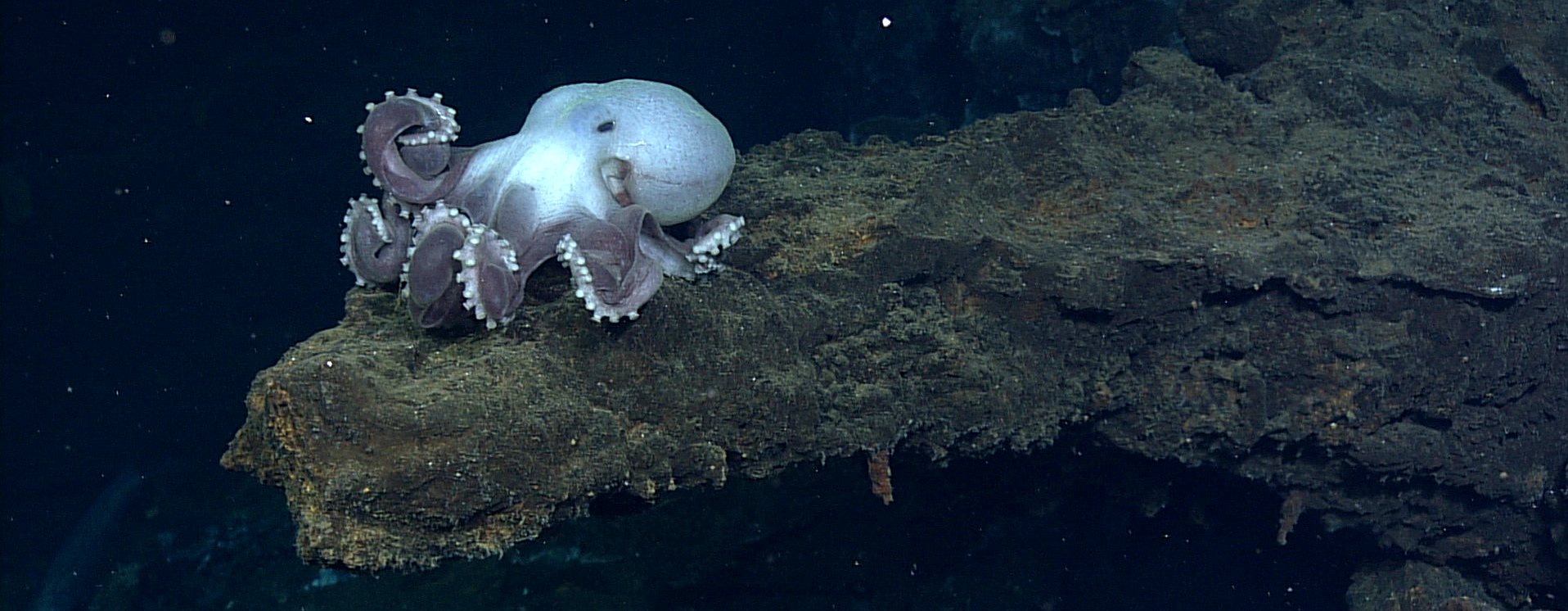
Deep-Sea Octopus (Muusoctopus sp.)

Muusoctopus is a genus of octopus found worldwide in deep, cold waters. They are generally small to medium-sized, with smooth skin (unlike another commonly seen octopus at OOI sites, Graneledone boreopacifica, whose mantle has a bumpy or warty appearance). Muusoctopuses lack an ink sac, and females are known to brood their eggs in protected crevices without leaving to feed, sometimes for extremely long periods of time: months or even years!
These octopuses have been observed at both of the deepest OOI installation sites: Slope Base and Axial Base.
References:
https://en.wikipedia.org/wiki/Muusoctopus
https://daily.jstor.org/the-last-vigil-of-the-octopus-parent/
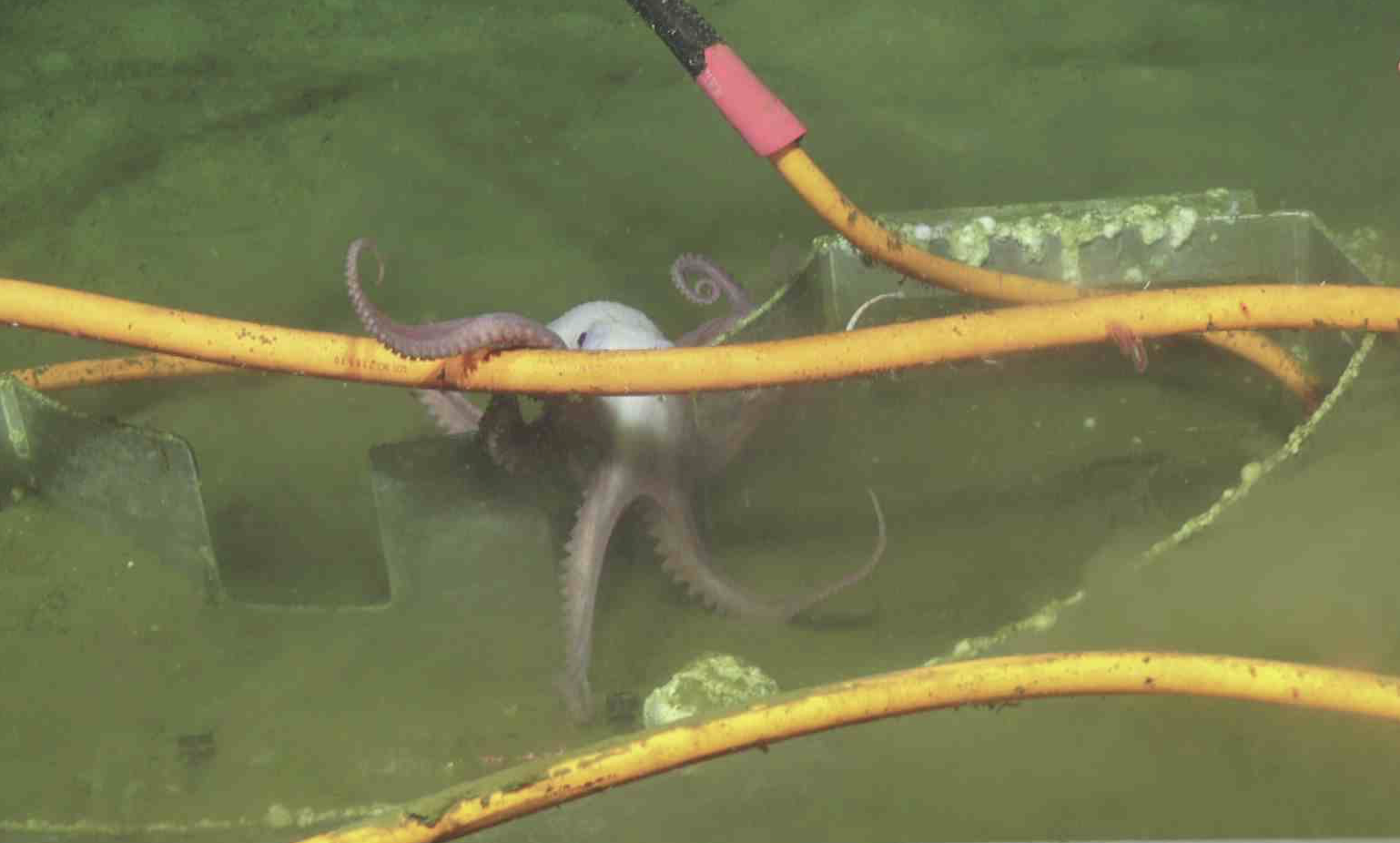
A deep-sea octopus (possibly Muusoctopus?) seen at Slope Base during the Shallow Profiler EOM anchor inspection. Two anemones are attached to the nearby cable. Credit: NSF-OOI/UW/CSSF, Dive R2256, V22
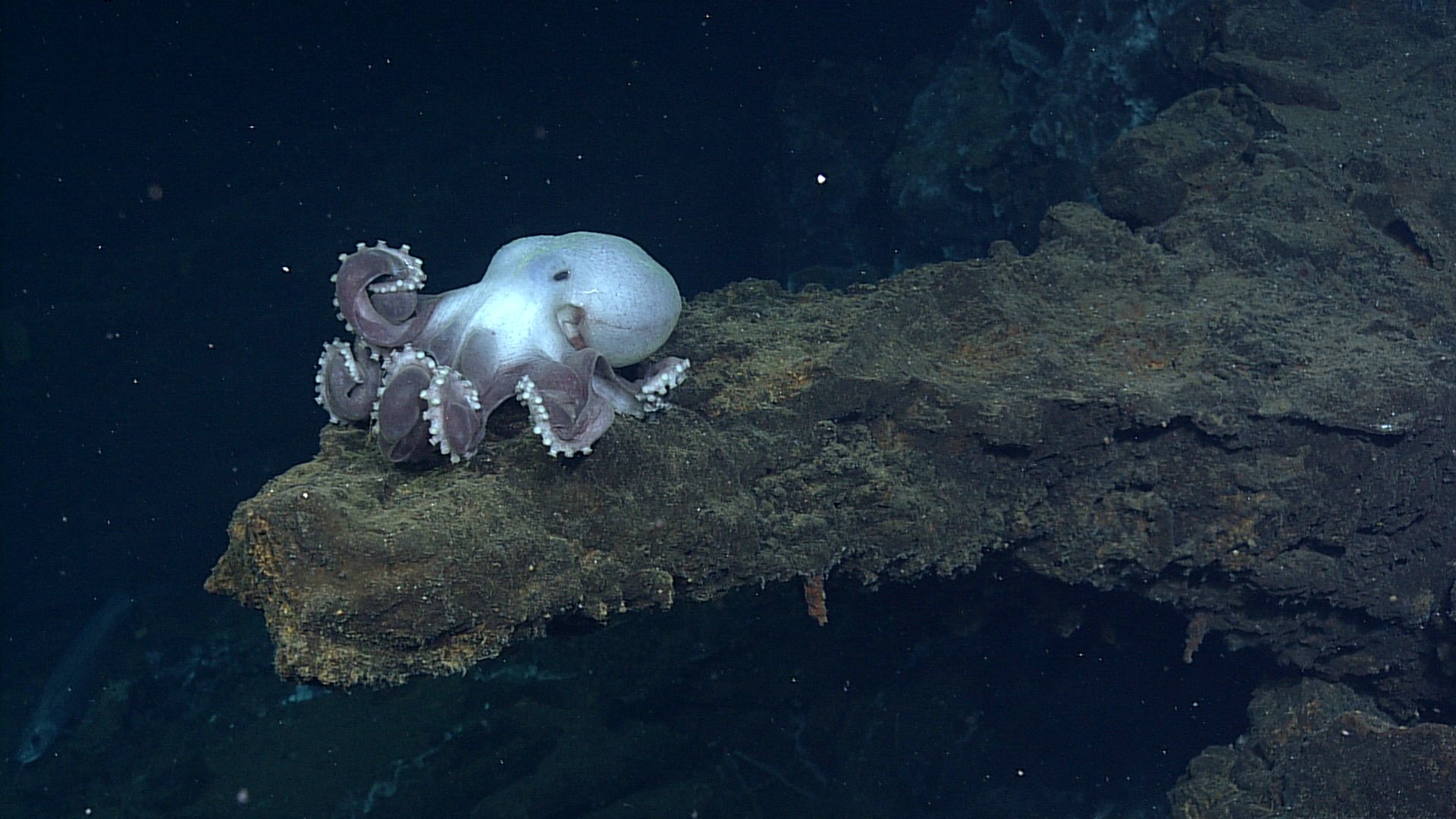
An octopus moves along the sedimented seafloor at the Slope Base site. Credit: UW/NSF-OOI/CSSF; ROPOS Dive R2256, V22.
An octopus at 9500 ft beneath the oceans' surface finds a home by the leg of one of the Cabled Array junction boxes at the Slope Base site. Credit: UW/NSF-OOI/WHOI, V18.
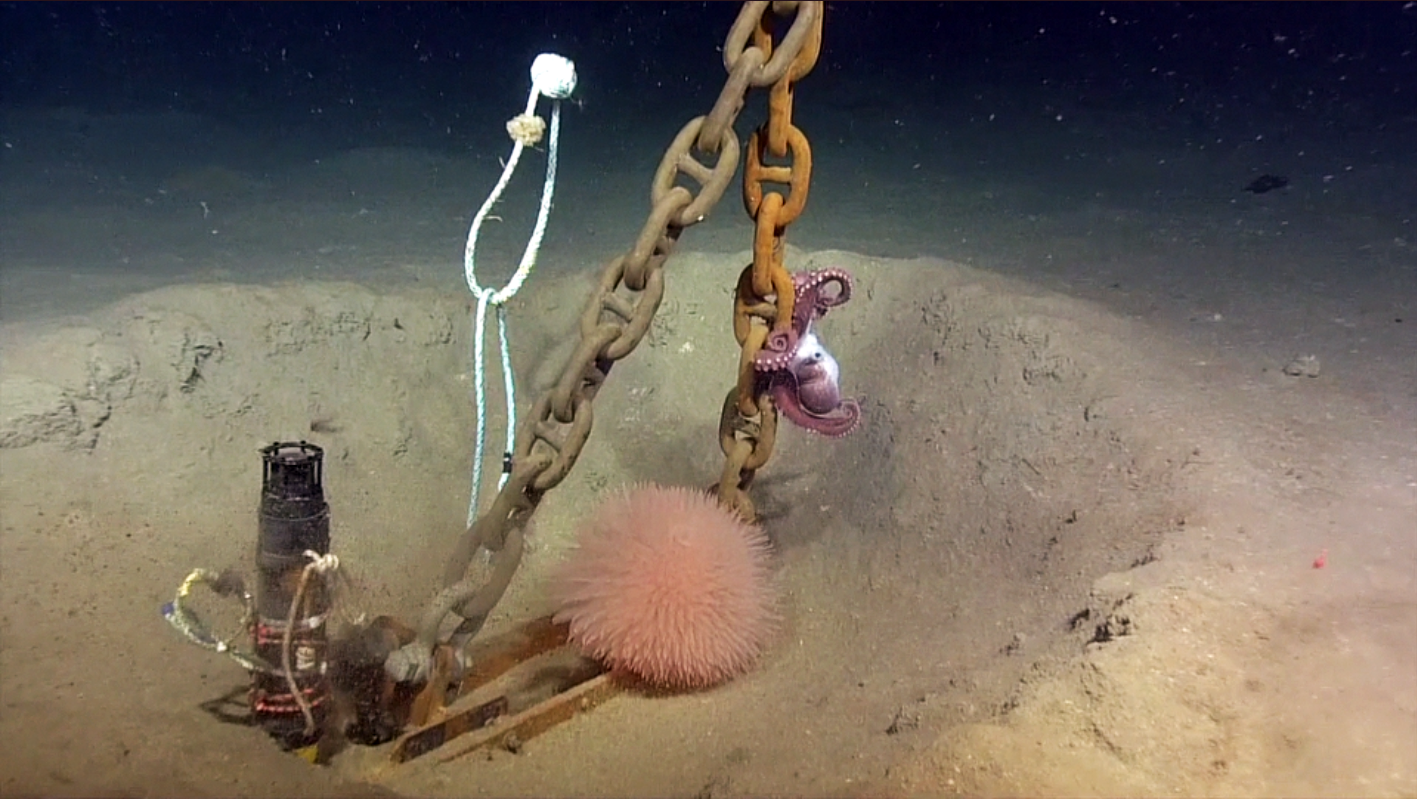
A very large anemone and octopus call the anchor of the Slope Base Shallow Profiler Mooring home. Credit: NSF-OOI/UW/ISS; V15 ROPOS Dive R1848.
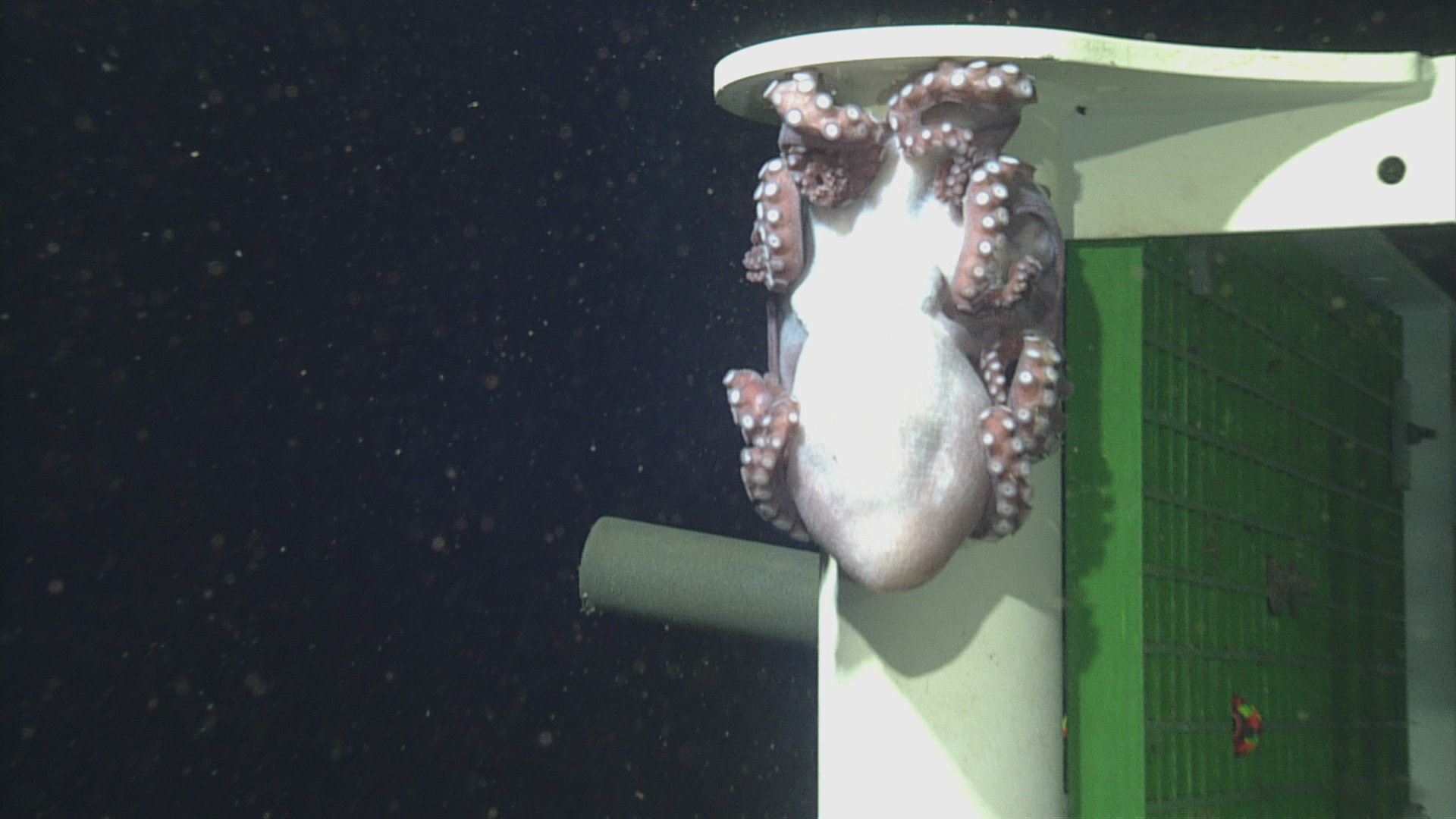
A deep-sea octopus (possibly a Muusoctopus), clinging to the leg of the medium power junction box MJ01A at Slope Base. It may be brooding eggs, and they can guard their eggs for over four years, longer than any known animal. Credit: UW/NSF-OOI/CSSF, ROPOS Dive R1751, V14.