
VISIONS Sea-Going Research and Discovery
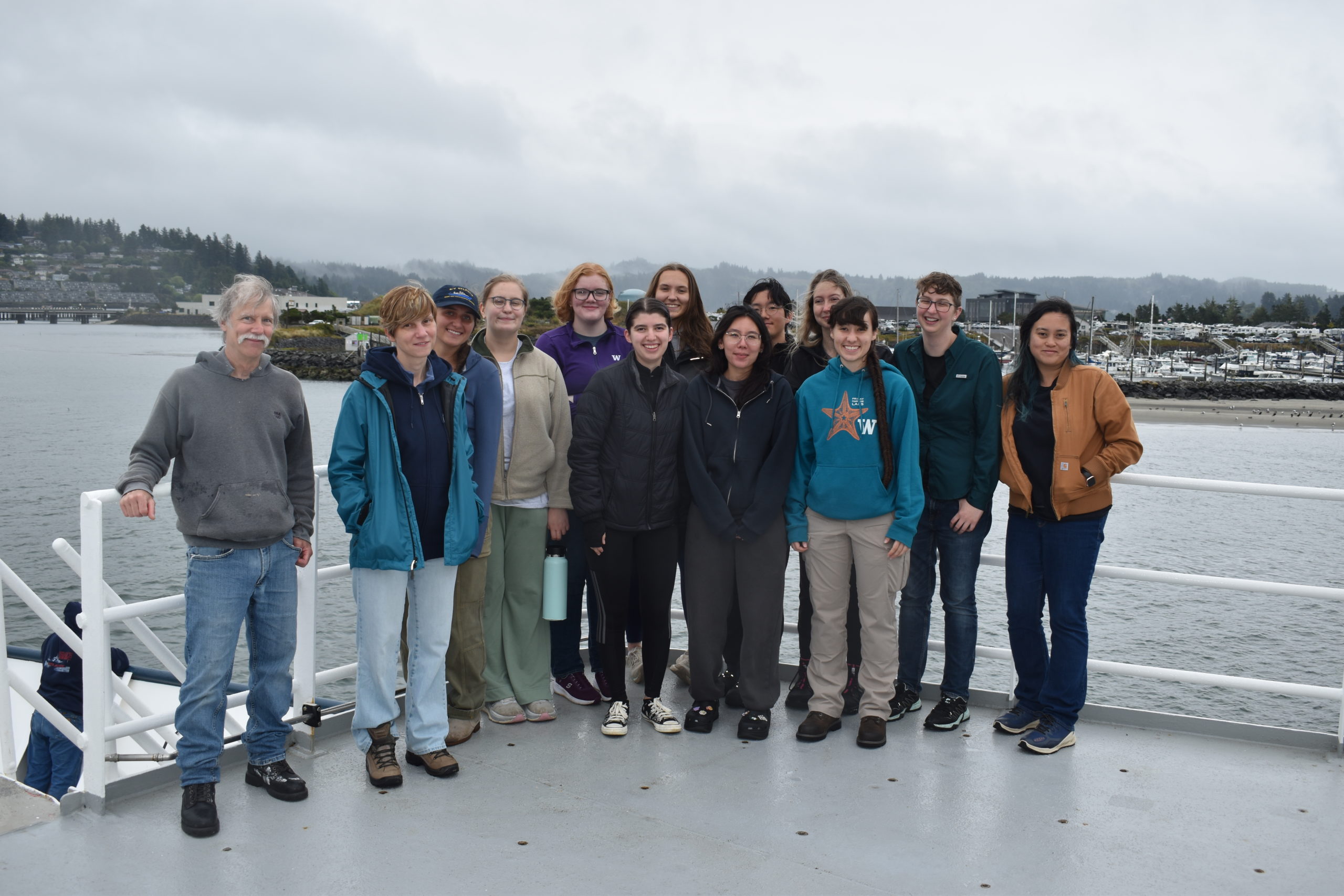
For two decades, the University of Washington has been actively engaging students in the at-sea experiential learning program ‘VISIONS’. Since 2010, over 200 undergraduate and graduate students have participated in this uniquely interdisciplinary, hands-on at-sea course that provides training in research related to many important oceanographic processes operating within the Northeast Pacific ocean and on the seafloor. The oceanographic expeditions are an important component of the National Science Foundations’ Ocean Observatories Initiative Regional Cabled Array (RCA) operations and maintenance cruises using the global class research ships the R/V Thompson (UW), the R/V Revelle (SIO), and the R/V Atlantis (WHOI). All cruises utilize state-of-the-art underwater robotic vehicles (ROV) that allow students to directly witness some of the most extreme environments on Earth. Their fascination and enthusiasm for this region of hydrothermal activity, underwater volcanoes, methane seeps, methane ice deposits, and exotic life forms has continually inspired them to find ways to share their explorations and discoveries during research expeditions with audiences around the world.
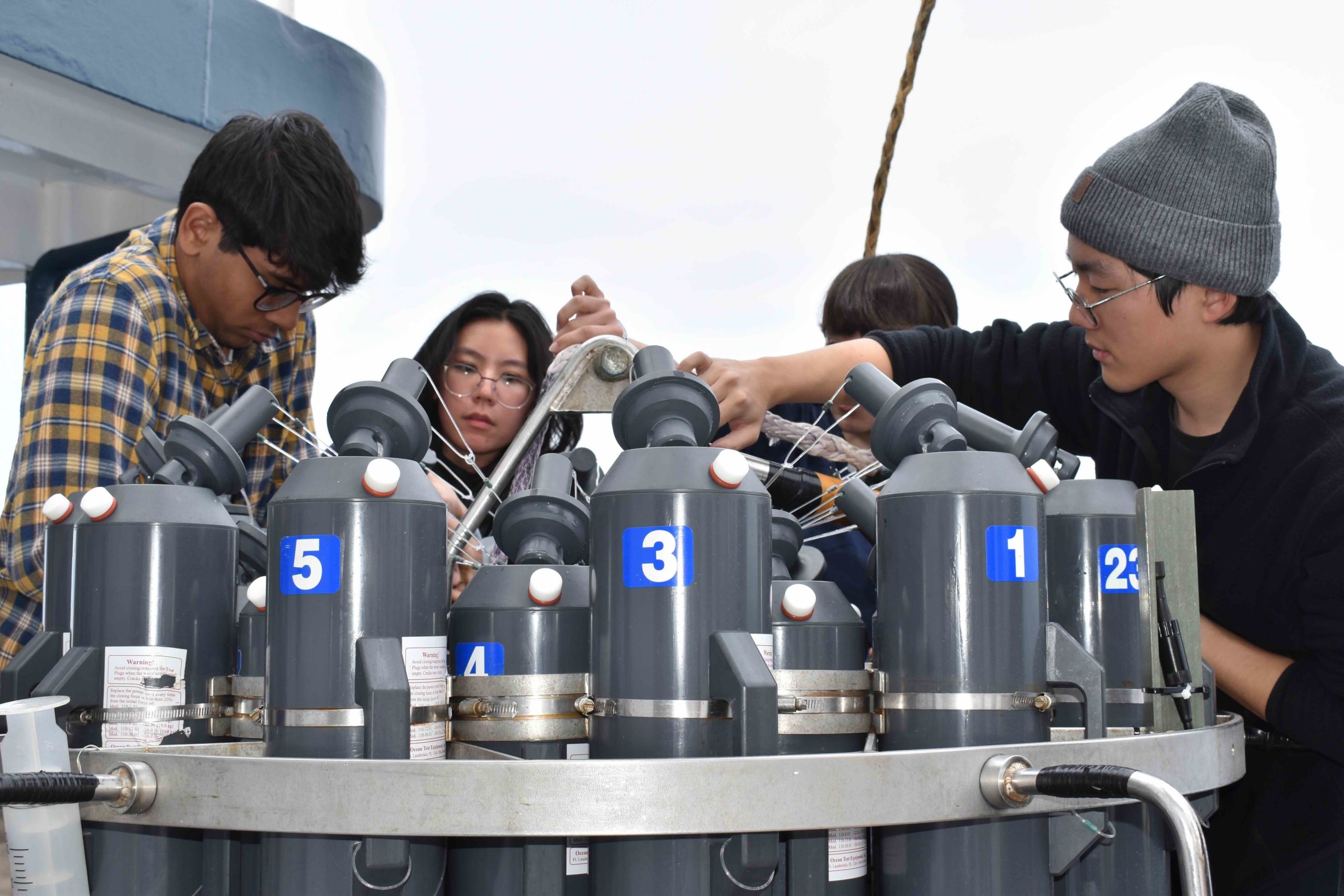
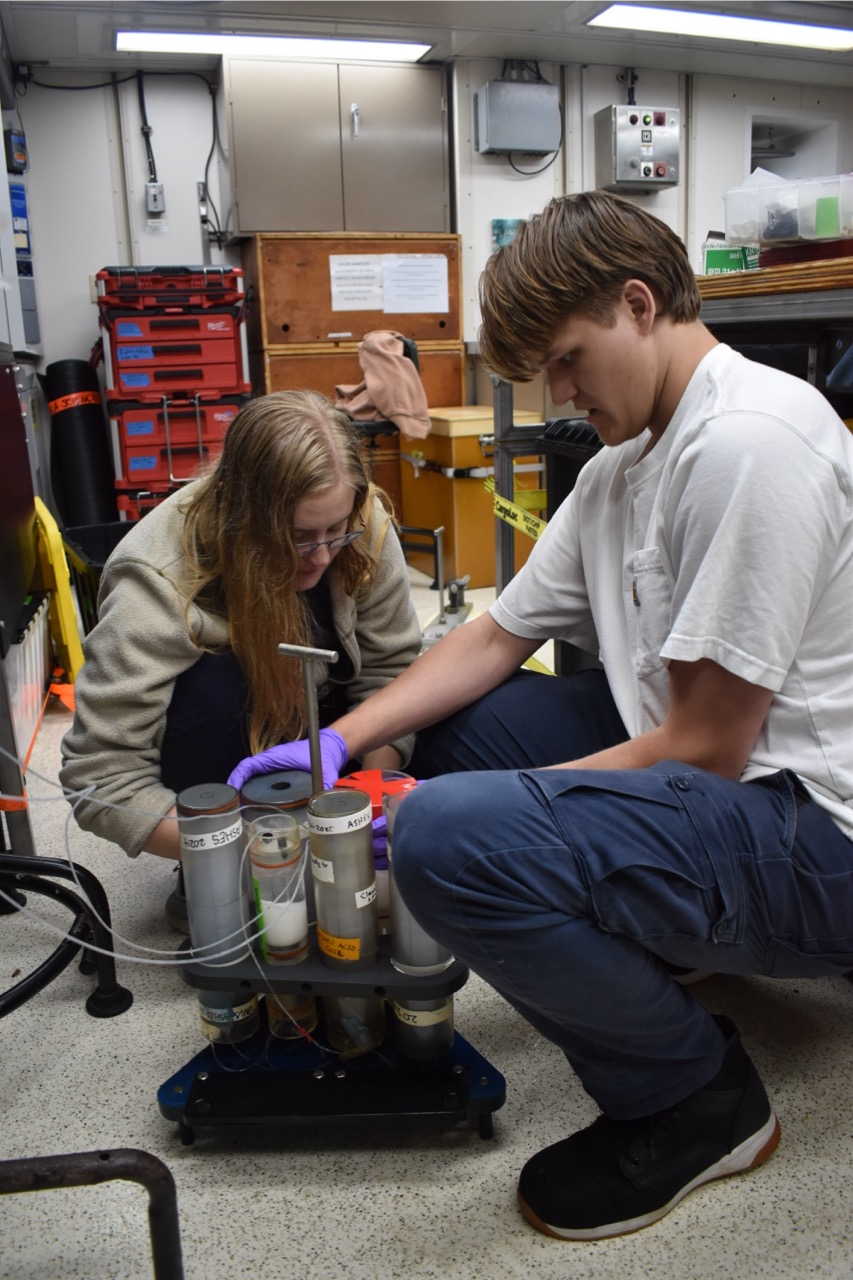
During ~10 day to >5 week duration’s at sea, the students work alongside experienced UW School of Oceanography scientists, engineers from the Applied Physics Laboratory, the ROV team, and the ship’s crew to gain at-sea and research experience using advanced oceanographic research instrumentation. Students conduct their own research and engagement projects using data and video collected with some of these tools and data streamed live at the speed of light from 150 RCA instruments directly connected to the Internet on shore.
This past summer on VISIONS’25, ~14 undergraduates and graduate students participated on the Regional Cabled Array Operations and Maintenance cruise aboard the research ship the R/V Atlantis, hosting the ROV Jason.
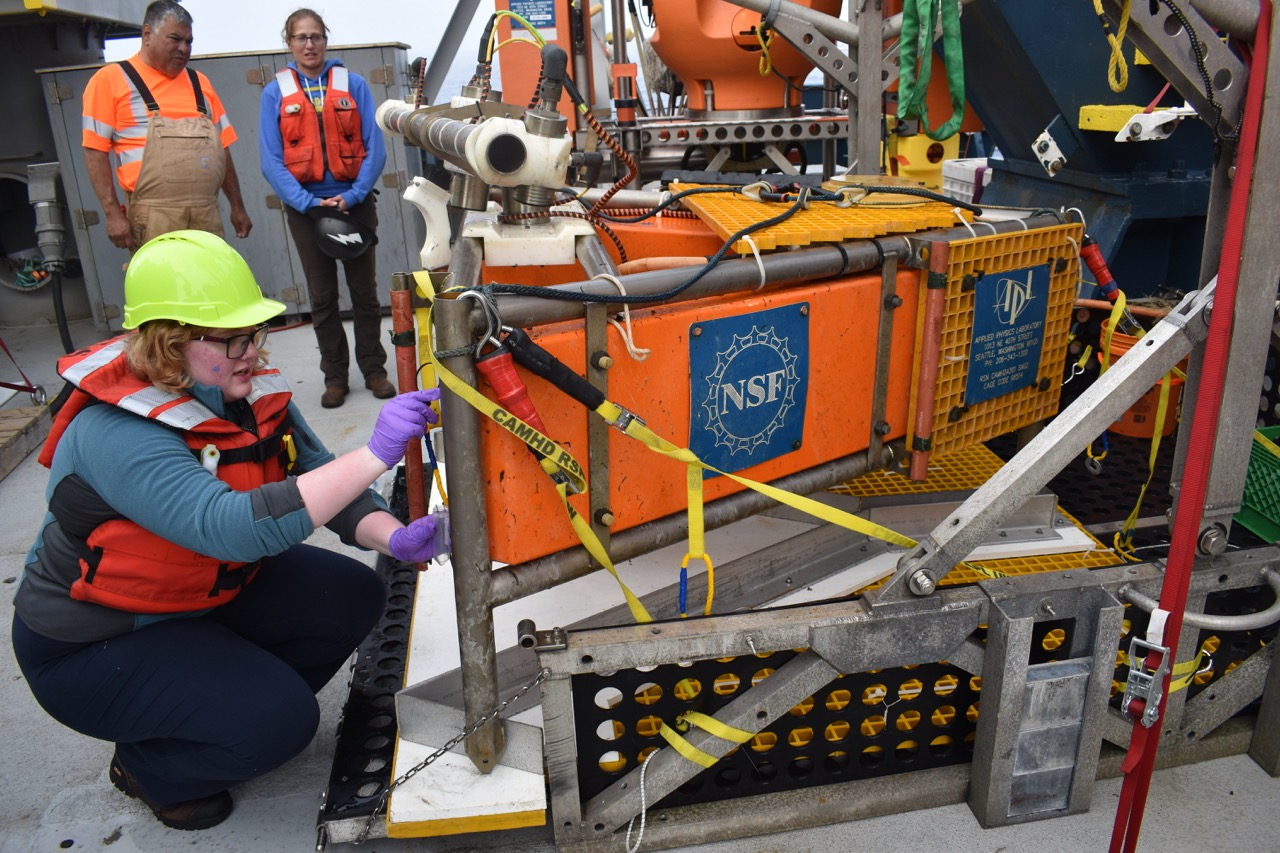
During the 27 days at sea, we visited all Regional Cabled Array sites resulting in some impressive cruise statistics:
•The Atlantis transited over 2600 kilometers
•The ROV Jason completed 48 dives spanning 2900 m to 80 m water depth
•9 CTD’s were conducted reaching depths of 2900 m with 348 CTD and 172 Niskin verification samples processed for the water column sensors
•164 instruments were recovered and installed.
•Thousands of overlapping seafloor images were collected with Jason to produce a time-series photomosaic of Southern Hydrate Ridge seeps and biology , which have changed dramatically over this past year.
Visit the Expeditions link on this website for past cruises in which students have participated.