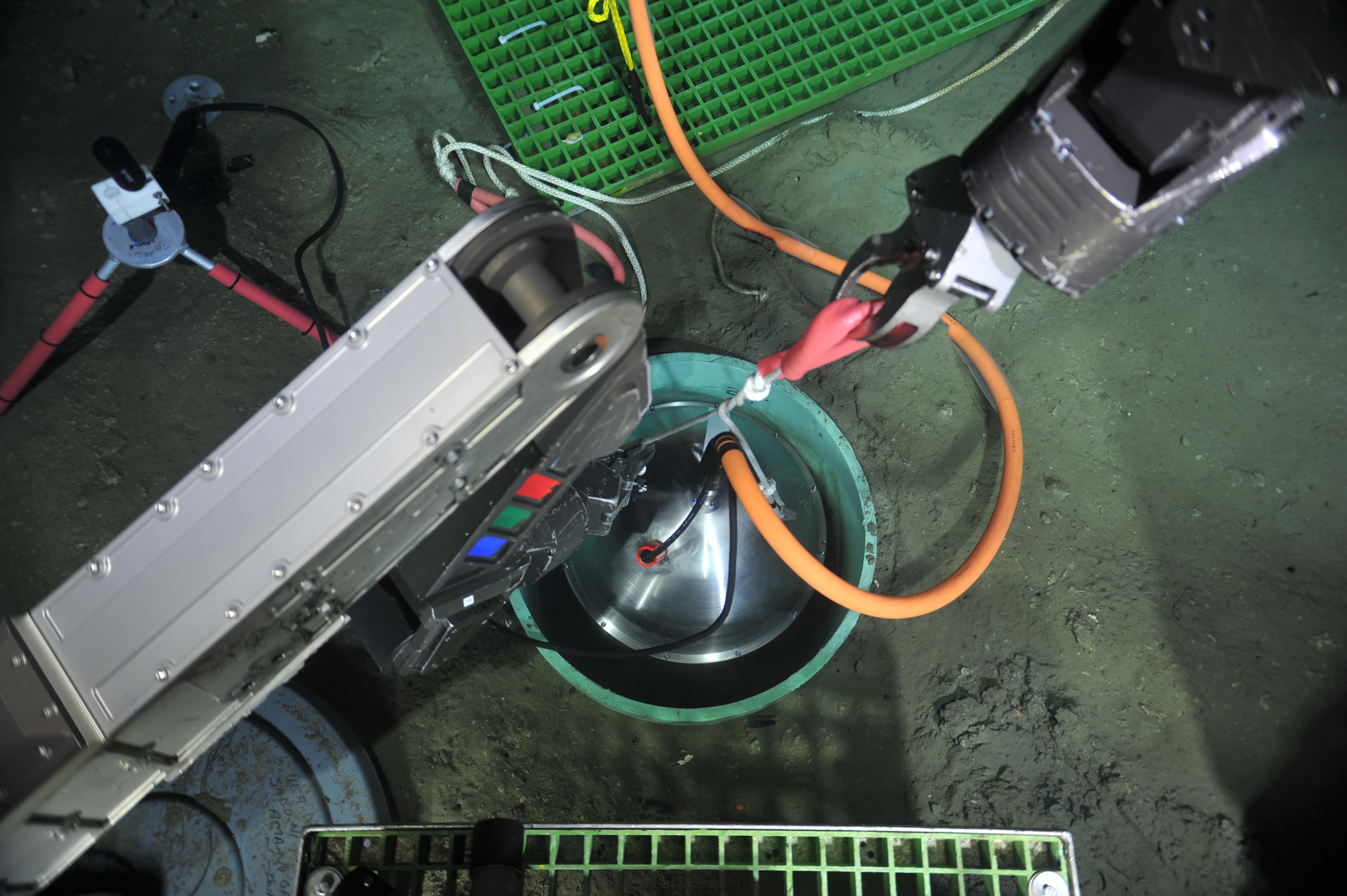
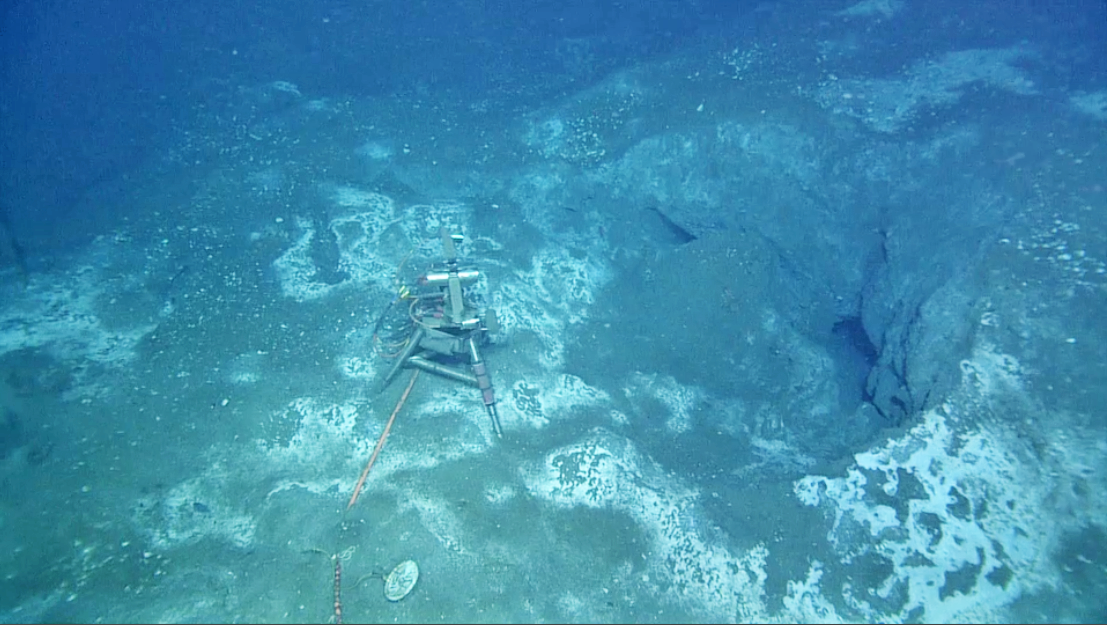
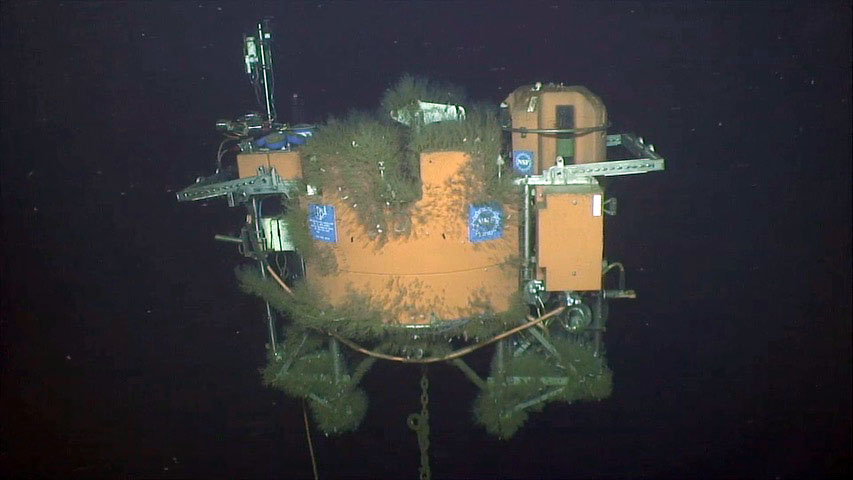
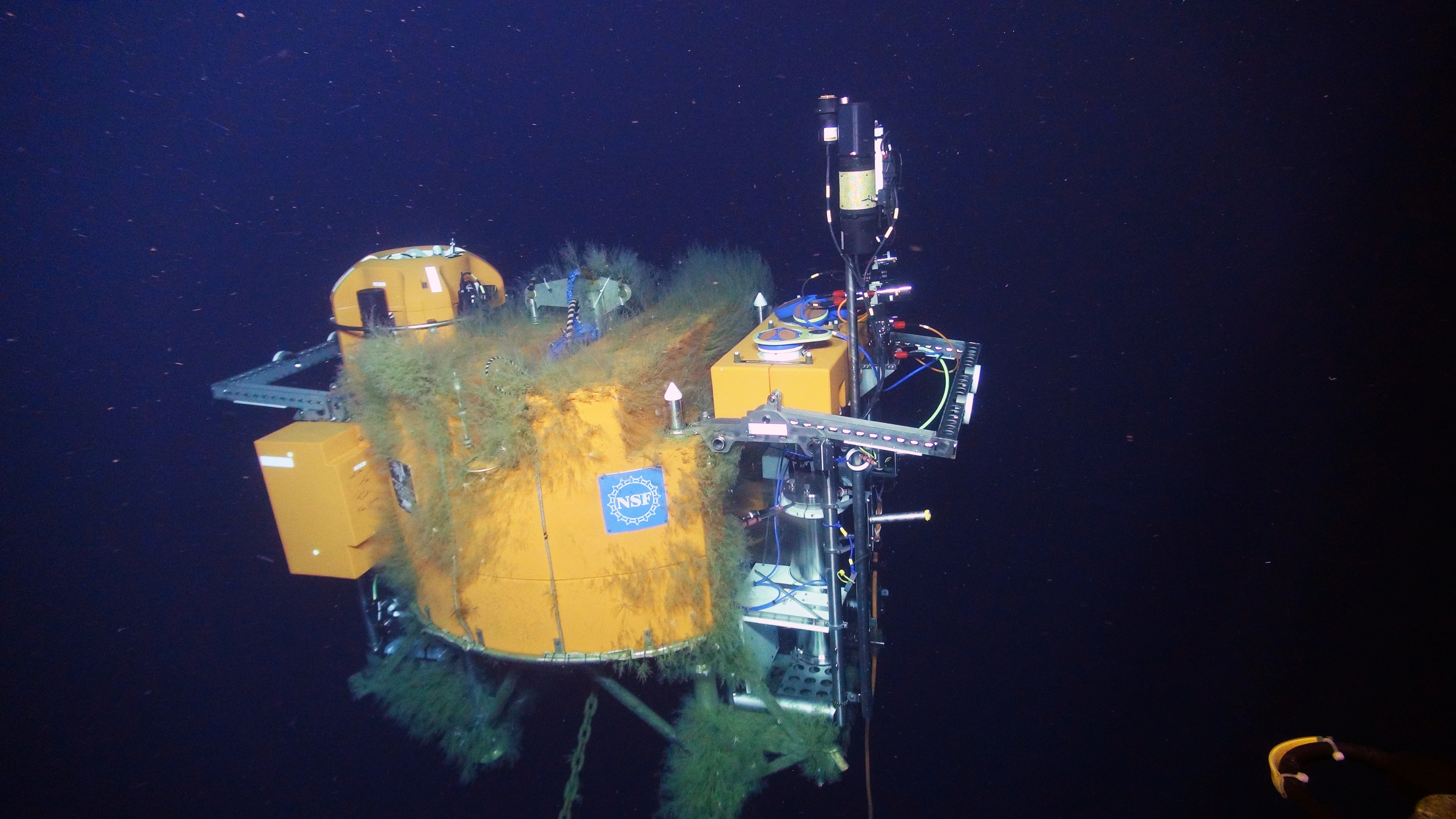
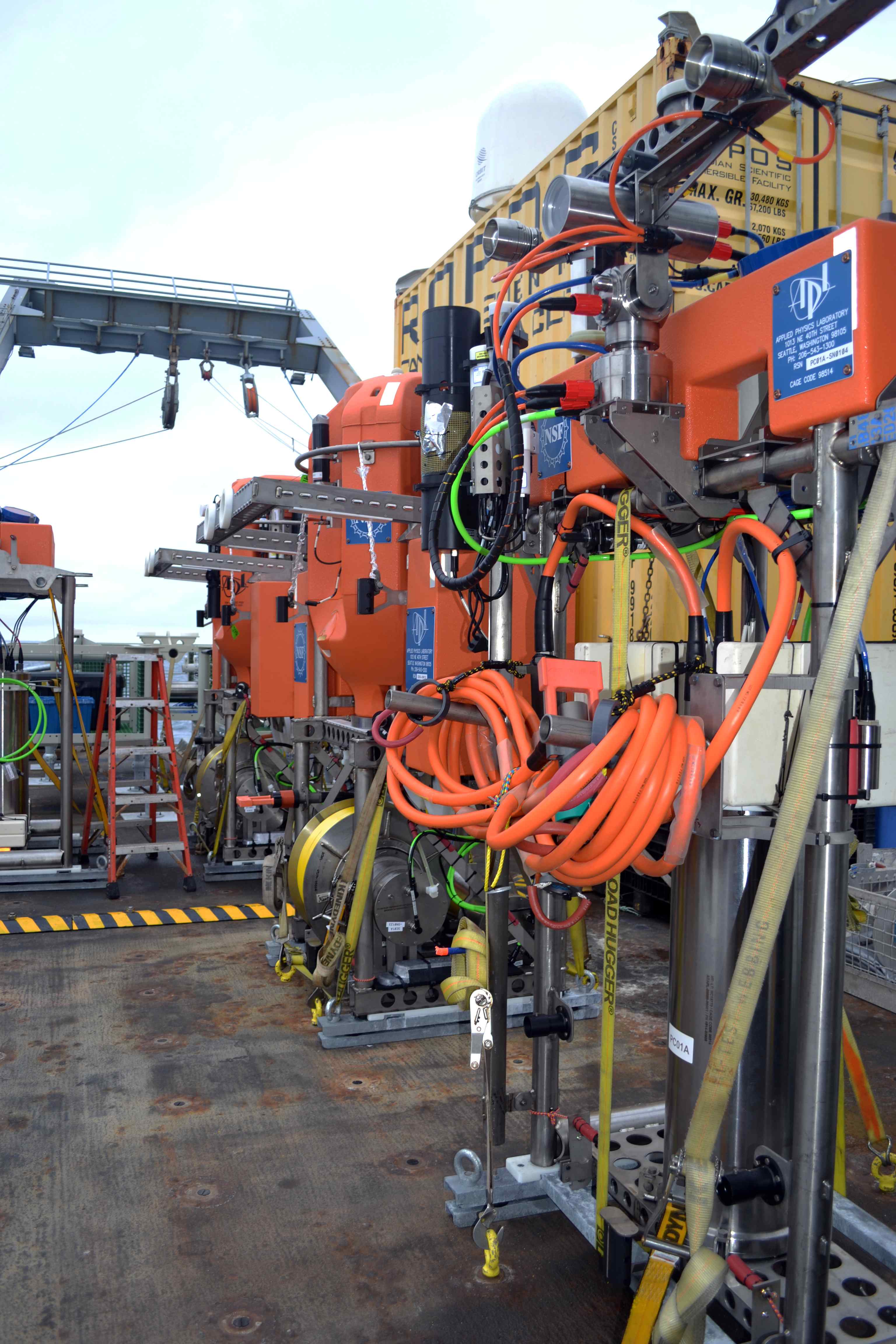
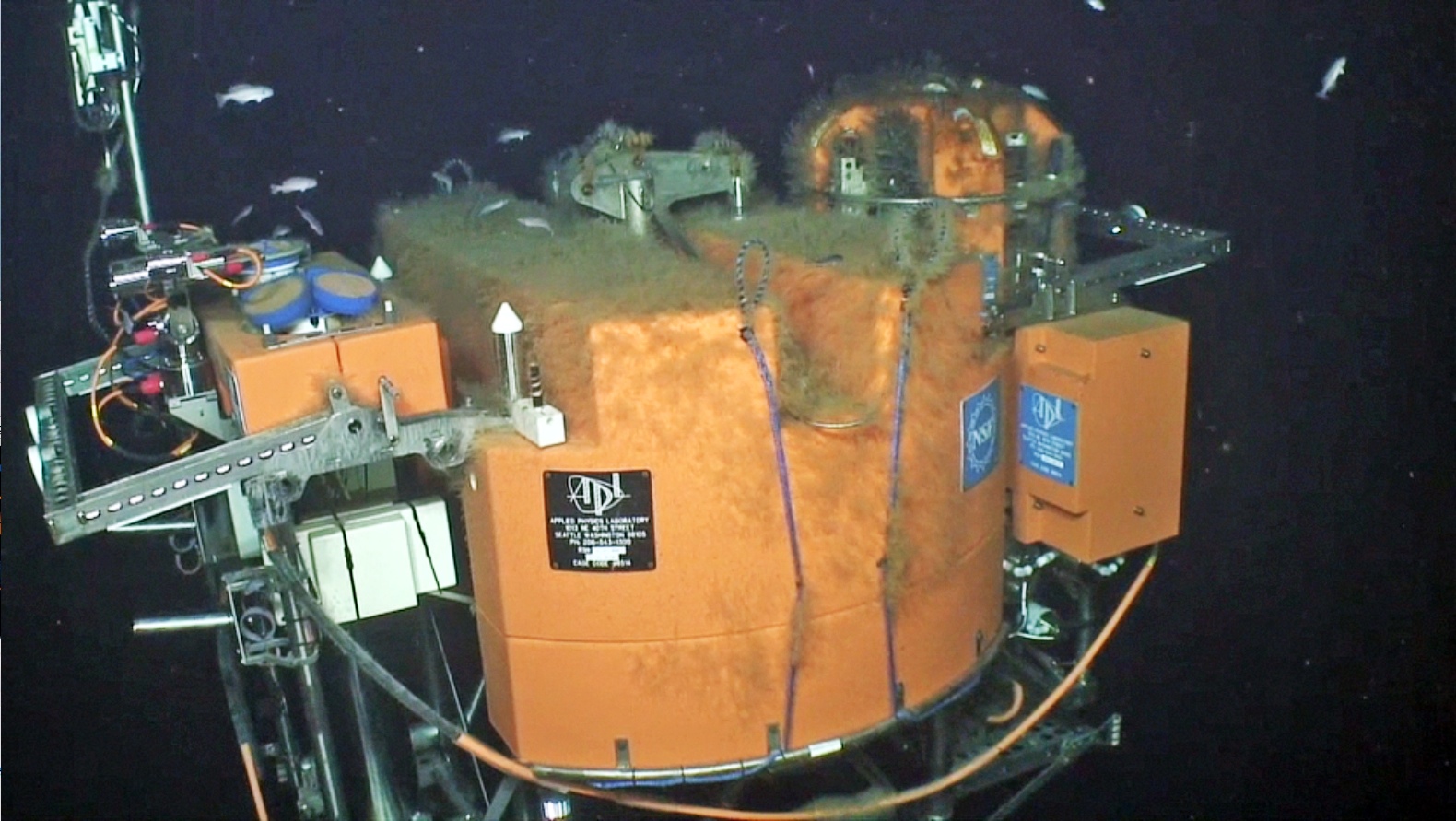
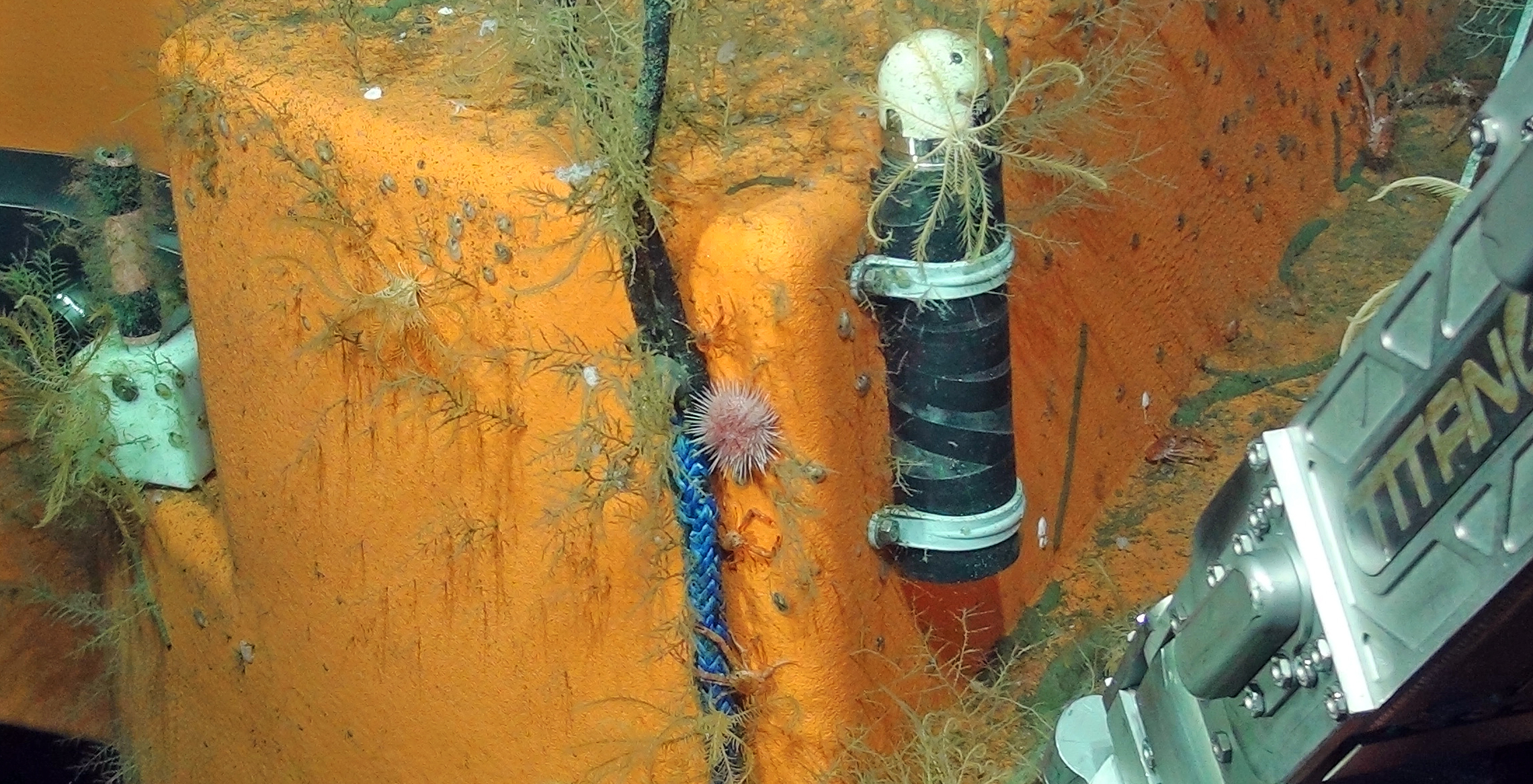
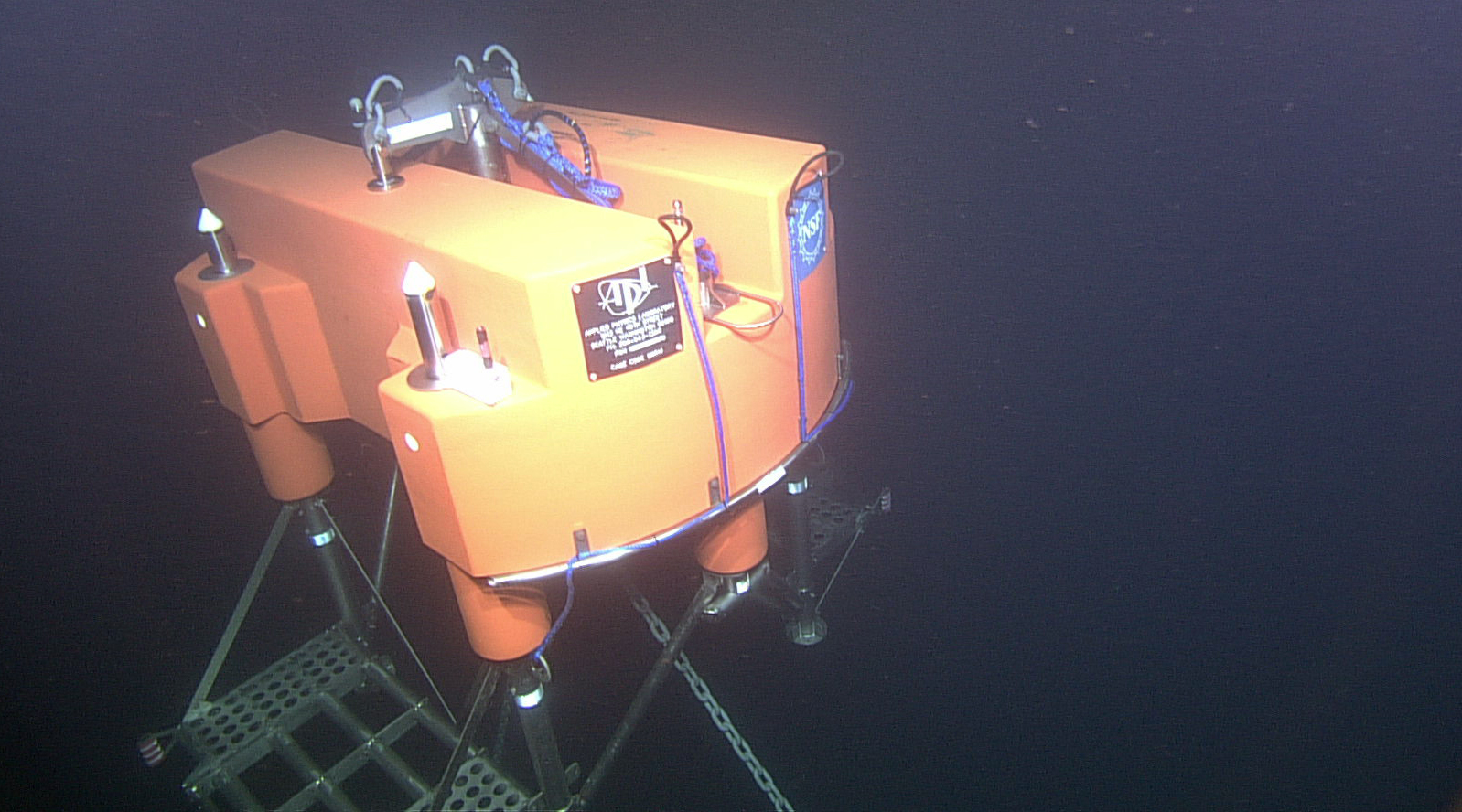
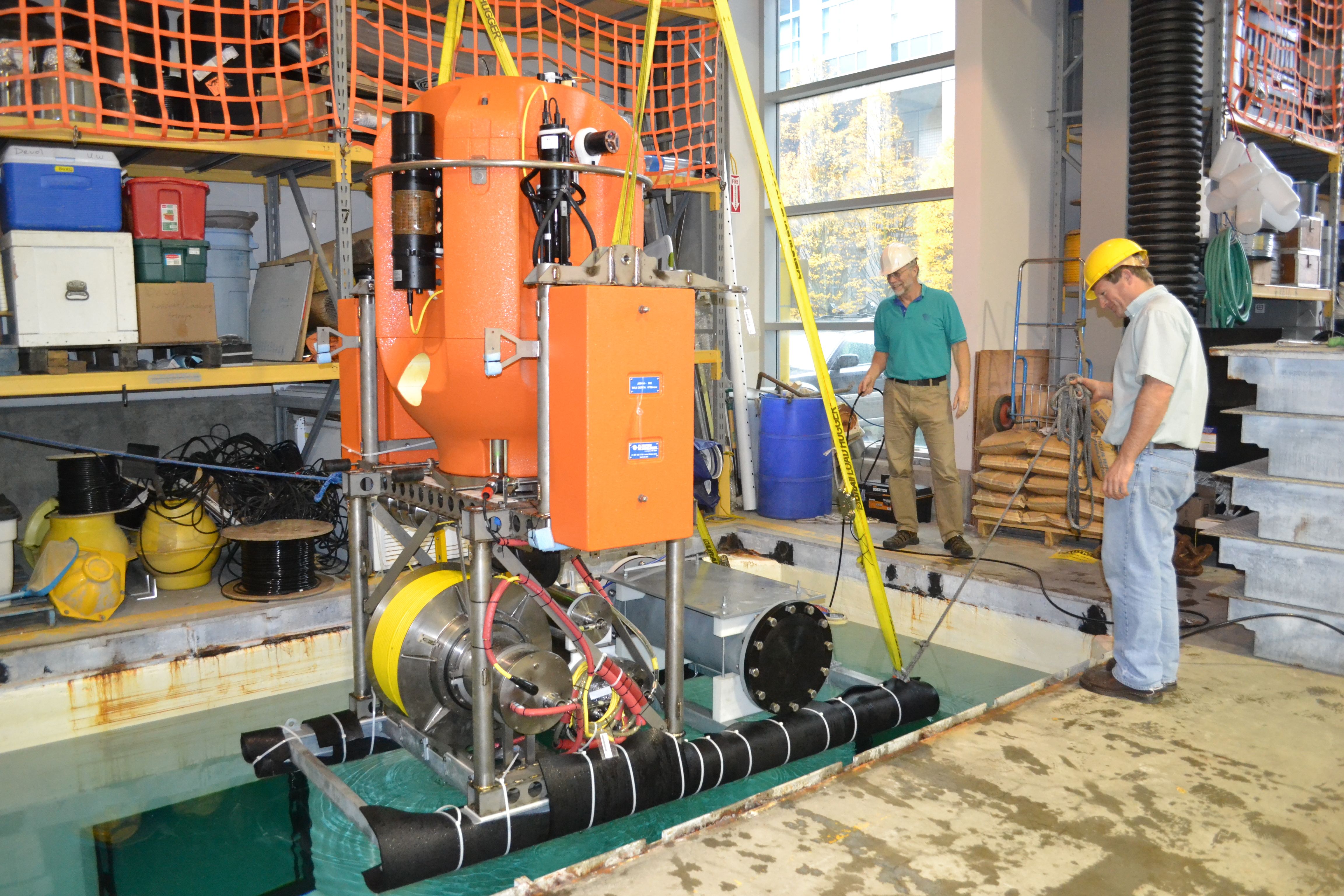
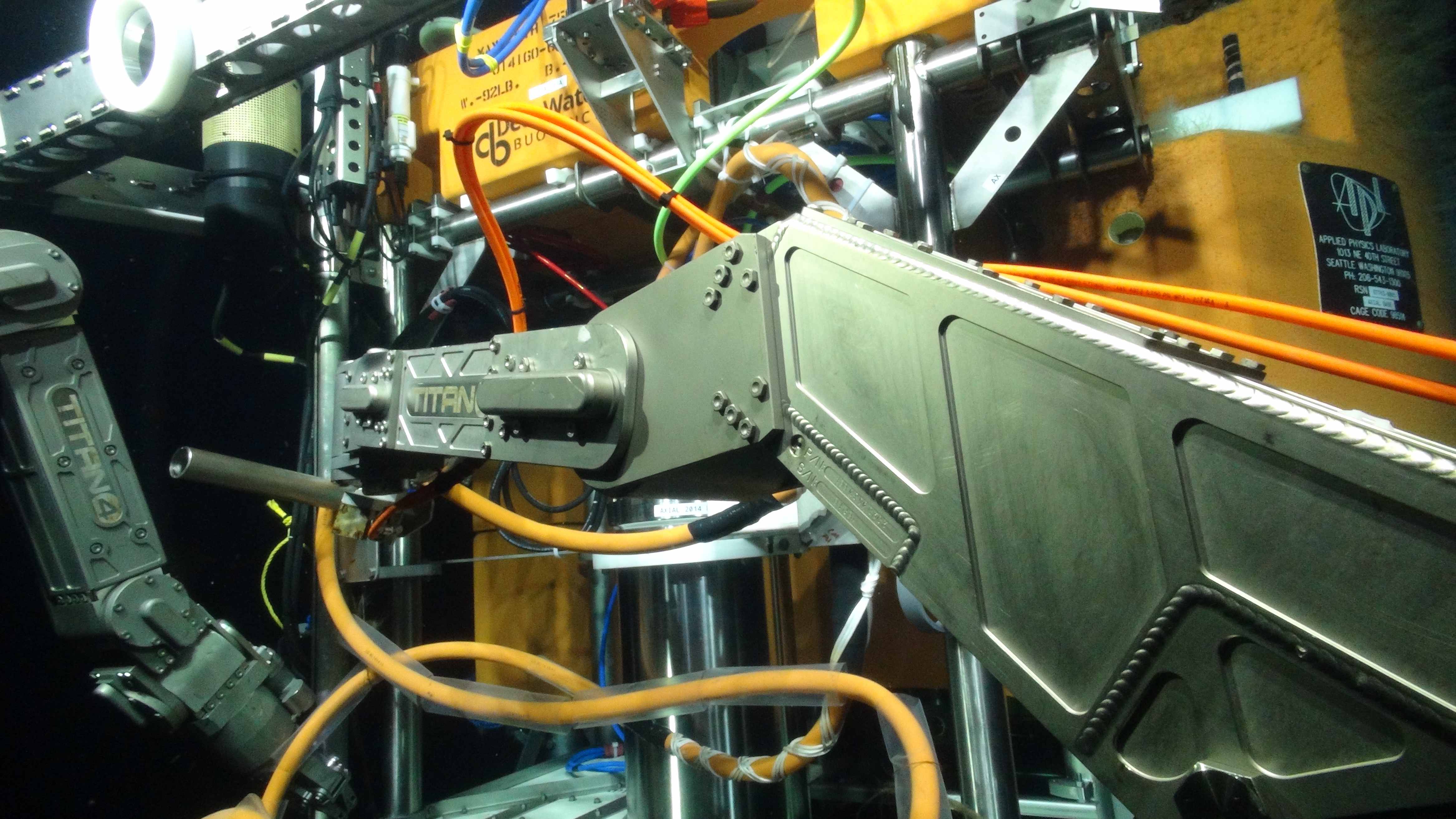
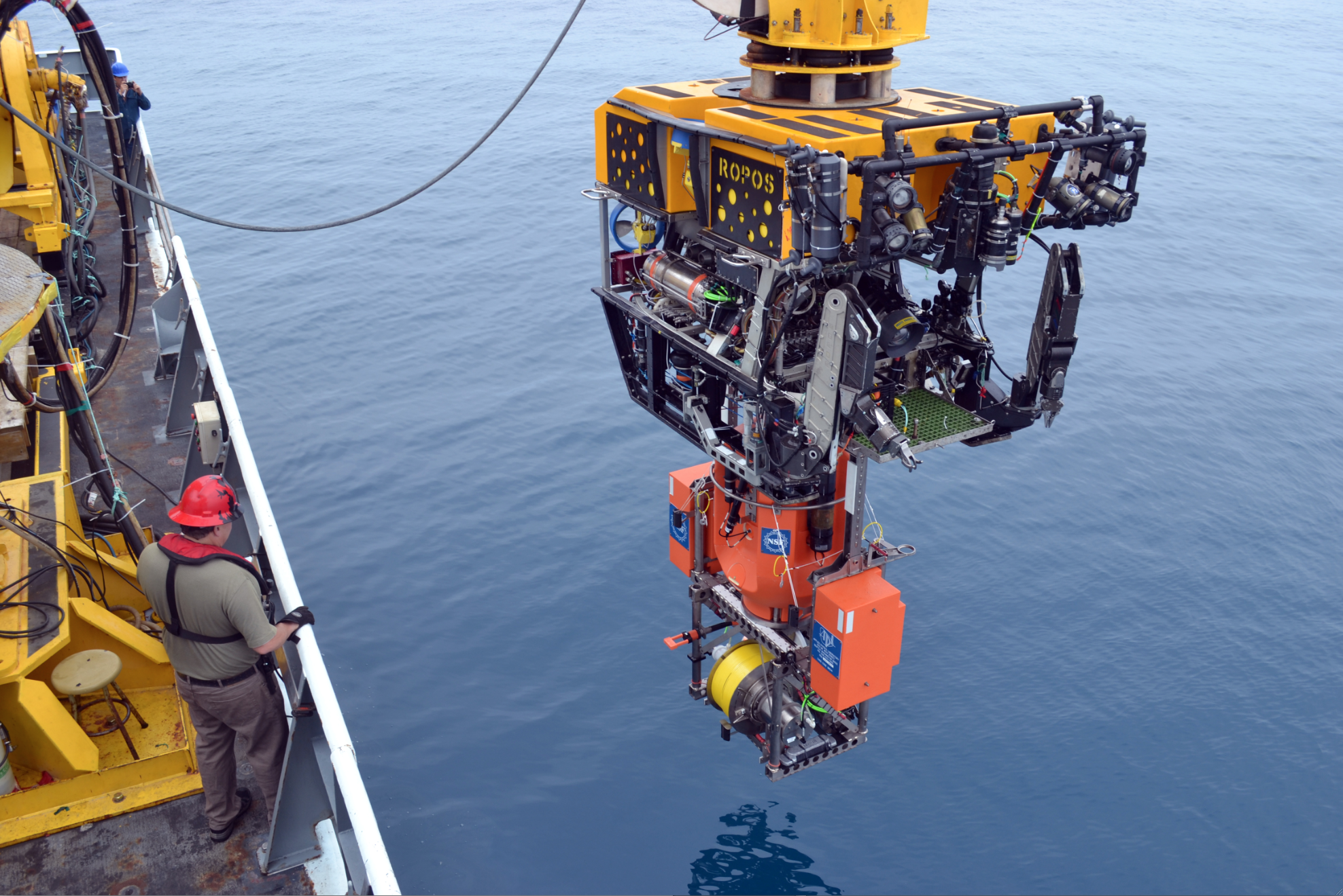
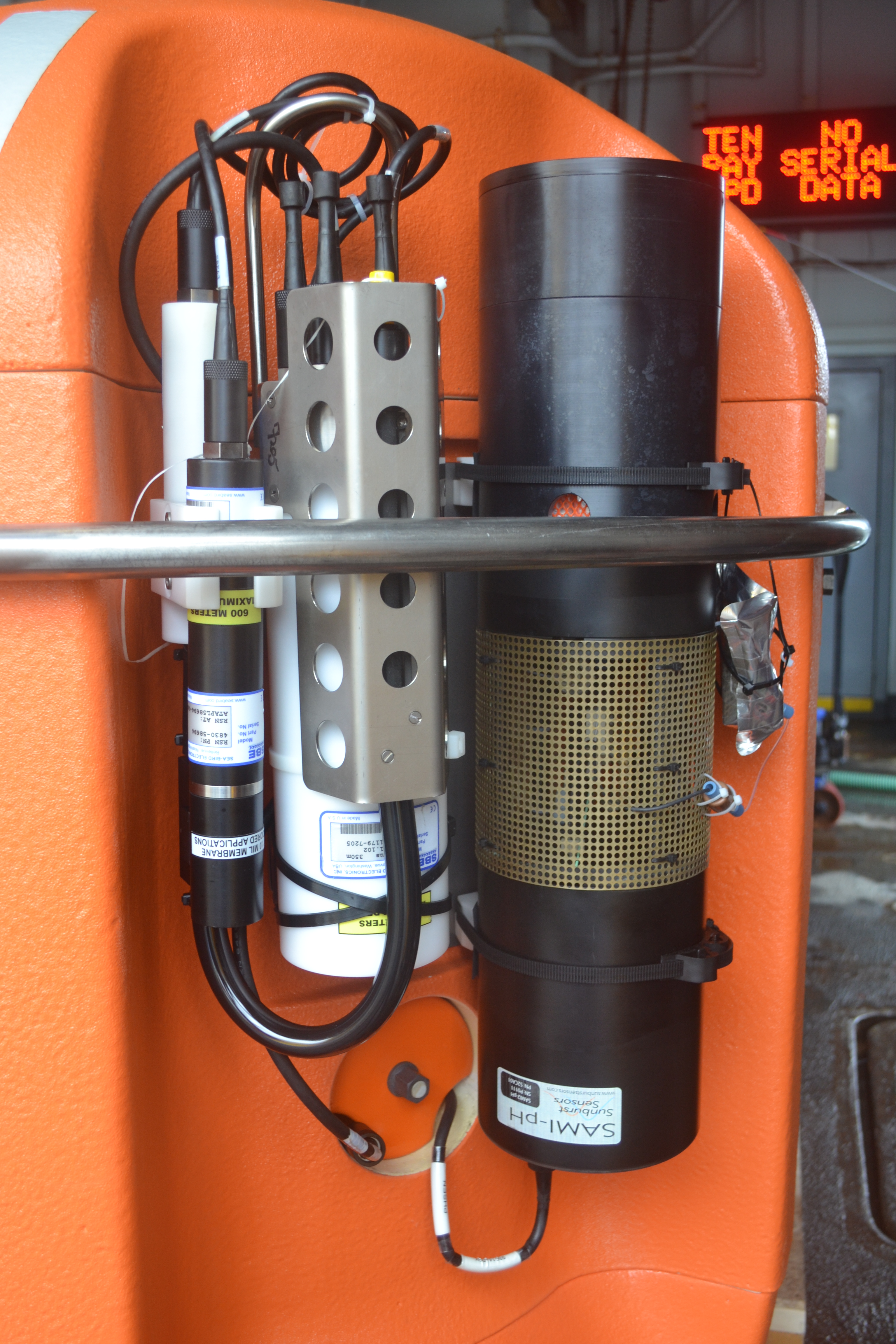
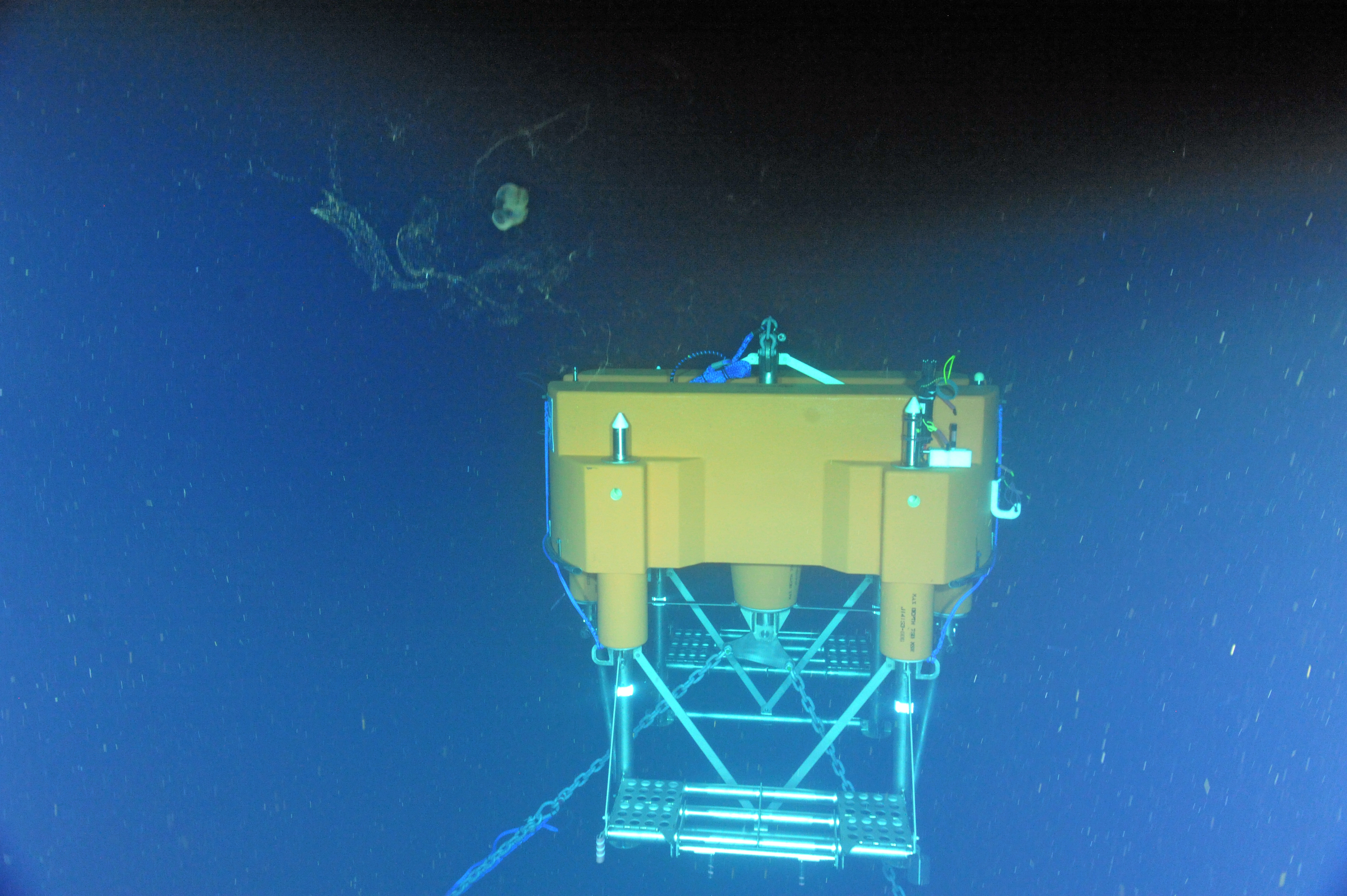
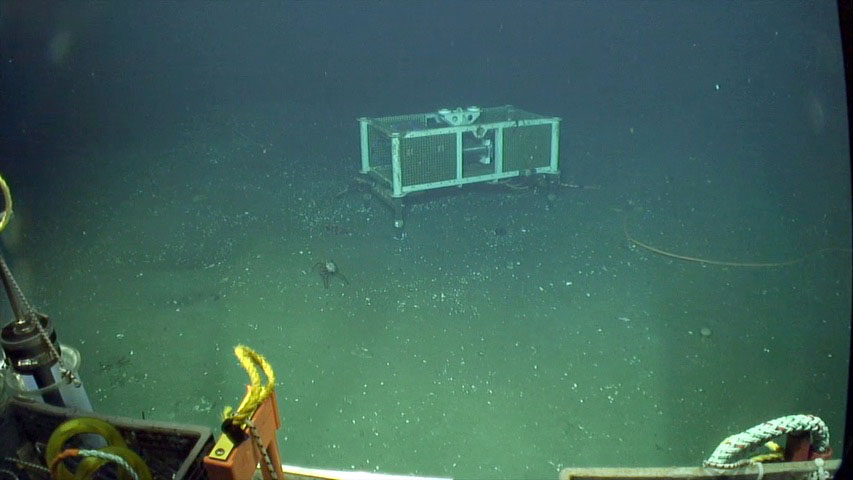
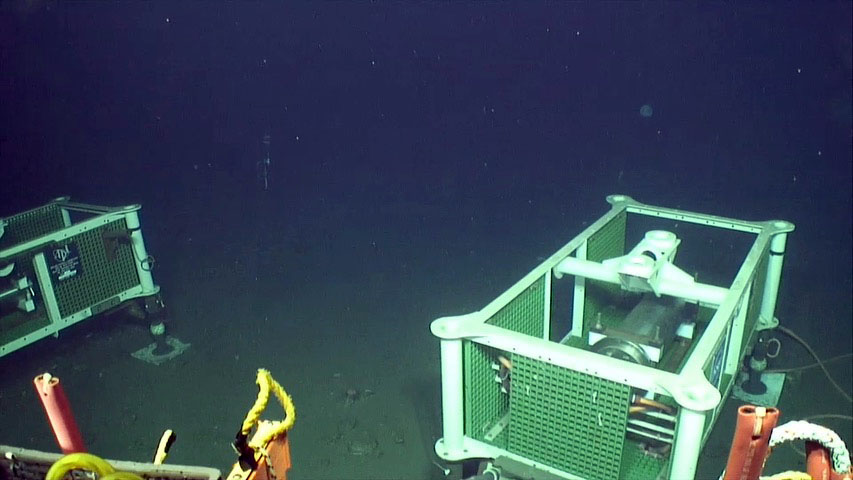
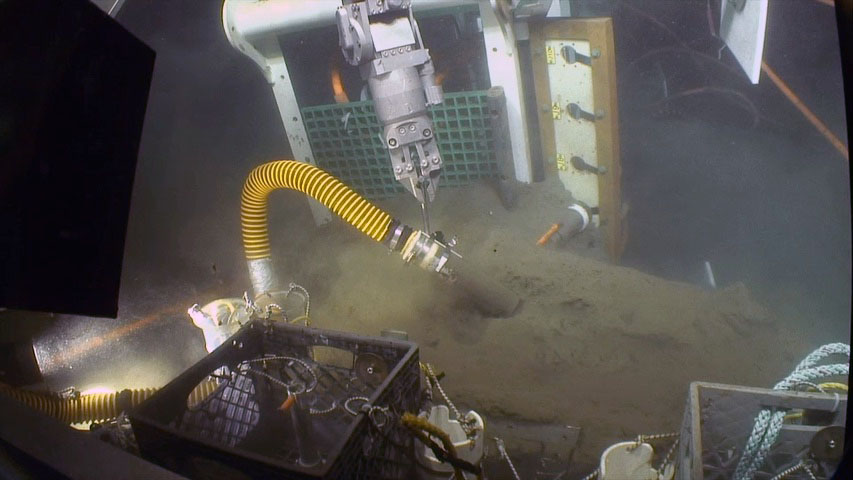
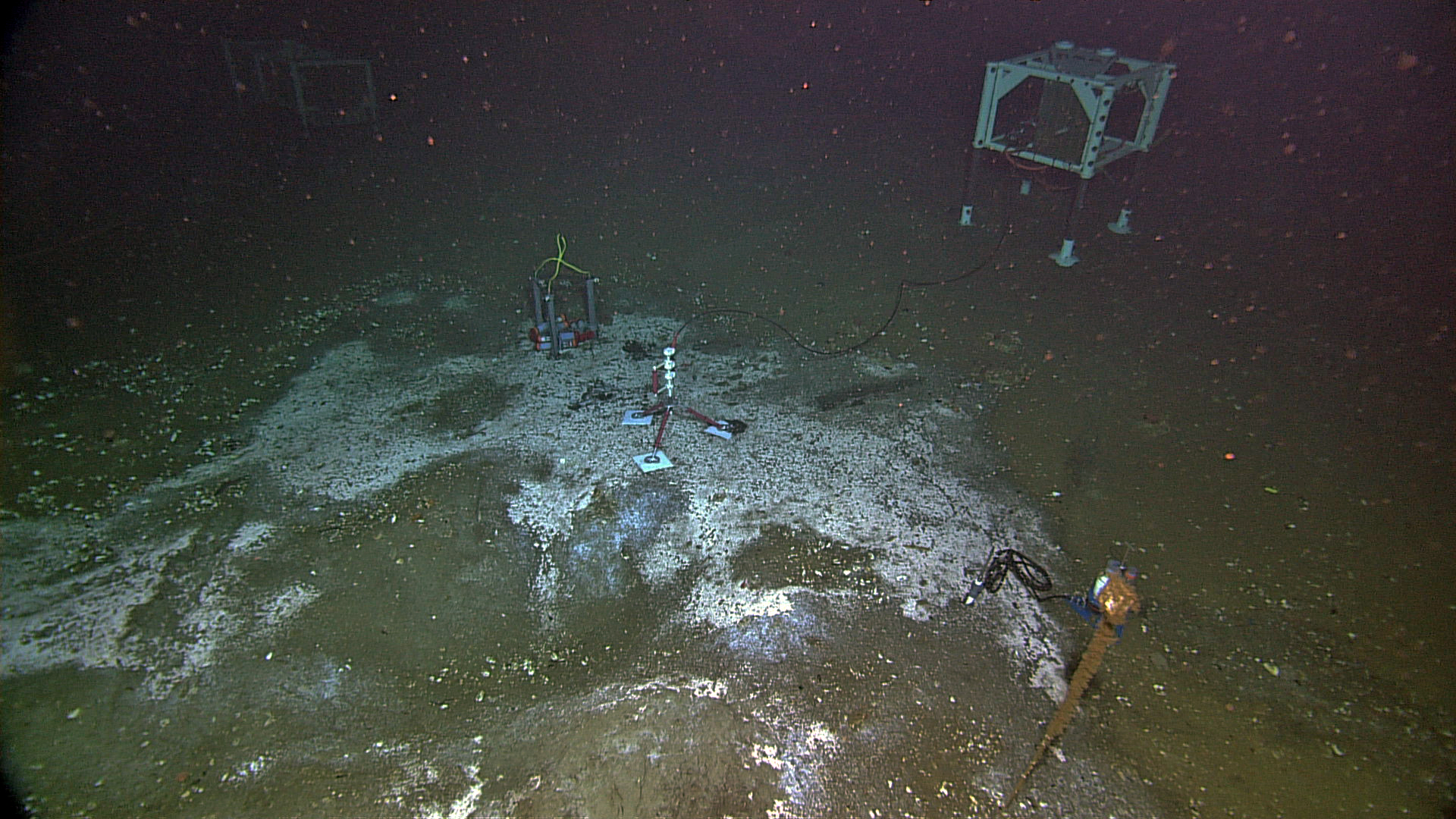
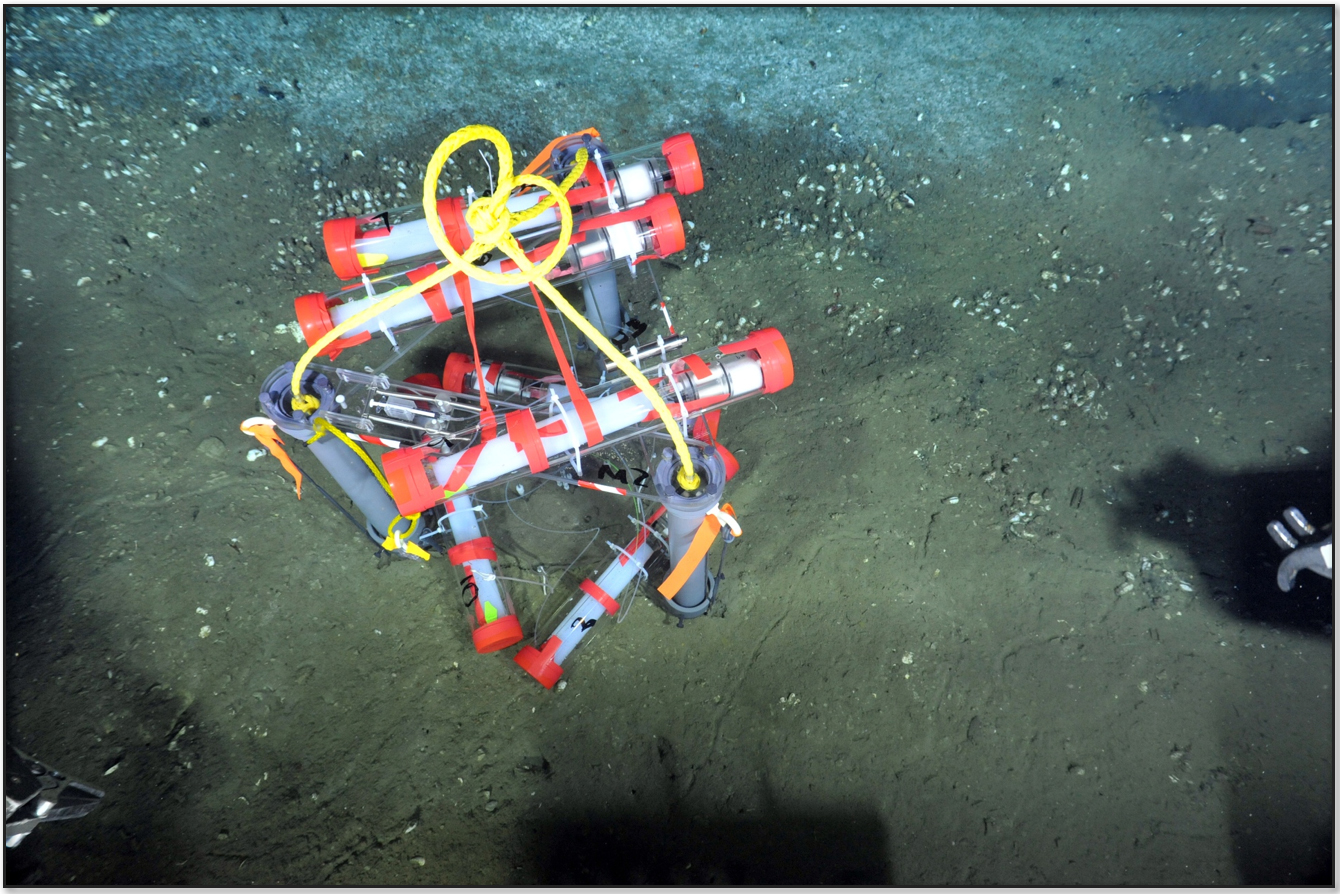
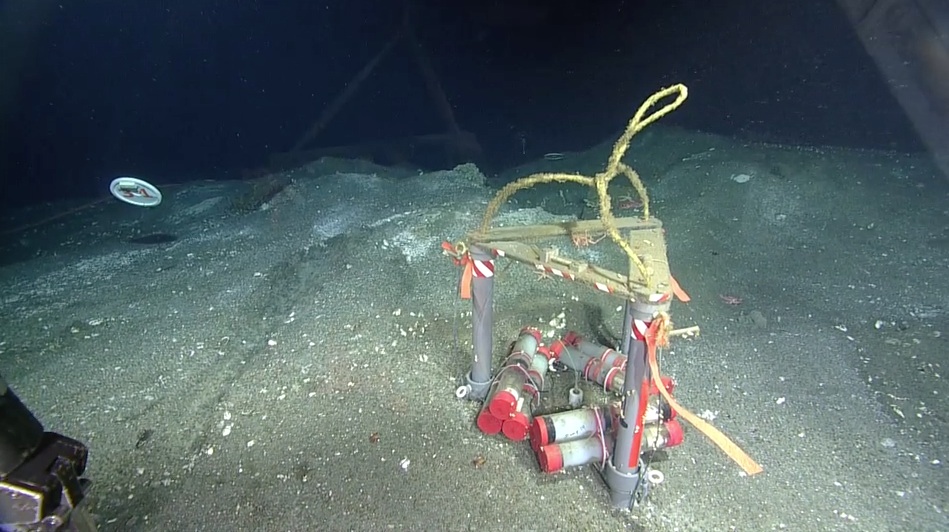
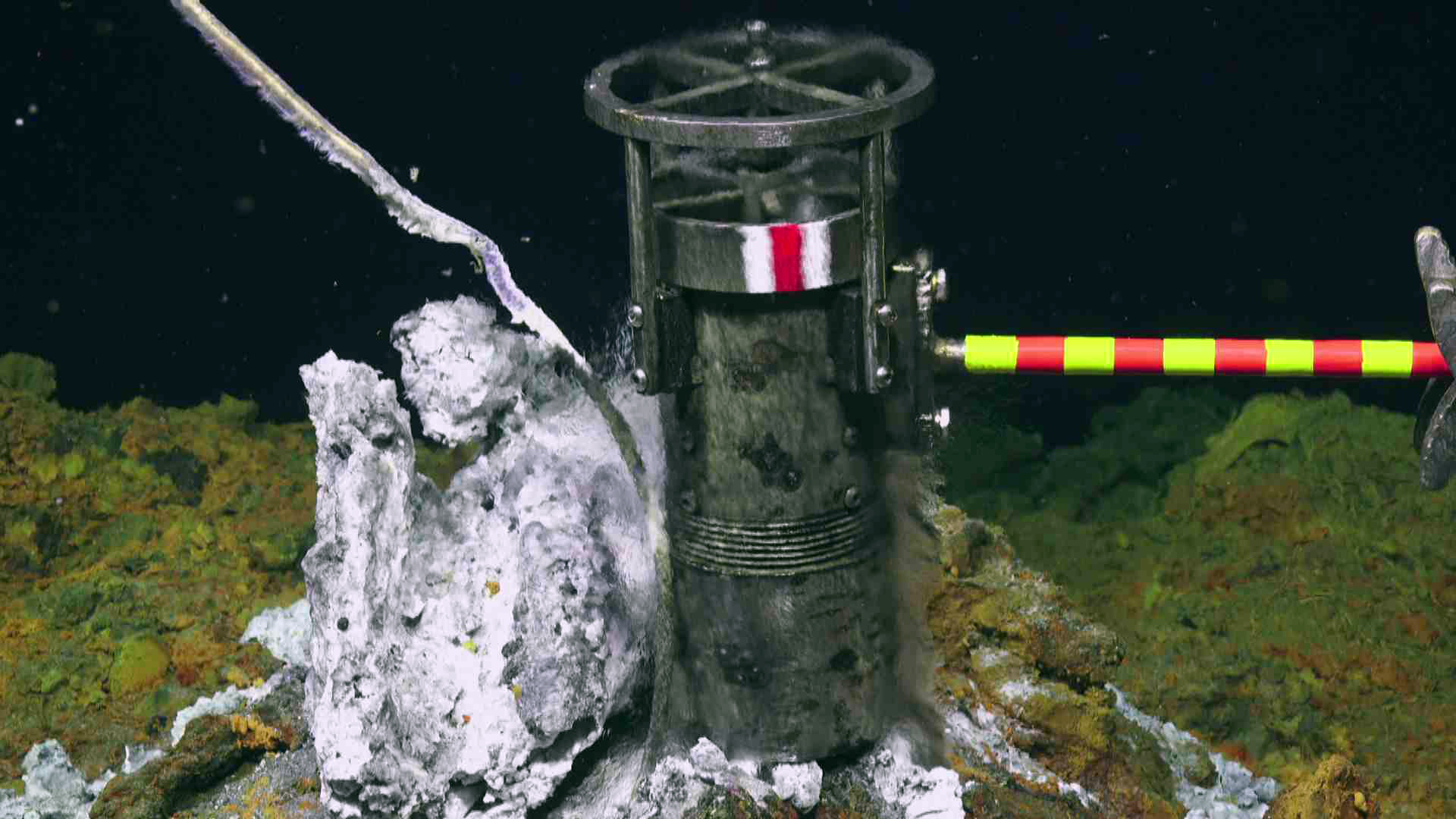
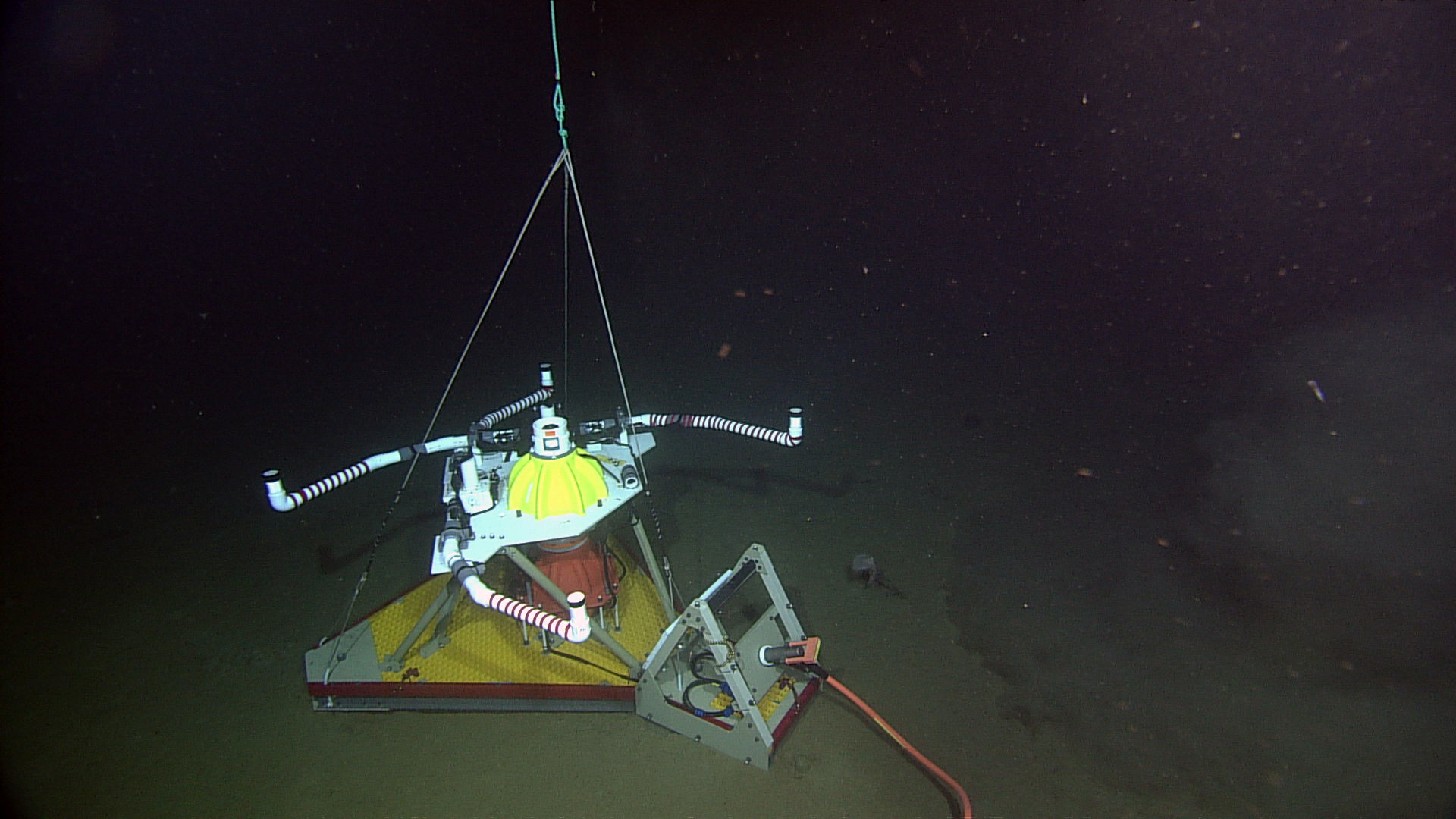
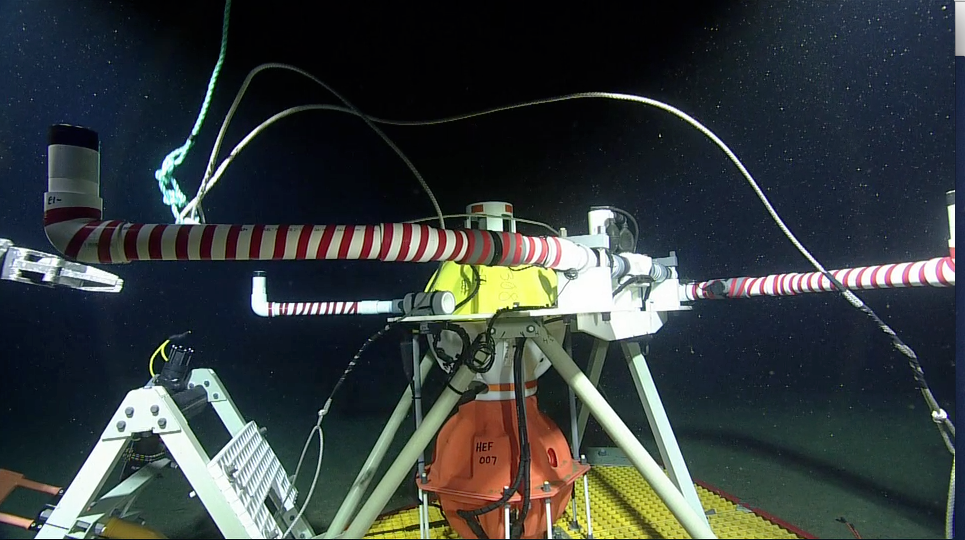
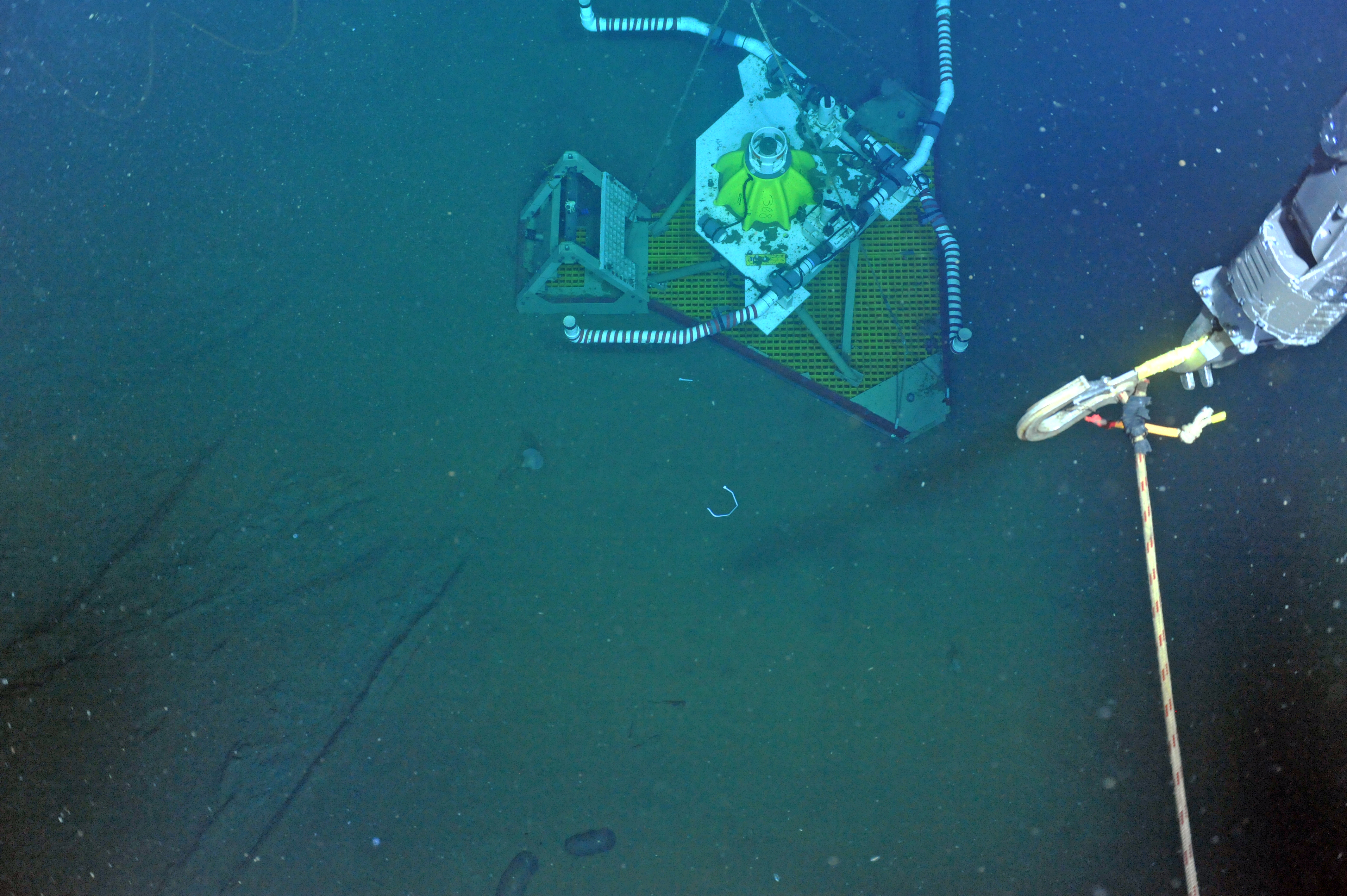
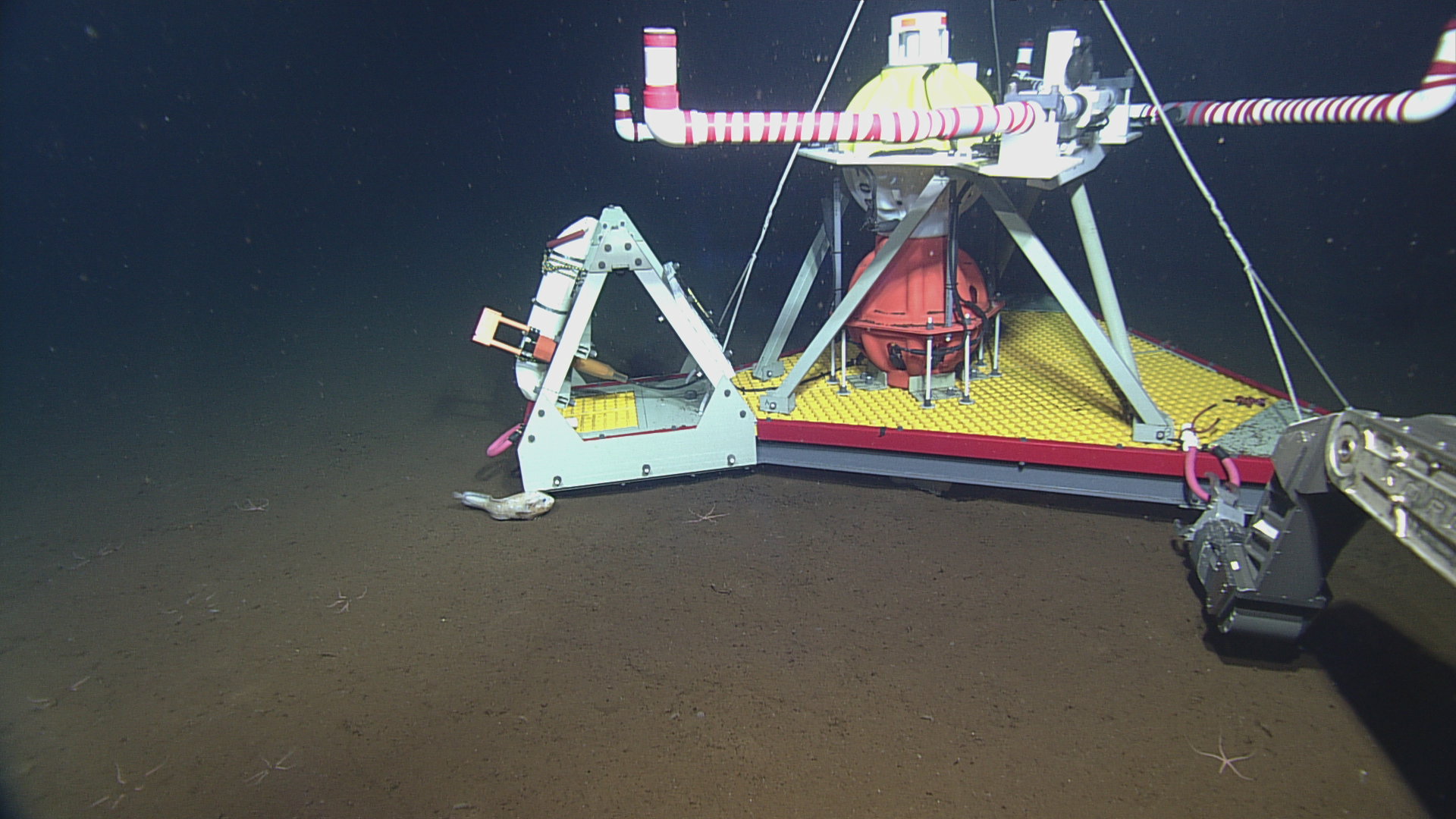
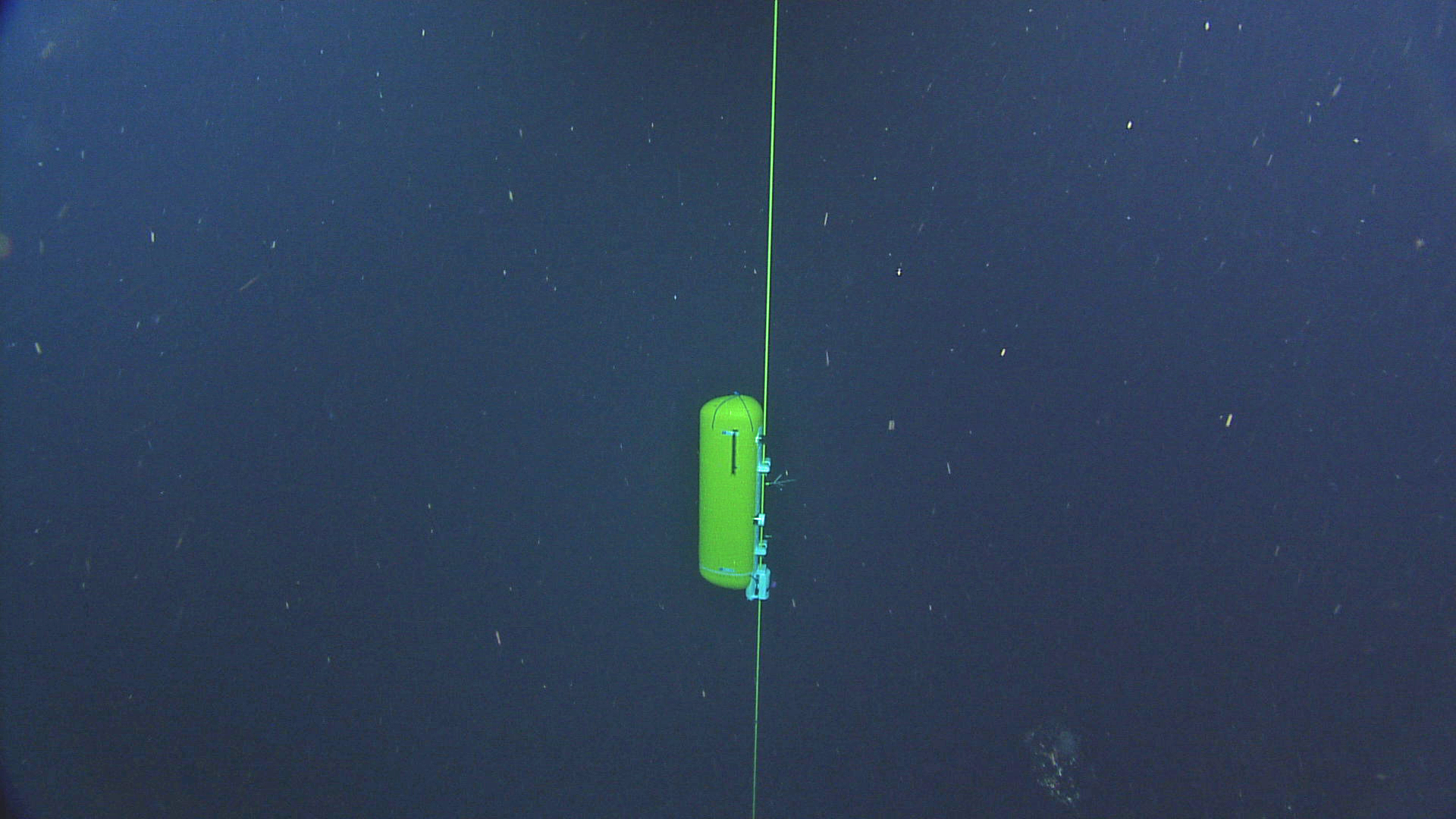
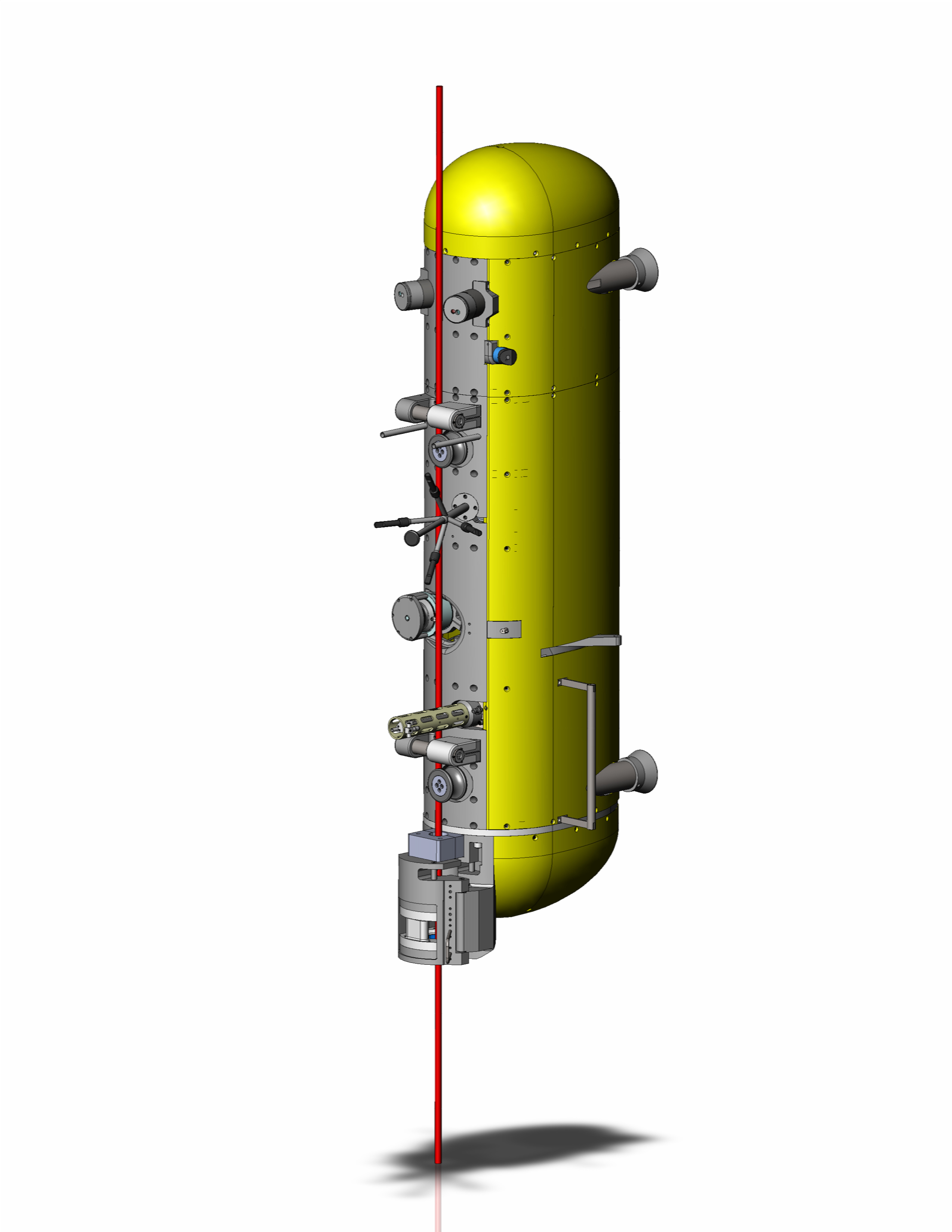
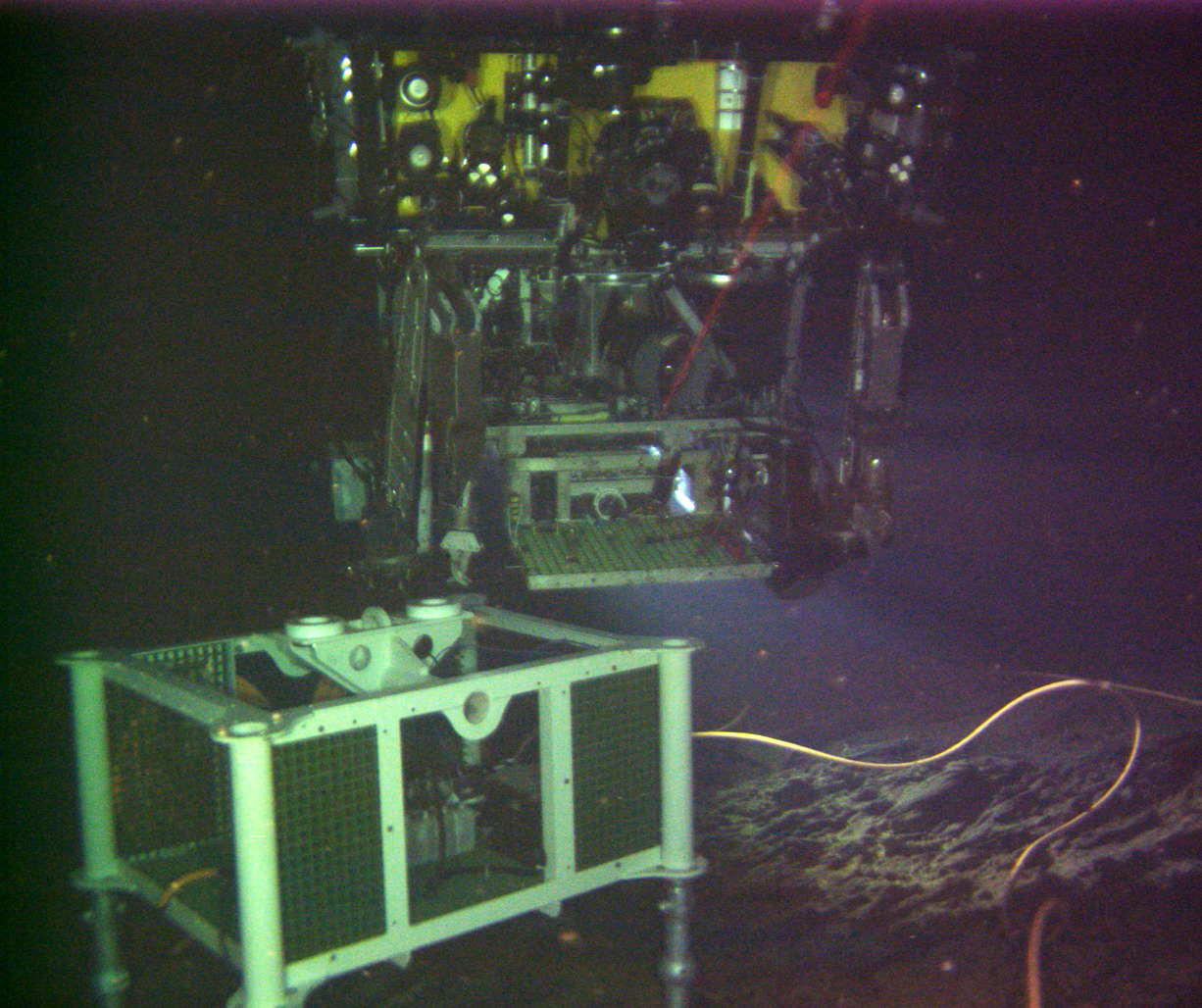
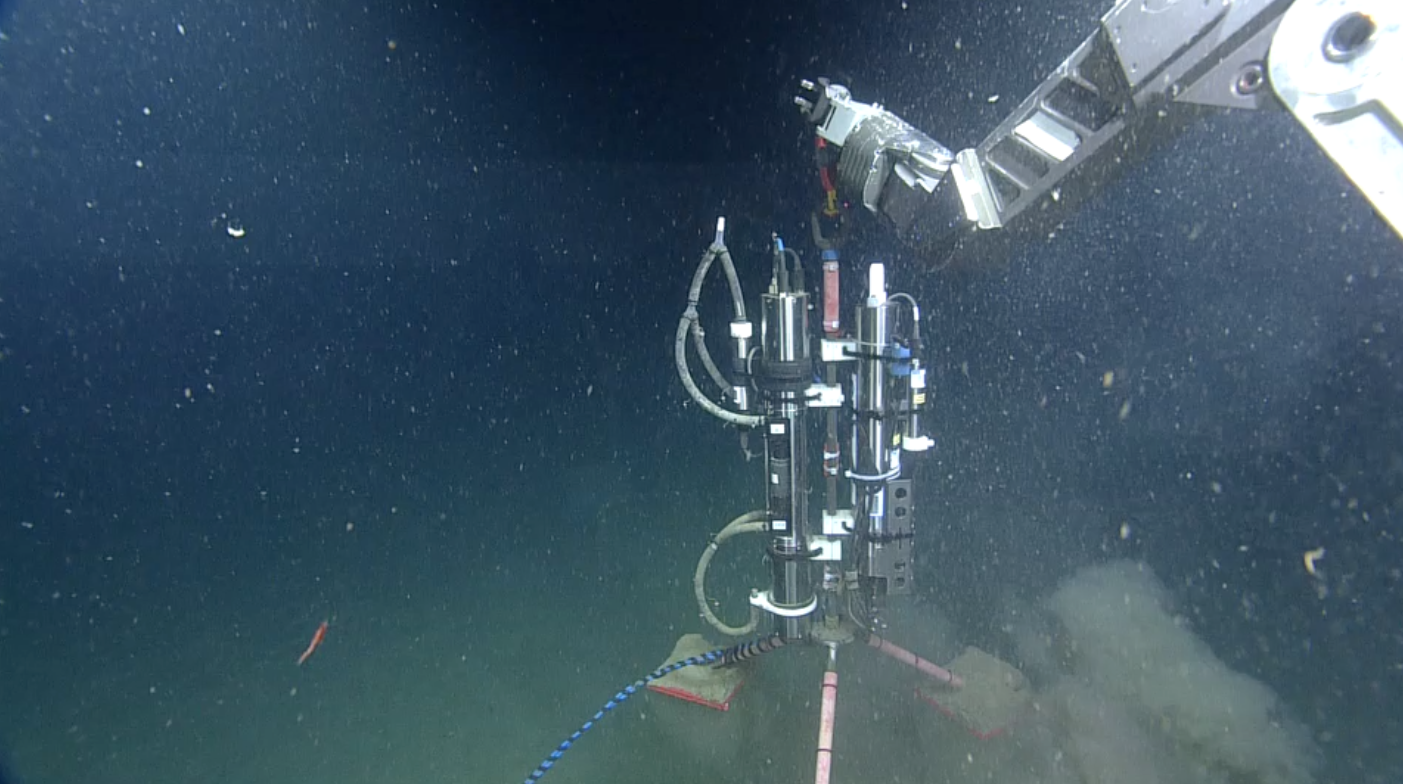
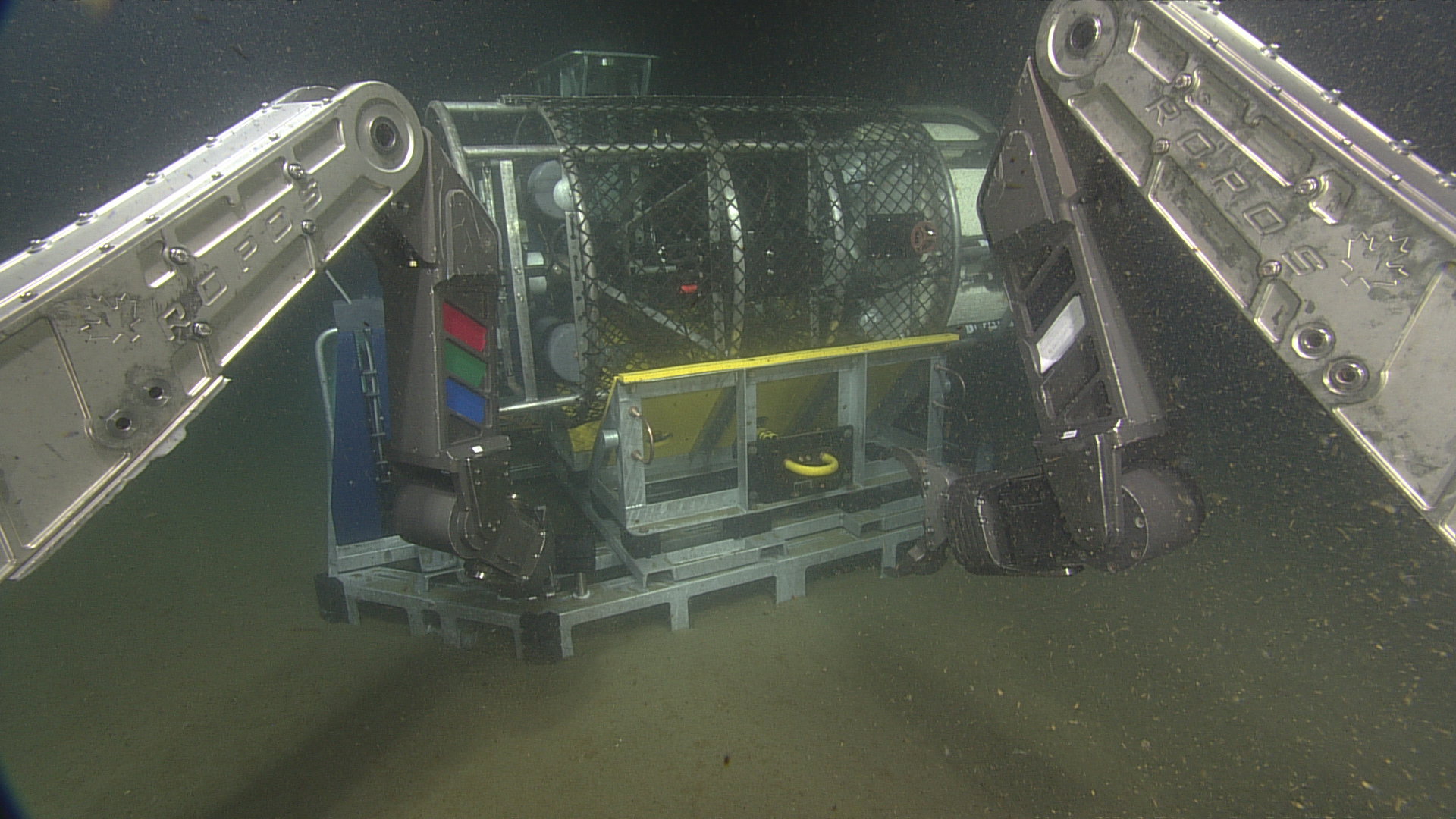
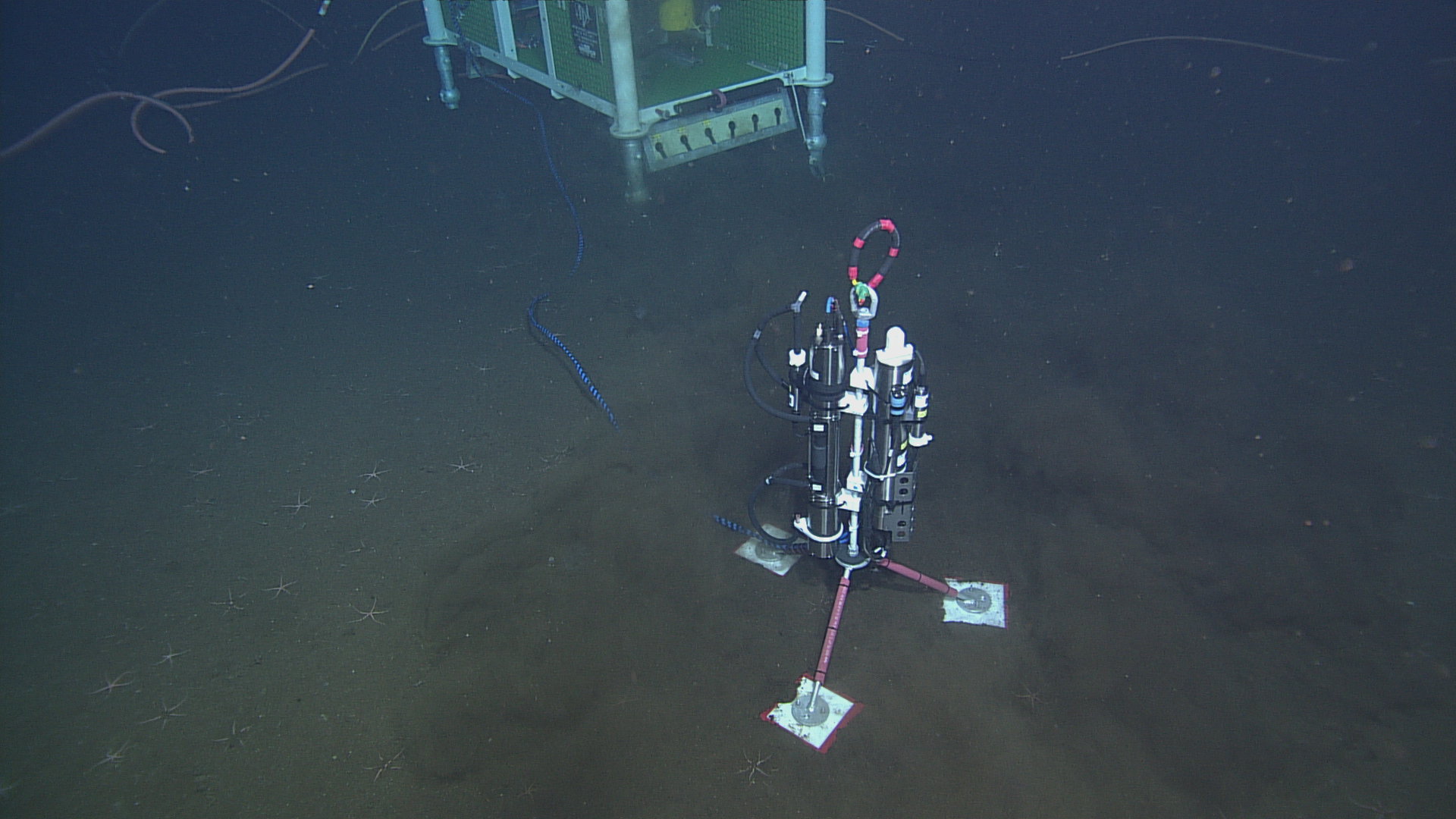
A bottom pressure-tilt instrument is installed at the Eastern Caldera Site on the summit of Axial Seamount. Image Credit: VISIONS'13, UW/OOI/CSSF; Dive R1617; V13.
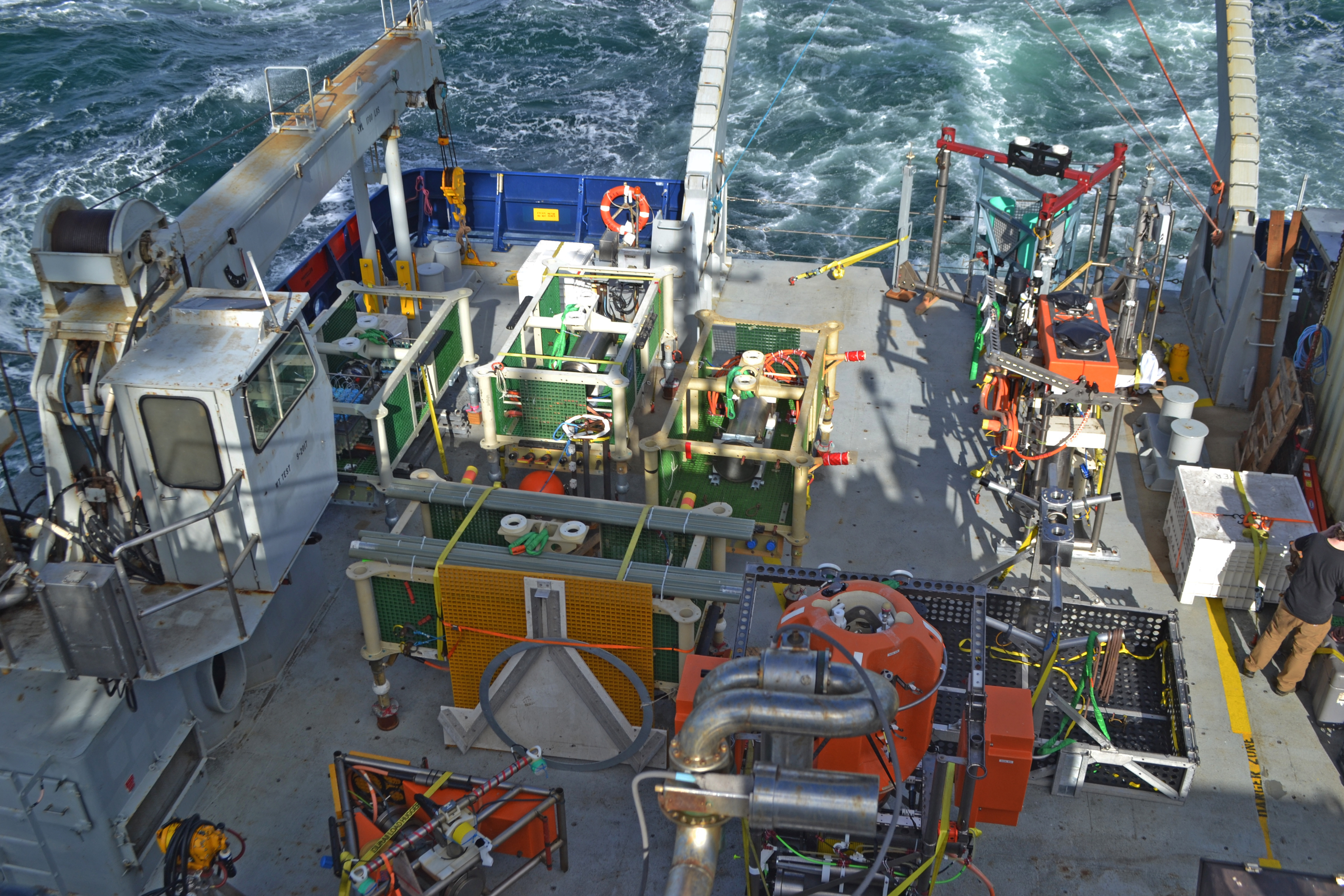
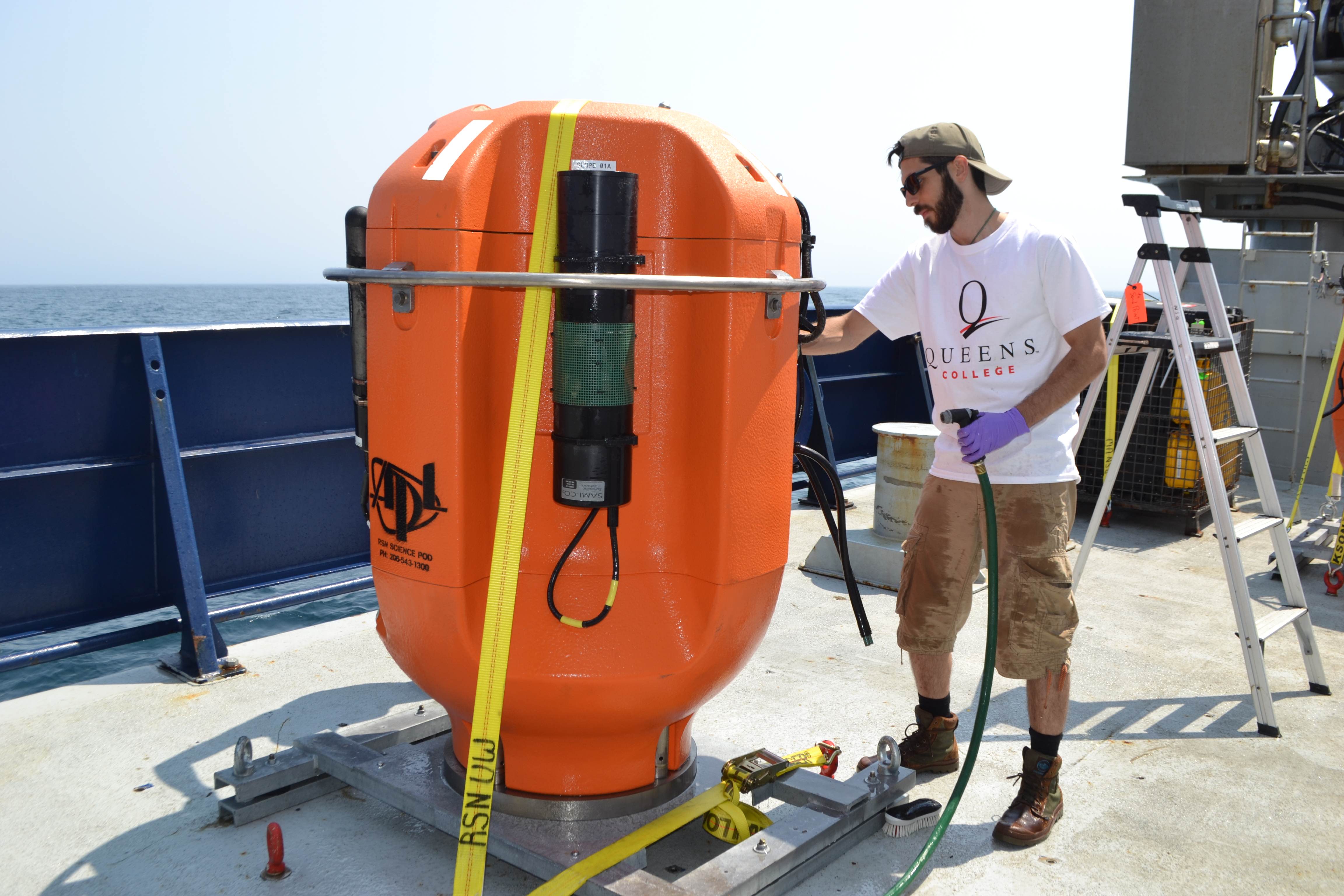
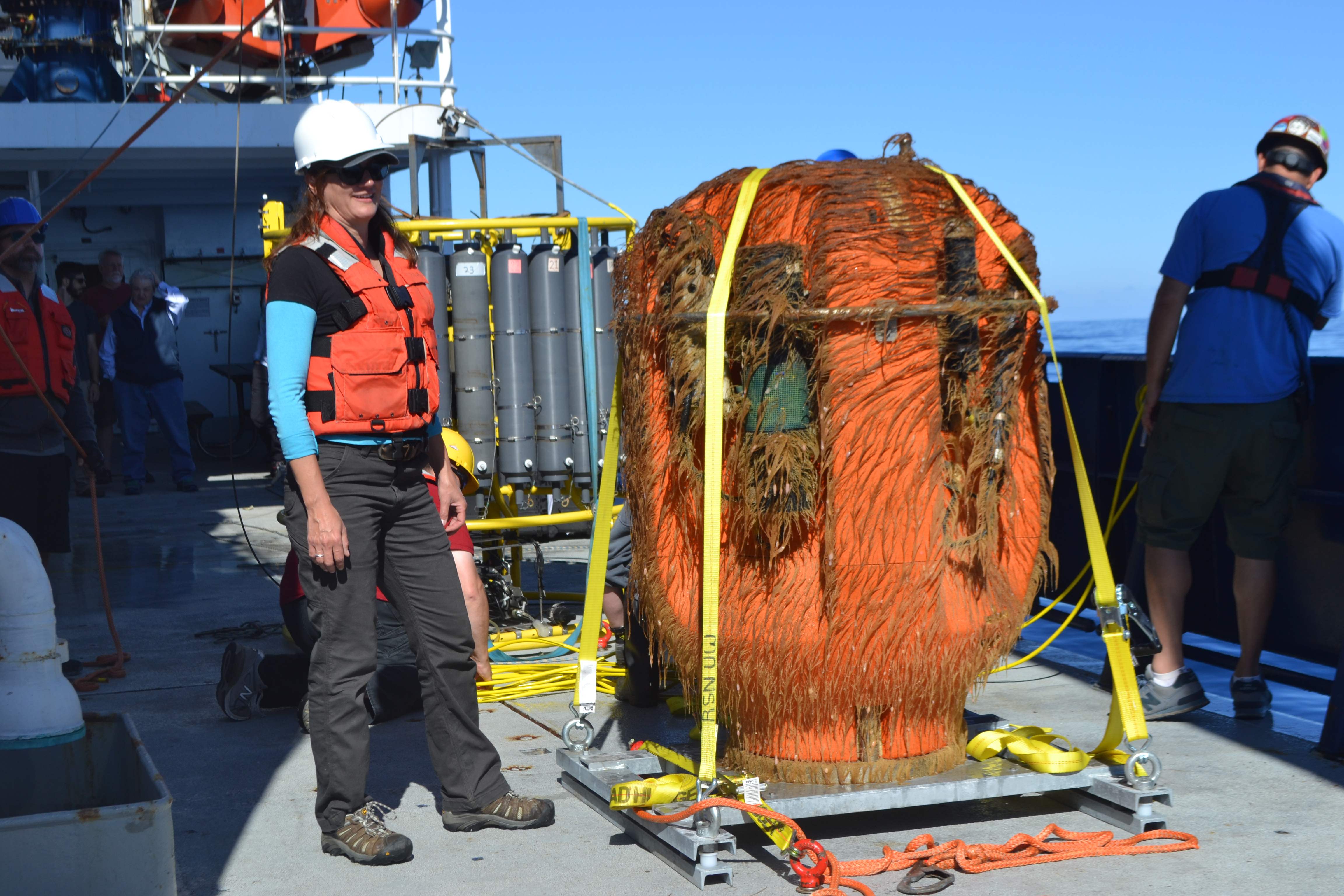
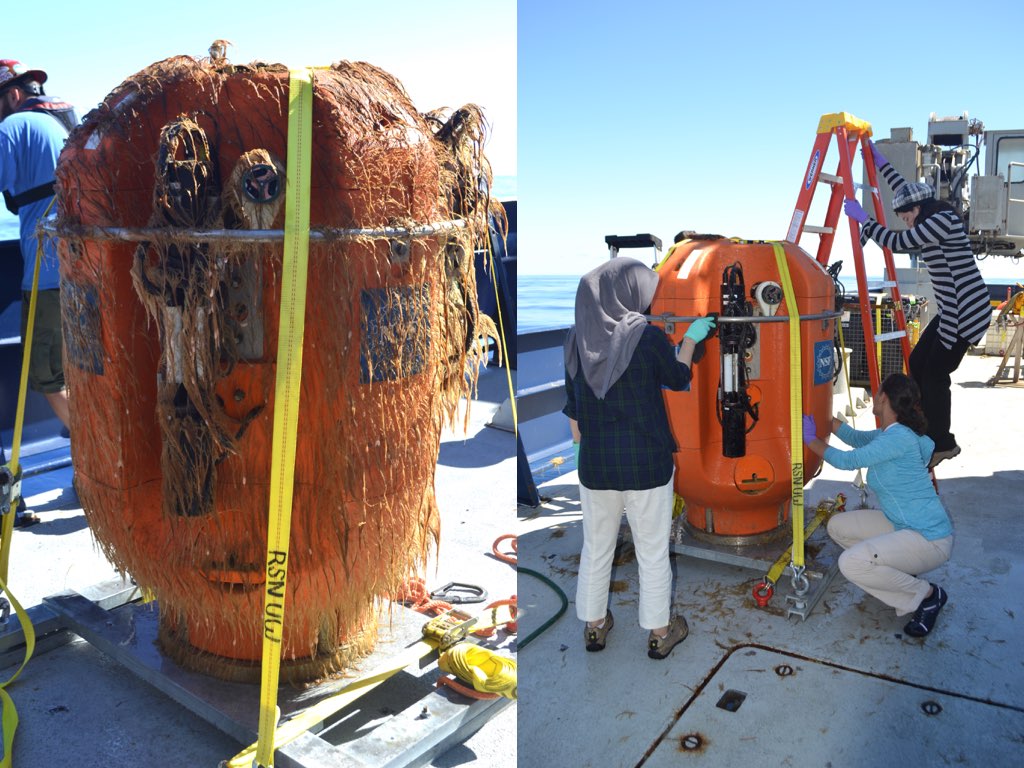
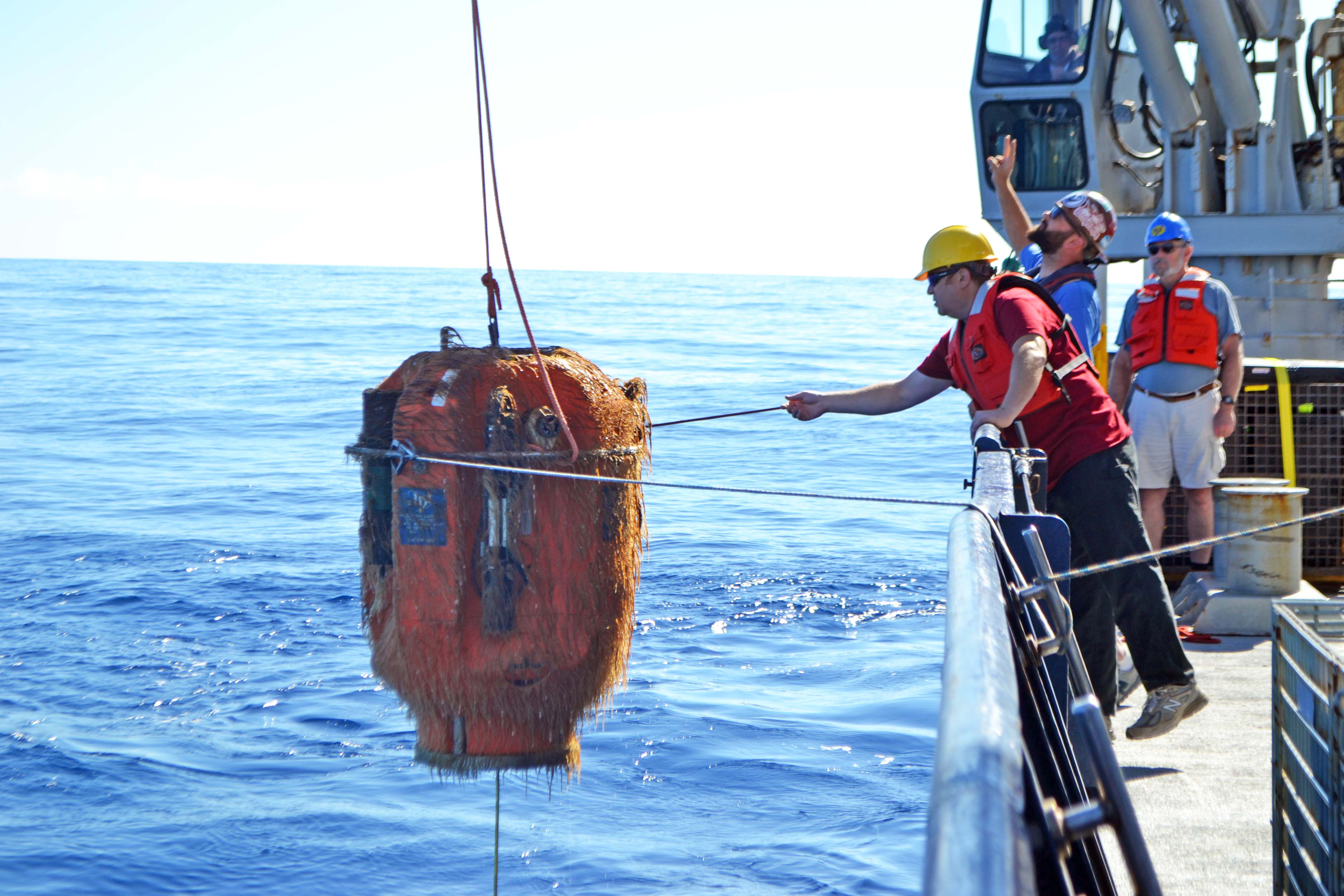
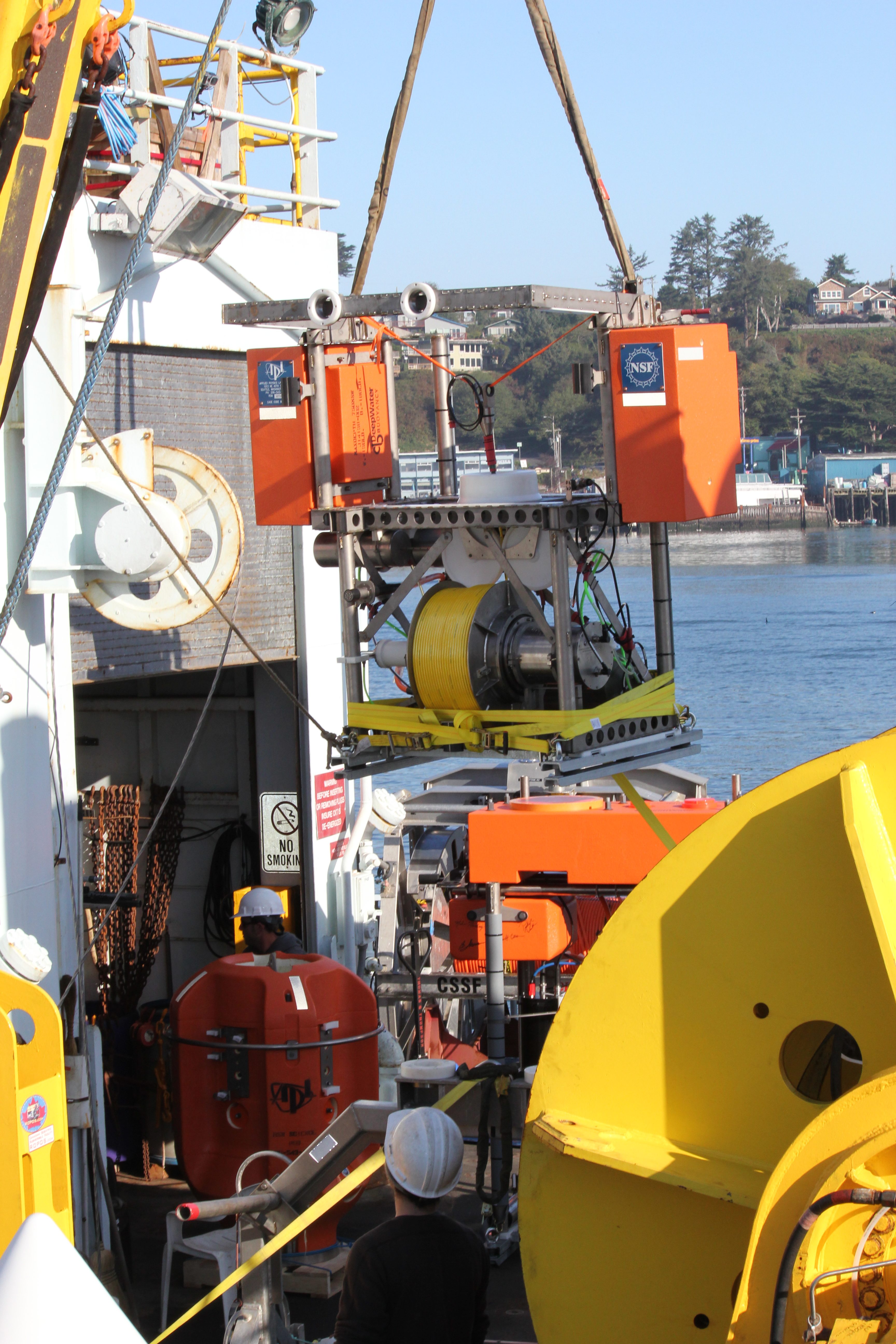
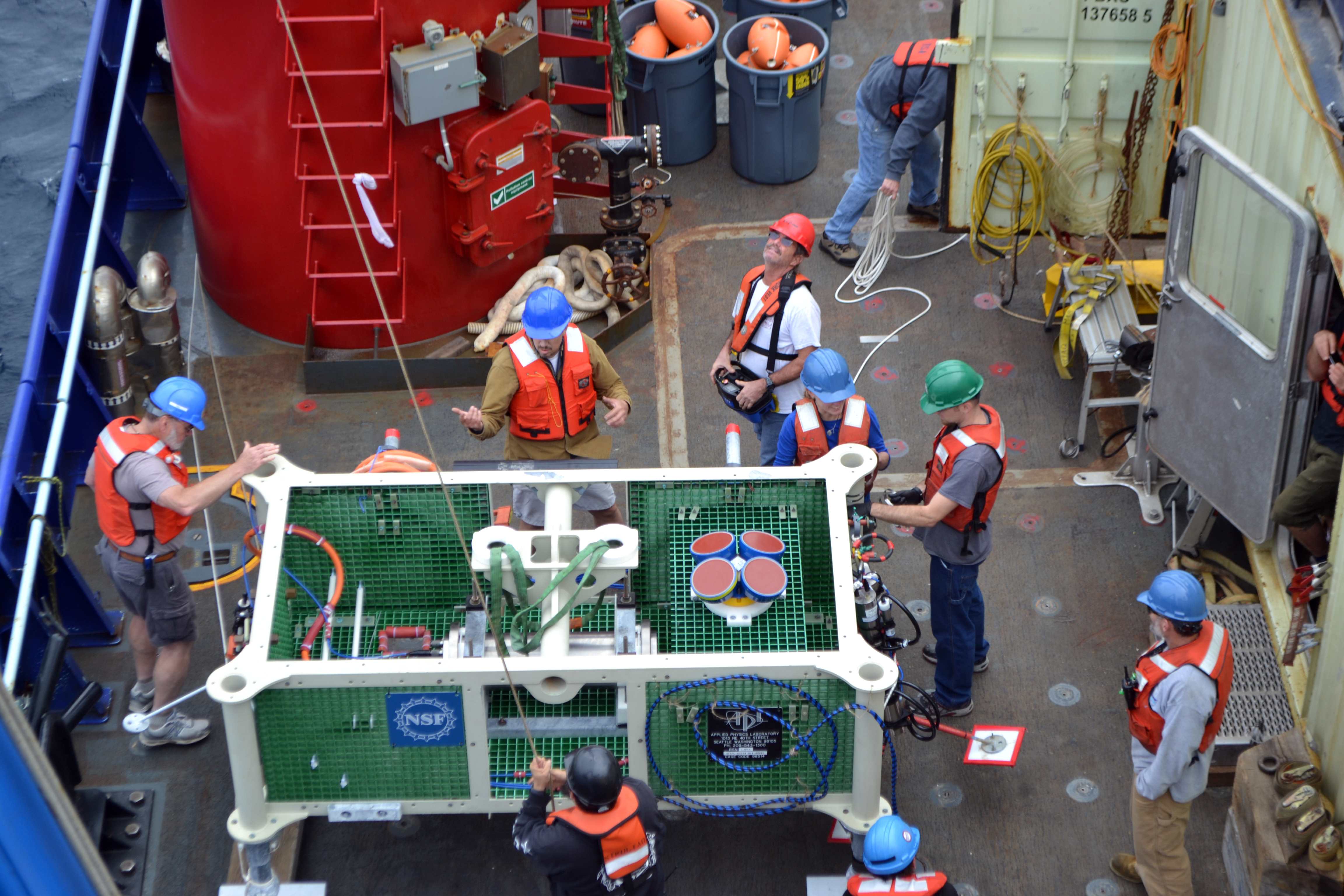
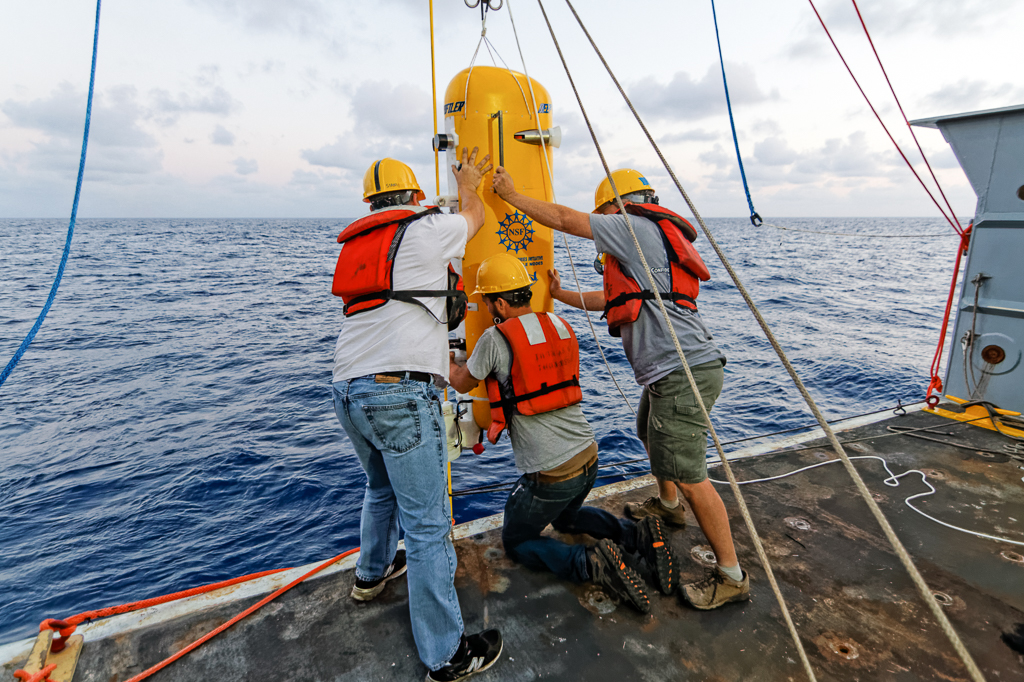
Deployment of the Bottom Pressure and Tilt meter off the side of the R/V Thompson in 2013. Credit: M. Elend, University of Washington. V13.
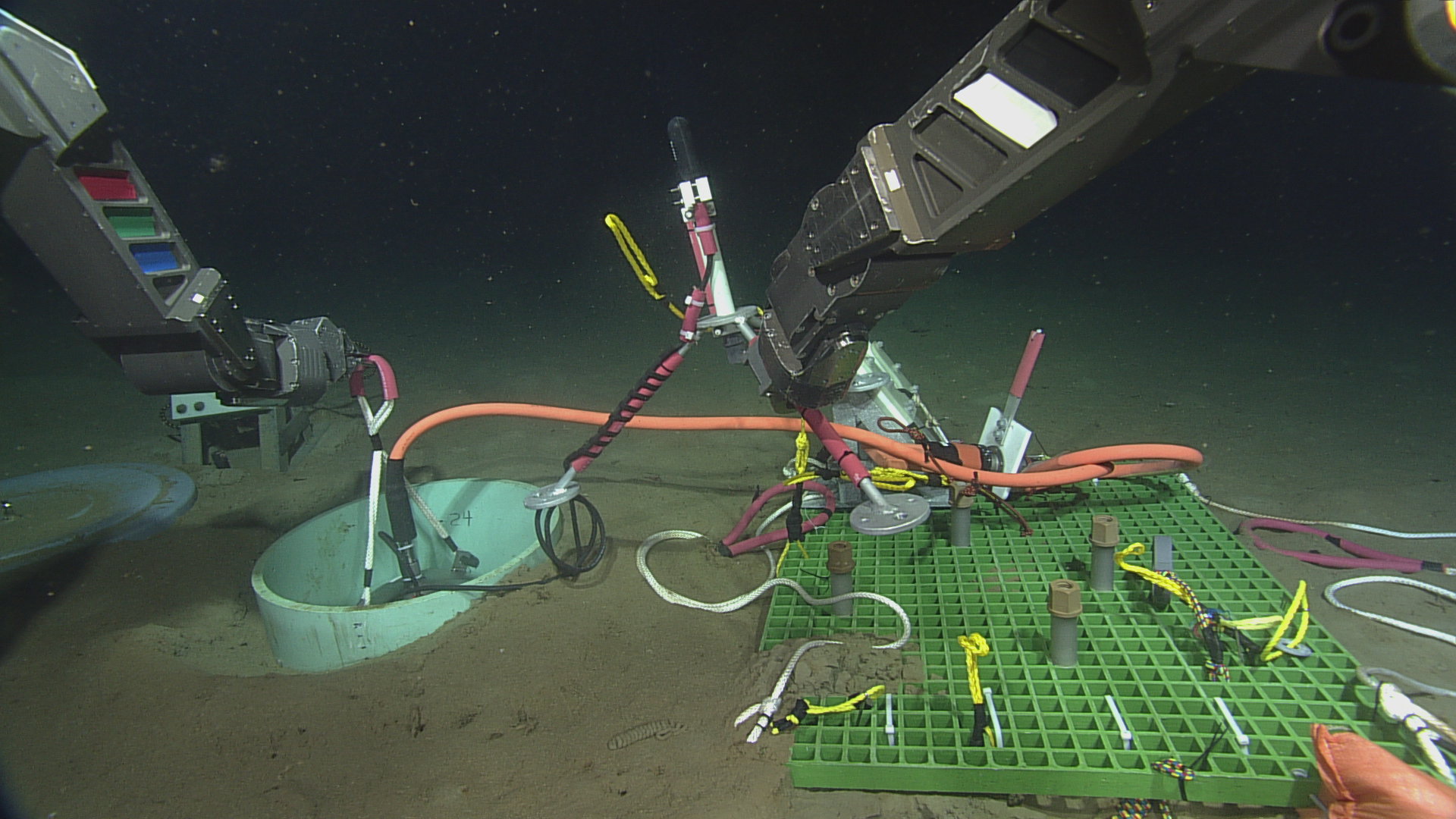
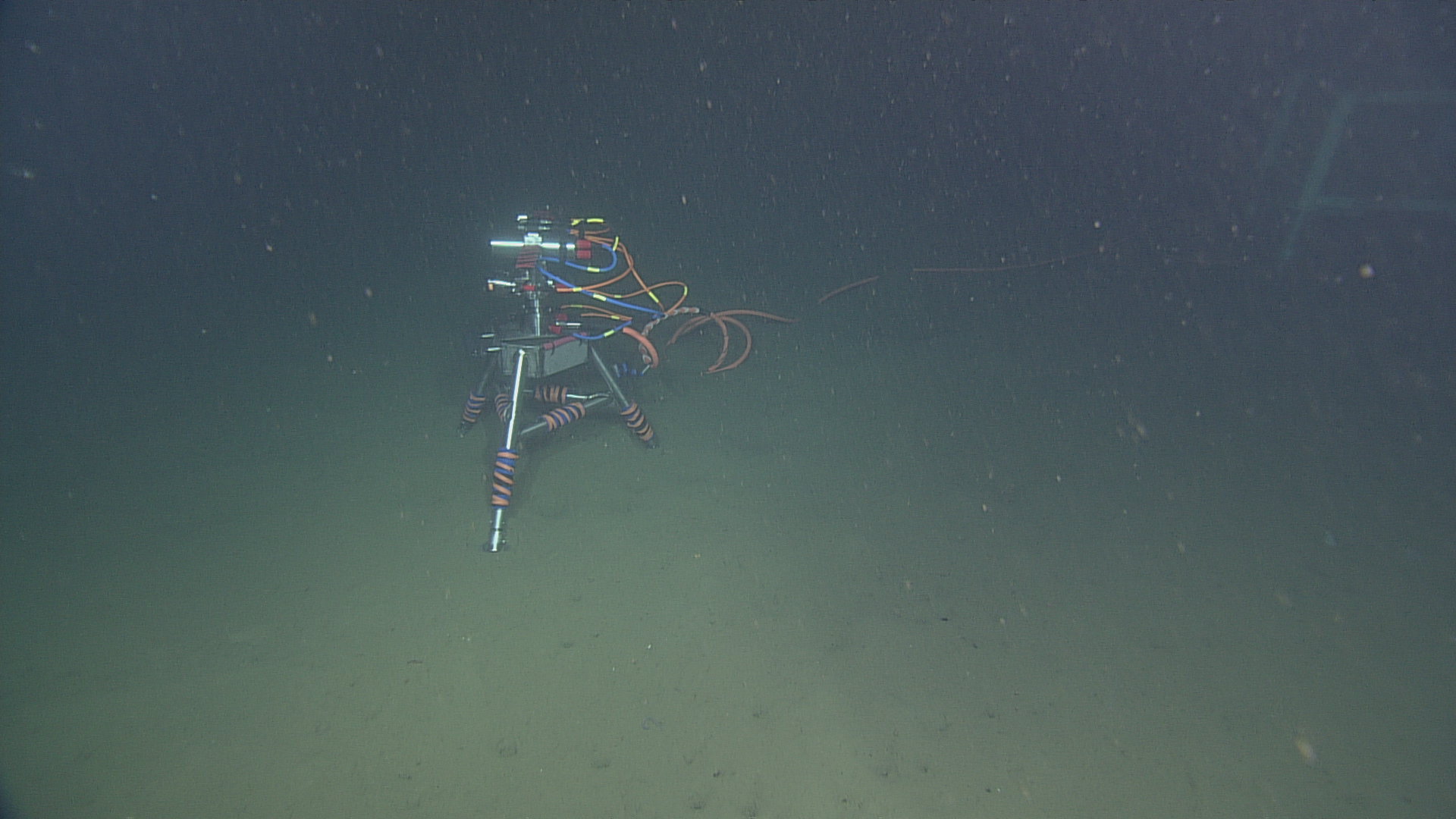
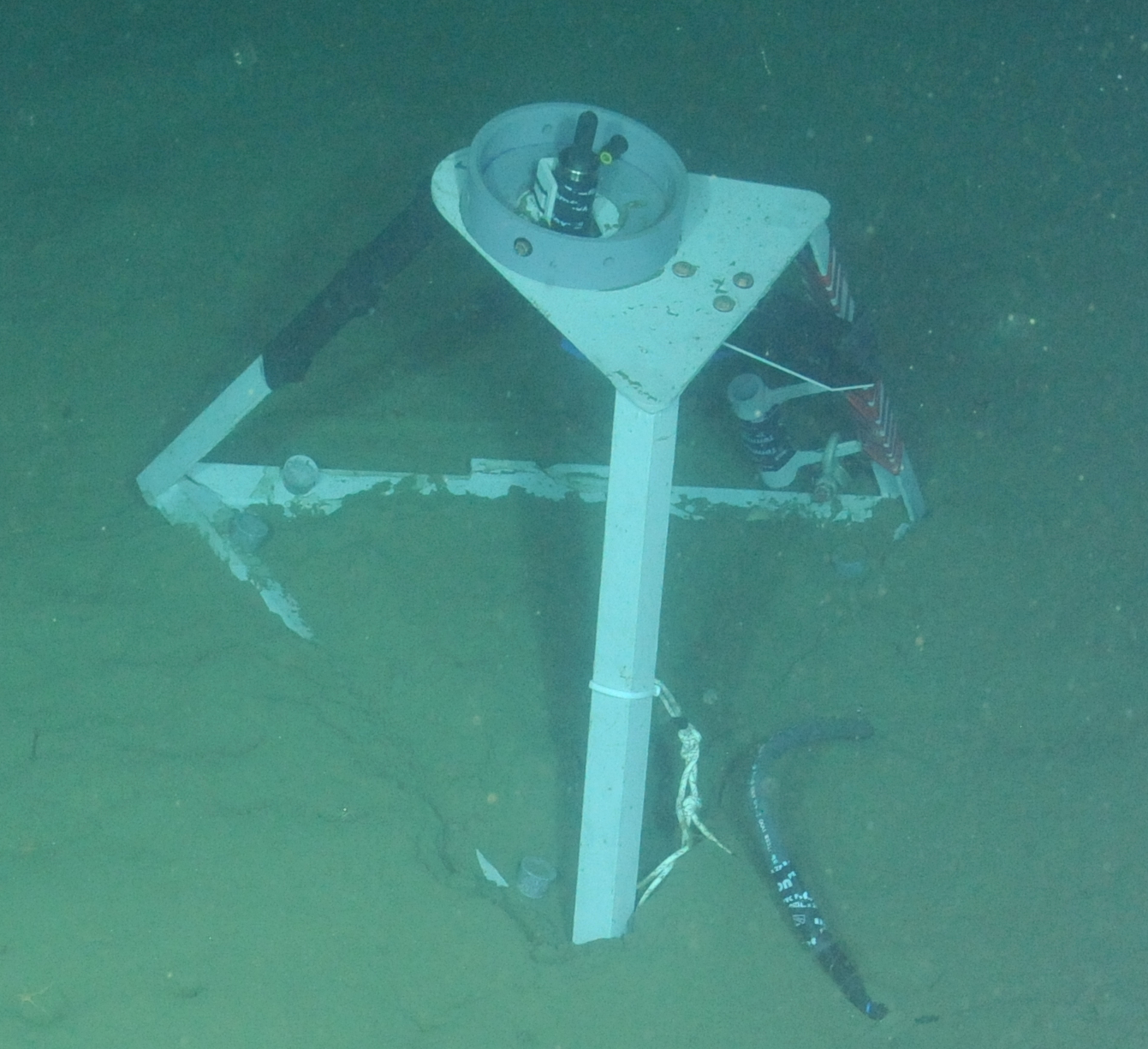
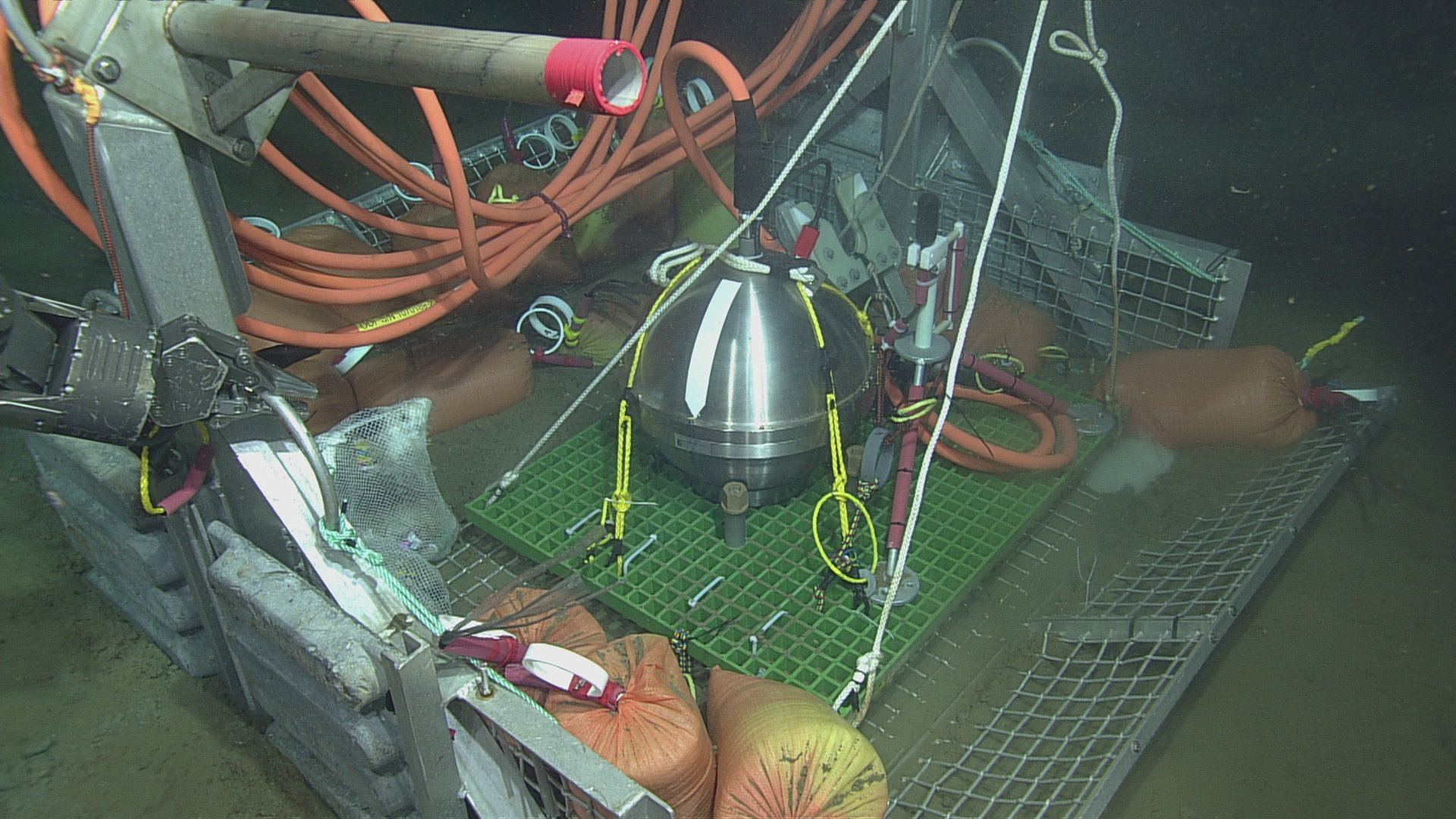
A low-frequency hydrophone (black tubular-shaped instrument in tripod with red legs), connected to a broadband seismometer, awaits installation by the ROPOS that will install this sensor in the International District 2 Site. Pea gravel bags in the background will be piled over the broadband to dampen any noise by local currents. Credit: Mitch Elend, University of Washington, V14.
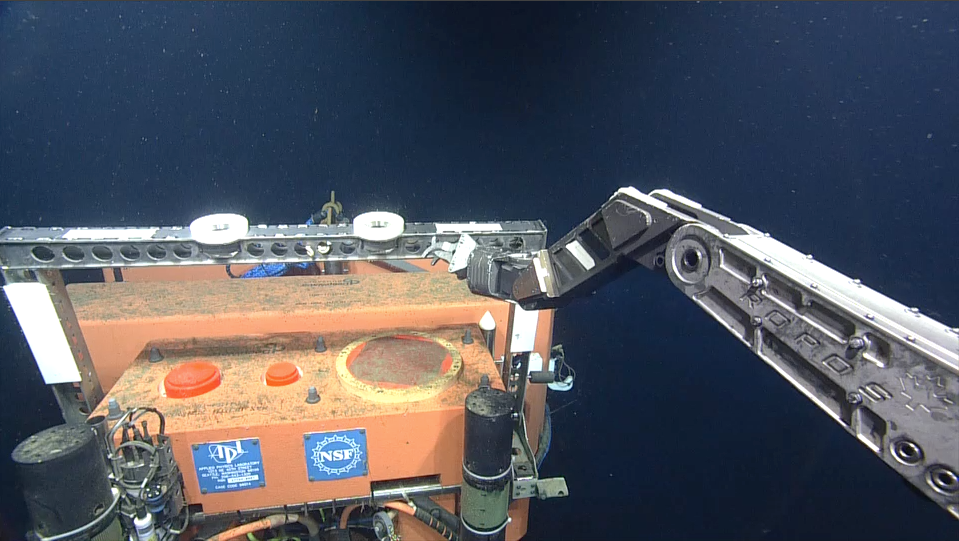
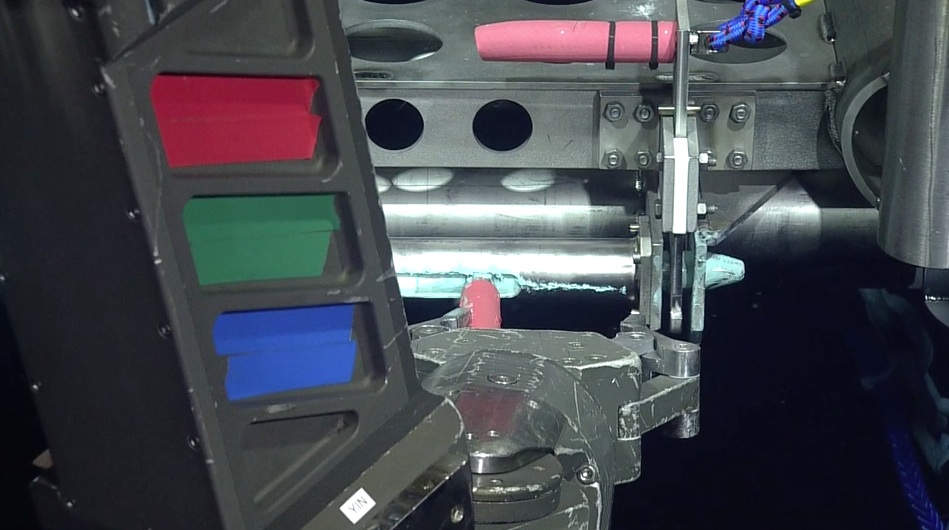
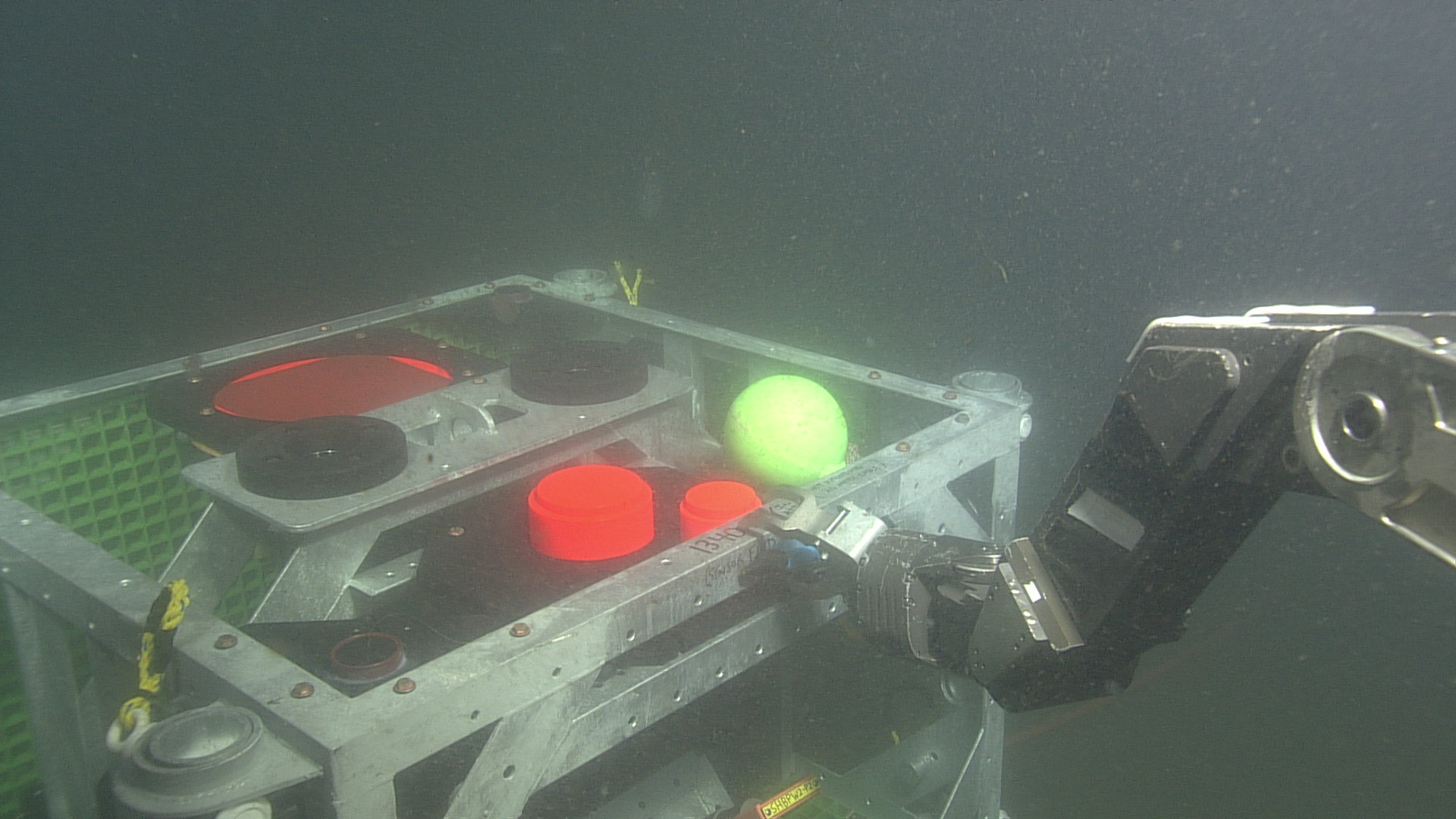
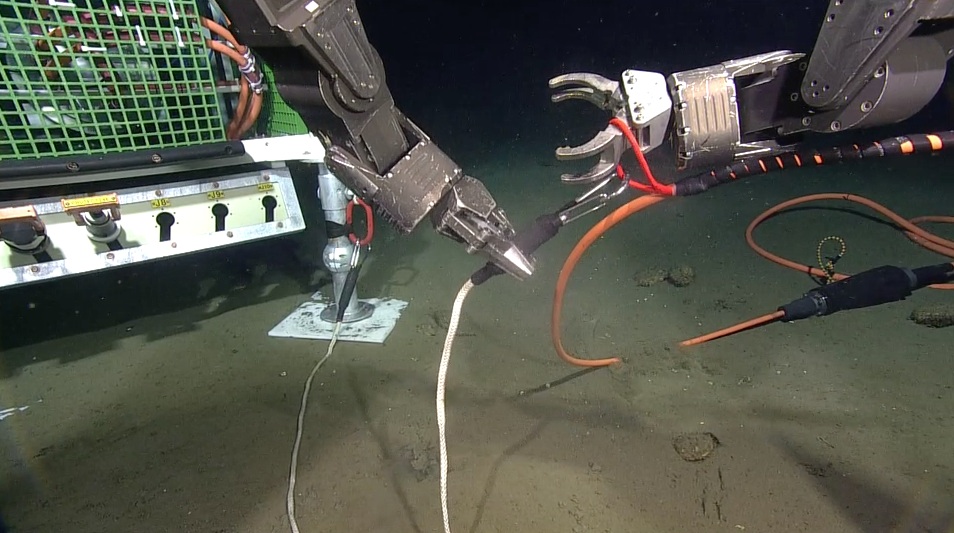
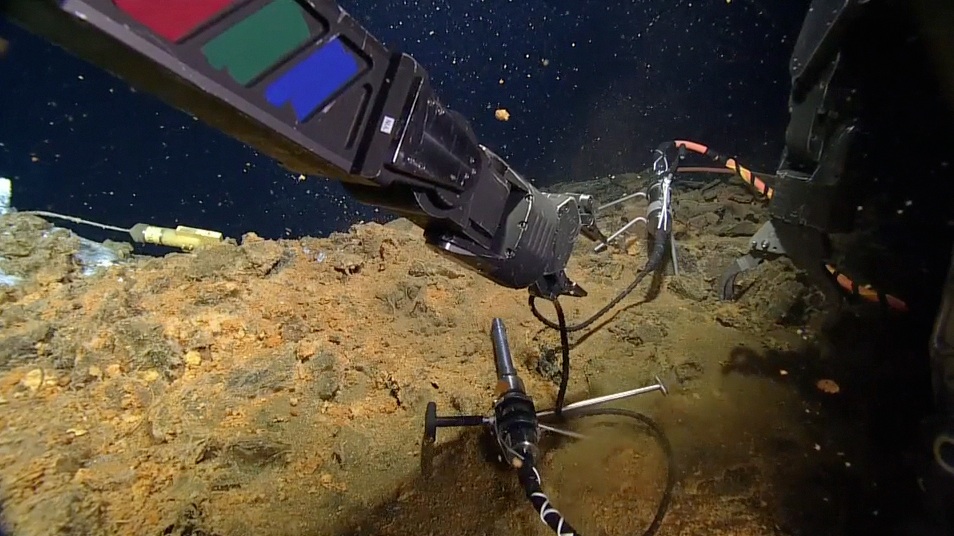
Part of the work required to properly install a seismometer on the seafloor is to ensure that the instrument is level. The yellow disk, shown here, is placed on the seismometer by ROPOS. The legs of the seismometer platform are then adjusted until a level reading is achieved. Credit: UW/NSF-OOI/CSSF; ROPOS, Dive 1617, V14.
Credit: NSF-OOI/UW/CSSF
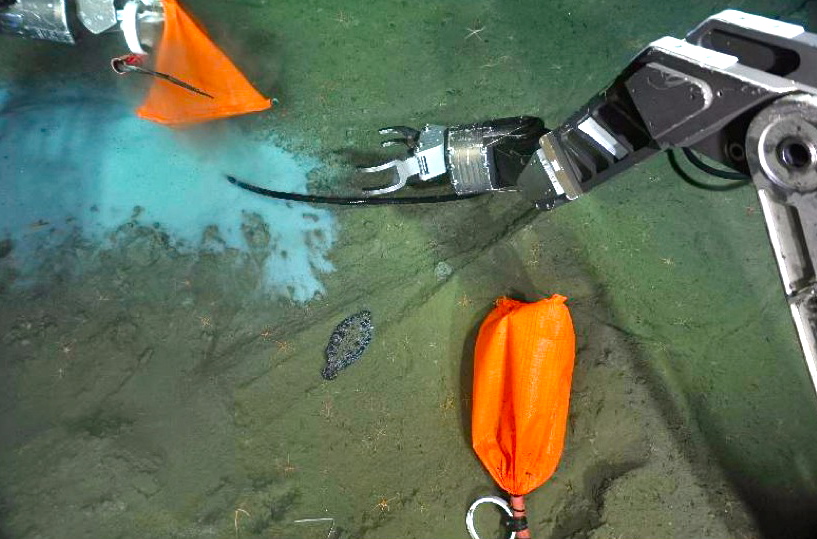
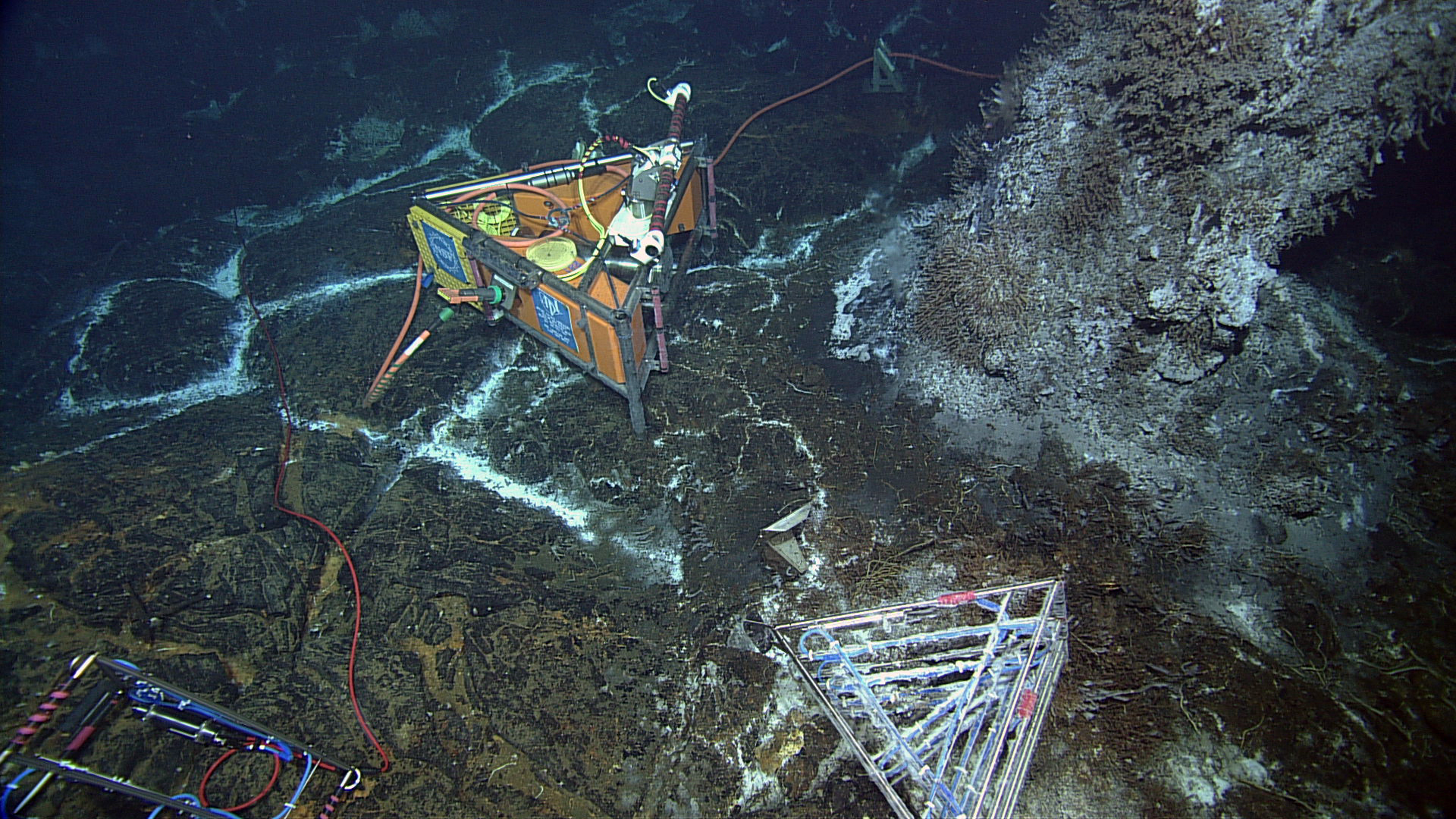
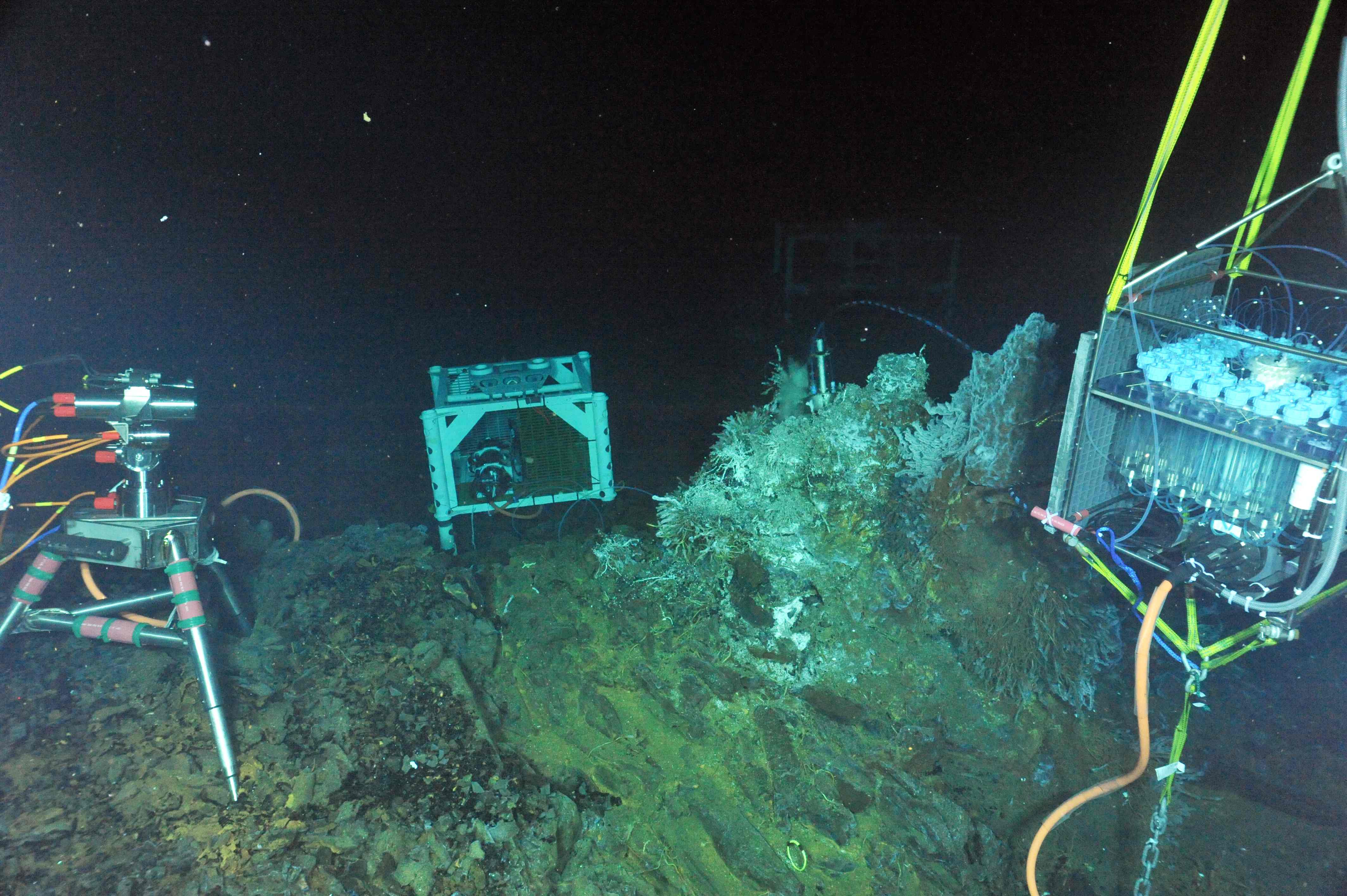
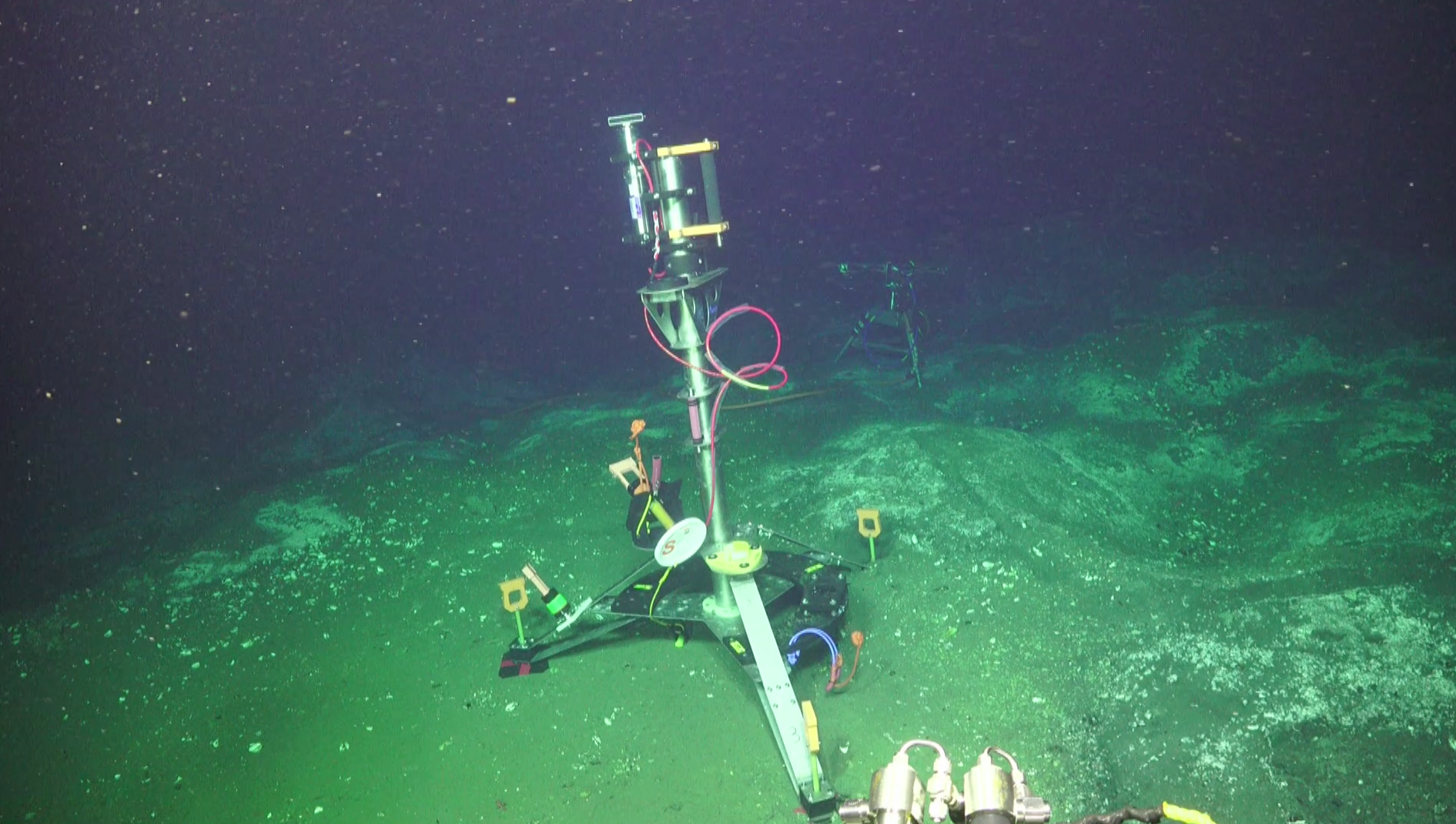
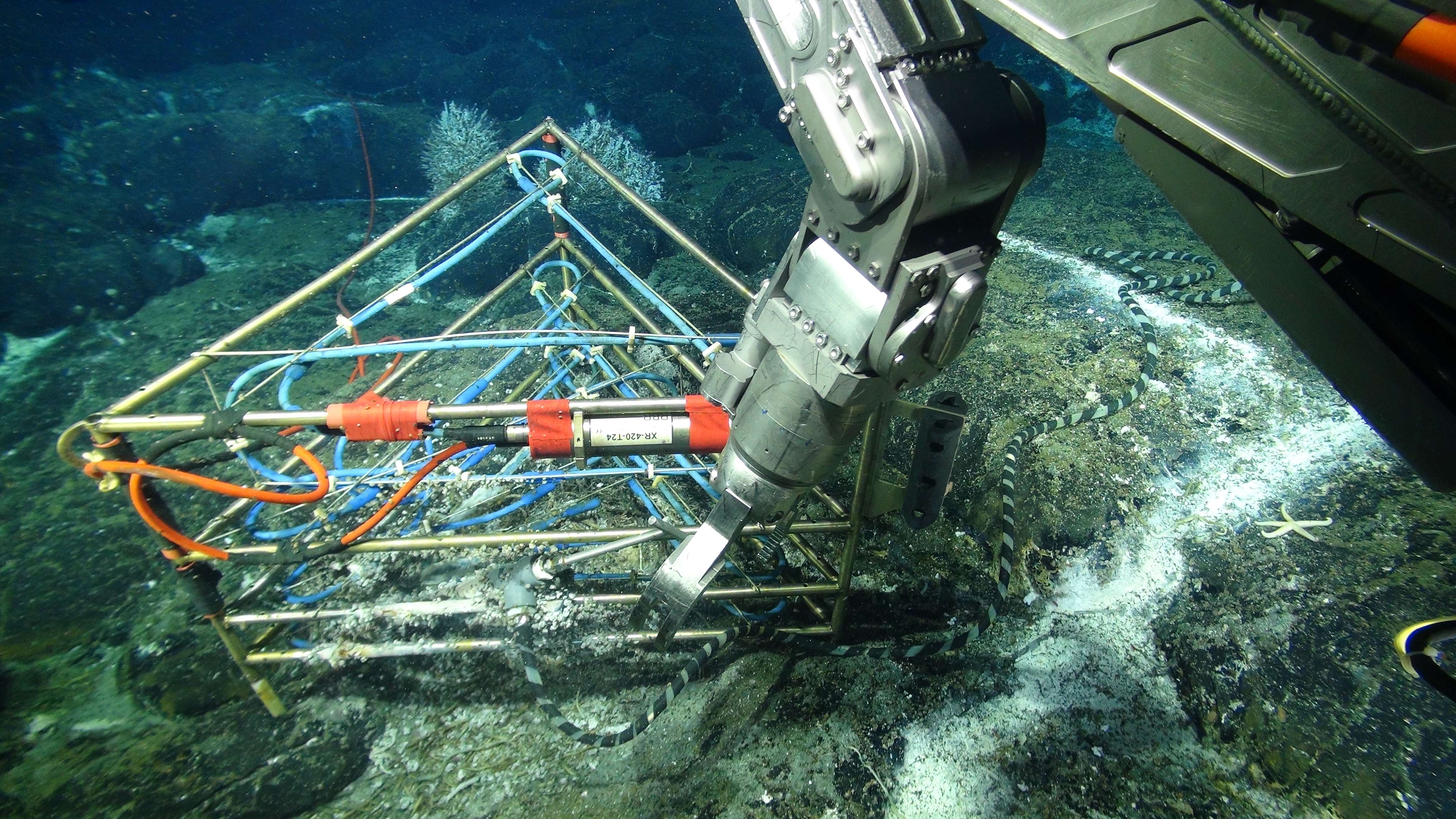
During ROPOS Dive R1730, the UW-RCA high-definition video camera was tested successfully. The camera was installed in 2013 and 1-year later it worked extremely well. A test 3-D thermistor array (bottom right) that was installed last year rests on a diffuse flow site, covered in microbial filaments. To the left, a cabled 3-D thermistor array will replace the uncabled system. Credit: UW/NSF-OOI/CSSF; Dive ROPOS R1730; V14.
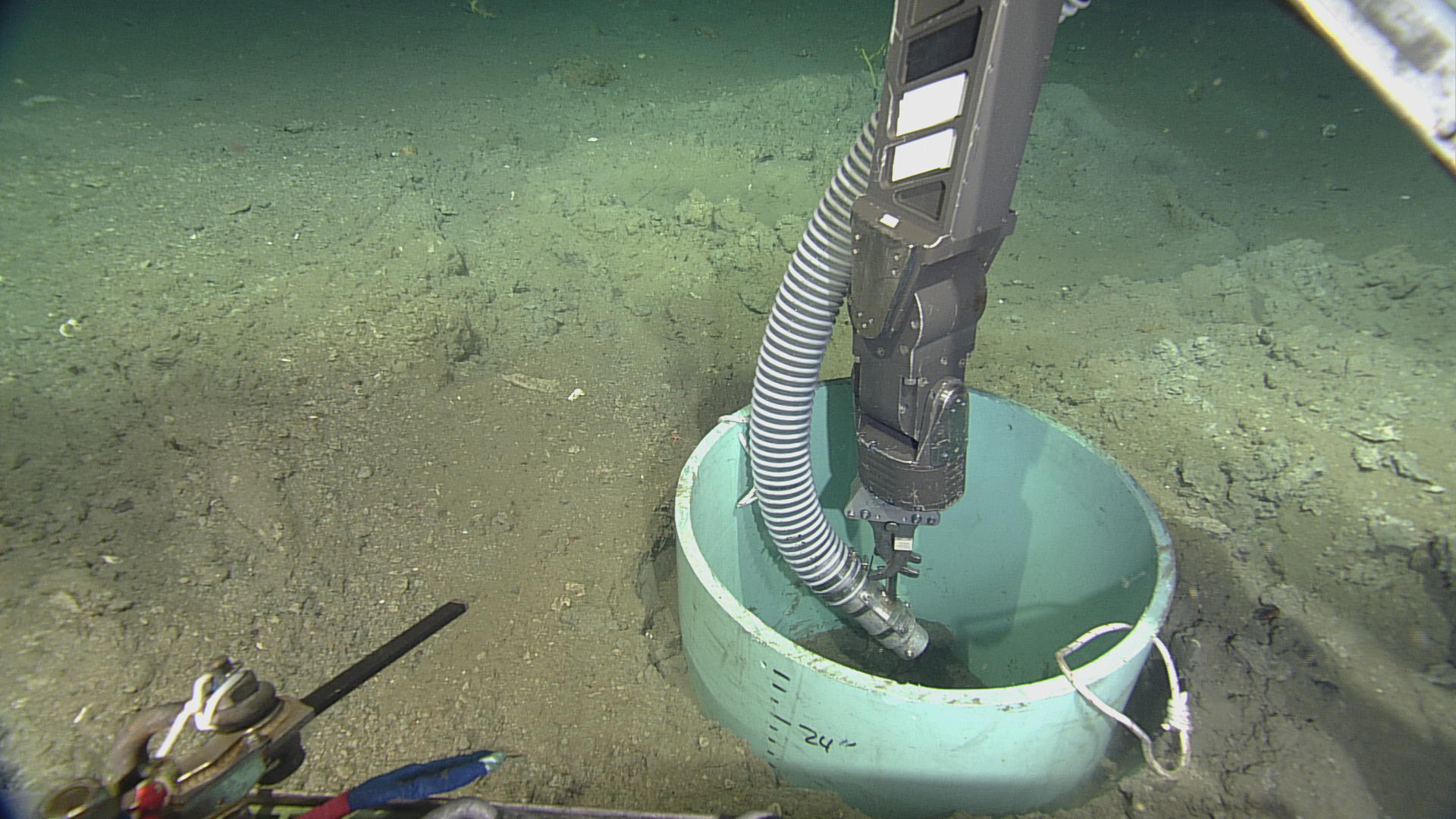
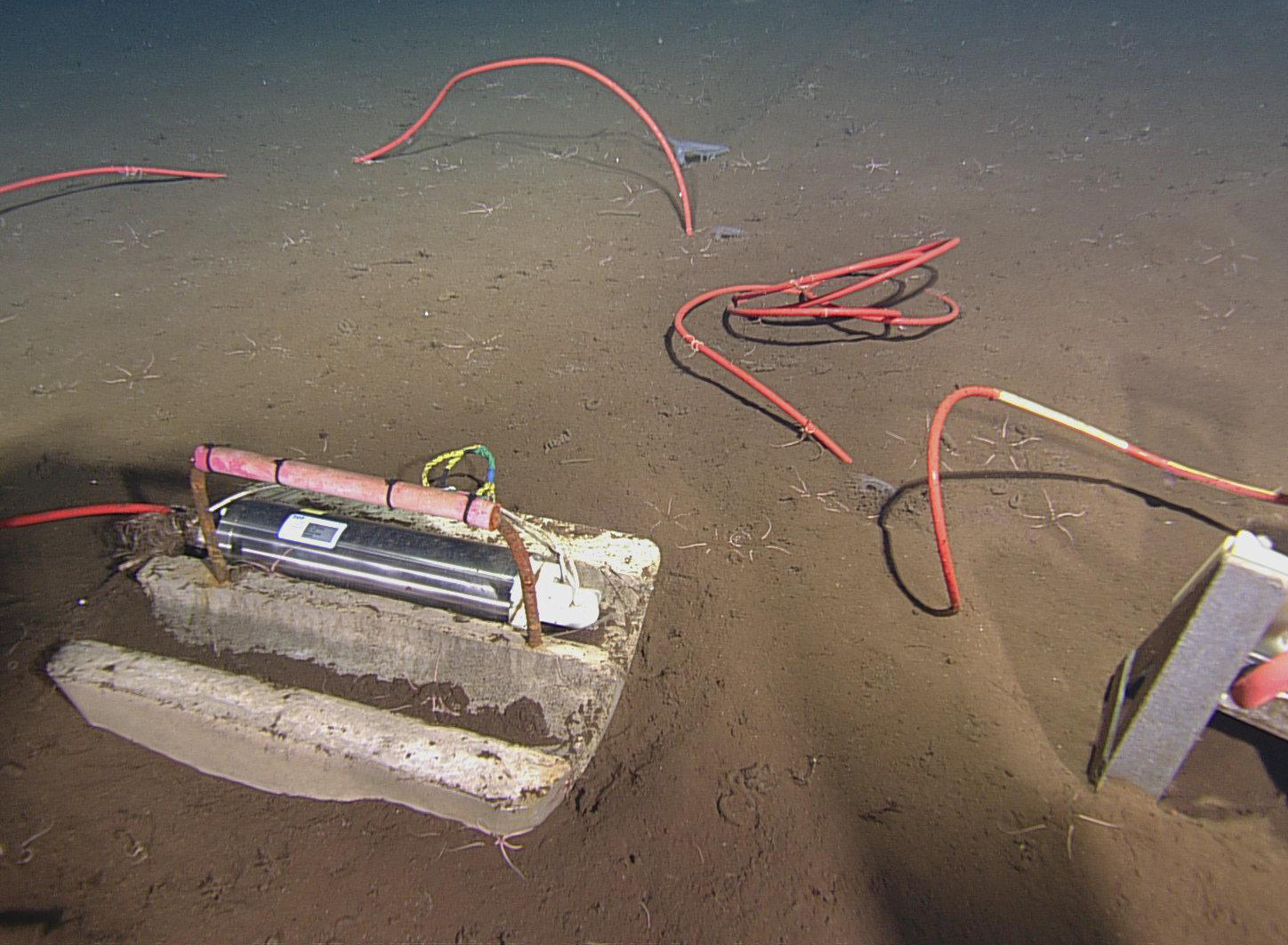
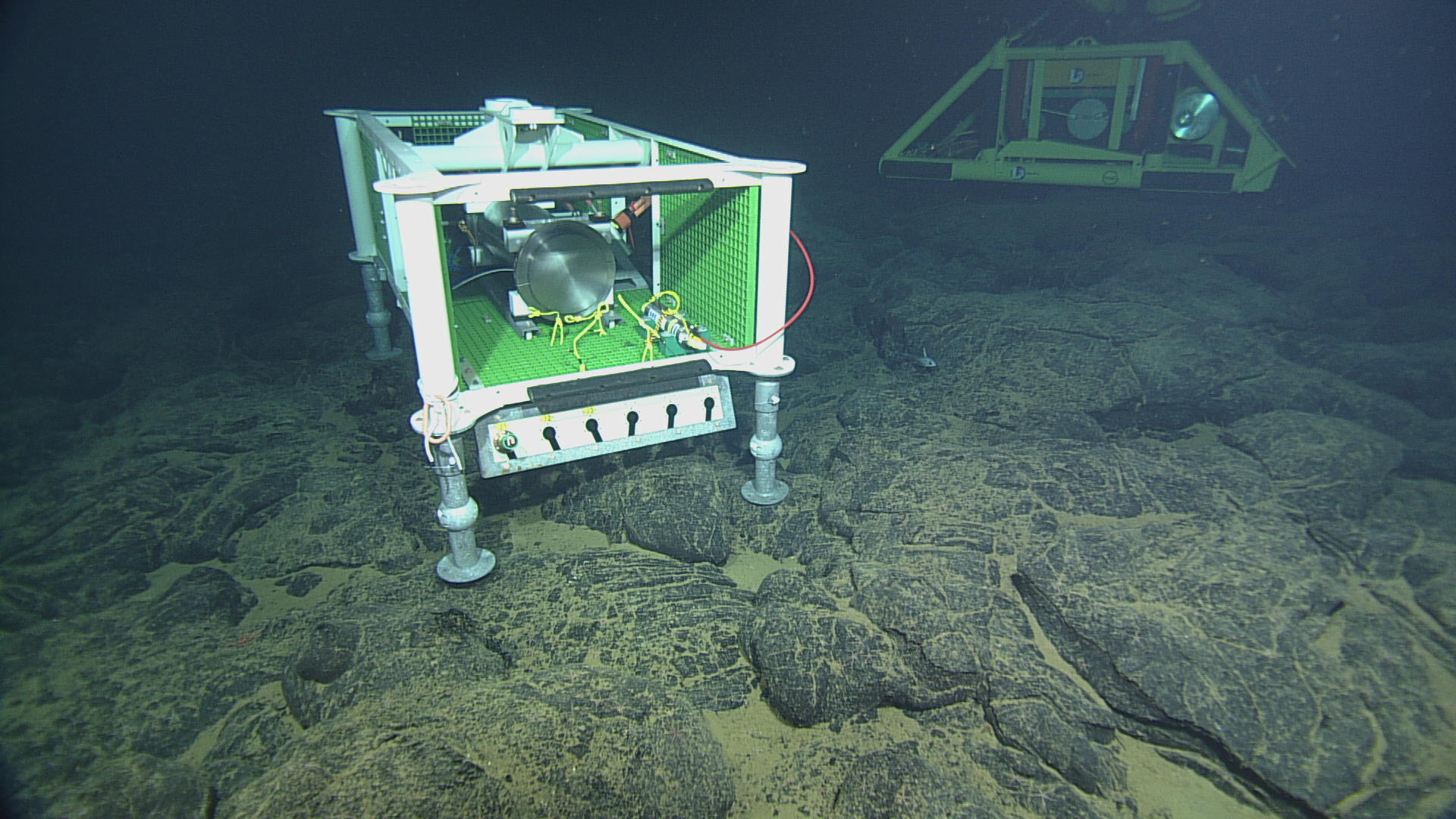
A short-period seismometer (OBSSPA301) is installed ~1.3 km east of the ASHES hydrothermal field. A cable connects to a medium power junction box in the field. During testing with ROPOS, this seismometer recorded a small earthquake. Credit: UW/NSF-OOI/CSSF, ROPOS Dive R1640; V13.
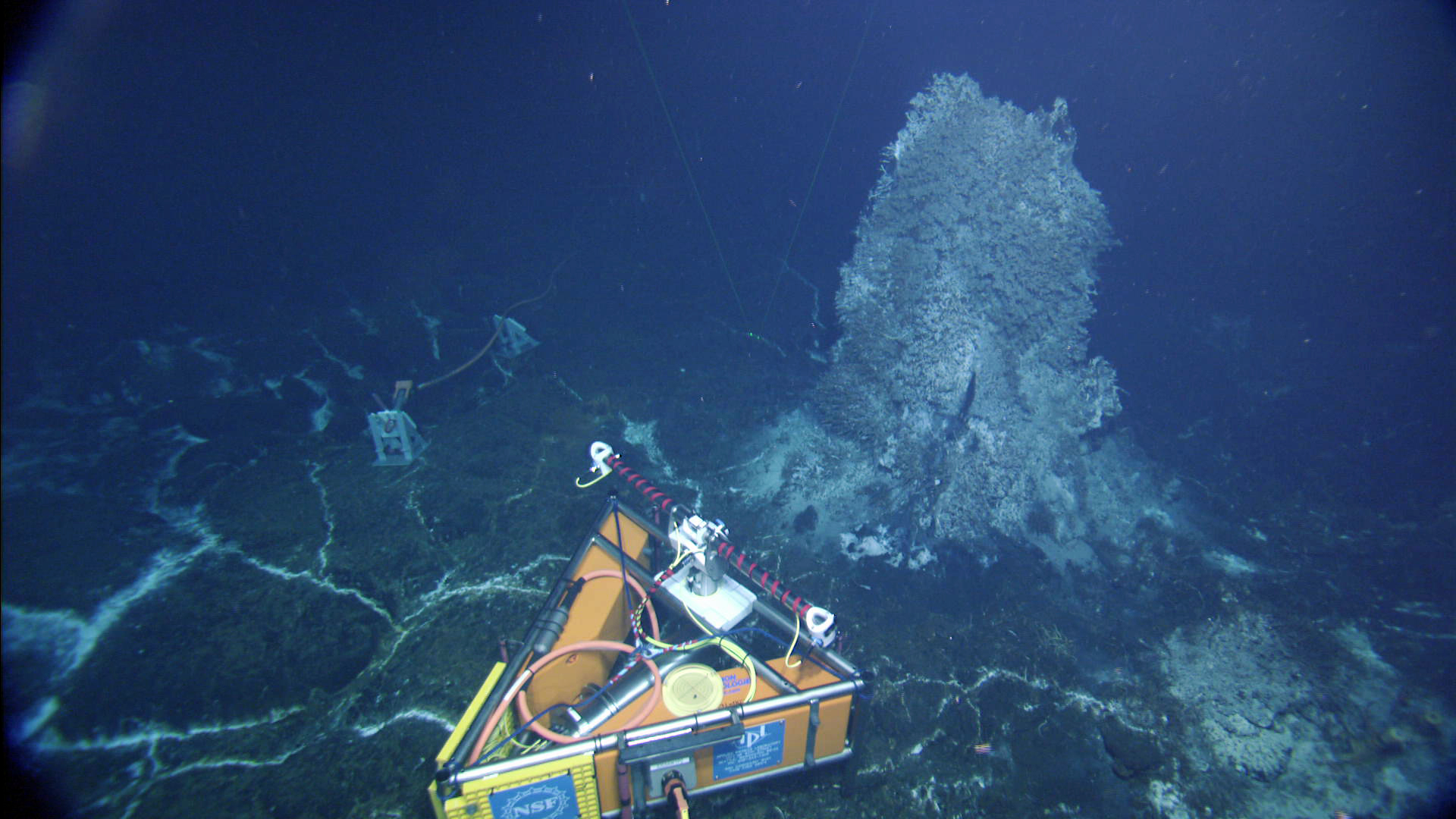
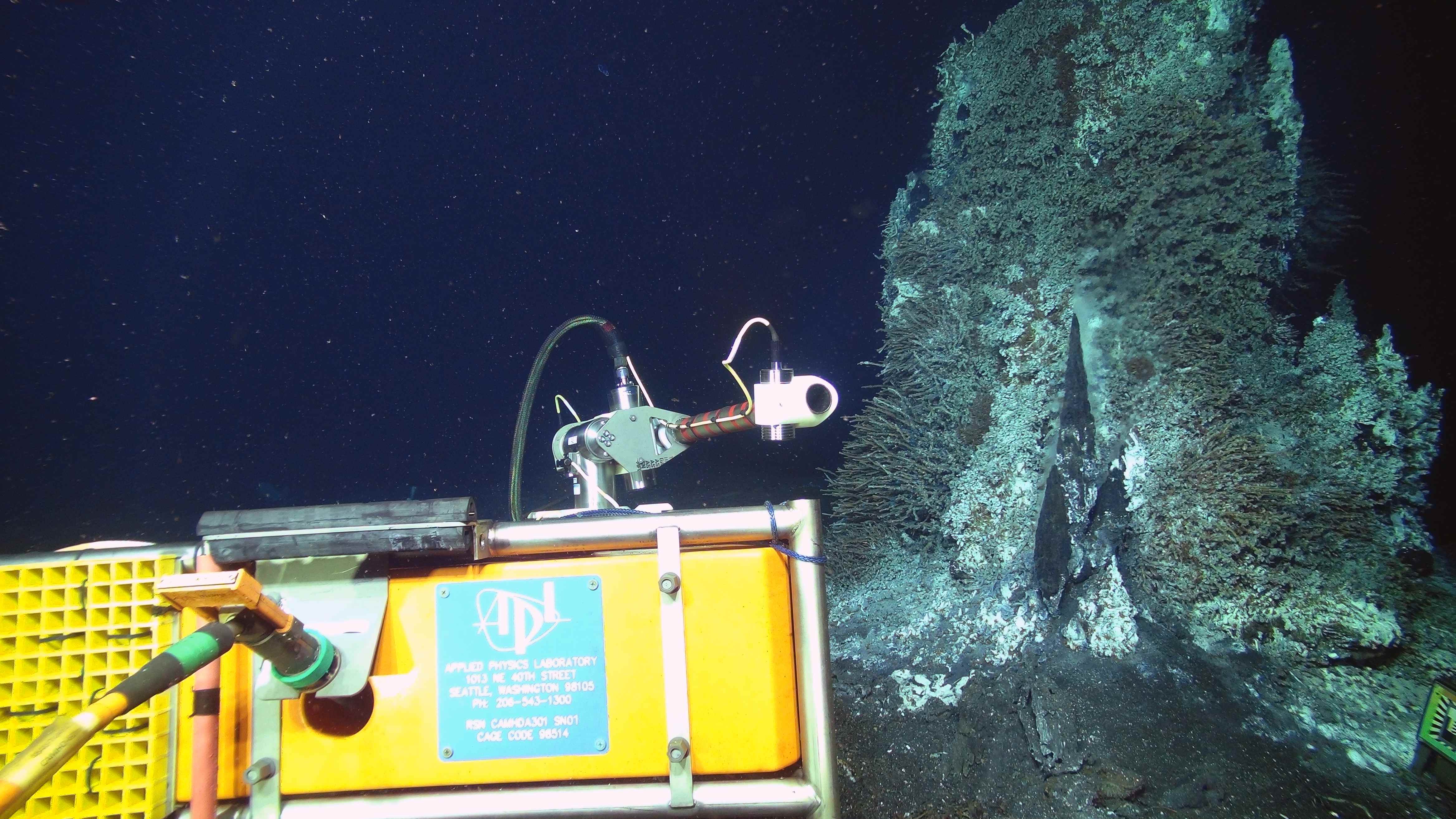
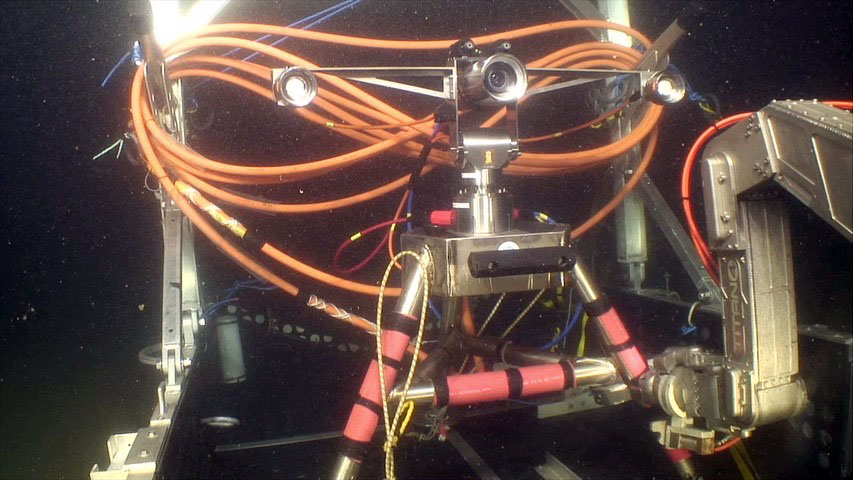
The high definition camera, built by the UW Applied Physics Lab, was reinstalled in 2016 during the VISIONS'16 cruise. The prior camera had been streaming video live to shore for two years. The camera was recovered to clear the outer window of biofouling. The camera is located at the hydrothermal chimney called Mushroom in the ASHES hydrothermal field on Axial Seamount. Video are streamed live from ~5000 ft down and >300 miles offshore onto the Internet 8 times a day. Credit: UW/NSF-OOI/WHOI; V16.
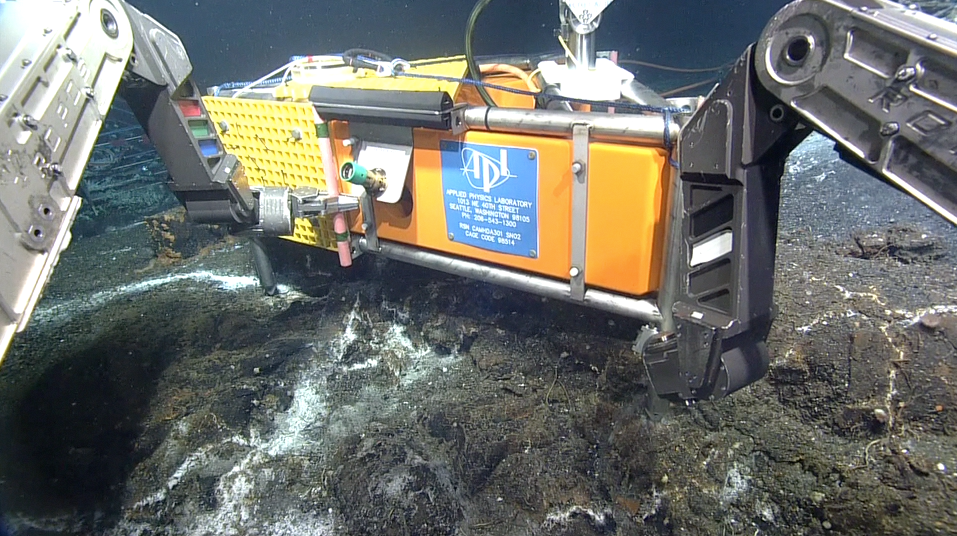
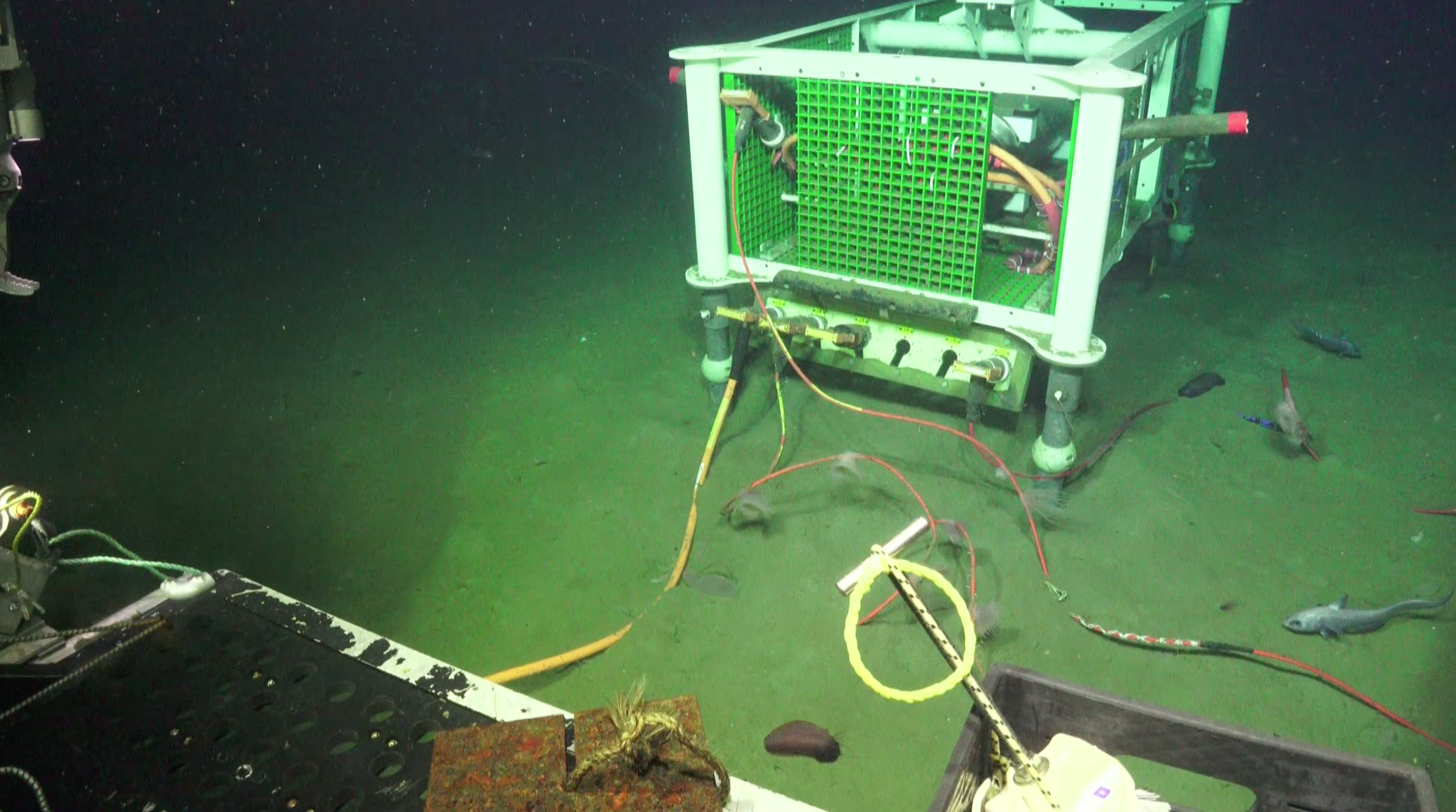
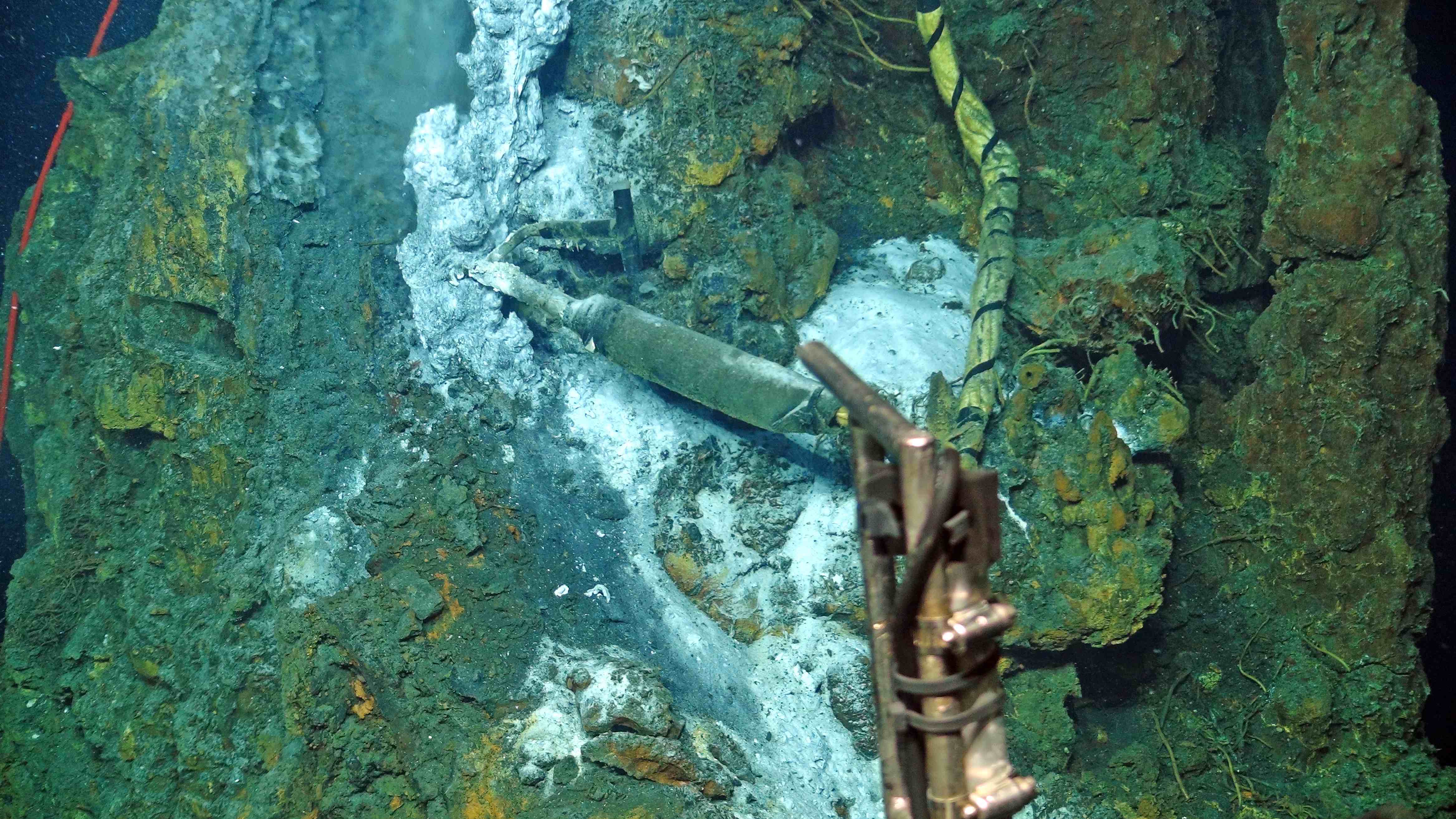
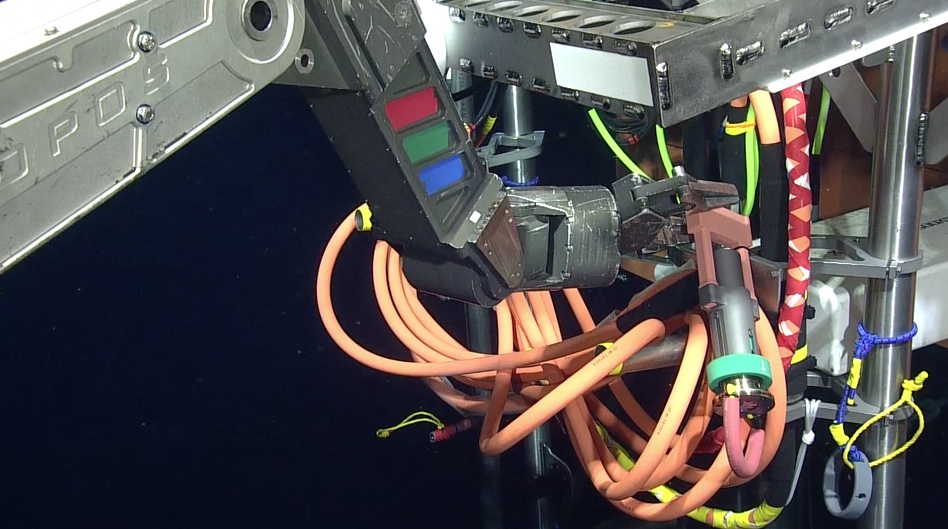
The ROV Jason 'looks' at a hybrid underwater wet-mate connector that connects the high definition camera to a ~ 4 km long extension cabled attached to Primary Node PN3B at the summit of Axial Seamount. This connection provides a 10 Gbs communication path to the terrestrial Internet located ~300 miles to the east. White bacterial mats line fractures in the lava-covered seafloor where diffusely flowing fluids are exiting the seafloor. Credit: UW/NSF-OOI/WHOI; V16.
Since the late summer, 2015, each of the three cabled Shallow Profiler Mooring winched science pods have made >7000 cycles from 600 ft water depth to just beneath the oceans' surface. Real-time command and control of these systems through the Internet provides response capabilites such that the science pods can be stopped to take key measurements in response to events that include the passing over of biologically-rich thin layers. Credit: University of Washington, NSF-OOI/ROPOS, V15.
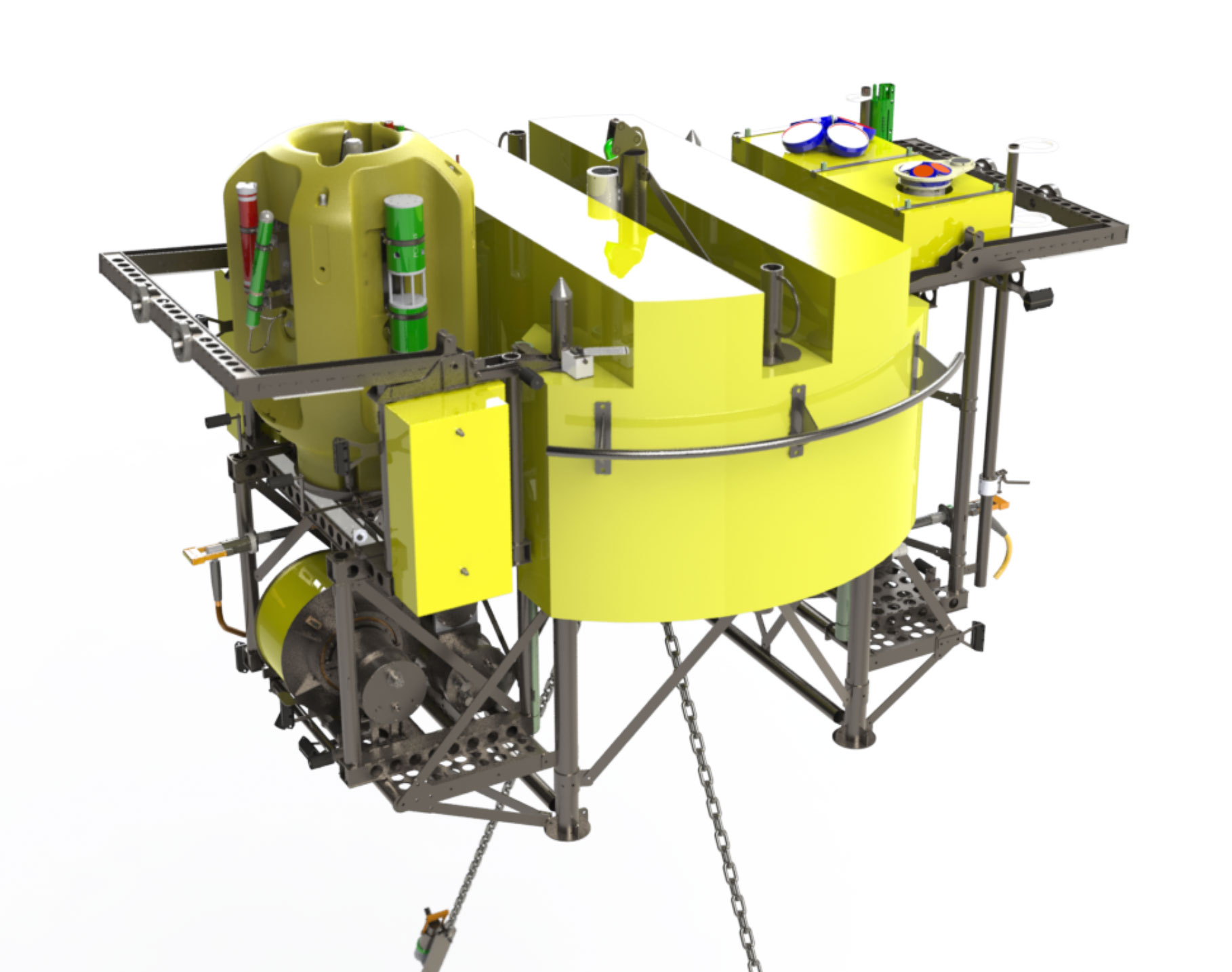
A Shallow Profiler winched science pod and stationary platform, which host 18 instruments (e.g. pH, CO2, temperature, chlorophyll, zooplankton, nutrients, currents) undergoes testing in the School of Oceanography saltwater tank. The platforms will be deployed 600 ft beneath the oceans surface. Since 2015, three of these pods have made >27,000 profiles, providing unprecedented measurements of our dynamic ocean in real-time. Credit: D. Kelley, University of Washington.
During ROPOS Dive R1729, a digital-still camera (left), a mass spectrometer (middle) and a fluid- and microbial-DNA sampler (right) were installed in the International District Hydrothermal Field at the vent called El Gordo. A titanium "hat" rests on top of the structure in a tubeworm and limpet patch. Inside the "hat" are temperature probes and intake nozzles for the fluid and DNA sampler. Photo credit: NSF-OOI/UW/CSSF; Dive R1729; V14.
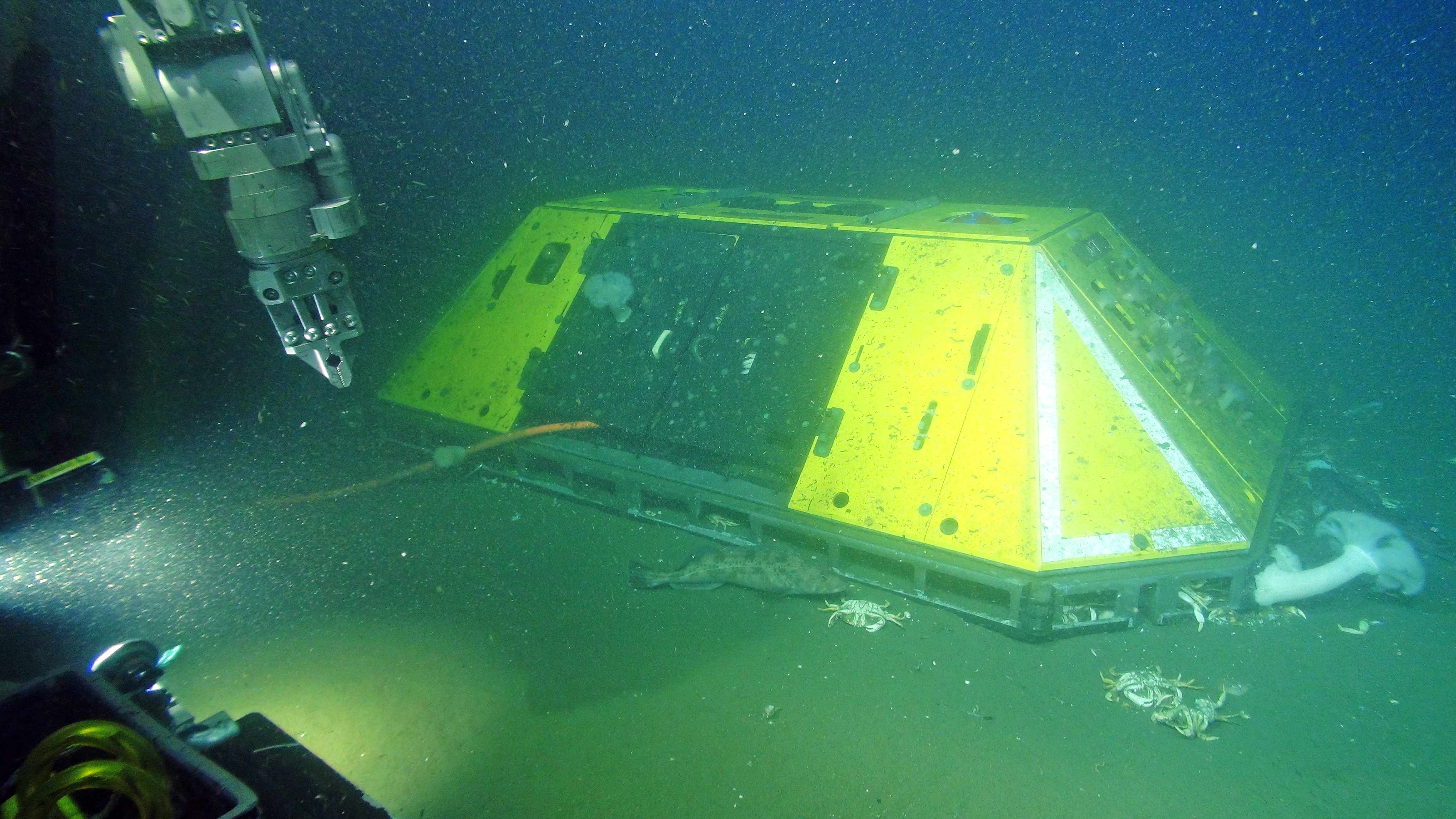
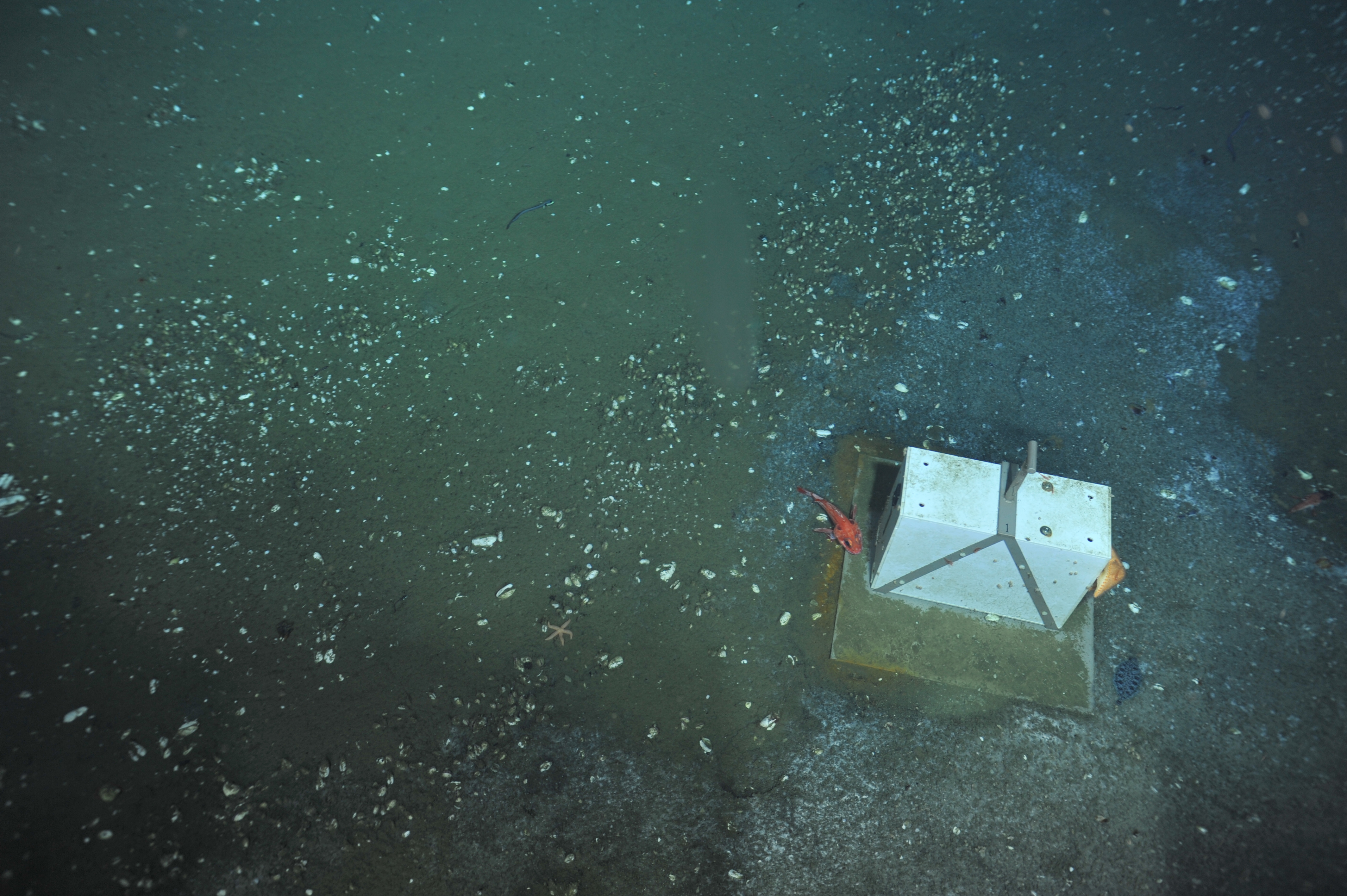
The Benthic Experiment Package on the seafloor at Endurance Oregon Offshore, connected to the low-voltage node LV01C by the cable extending under the protective doors. The oxygen sensor is visible on the left side, and the 3D velocimeter and ADCP can be seen on the top left and right (respectively).
Photo Credit: NSF-OOI/UW/CSSF, Dive 1747, V14