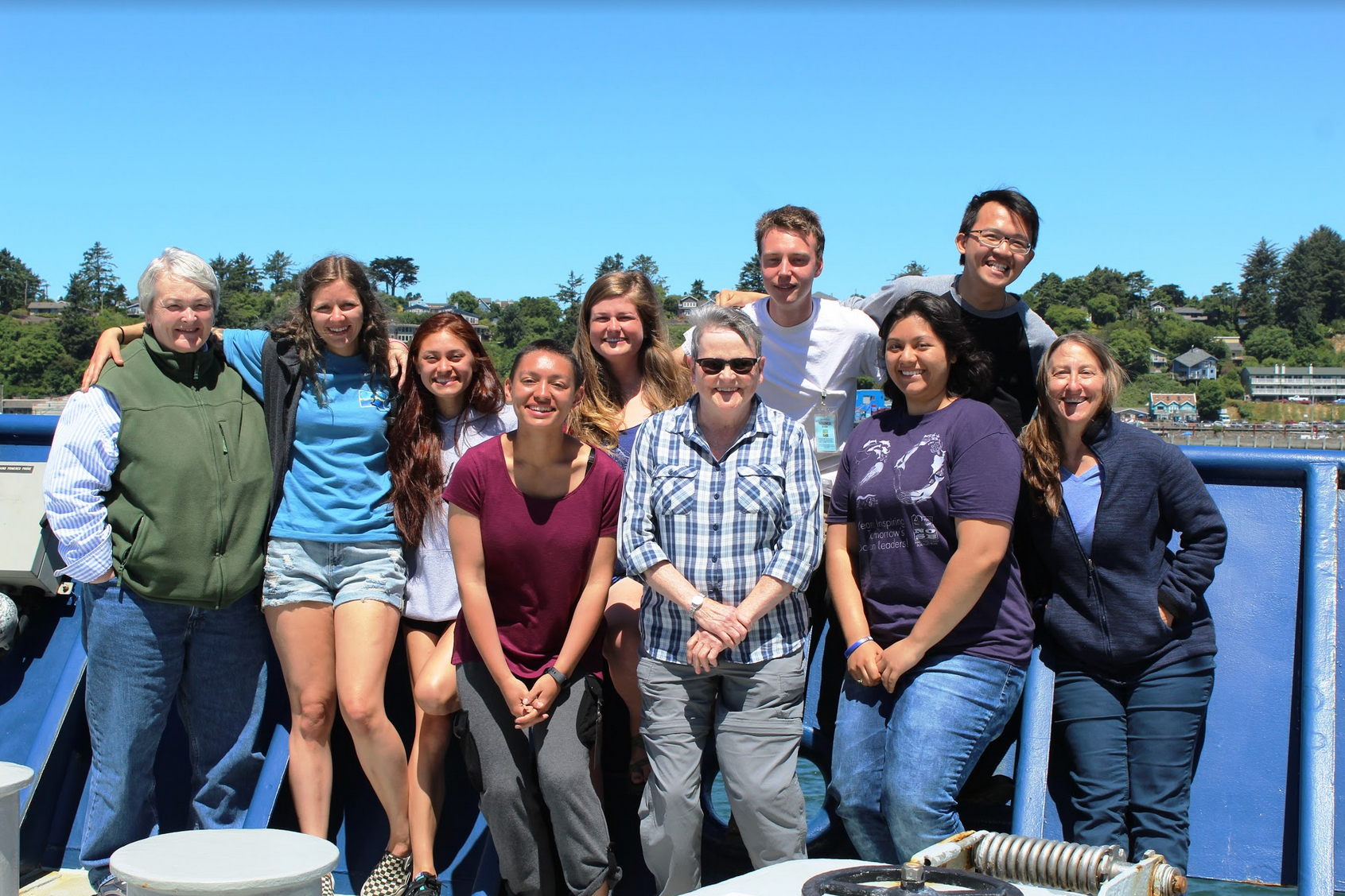
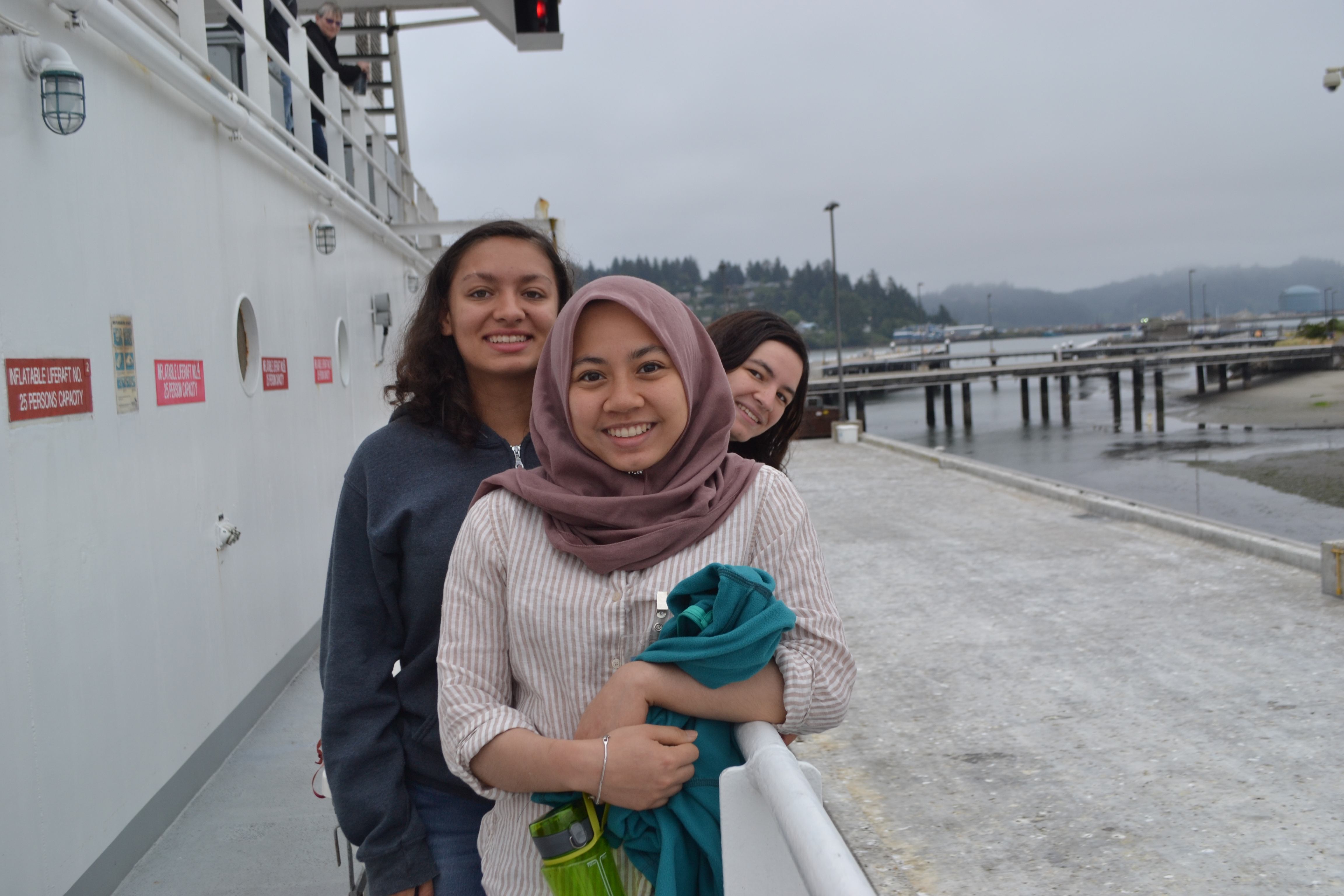
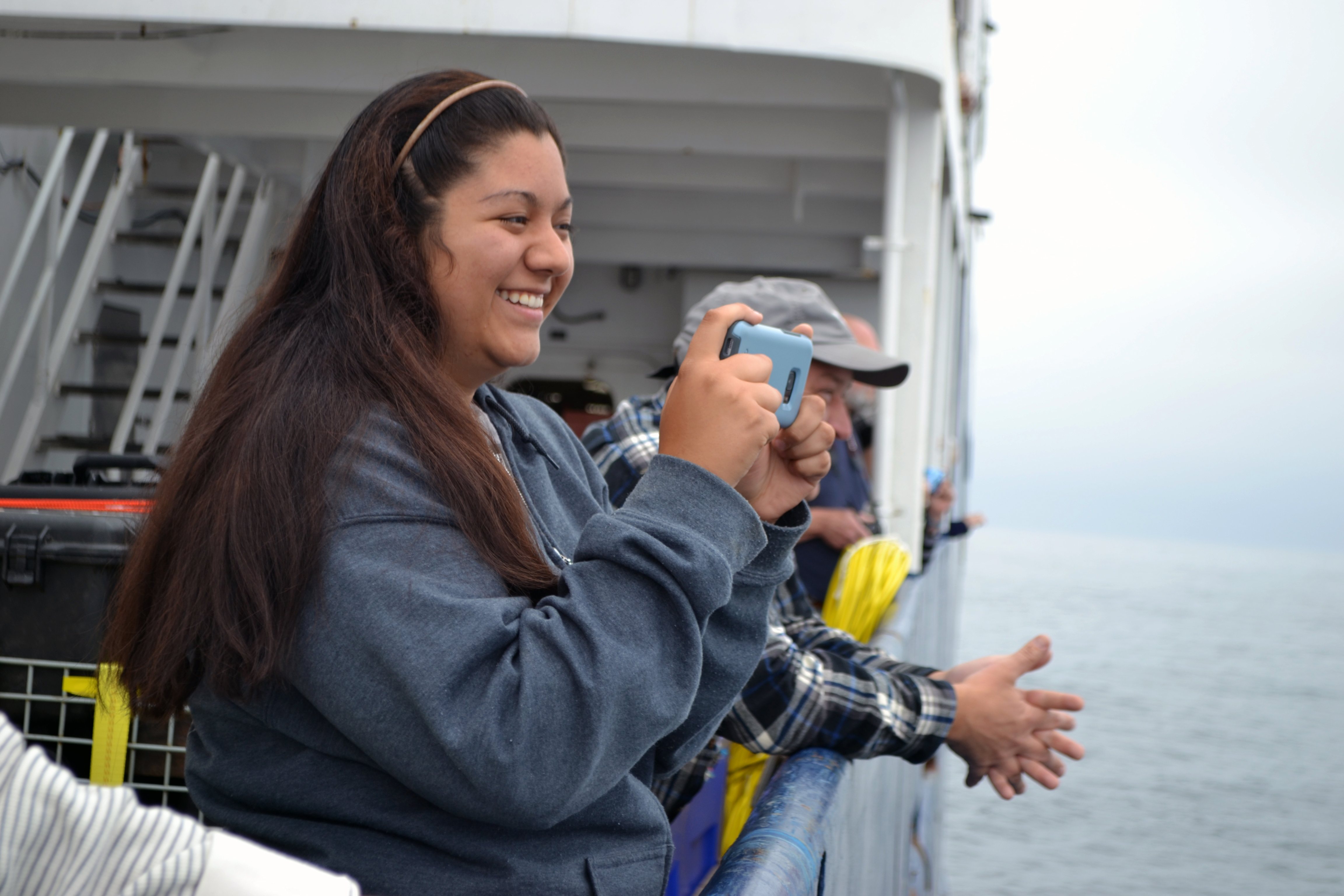
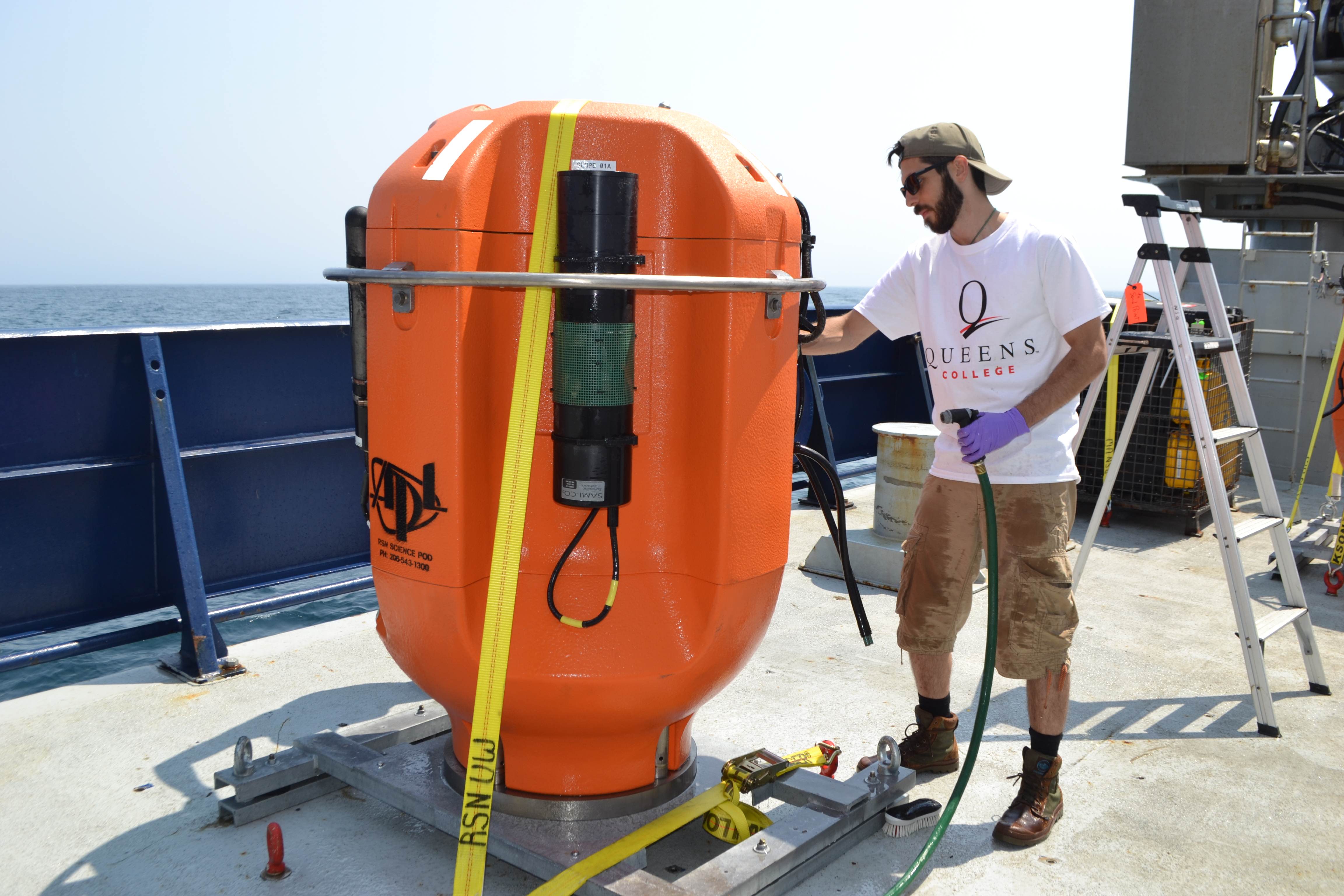
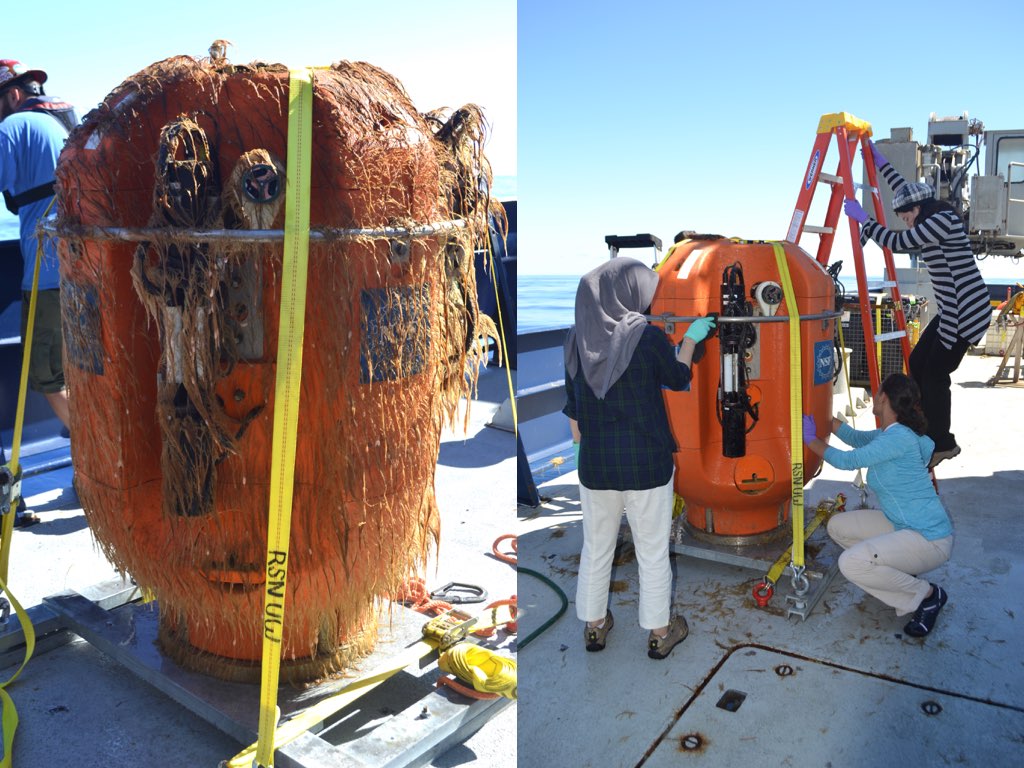
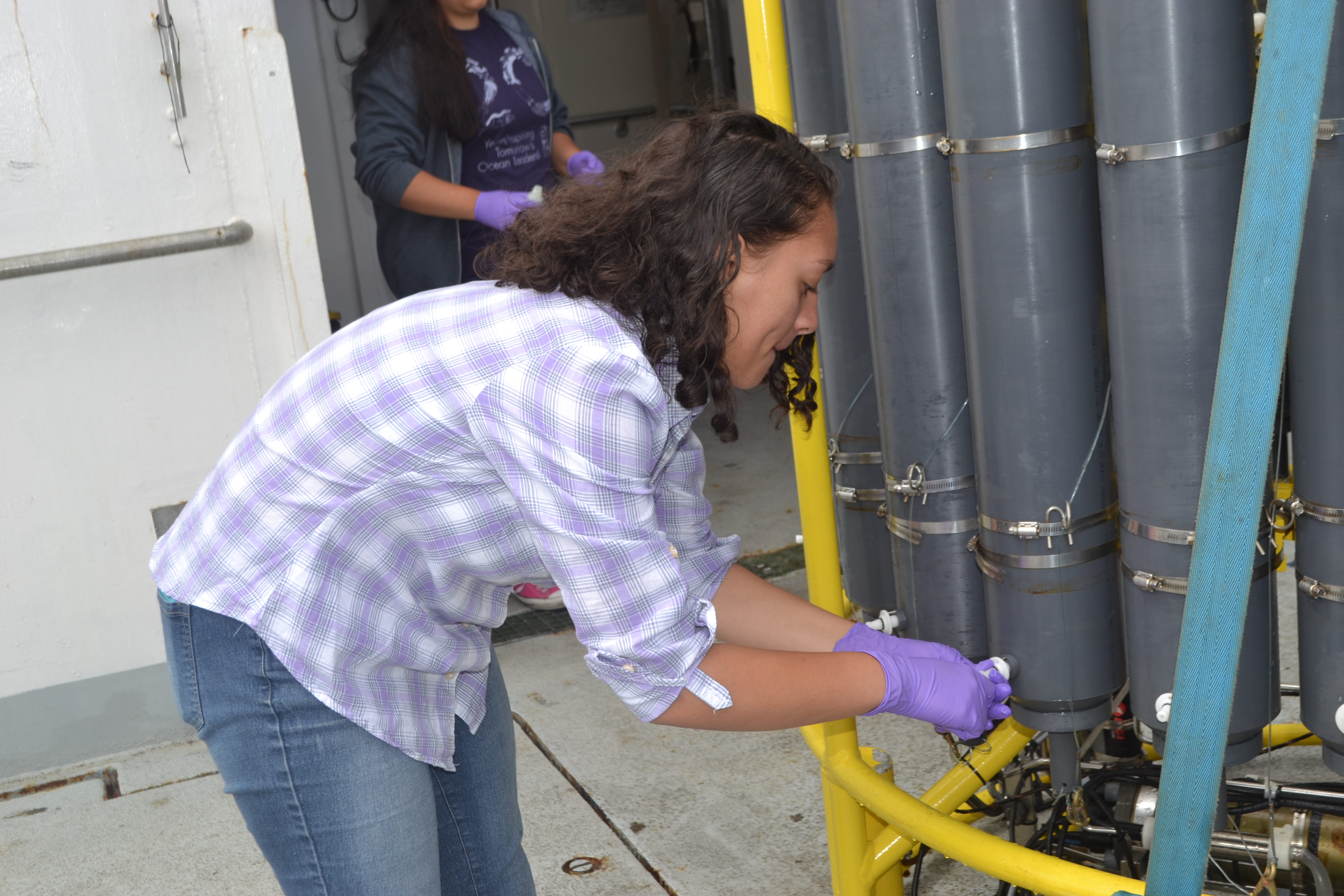
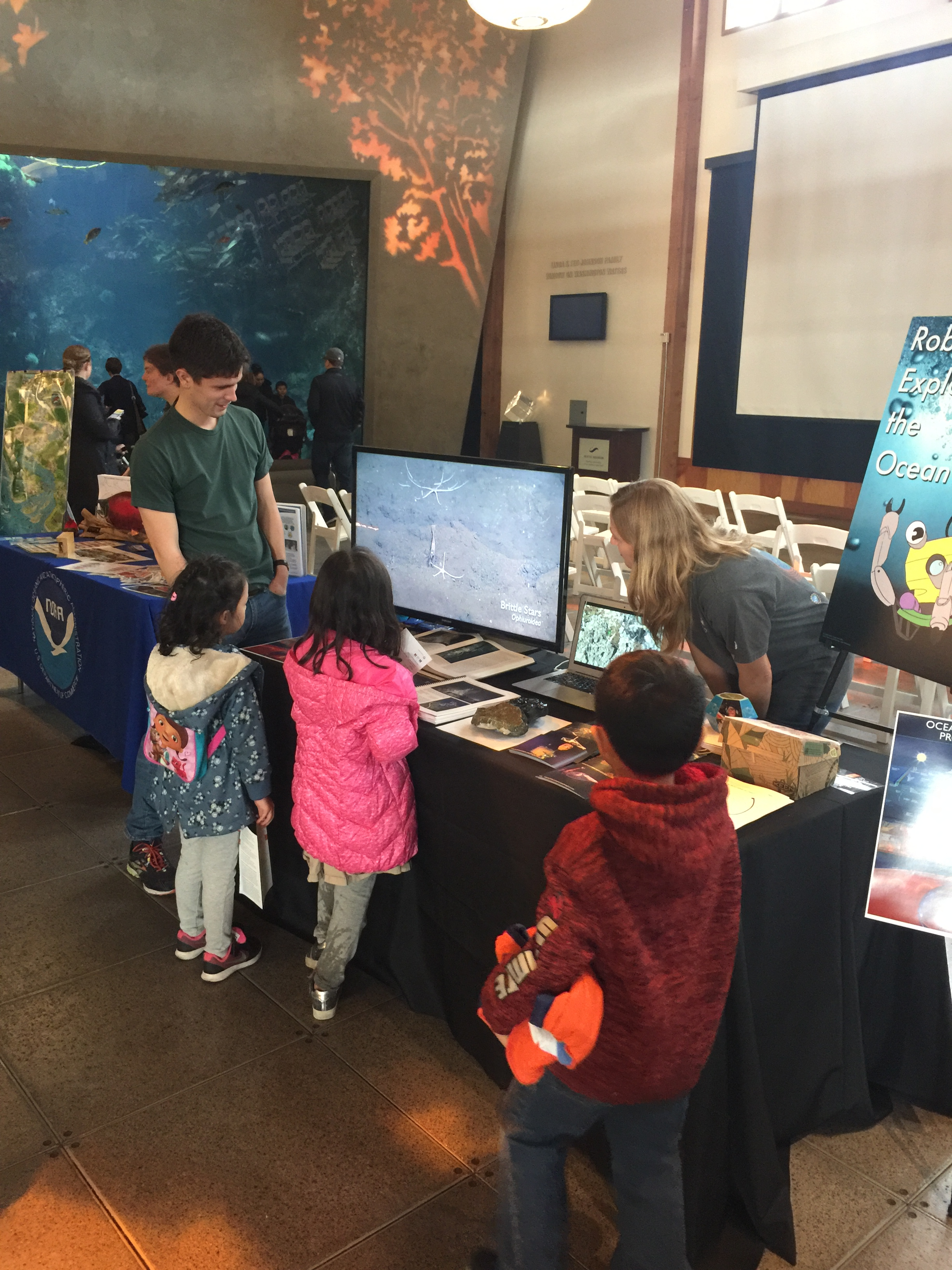
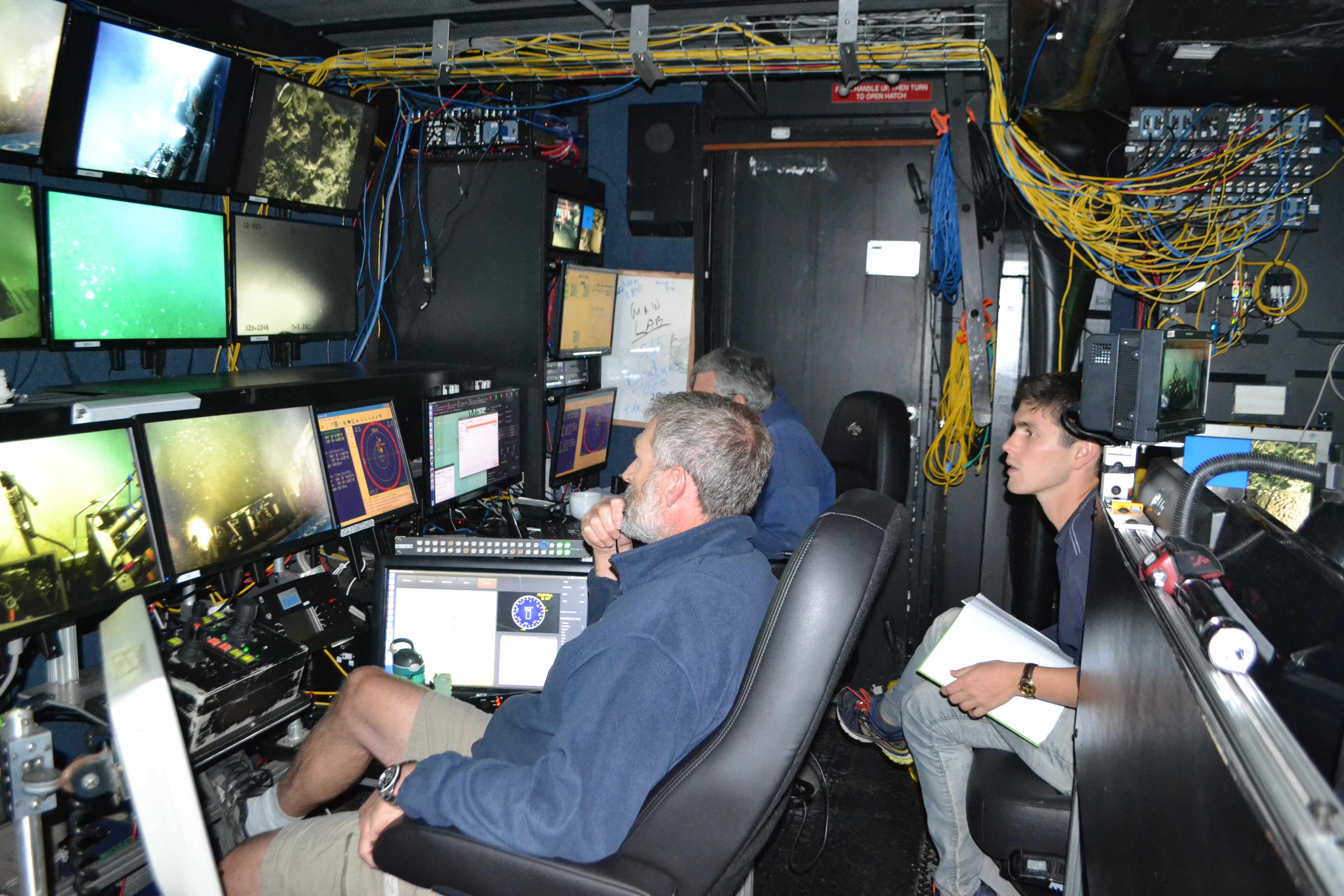
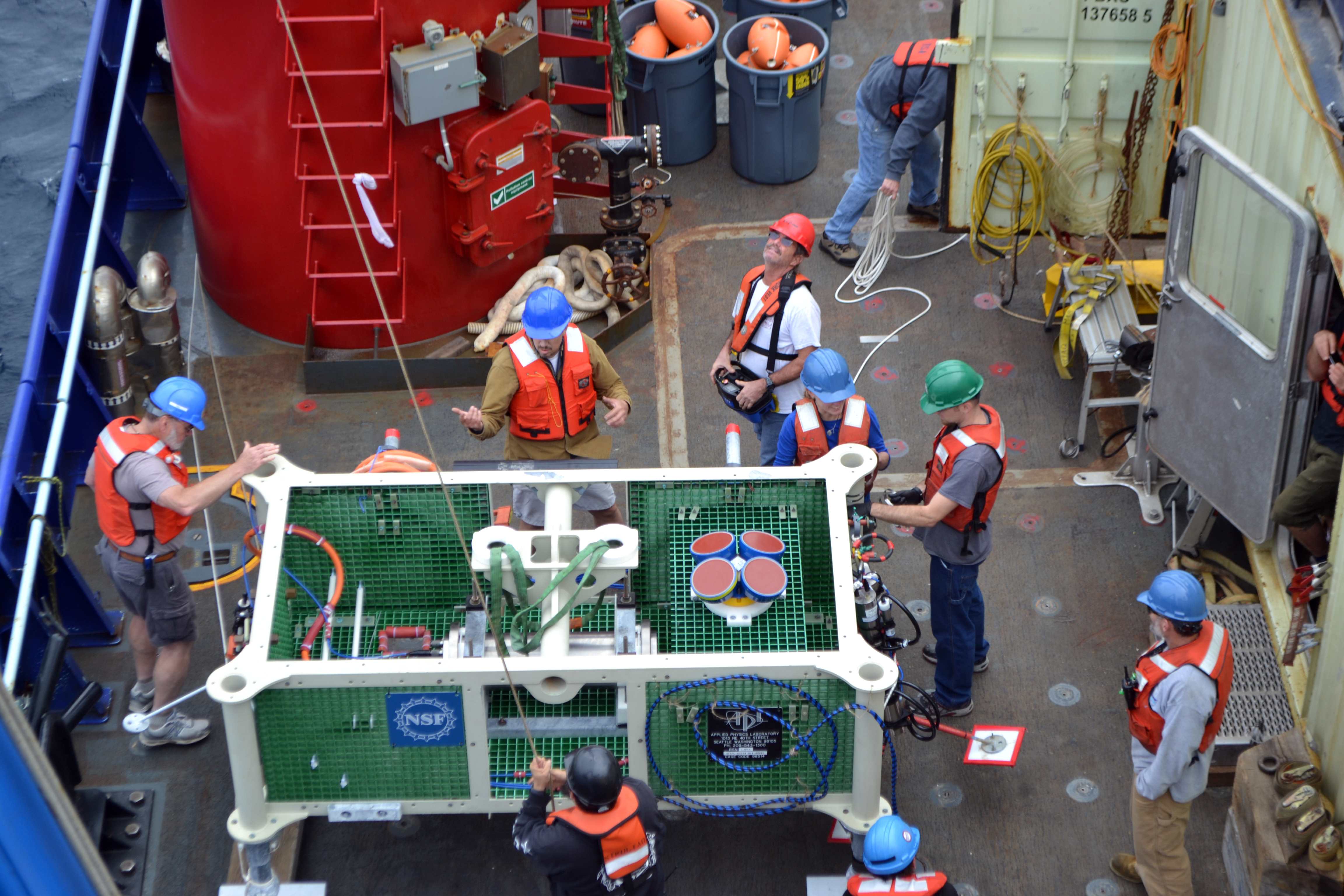
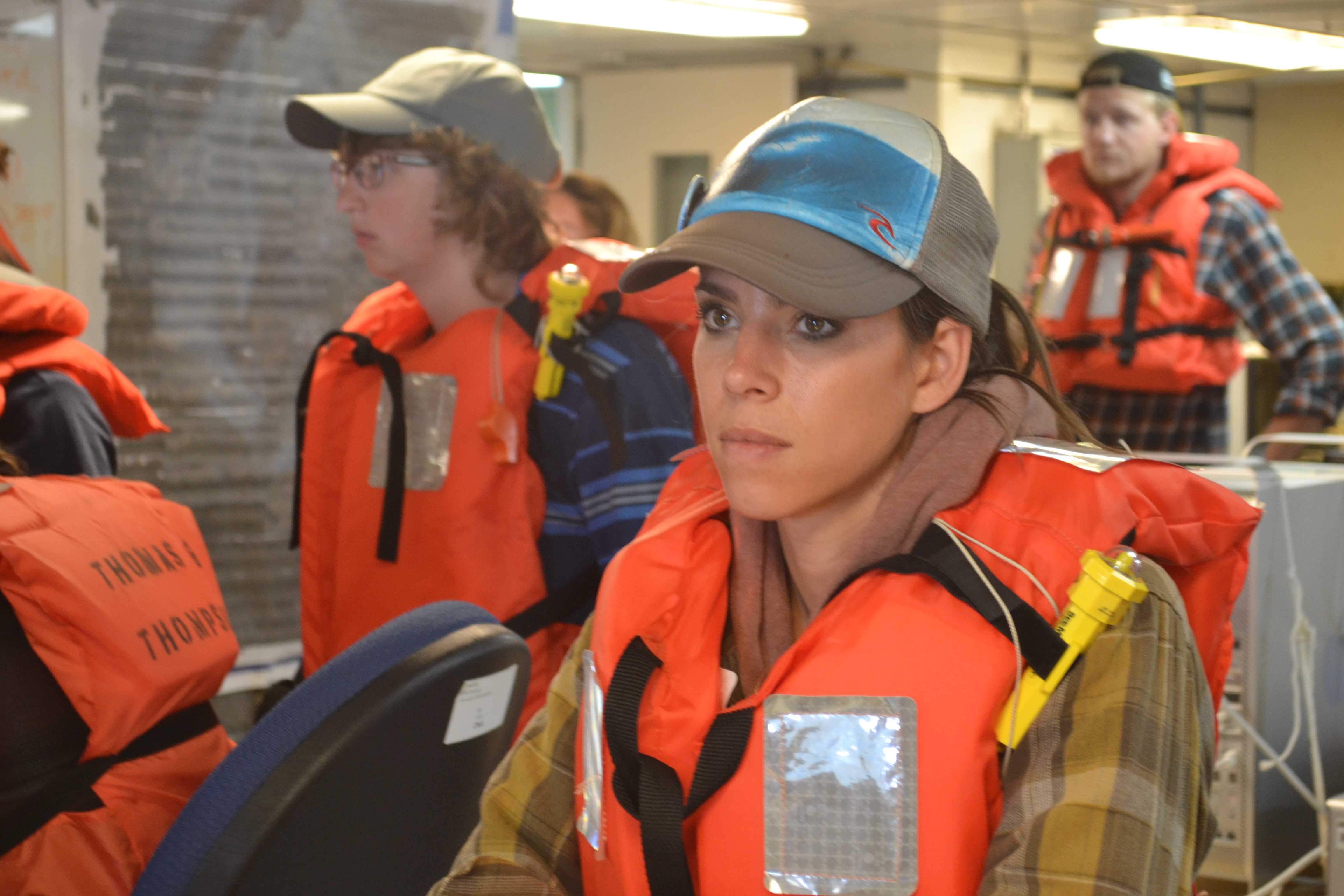
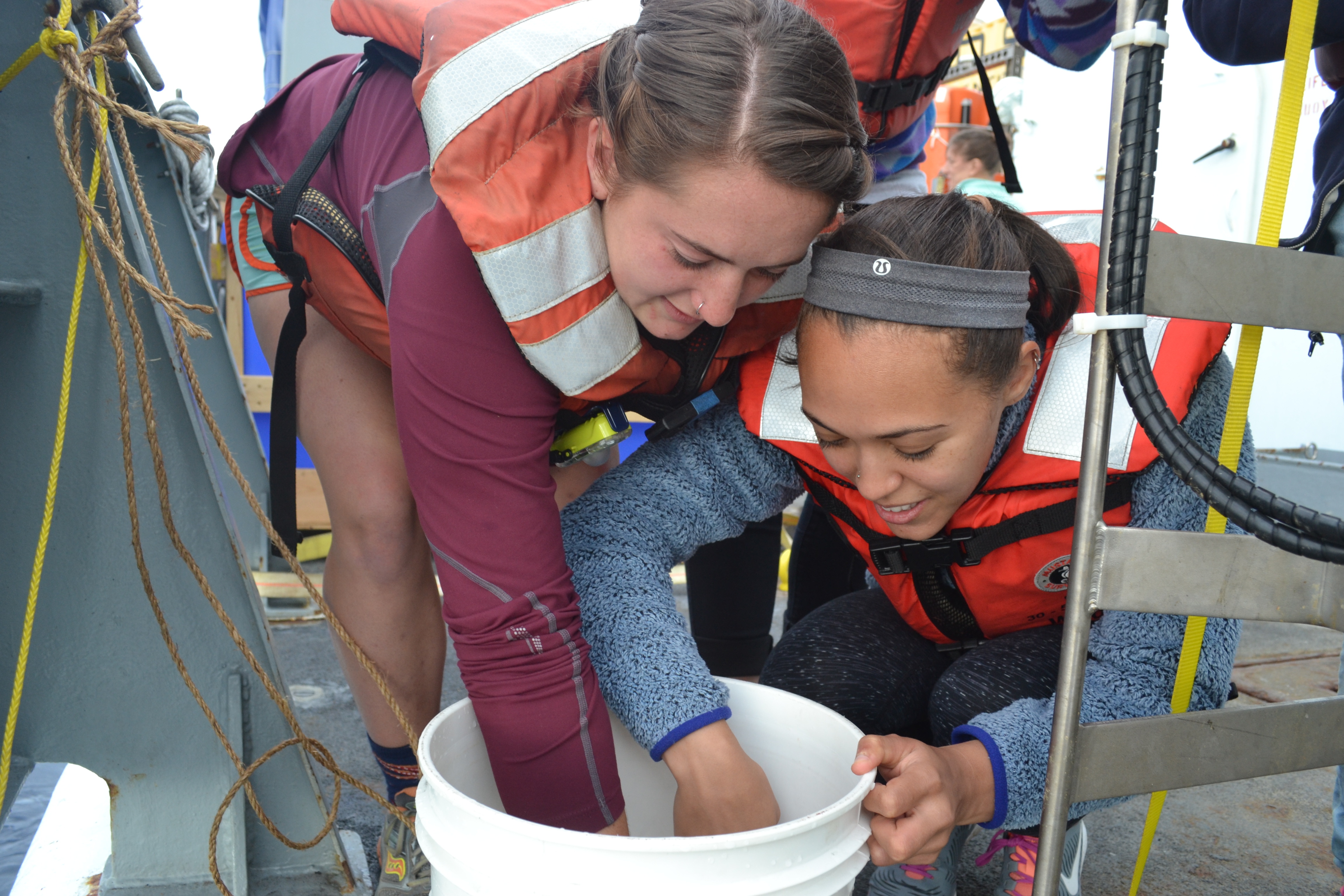
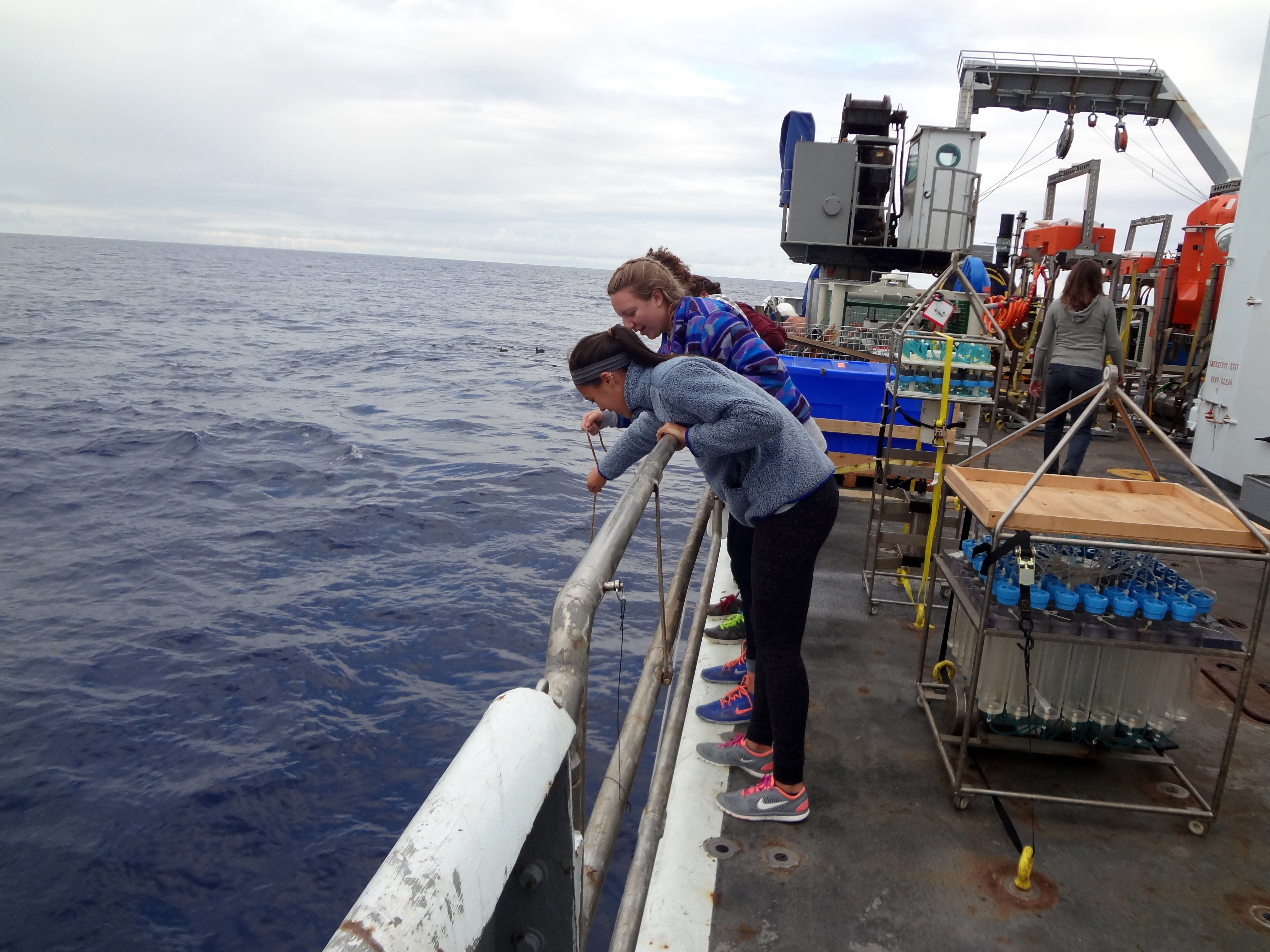
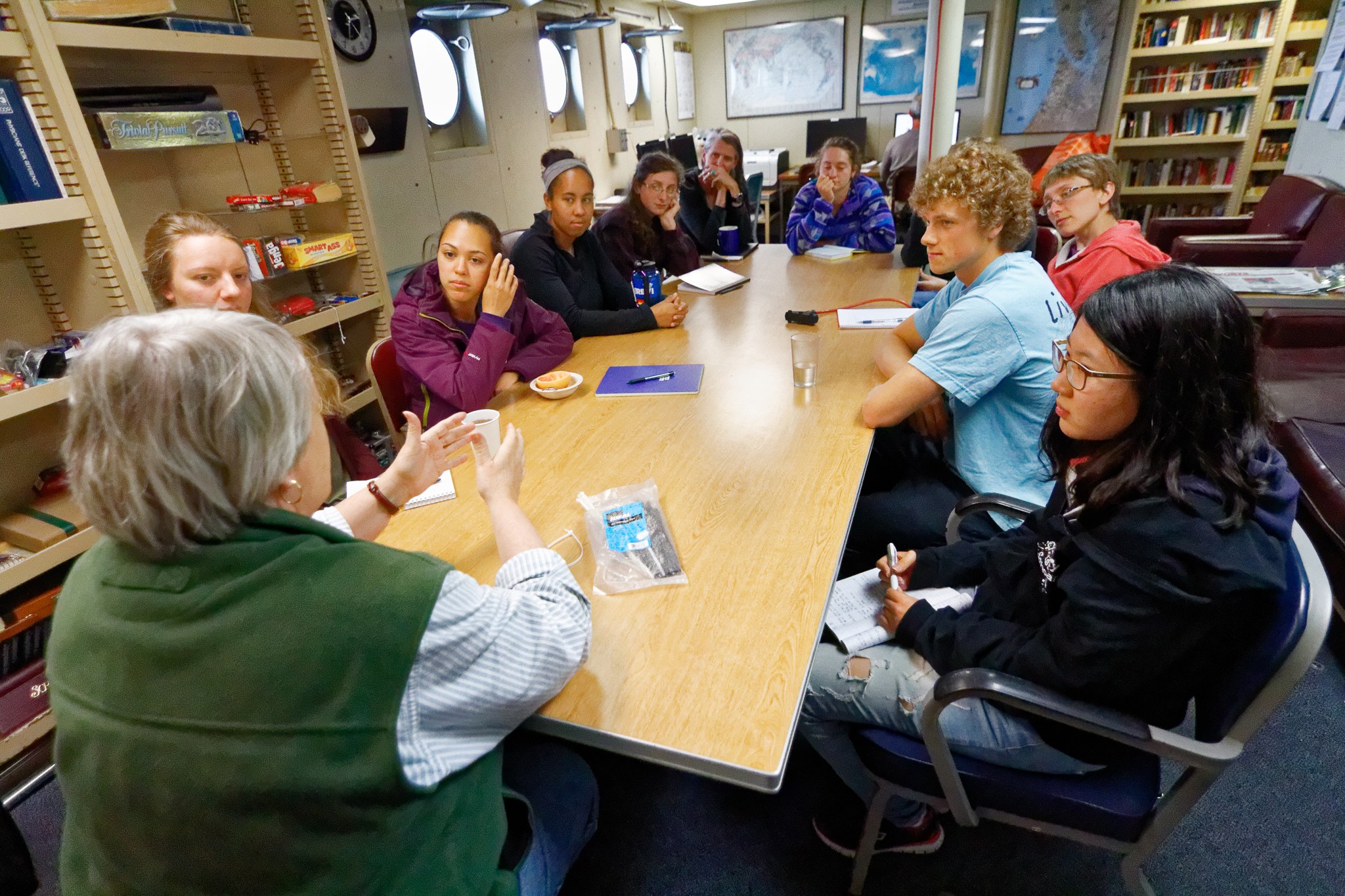
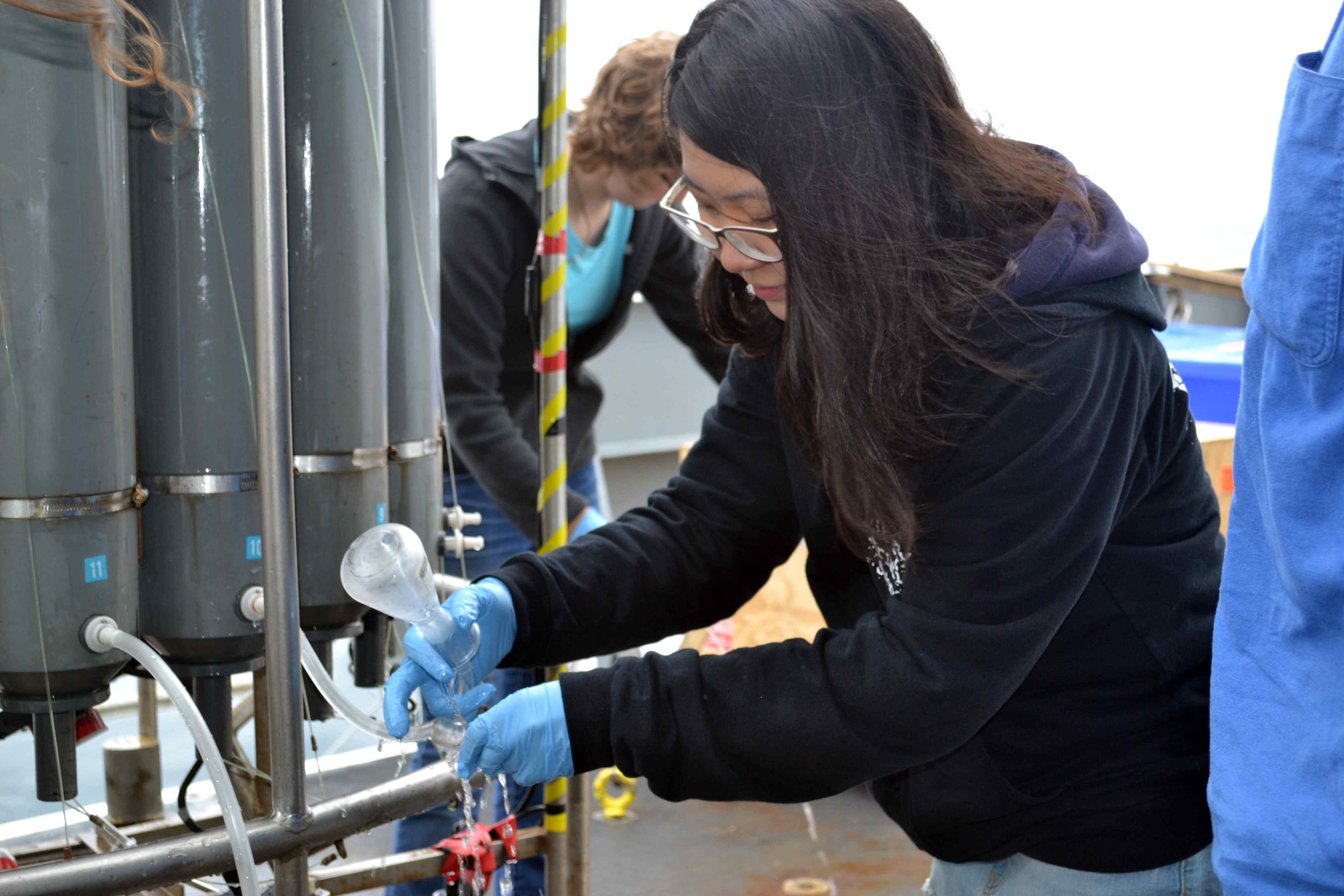
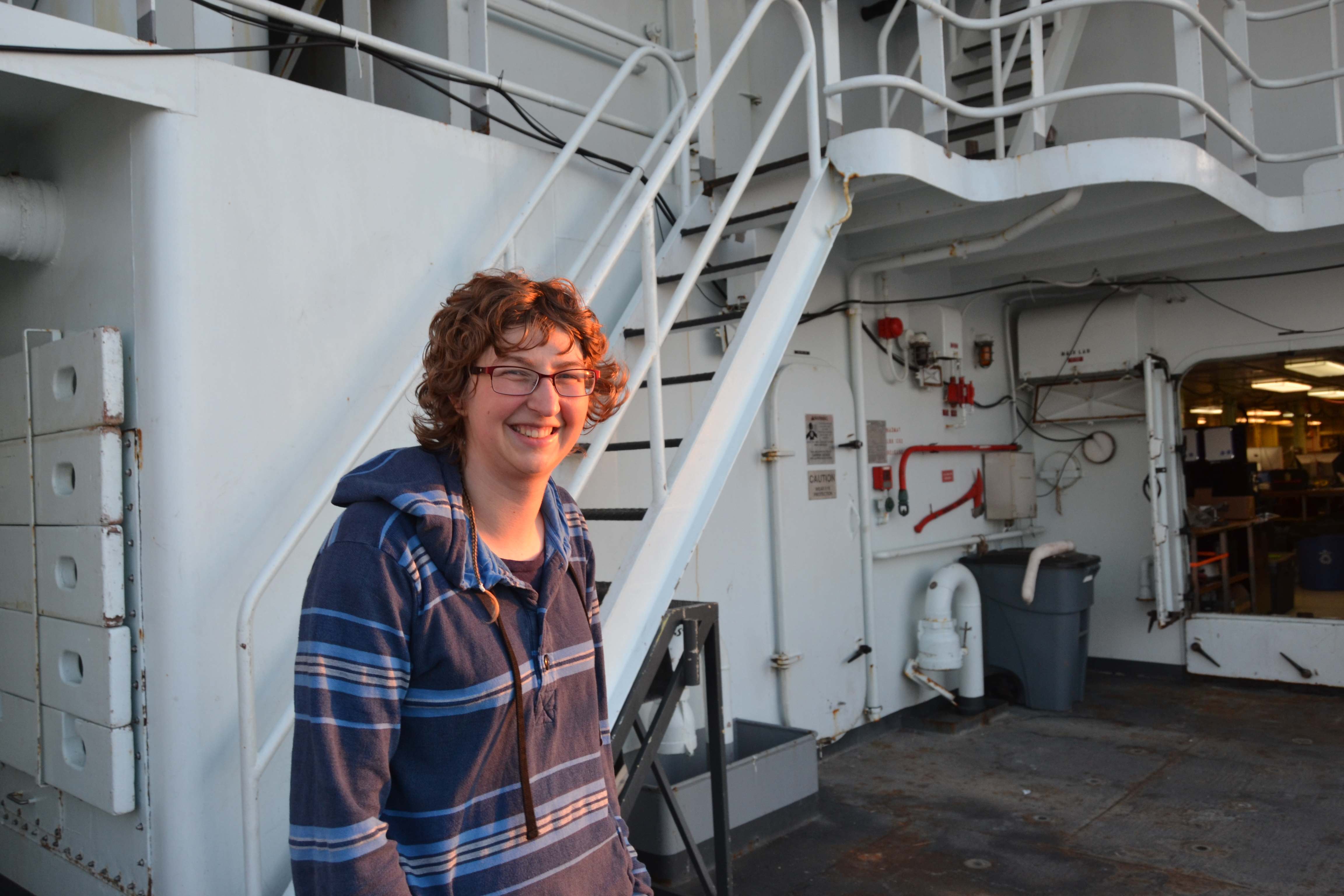
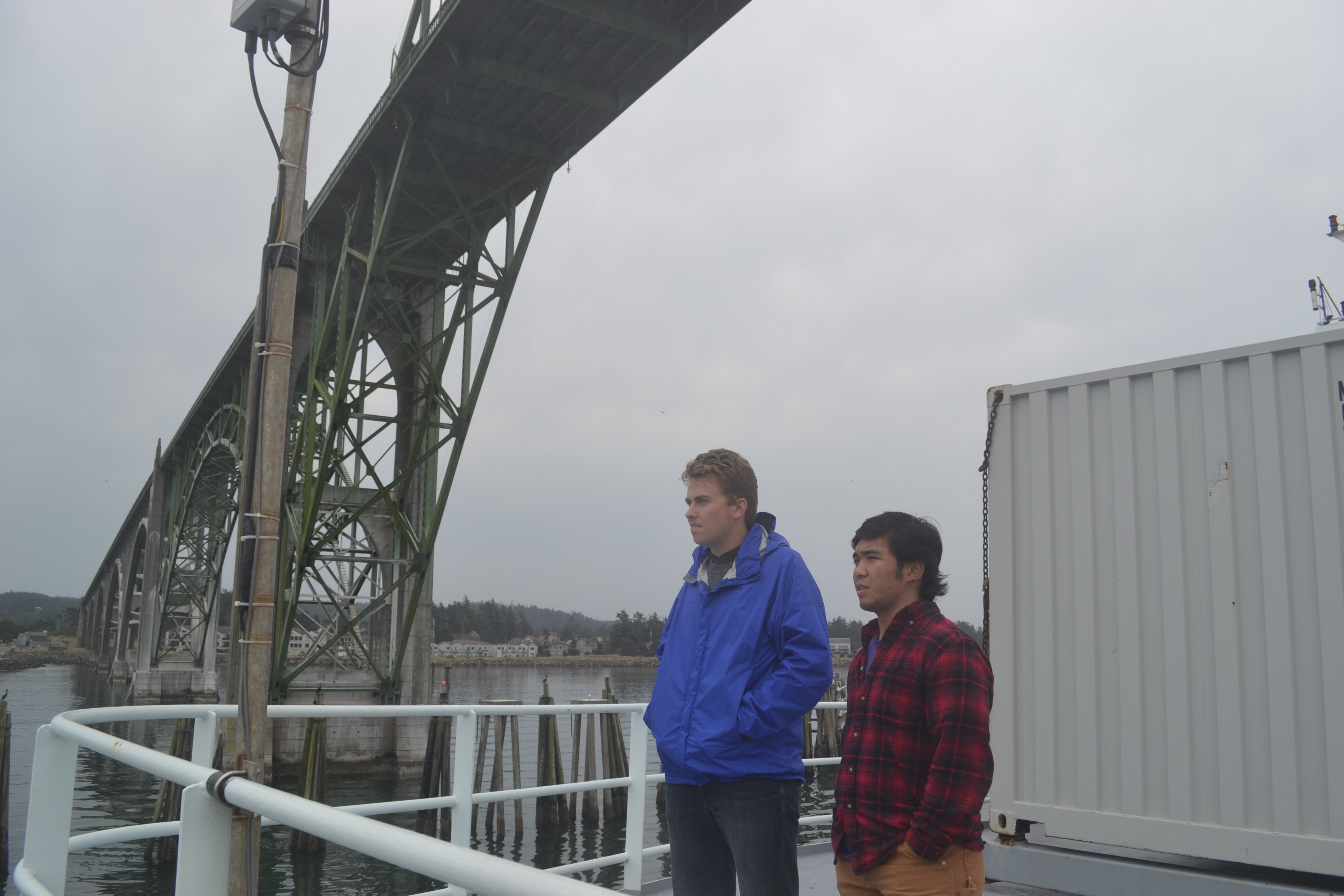
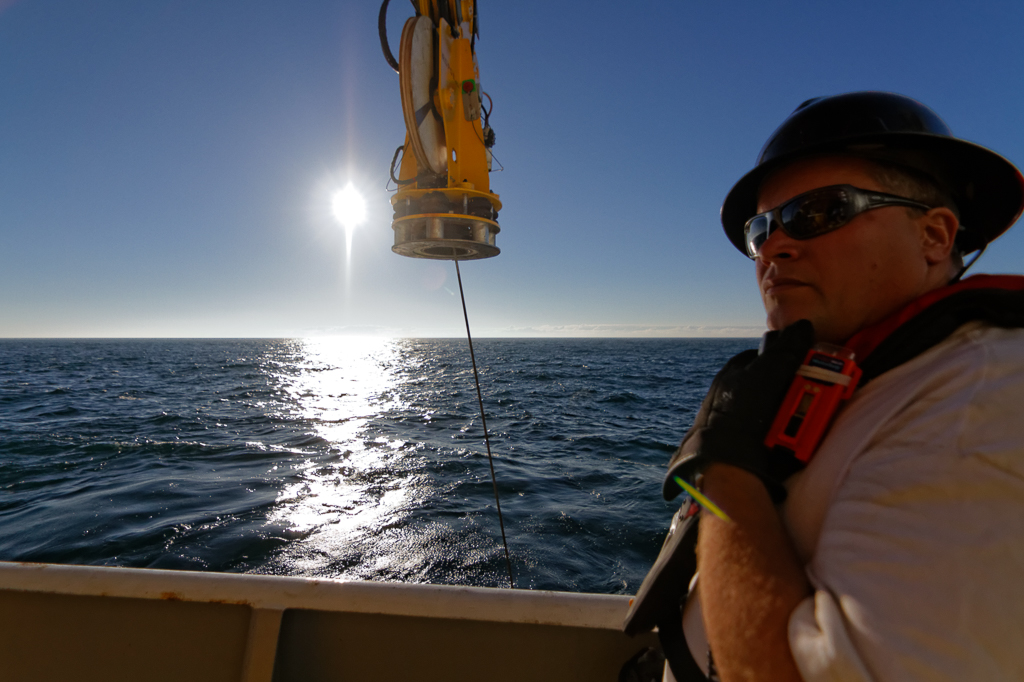
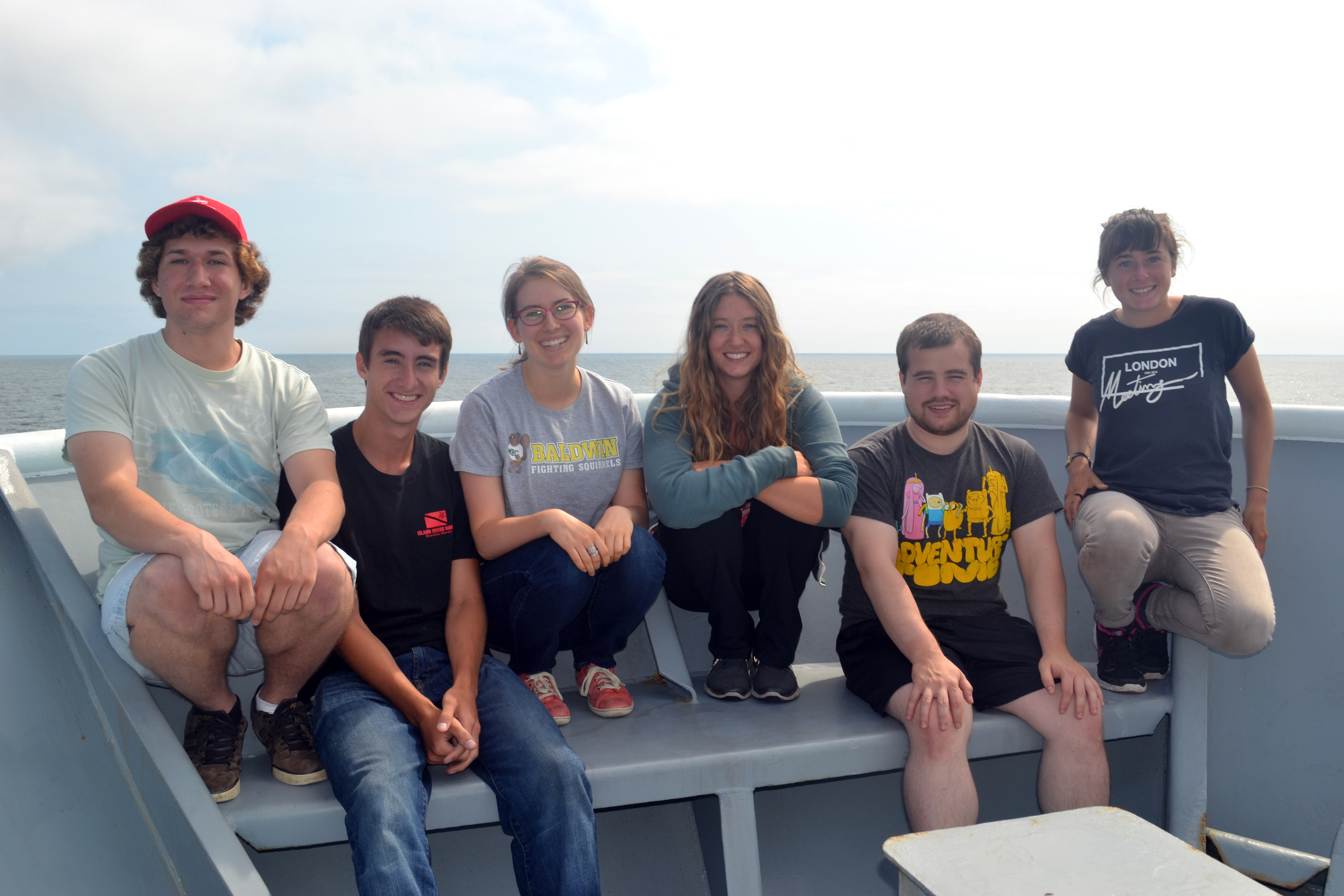
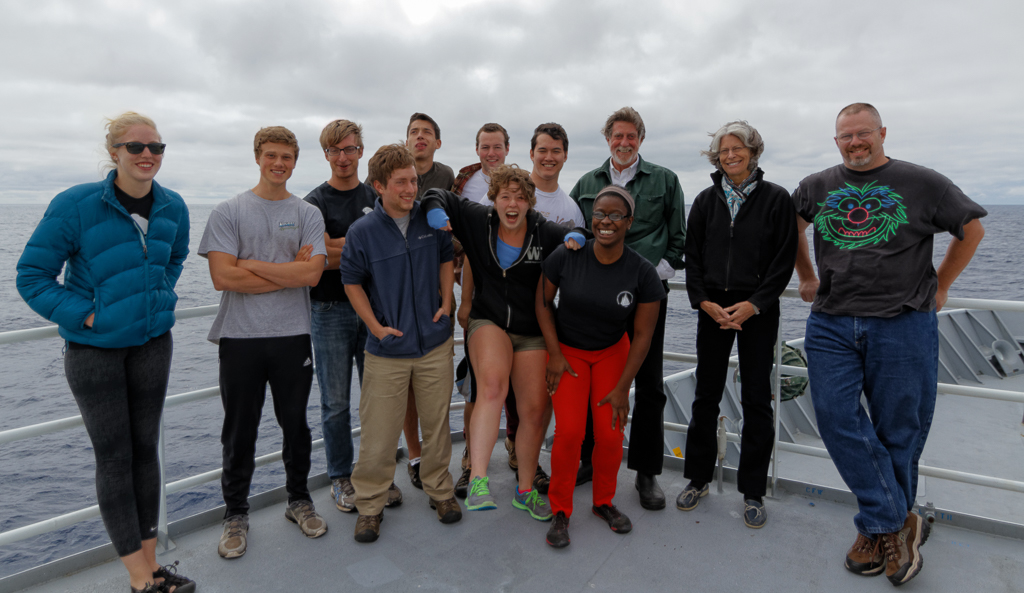
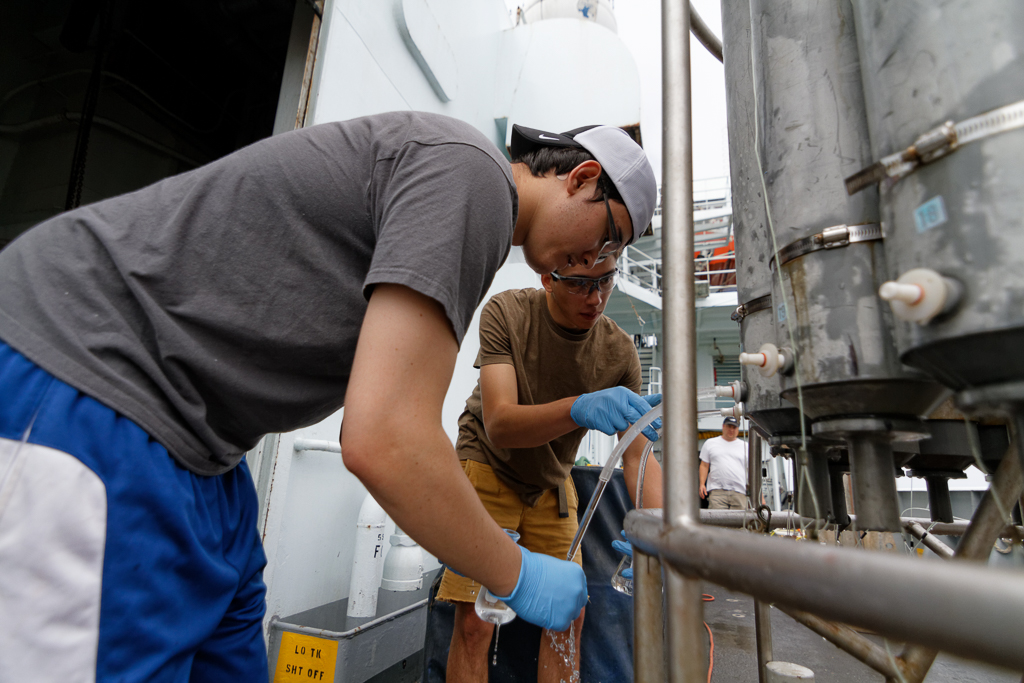
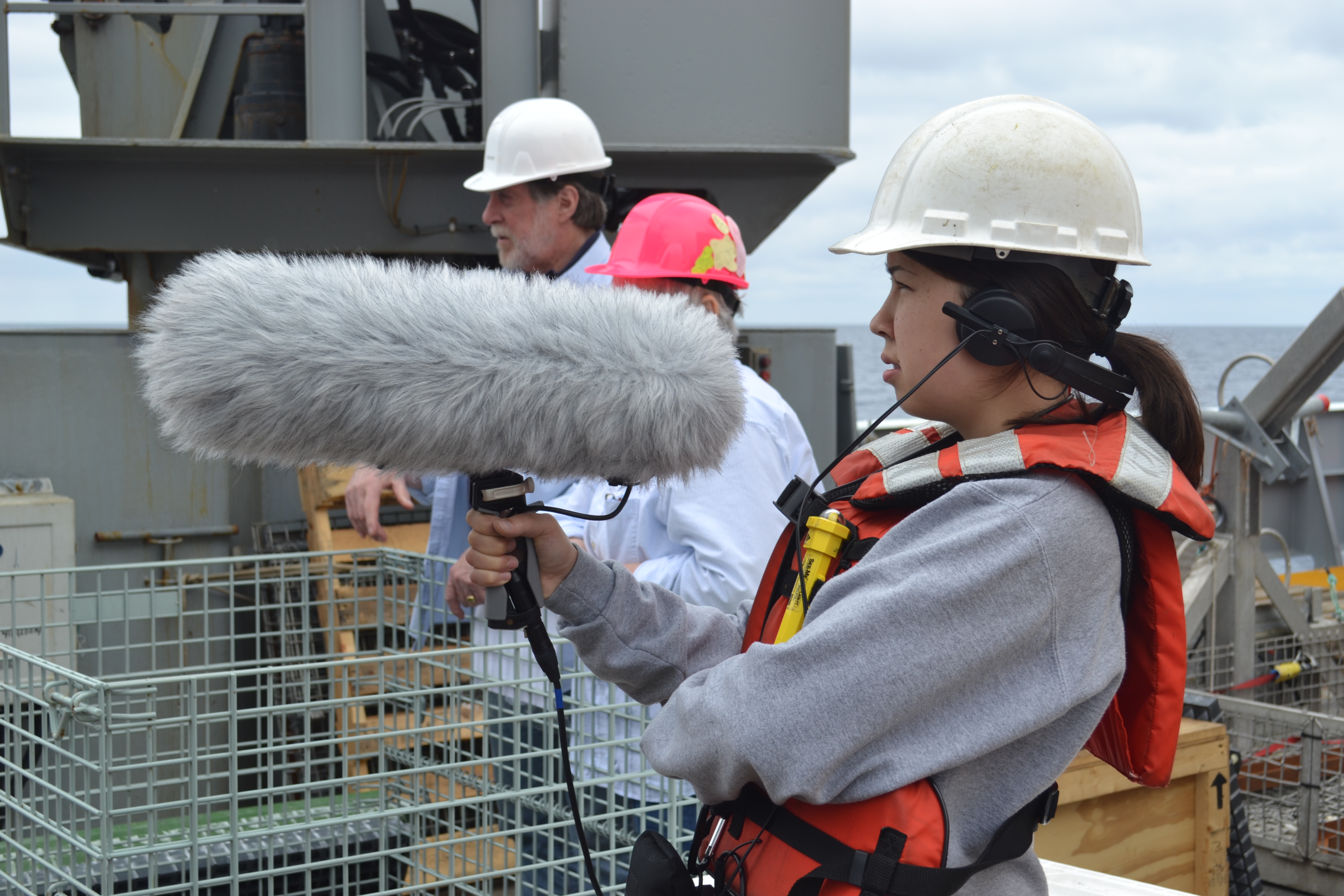
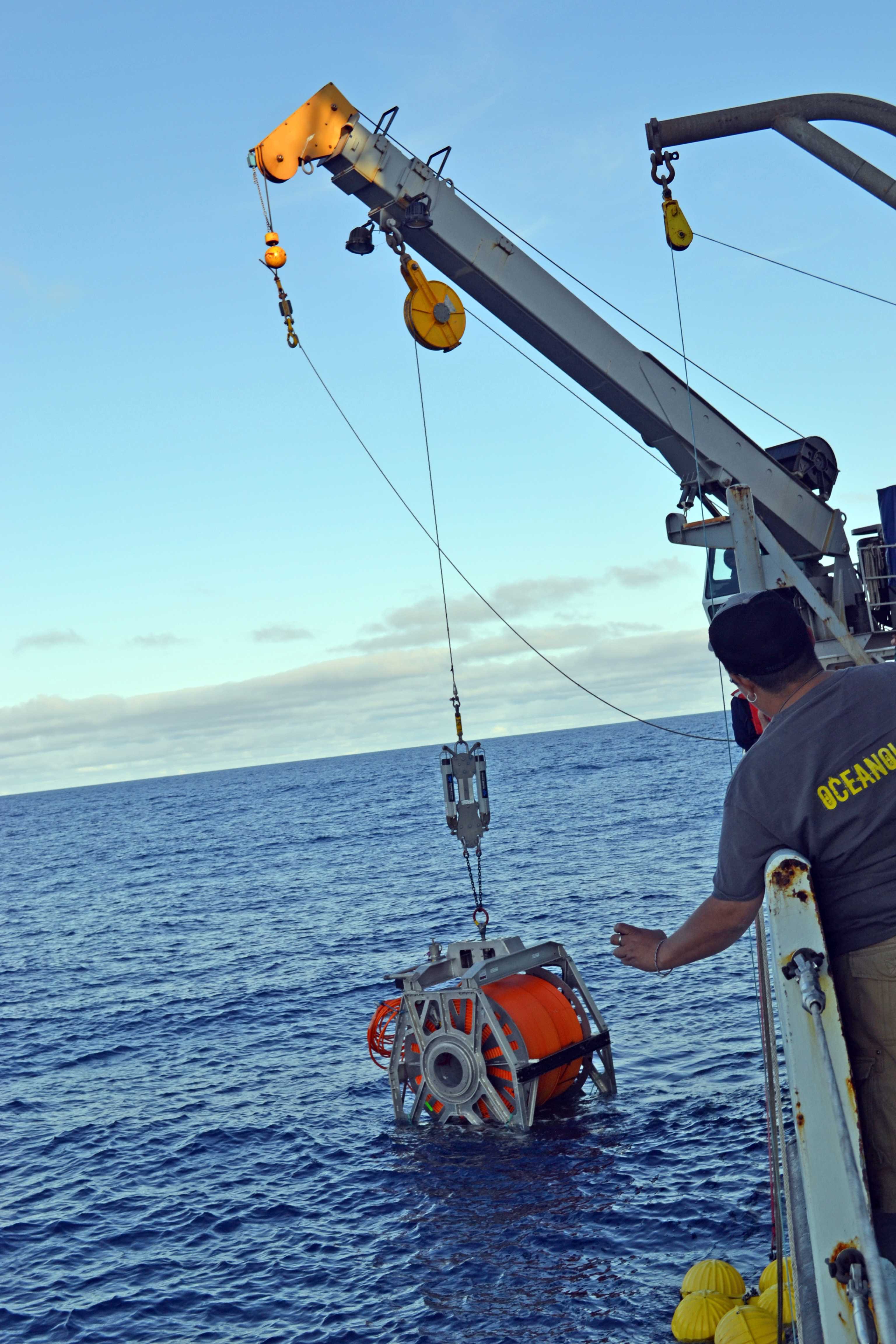
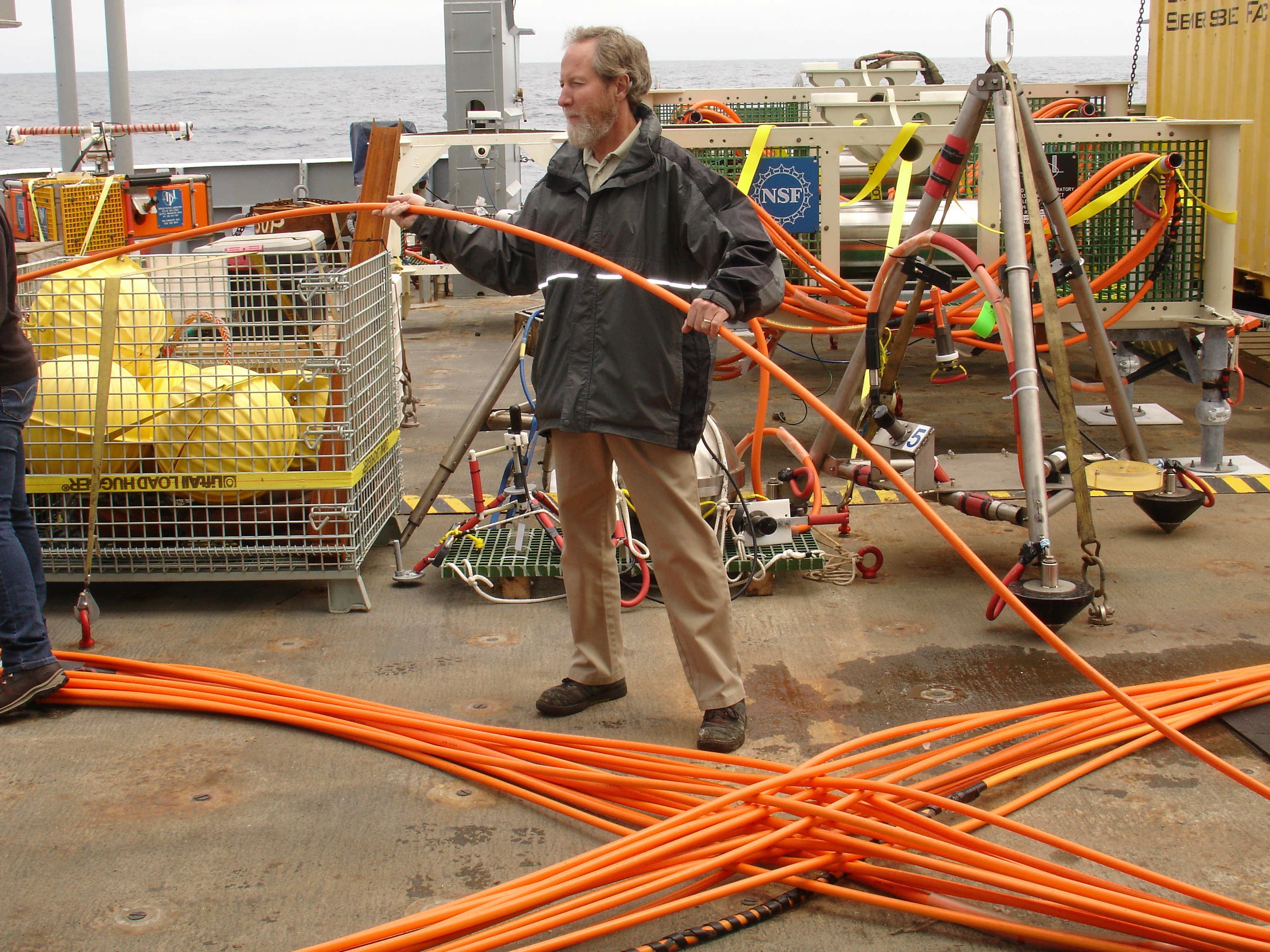
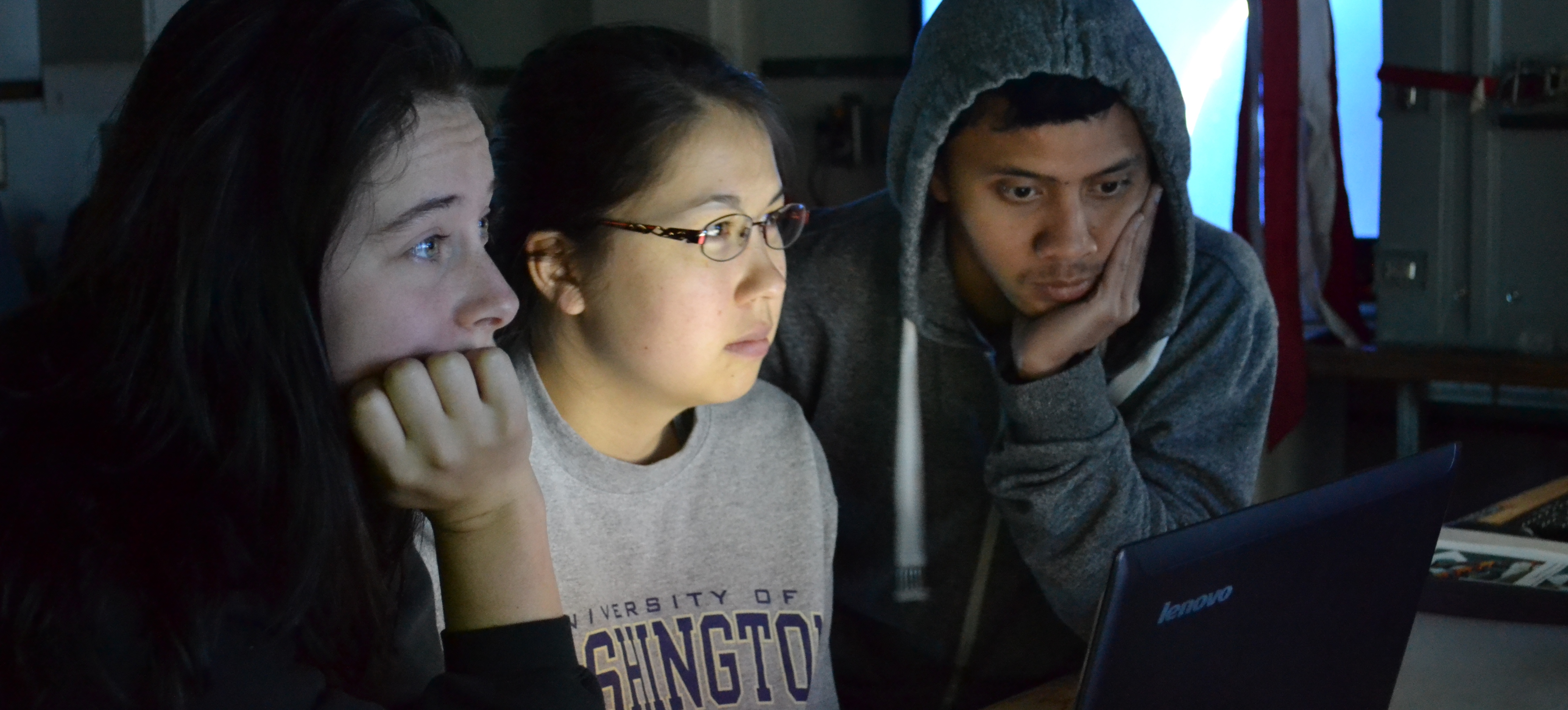
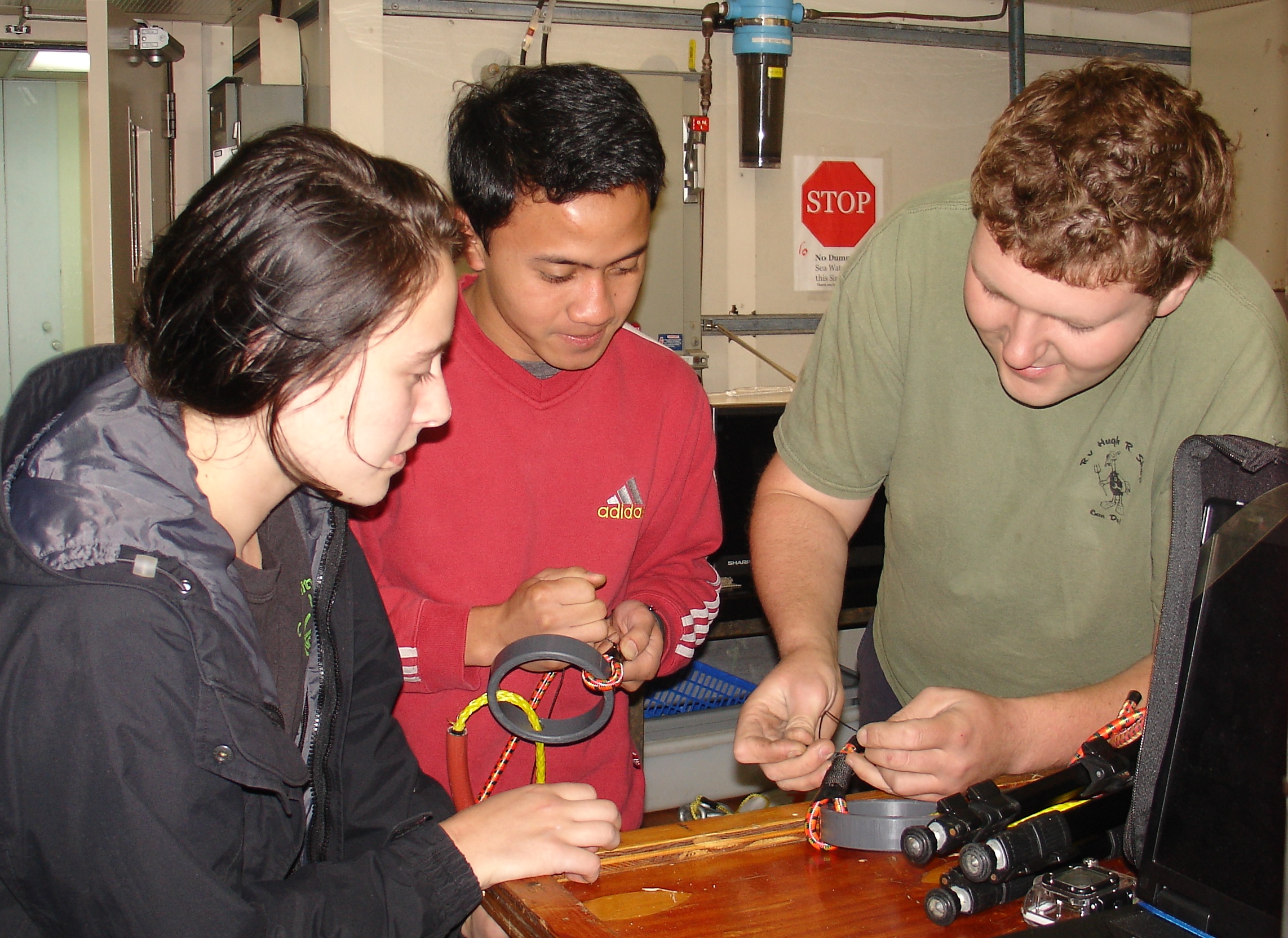
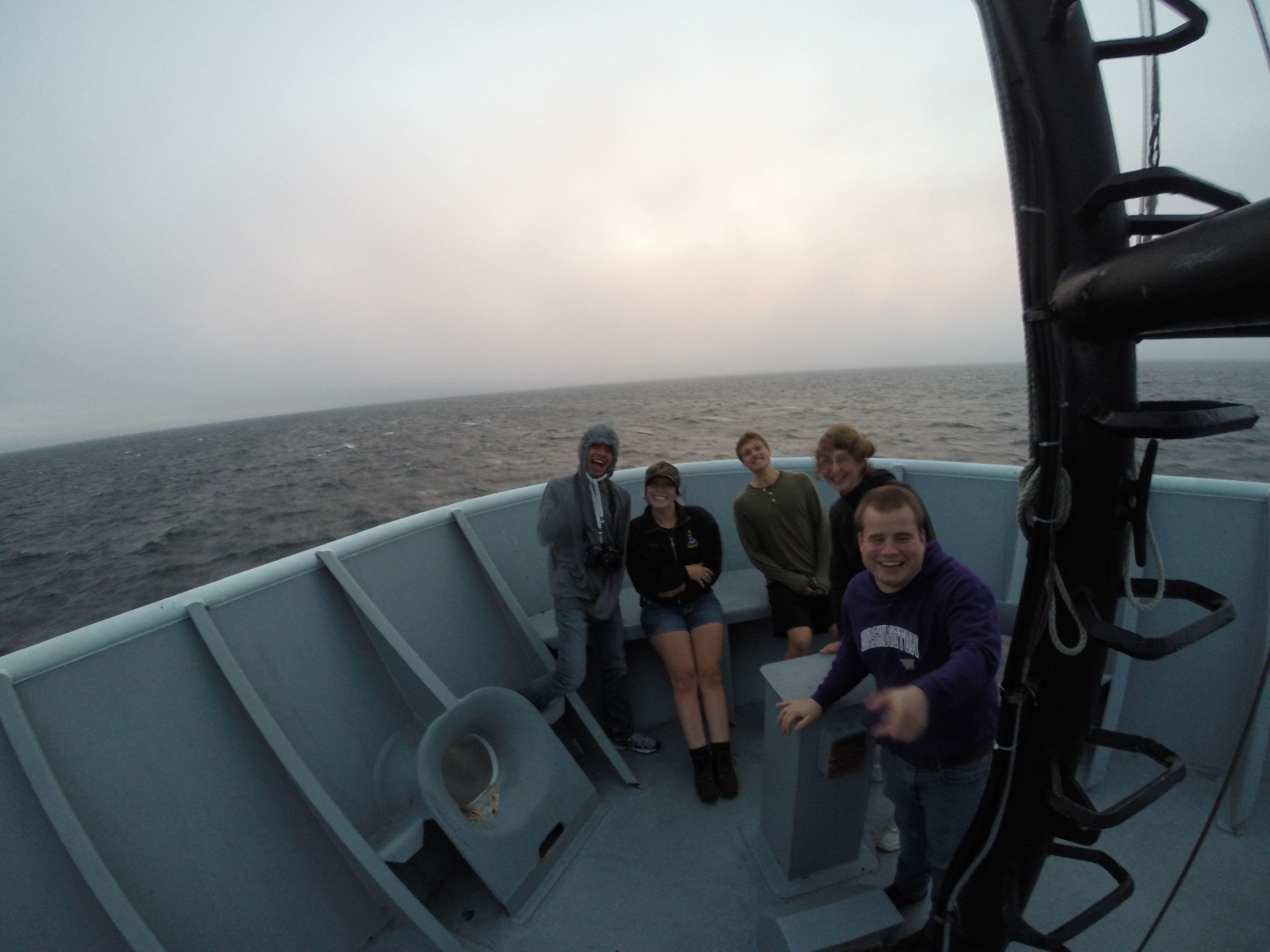
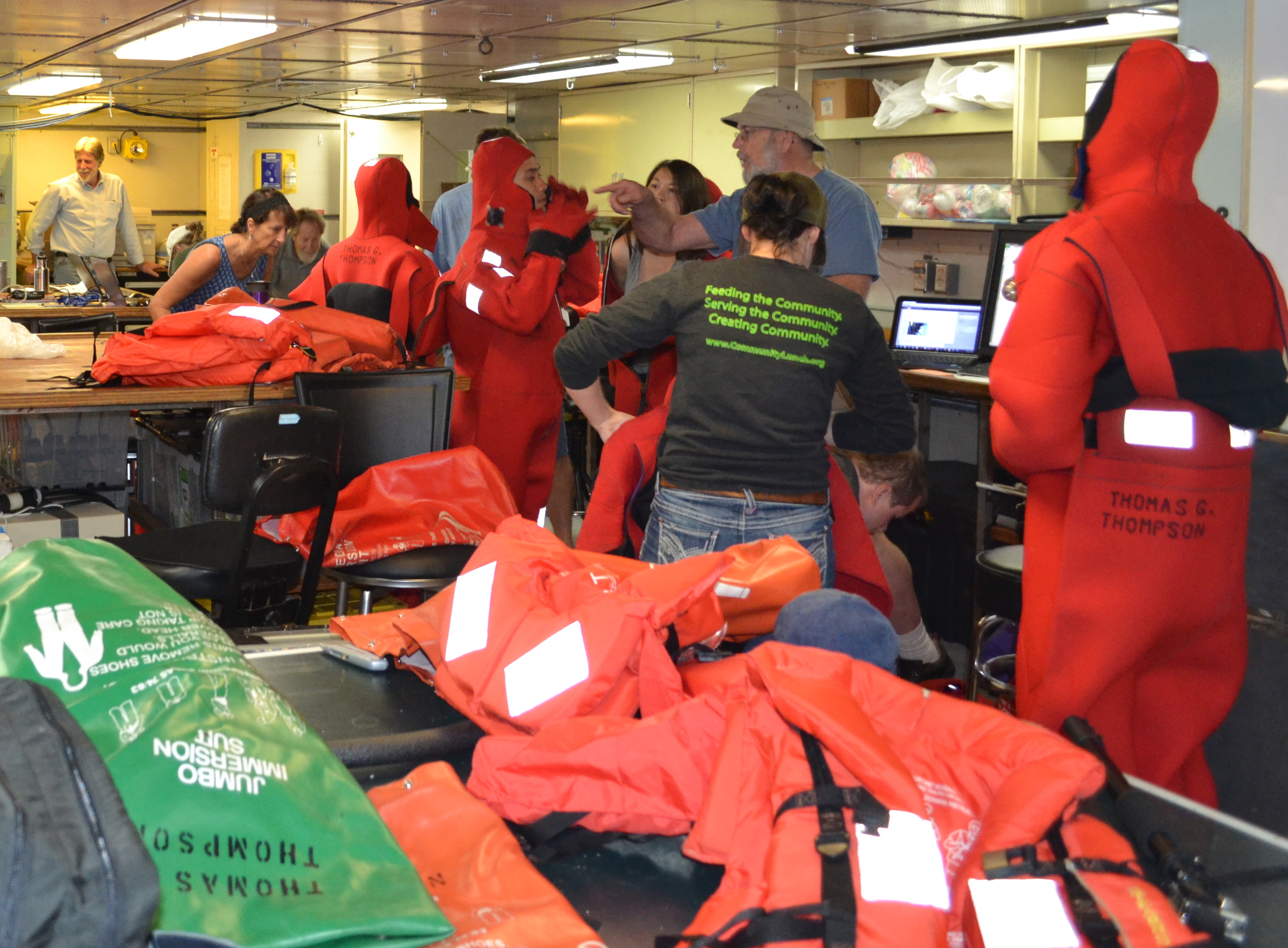
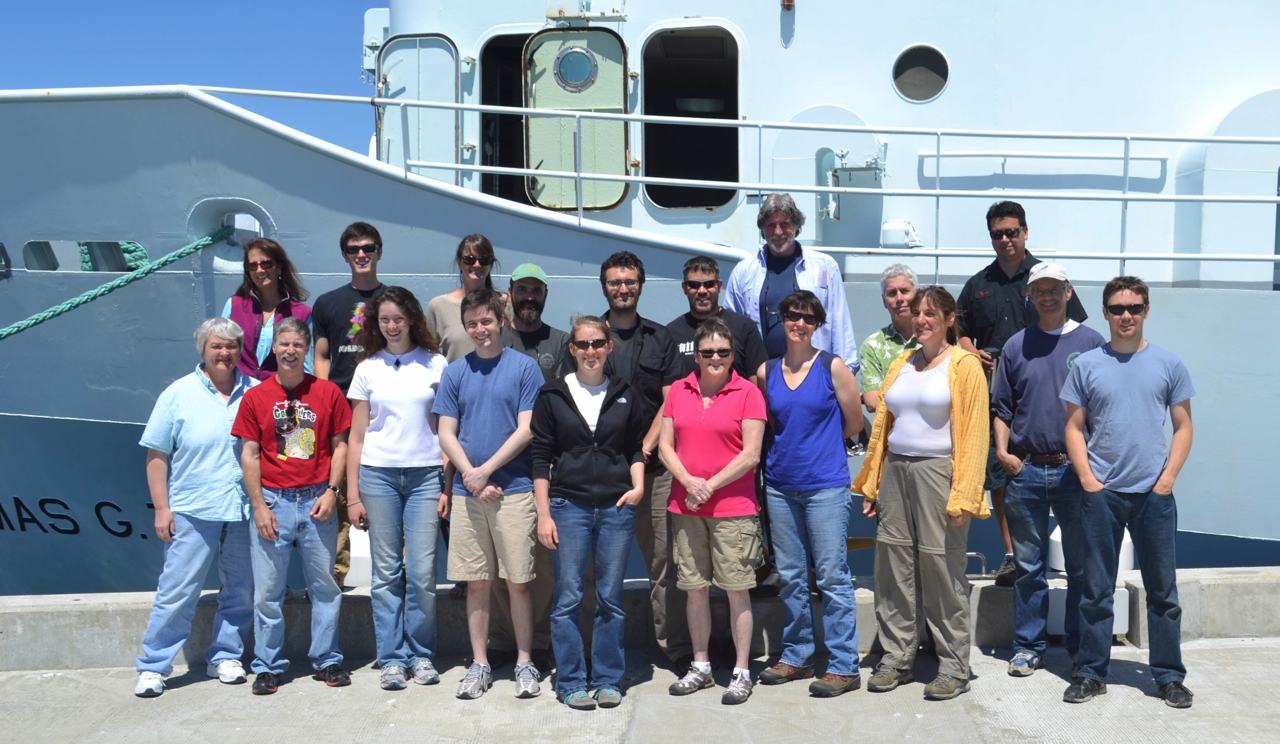
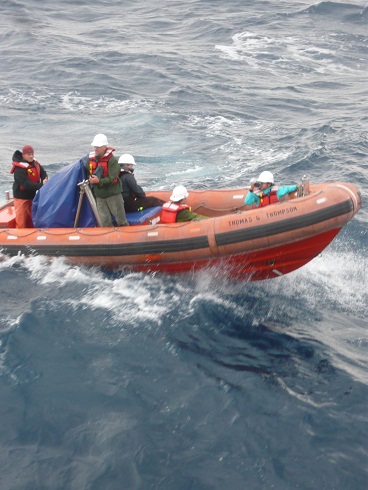
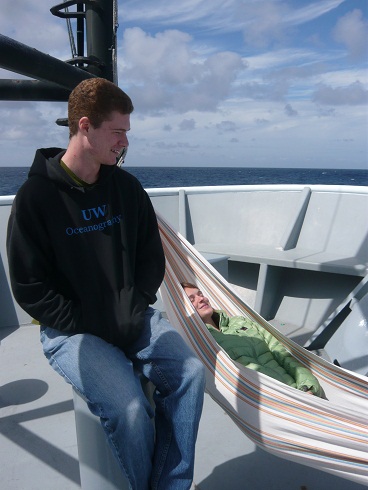
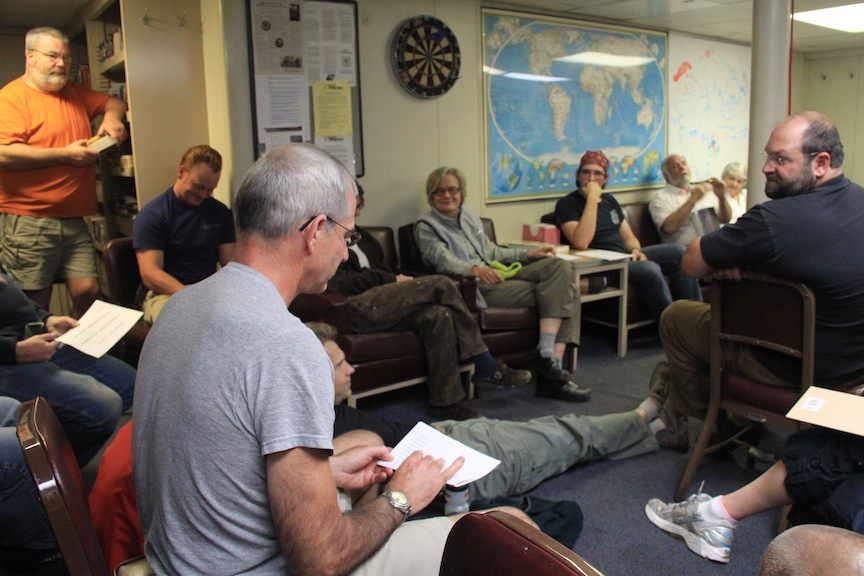
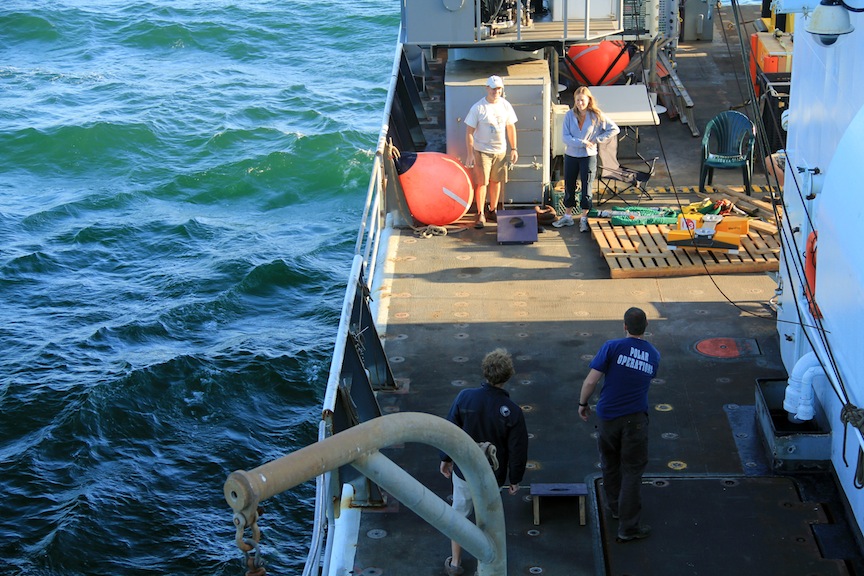
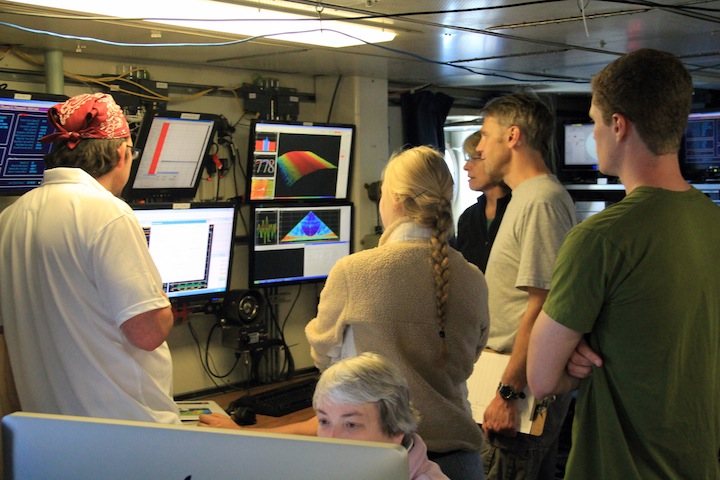
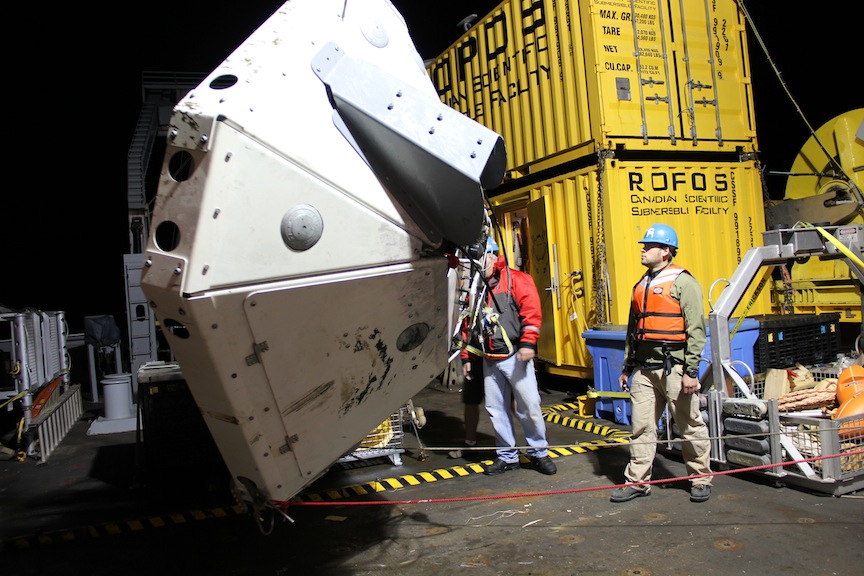
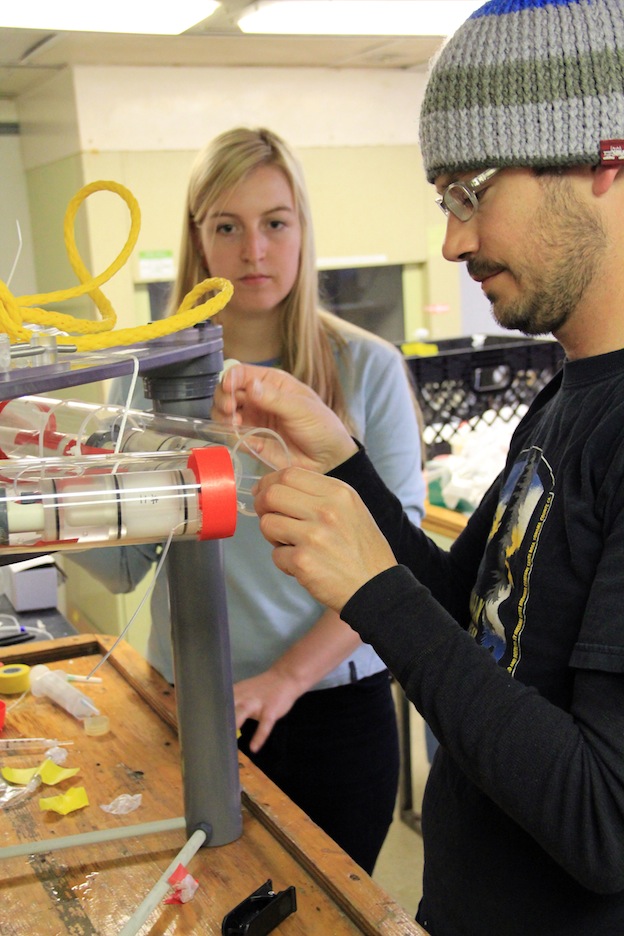
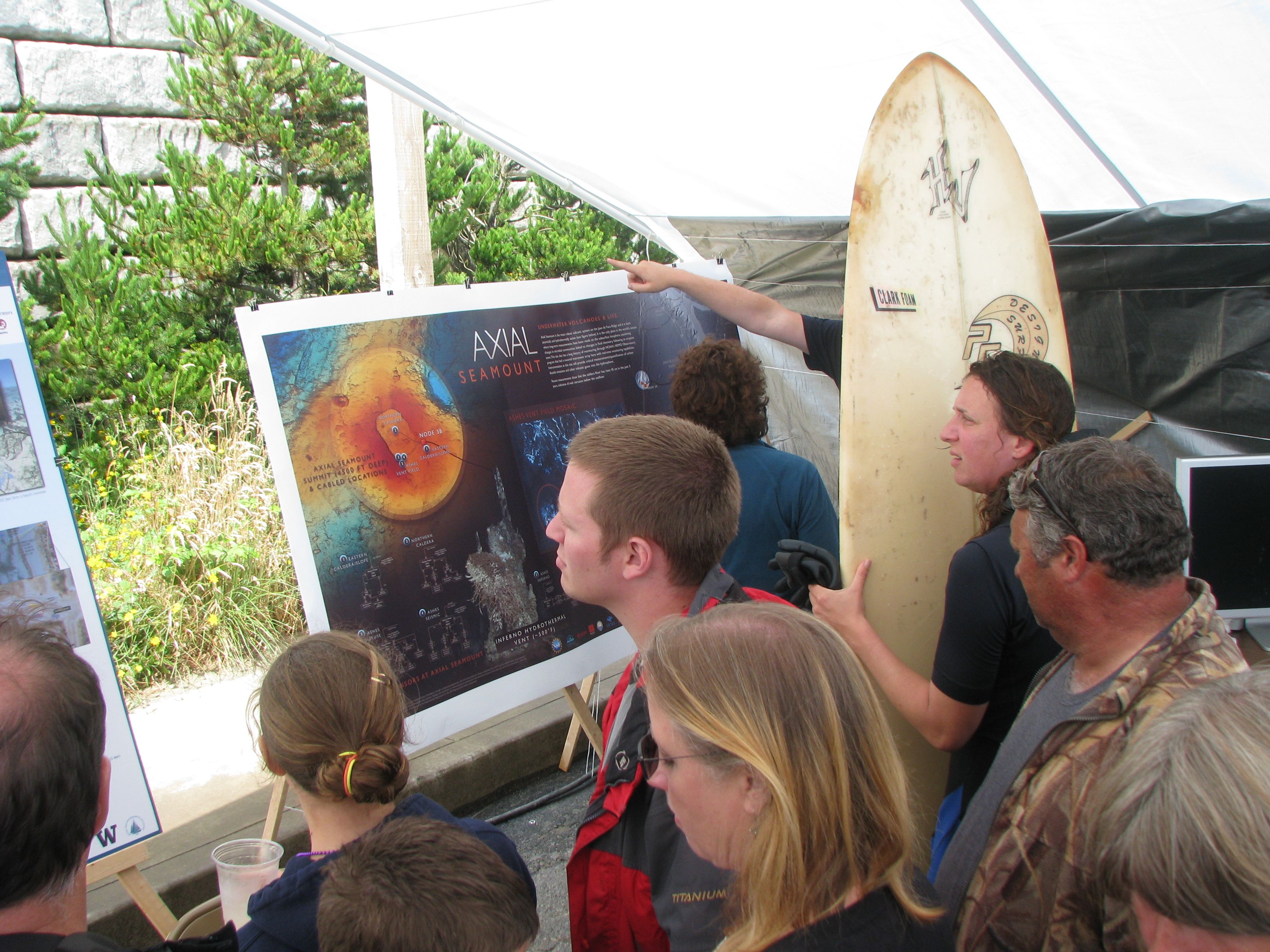
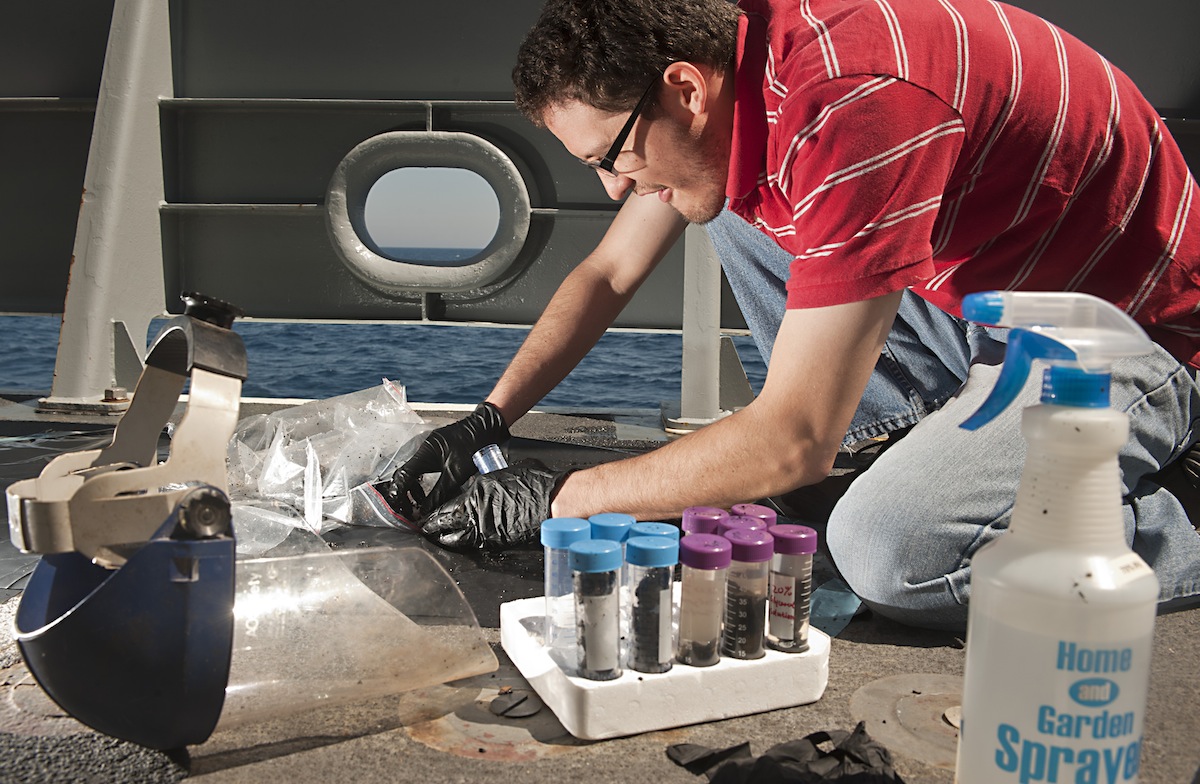
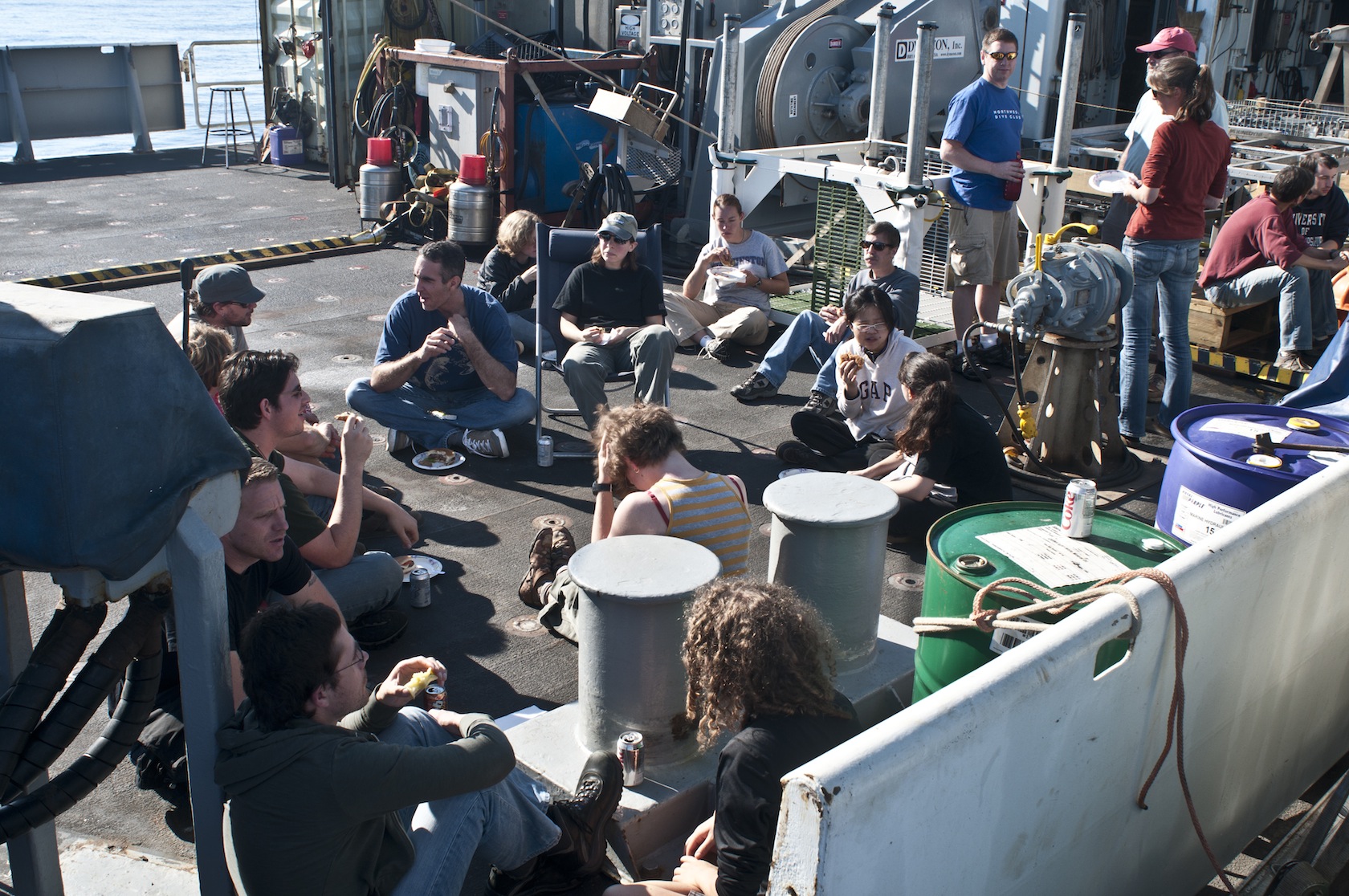
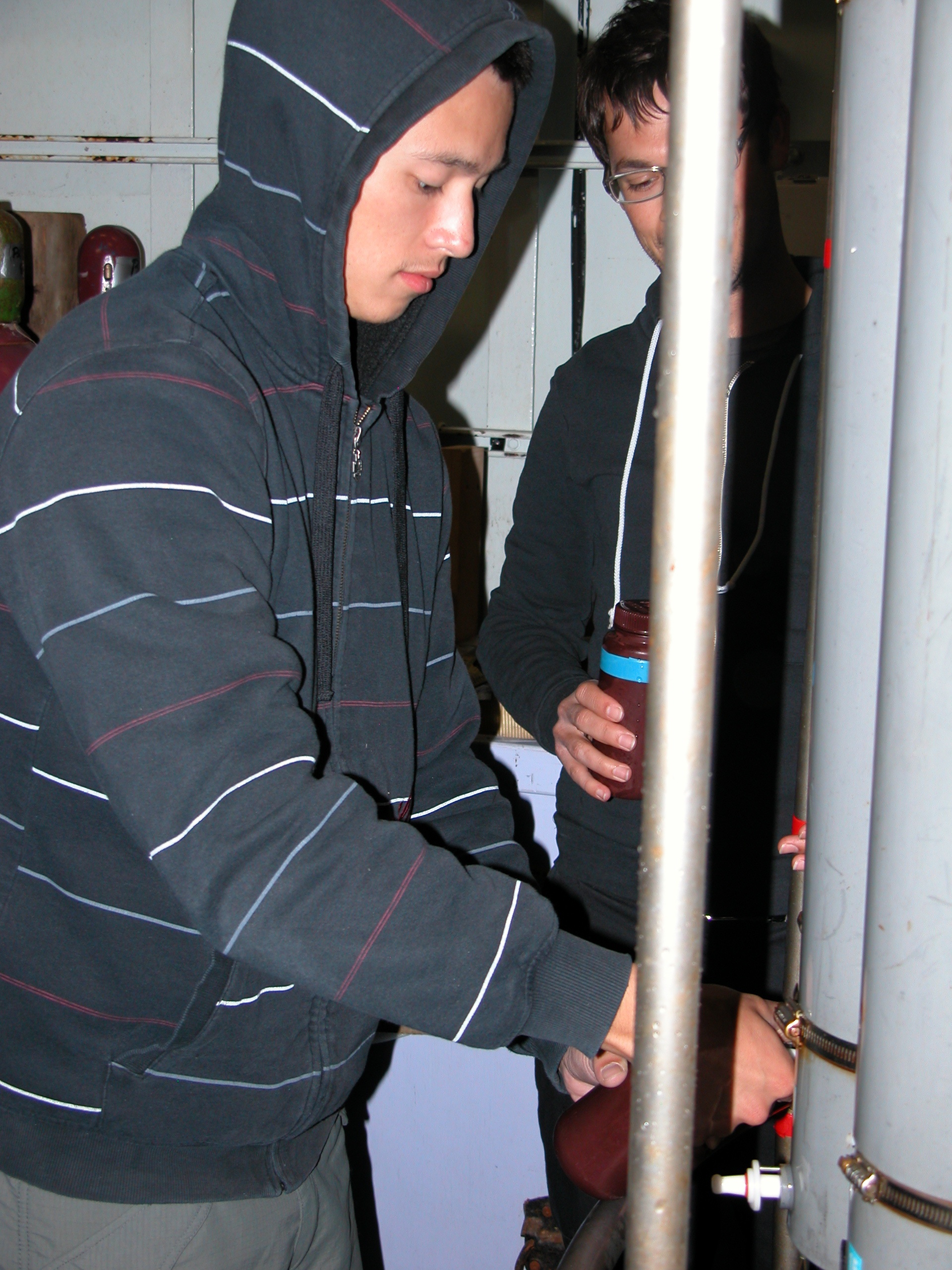
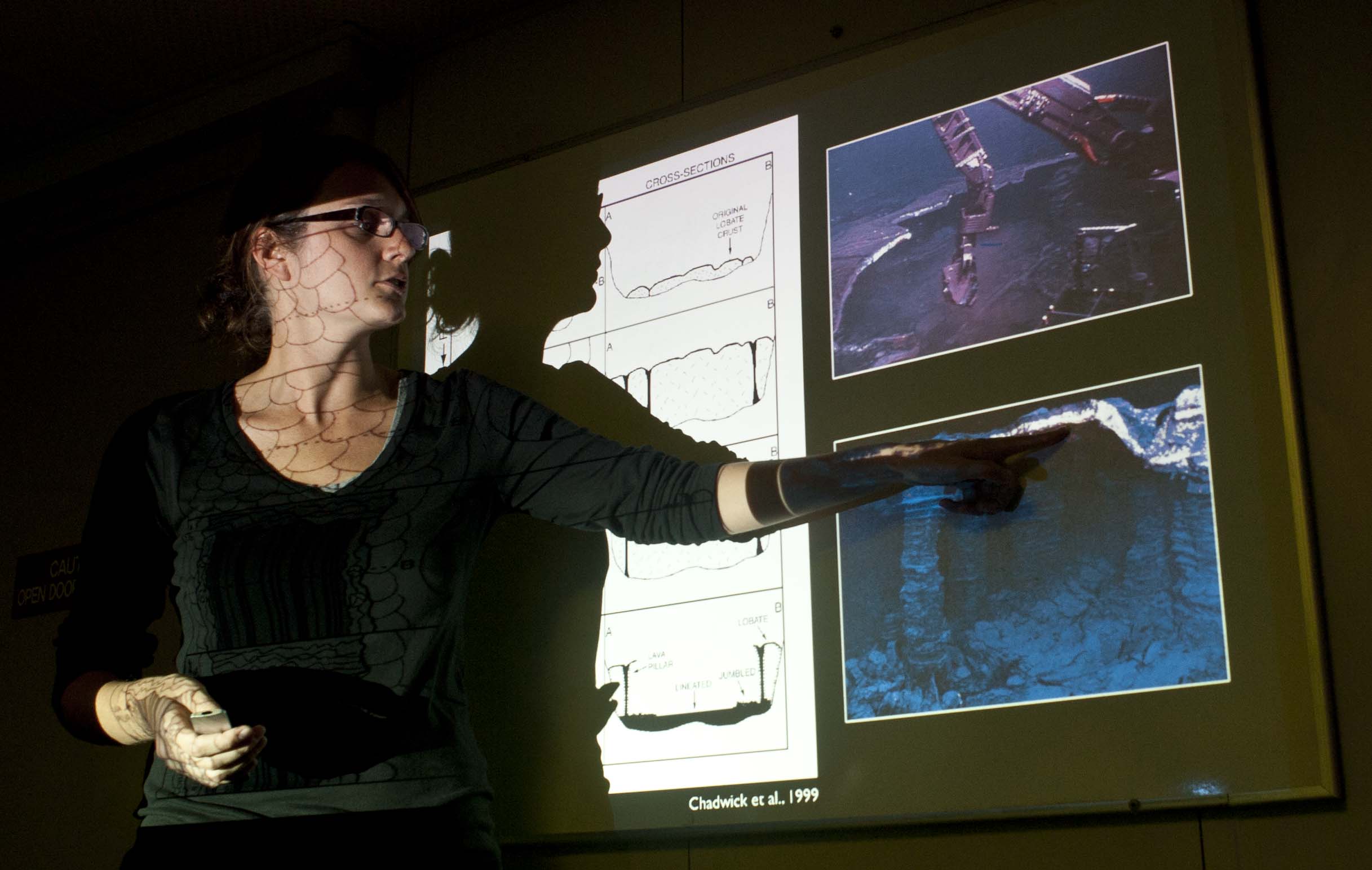
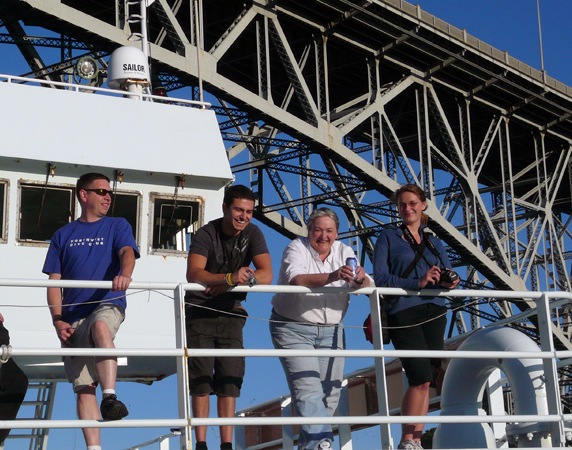
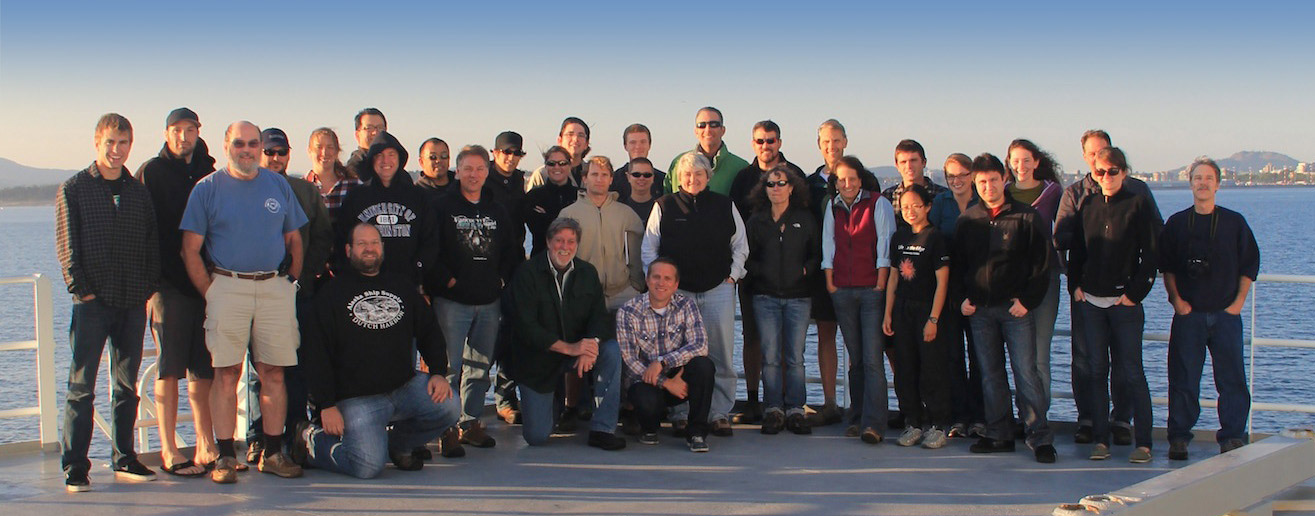
During Leg 3 of VISIONS18 there were eight student participants. Front, left to right: Julie Nelson (Grays Harbor College, professor), Eve Hudson (University of Washington, undergraduate), Ashley Lobao (University of Washington, undergraduate), Elizabeth Pesar (Queens College CUNY, undergraduate), Katie Gonzalez (University of Washington, undergraduate), Spencer Nelson (University of Washington Bothell, undergraduate). Back, left to right: Mathew Munson (University of Washington Bothell, undergraduate), Leland Wood (University of Washington, undergraduate), Emilio Tensin (Queens College CUNY, undergraduate), Katie Bigham (Cabled Array, team member). Credit: M. Elend, University of Washington, V18.












![University of Washington students and mentors gather in front of the ROV Jason near the end of the Leg 2 UW VISIONS program. Front, left to right: Erik Friedrickson [School of Oceanography (SoO) graduate student], Bing-Yu Lee (SoO and Earth and Space Sciences), Riah Buchanan (Digital Arts and Experimental Media graduate student), Katie Bigham (Cabled Array team, mentor). Back left to right: Brison Grey (SoO undergrad), Julie Nelson (Grays Harbor College professor, mentor), Amy Larsen (SoO undergrad), Katie Gonzalez (SoO undergrad), Deb Kelley (Instructor), Eve Hudson (SoO undergrad). Credit: M. Elend, University of Washington, V18.](https://s3.us-west-2.amazonaws.com/media.ooica.net/wp-content/uploads/2019/01/02231931/leg2_v18_sgroup_photo_20180708_143600_leg2.jpg)