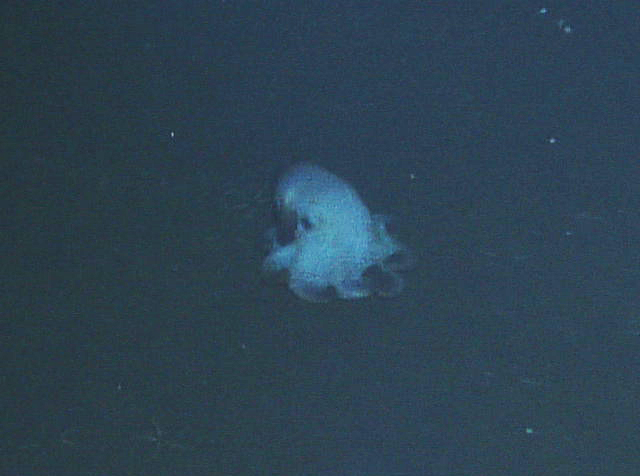
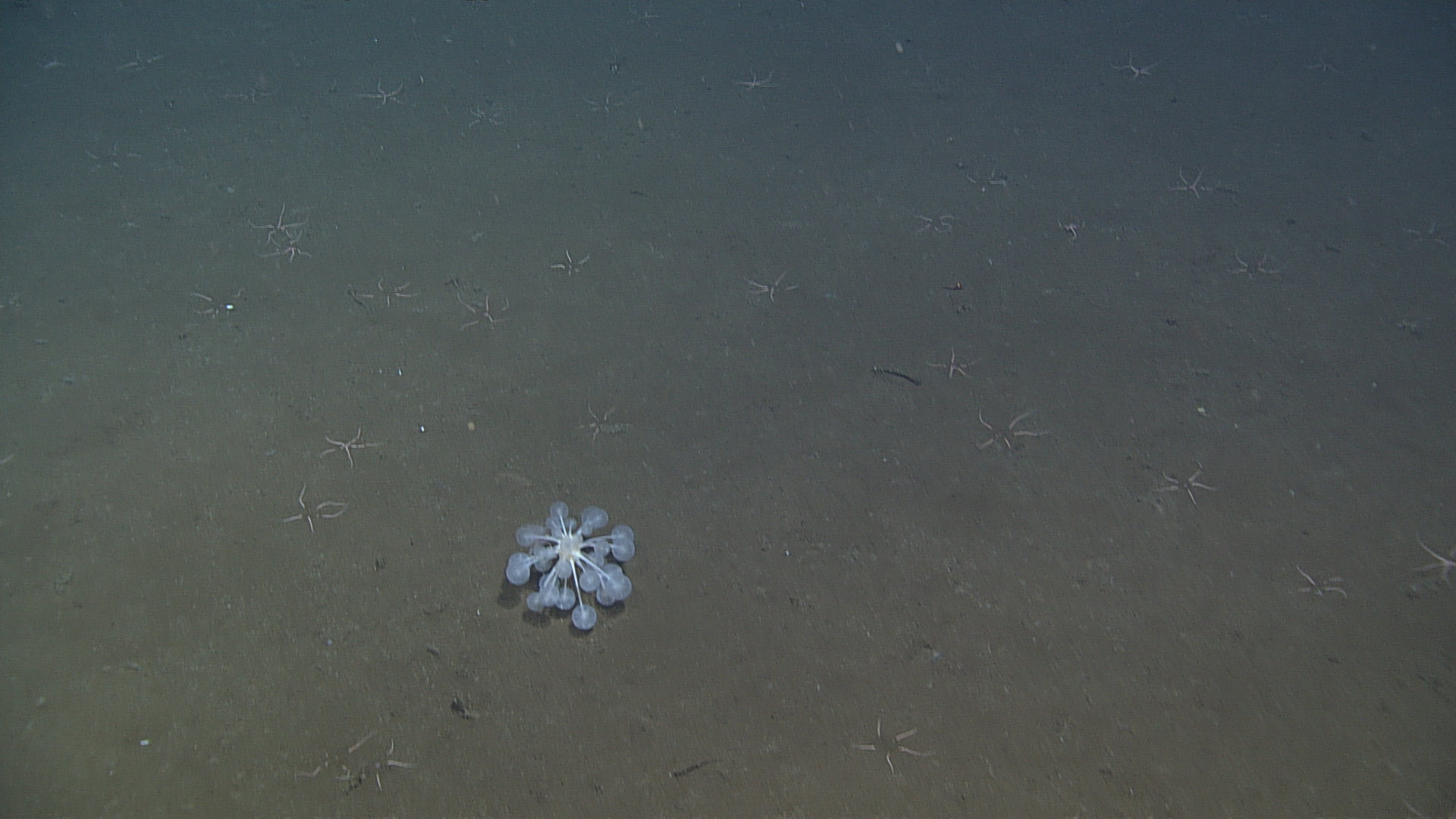
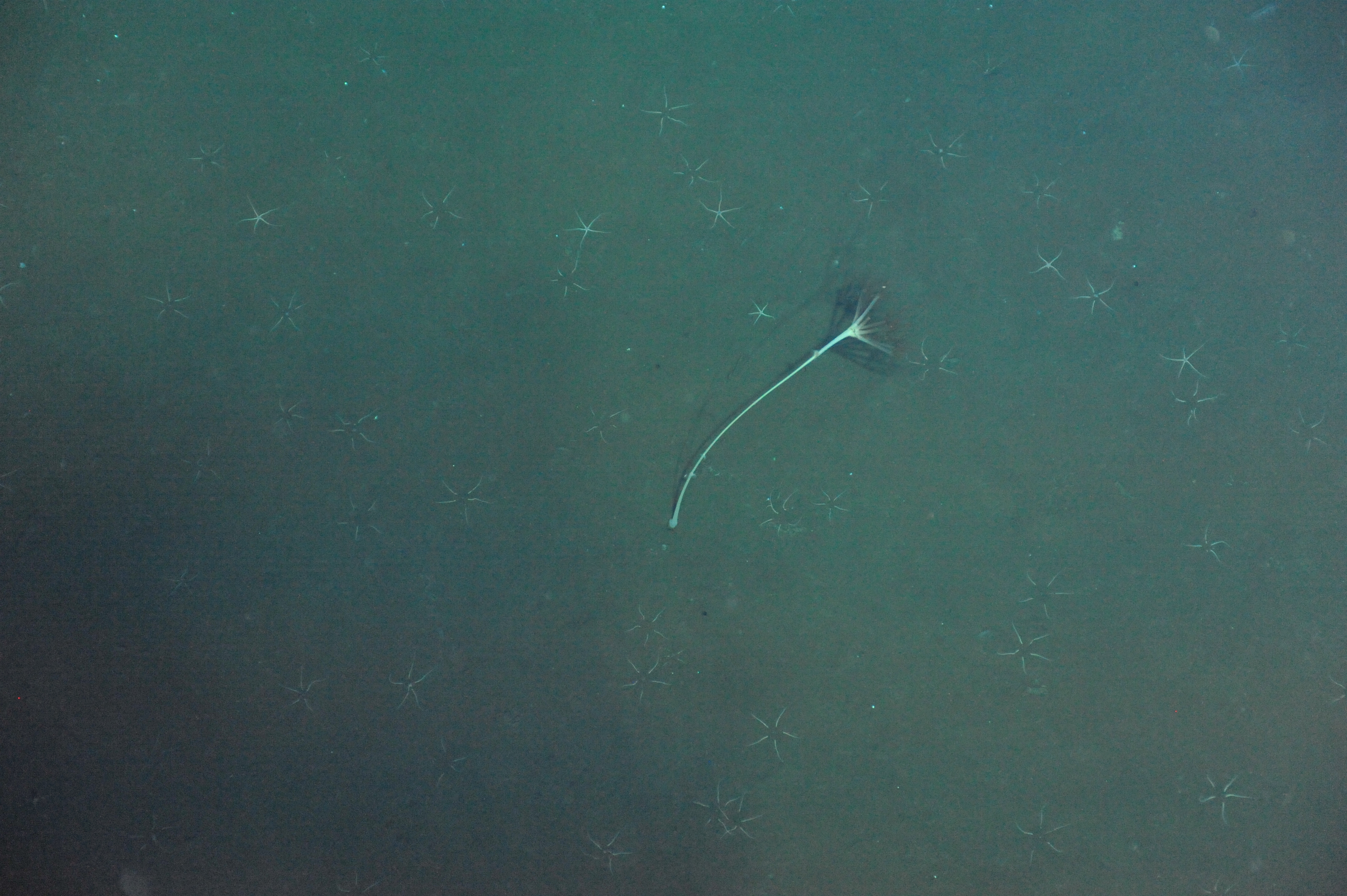
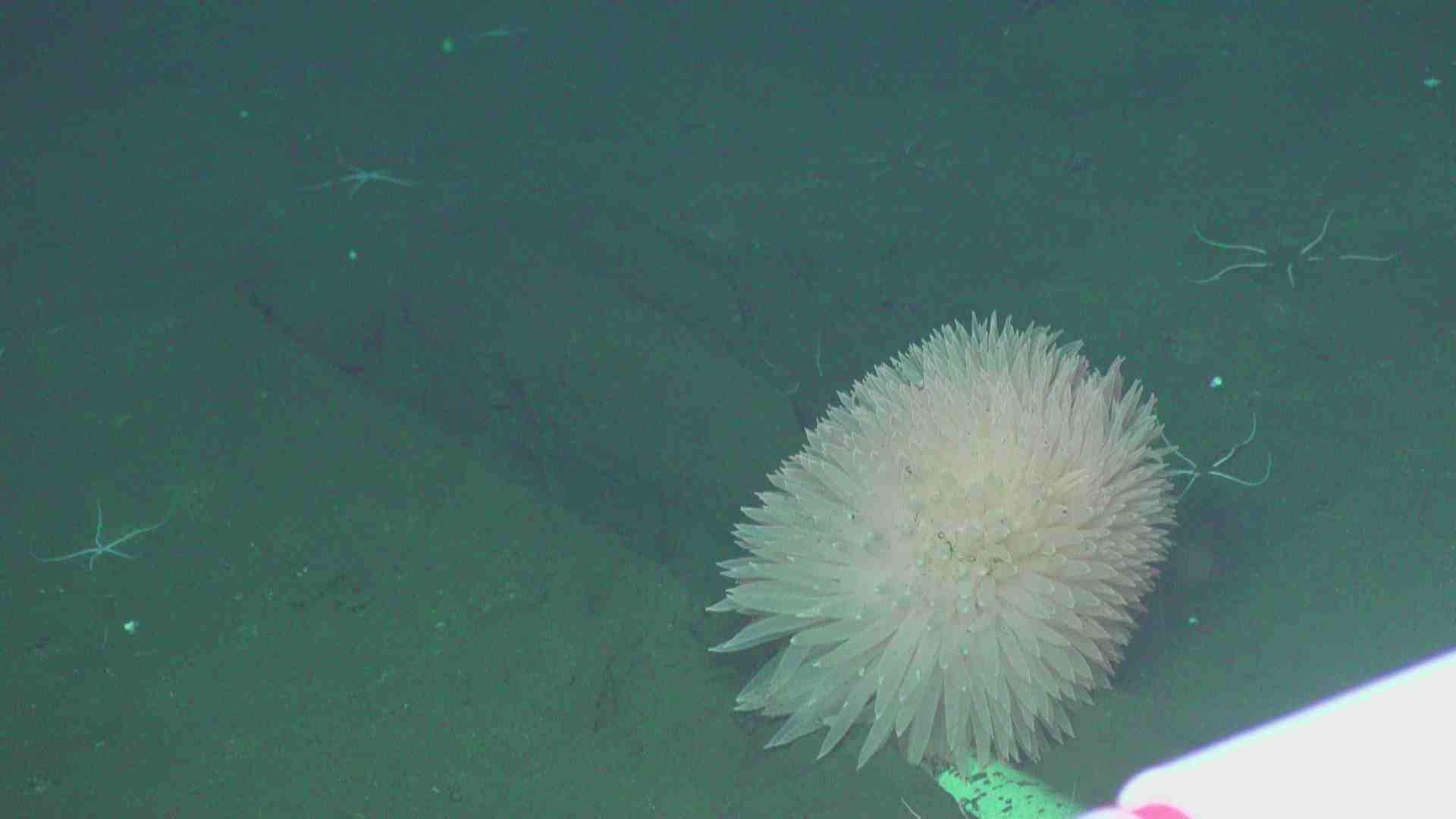
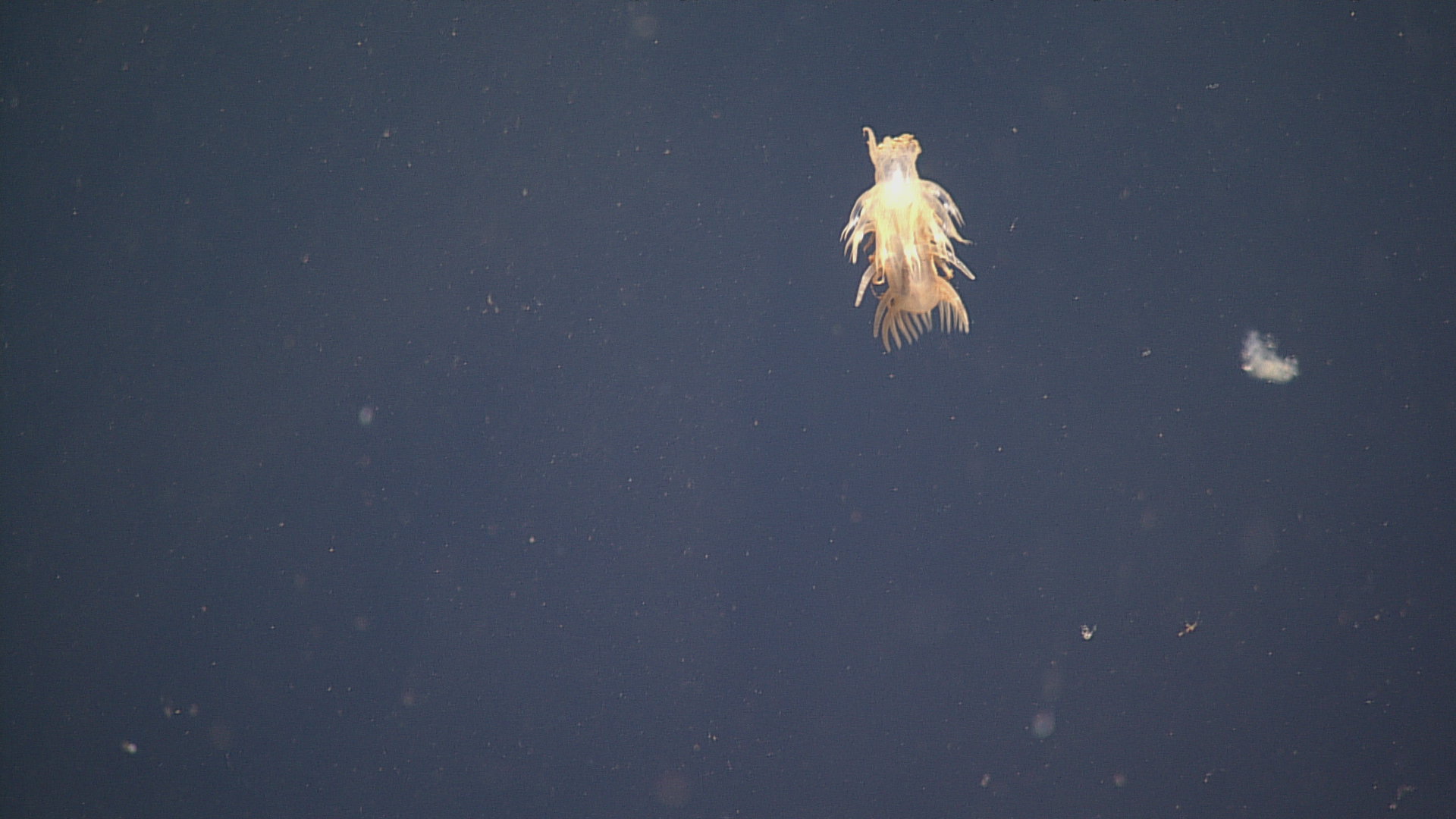
A dumbo octopus (Grimpoteuthis) at the Axial Base site at 2600 m water depth. Identified by cephalopod experts Stephanie Bush (MBARI) and Mike Vecchione (Smithsonian) Credit: UW/NSF-OOI/CSSF, Dive R1739, V14.
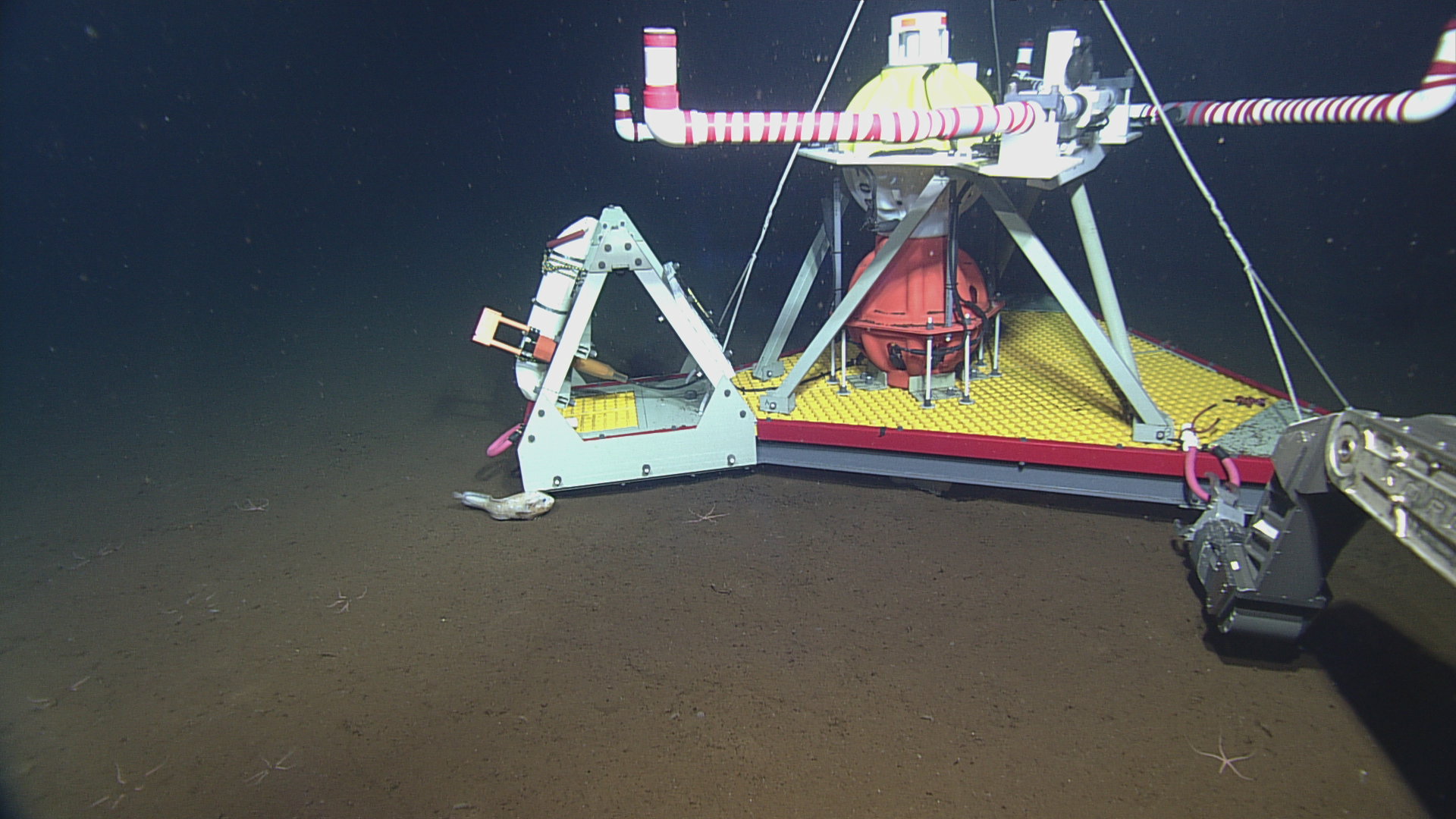
An octopus hanging out near primary node PN3A at Axial Base, 2600 meters deep. Credit: UW/NSF-OOI/CSSF,ROPOS Dive 1742, V14.
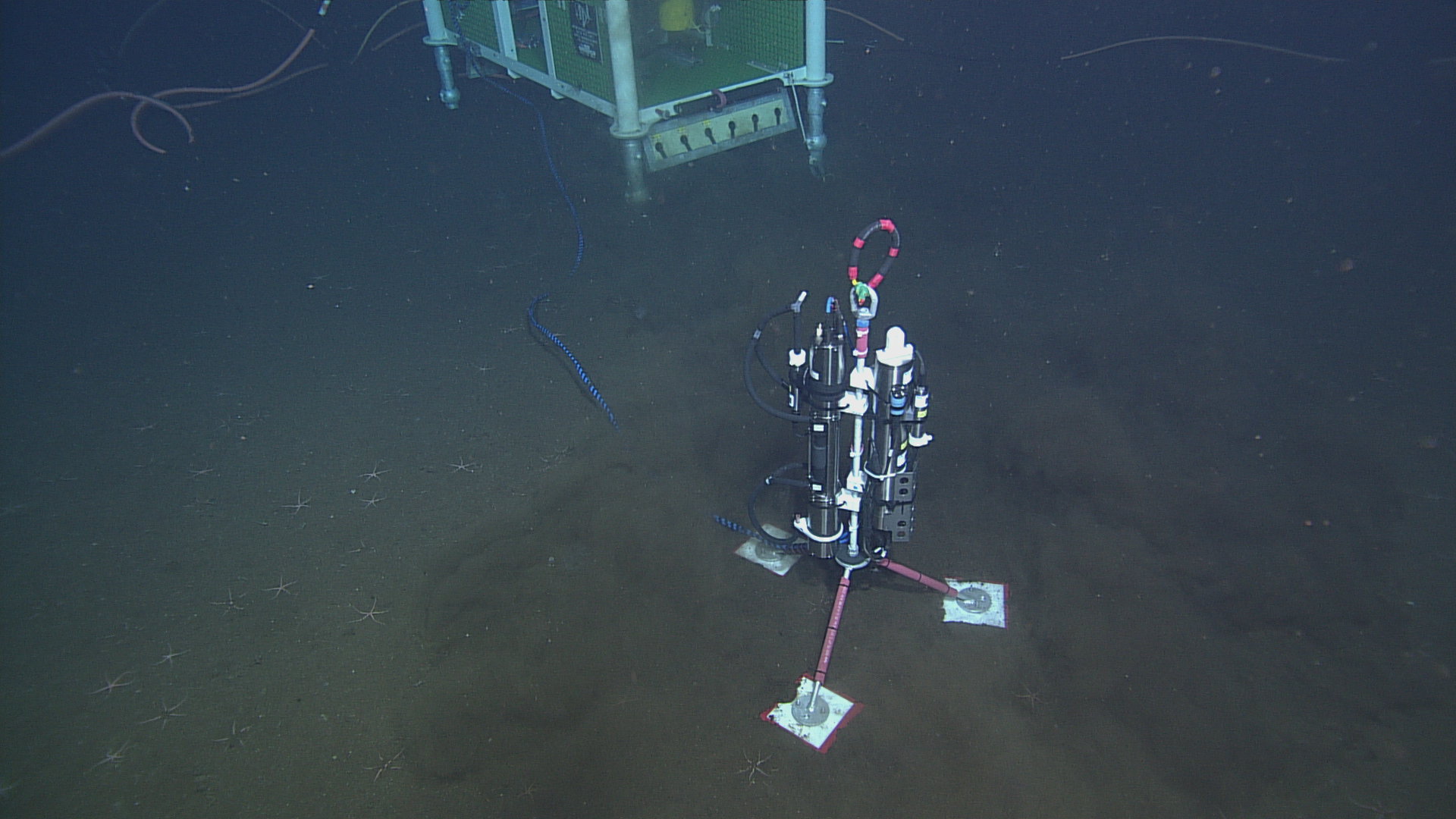
A Graneledone octopus peeking at Jason around the side of the Axial Base HPIES instrument. Photo Credit: UW/NSF-OOI/WHOI; V19
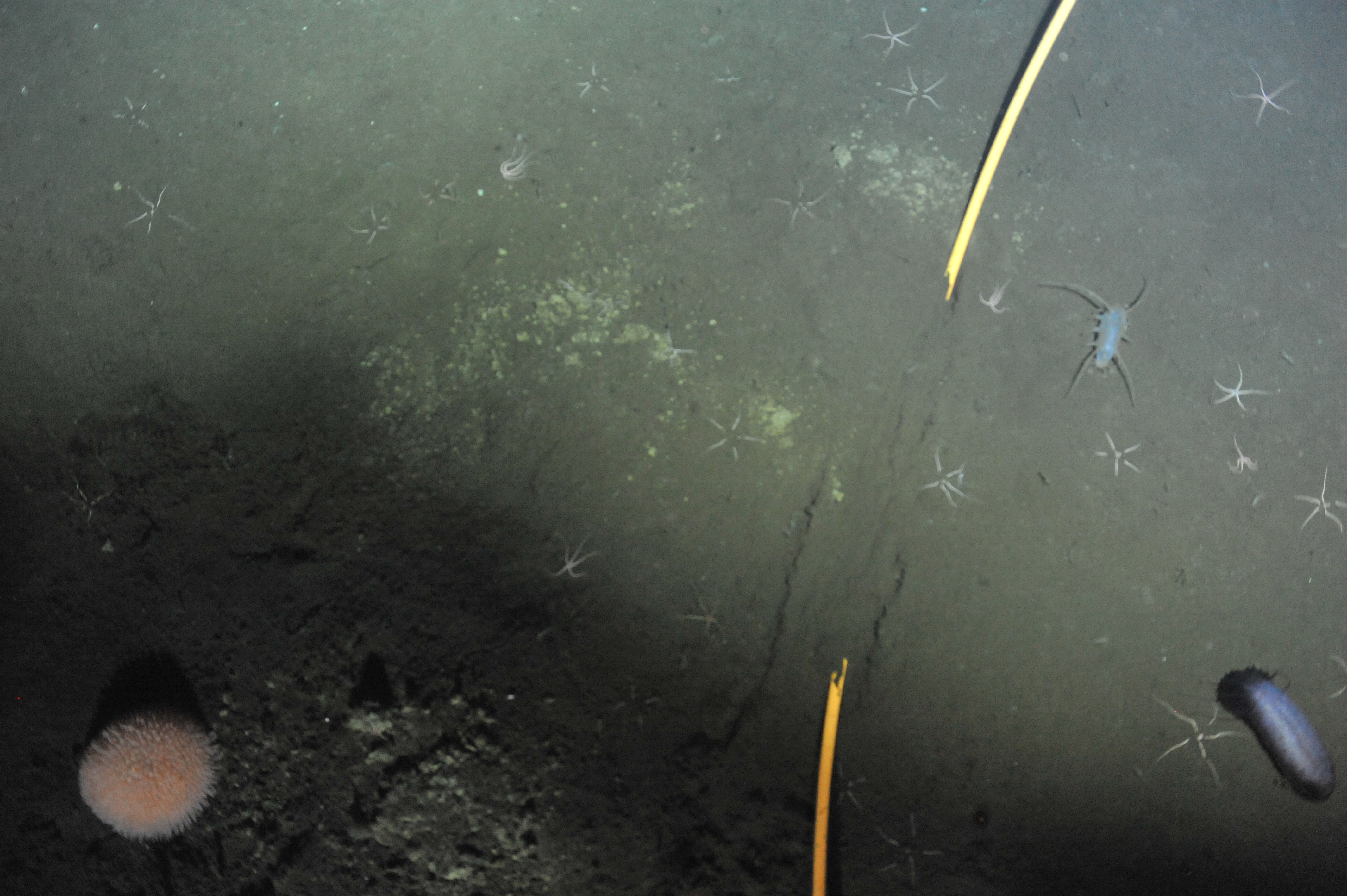
Bathydoris aioca, an unusually large (~30 cm) deep-sea nudibranch, was part of a unique community of invertebrates gathered around the anchor of the Slope Base profiler mooring in 2900 meters (~9500 feet) of water, also including flytrap anemones, galatheid crabs, and sea cucumbers. Photo credit: NSF-OOI/UW/CSSF, Dive R2258, V22
OOI RSN Primary Node 3A (PN3A) on the aft deck of the TE SubCom Dependable. Cable segment 6 is on the port sheave (to the right in this photo) and cable segment 7 is on the center sheave (to the left in this photo).
--Photo by Brian Ittig
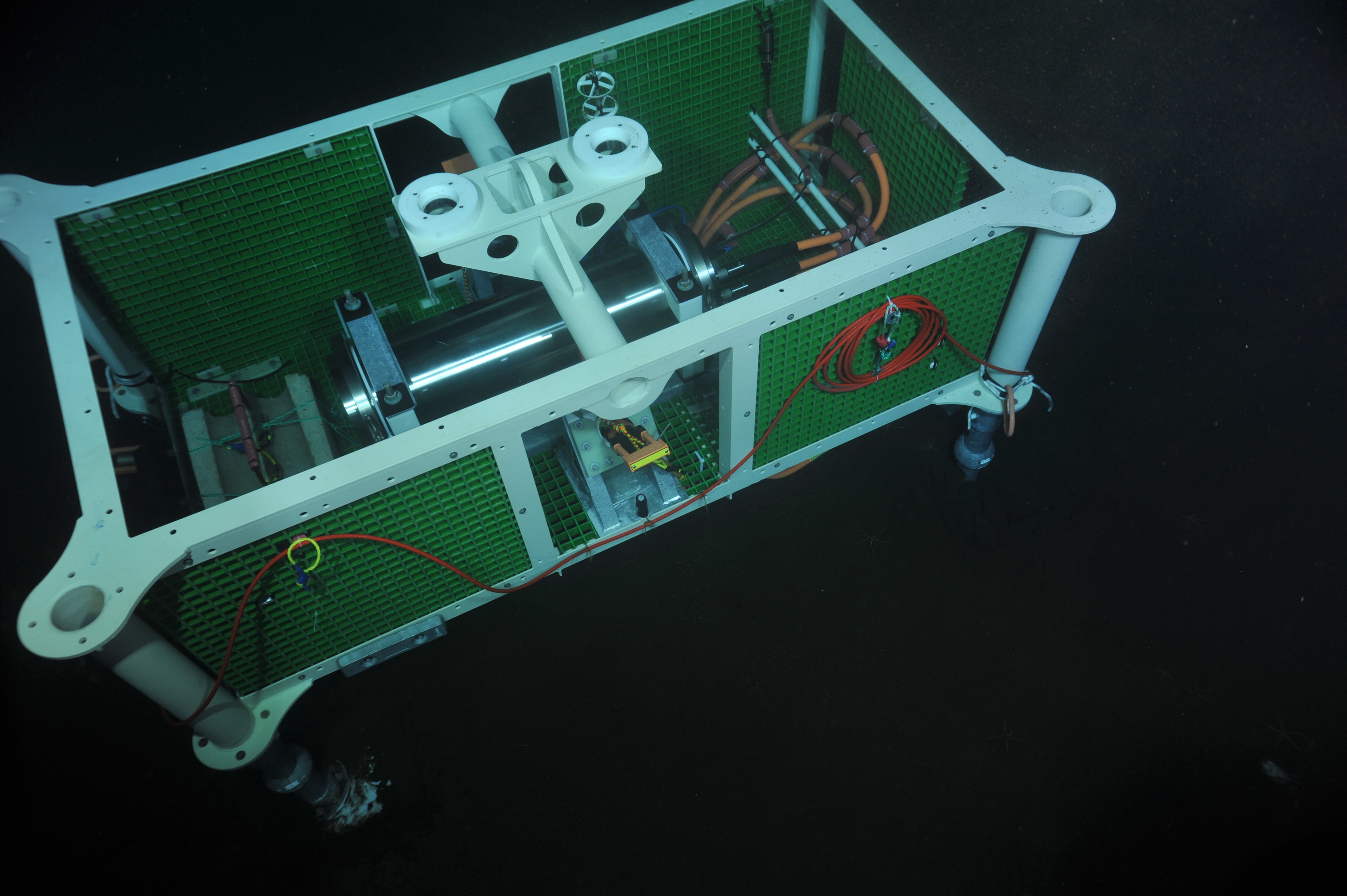
Primary Node 3A is installed at the base of Axial Volcano and connected to the backbone cable, which is connected to a terrestrial shore station in Pacific City, Oregon. This node provides 10,000 volts of power and 10 Gbs bandwidht for real-time communication. The node is located >300 miles off the coast. Photo Credit: Photo credit: NSF-OOI/UW/CSSF
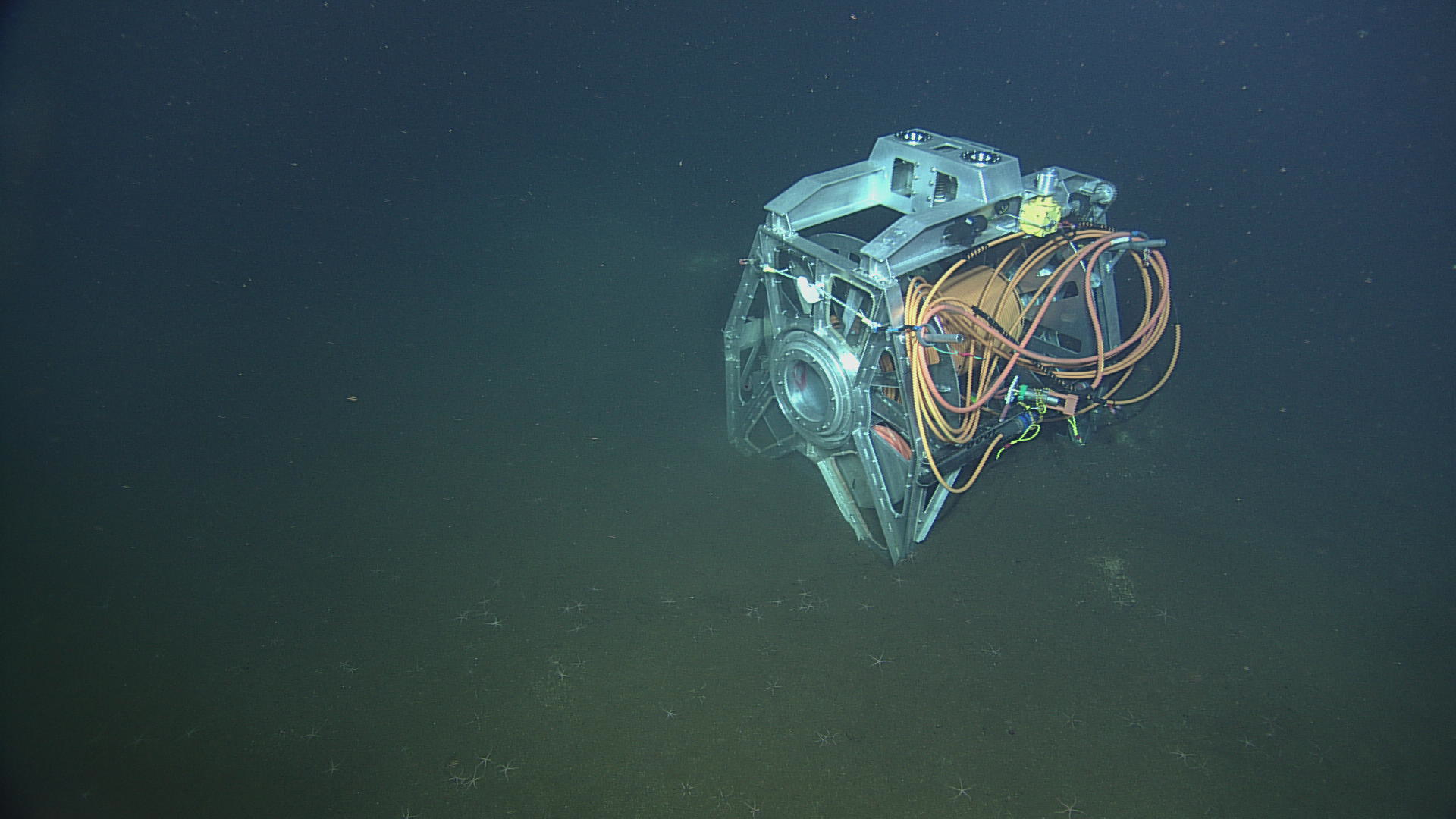
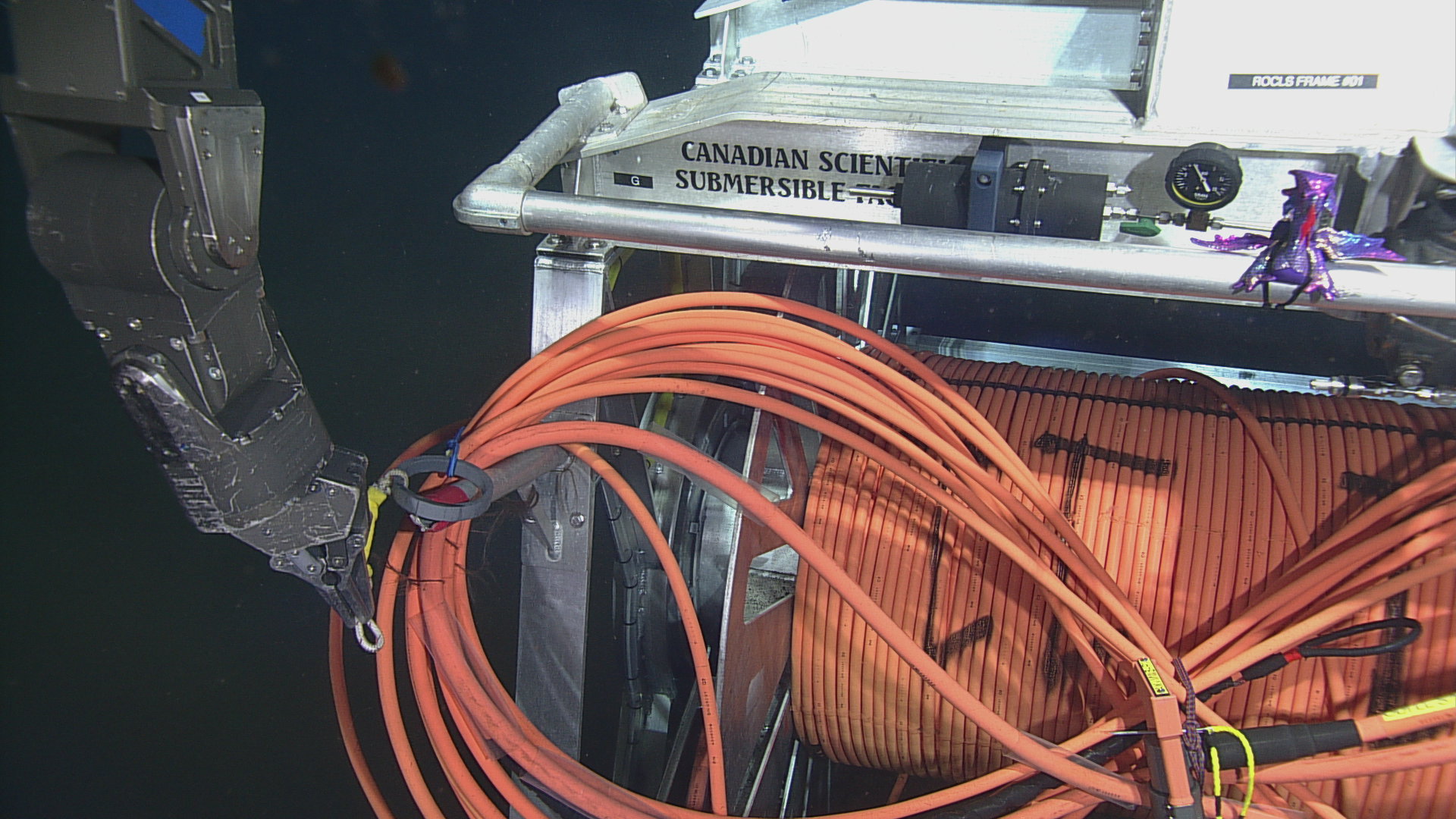
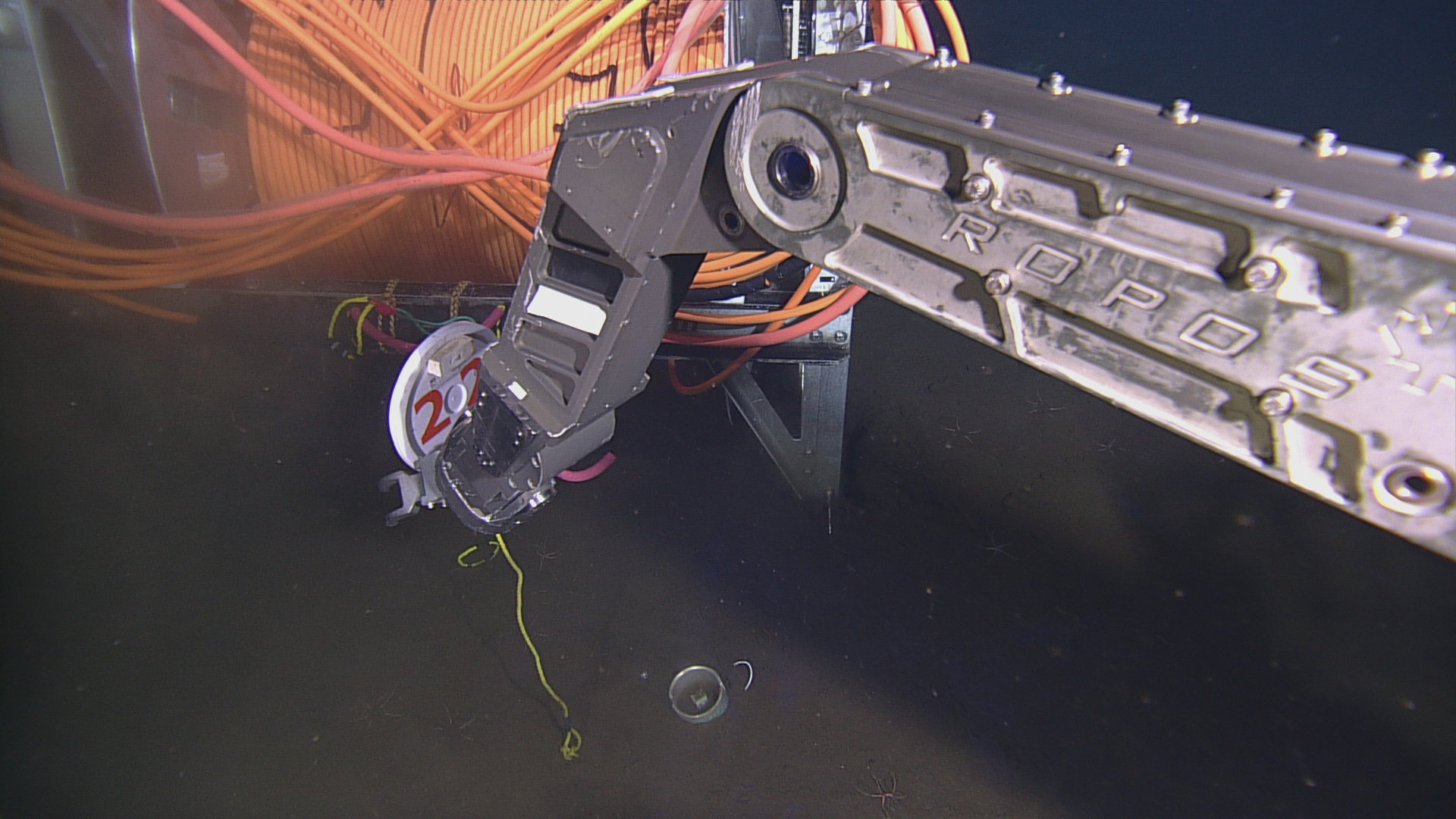
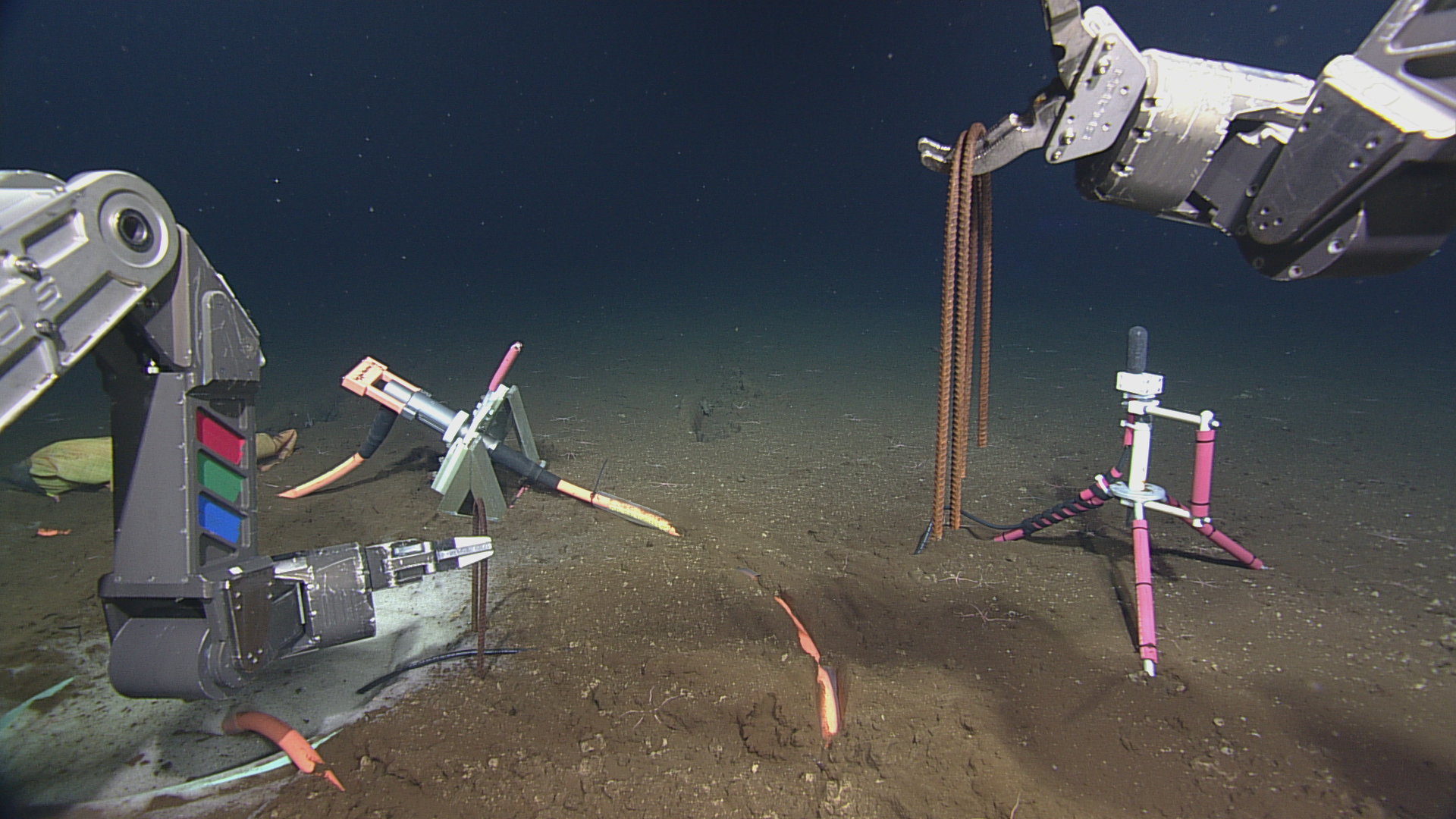
The ROCLS cable drum is unlatched on the seafloor at the base of Axial Seamount near PN3A at a depth of 2600 m. The cable, once plugged into a junction box and Primary Node, will power and communicate with ~2600 m-tall (8500 ft) instrumented moorings, as well as seafloor instruments. Photo Credit: NSF-OOI/UW/CSSF; Dive R1715; V14.
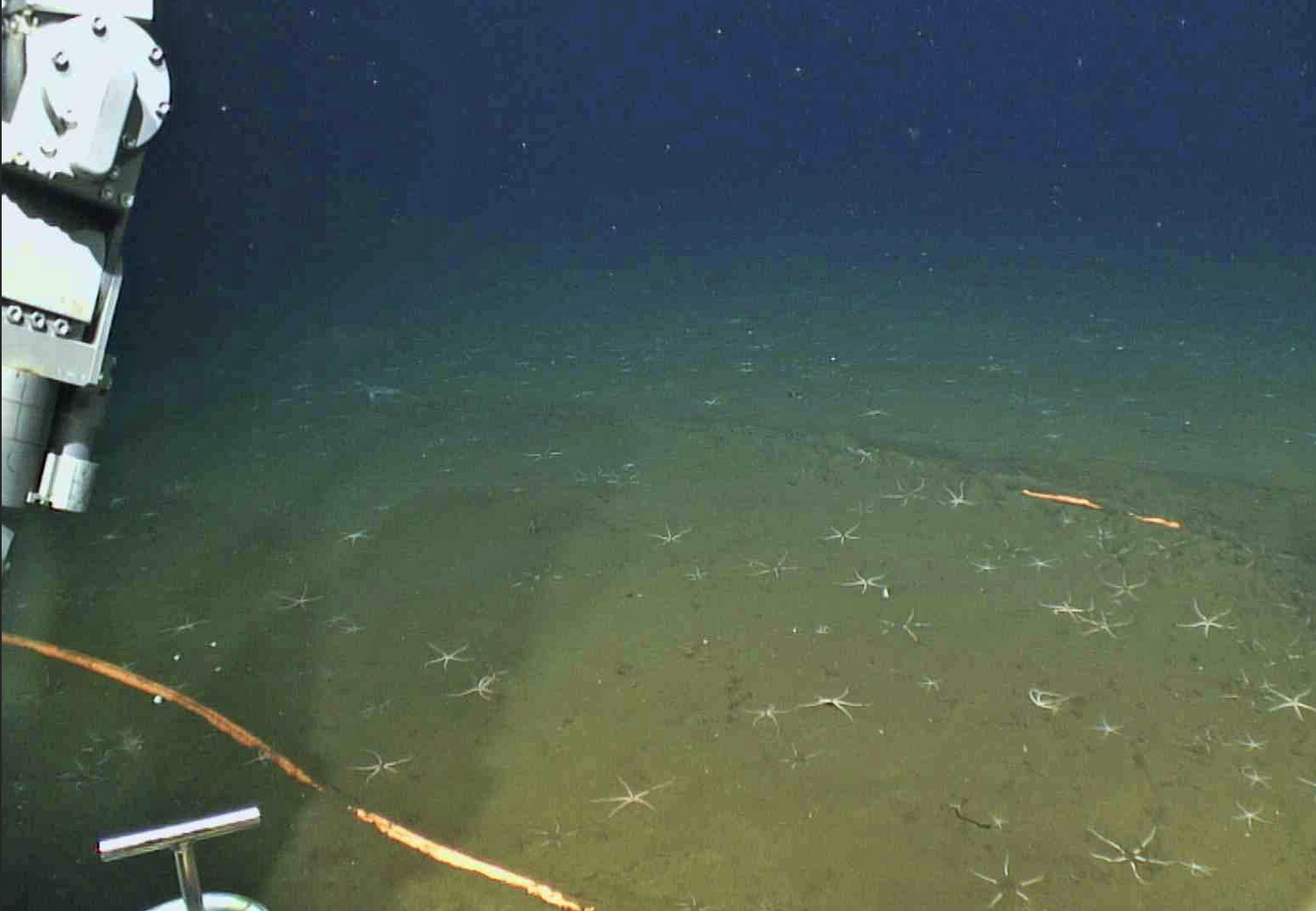
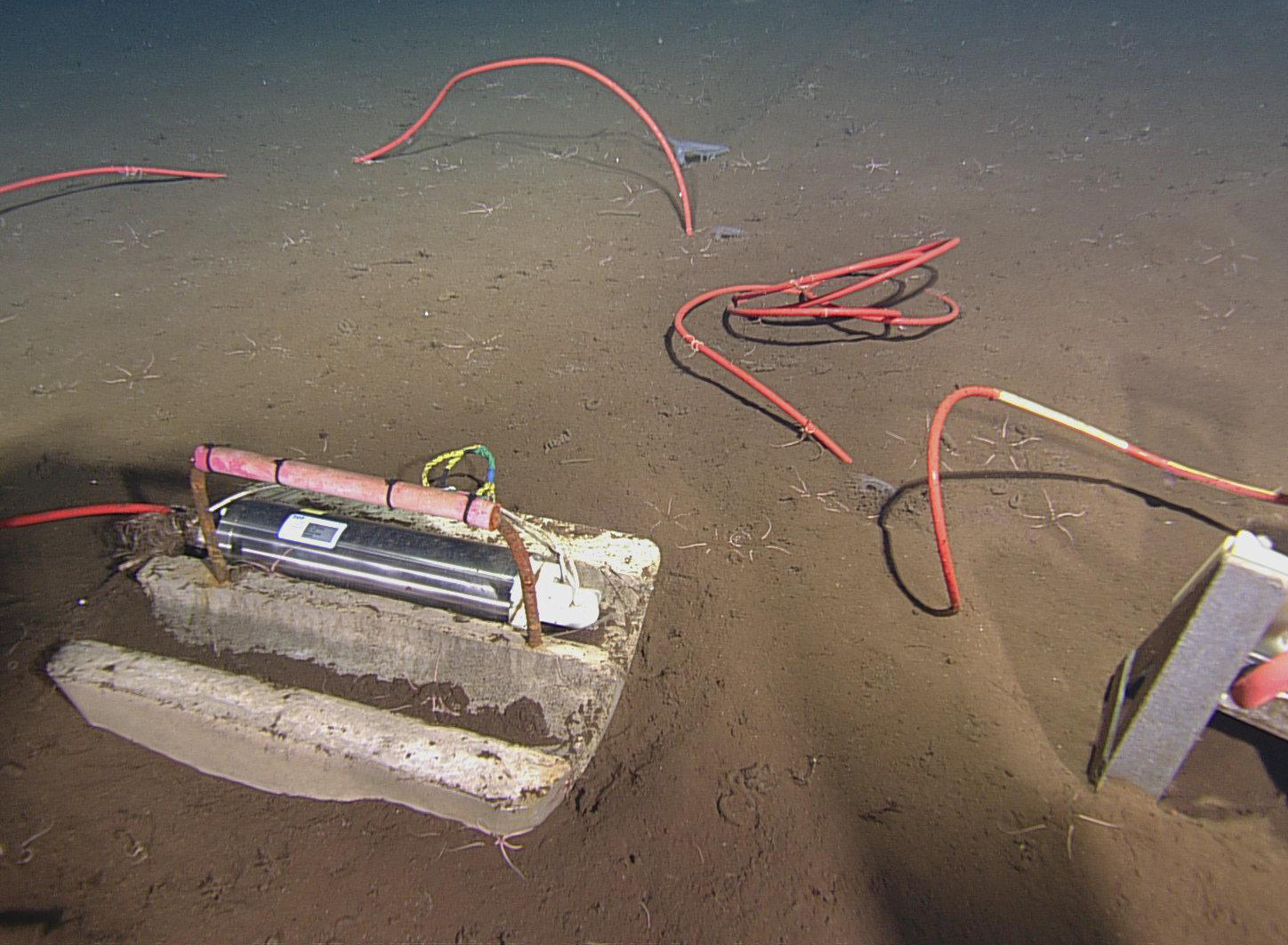
The empty ROCLS spool on the seafloor at Axial Base, after laying cable AXVMW4 from LV03A to the deep profiler site. Photo Credit: NSF-OOI/UW/CSSF, Dive 1737, V14
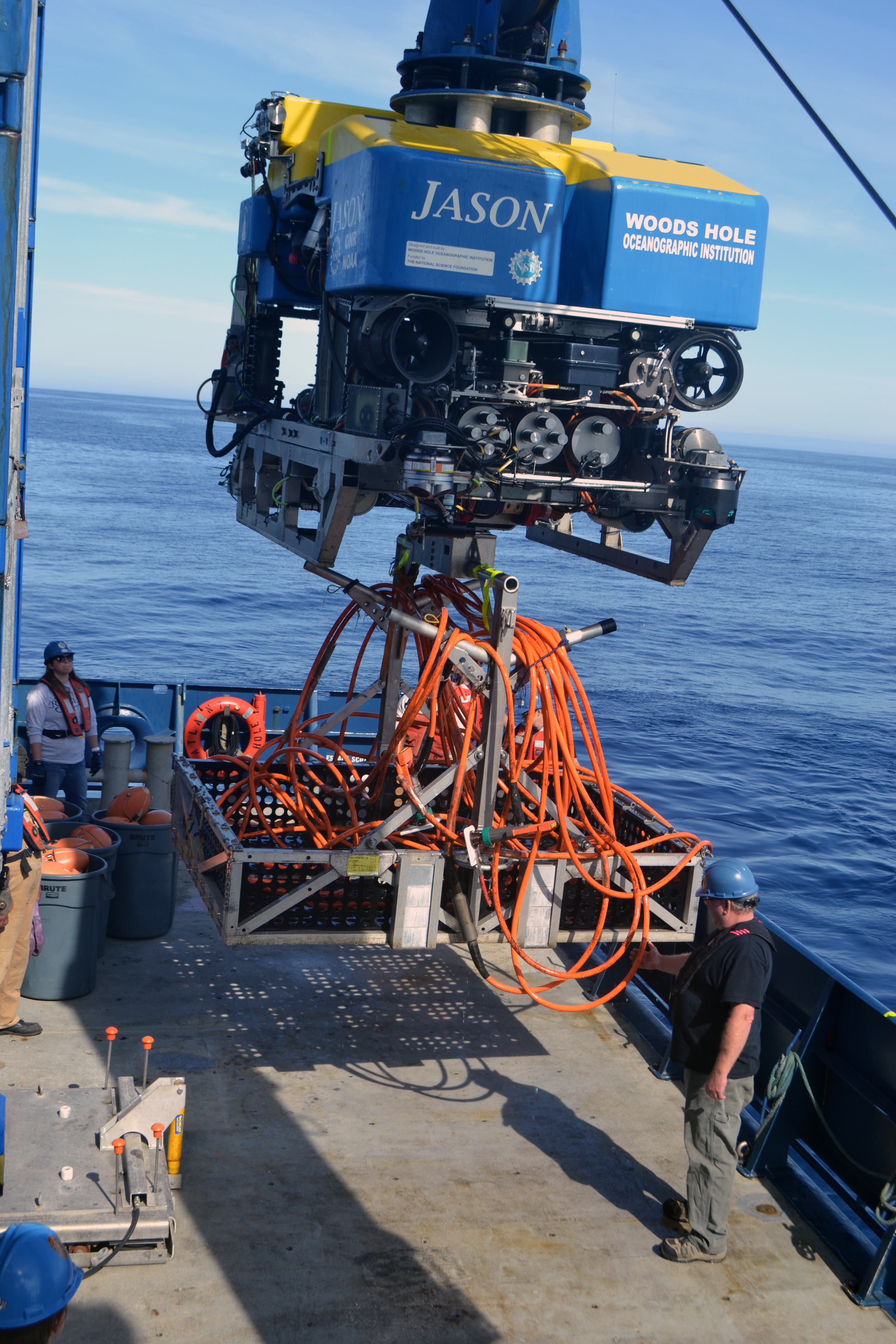
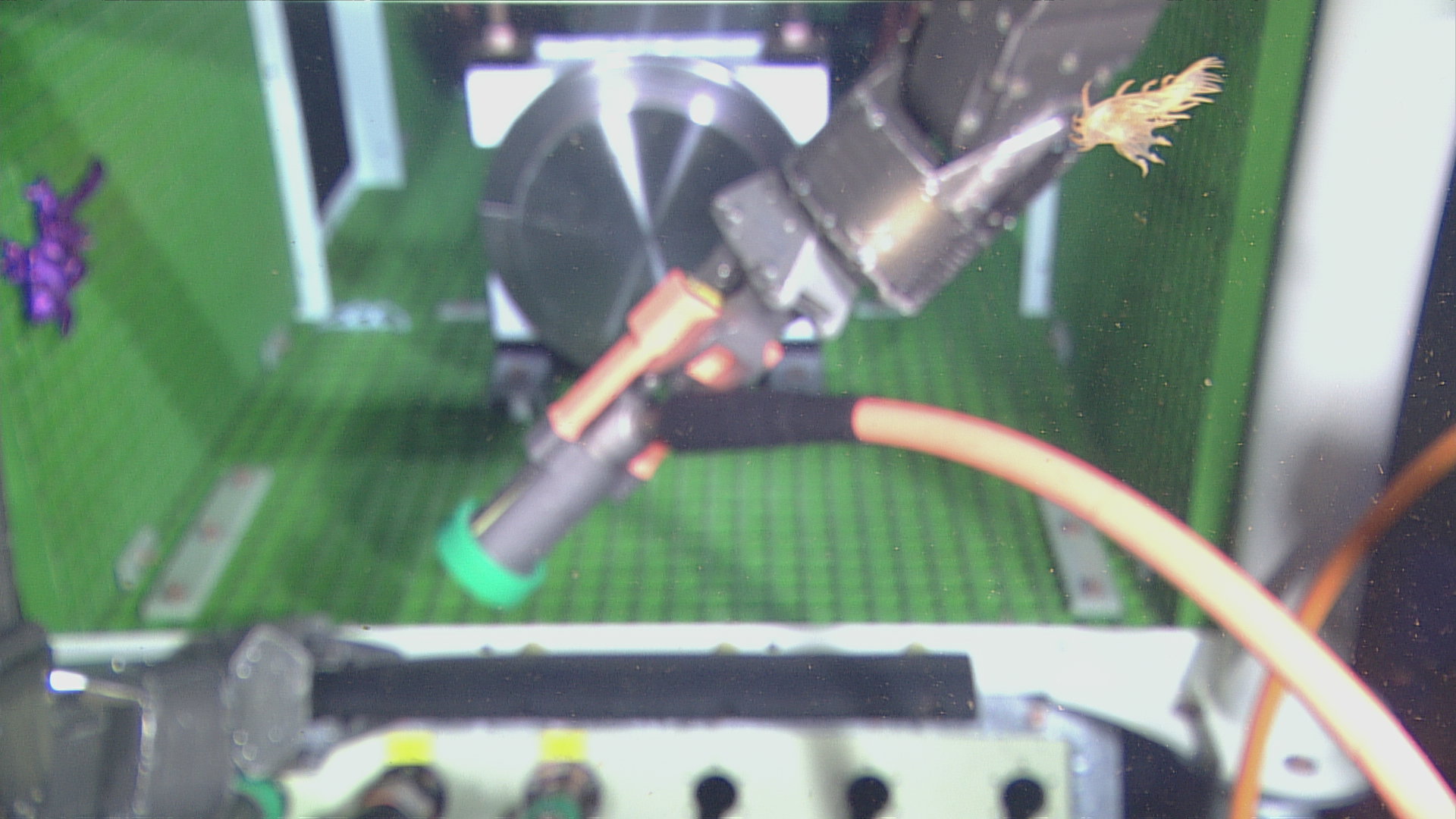
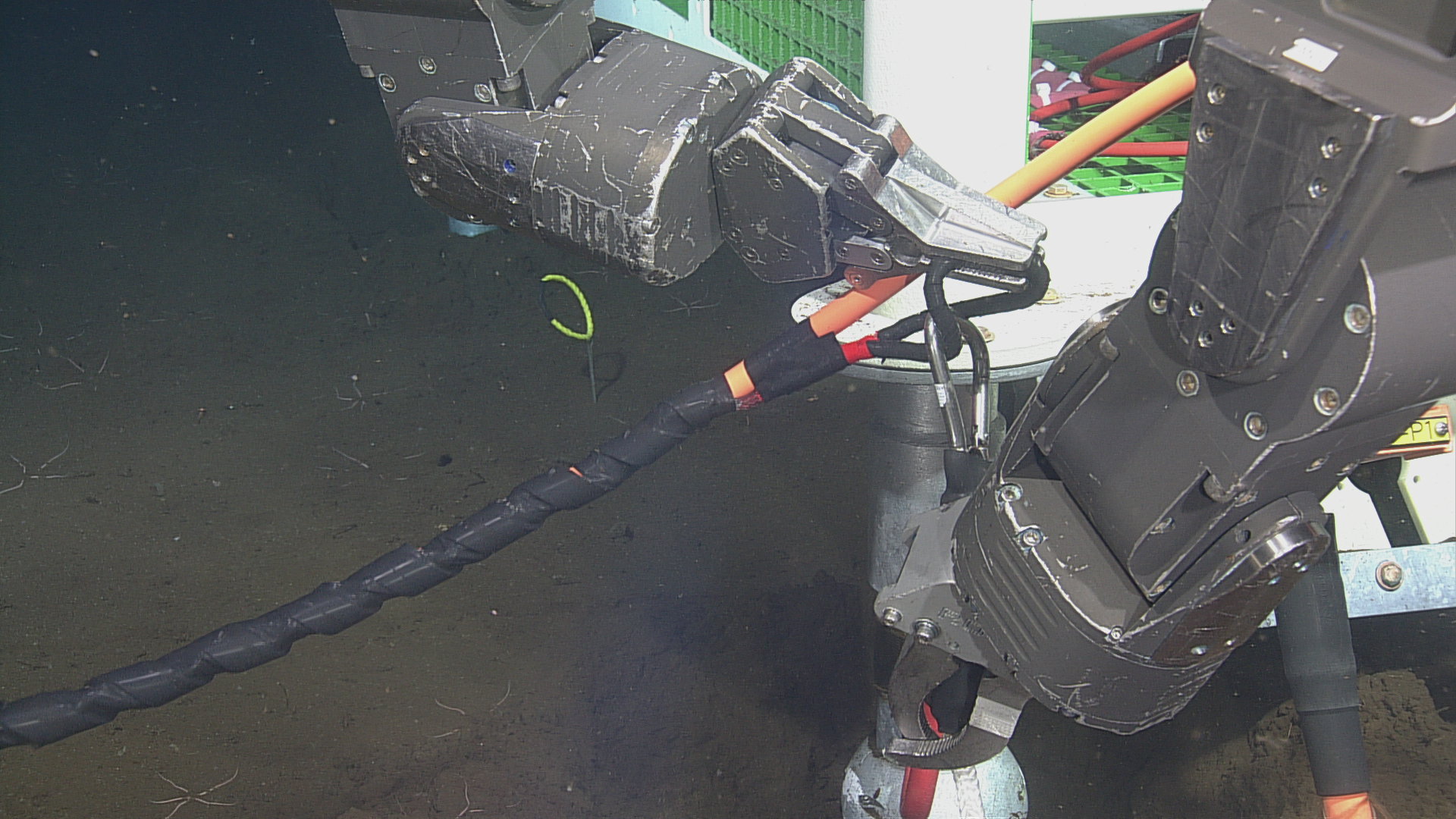
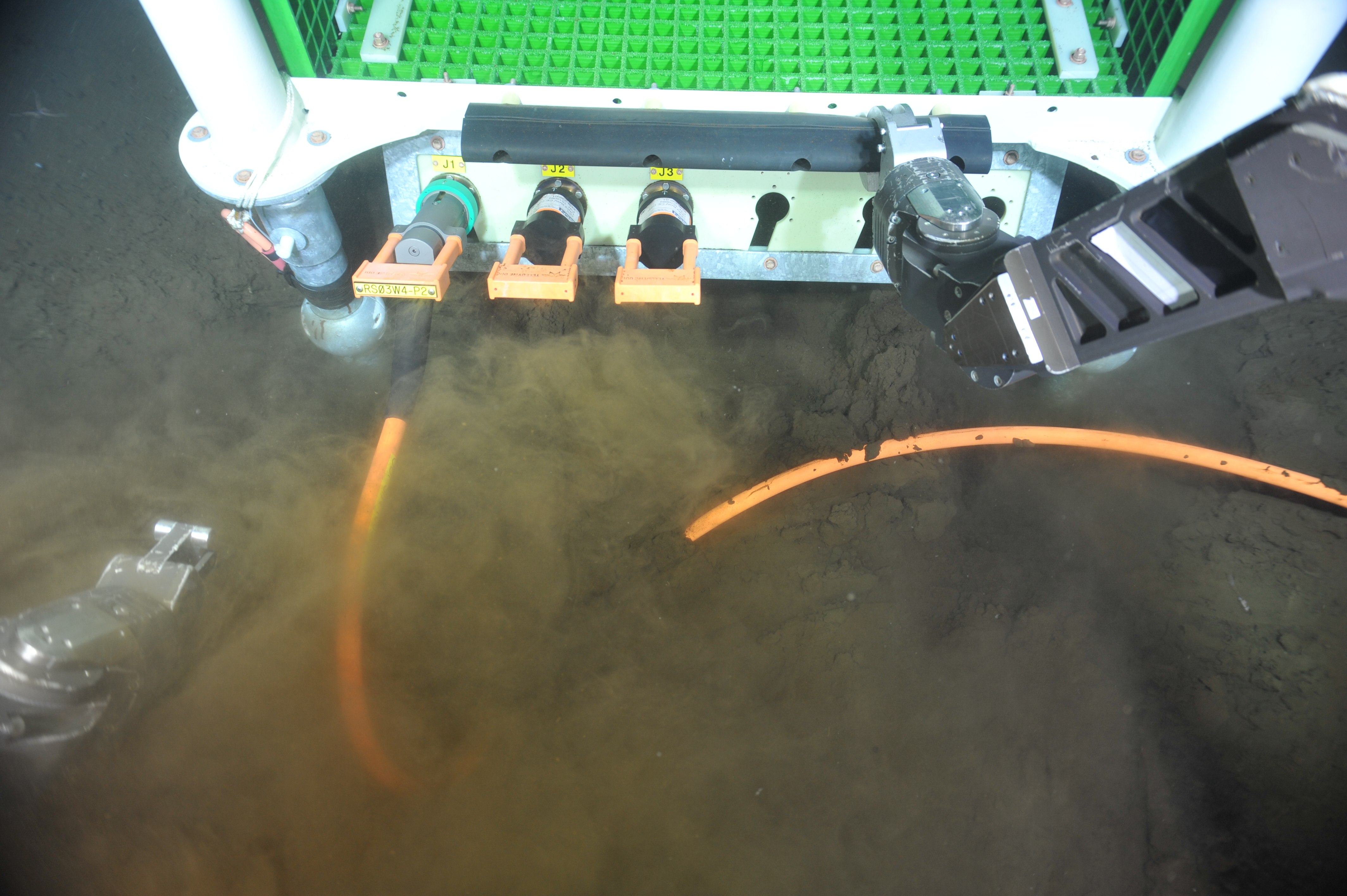
During Jason dive J2-1150, a 120 m extension cable was recovered following its replacement. It provides power and communications to the Shallow Profiler Mooring. Credit: M. Elend, University of Washington.
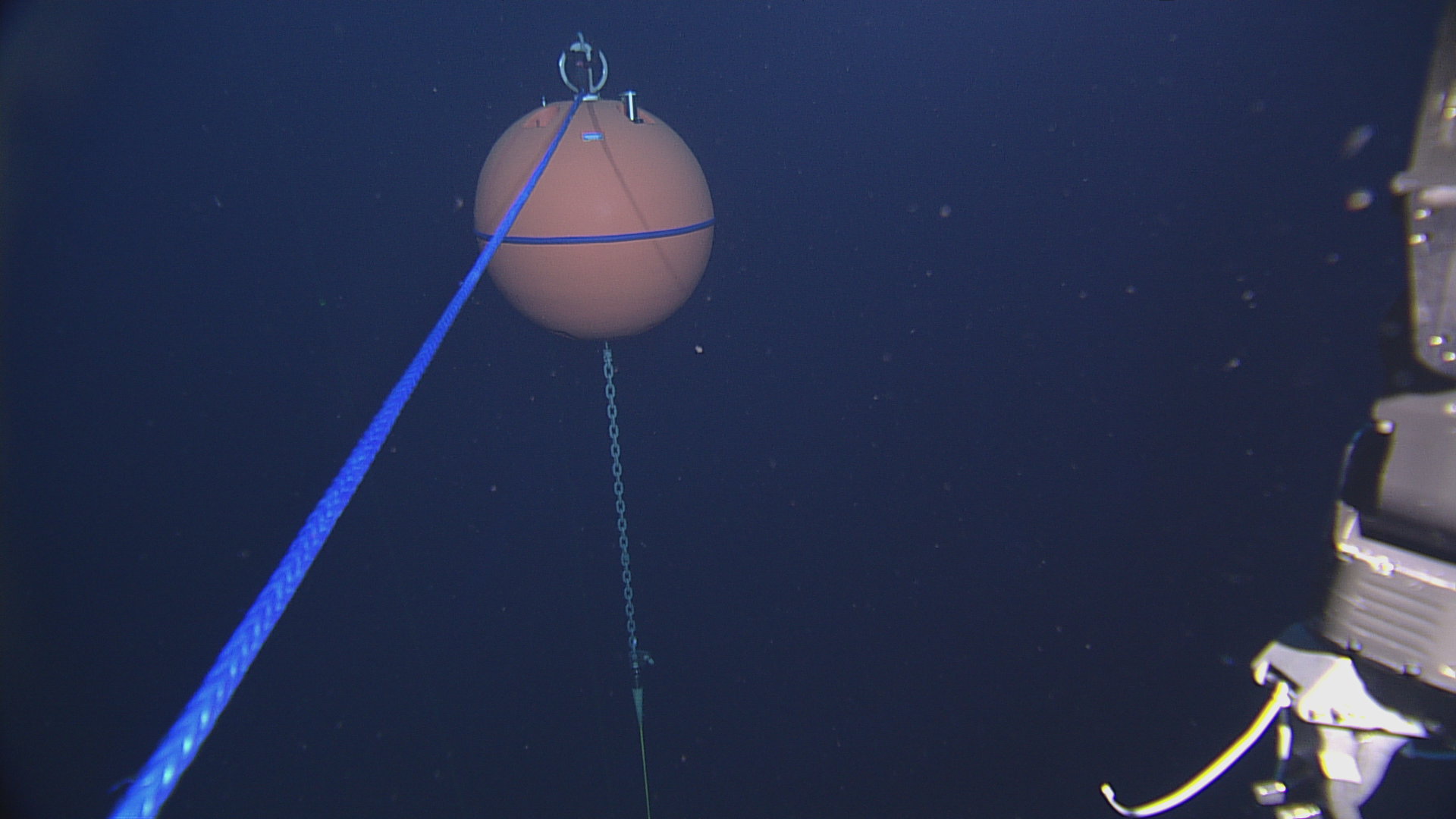
The Shallow Profiler Mooring platform, hosting the instrumented Platform Interface Assembly (left) and winched science pod (right) - both have been in the water since last year. Credit: UW/NSF-OOI/WHOI; V21.
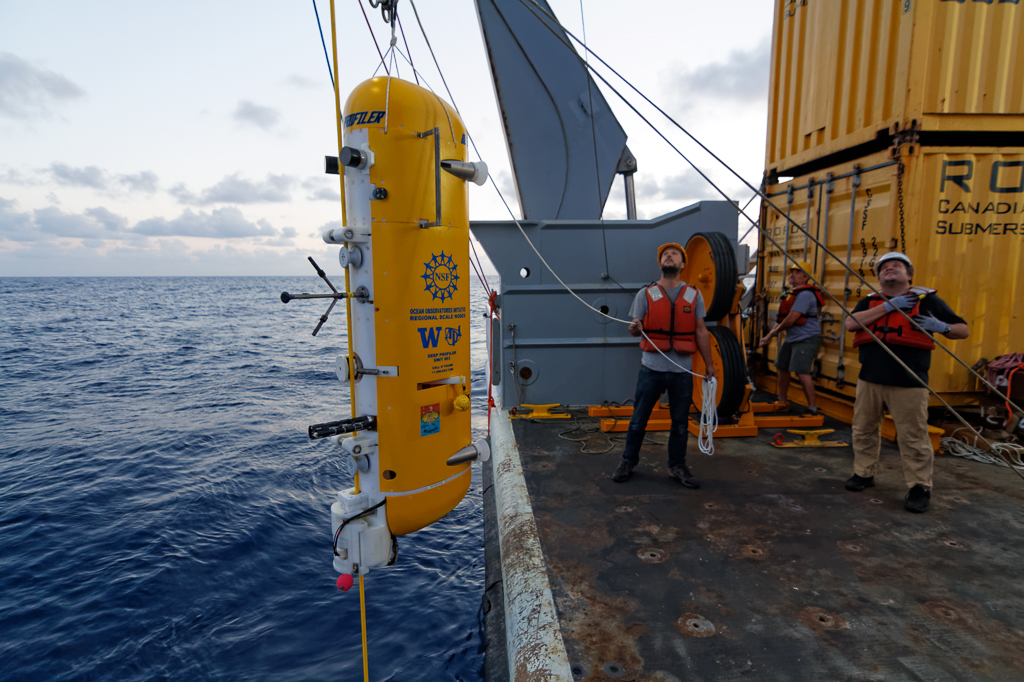
A Deep Profiler sensor installed to the cable during the visions 14 cruise. Photo Credit: Ed McNichol, © 2014 Mumbian Enterprises, Inc., University of Washington. V14.