Dolphins playing alongside the ship while we transited back to the Southern Hydrate Ridge site. Credit: S. Baxstrom, University of Washington; V22.
The 2019 OOI digital still camera at Southern Hydrate Ridge (770m) observing a plume of methane bubbles streaming out of the seafloor. Credit: UW/NSF-OOI/WHOI, V19
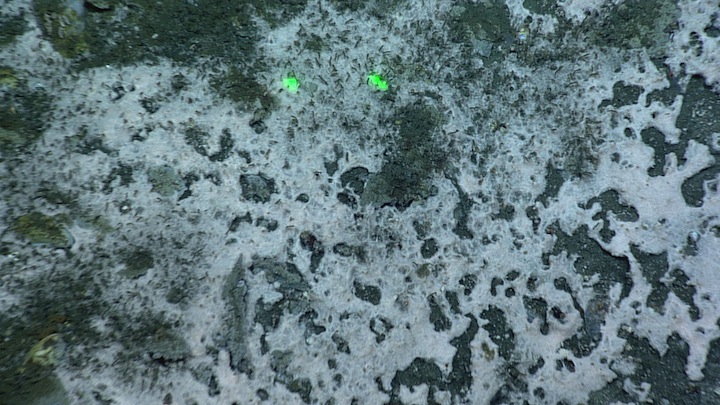
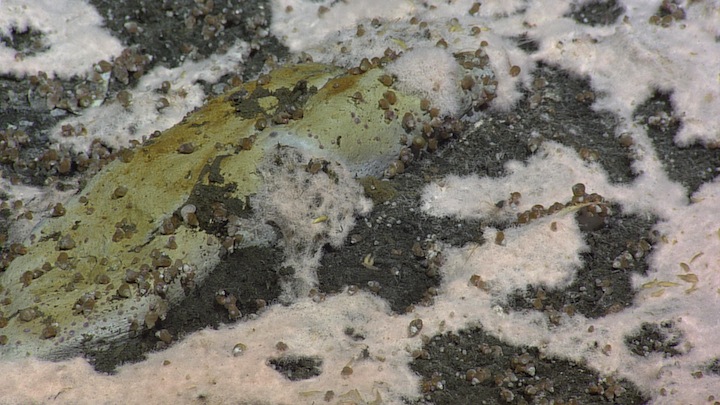
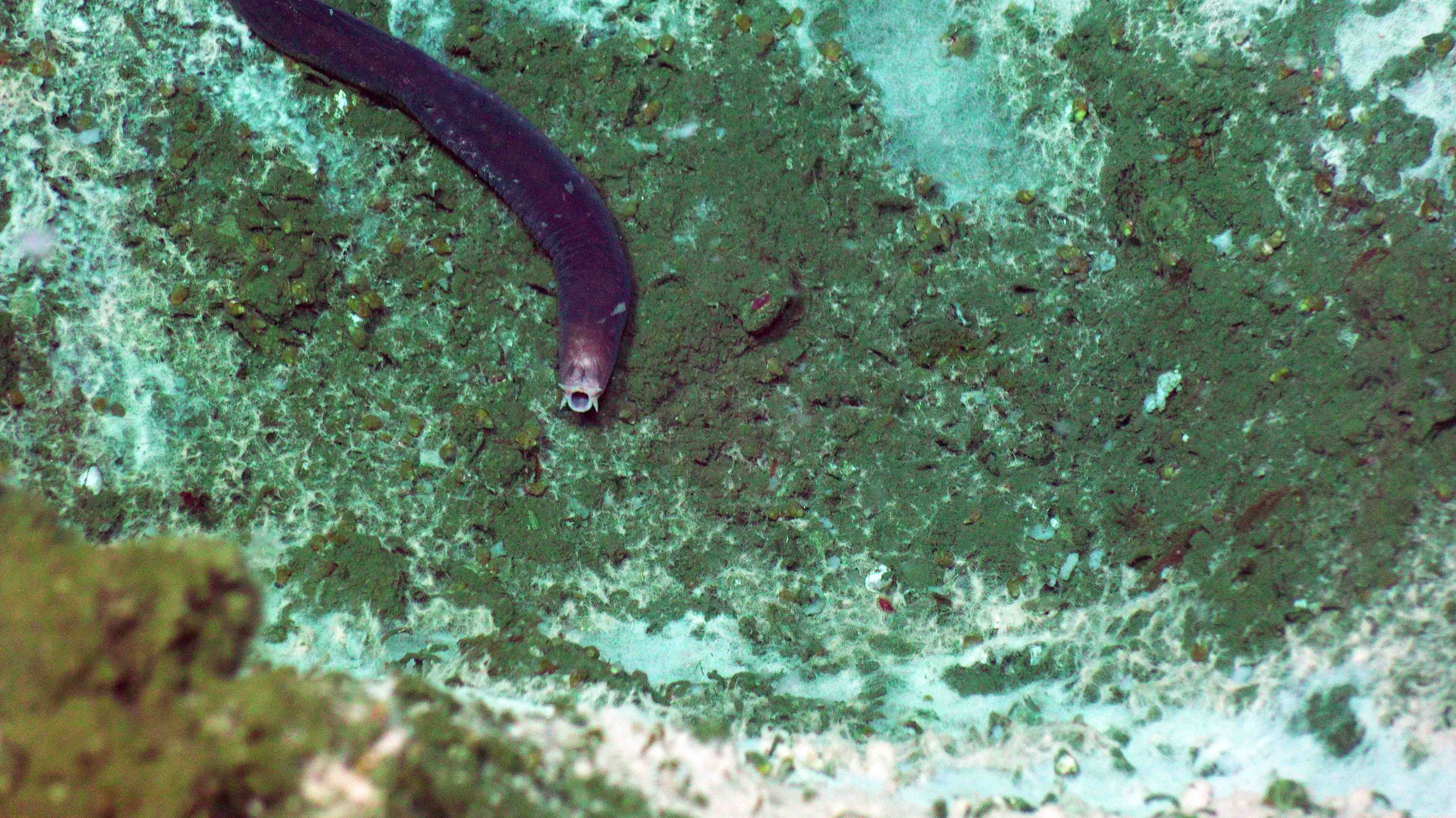
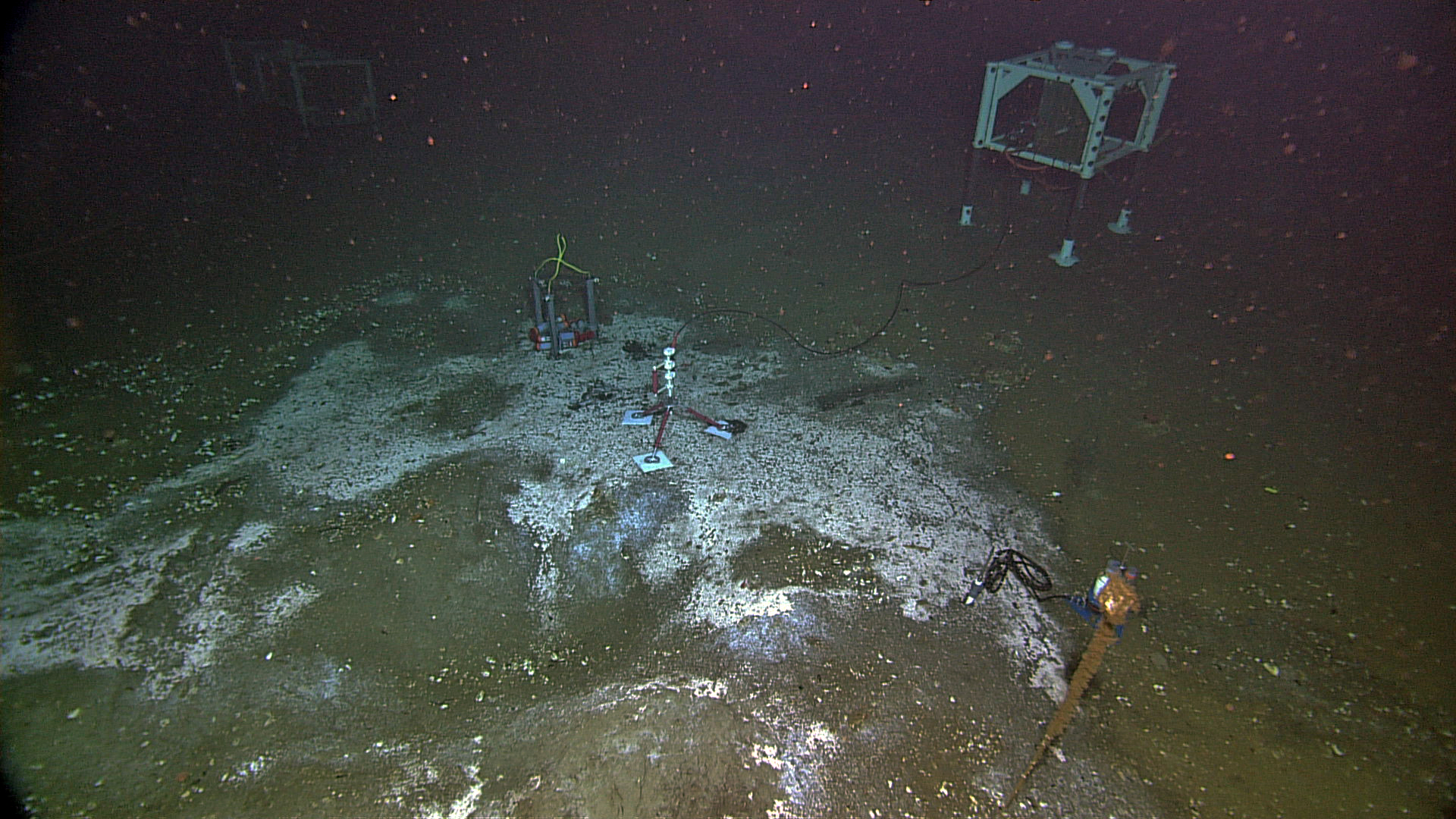
Beggiatoa matting (white) at Southern Hydrate Ridge with small snails. Photo credit: NSF-OOI/UW/CSSF
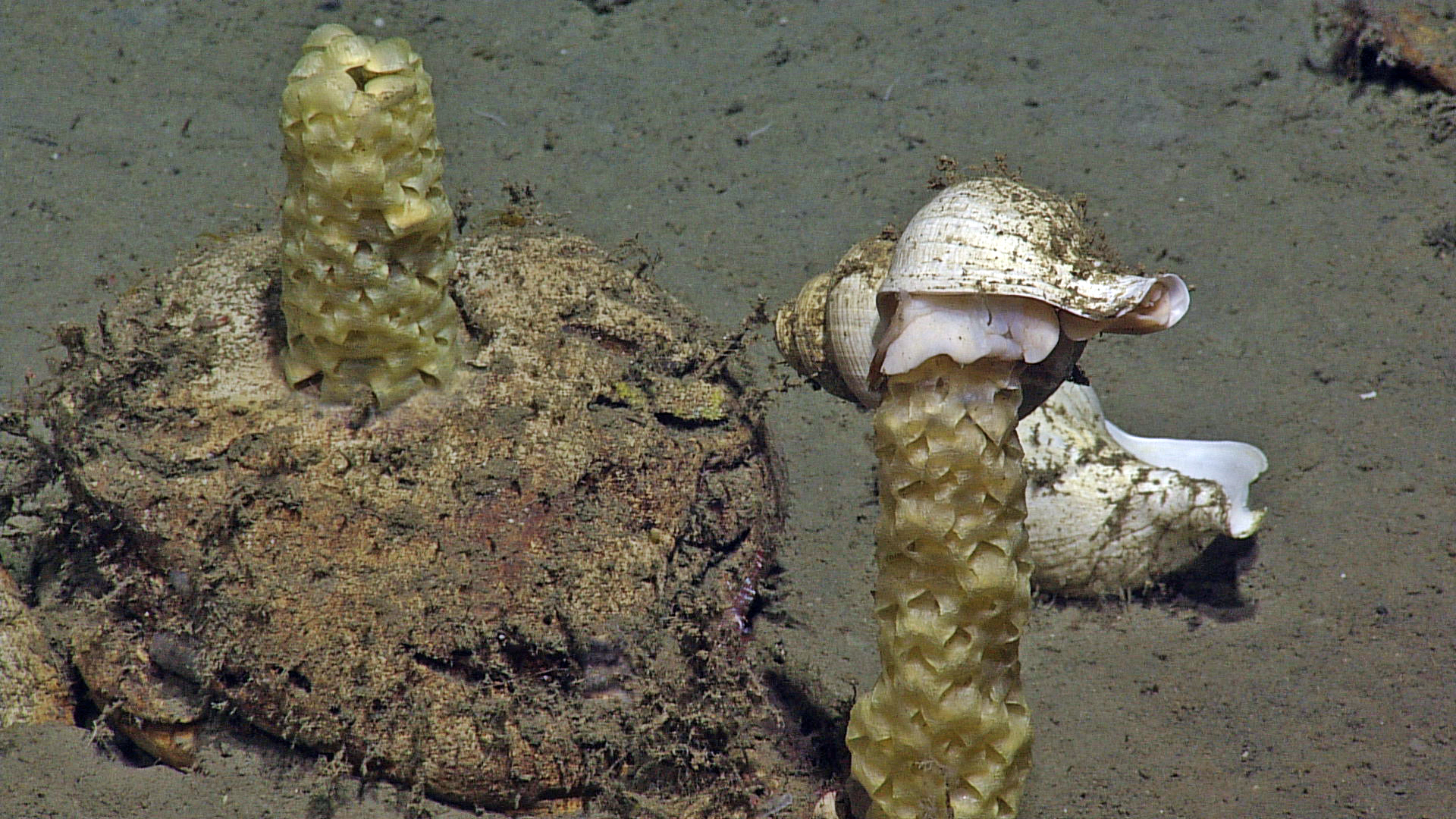
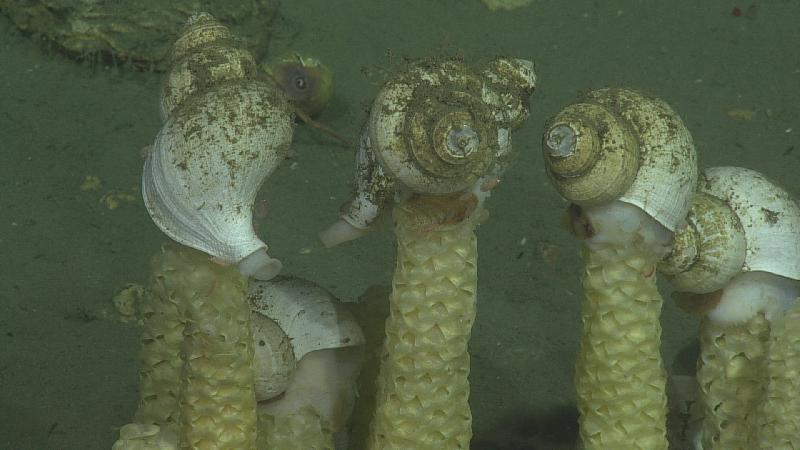
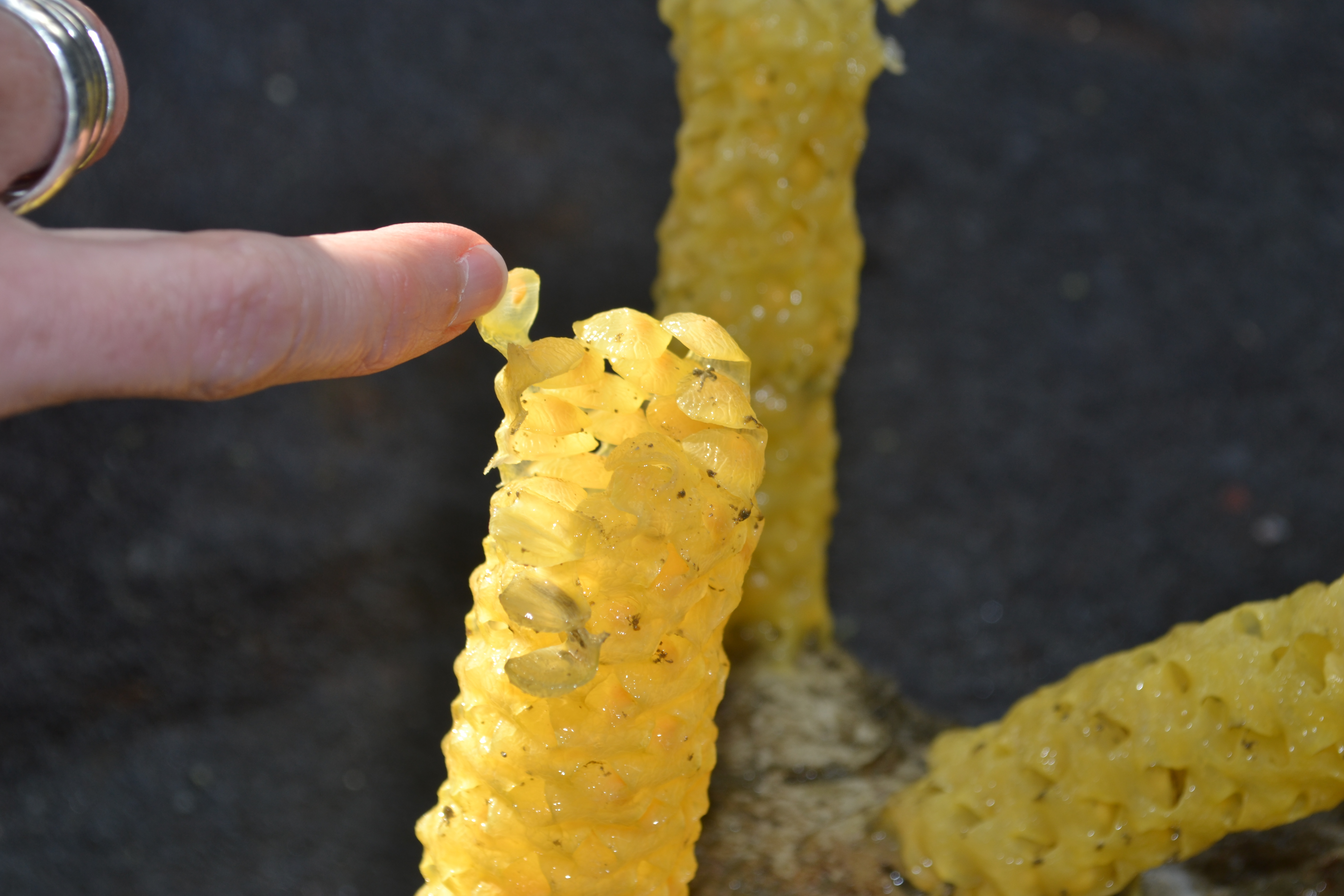
A close up of a beautiful stalk of Neptunea snail eggs recovered from Southern Hydrate Ridge. Credit: Mitch Elend, University of Washington, V15.
ROPOS making the connection between the extension cable from Primary Node PN1B and Southern Hydrate Ridge - allowing this site to go live again. Credit: UW/NSF-OOI/CSSF; V22.
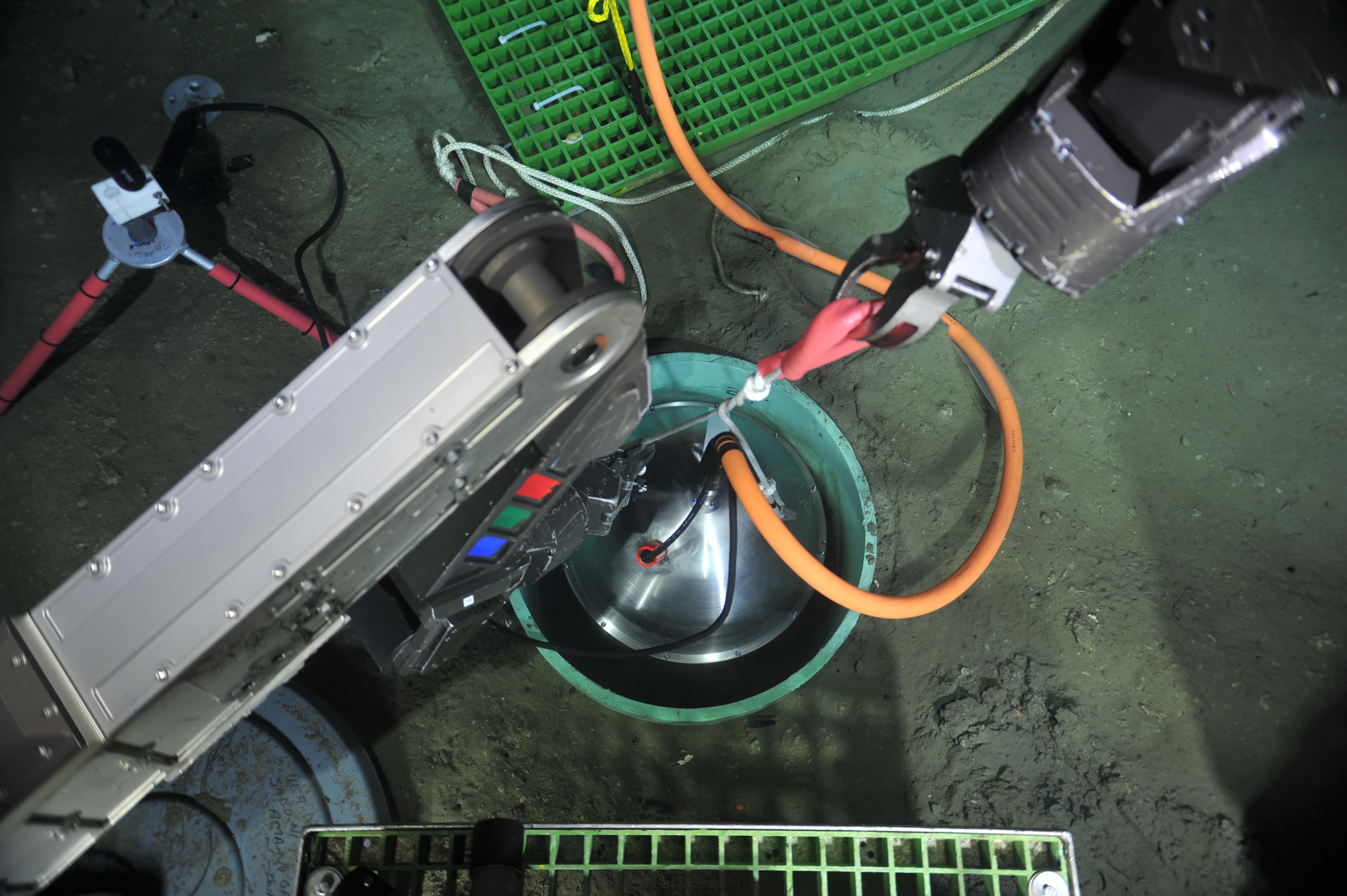
Replacing the caisson cover at Southern Hydrate Ridge, after inspecting the eventual deployment location of a seismometer at that site. The caisson (the hole in the sediment at center) was excavated using a suction tube attached to the ROV during a previous expedition. Credit: UW/NSF-OOI//CSSF, ROPOS ROPOS Dive R1750, V14.
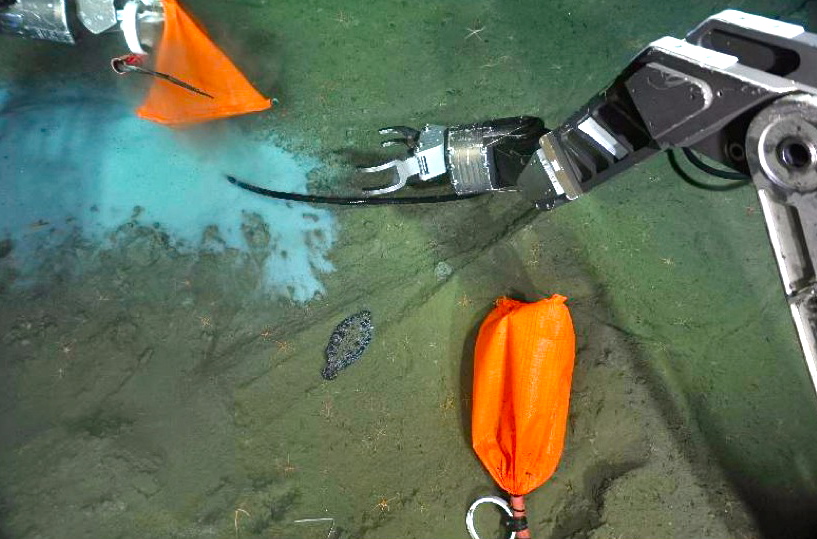
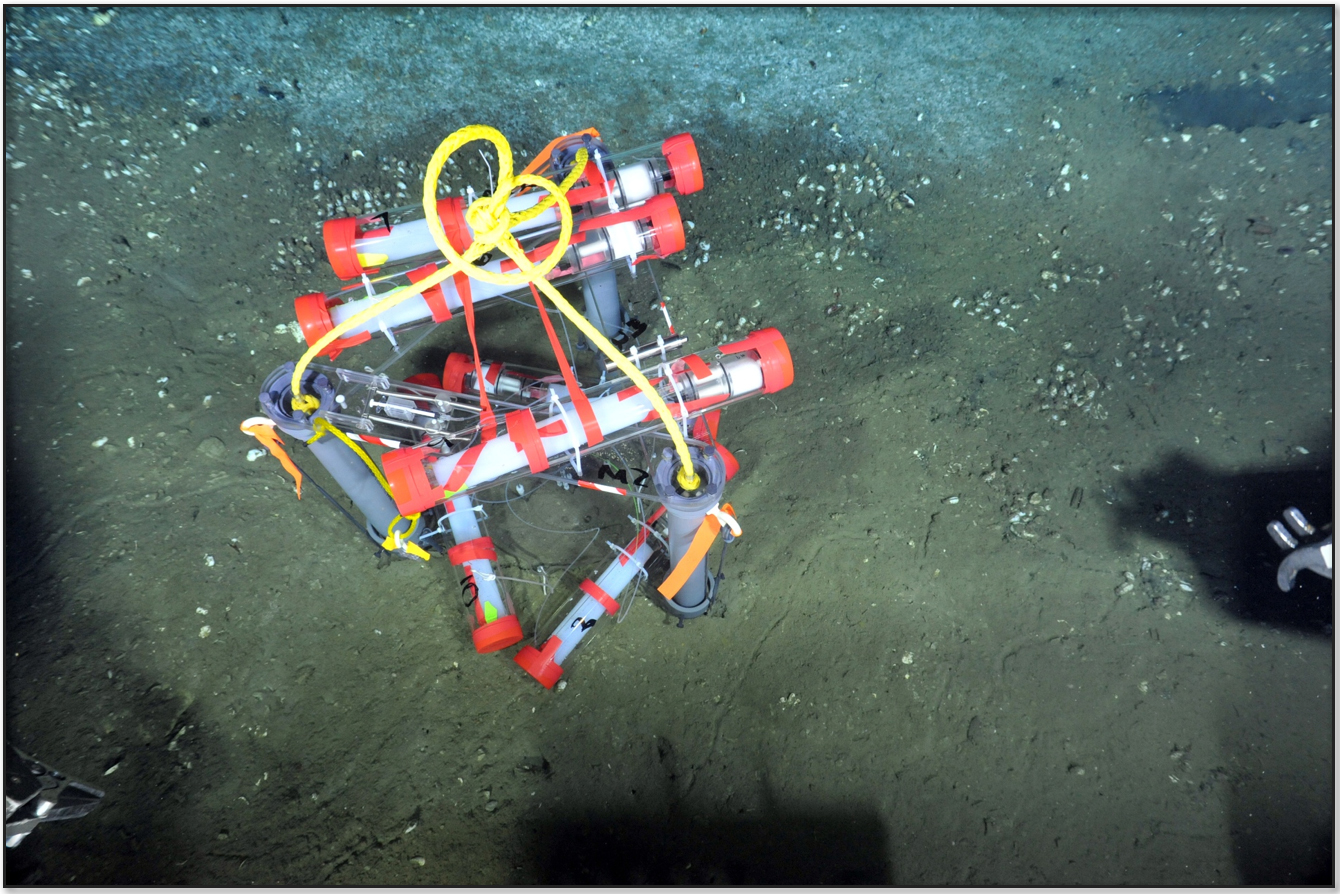
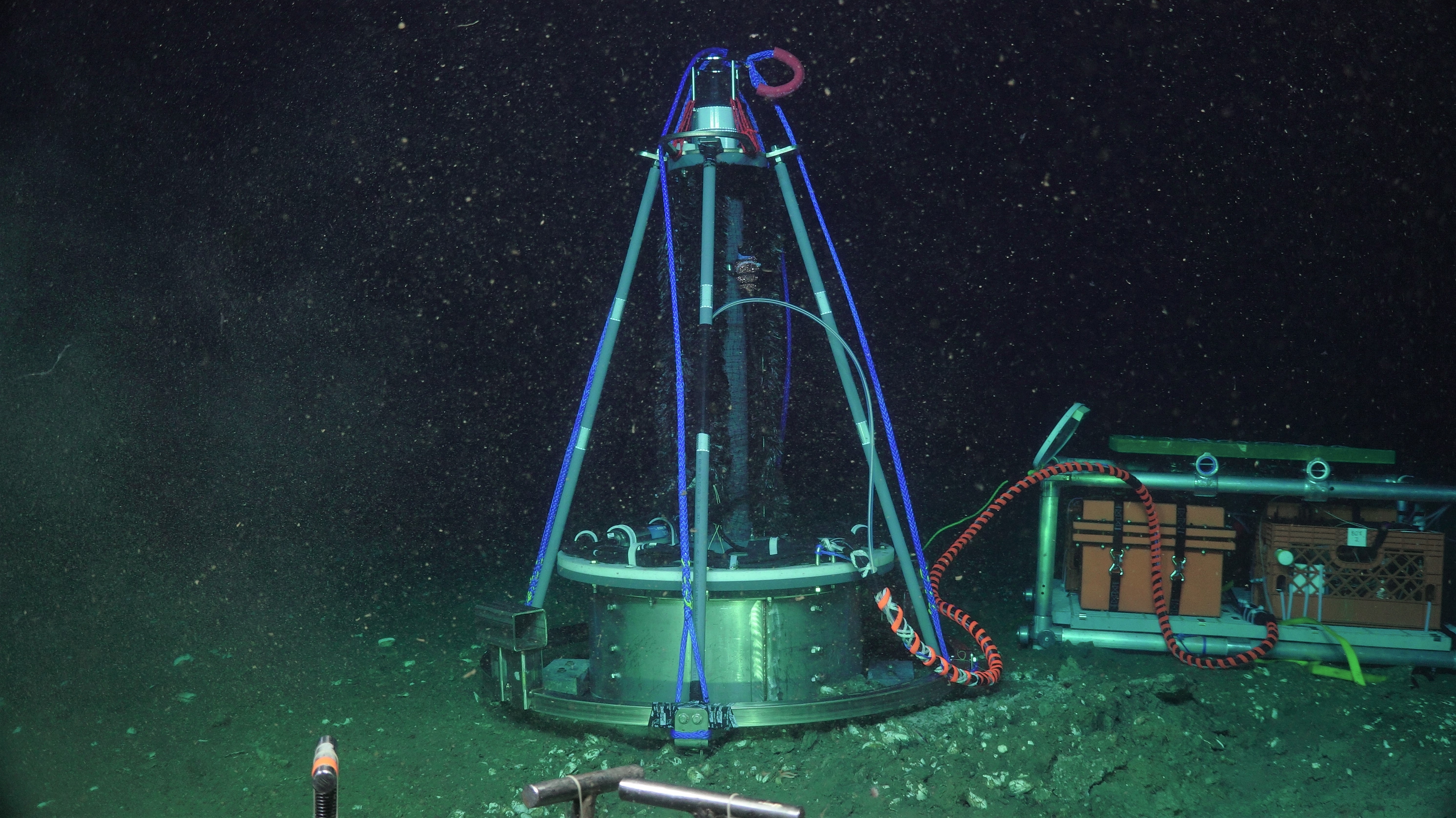
A Mosquito, developed by UW Marine Geologist, Evan Solomon, is deployed at a methane seep at Southern Hydrate Ridge. The instrument pulls in fluids in the sediments with a tracer. The instruments are recovered annually and the fluid chemistry analyzed, providing calculations of the flow of fluids both into, and out of the seafloor. Credit: UW/OOI-NSF/WHOI; V17.