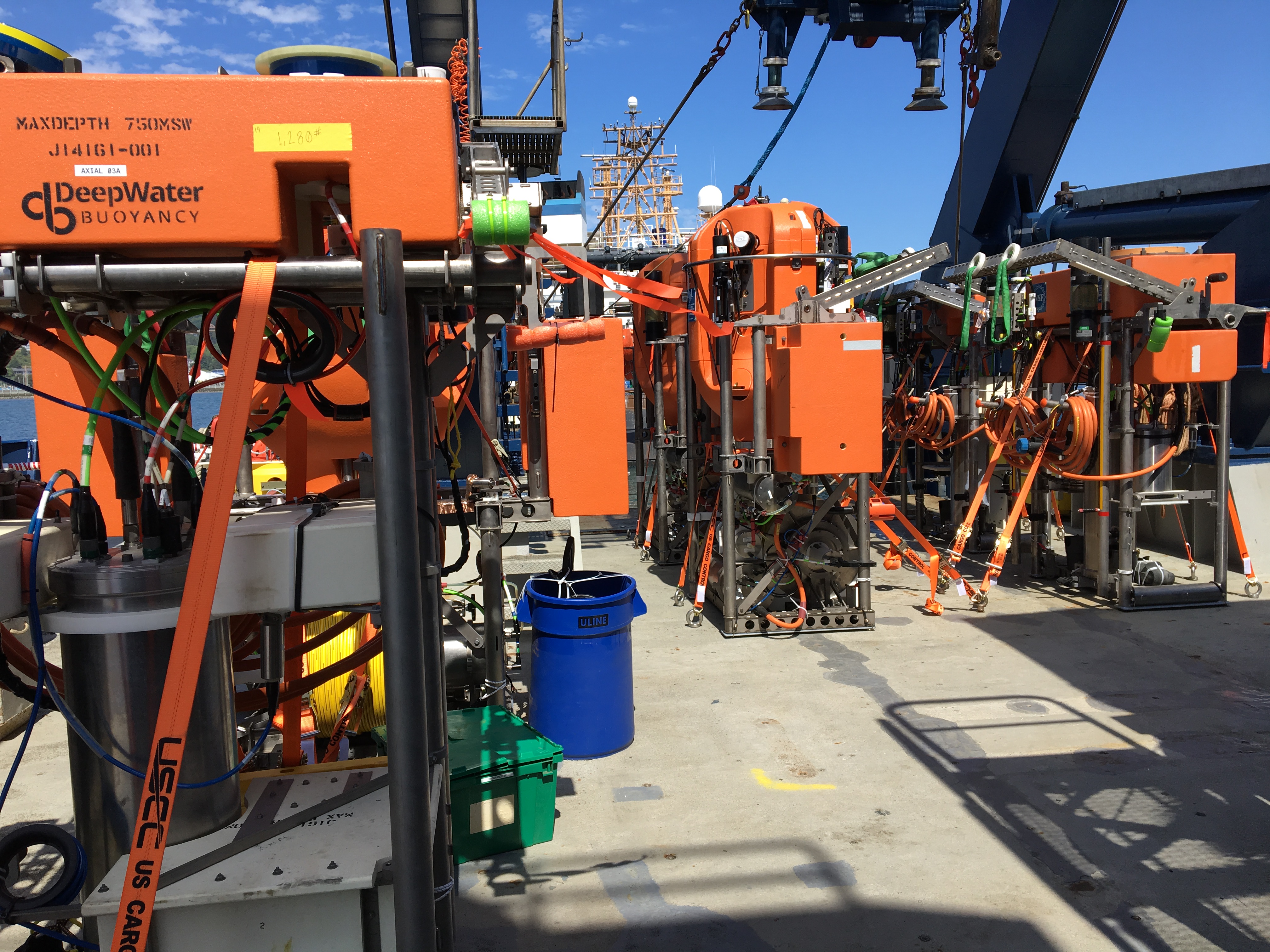
The Thompson steams to the Oregon Offshore site on Leg 1 with a fully loaded deck. Credit. M. Elend, University of Washington. V20.
An "army" of instrumented Shallow Profiler pods await installation on moorings at the Offshore, and Slope and Axial Base sites. Credit: D. Kelley, University of Washington, V19.
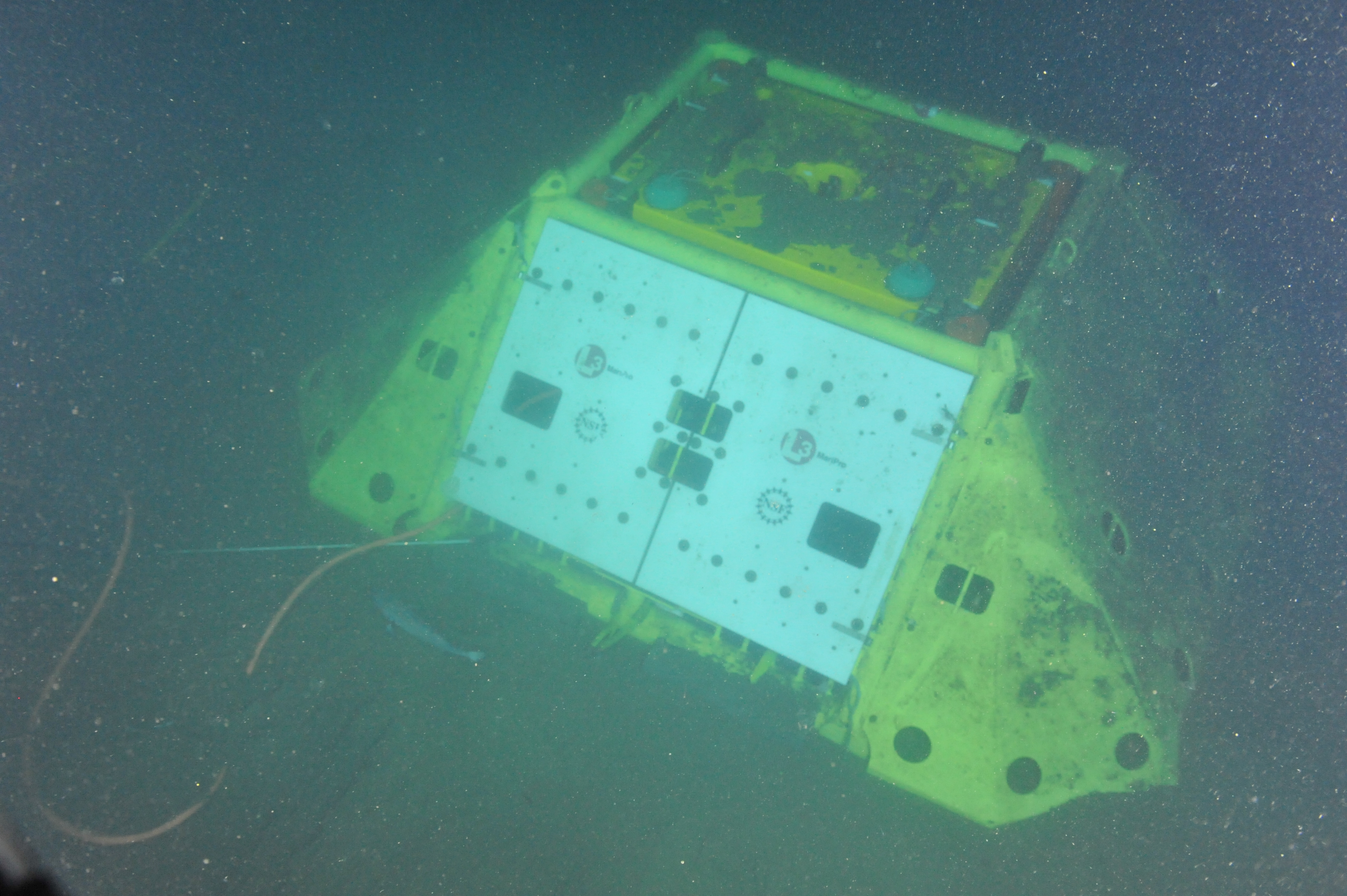
Primary Node PN1C provides power and bandwidth to the Oregon Offshore site (600 m). Because it is in shallow waters, it hosts a 'trawl resistant' frame - here with the protective doors closed. Credit: UW/NSF-OOI/CSSF, ROPOS Dive 1747, V14.
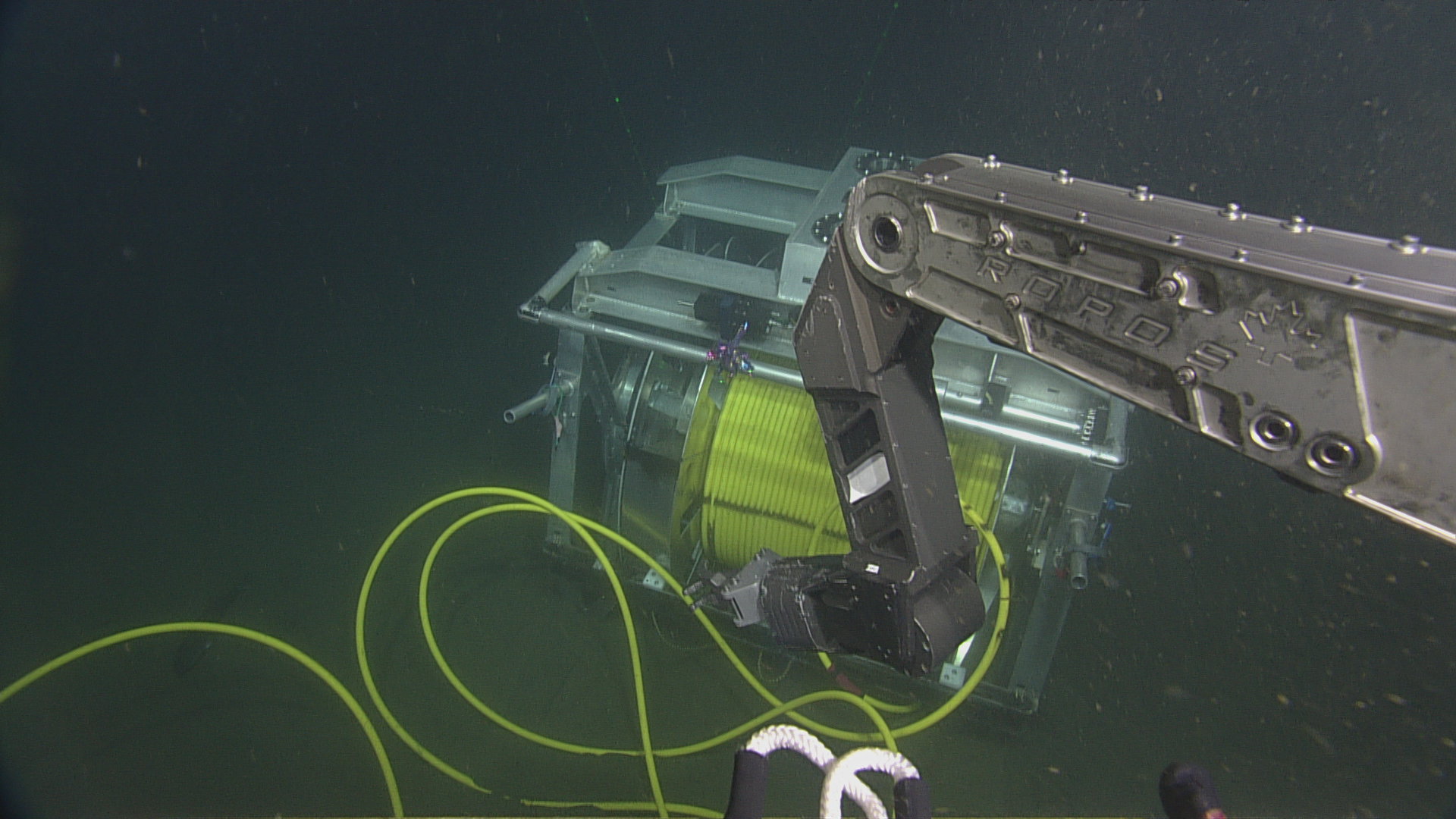
Seafloor cable RS01W9 and strain relief carabiners connected to the low-voltage node LV01C at the EOffshore site, 600 meters deep.Photo Credit: UW/NSF-OOI/CSSF, ROPOS Dive 1744, V14.
Top view of the OOI Oregon Offshore Shallow Profiler Mooring shows the difference between a new set of instruments (top), 8 years spent at 200m (center) & 1 year of biofouling (profiler pod at bottom) from 2021 to 2022. Credit: UW/NSF-OOI/CSSF; Dive R2206; V22
A Shallow Profiler platform at 200 m water depth forms an island for colonization by a variety of macrofaunal communities. Credit: UW/NSF-OOI/WHOI; V21.
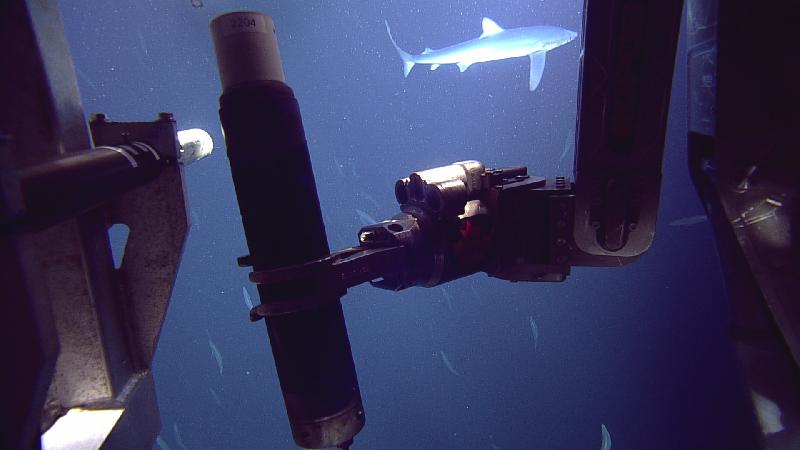
The Deep Profiler vehicle installed since 2018 at the Oregon Offshore site is recovered onto the deck of the R/V Atlantis. Credit: M. Elend, University of Washington; V19.
The Thompson crane moving the Benthic Experiment Platform from the aft deck to the ROPOS launch area, prior to deployment at Oregon Offshore (600 m depth).
Credit: Rhea Sanders, Oregon State University
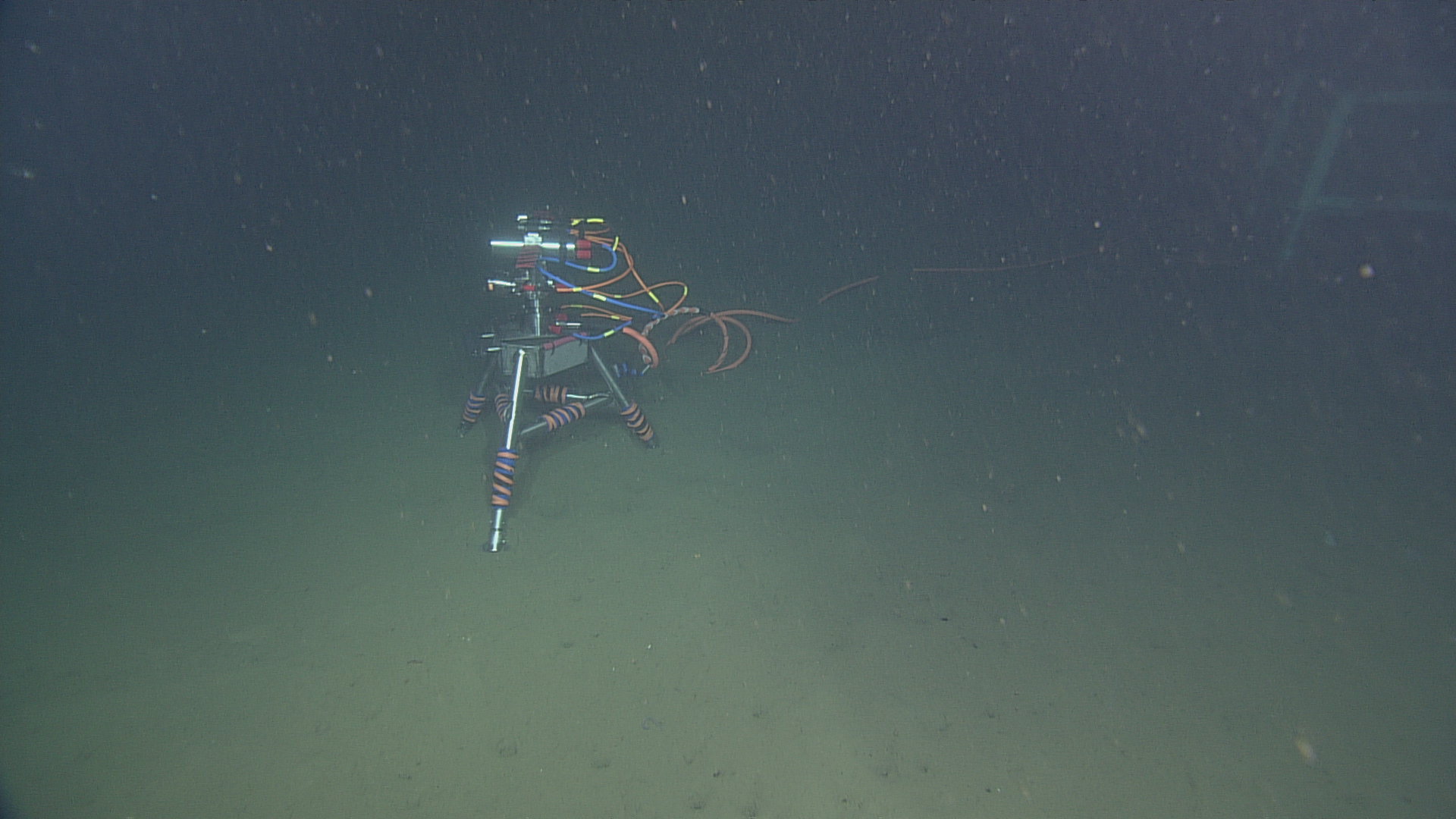
The Benthic Experiment Package on the seafloor at Endurance Oregon Offshore, connected to the low-voltage node LV01C by the cable extending under the protective doors. The oxygen sensor is visible on the left side, and the 3D velocimeter and ADCP can be seen on the top left and right (respectively).
Photo Credit: NSF-OOI/UW/CSSF, Dive 1747, V14