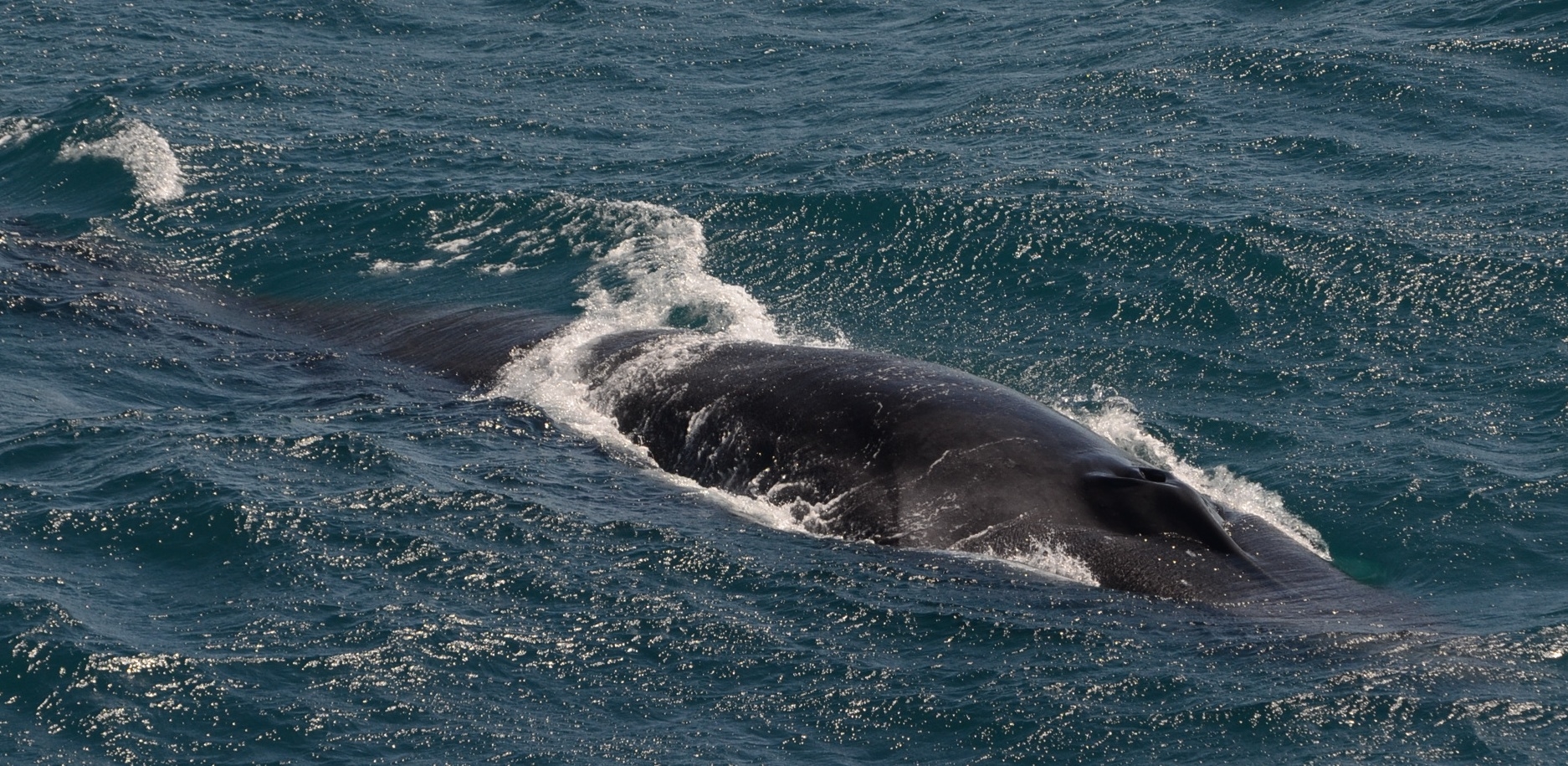
Two humpback whales paid a visit to the TE SubCom Dependable during the first leg of the Primary Node Installation cruise. Here one of the two visitors surfaces and exhales.
Credit: Patti Haase, 2012.
Humpback whales have been observed playing around the TE SubCom Dependable. Two Protected Species Visual Observers are onboard as part of the OOI team during the Primary Node Installation Cruise.
Credit: Cecile Durand, University of Washington, 2012.
Two humpbacks visited during the node installation cruise. Credit: Cecile Durand, University of Washington, 2012.
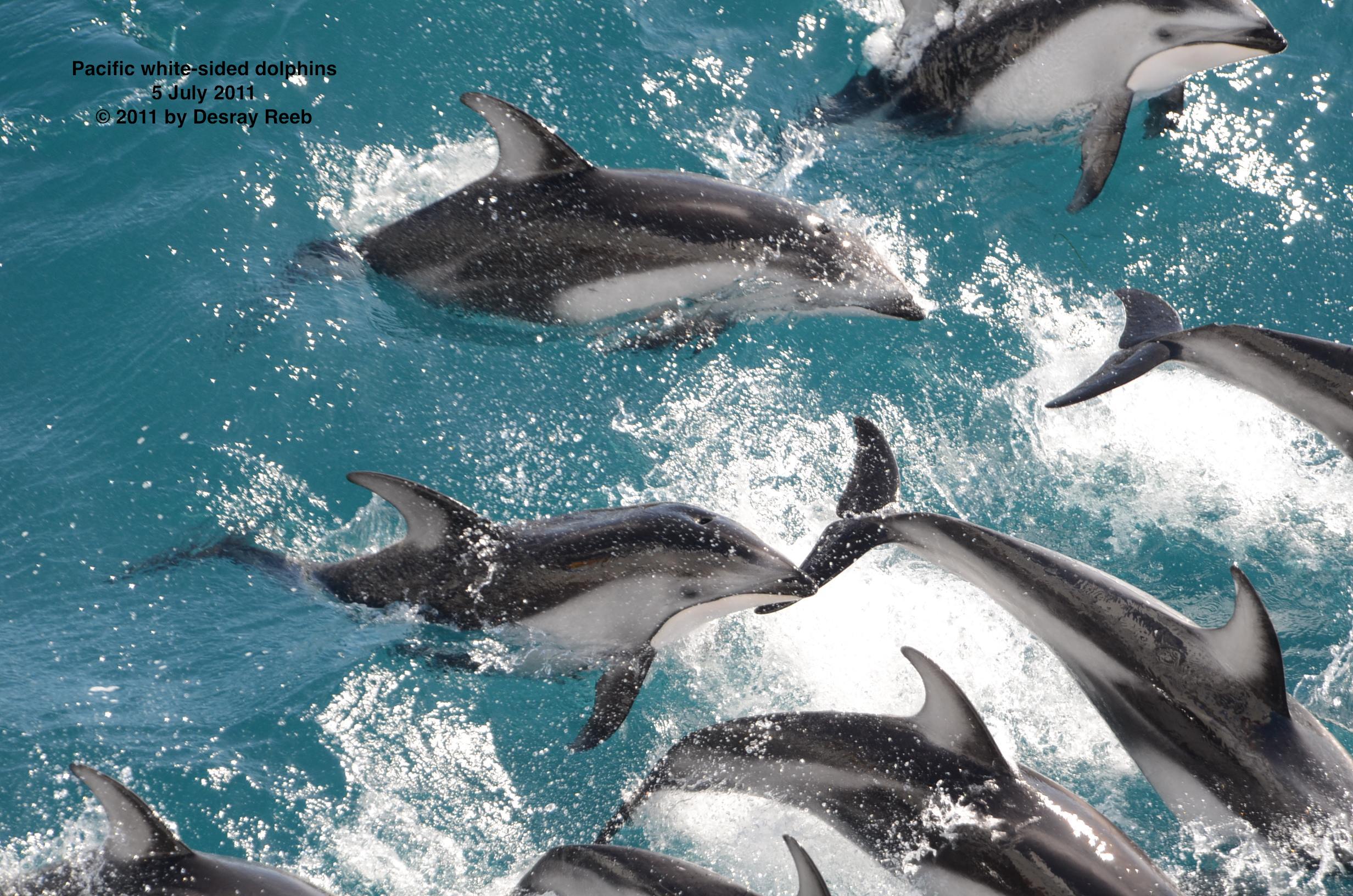
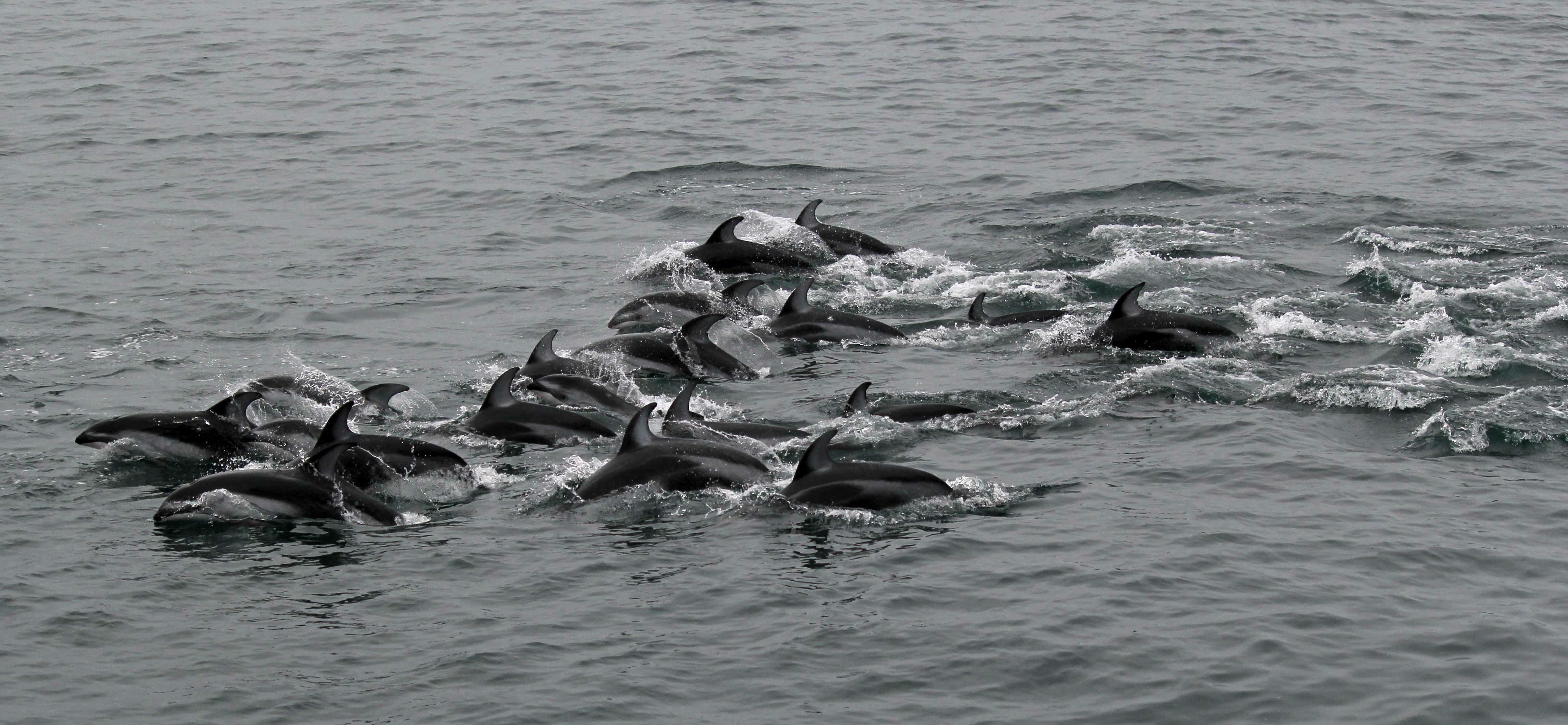
On 5 July we were in the right place and time to encounter a group of approximately 300, or more Pacific white-sided dolphins. These dolphins remained somersaulting, leaping, porpoising and surfing around the ship for more than 1.5 hours.
--Photo by Suzanne Yin, marine mammal observer onboard the TE SubCom Dependable. Credit: Regional Cabled Array, University of Washington, 2011.
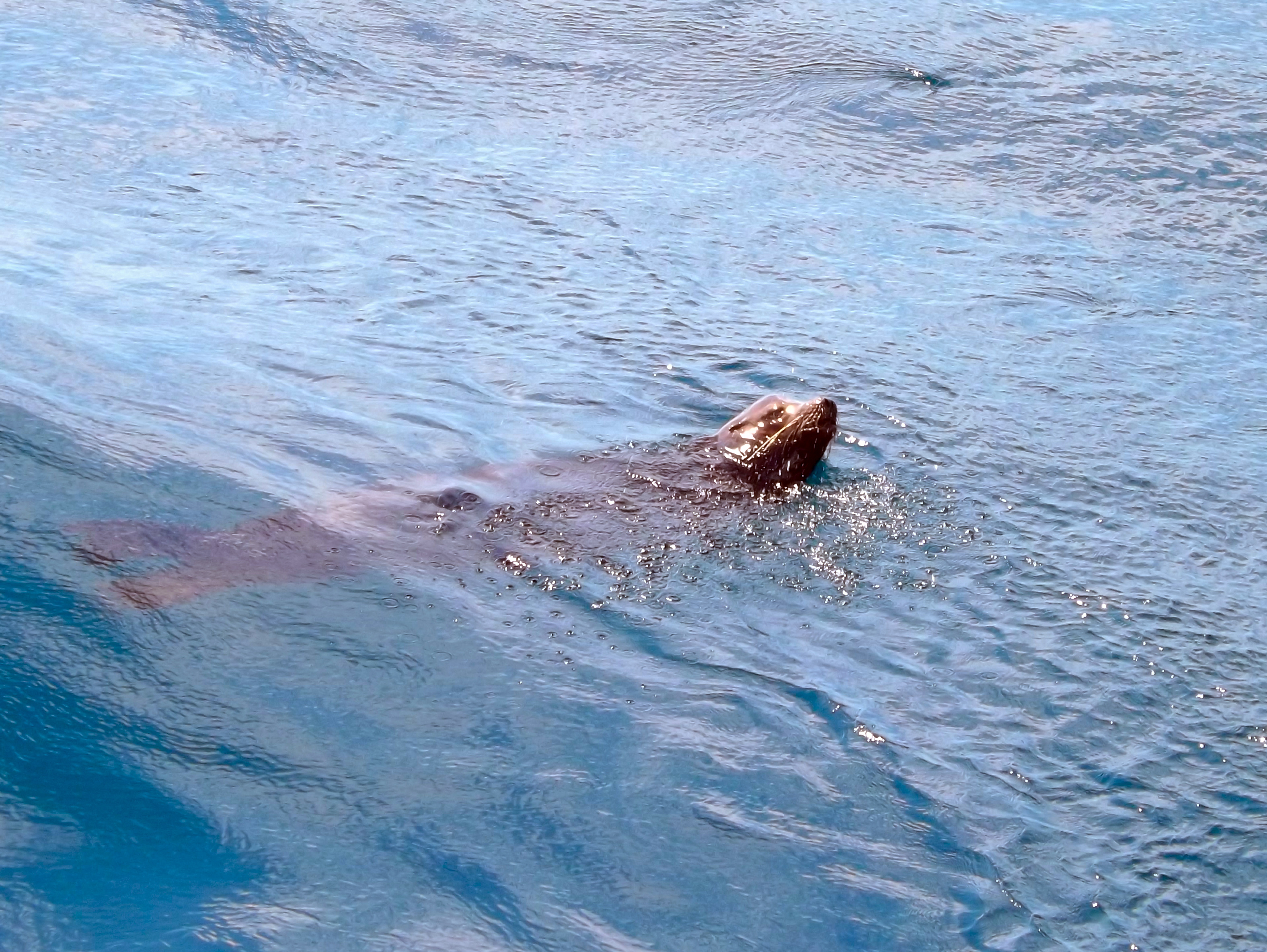
A sealion swims alongside the R/V Thompson during VISIONS'14 at the Oregon Offshore Site. Credit: Victoria Selesnick, University of Washington, V14.
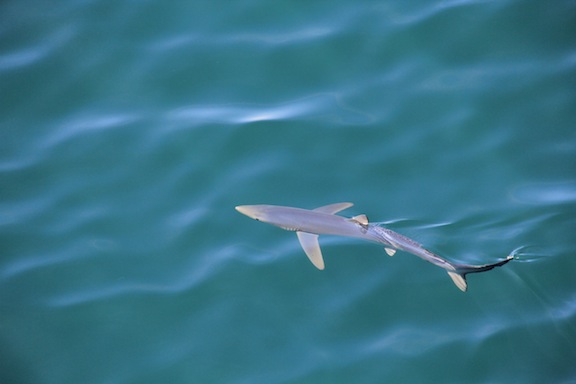
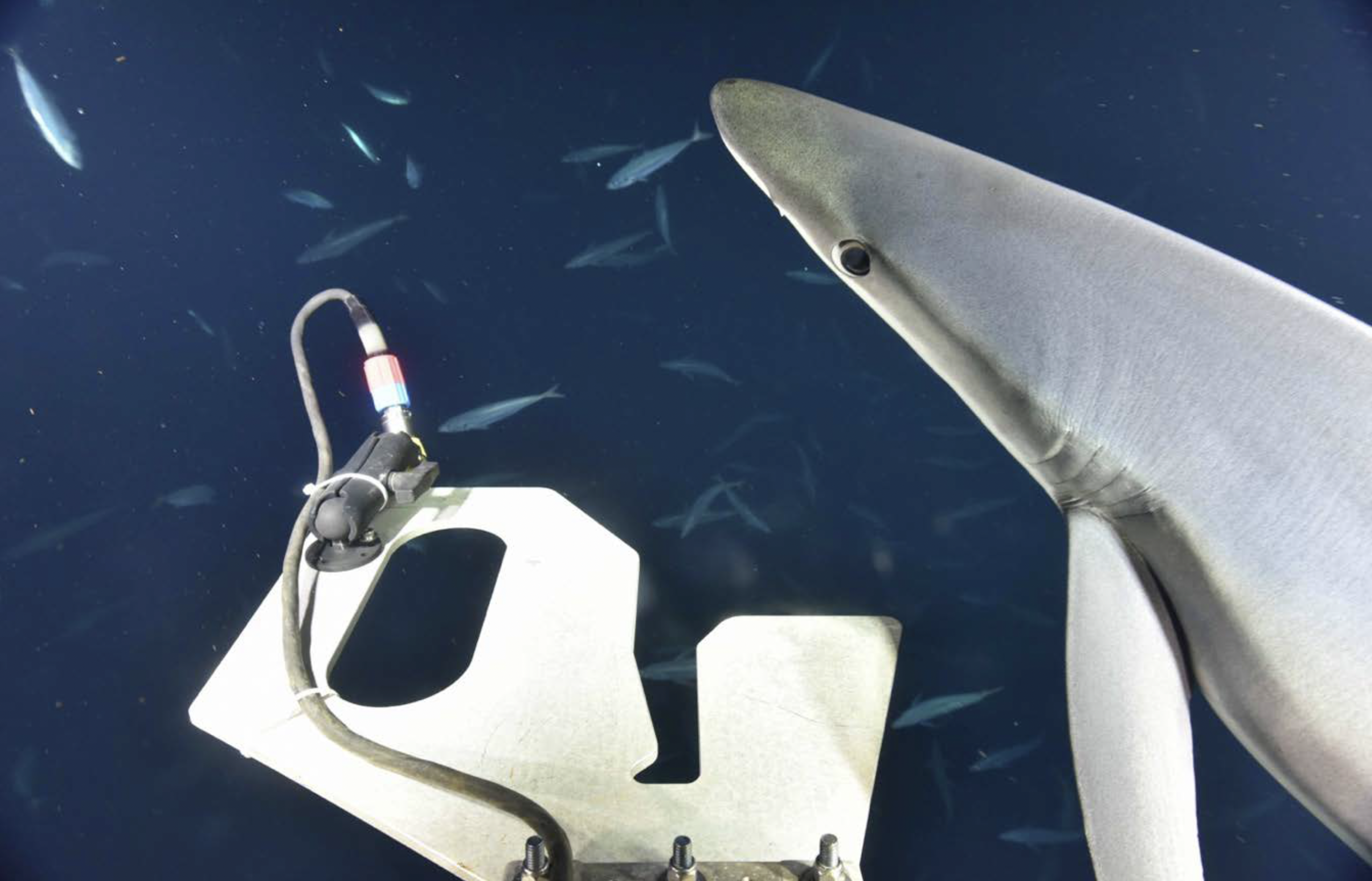
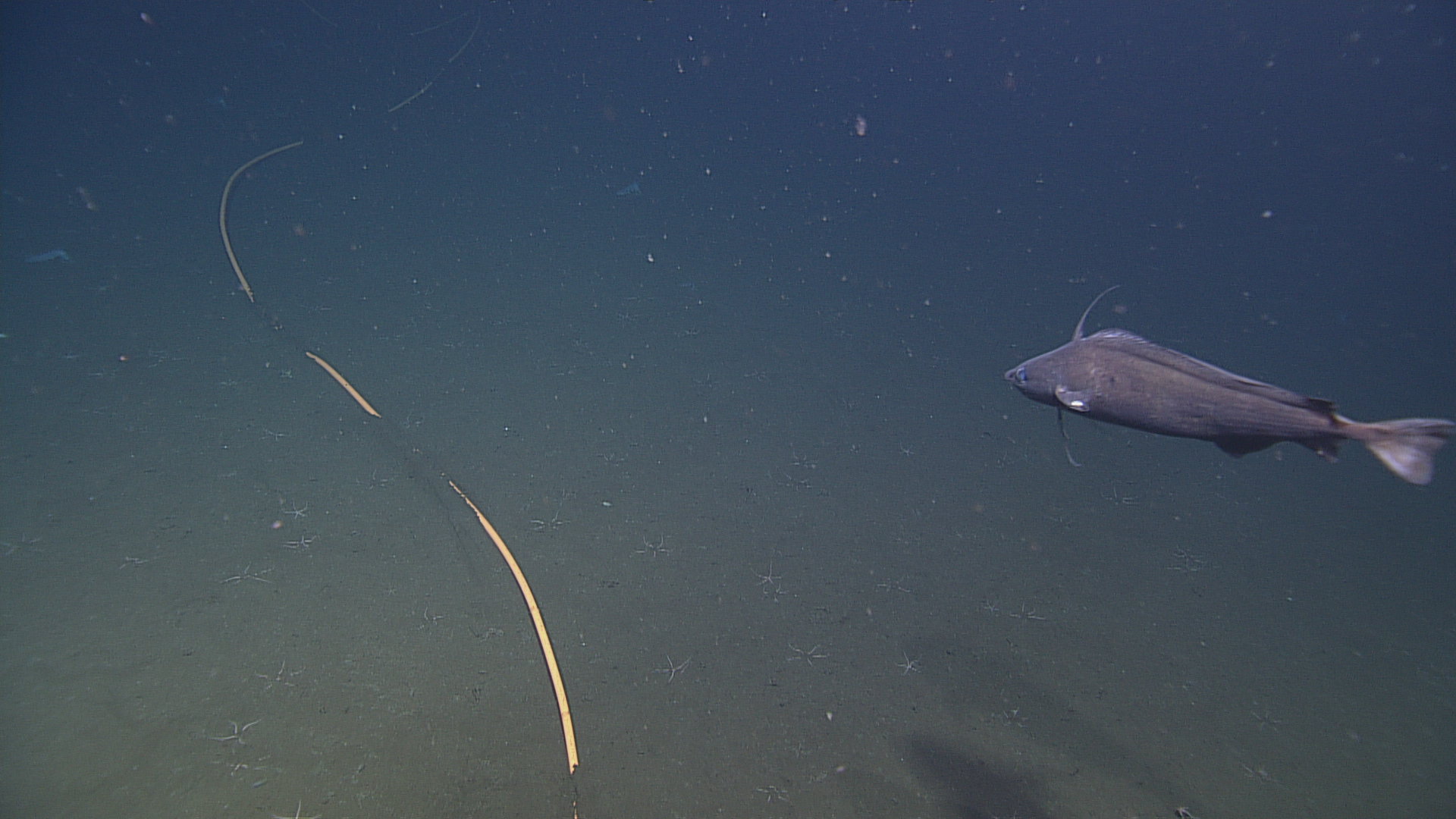
This blue shark was the highlight of the Slope Base Deep Profiler dive as he moved around the ROV Jason. Credit: UW/NSF-OOI/WHOI; Dive J2-1367; V21.
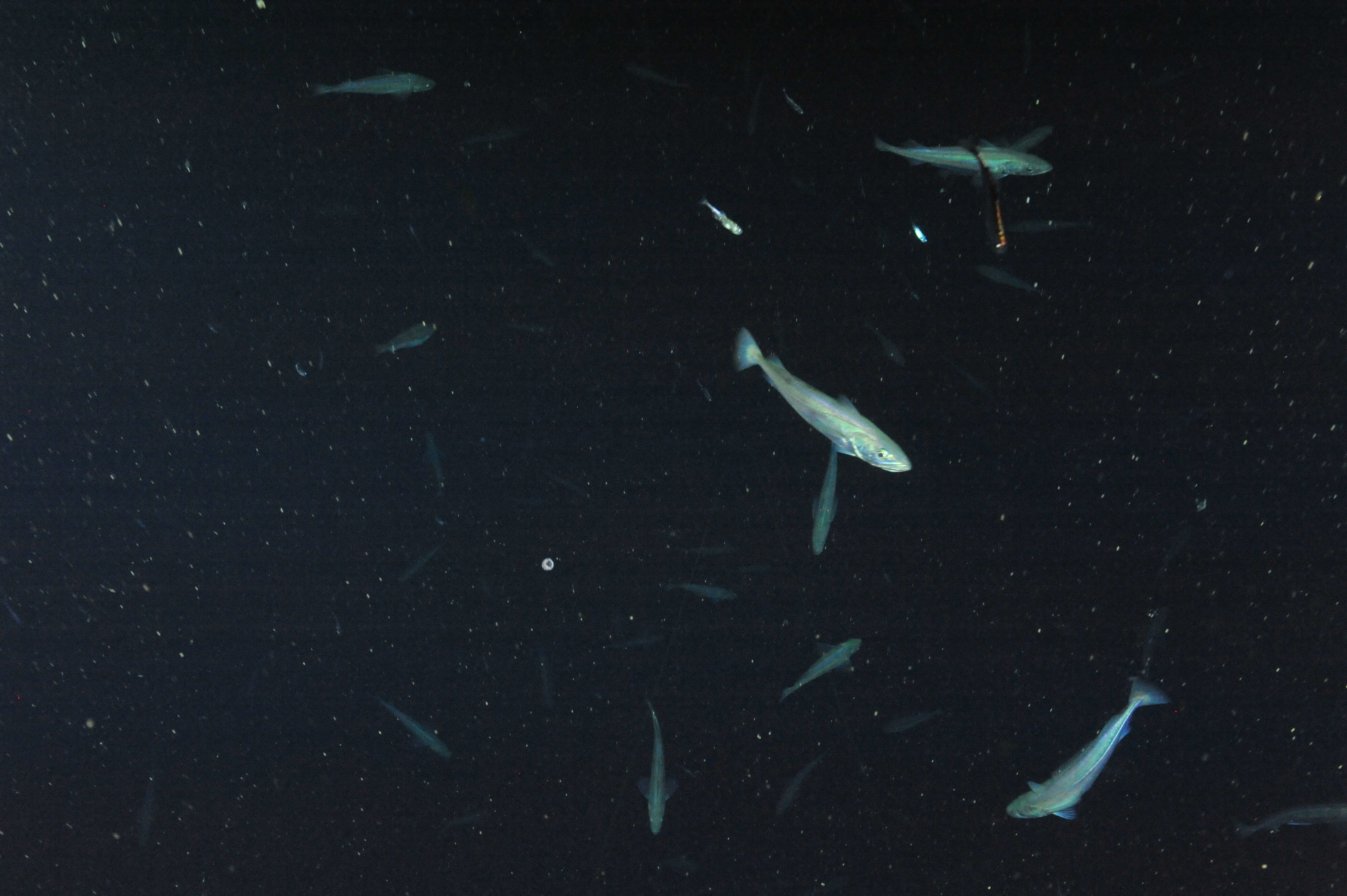
The float atop the Deep Profiler Mooring at the base of Axial Seamount has become a habitat for schools of fish. Credit: NSF-OOI/UW/CSSF; ROPOS Dive R1860, V15.
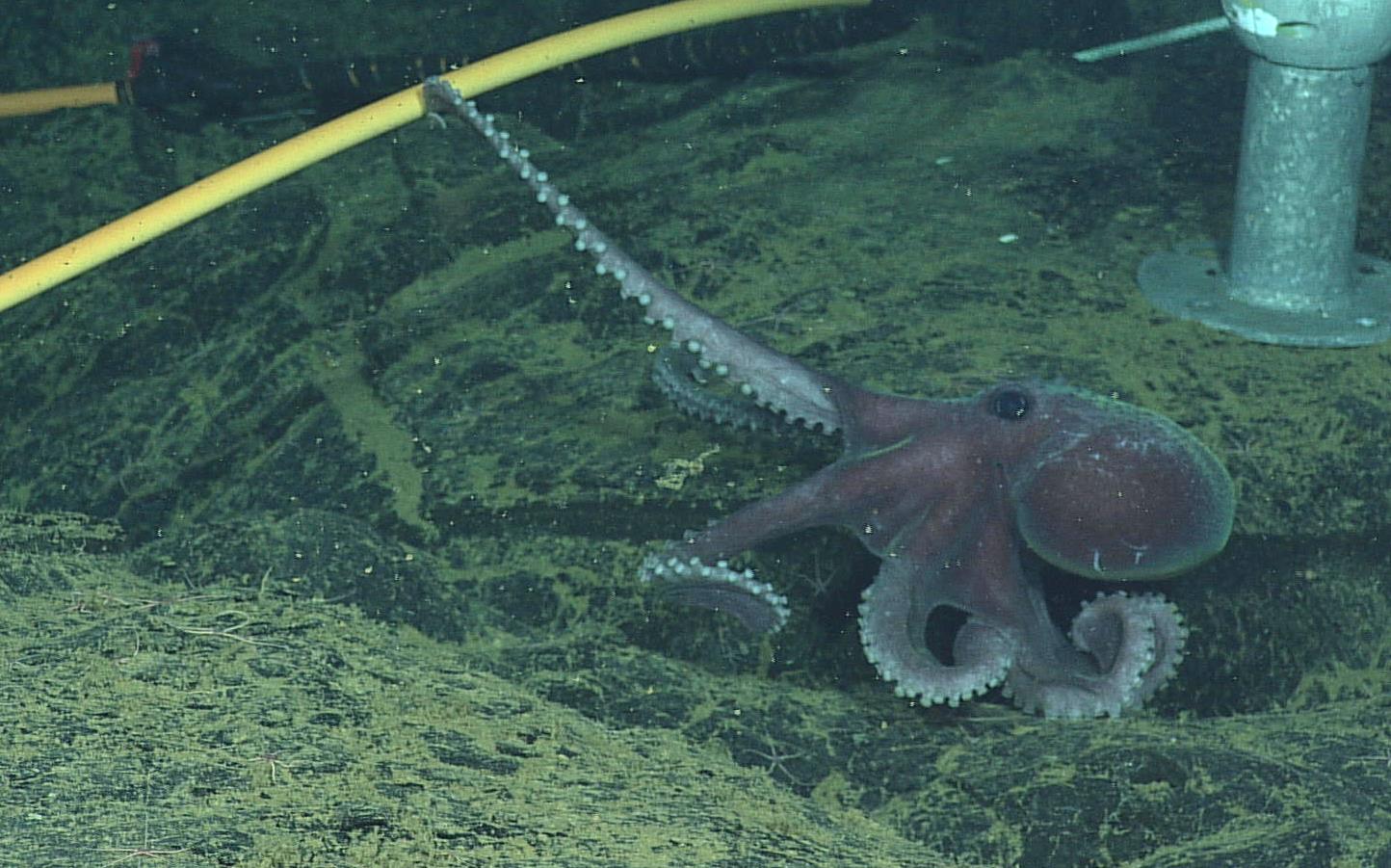
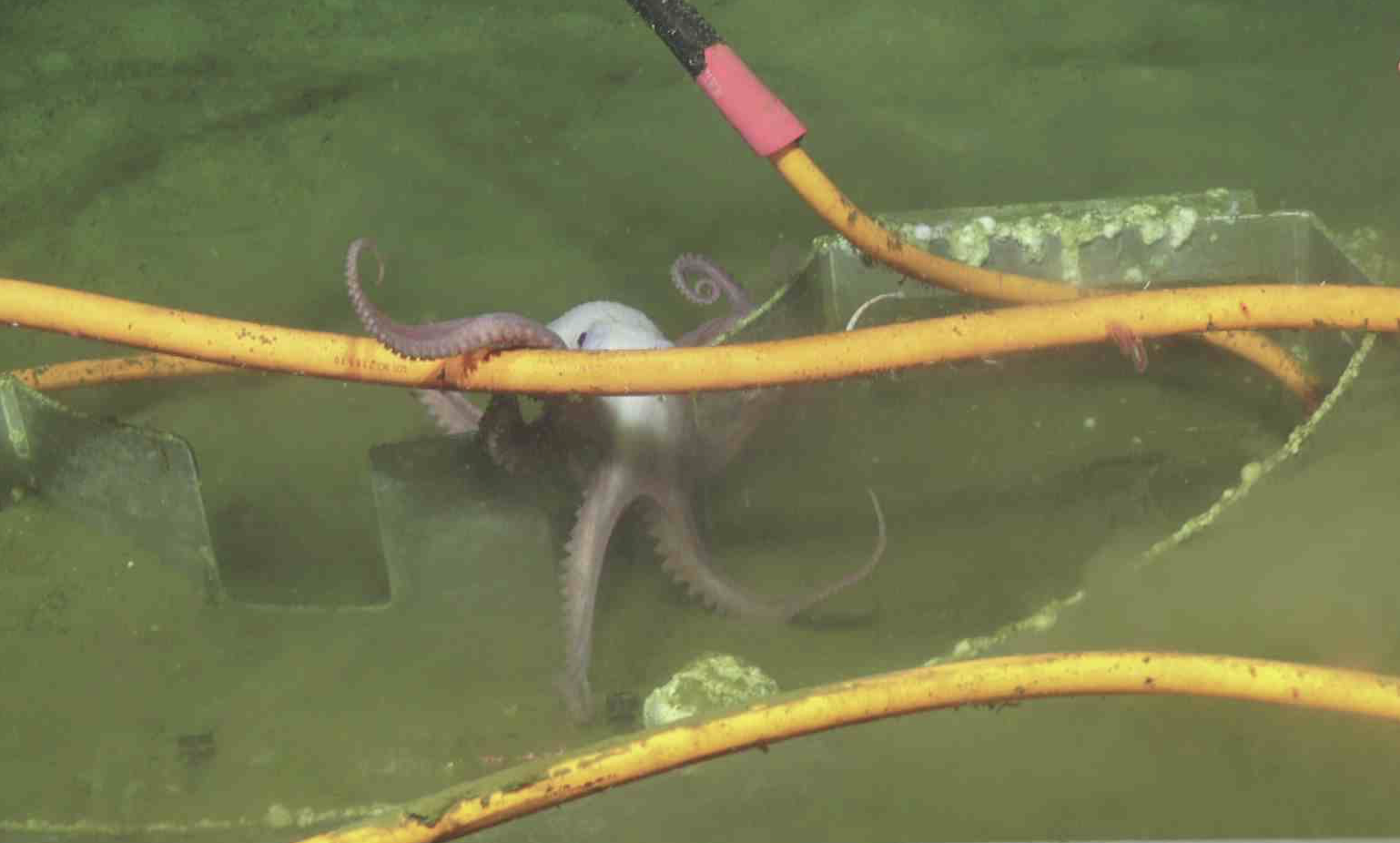
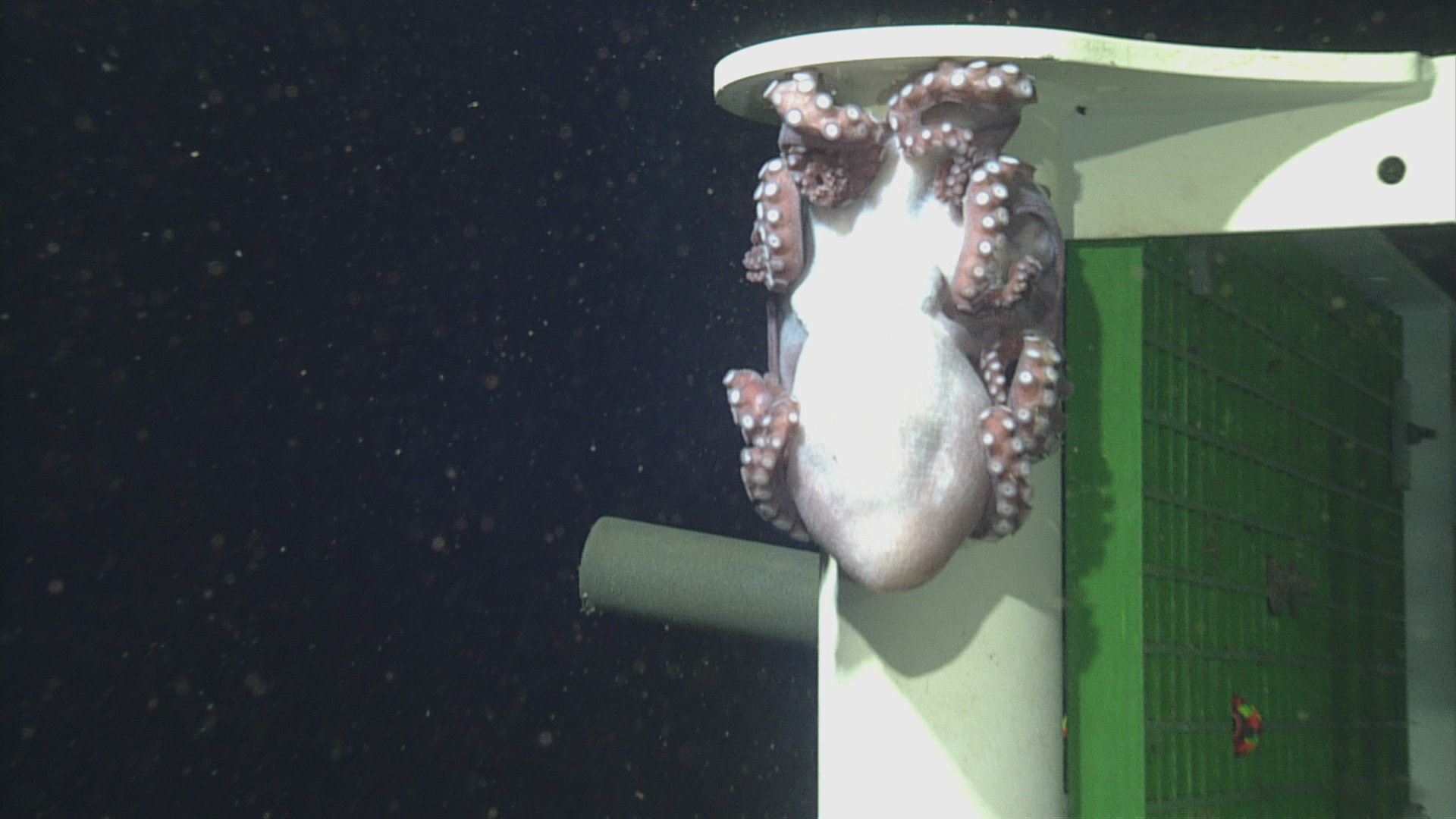
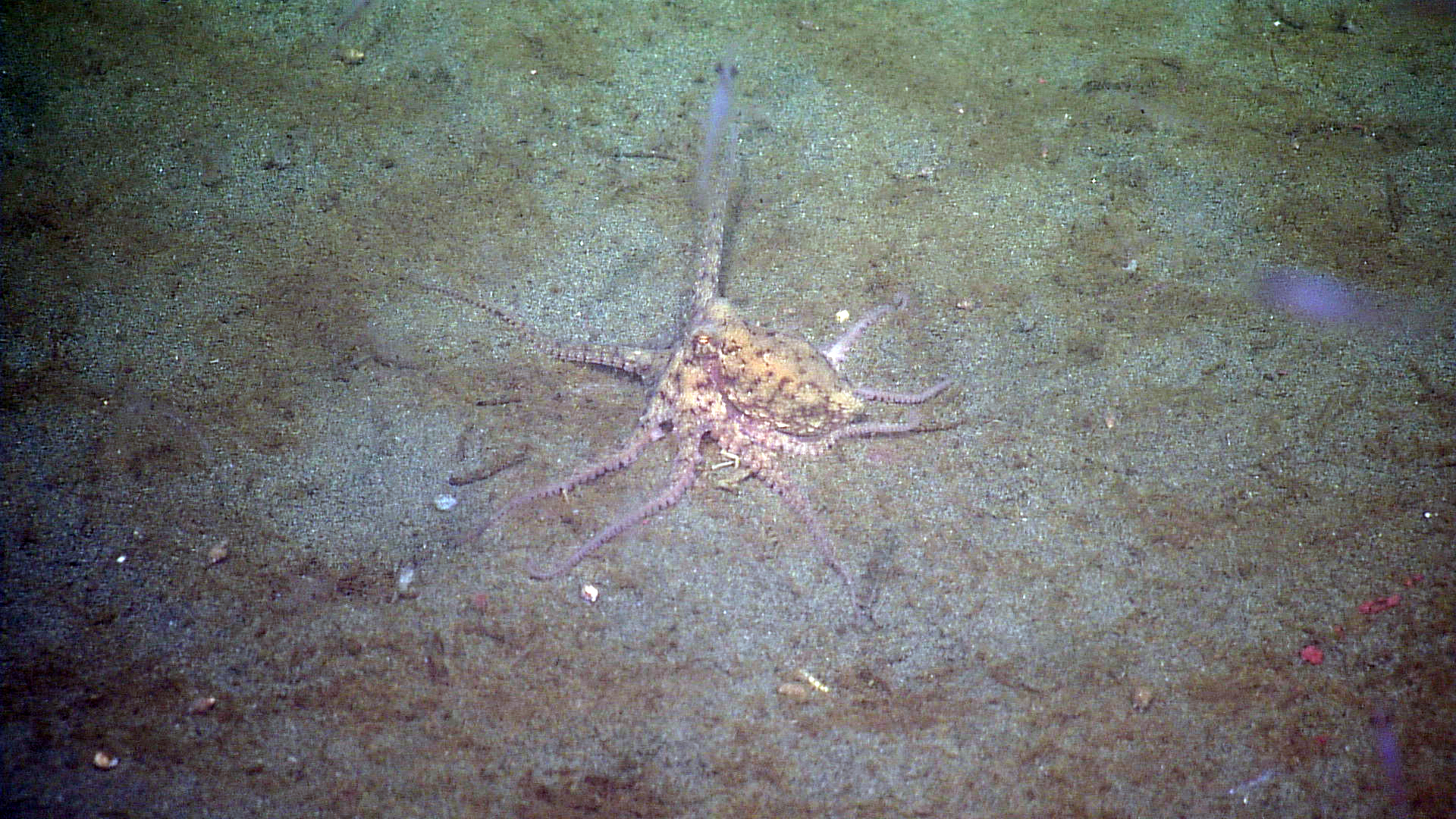
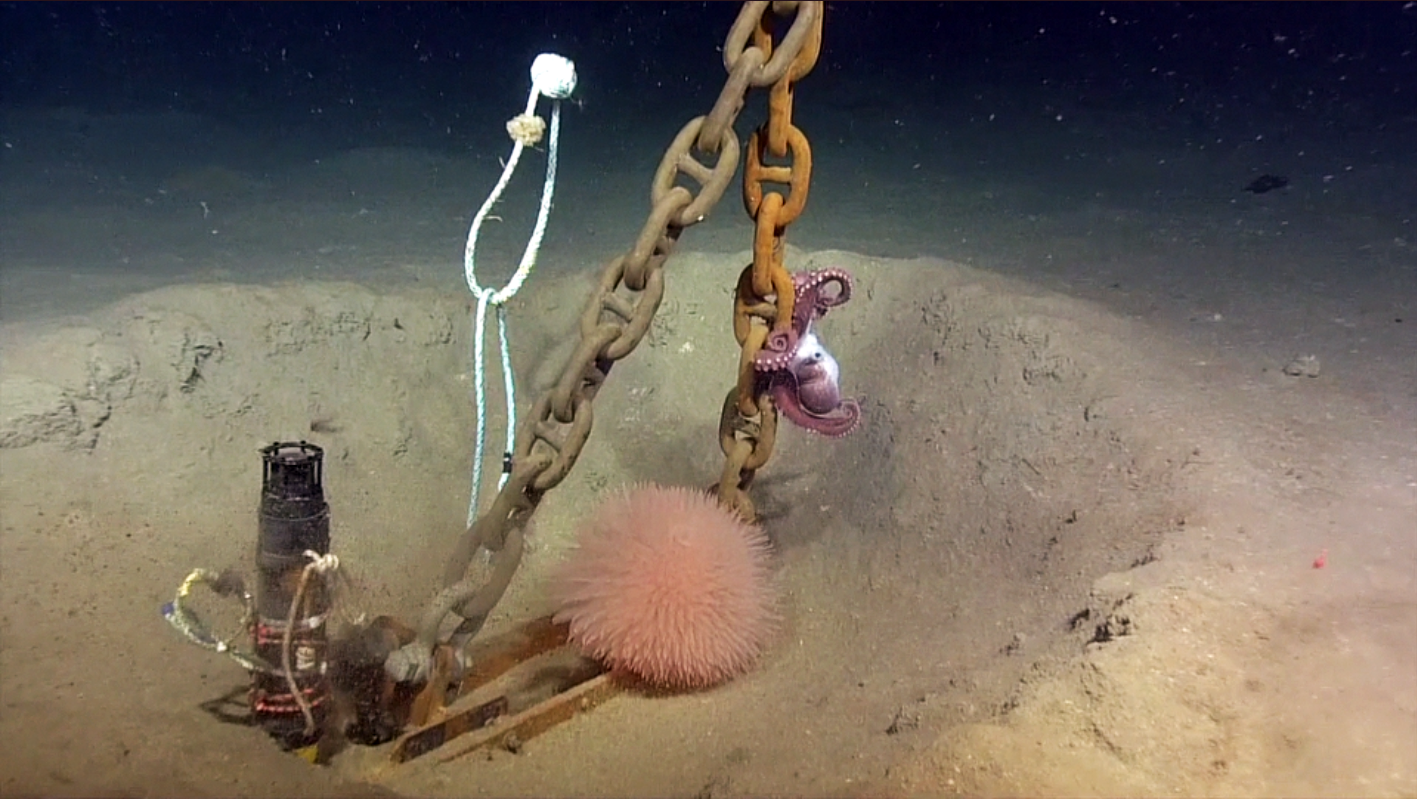
Graneledone Octopus investigates a junction box at the base of Axial Seamount (~2600 m). Credit: UW/NSF-OOI/CSSF, V13.
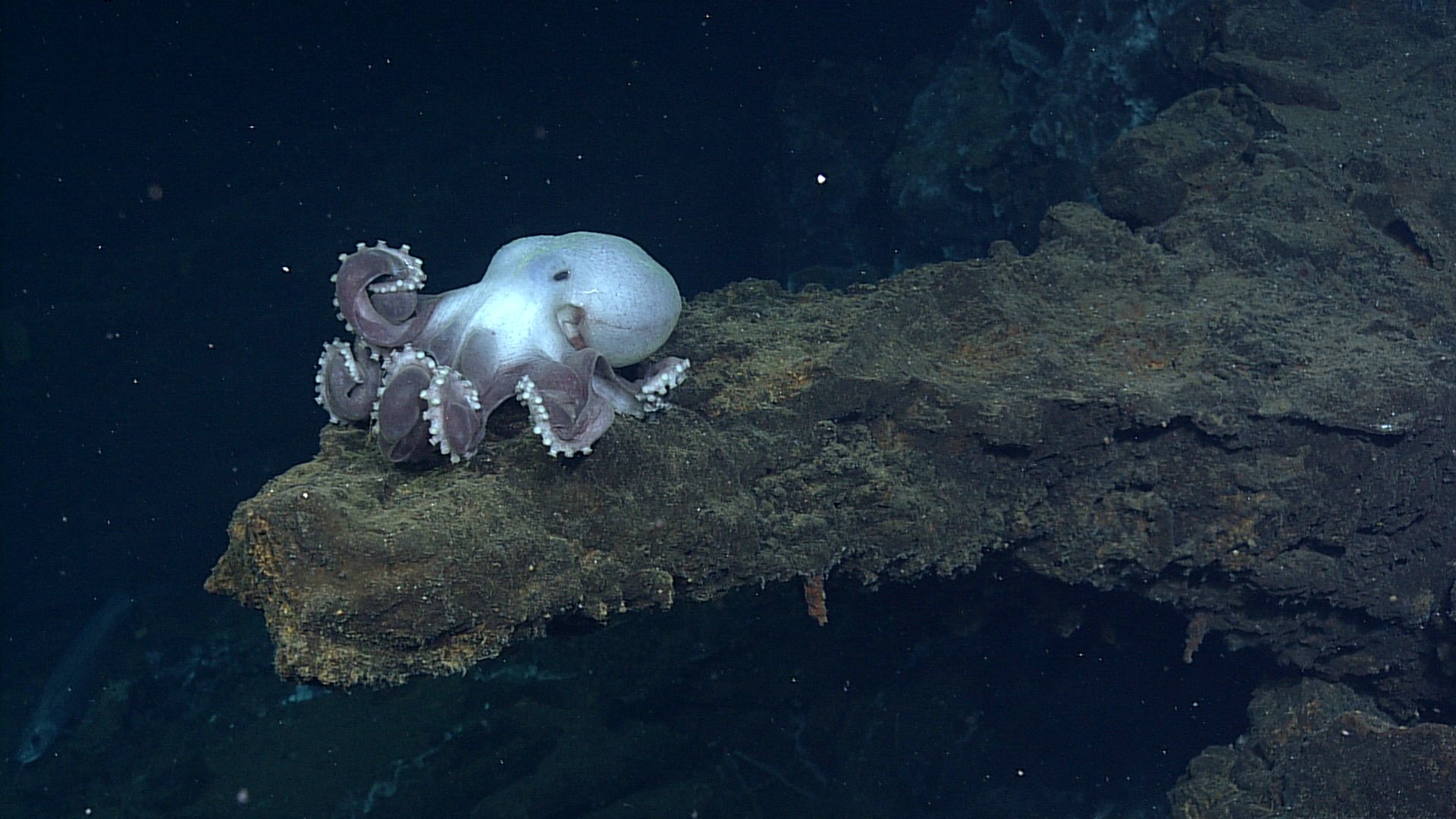
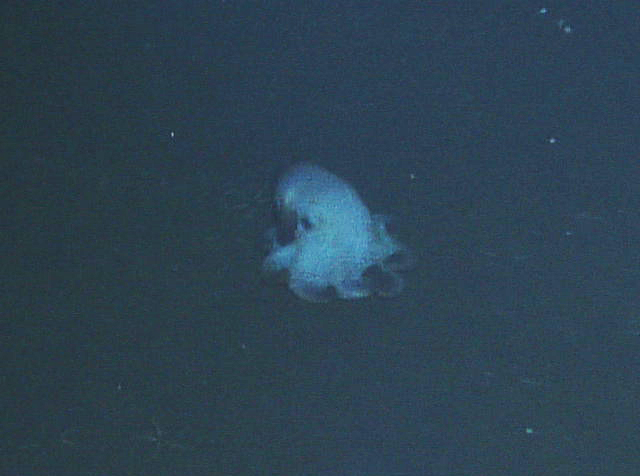
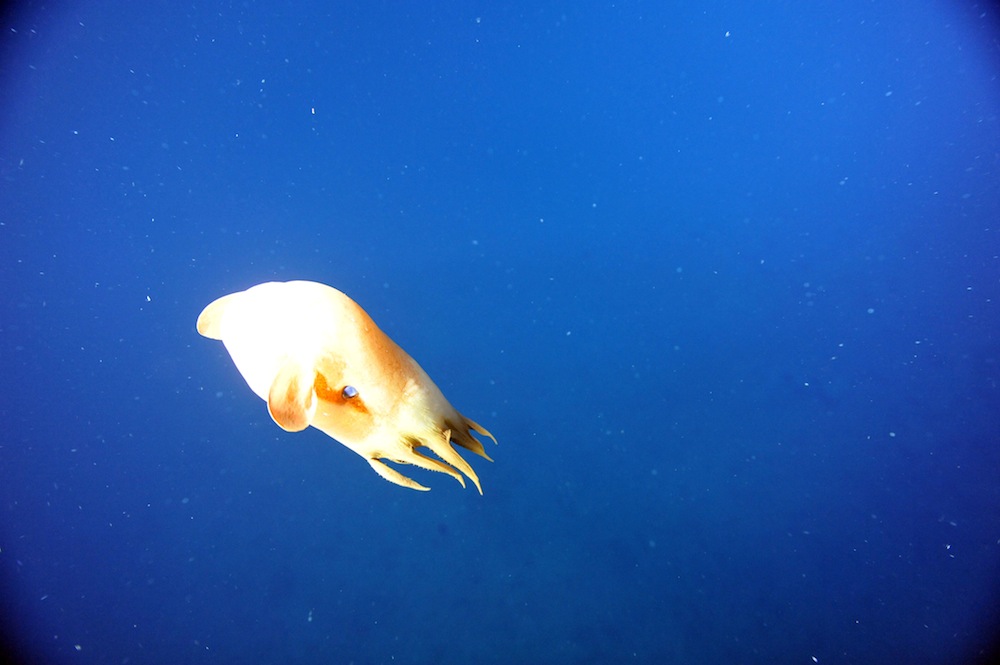
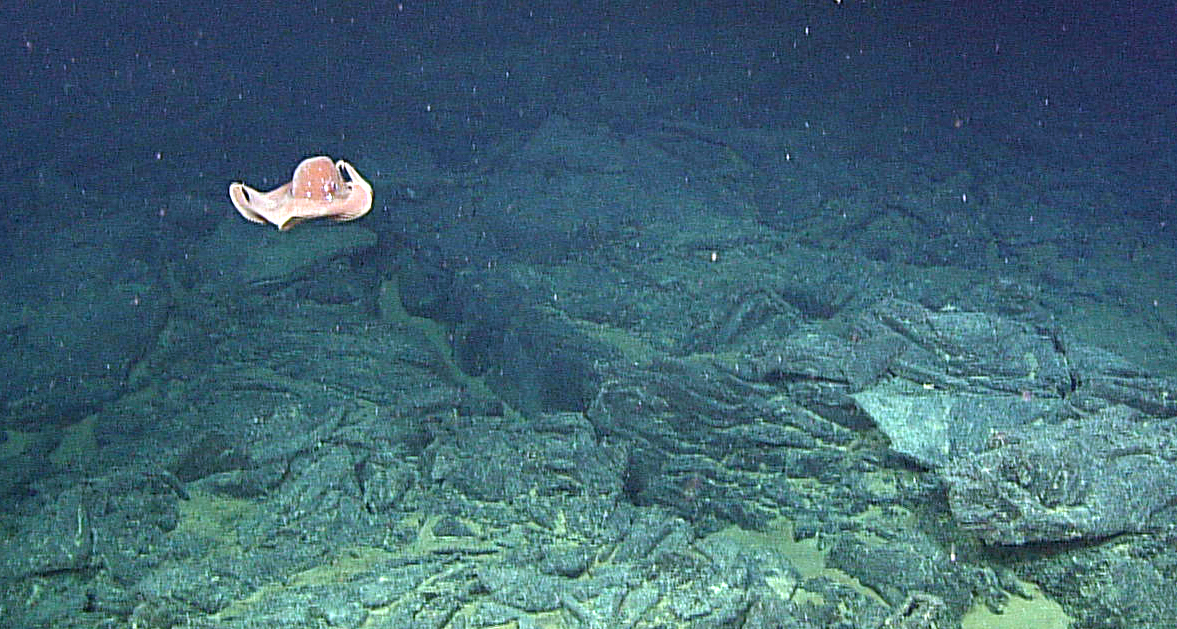
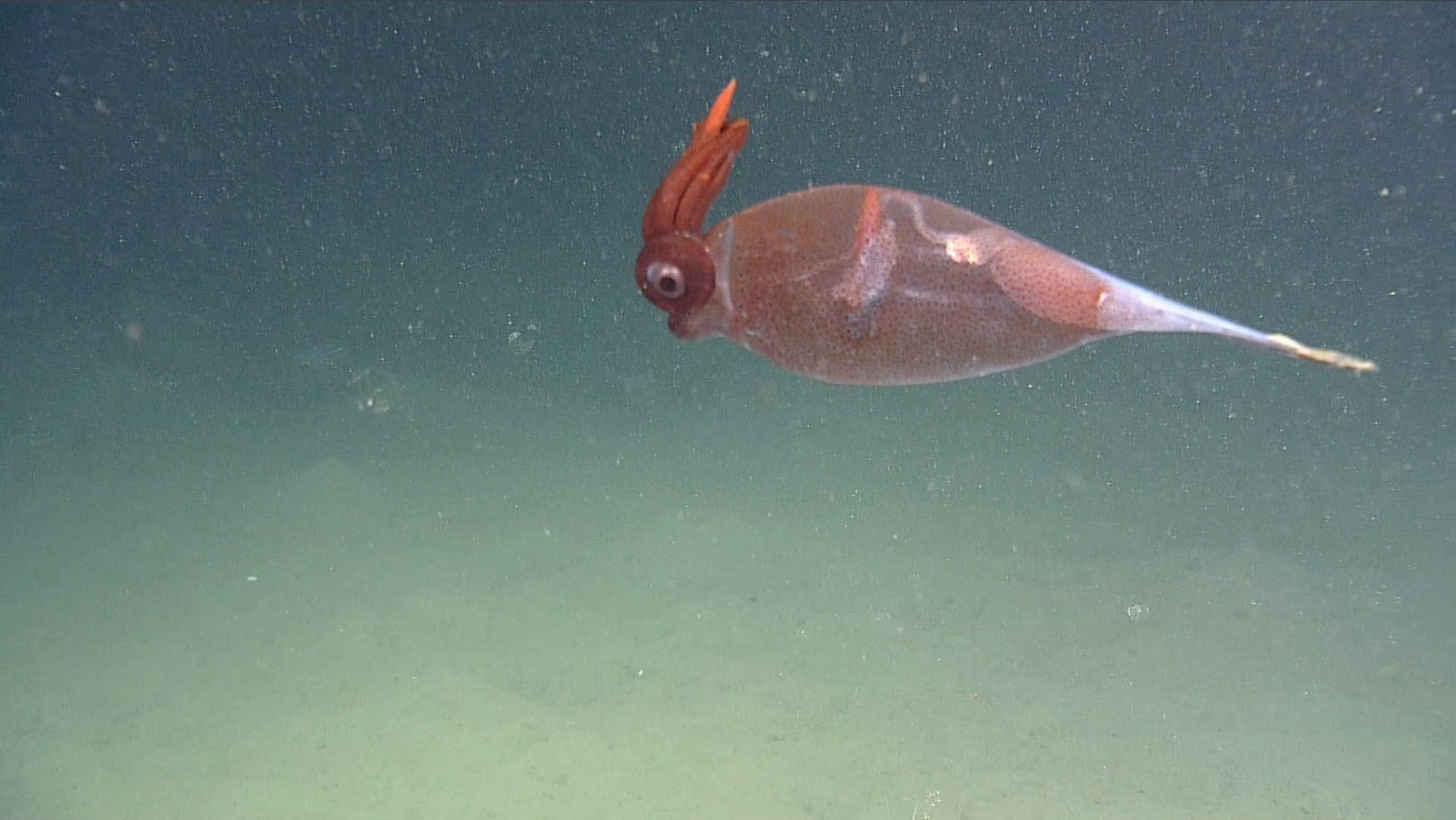
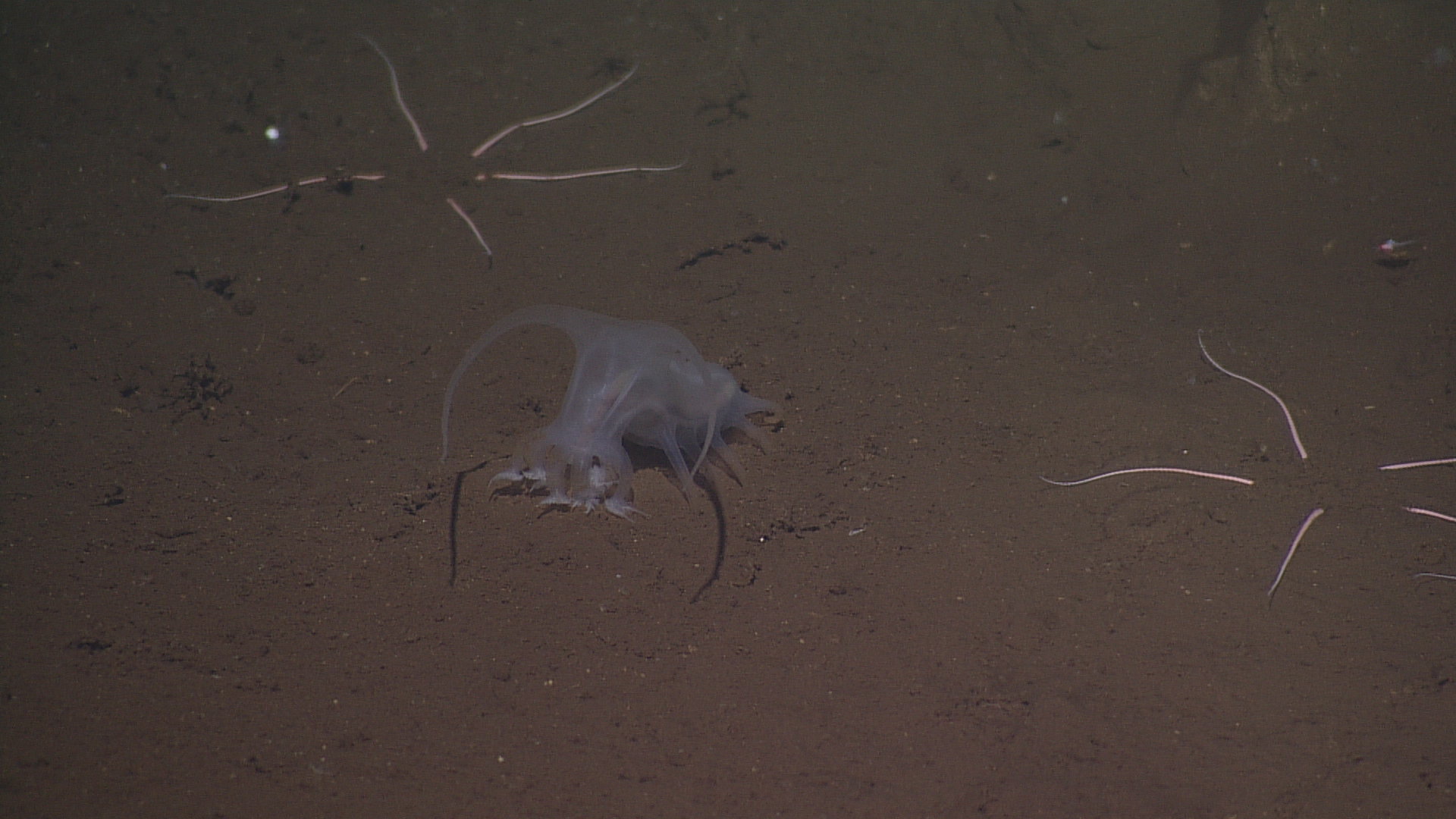
A Dumbo Octopus spotted during ROV ROPOS dive R1465. Credit: UW/OOI-NSF/CSSF, ROPOS Dive R1465, V13.
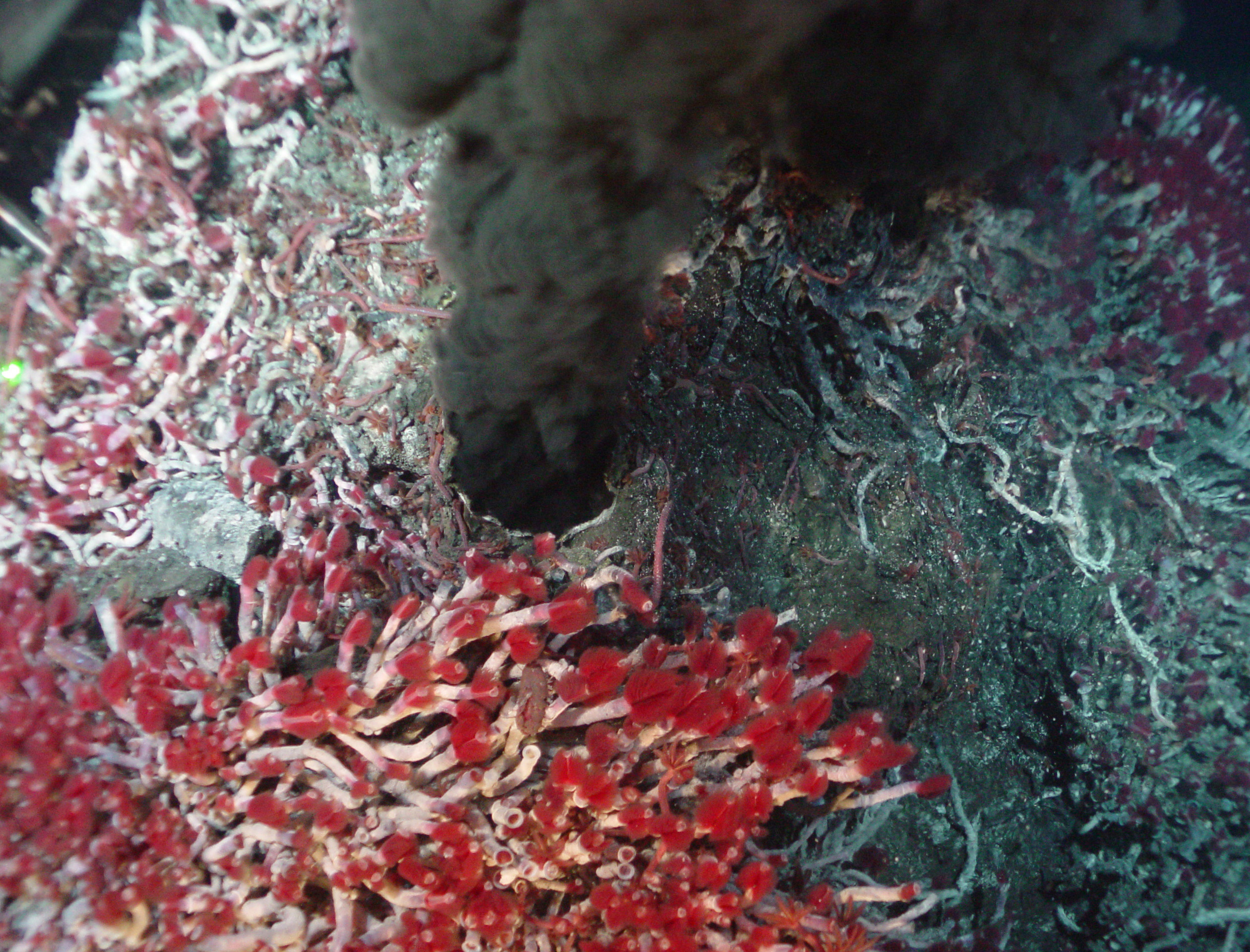
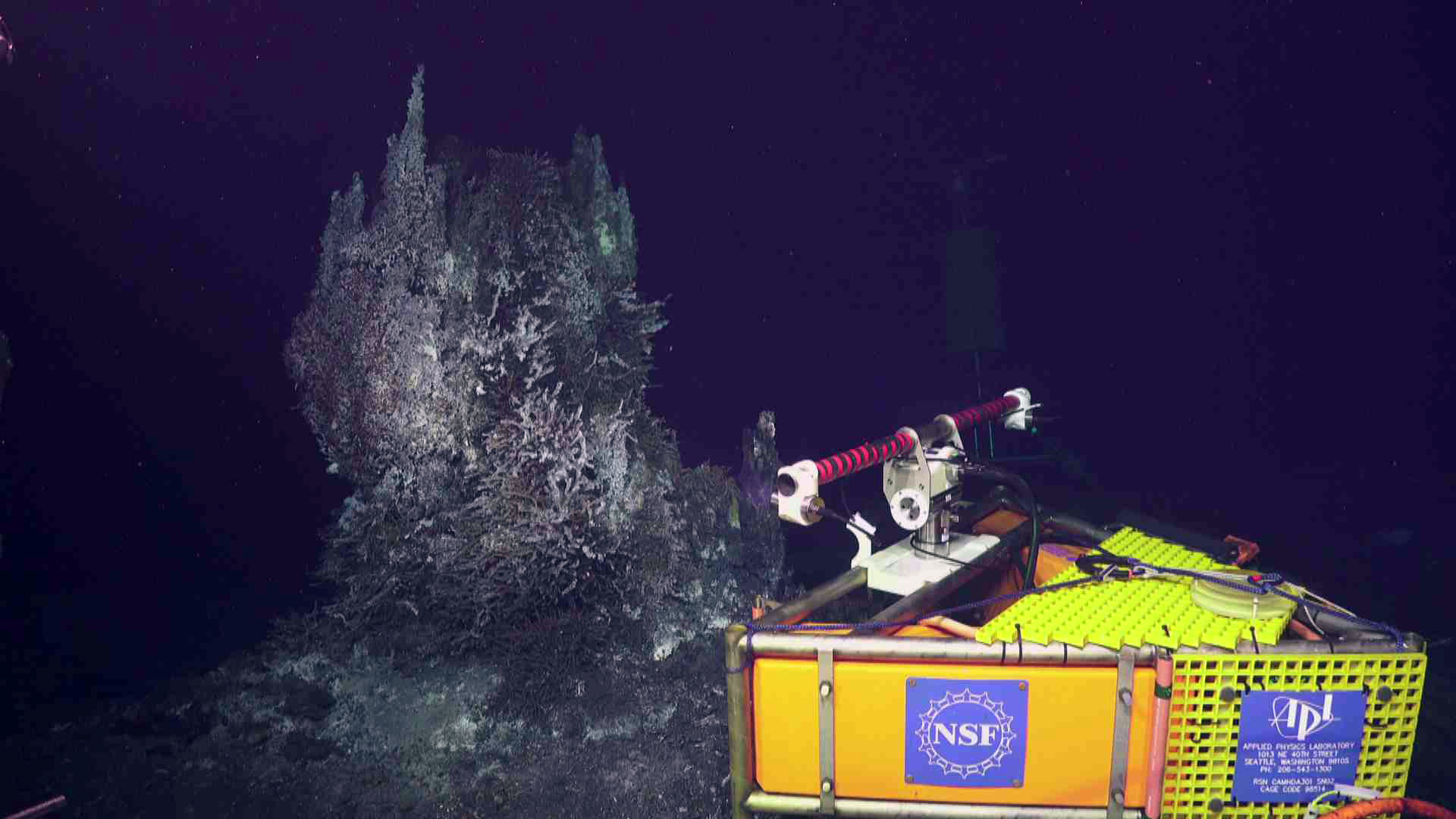
The temperature-resistivity instrument measures, in real-time, the temperature of black smoker fluids (>400°C) and the resistivity of the fluids as a proxy for chlorinity. Vents at Axial Seamount are boiling, producing fluids that are very low in chloride content (salts). Boiling is an important processes because it enhances precipitation of precious metals in seafloor black smokers.
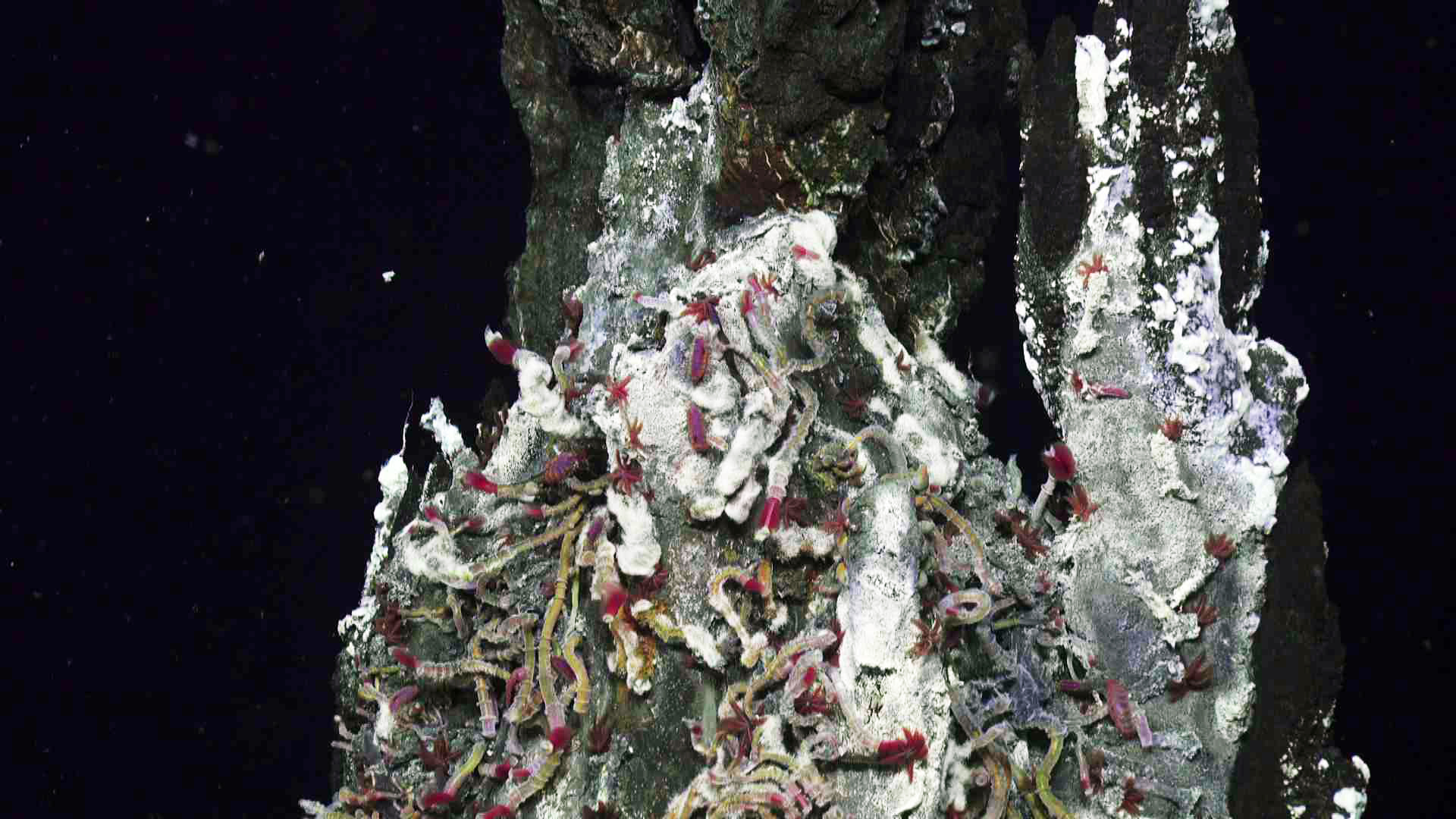
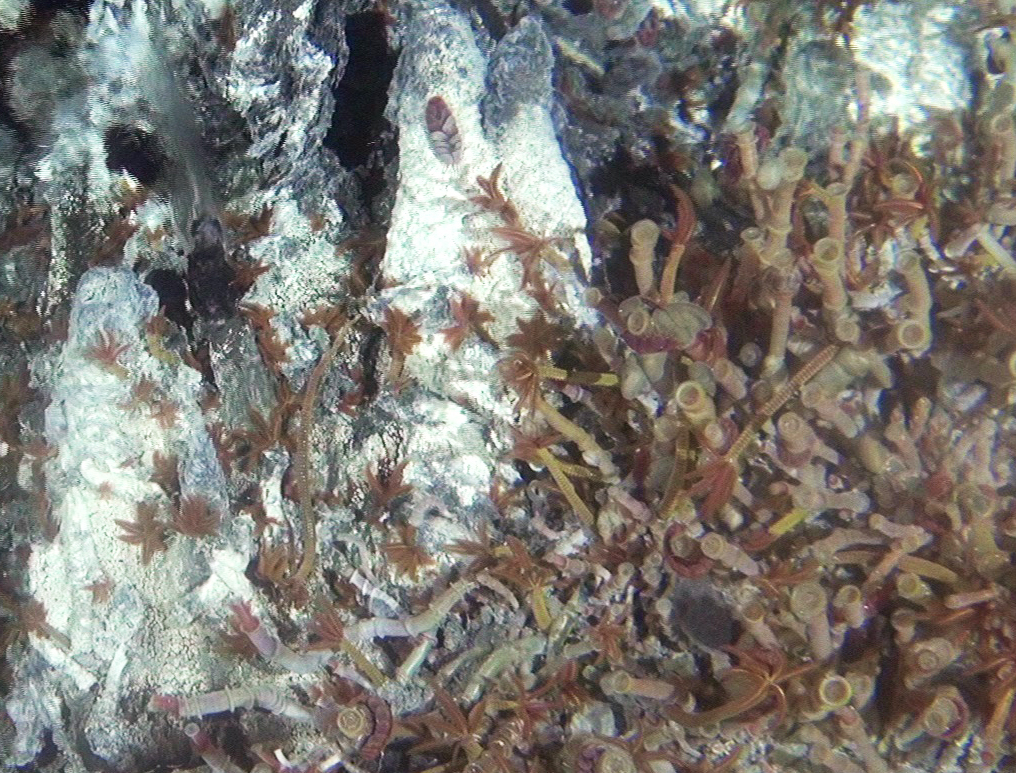
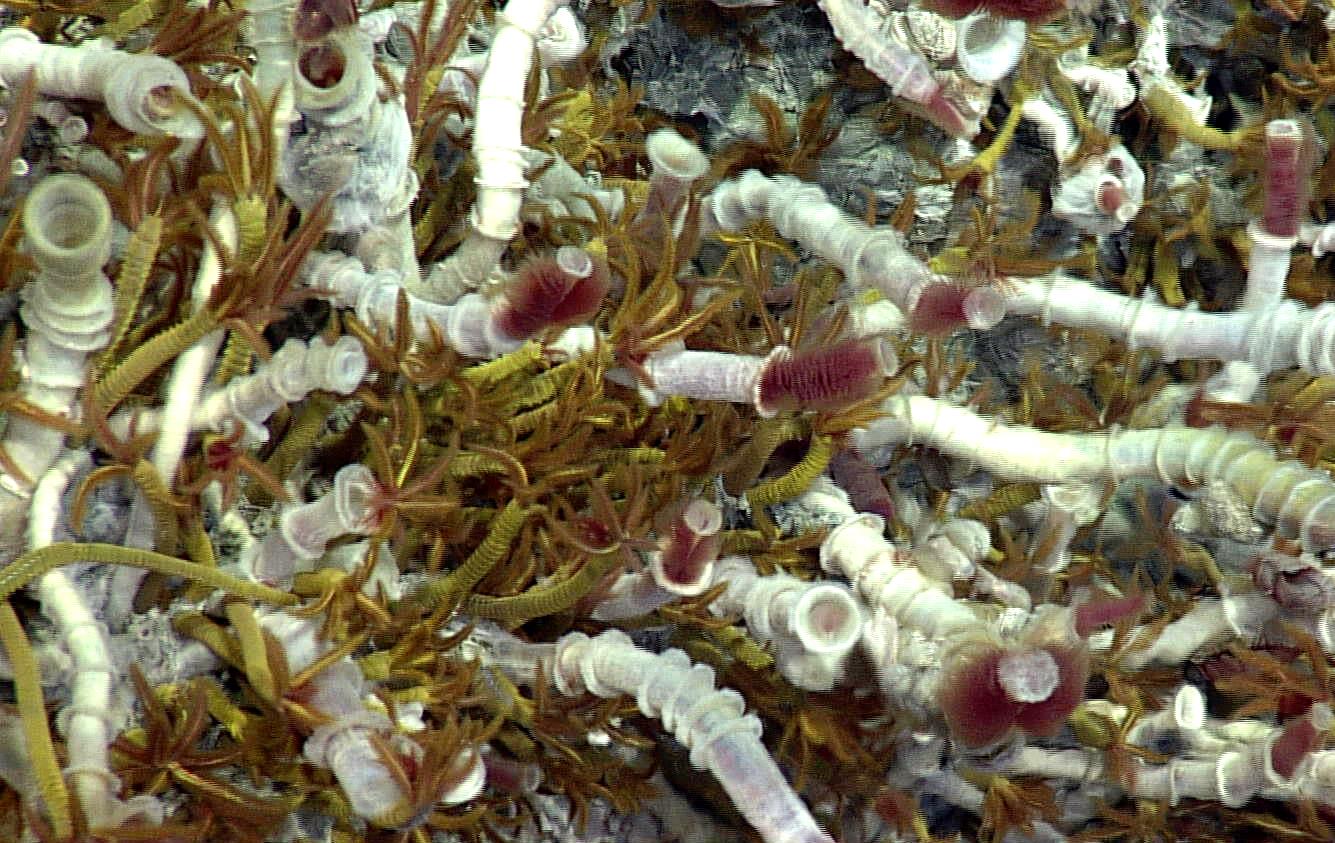
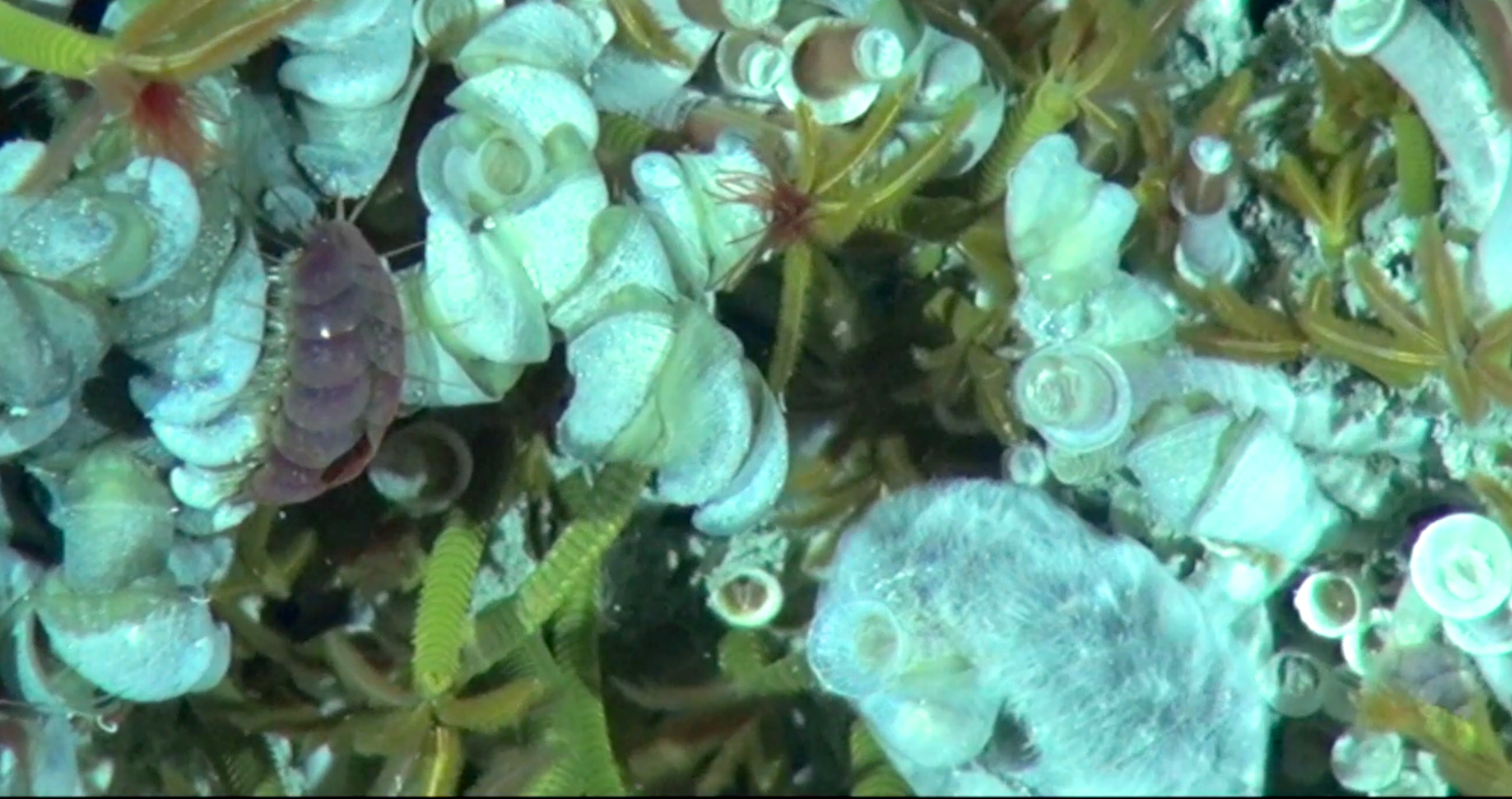
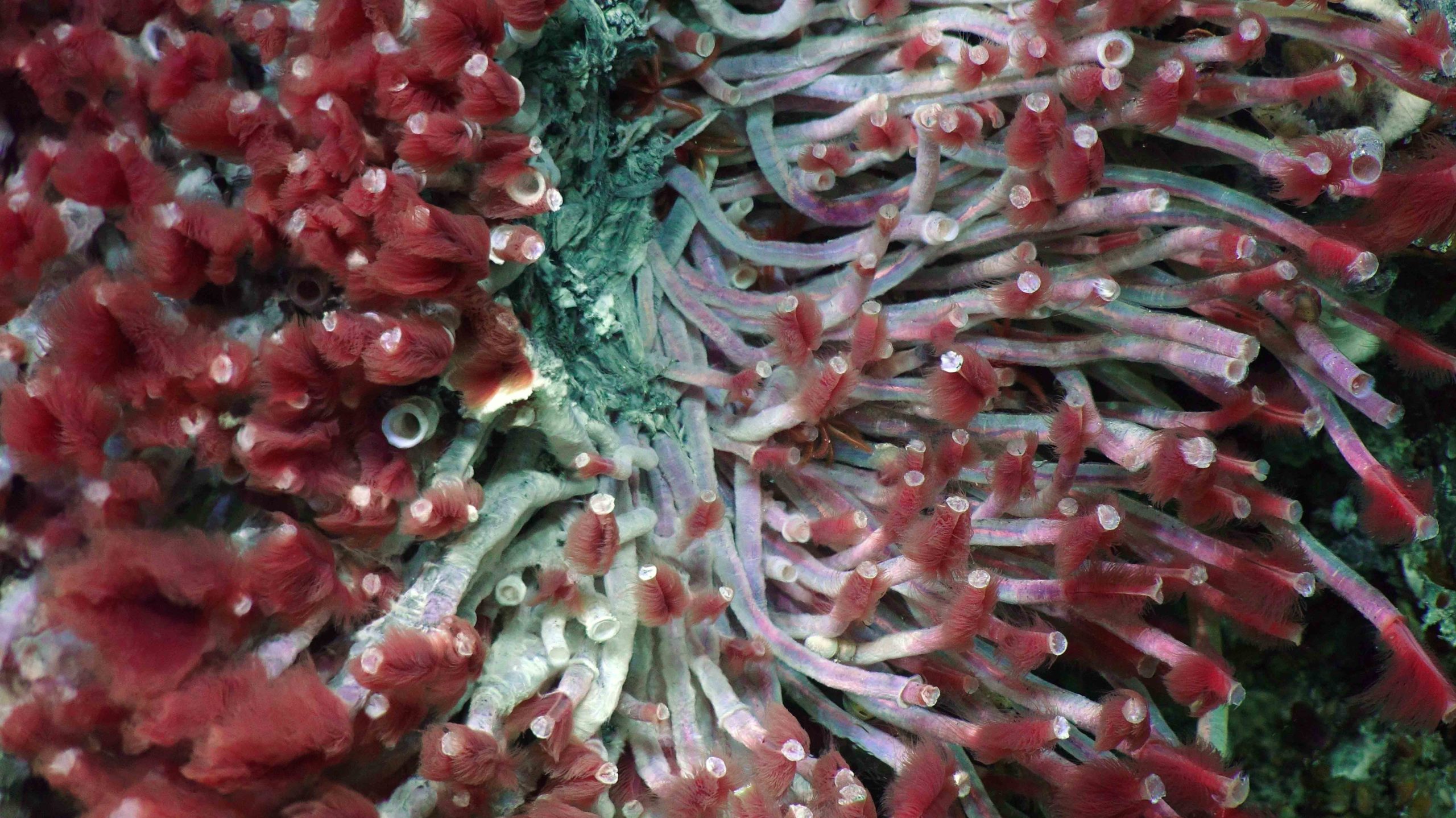
A close up of animals, including palm worms and tubeworms, on the hydrothermal chimney called Mushroom in the ASHES hydrothermal field. The image is a frame grab from video streamed during testing of the OOI-RCA high-definition video camera built by the Applied Physics Lab at the University of Washington. The camera has been at this site for 1 year. Credit: UW/NSF-OOI/ V14.
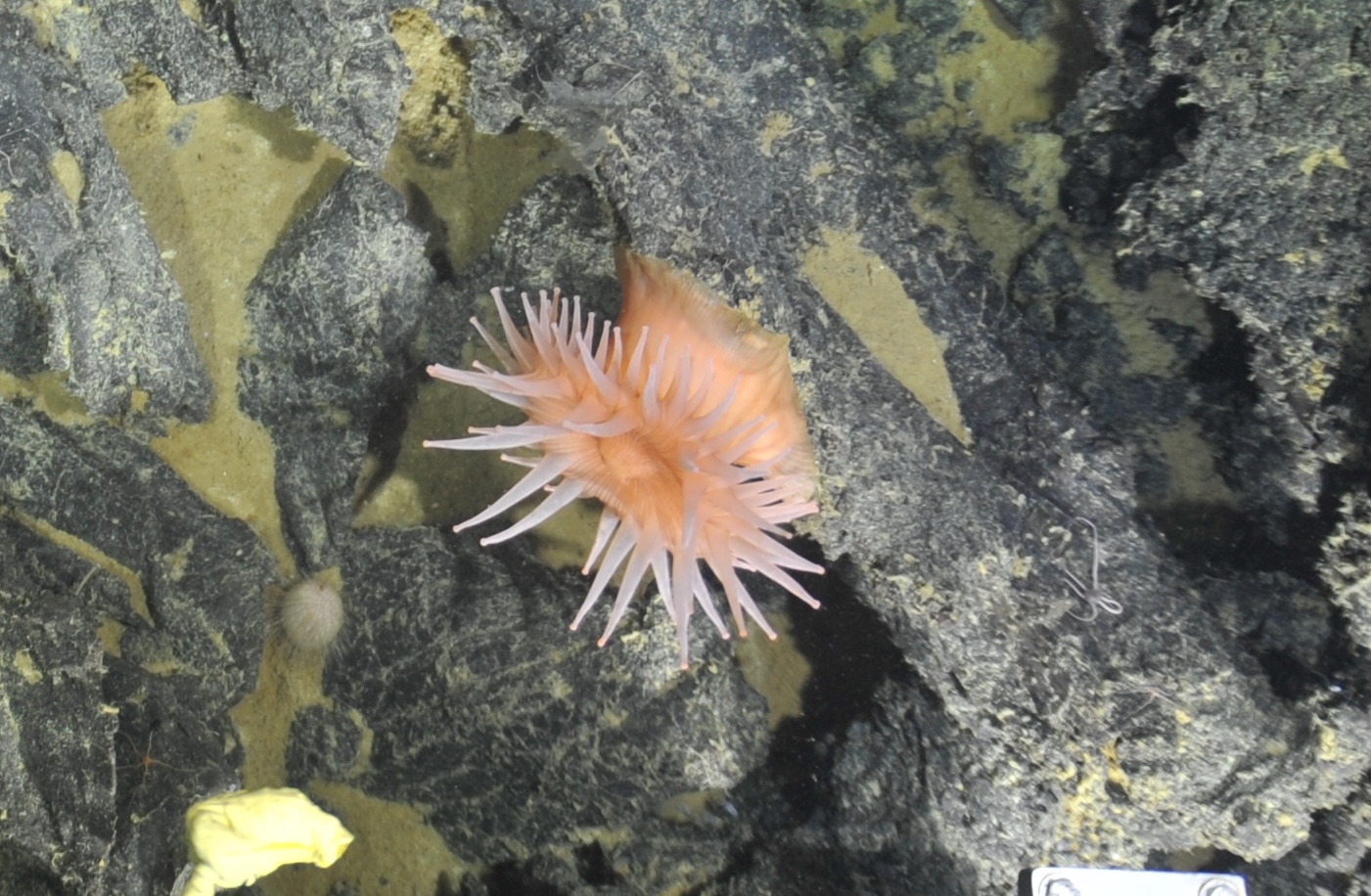
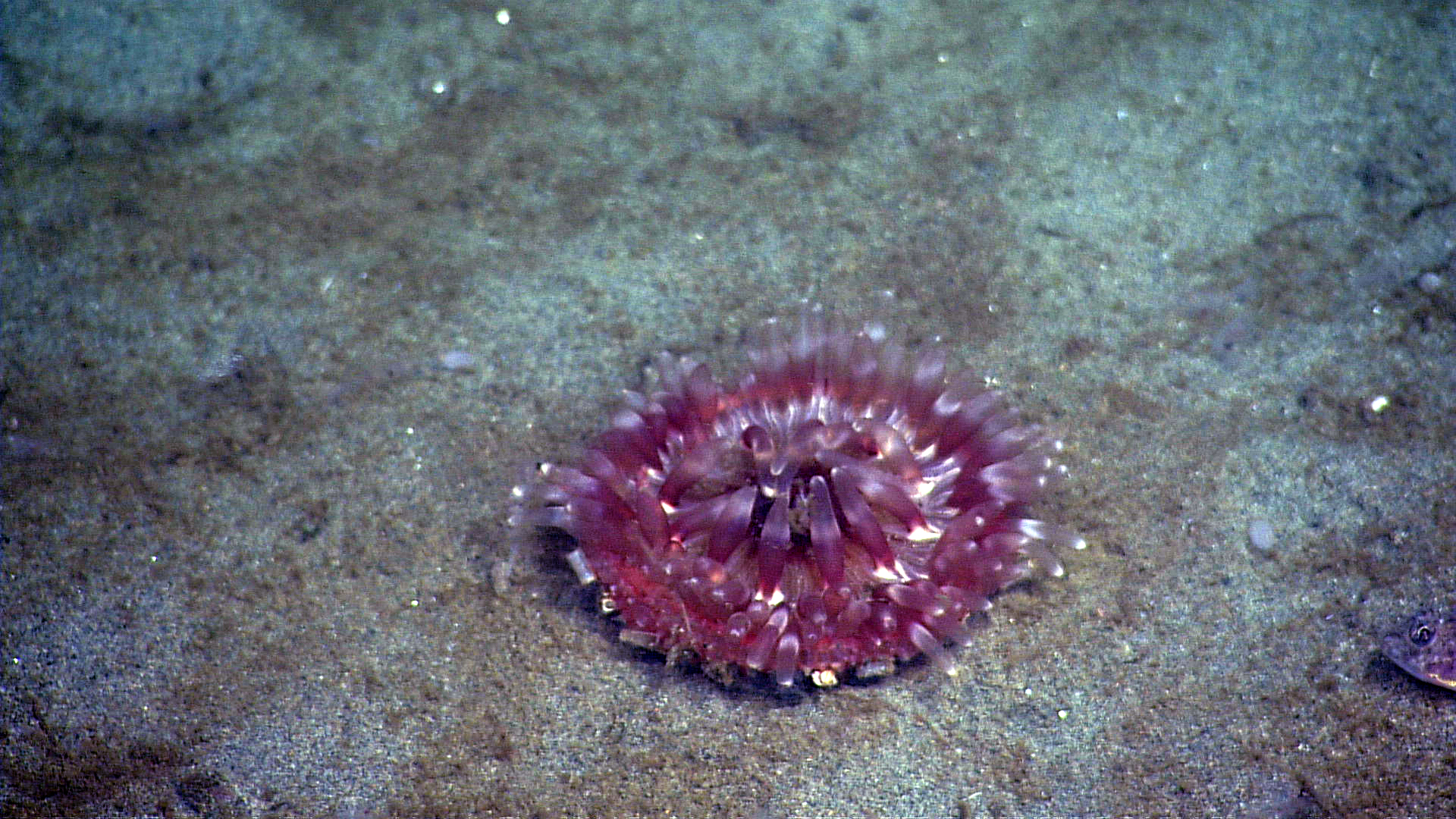
This anemone’s color can vary from white, to red-orange, and brown. It was found attached to a platform interface assembly at the Oregon offshore site at about 195 m in depth. Credit: UW/OOI-NSF/WHOI; Dive J2-970; V17.