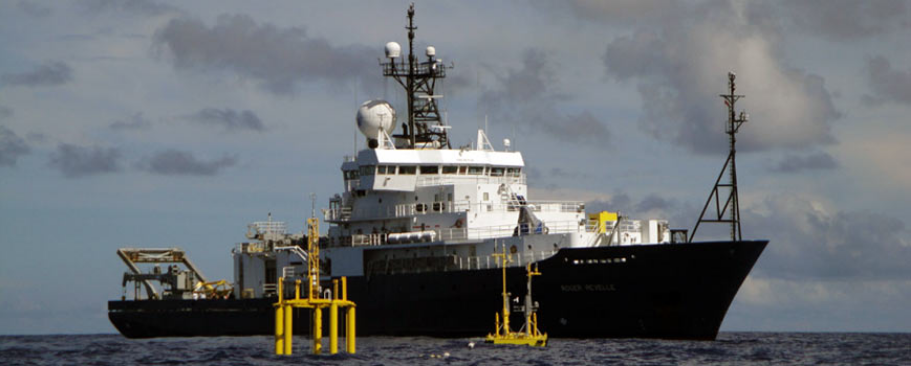
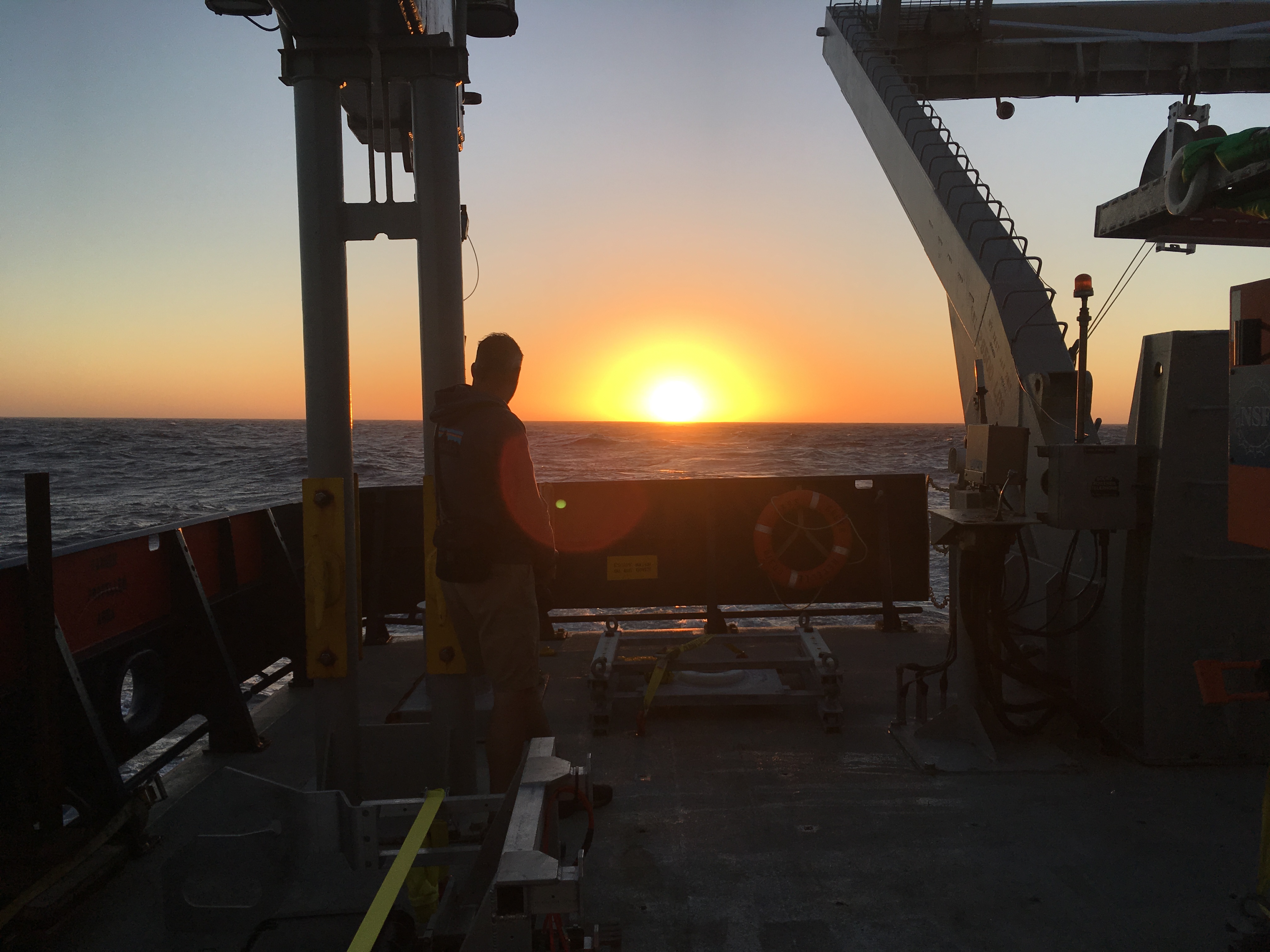
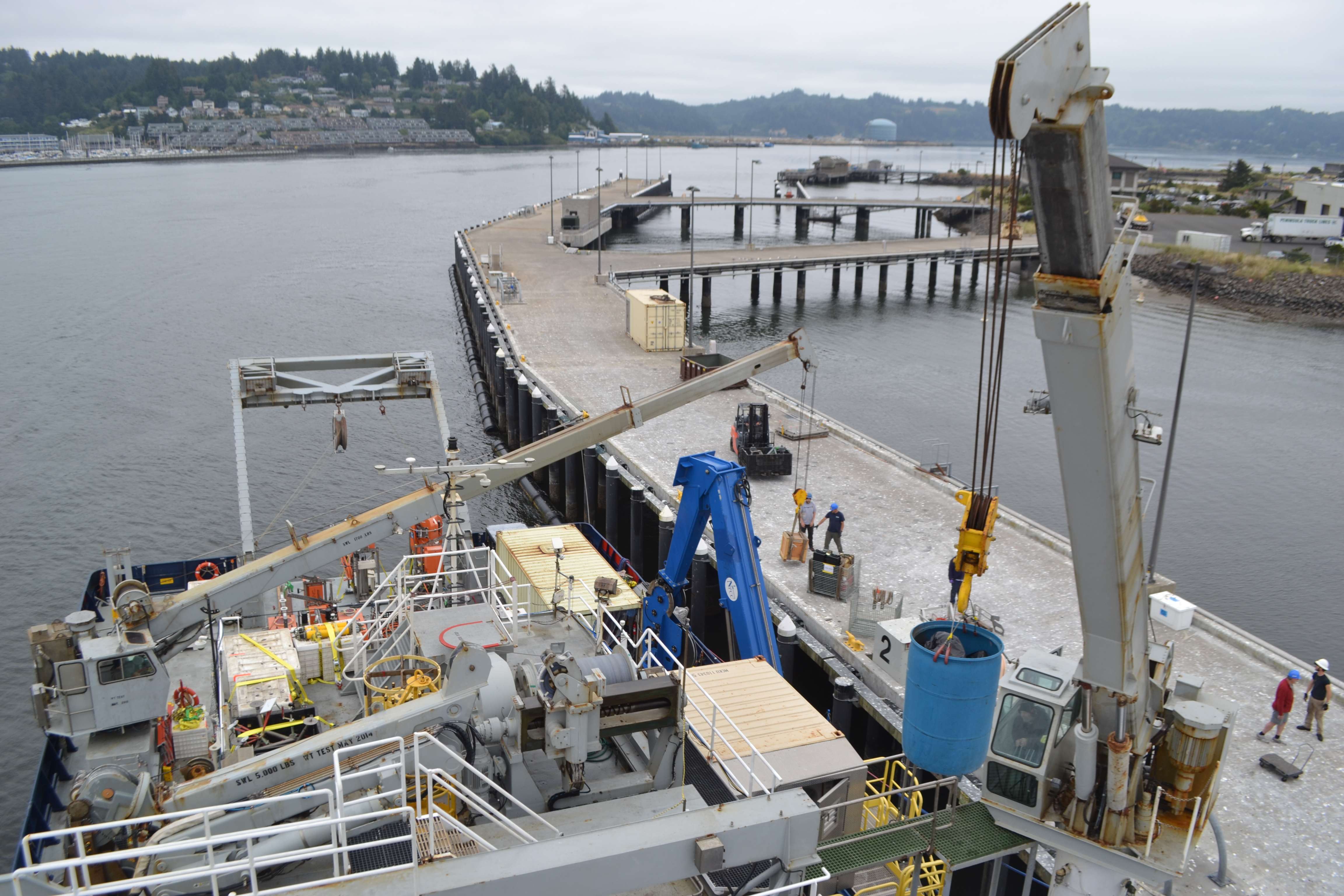
The Global Class research vessel, the R/V Roger Revelle, is operated by Srcripps Institution (SIO) of Oceanography. It will be utilized for the Cabled Array operations and maintainence cruise July - August, 2017. This image is from the SIO website.
The ROV Jason enters the water at the Cabled Array Offshore Oregon site, water depth 600 m. Credit: M. Elend, University of Washington.
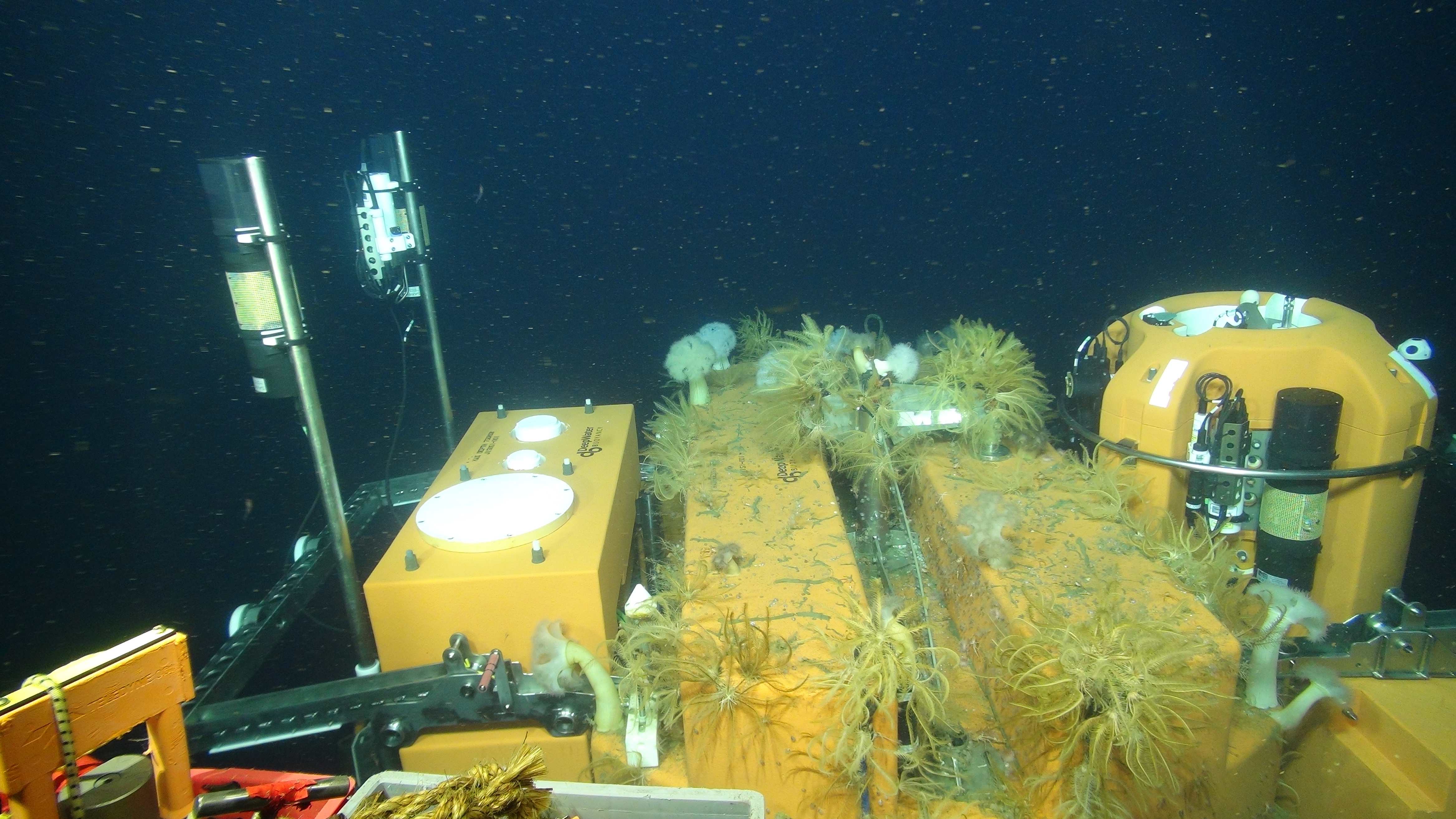
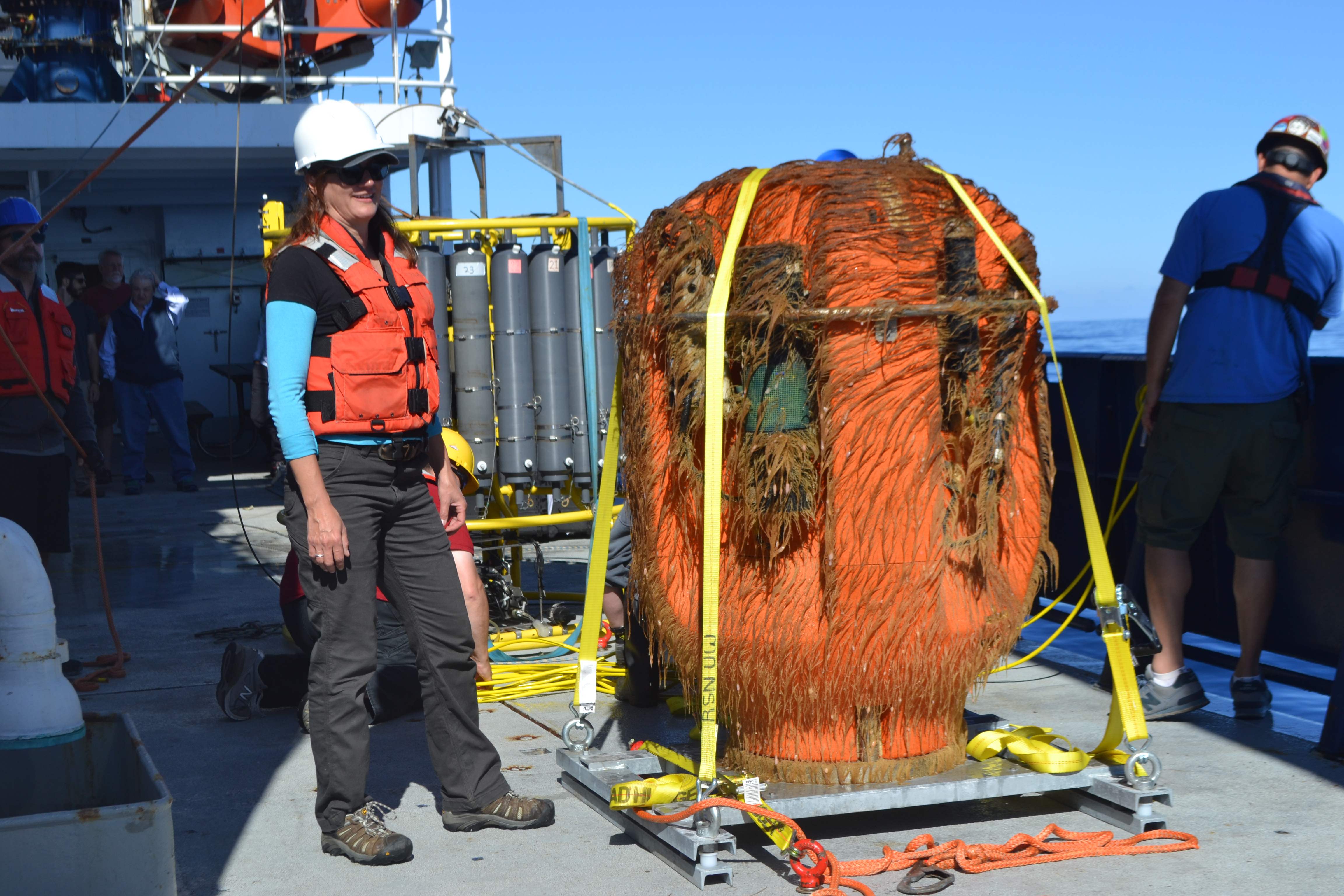
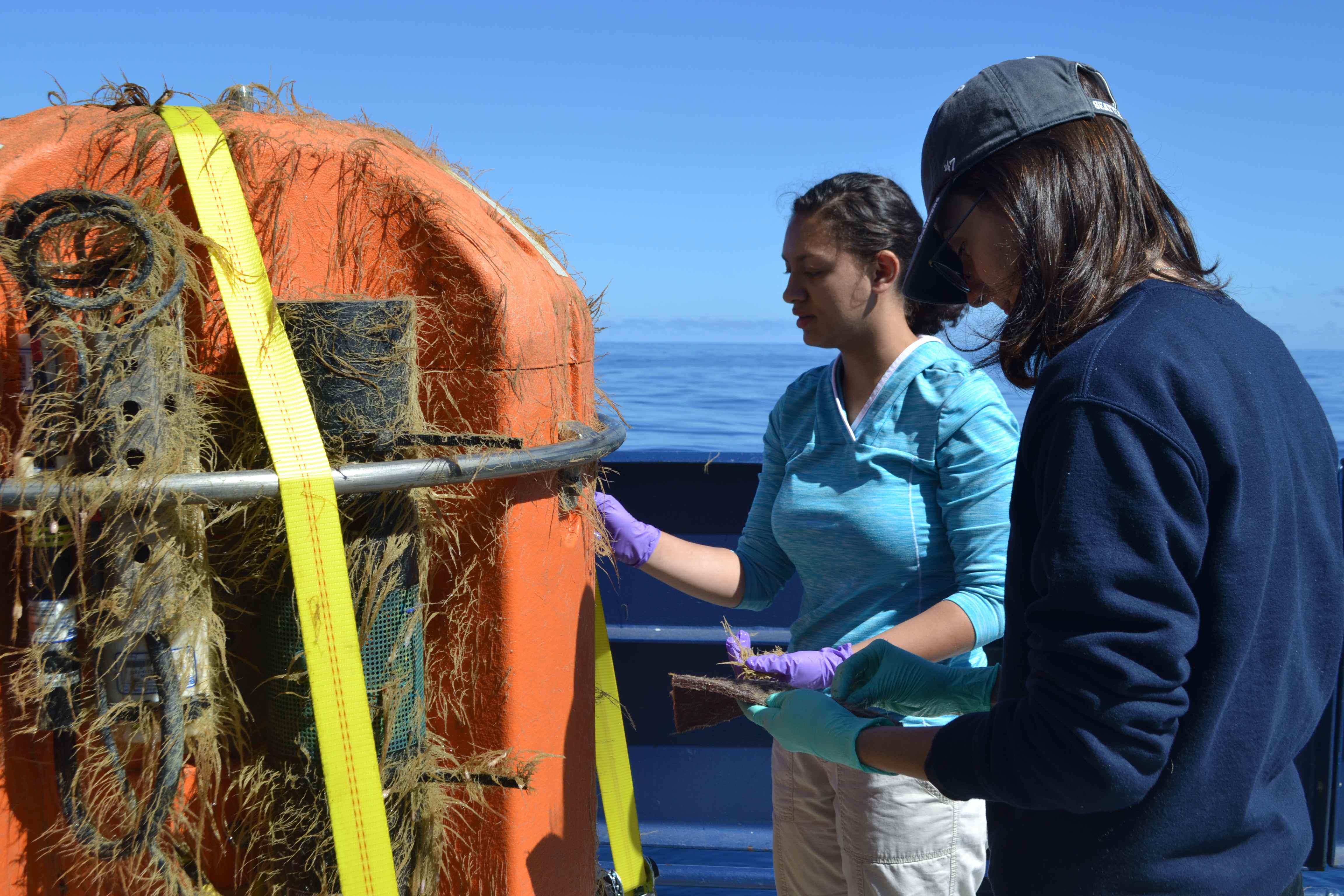
Life thrives on the Shallow Profiler Mooring platforms at 200 m beneath the oceans' surface. This 12 ft across mooring platform is coated in dense communities of very large anenomes, small pink sea urchins, feathery brown crinoids , and small crabs and shrimp...the closer you look the more you see. Credit: UW/NSF-OOI/Jason.
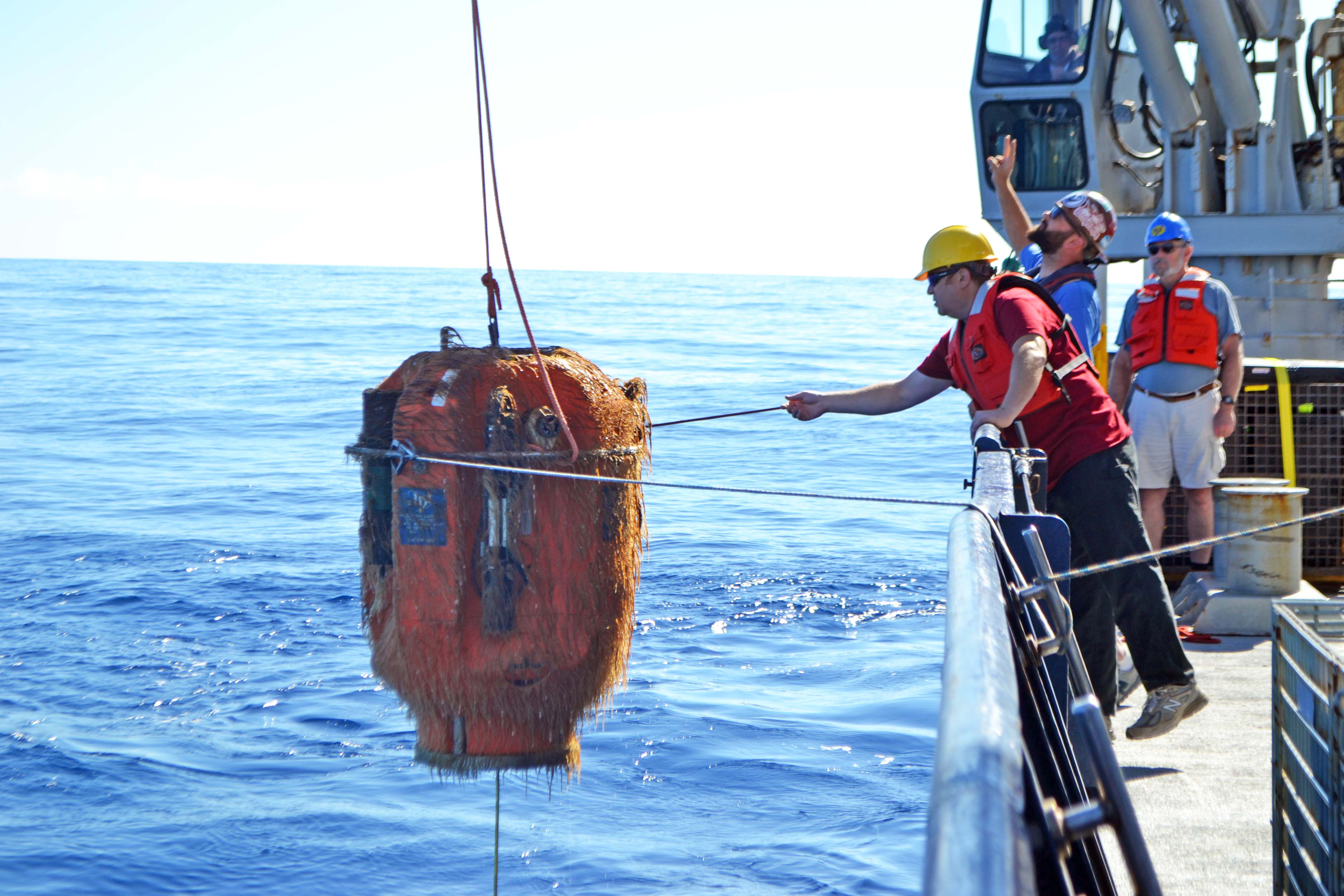
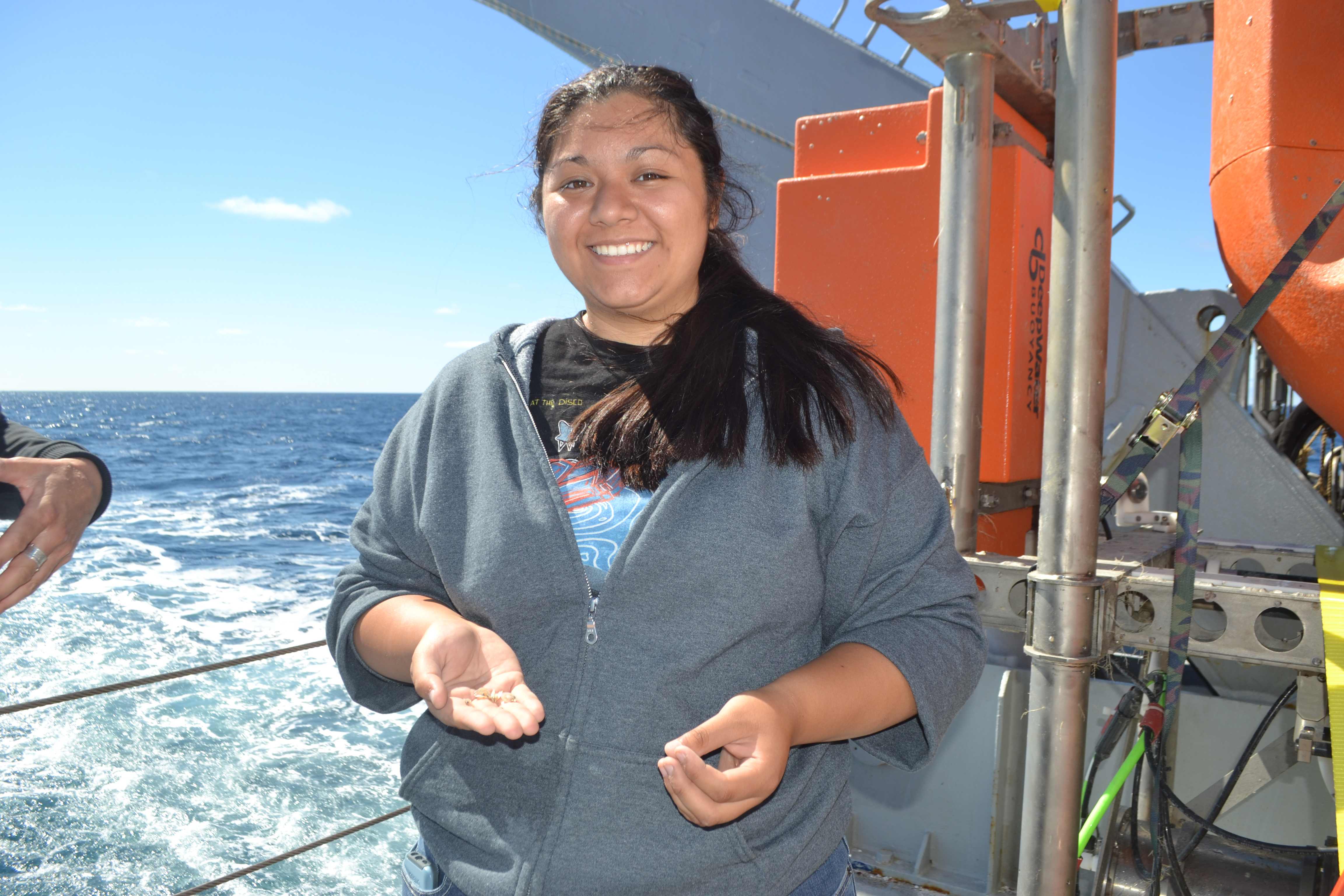
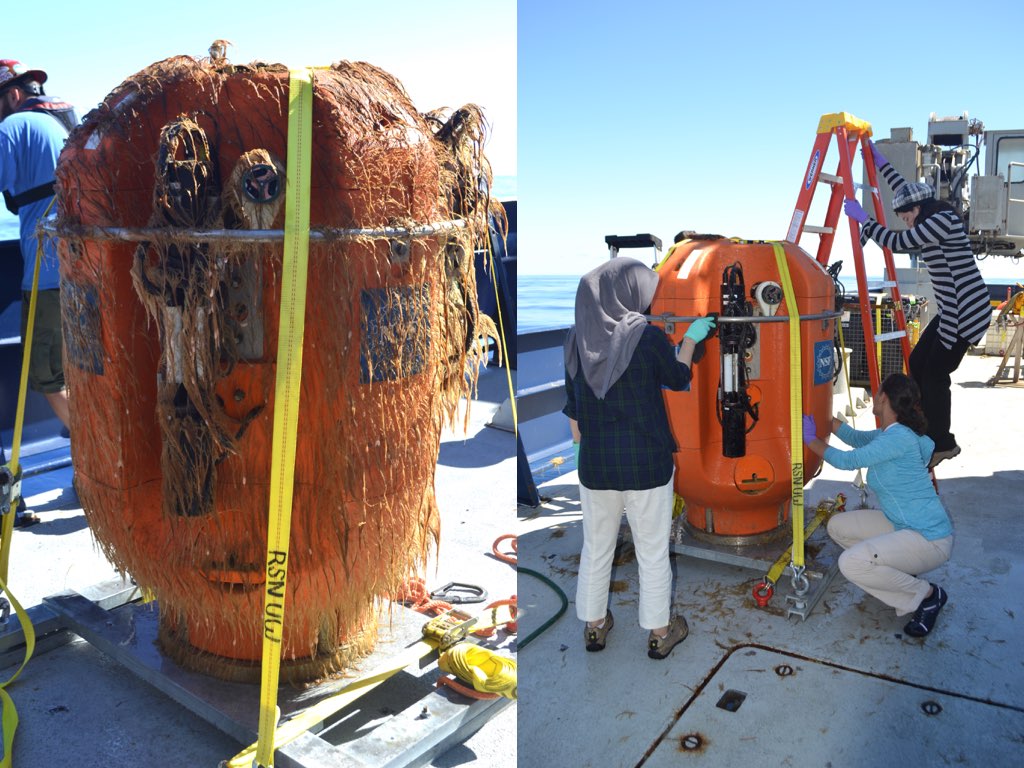
Brittle Stars, crinoids and sea urchins recovered from the Shallow Profiler Mooring packages at the Oregon Offshore site. Credit: Hanis Zulaikha, University of Washington.
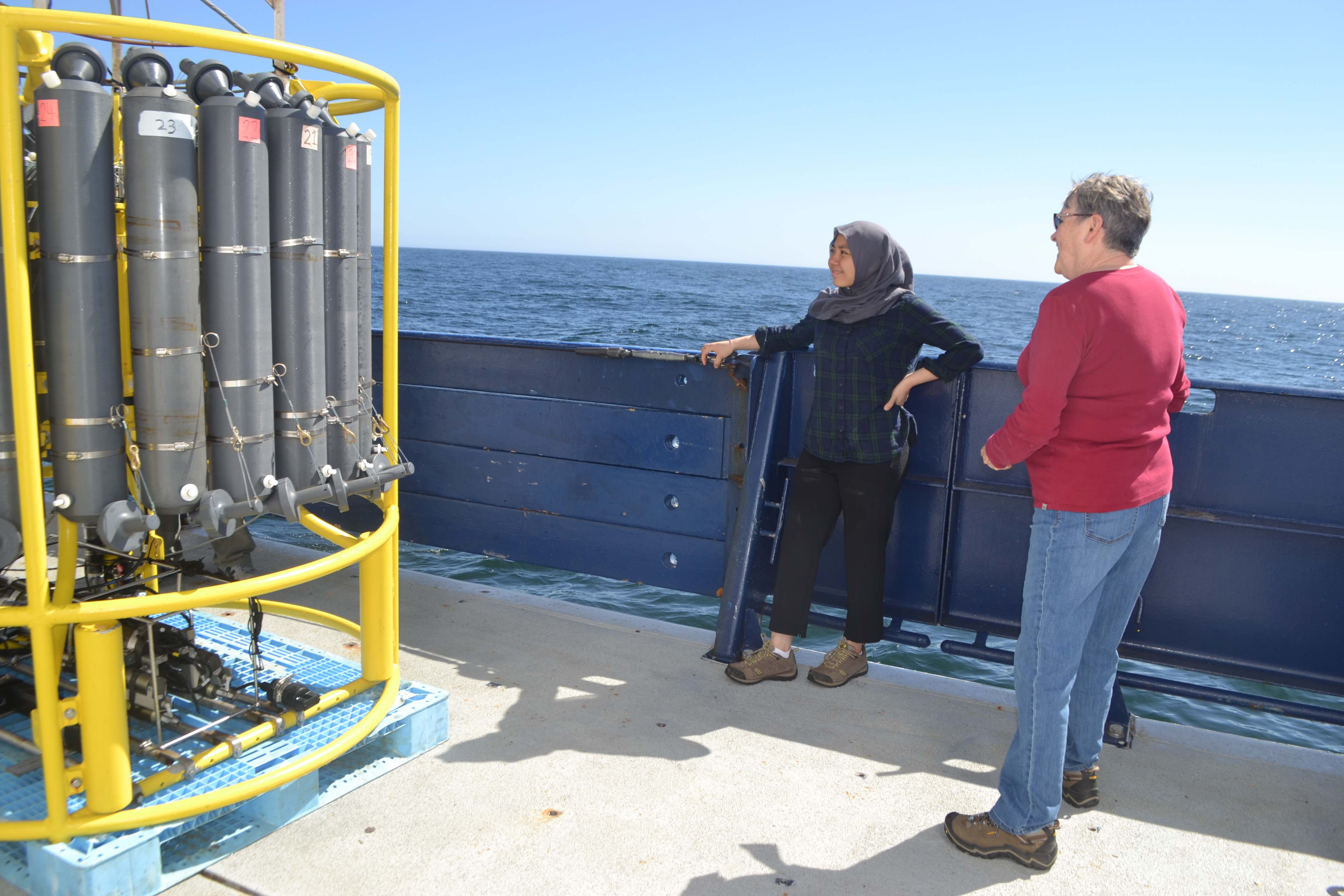
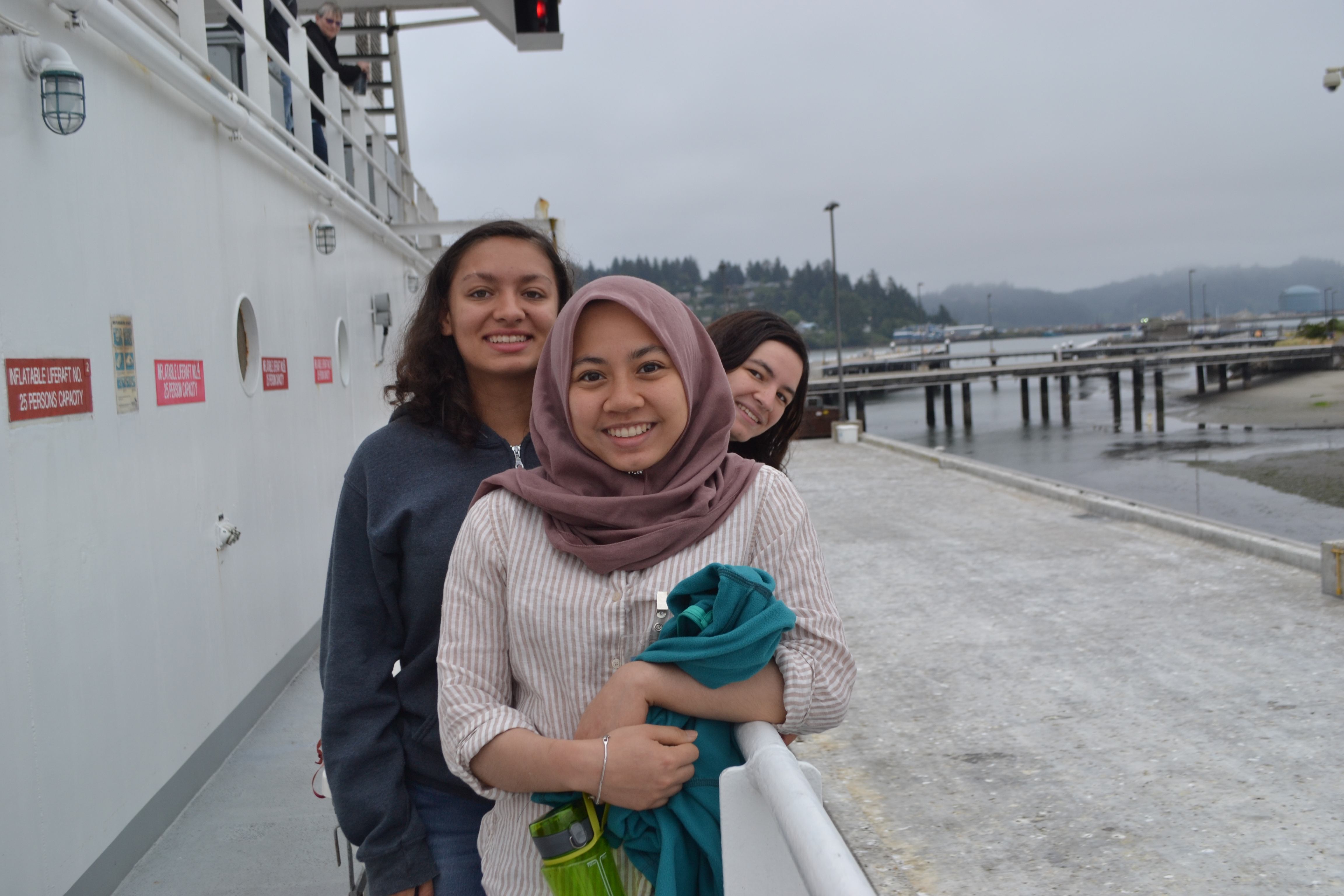
UW Oceanography student, Hanis Zulaikha, learns about the CTD from Julie Nelson, Grays Harbor College, prior to its first deployment on the VISIONS17 UW-NSF-OOI Cabled Array cruise. Credit: M. Elend, University of Washington.
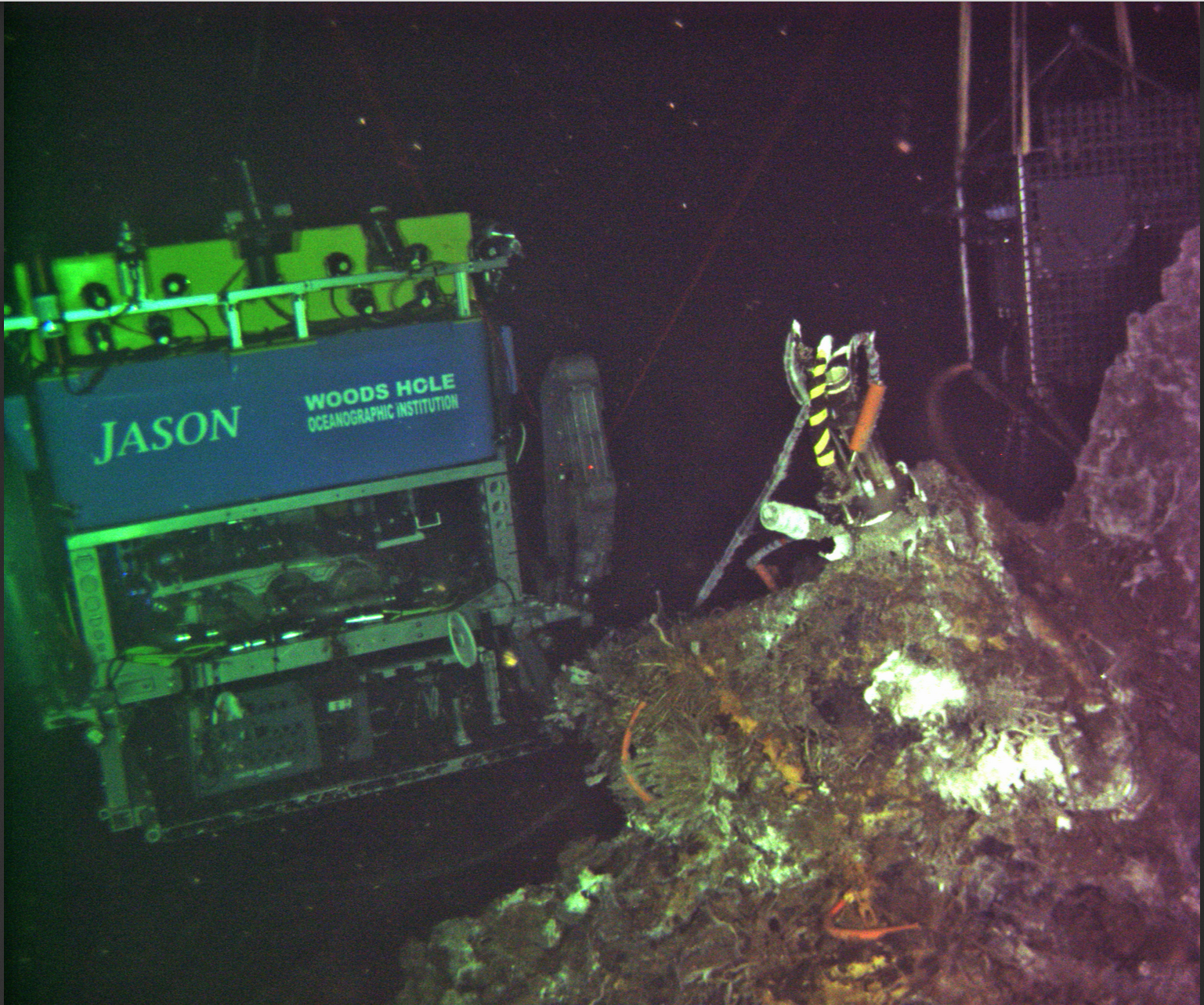
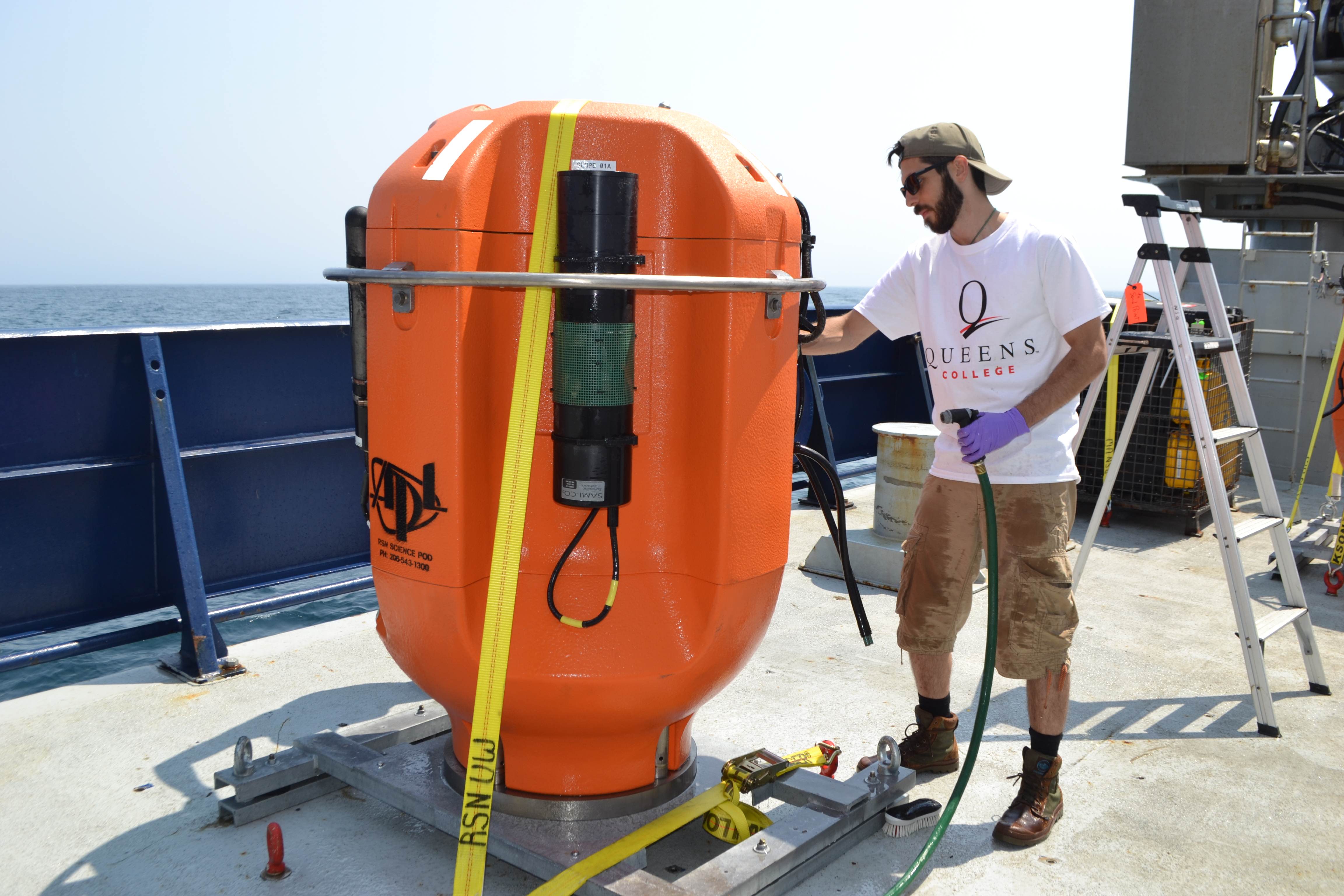
A close up view of the newly installed winched Shallow Profiler at the Oregon Offshore site. The platform is at 200 m water depth. The manipulator arm of the ROV Jason is about to pull a couple of pull pins to let the Science Pod be free. Credit: UW/OOI-NSF/WHOI.
A swarm of black cod circle the vehicle during recovery and installation of a junction box at 600 m water depth offshore of Newport. Credit: UW/OOI-NSF/WHOI; J2-986; V17.
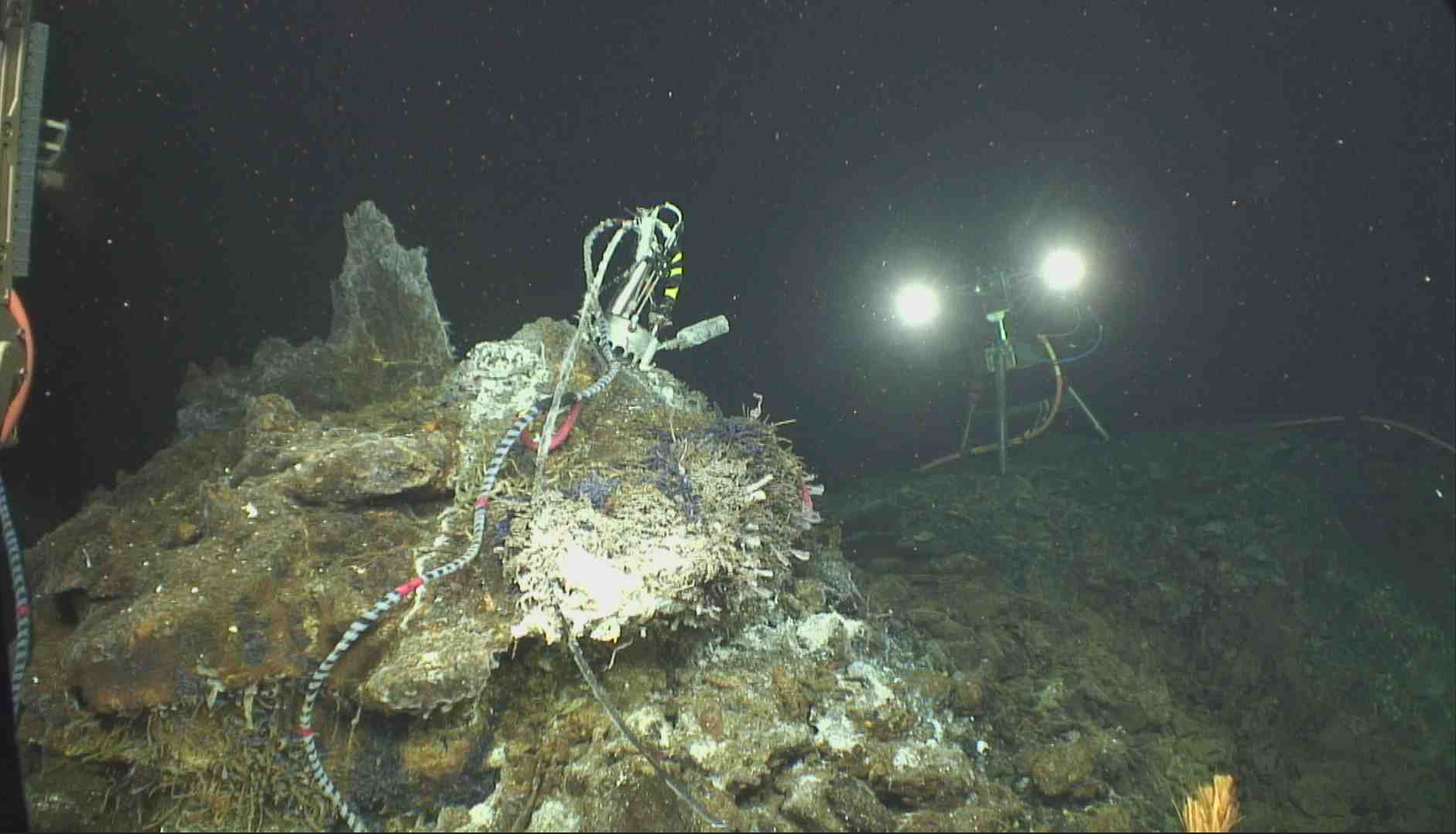
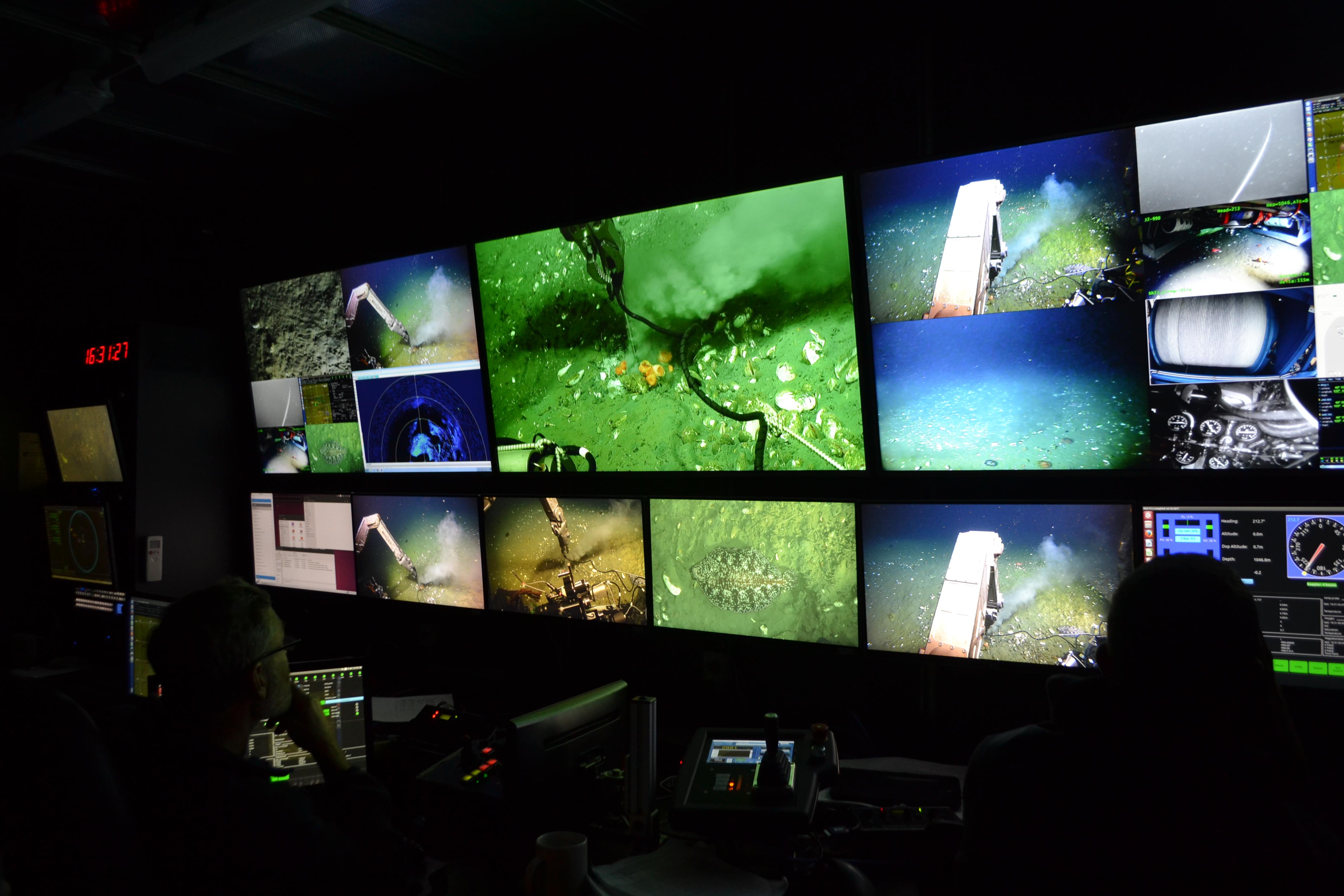
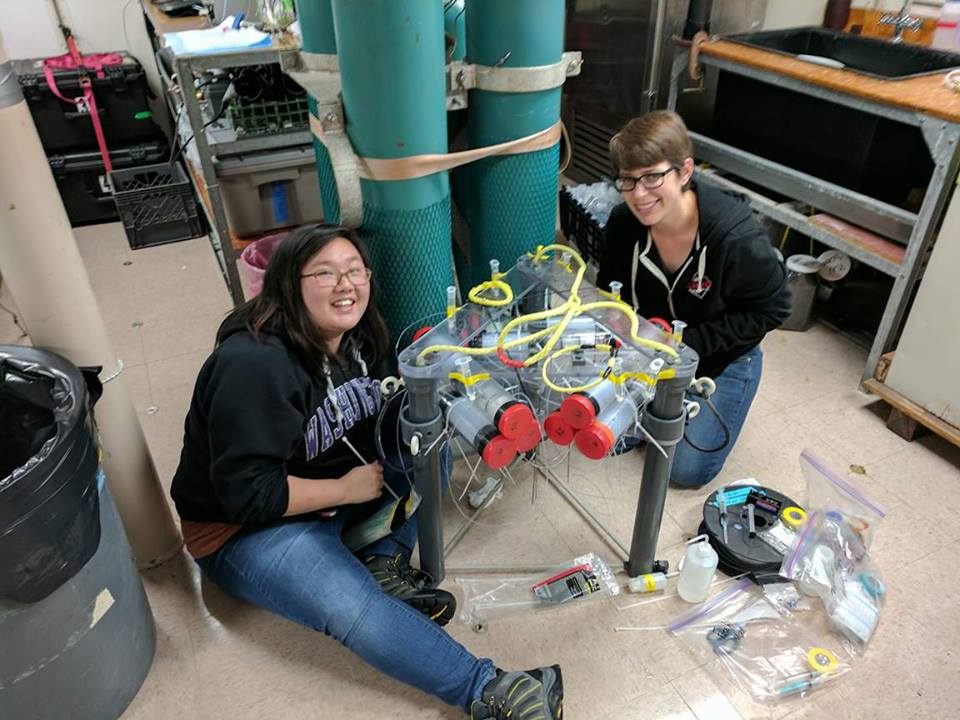
A Mosquito, developed by UW Marine Geologist, Evan Solomon, is deployed at a methane seep at Southern Hydrate Ridge. The instrument pulls in fluids in the sediments with a tracer. The instruments are recovered annually and the fluid chemistry analyzed, providing calculations of the flow of fluids both into, and out of the seafloor. Credit: UW/OOI-NSF/WHOI; V17.