
August 9, 2026
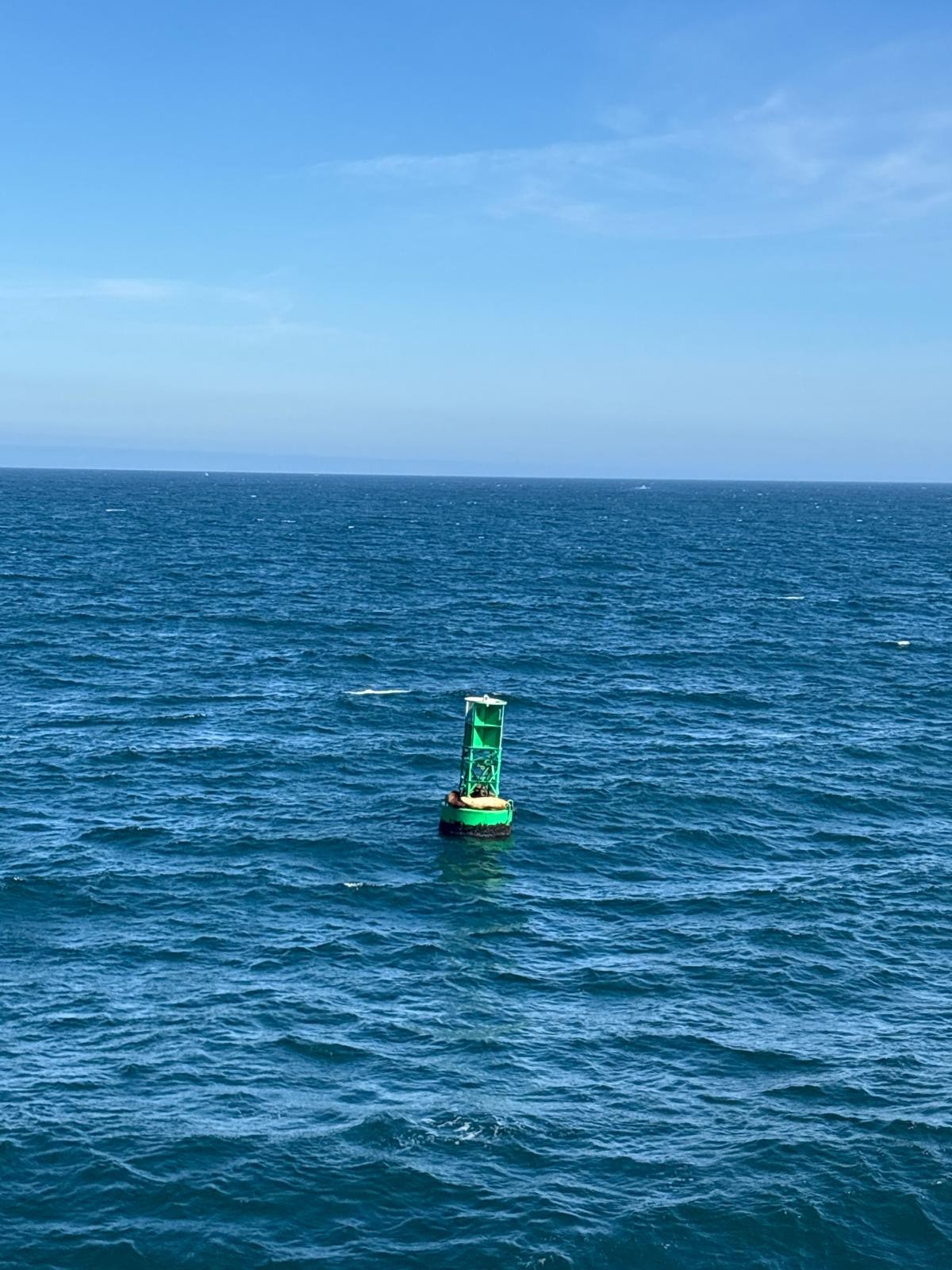
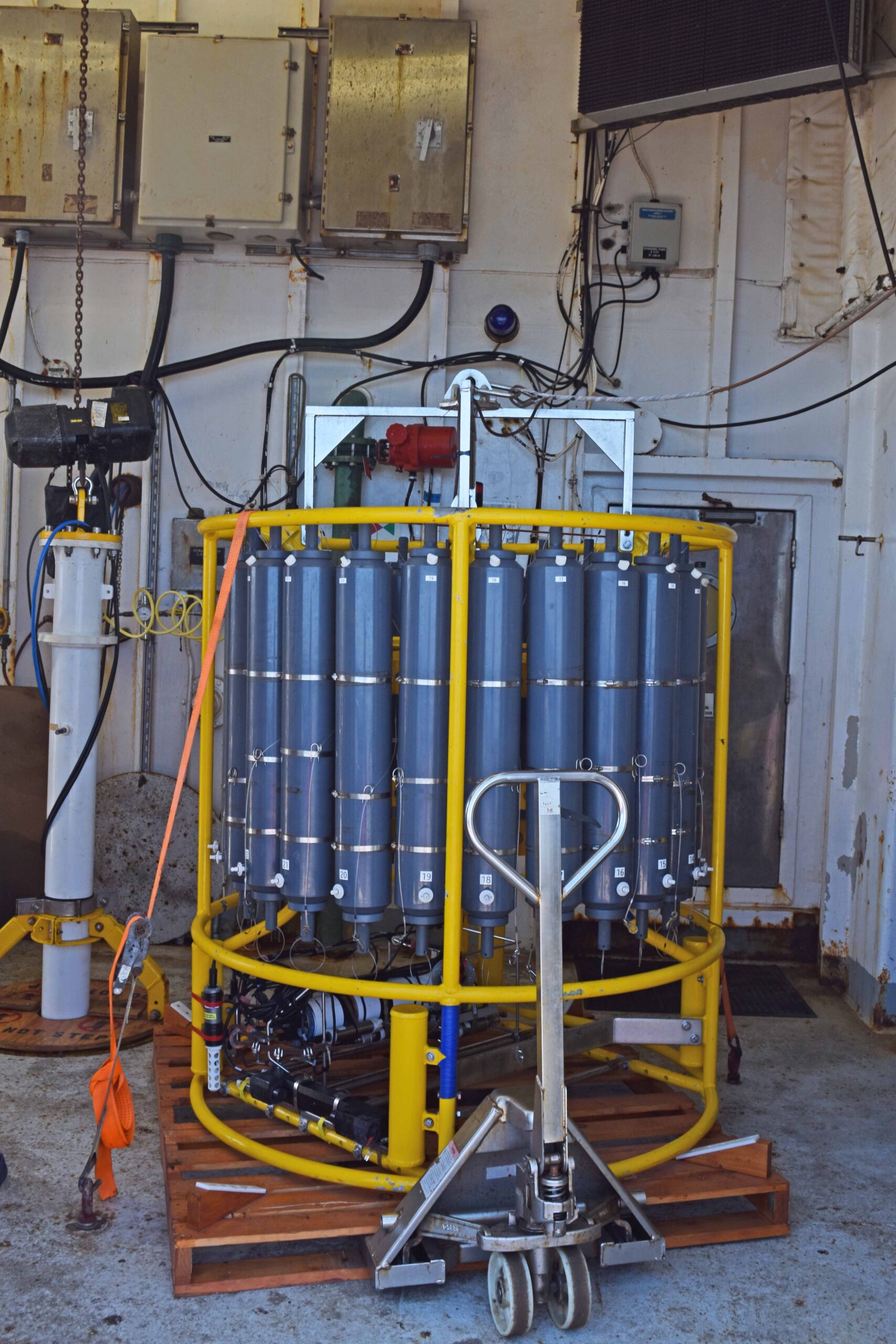
Today at 10:00, VISIONS ‘26 departed from Newport, Oregon on the Revelle. On our way out, we passed a few green channel markers, and the last one had a few sea lions sleeping on it! As soon as we got out onto the open ocean, the waves got pretty big and it took some time for me to adjust to the rocking. En route to our first site, the Oregon Shelf (depth of 80 meters), we learned more about the ROV Jason and our role in logging the dives. We also learned about how to set up the CTD for deployment. We took turns hopping up onto the yellow frame containing the CTD and other instruments. Once we got to the site, we had our abandon ship drill and tried on our beautiful orange emergency suits.
During the first dive, an barnacle-clad BEP (Benthic Experiment Platform) deployed in 2025 was replaced with a new BEP, and a few sea stars were displaced from their house in the process. I was surprised by the density of ctenophores/cnidarians/other invertebrates in the water; throughout the entire descent from the ocean surface to the bottom, small creatures were floating around everywhere. They varied in size a decent amount, although it’s hard for me to tell the exact scale of things so far. It’ll be interesting to see how this compares to the deeper sites we’re visiting later in the expedition.
During the afternoon, I watched Jason get reeled up out of the water after its first dive with the 2025 BEP attached to it. Close to the ROV, there are a bunch of football-shaped objects that get clipped onto the cable when it descends and removed when it comes up. These footballs keep the cable suspended away from Jason when it’s the water, so that it doesn’t get wrapped up in the equipment. When Jason came up, the water became a lot more turbid at the surface even before the ROV became visible. A lot of mud made it up to the surface as well. Then, I walked around the boat for a while and practiced taking some photos, and did some computer work in the Main Lab.
My first shift in the ROV control van (which looks suspiciously like a shipping container from the outside) started at 20:00 and I learned how to do camera logging. There were some technical issues getting to the bioacoustic sonar, but we made it down eventually and now (22:00) we’re currently watching the Jason team working with the equipment.
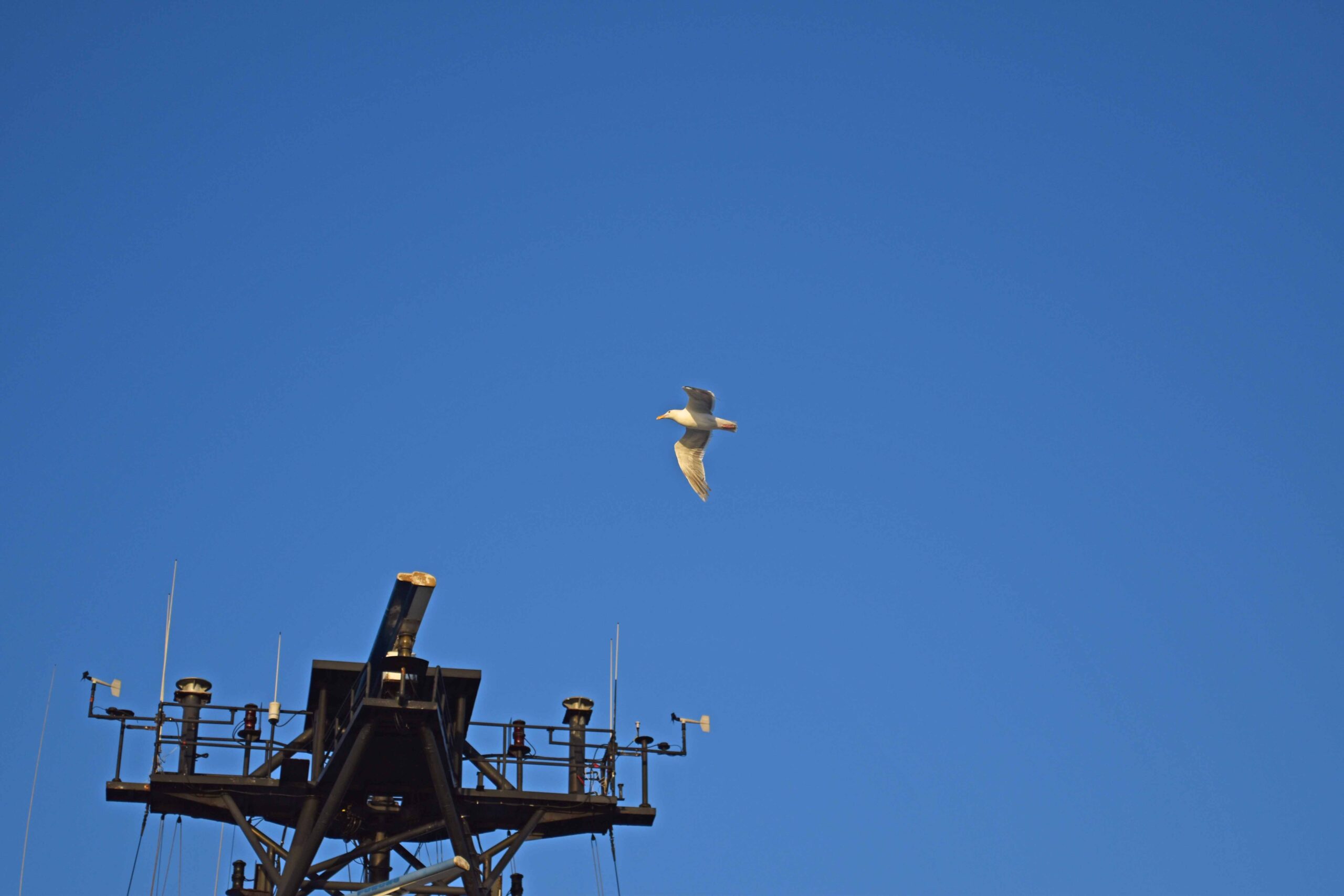
I’m looking forward to taking more photos and documenting this trip. Today is (almost) gone, today was SO fun, tomorrow is another one! I love science.