
August 18, 2026
Infinite Memories in Finite Words (somehow)
The most exciting part of these twelve days was seeing how people with completely different skills, backgrounds were intertwined and how different ways of thinking depended on one another to make discovery possible and advance science. I arrived expecting to learn about ROVs, sensors, AI, hydrothermal vents, and the oceans, and don’t get me wrong, I did. I didn’t even know what existed out there, and I’m less ignorant in knowing that I don’t even know what I don’t know. Try saying that 3 times over. But the more important lesson was that the moments that everyone remembers, like the methane plumes, the deep-sea flamingo, the sharks and the octopus and so many more, were only made possible by work that usually looks mundane and was border-line frustrating, like cleaning glassware, labeling every sample, tightening the millionth bolt, checking every connection twice, and remaining calm under mishap.
I learned that ambition is important, but reliability is what allows other people to trust and believe in your ambition. I always doubted myself if I was spread out to thin. But my faith in “being all over the place” just fortified with this experience. It may not be a bad thing, especially when the problems themselves cross biology, chemistry, robotics, electronics, software, and machine learning.
These twelve days allowed me to live with the kind of people I want to grow into, displaying technically excellence and oceanic curiosity, while humble enough to keep asking questions, and being generous enough to make the next person feel like they belonged.
August 16-17
All these days I knew the Revelle through only the spaces I lived in. Mainly my bunk, the main lab, the wetlab, the control van, and whichever staircase I kept choosing by accident. I knew the sound of waves hitting the hull at night and the hum under the floor when we were underway. I had no idea how any of it actually worked. On August 16, the ship finally opened up to me.
We pulled an HPIES instrument up from about 2,600 meters at Axial Base before sunrise, then started an eighteen-hour transit east toward Slope Base. With Jason secured and the ocean outside doing its usual infinite copy-and-paste, we finally had time to tour the parts of the ship that made every dive possible. Our first stop was the engine room.
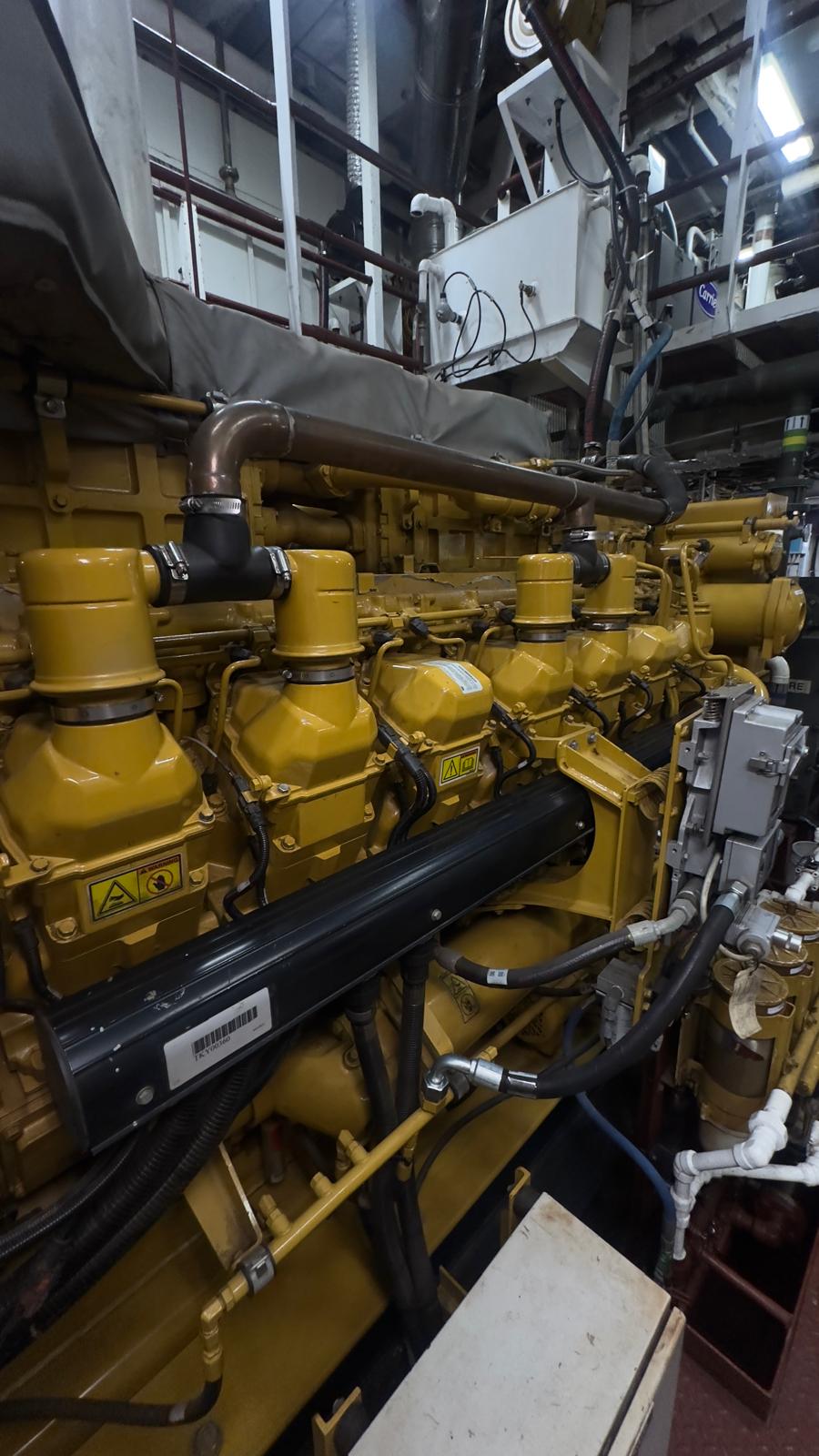
They handed us earplugs and heavy earmuffs before we went in, which seemed excessive until the door opened. The sound takes up physical space. It comes through the floor into your shoes and pushes on your chest, and even under two layers of hearing protection the engines surround you.
Our guide was Gabriel, who looked like someone who gives formal, deeply serious tours. That impression lasted about thirty seconds. Since talking was pointless, he carried a small whiteboard. He would point at a pipe or a panel, scribble a few words, then act out the rest with charades, faces, and dramatic reenactments. I did drama for years in high school and I could not have made a sewage treatment system half that entertaining.
He showed us how waste gets collected and treated, and how seawater becomes everything we drink, shower in, and cook with. The Revelle makes around 4,000 gallons of fresh water a day with evaporative distillers, driven by waste heat from the engines. I am in the industry and this is more innovative than most things I had seen. Every ordinary system on board has an enormous machine behind it. Explains why the engine room was basically 4 stories tall.
Then came the engines. The Revelle is diesel-electric. Four generator sets, two rated at 2,100 kilowatts and two at 940, making electricity for the labs, kitchens, winches, and two big electric propulsion motors. The crew only brings generators online to match the load (apparently it came make so much that if they maxed out the generators, the turbines would basically break). It felt like power management I was used to on an embedded platform, except the platform was 273 feet long.
Being a car guy, I responded to this feat of marine engineering with hard-hitting journalism. "How much horsepower?" "Six thousand total." "Turbocharged?" "Twin." "W16?" "V16." I think I stopped touring the engine room and started interviewing it for Fast and Furious. Gabriel answered everything anyway, every random car comparison included, and never made me feel stupid for asking. He would grin, write something on the board, and mime the rest.
The 6,000 horsepower comes from two 3,000-horsepower electric motors on twin aft Z-drives that each rotate a full 360 degrees, plus an 1,180-horsepower azimuthing bow thruster. The dynamic positioning balances those forces constantly, so the ship can hold itself over a point thousands of meters down despite wind, waves, and current. And if you used all of it for speed? Gabriel said drag and hull physics become the problem long before power does.
We saw the control panels where the engineering team watches pressures, temperatures, generator loads, fuel, and alarms, catching small deviations. We also saw the machine shop, because of course there is a machine shop. There is no hardware store out here and no same-day shipping. If something breaks, the crew diagnoses it, machines a replacement, or invents one from whatever is on board. I saw that the farther you get from civilization, the more of it you have to carry with you.
If the engine room was the ship’s heart, the bridge is its brain. Pam went on to give us that tour, and I had barely spoken to her or Gabriel before this day. Pam might be the most sarcastic person on board, and I don’t think a full minute passed up there without me laughing.
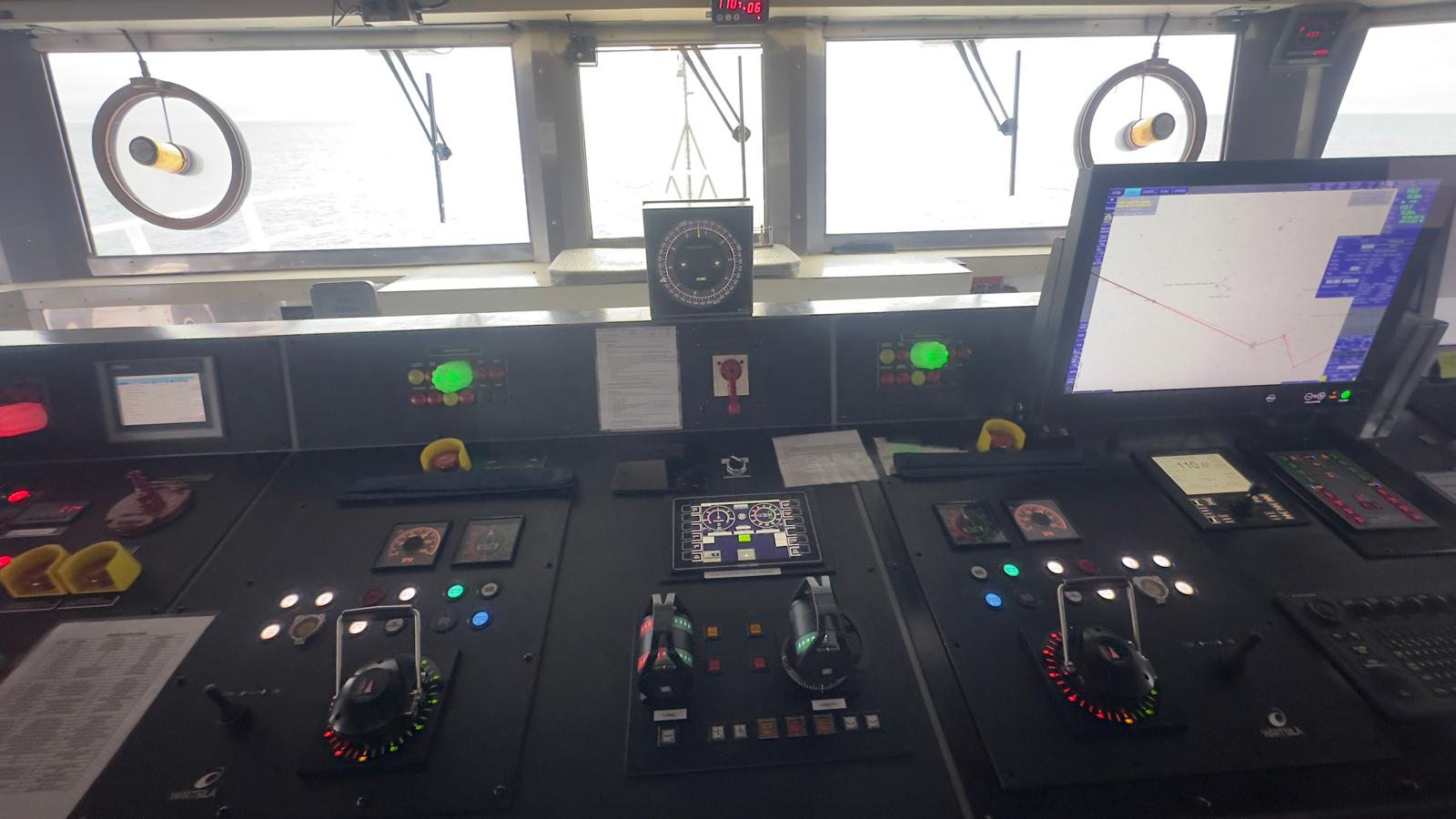
The bridge sits high above everything, wrapped in windows and filled with radar, charts, radios, and the controls that keep a very expensive research expedition from becoming a maritime incident. The ship navigates mainly by GPS but keeps two gyrocompasses, a magnetic compass, and the full set of traditional tools, because you don’t want a vessel’s entire grasp of reality depending on one system.
Then she showed us the binoculars. Enormous, old-school, mounted things that belong on a warship, and she said Navy vessels are among the few that still carry them. I looked through and understood why people spend careers staring at the ocean. From up there you see open sea in every direction and the whole working deck below. The group before us saw dolphins, and I can’t lie I was a little jealous.
Pam told stories from her years at sea. Whales she tried to steer wide of drifted back toward the thrusters (RIP), pirates, and a seagull that outsourced its transportation to turtles. Then there was the radio, which is basically the ocean’s group chat. Captains, harbors, and the Coast Guard all share channels, so the bridge overhears an astonishing amount of maritime tea, including arguments between grown adults that I should probably not write about in my blog.
The next day brought an equally important milestone, the merch. I had been waiting since day one, when we learned new Revelle merchandise existed somewhere on board. I asked Jolee what would happen if we “accidentally” found it early, and she said bad things would happen haha.
I loved the orange sweatshirt, but I think I loved the expedition coin more. The coin will be proof of my first expedition ever, decades from now, that these 12 strange days really happened. I bought one for my parents.
Then dinner arrived, and FOR DINNER, WE HAD TIRAMISU. I had not eaten tiramisu in years. I had spent the week watching robots work inside a volcano and walking through a six-thousand-horsepower propulsion system, and the tiramisu stayed competitive. Holy, it was good.
That night we were in transit during my watch, so there was nothing to log. I sat in the Main Lab working on my stuff, and around eight thirty the others on watch headed downstairs. Every Jason camera feed went black.
The screens that had shown us the deep ocean all week simply turned dark, and Jason had lost power. For about twenty minutes we waited while the team worked the problem. I understood very little of what they were doing, which somehow made it worse. Twenty minutes is nothing until you are waiting for a deep-sea robot to get its eyes back. Then the feeds returned, and the room exhaled.
This probably just added to the entire experience a whole new dimension. Machines fail out here. Cameras go dark sometimes, parts wear out, and the ocean adds to every problem. For over a week I thought the Revelle was carrying all of us. It was the other way around. Towards the end, I figured out that the people were carrying the Revelle.
August 14-15, 2026
The Octopus Was on Time
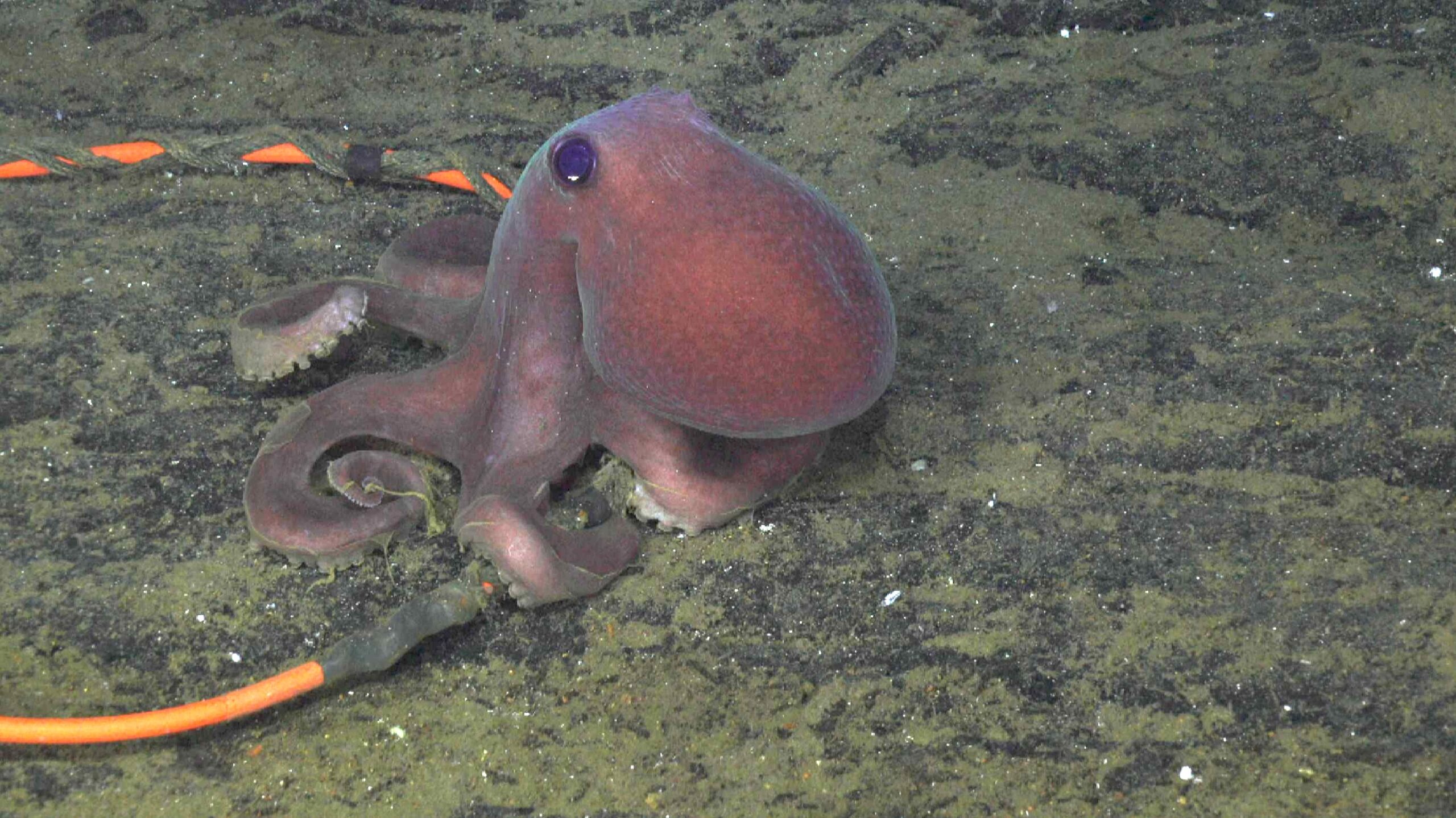
At nearly a mile beneath the Pacific Ocean, an octopus had better attendance than I did. It appeared during our photo survey of Skadi exactly when it was supposed to, resting against volcanic rock as though it had been waiting for its close-up. I, meanwhile, had spent the previous few mornings losing increasingly embarrassing negotiations with my alarm clock.
The morning of August 14 began with more dives inside the caldera of Axial Seamount. Jason finished one operation and descended again to deploy instruments around the hydrothermal vents. I had somehow become accustomed to sentences like that. Two weeks earlier, “deploying scientific equipment inside an active underwater volcano” would have sounded like the climax of a science-fiction film. Now, it was something happening before lunch.
Every dive still looked alien. Jason’s lights cut through complete darkness, briefly revealing broken lava, pale sediment, bacterial mats, cables, instruments, and animals that seemed deeply unbothered by living inside a volcano. Watching the monitors felt less like looking through a window and more like opening one for a few seconds into a world that immediately closed again behind us.
One of our operations was a photo survey of Skadi, an area named after the Norse goddess associated with winter and hunting. The name felt appropriate for a place that was cold, dark, volcanic, and somehow crowded with life anyway. The landscape carried evidence of old lava flows, collapsed surfaces, hydrothermal shimmer, bacterial mats, and organisms taking advantage of chemistry escaping from beneath the crust.
A photo survey sounds as though we were casually taking scenic pictures. In reality, Jason had to move methodically across the site while its cameras captured overlapping images of the seafloor. Those images could later be assembled into a detailed visual map and compared with surveys from previous years. A rock shifting, a microbial mat expanding, an animal appearing, or a vent changing might look insignificant in one frame, but across time, it becomes evidence that the seafloor itself is evolving.
Then the octopus appeared.
It sat among the lava with its arms wrapped around the rock, changing its shape so naturally that my brain needed a moment to separate animal from seafloor. It looked ancient, intelligent, mildly annoyed, and completely comfortable in a place that would kill me before I had enough time to regret visiting.
For a few moments, everyone’s attention shifted toward it.
Just aura farming.
Later, Jolee brought me into the wet lab. After hydrothermal vents, methane plumes, robots, and deep-sea octopuses, I was introduced to the glamorous frontier of ocean exploration: cleaning beakers.
There was rinsing, organizing, preparing containers, checking labels, and making sure everything was ready for the next set of samples. At first, it felt menial. Nothing was glowing. Nothing was robotic. There was no GPU involved, and nobody was going to publish a photograph of me holding a freshly cleaned beaker beneath the headline STUDENT ADVANCES OCEAN SCIENCE.
But the longer I worked, the more obvious the lesson became. A beaker remembers. Leave behind even a tiny amount of the previous sample, detergent, salt, or some other contaminant, and the next measurement may faithfully report something that was never actually present. The instrument will not understand that the number came from carelessness. It will simply measure what it is given.
In machine learning, everyone wants to talk about models, from architectures, parameters, agents, reasoning, to GPUs. Almost nobody gets excited about cleaning the data, checking labels, documenting transformations, or investigating the one suspicious value that refuses to behave. Yet the most advanced model in the world cannot do with fundamentally corrupted input. The wet-lab version of “garbage in, garbage out” is simply wetter and considerably harder to undo.
There was also something uncomfortable in how quickly I had classified the work as menial. I enjoy tasks that make me feel clever. Building a computer-vision pipeline feels intellectually important. Washing a beaker does not. But the ocean does not care which task flatters me.
If something needs to be done, it deserves to be done with full intention.
Around the same time, Katie and Deb pulled me aside to speak about my punctuality and participation. They were right to do it.
Over the previous few days, I had struggled to wake up for some of my watch hours. I had been working late on my startup, dealing with responsibilities outside the expedition, and allowing work pressure to consume the hours when I should have been sleeping. I had explanations, but explanations shouldn’t be excuses.
I felt bad.
August 12-13, 2026
Over the next two days, we deployed to production.
Production here was an active underwater volcano.
On land, “deploying to production” usually means pushing code to a server and praying that nothing breaks. At sea, it meant strapping a high-definition camera onto a metal platform, lowering it nearly a mile through the Pacific Ocean, handing it to a remotely operated robot, and plugging it into the internet beside a hydrothermal vent hot enough to melt lead.
Just before midnight on August 11, the Revelle pointed west and began a 17.5 hour transit from Slope Base to Axial Base. My floating prison was now moving even farther from land.
Escape was beginning to look logistically unreasonable.
Axial Base sits at the southern foot of Axial Seamount, more than 350 kilometers from the continental shelf and roughly 2,600 meters beneath the ocean’s surface. It is an open-ocean site where major currents transport heat, salt, oxygen, and life around the Northeast Pacific. It is also entrance to one of the strangest electrical systems I have ever encountered. For most of the transit, the view outside remained almost aggressively consistent.
Ocean.
More ocean.
A slightly different patch of ocean.
Hey! Look at that! Ocean.
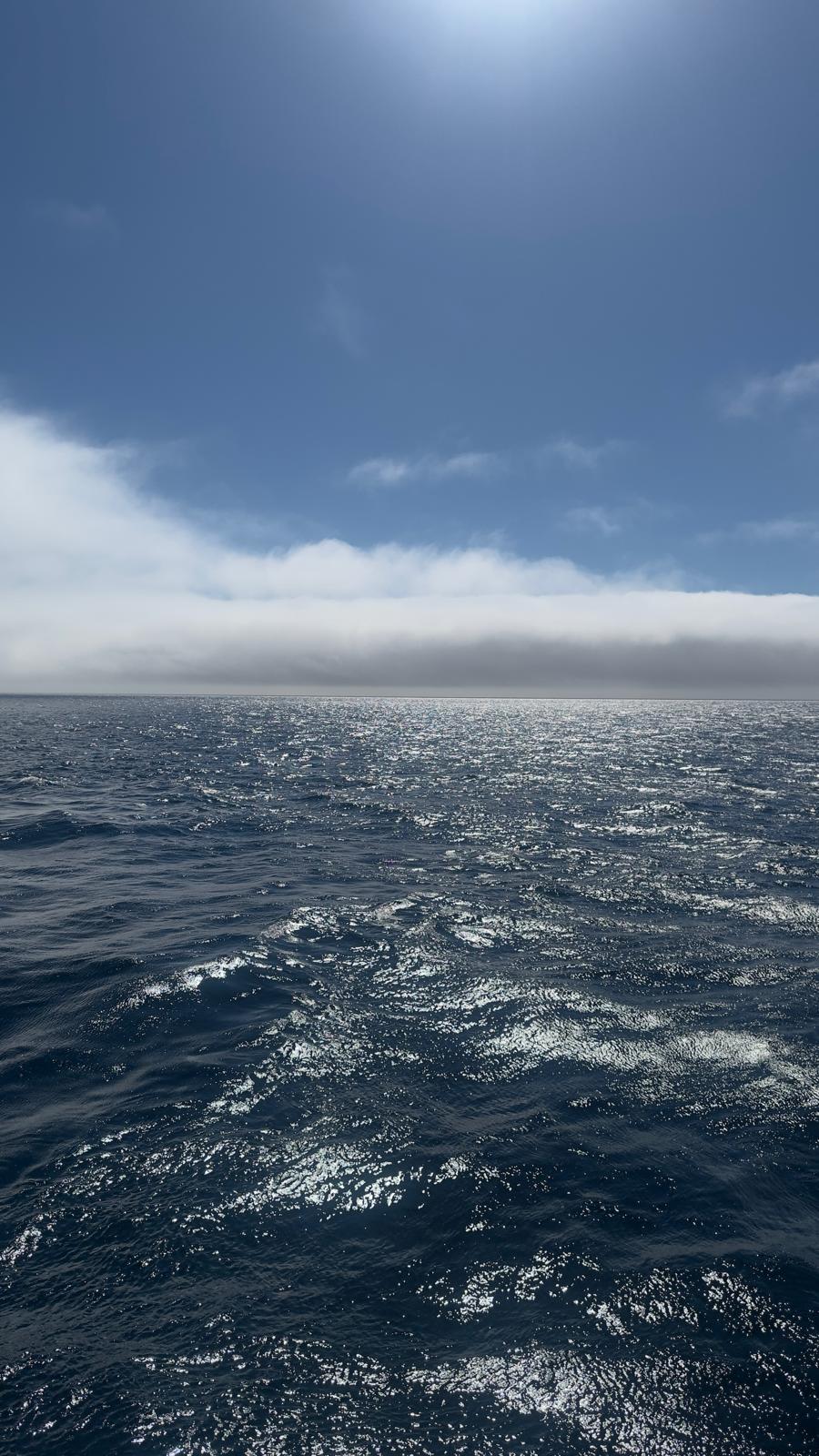
At sea, it is possible to travel hundreds of kilometers while appearing to go nowhere. The horizon follows you like a loading screen that has frozen at 99 percent.
But the ship was not idle.
The engineers were rigging the high-definition camera into the undervator and preparing CTD stands for the dives ahead. Our beloved scientists continued processing water samples from Slope Base. Instruments were cleaned, cables were checked, hardware was secured, and we worked through ideas for the research projects we would continue.
I opened my laptop intending to work on the autonomous event logger.
This was a mistake.
A few hours later, the event logger had somehow become an expedition memory system, a multimodal data compiler, an autonomous hypothesis engine, and possibly a small research institution.
This is how scope creep reproduces in captivity.
I kept thinking about the archive I had gained access to. Every expedition had generated video, navigation, hydrophone recordings, CTD profiles, current measurements, sonar, meteorology, engineering telemetry, and human-written logs. Every sensor was observing the same ocean, but from a completely different physical perspective.
A camera sees photons reflected from whatever happens to fall inside its lights. A hydrophone hears pressure waves arriving from somewhere else. A CTD measures the water physically touching its sensors as it moves vertically. A current profiler observes layers of water at different depths. A seismometer feels the seafloor move.
None of them possesses the truth alone.
Together, they might possess something close to it.
The longer I thought about the Regional Cabled Array, the less it resembled an ordinary oceanographic experiment and the more it looked like one of the most extreme distributed embedded systems ever built.
I learn that at Axial Base, a primary node on the seafloor can provide 10,000 volts of power and 10 gigabits per second of bandwidth to instruments located roughly 300 miles offshore.
The cloud, apparently, has a basement. Pun intended.
And suddenly, my background did not feel quite as scattered. ECE was the sensors, power, communication, control systems, and hardware. AI/ML was the attempt to find structure across everything those systems observed. Oceanography was the physical reality preventing either field from becoming too confident.
The startup part of my brain also had a deeply unhealthy reaction.
Most founders talk about building close to the user. I had now followed the users hundreds of kilometers offshore. Most startups claim to operate at the edge. This was the actual edge.
By the afternoon of August 12, the Revelle finally arrived at Axial Base. At 18:50, we began a deep CTD verification cast to approximately 2,600 meters. The 600-meter cast from earlier in the expedition had felt deep. This one made it look like the shallow end of a swimming pool. I watched the cable continue feeding into the water.
And continue.
And continue.
The CTD descended through a vertical world that looked identical from the surface but changed constantly underneath, with the sunlight disappearing, temperature dropping, pressure increasing, water masses shifting, particles thinning, oxygen changing.
When I entered the control van for my 04:00 shift, Jason was already working in the ASHES hydrothermal field. The control van had no windows, yet it somehow offers the best view on the ship.
The room was dark except for the wall of monitors that basically saw everything we couldn’t. Jason’s lights revealed dark lava, pale sediment, bacterial mats, cables, instruments, and pieces of seafloor infrastructure appearing from complete blackness.
We were already standing on a volcano.
Jason’s task was to place a CTD package directly onto the seafloor. The large shipboard CTD rosette asks the ocean a long vertical question once. A seafloor CTD keeps asking the same place the same question, over and over, for months.
This CTD gives you memory.
Revelle then repositioned to the Eastern Caldera, where Jason descended again at 08:30 to replace another seafloor CTD. A single morning had already involved us placing precision scientific instruments inside the caldera of an active submarine volcano. This was dad lore.
The camera’s destination was Mushroom, a roughly 14ft tall hydrothermal chimne, with cracks around it releasing diffuse hydrothermal fluids and supporting white bacterial mats, tube worms, limpets, snails, palm worms, and sea spiders. Fluids within the vent system have been measured upto 300°C, while the surrounding deep seawater is close to 2°C.
The same frame can contain water nearly cold enough to freeze and fluid hot enough to destroy most ordinary electronics.
Yet life occupied the boundary between them.
The high-definition camera is designed to stream uncompressed video through the cabled network to shore. My webcam began struggling when the Wi-Fi router was in the other room.
We watched the vehicle and its manipulator arms work around the undervator. There was no casual reaching around the back to see whether the cable fit. No Ctrl+Z.
By late evening, the high-definition camera had been installed at Mushroom, and operations continued with the replacement of junction box MJ03F and its associated instruments.
And every event we logged was another small piece of its memory. The more complicated the operation became, the more obvious the need for that memory felt.
On land, production is abstract.
Here, production had pressure, currents, lava, tube worms, multimillion-dollar hardware, and an extremely unforgiving return policy.
Most startups deploy software and spend the night staring at logs.
We deployed a camera to a volcano.
I still spent the night staring at logs.
August 10-11, 2026
Over the next two days, I got kidnapped twice.
The first kidnapping ended with acetone in a freezer. The second ended with me arguing about the direction of the handle on a titanium hydrothermal vent cap.
Never thought I’d say that sentence.
At 4:13 a.m., I was woken up by Jolee because my alarm had not rung. Or so I told myself. There are currently no witnesses willing to support my version of events.
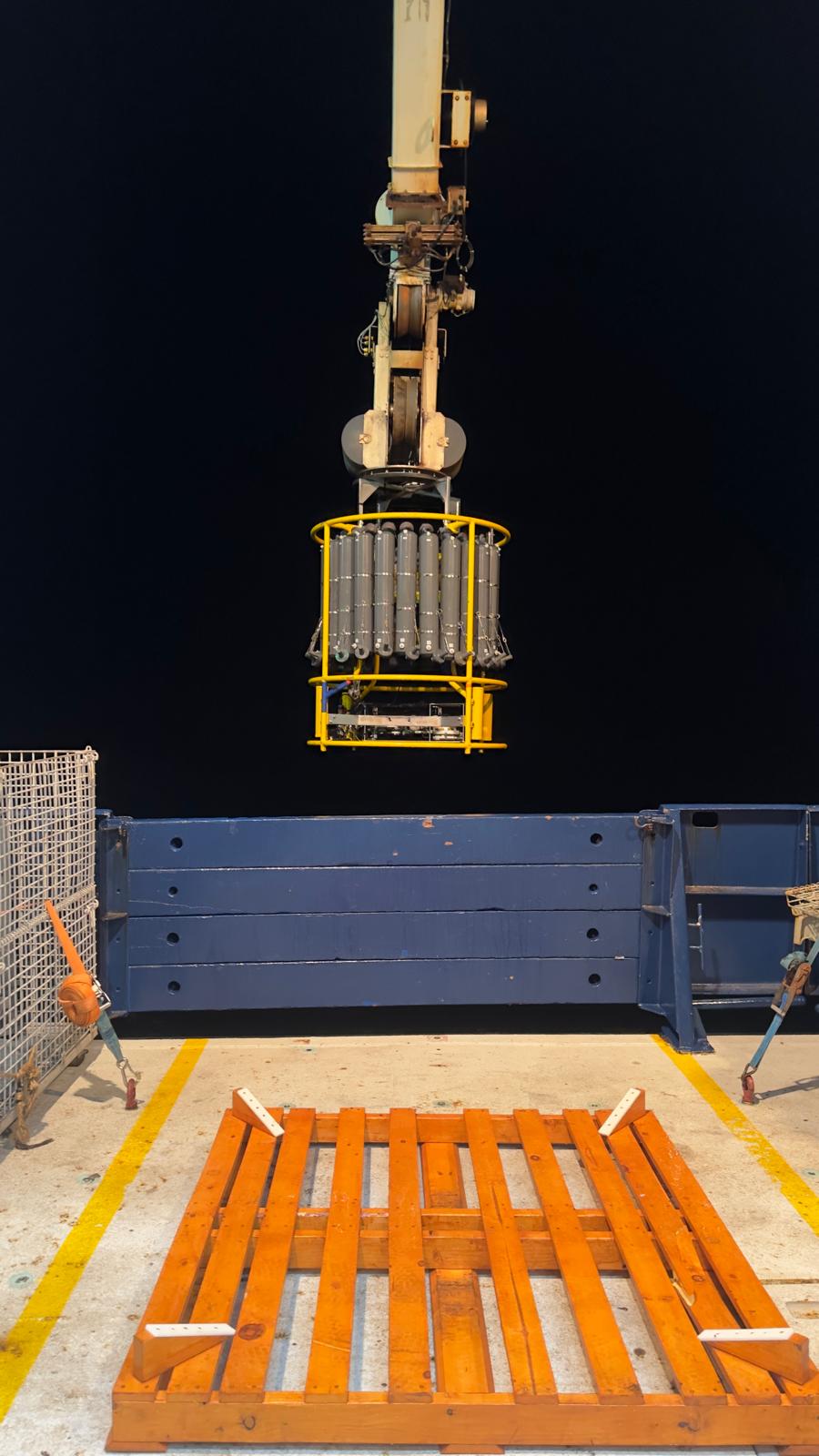
This was going to be my first CTD cast. Until the previous day, I didn’t know what CTD meant. Now, still half-asleep, I was standing on a freezing deck preparing one as though lowering scientific machinery into the Pacific before sunrise was part of my normal morning routine.
A CTD stands for conductivity, temperature, and depth. It is a large instrument package that measures the physical and chemical properties of the water column. Around its metal frame sit 24 Niskin bottles, each of which can be closed at a chosen depth to bring that exact water back to the surface. We prepared the rosette, cocked the bottles (which is a strangely aggressive phrase for arranging heavy water containers) and made sure everything was ready for deployment. At 4:50 a.m., the cast began, collecting water from depths approaching 600 meters.
It was chilly enough that every metal surface felt personally hostile.
I watched the CTD disappear below the waves, carrying open bottles into complete darkness. Somewhere beneath us, those bottles would close one by one and return holding twenty-four small pieces of the ocean.
Once the CTD was back aboard, I started walking toward my shift.
I did not make it.
Mariela and Joe intercepted me and redirected me toward chlorophyll sampling. To be fair, they asked very nicely. “Kidnapping” is simply for the narrative.
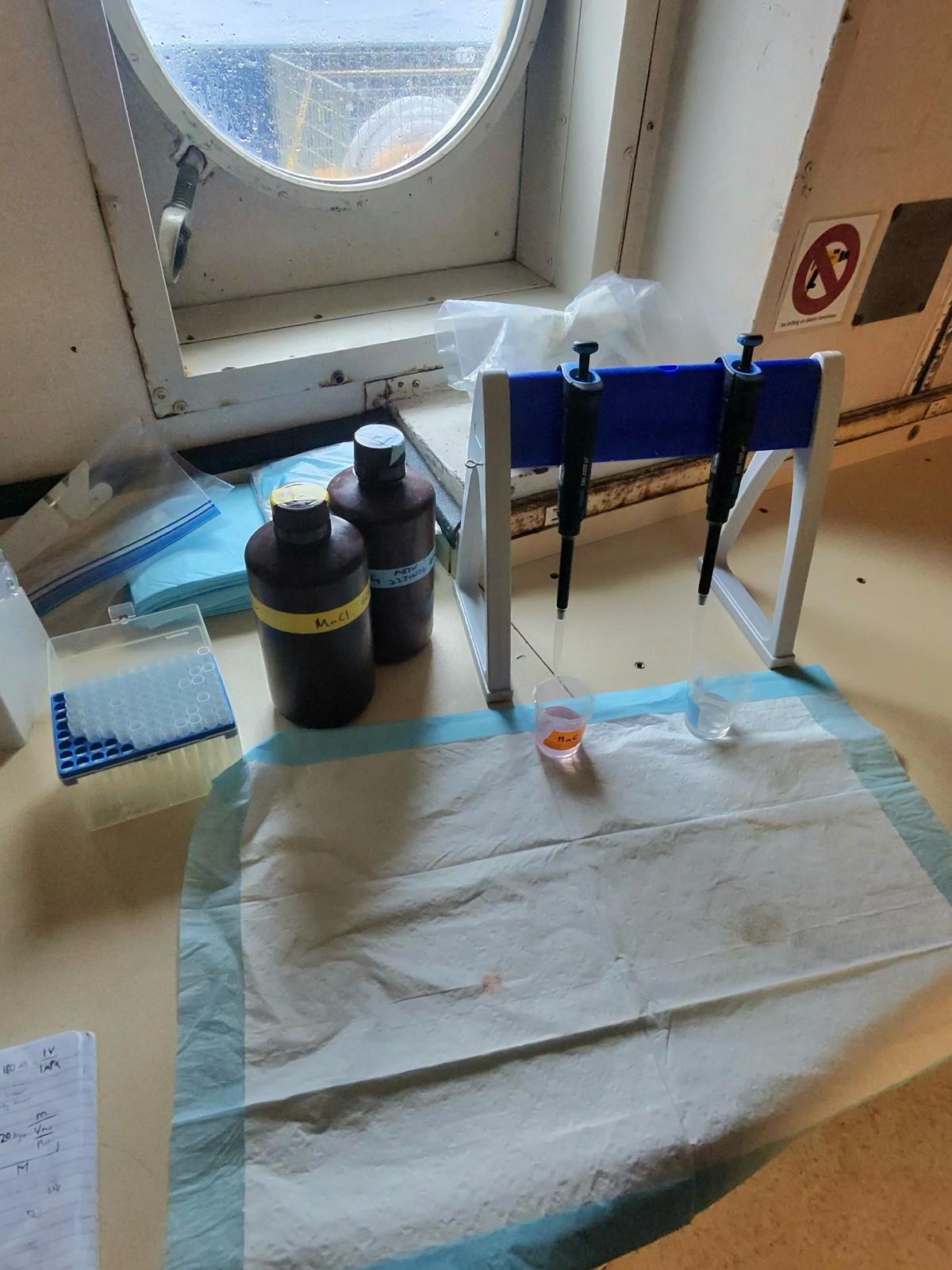
The water collected by the Niskin bottles had to be processed to determine how much chlorophyll (and therefore how much photosynthetic life) was present at different depths. We measured a known volume of seawater, pulled it through a glass-fiber filter, and concentrated the tiny phytoplankton and their pigments onto a disk barely wider than a coin. The filter would then be placed in acetone and stored cold and dark so that the chlorophyll could later be extracted and measured by fluorescence.
I immediately demonstrated my laboratory precision by dropping the burette.
A few minutes later, I tore the filter, the one object in the experiment whose entire job was to remain intact. If ocean science has a probationary period, I was speedrunning it.
Somehow, with help from Mariela and Joe, the sample survived my participation. The water was filtered, the chlorophyll was captured, the acetone was added, the labels matched, and everything reached the freezer.
While we worked, we talked about how I had ended up here. I told him how computer vision had pulled me into machine learning, how machine learning had pushed me deeper into electrical and computer engineering, and how ECE had somehow deposited me onto an oceanographic research vessel.
Boy, am I all over the place. Or perhaps I am finally finding the place where all of it overlaps.
The next morning was comparatively civilized. I woke up before my alarm. Thank God Jolee did not have to rescue me again. I reached my station and began event logging during Jason Dive J2-1780 at Southern Hydrate Ridge. The team was replacing a digital still camera and surveying a methane seep roughly 780 meters beneath the surface.
Then the seafloor began to bubble. Nearby, we saw exposed methane hydrate, the ice-like material from which some of that gas originates.
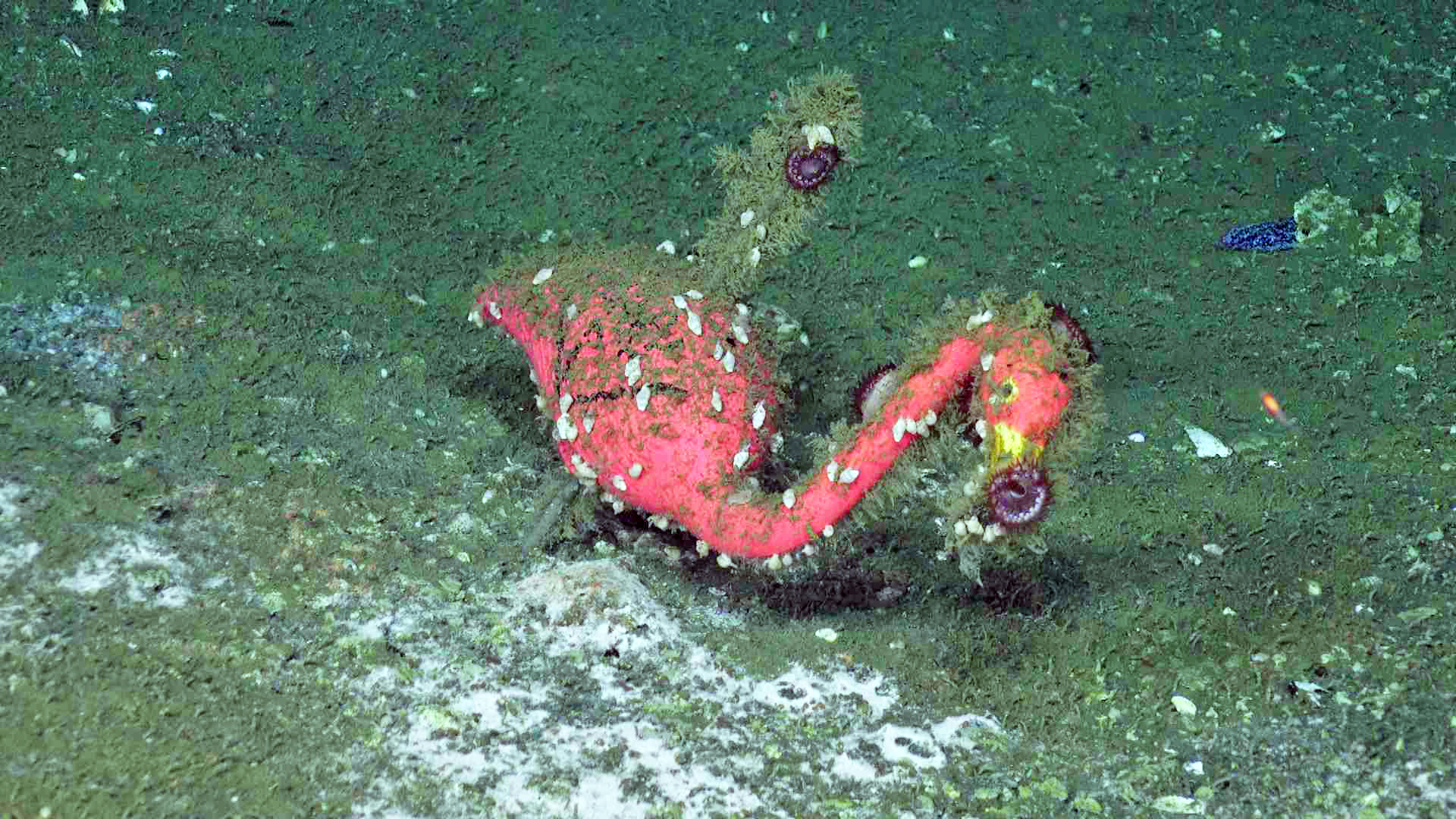
Deb explained the biogeochemistry unfolding in front of us. Through the screen, I had initially seen bubbles. Then, in the middle of this alien, methane-powered ecosystem, we encountered…a flamingo? At 780m below sea level?
It was a marker placed during an earlier MBARI expedition and still stood among the microbial mats. Apparently, when humanity reaches another world, our first instinct is to decorate it like suburban Florida.
We also saw eel-like fish moving across the seafloor, translucent jellyfish drifting past Jason’s lights, and crabs occupying the terrain with the confidence of animals that had never paid rent. And why would they? It’s their world, we are just living in it.
Toward the evening, I was walking to our student meeting when I was kidnapped for the second time. This time, the perpetrator was Mitch.
In reality, Mitch asked whether I wanted to help him with something, and I immediately agreed. I am lying exclusively for dramatic effect. Again.
This is probably why people always called me a drama queen.
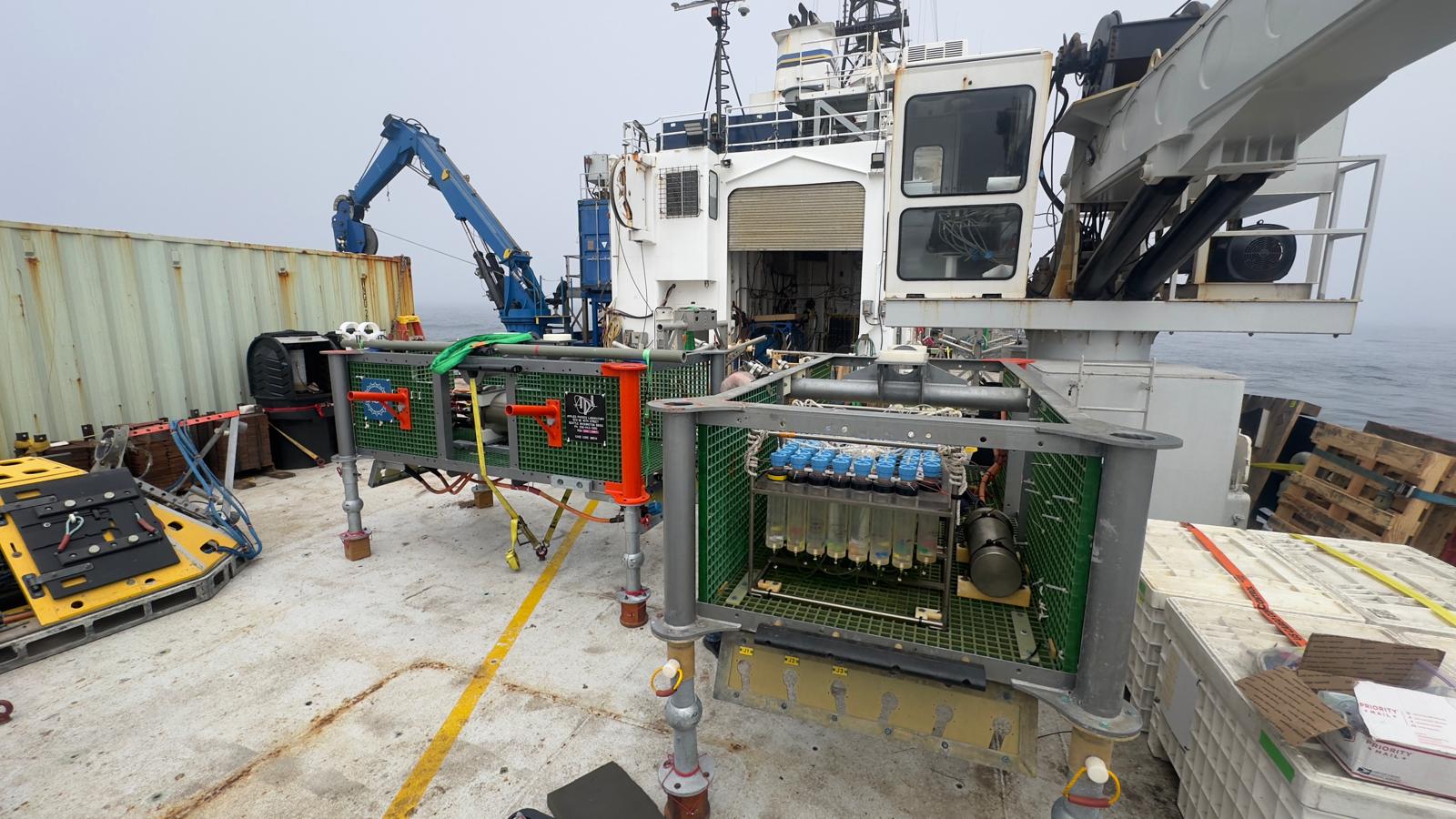
Mitch led me to the foredeck, where equipment was secured beneath a tarp. We pulled back the tarp and began unpacking. First, we cut what felt like a million zip ties. By the end, my fingers were absolutely cooked.
This was especially humiliating because I regularly go to the gym and occasionally brag about deadlifting 405 pounds. Yet there I was, asking for help with a zip tie.
Soon, I was sitting on the rough, nonskid deck with a wrench in my hand, tightening what felt like a million bolts. The ocean moved beneath us, the wind moved around us, and I tried very hard not to drop anything expensive into either.
Among the equipment was a titanium hydrothermal vent cap, often called a “hat.” Startup people are always told to wear many hats. Nobody warns you that one of them may be titanium and designed for a hydrothermal vent.
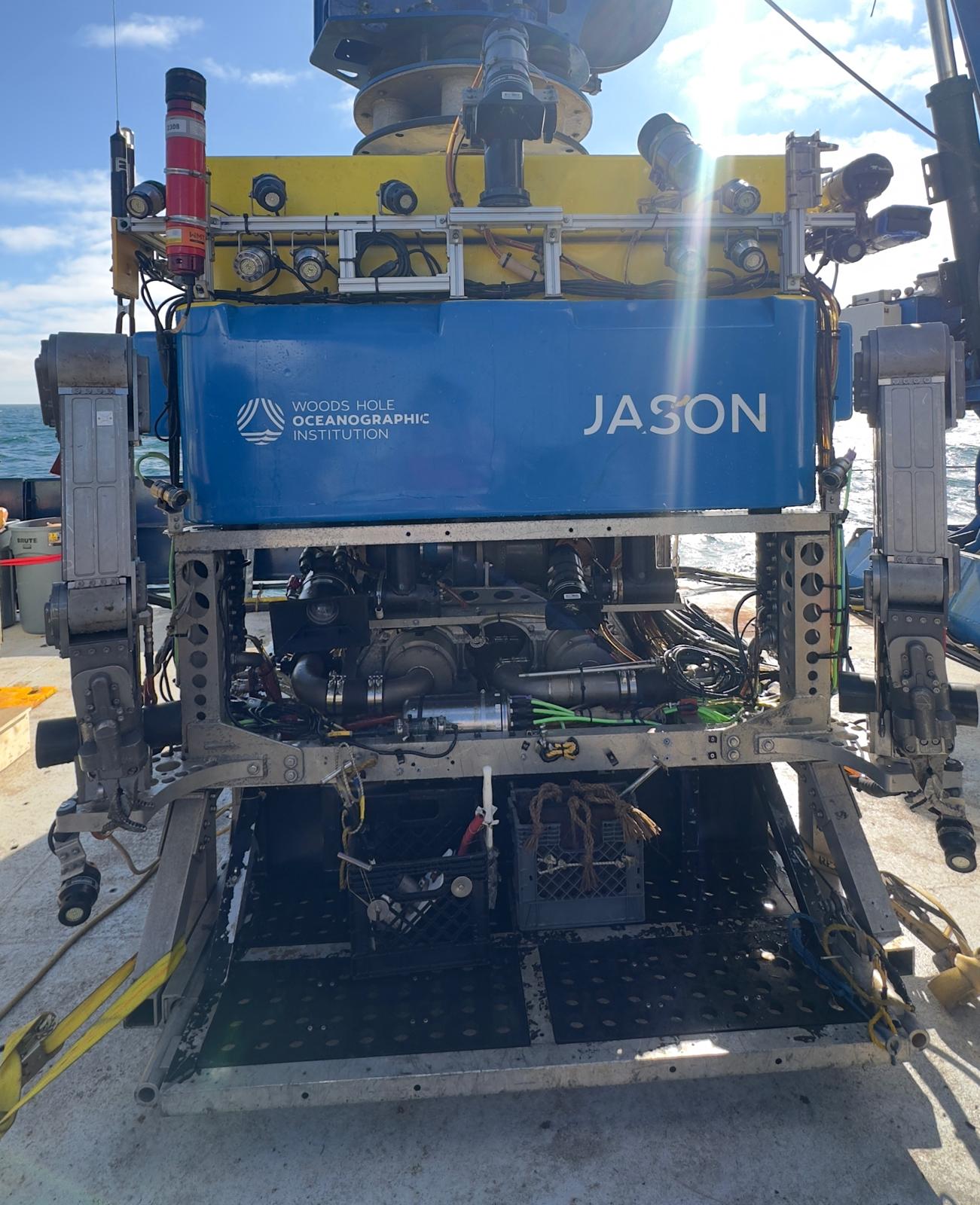
Then Mitch and I began debating which direction its handle should face. The orientation mattered because Jason’s manipulator arm would eventually have to approach, grip, move, and position the cap on the seafloor. A handle that appears perfectly reasonable to a human standing above it may be awkward for a robot viewing it through cameras, working with limited wrist motion, and approaching from a completely different direction.
I attempted to stand my ground. Mitch responded with the deeply unfair advantage of several decades of experience. More accurately, I proposed a design hypothesis based on approximately fifteen minutes of familiarity with the equipment, and Mitch conducted live peer review while clowning me.
The simple handle was not simple anymore.
I began this voyage joking that I was a prisoner aboard the ship. I had the captor wrong. The Revelle has doors.
Curiosity is the thing that keeps kidnapping me.
August 9, 2026
By the time we left Newport, I had become a prisoner.
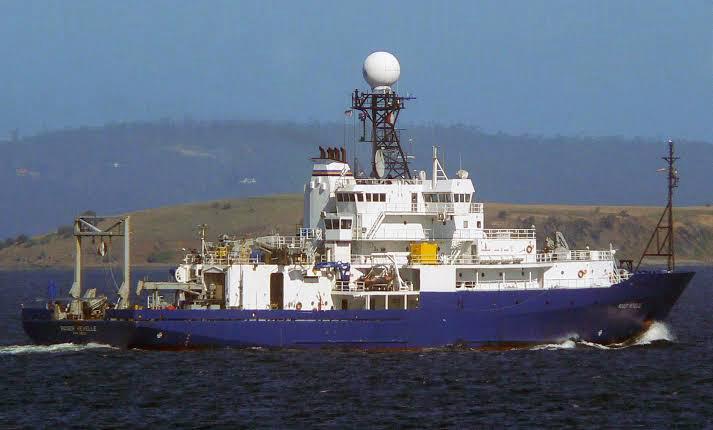
The previous day, we had driven from the University of Washington to Newport, Oregon, and moved onto the R/V Revelle. Somewhere between finding my bunk, learning which staircase went where, getting lost, and discovering that every hallway can somehow return you to the same hallway, I learned that my international-student paperwork meant I would not be allowed to leave the ship for the next ten days.
“Prisoner” is legally inaccurate. But in the moment? It was emotionally efficient, and made significantly less convincing by dinner that tasted like it came straight out of a Michelin-star restaurant.
My first impression of the R/V Revelle was the people.
Everyone on this ship has so much aura it is honestly ridiculous.
I am leaving that sentence raw because “exceptionally competent” sounds like a LinkedIn recommendation. The pilots can guide a robot through murky water. The engineers can make electronics, fiber-optic cables, pressure housings, and corrosive saltwater somehow coexist. The scientists can look at a noisy graph and see a story unfolding beneath us. And yet, everyone spoke with the humility and grounded-ness of a monk in deep meditation.
I guess the Dunning-Kruger effect stands its ground.
Walking through the kitchen passage, I noticed a five-dollar bill taped to a whiteboard with an arrow that said, “found on deck.”
Five dollars is not a lot of money (at least in this economy). But the honesty felt more expensive than the Kohinoor. Nobody pocketed it. Nobody ignored it. Nobody turned it into a blockchain. They simply found something that was not theirs and made sure it could return to whoever had lost it.
The ship appears to run on diesel, fiber optics, and an amount of integrity I can only hope to live by.
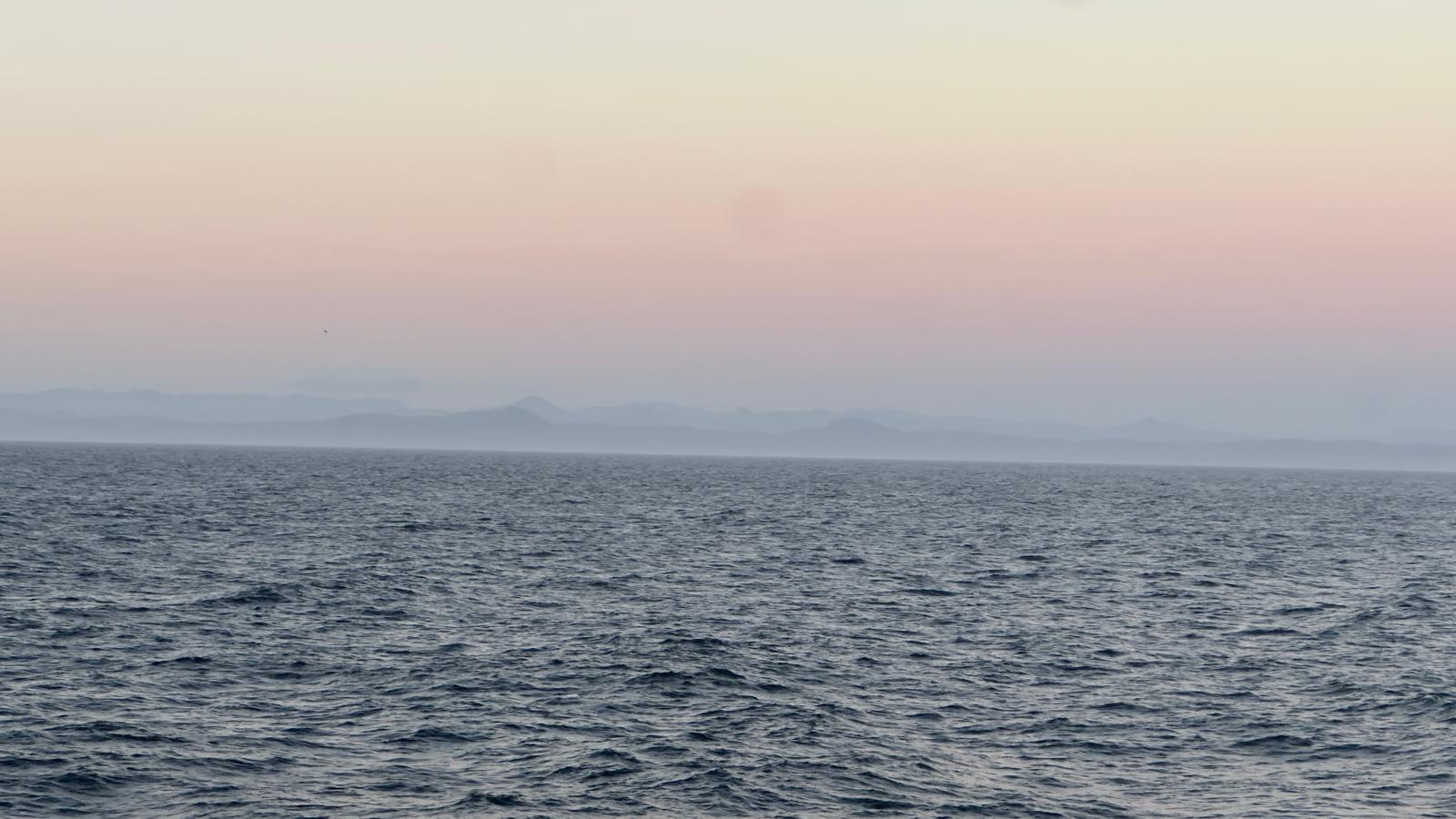
When the R/V Revelle finally left Newport, everything changed slowly and then all at once. Buildings became coastline. The coastline became a thin strip. Eventually, land was only a figment of my imagination.
Not long afterward, we had an abandon-ship drill. We carried our immersion suits to the muster area, listened to the procedures, and climbed into bright orange survival suits. Nothing says “welcome aboard” quite like immediately rehearsing how to leave.
Then came our first dive.
At the Oregon Shelf site, the seafloor is “only” about 80 meters below the surface, as everyone said on board. This seemed weird for someone who was afraid of the “deep-end” of the swimming pool as a kid, with the maximum depth being 6 ft. Strong currents and suspended sediment made visibility difficult.
Inside the Jason control van, it was organized chaos. Pilots, navigators, engineers, scientists, cameras, sonar, navigation, and the ship itself all have to remain synchronized. Commands were short. Nobody seemed rushed, and yet nothing was slow.
During the dive, I learned the event-logging and video-logging roles.
Event logging turns the operation into a timestamped sequence: where Jason is, what the ship is doing, which instrument is being moved, what the manipulator is touching, and which image belongs to that moment. Video logging monitors the camera feeds, maintains the recordings, and captures still images whenever the ocean does something worth remembering.
It looked simple for approximately five seconds.
In reality, two humans were compressing an entire multimodal world into structured memory. Multiple video feeds, vehicle navigation, sonar, telemetry, operator conversations, instrument states, and scientific context were all arriving continuously. The loggers had to notice the right thing at the right second and describe it clearly enough that someone years later could understand what happened.
My AI/ML brain responded by committing its usual social offense:
How do we make this automated and agentic?
Not an AI that pilots Jason. Not something that decides what matters instead of the scientists. Yet. At least. One that watches every feed, listens to operator speech, aligns events with navigation and telemetry, proposes timestamps, saves evidence, and retrieves relevant historical moments.
So I started asking questions. One person directed me to another person, who knew another person, who knew where the data lived, who knew where the compute might come from. As Joe (the vessel’s software engineer) would say, I basically performed a breadth-first search through the ship’s social graph.
By the end of the day, I had found a path to GPU compute and terabytes of historical expedition data extending back more than a decade.
I had begun the day learning how to log one dive. I ended it staring at enough history to teach a machine how to remember dozens of expeditions. Then came my wildest imagination, something I learn during my time at San Francisco.
Could the hydrophone archive measure more than sound? Because Acoustic travel time changes with the temperature, salinity, and pressure of seawater, could we use passive acoustic thermometry to recover changes in ocean temperature? Could repeating earthquakes become free transmitters, their T-waves captured by hydrophones and converted through seismic ocean thermometry into measurements of deep-ocean change? Could those results be combined with CTD profiles, current measurements, meteorology, navigation, video, and seafloor instruments to reconstruct not just what every sensor recorded, but what the ocean itself was doing?
Could a system notice relationships nobody had thought to place beside each other?
Could it discover that a current shift consistently precedes a collapse in camera visibility? Could it connect an acoustic change to seismic activity, biological behavior, or hydrothermal processes?
I have always been ambitious, occasionally to the inconvenience of everyone around me. But this felt different. What started as an idea for automating logs is beginning to look like a scientific data compiler, an expedition memory, and perhaps a curiosity engine for the ocean. It was a massive undertaking, and I didn’t know if it was a warning or an invitation. I took it as the latter.
I finally tried to sleep at 11:00 p.m, regretting not having slept earlier, just like the past 18 years of my life. I lay on my pillow, wide awake. The waves crashed like a wrecking ball against the hull, almost singing a violent lullaby. It was frightening, and frighteningly calming. The ocean sounded like it wanted in.
Somehow, this was the first moment I wanted in too.