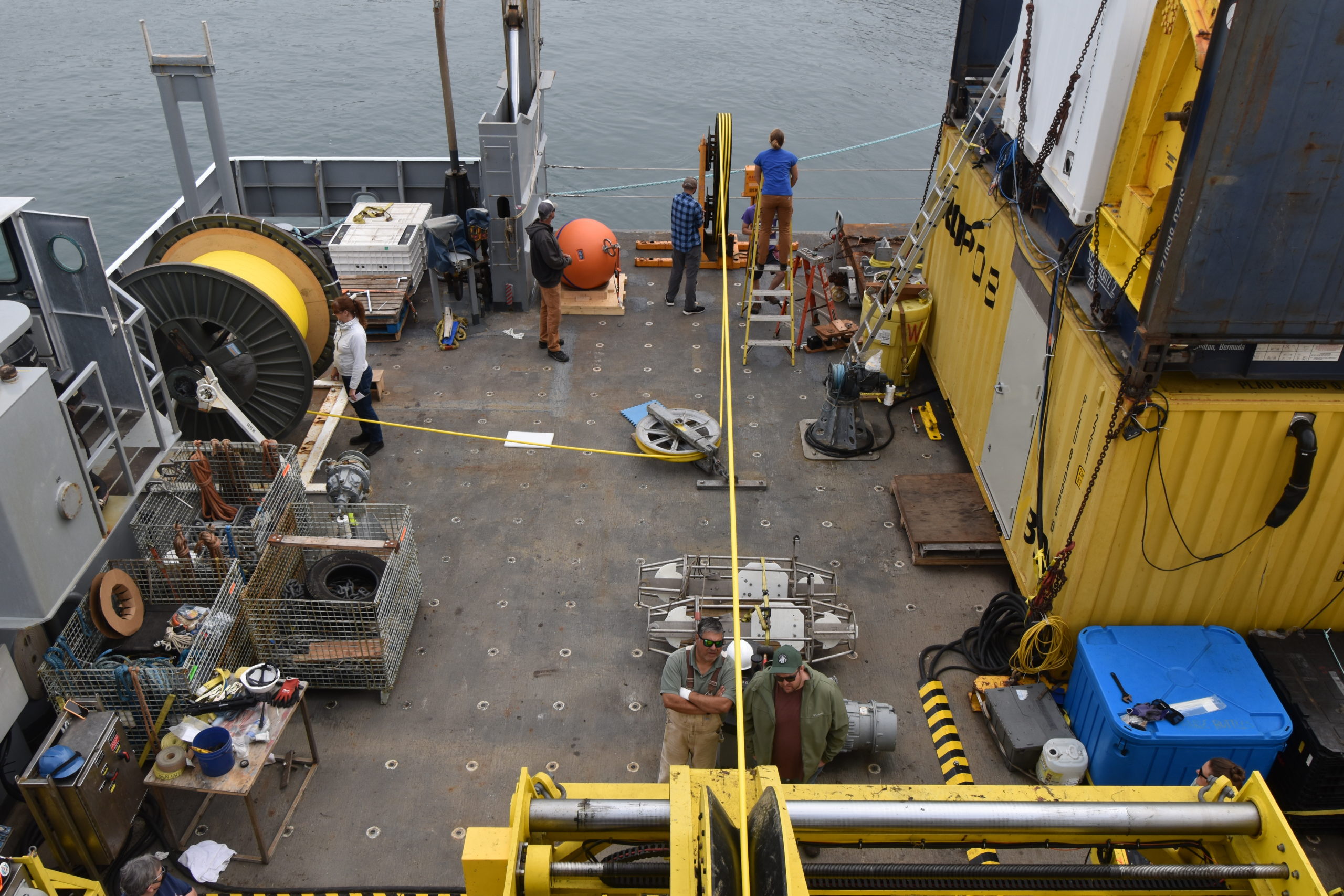
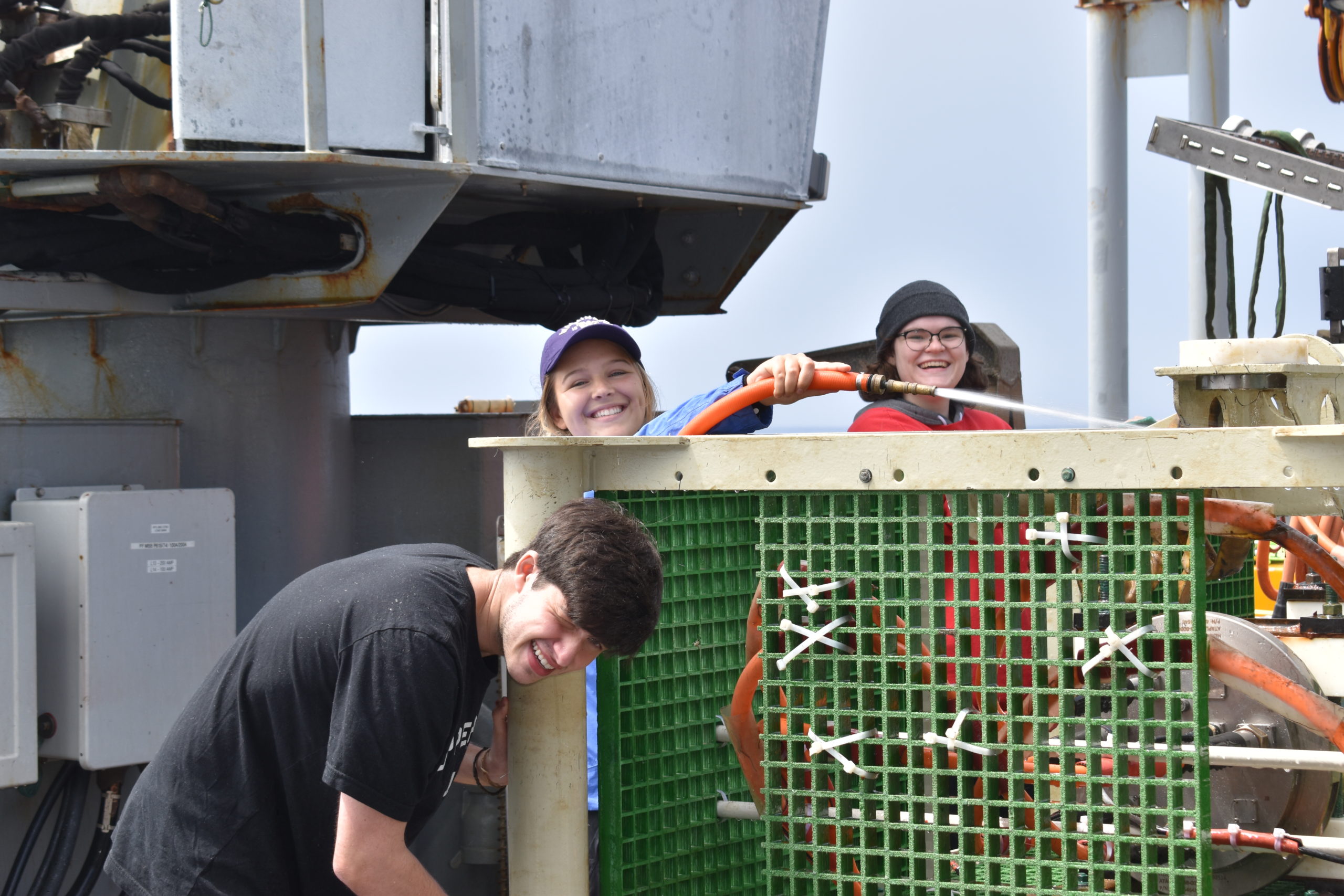
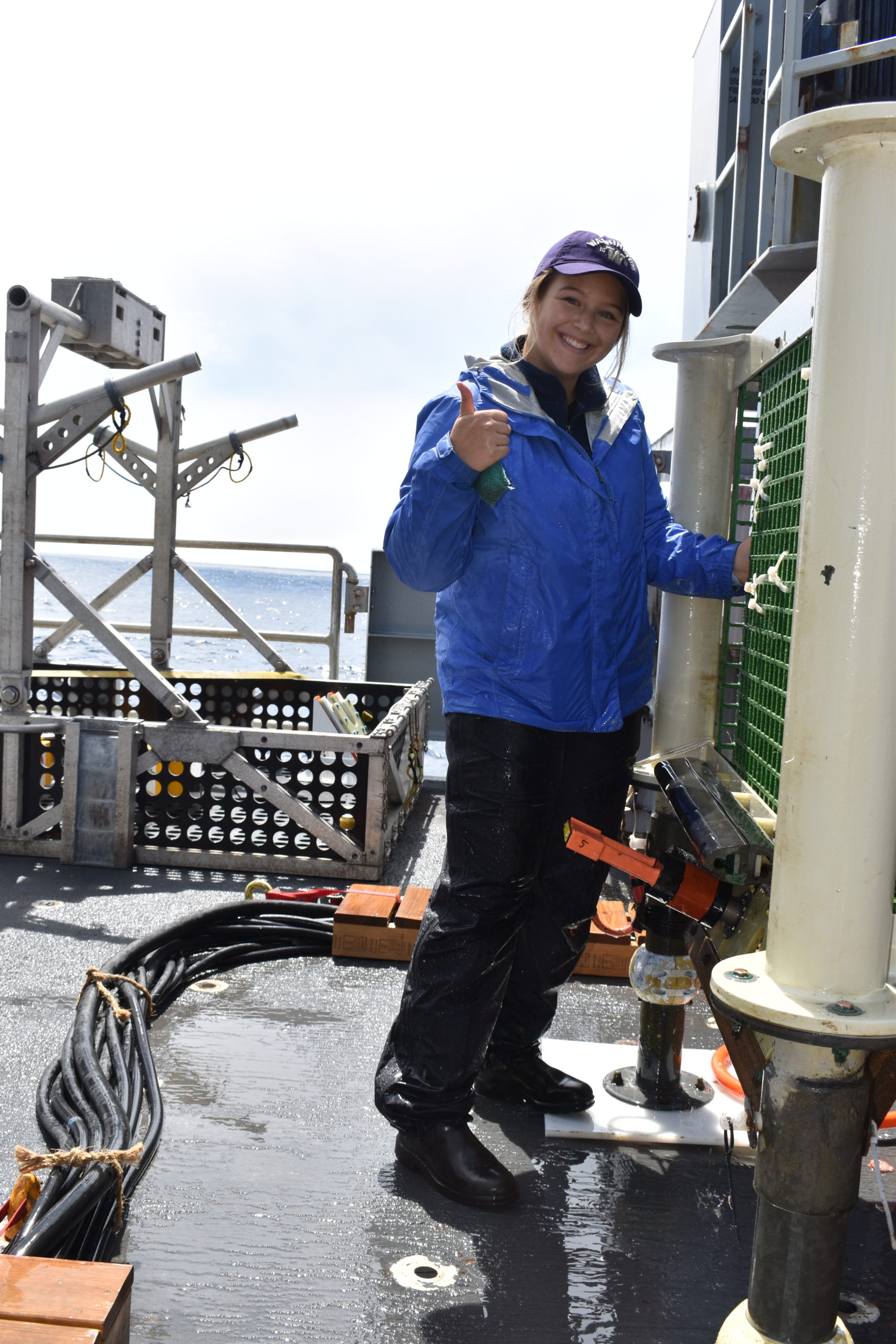
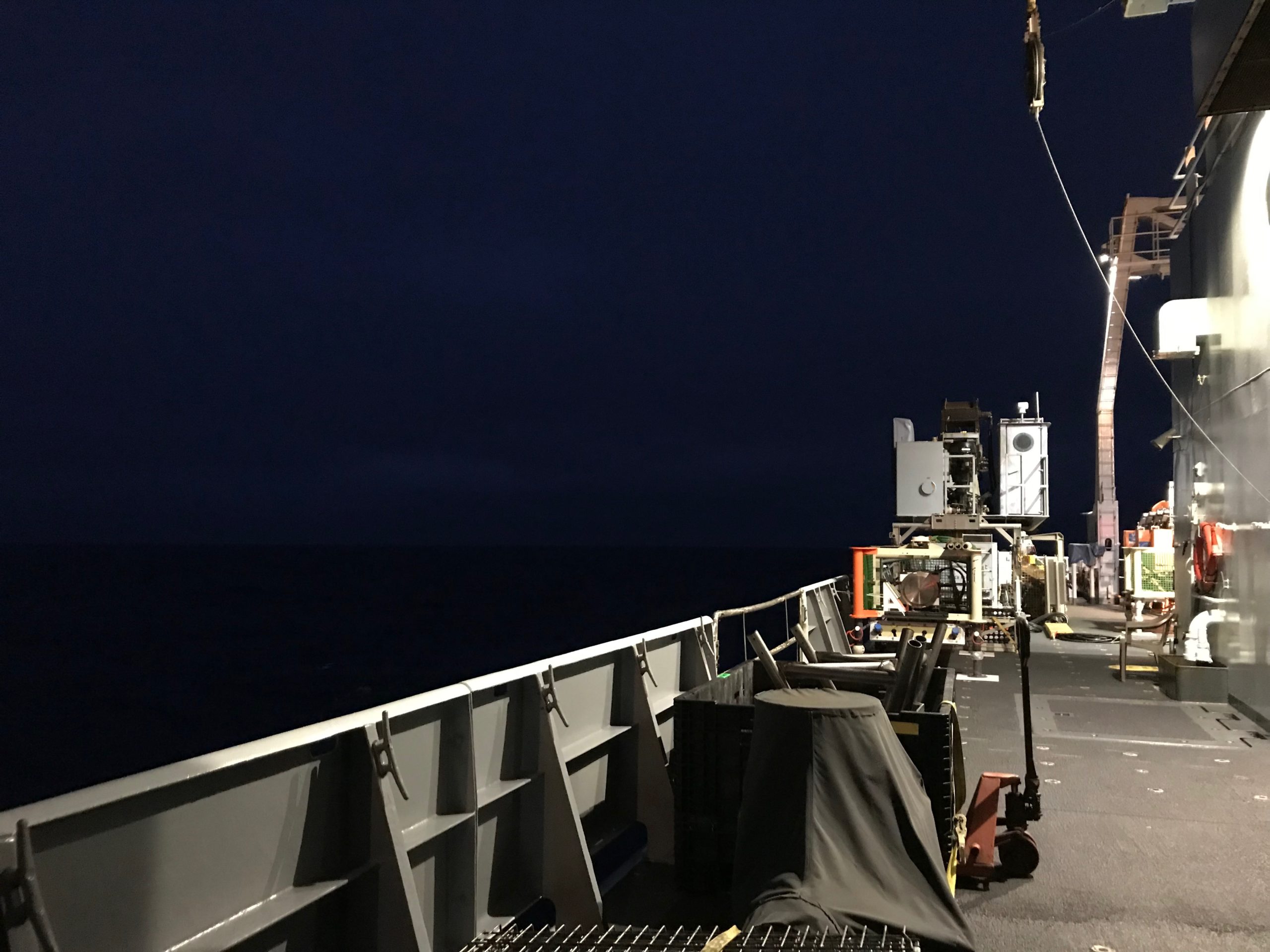
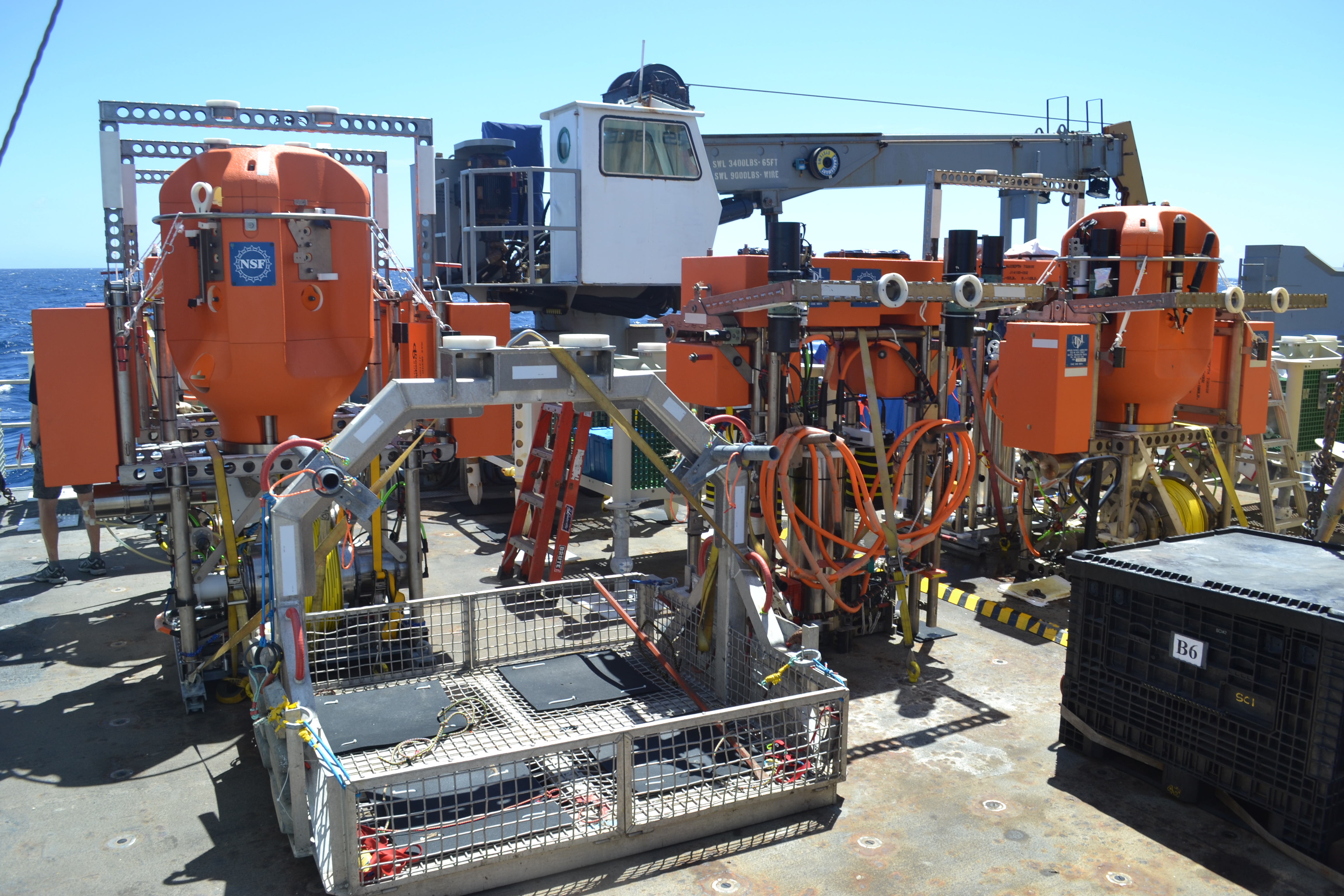
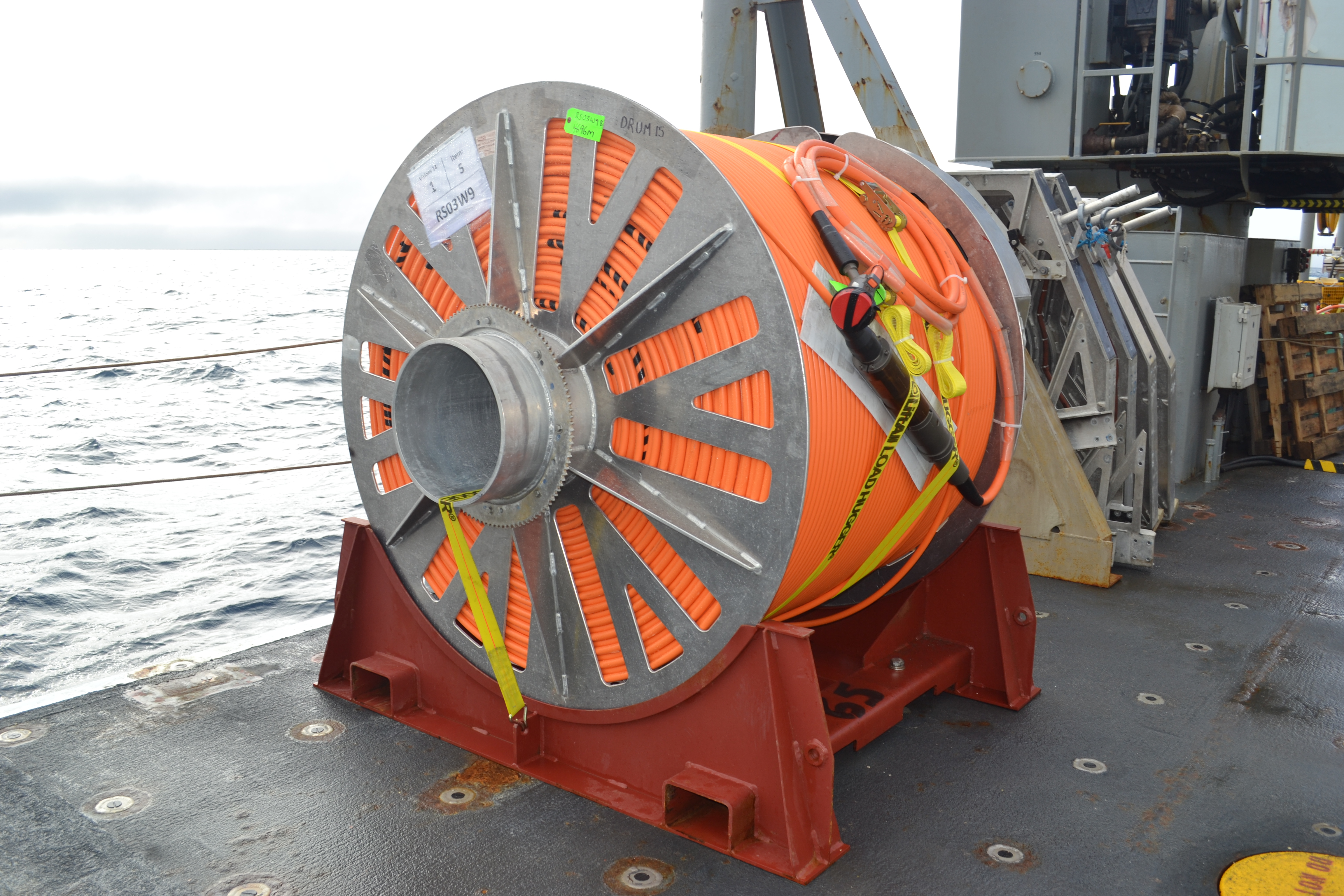
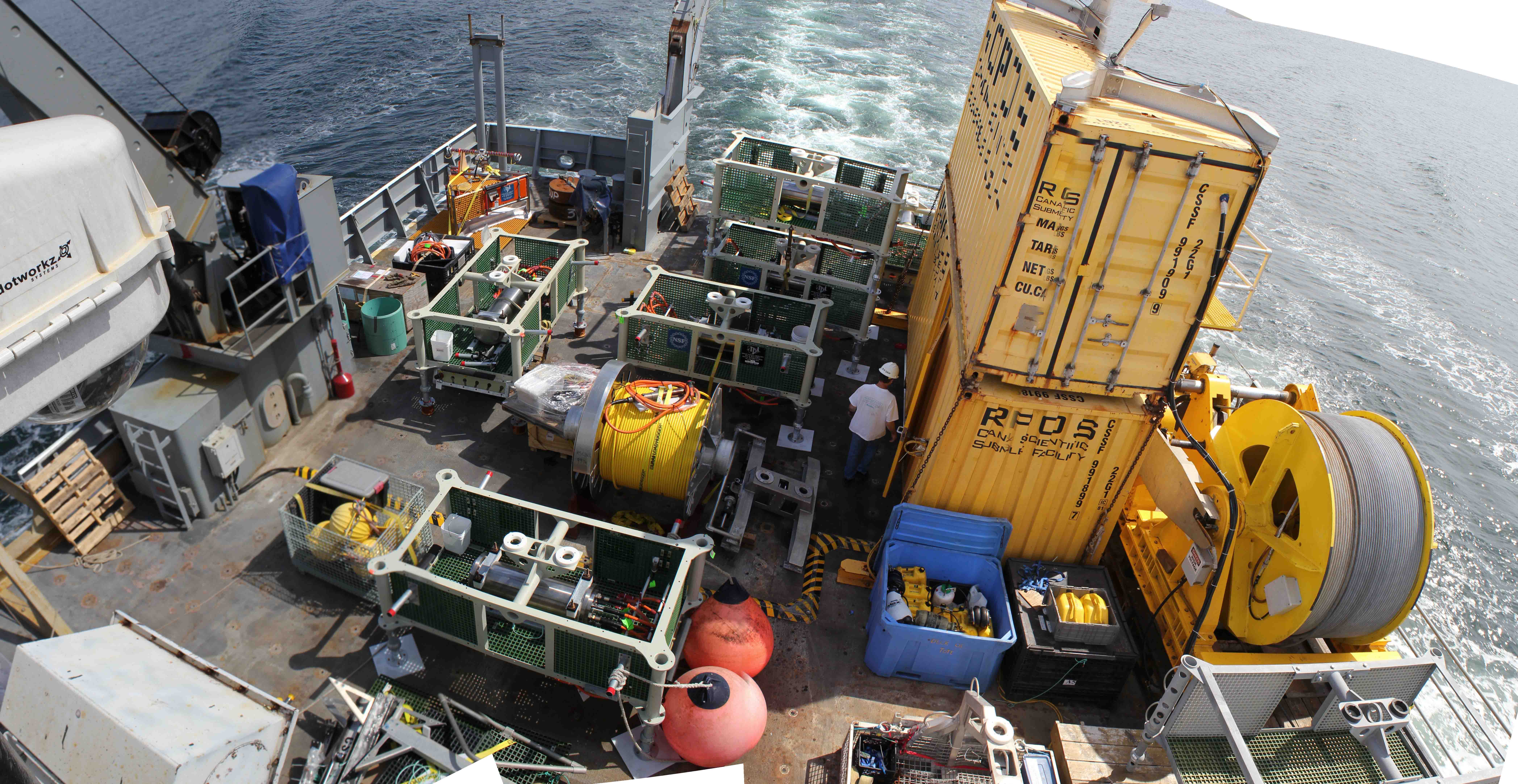
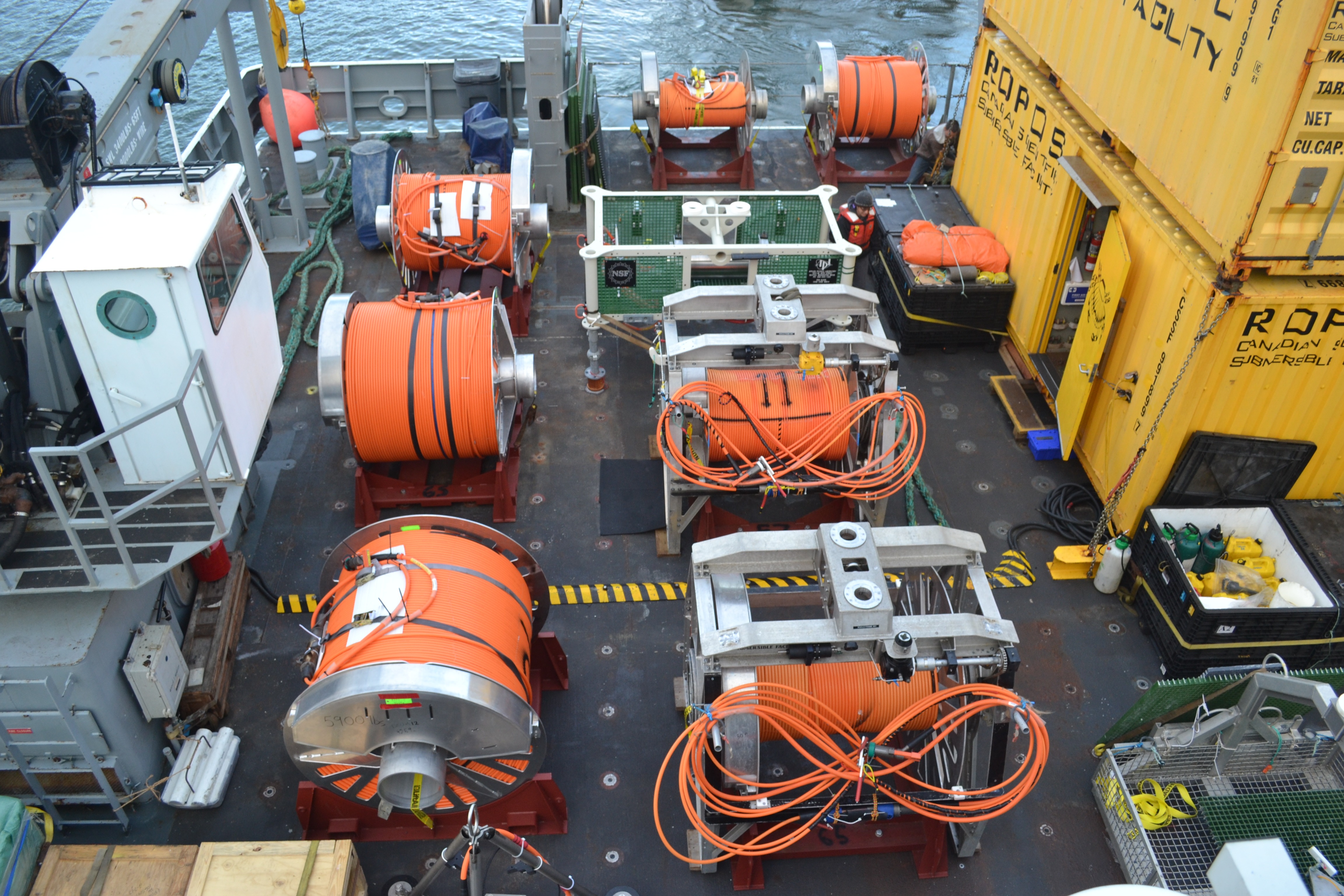
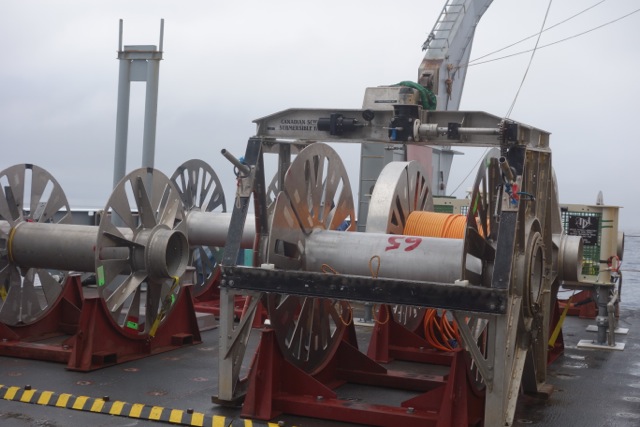
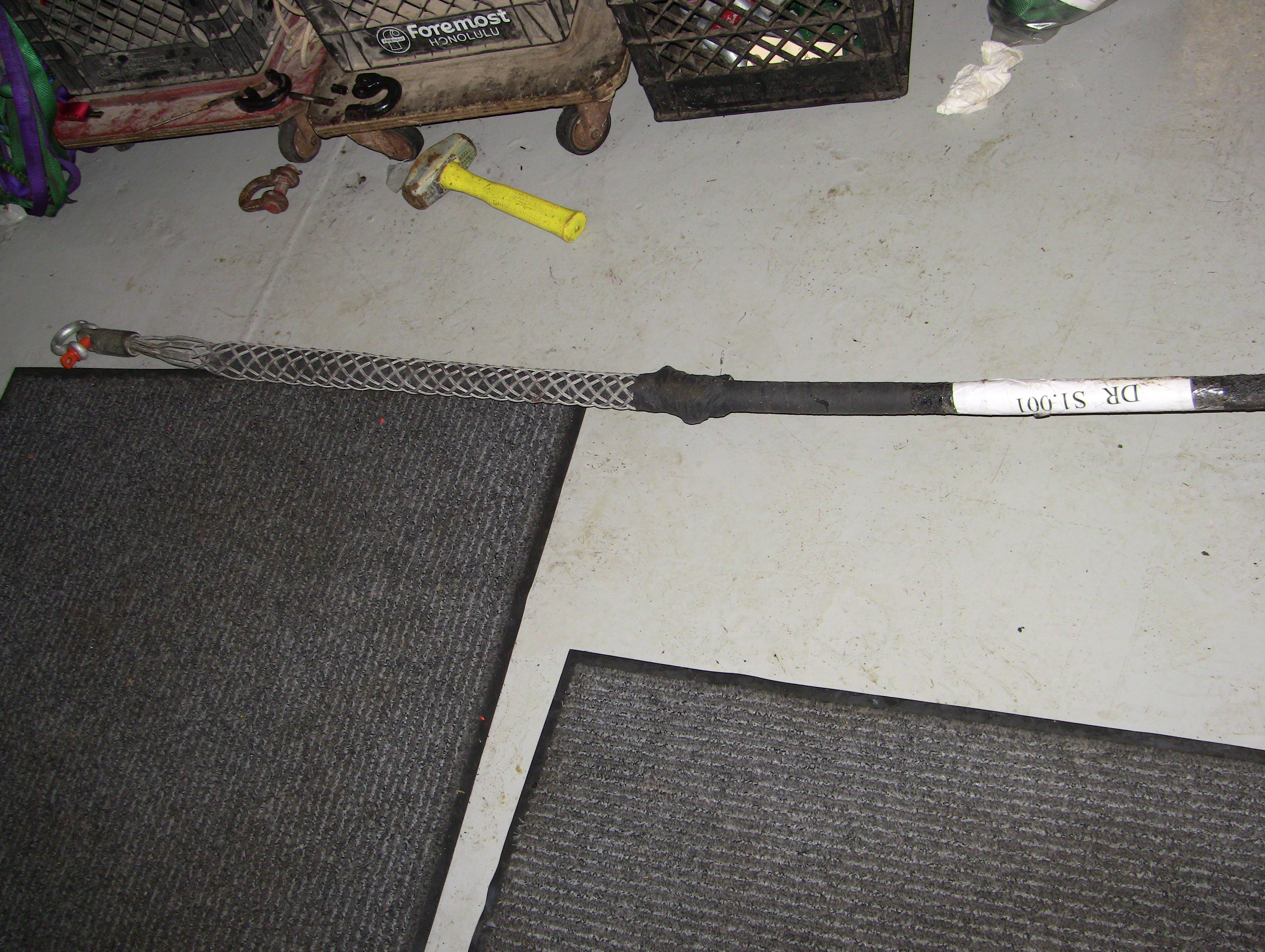
An intricate configuration of gear is used on the fantail of R/V Thompson to spool >3000 m of electro-optical cable onto the medium lift winch for follow-on installation of the Shallow Profiler mooring. Credit: M. Elend, University of Washington, V22.
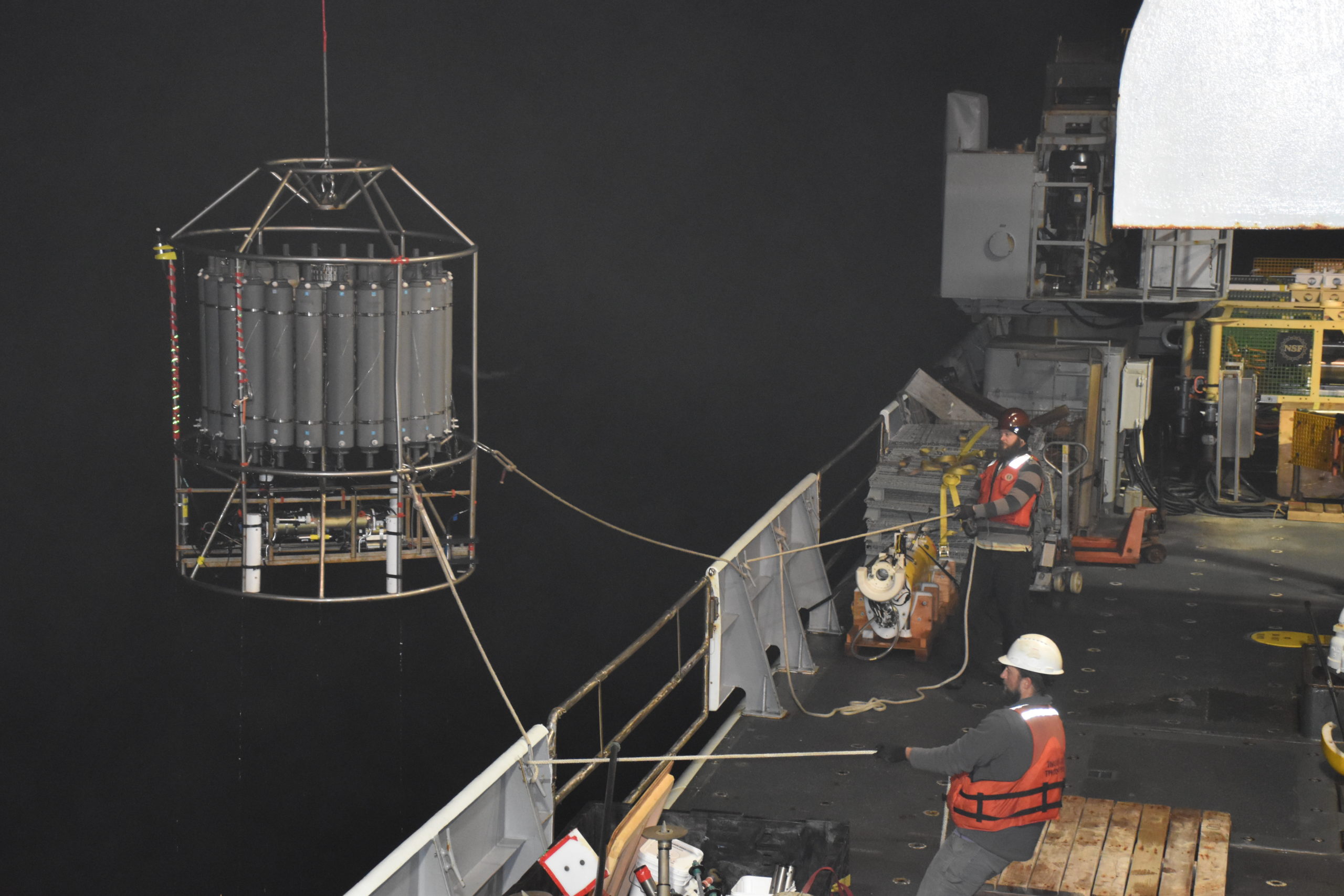
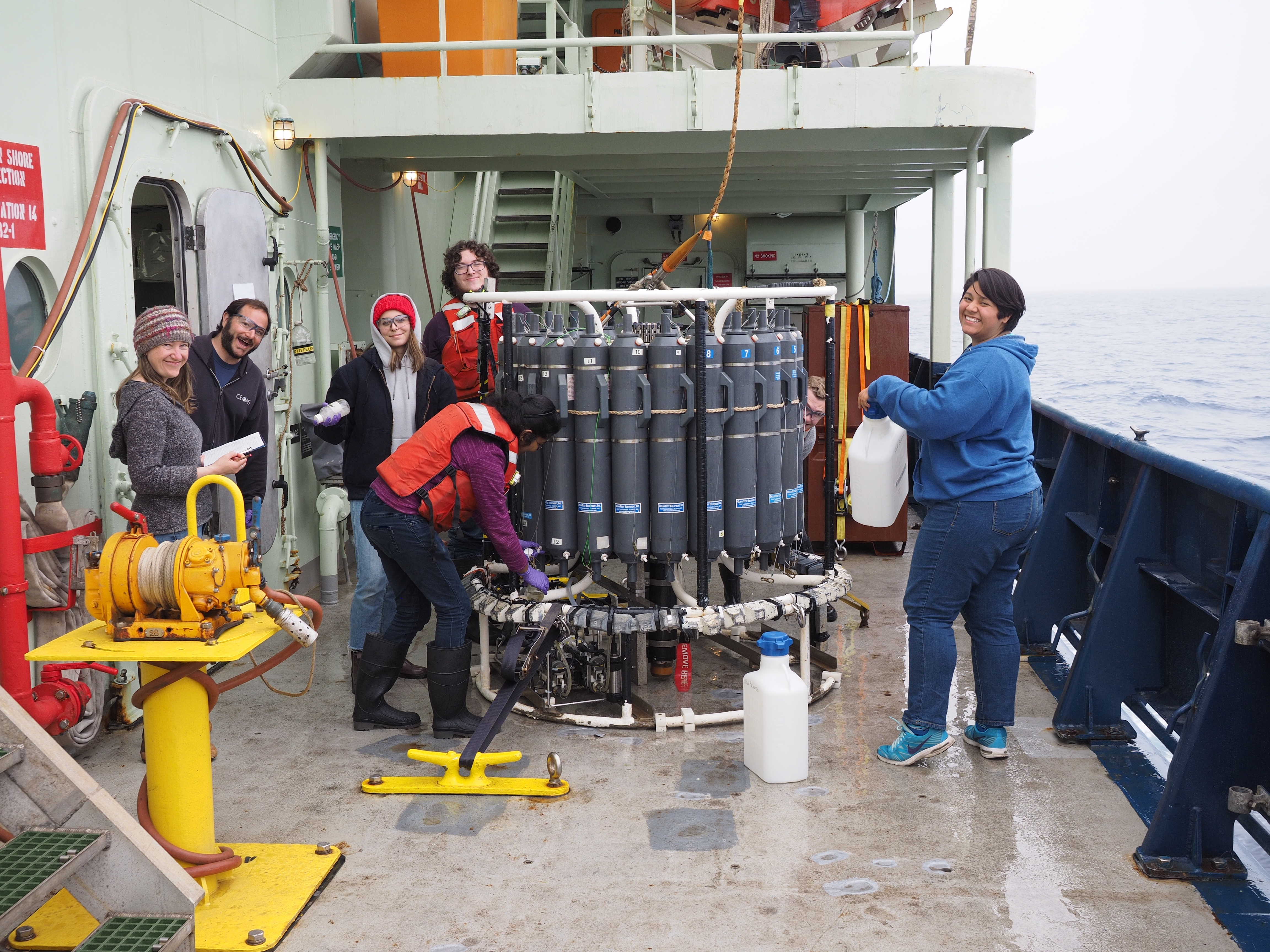
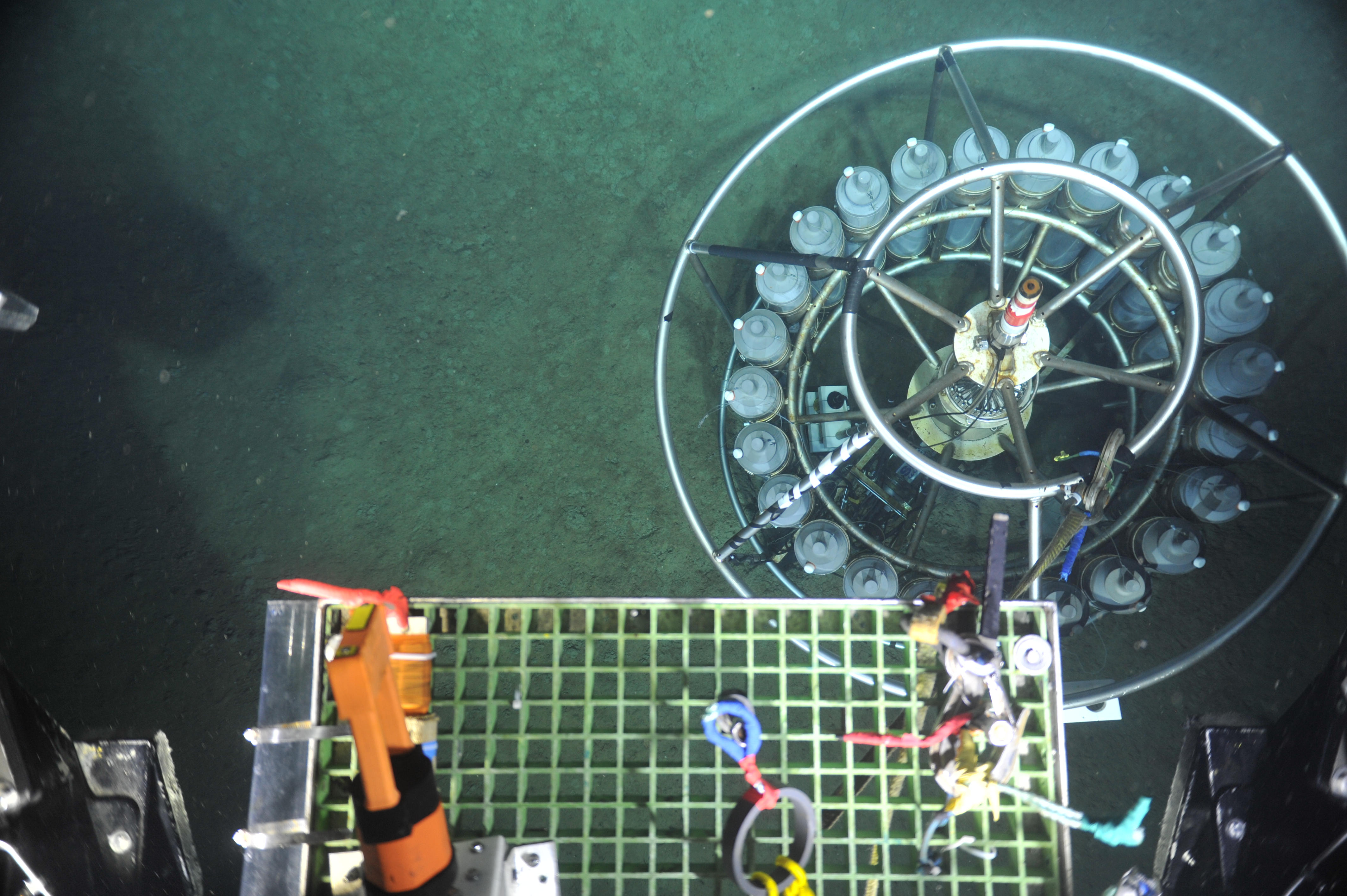
A CTD rosette hosting 24 Niskin bottles filled with ocean water is about to be recovered onto the deck of the R/V Thompson. Credit: M. Elend, University of Washington, V22.
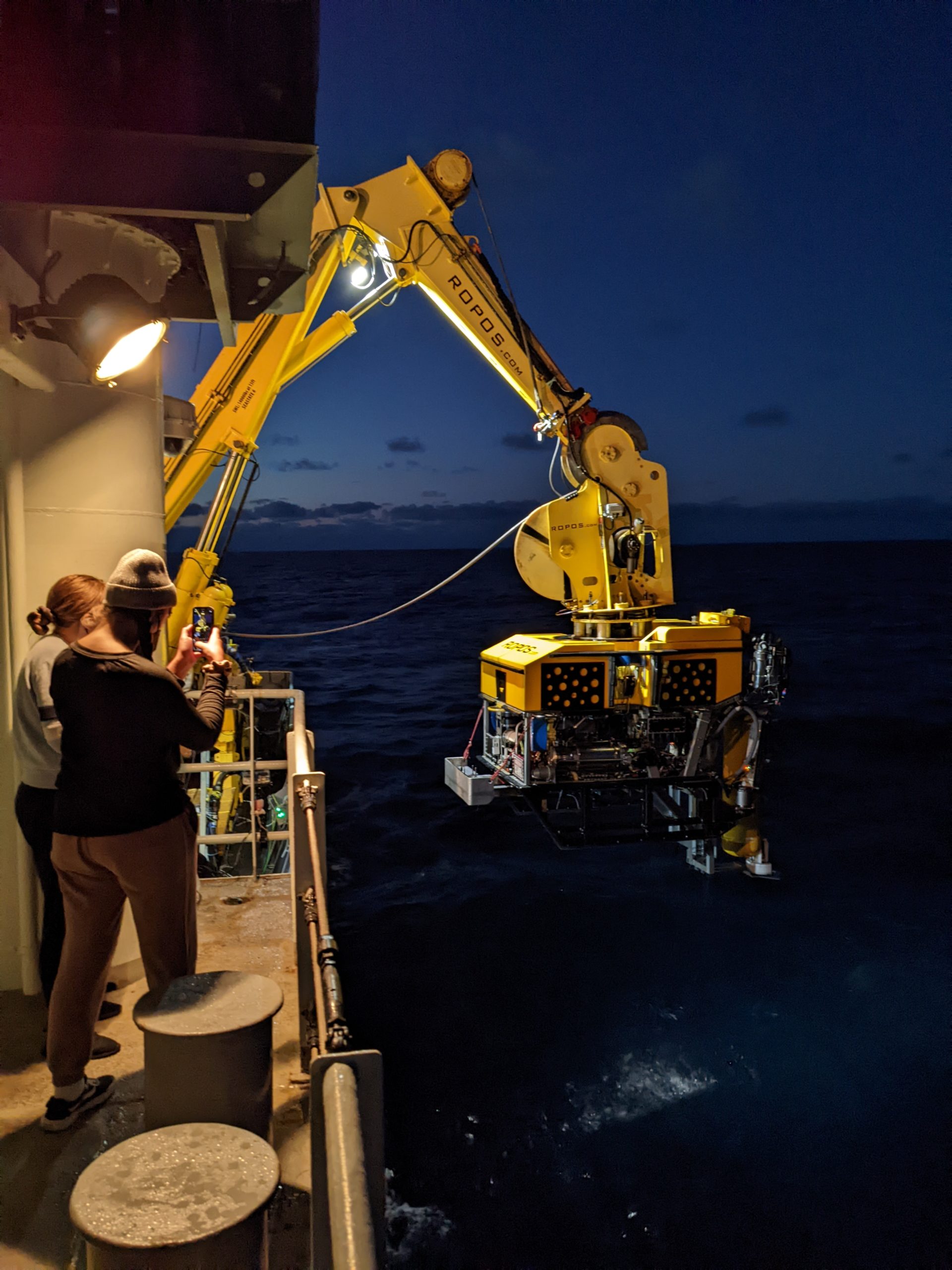
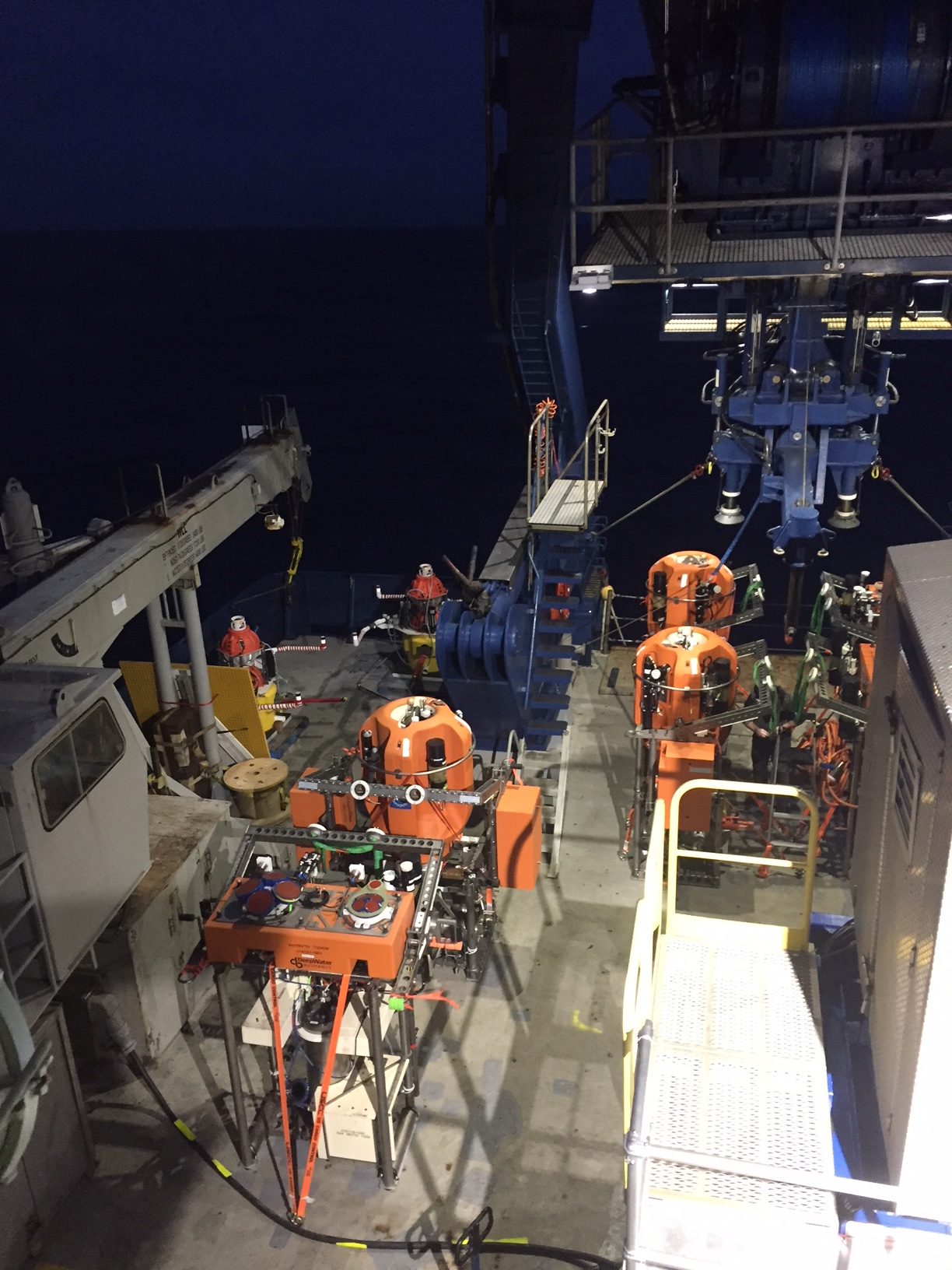
A painting of Deep Profiler operations as viewed from the O2 deck on the Thompson. Credit: C. Gill, V21.
The Sheep (Junction Box MJ01C) recovered from the Oregon Shelf site on deck in the midst of being shorn. Credit: R. Scott, University of Washington, V21.
Primary Node PN1B almost on deck of the IT. Integrity. Credit: C. McGuire, University of Washington, V21.
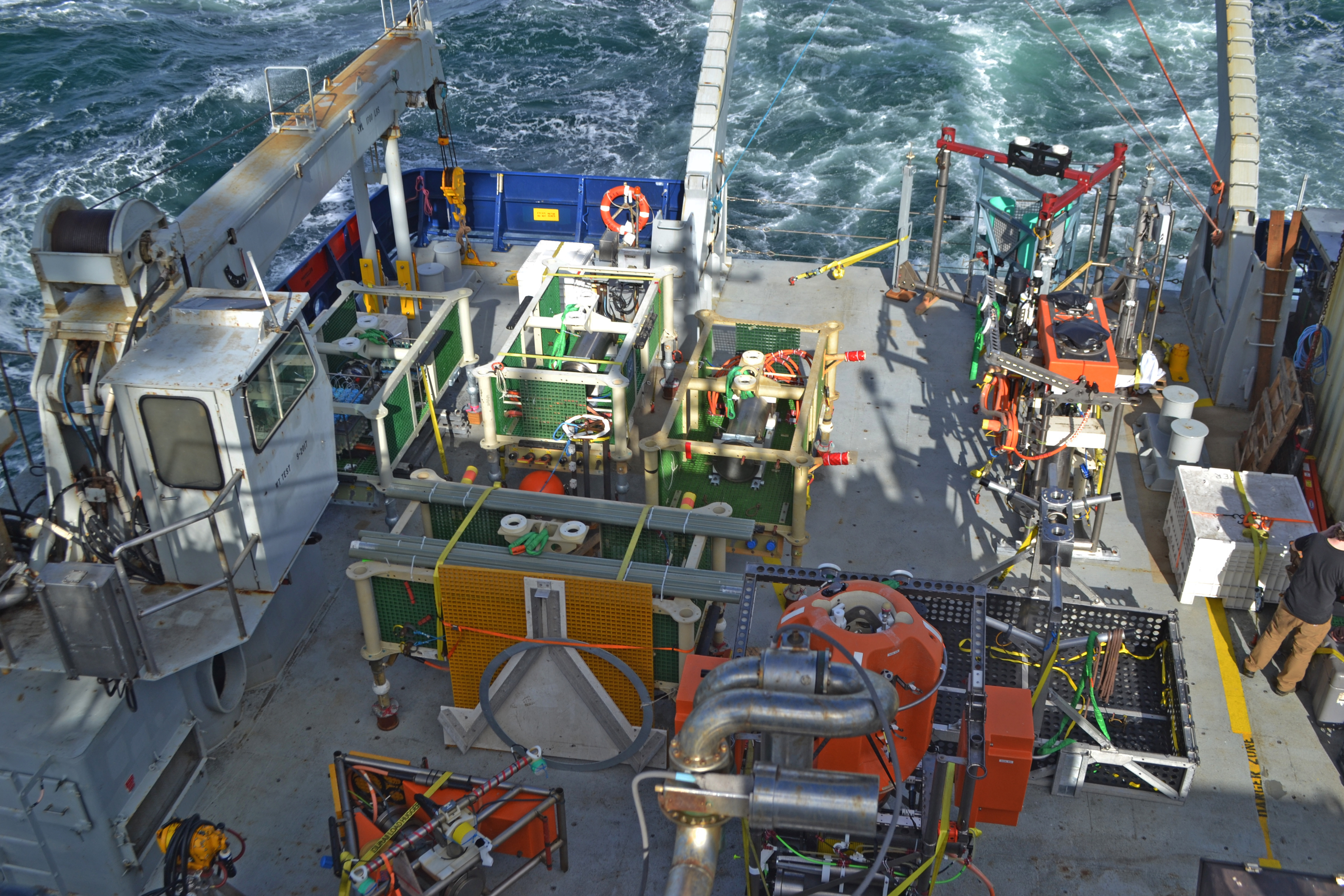
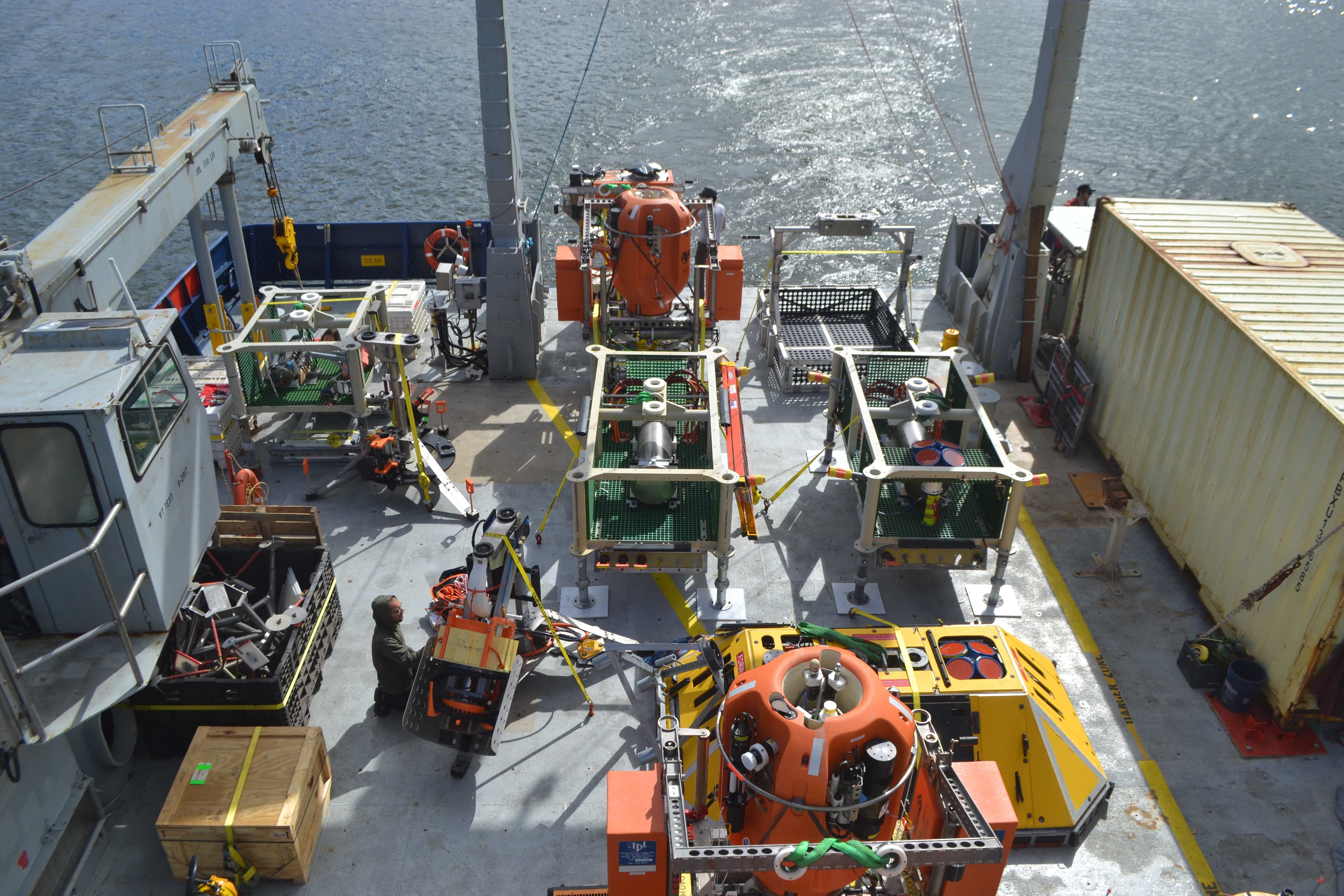
The fantail of the R/V Thompson is fully loaded at the start of Leg 2. A zooplankton platform is moved into place for subsequent latching into by Jason for installation at the Oregon Shelf site. Credit. M. Elend, University of Washington. V20.
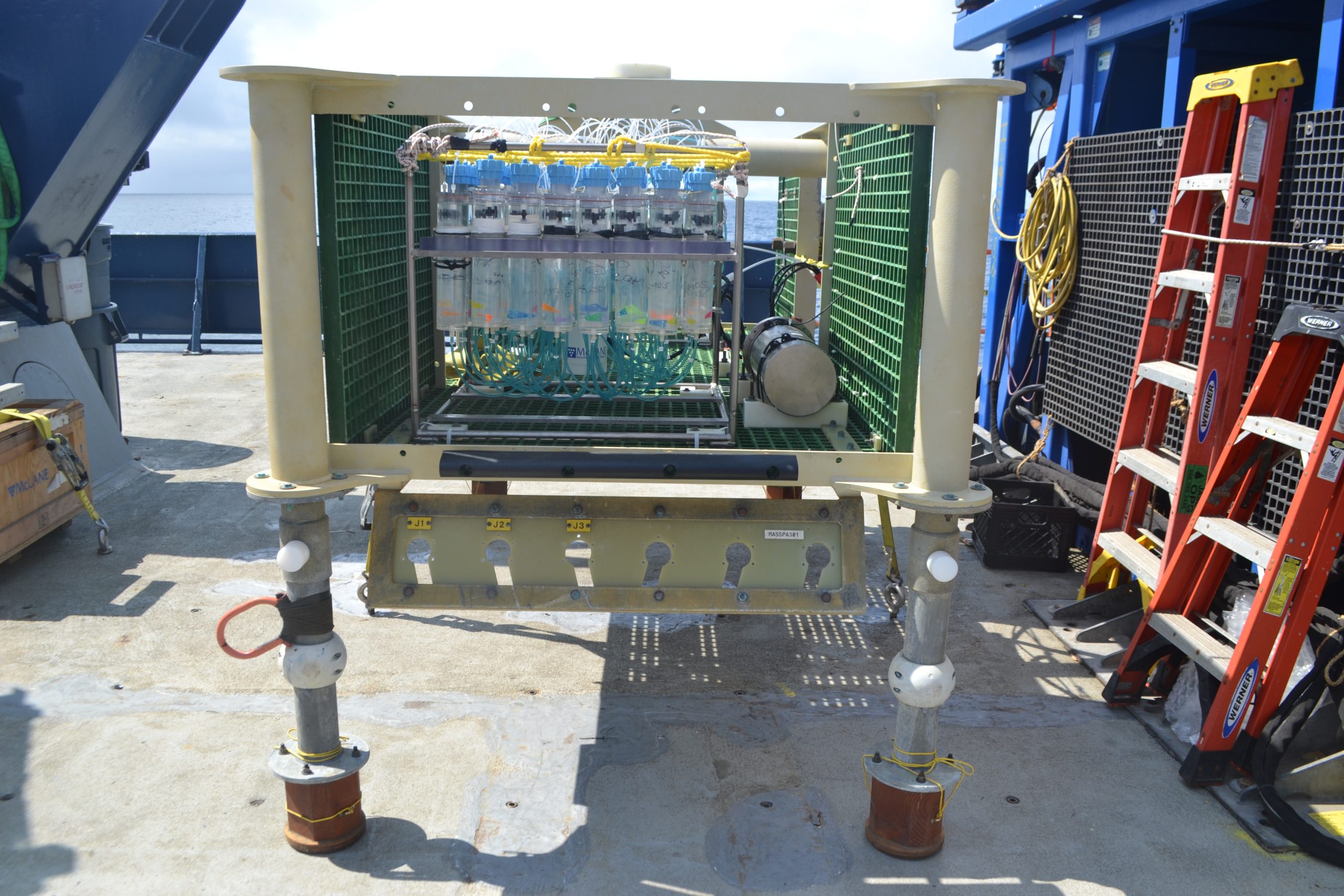
Pre-deployment deck photo of fluid- and microbial-DNA samplers RASFLA/PPSDNA, inside a seafloor-frame, focused on the fluid sampler portion of the instrument. Photo Credit: M. Elend; University of Washington; V19
APL engineer James Tilley handles a line to latch a thermistor array under Jason to measure ocean temperatures ~ 1 mile beneath the oceans' surface. Josh Manger, lead Marine Tech onboard the R/V Revelle, directs operations. Credit: M. Elend, University of Washington, V18.
Josh Manger, lead of the marine support group onboard the R/V Revelle, oversees launching of a winched shallow profiler assembly to be installed on a UW-NSF-OOI Cabled Array Shallow Profiler Mooring. Credit. M. Elend, University of Washington, V18.
The Platform Instrument Assembly (PIA) is hoisted off the deck of the R/V Thompson in preparation for the successful installation at the Oregon Offshore Site. It was installed in the early morning hours of August 30th. Photo credit: NSF-OOI/UW/CSSF; Dive R1763; V14.
The remotely operated vehicle ROPOS used a snap hook connected to a line on its underbelly, hooked into the frame of the CTD for recovery to the surface. The CTD wire failed as the sensor-sampling package was being recovered onto the deck of the Thompon. Luckily, after its >9000 free descent to the seafloor, it landed upright in the soft sediment. Photo credit: NSF-OOI/UW/CSSF.
Iron-rich basalts quickly oxidize in the O2-rich atmosphere once on deck. (Photos by Leslie Sautter)