The Regional Cabled Array includes ~900 km of submarine high power and bandwidth fiber optic cables connected to 7 Primary nodes [underwater substations, 18 secondary nodes, and >150 instruments streaming live data to shore 24/7. Six cabled and instrumented moorings span depths from 2900 m to 600 m with instrumented science pods that travel up and down through the water column, also streaming live data. The high bandwidth and power provides important expansion opportunities for interested investigators. Credit: University of Washington.
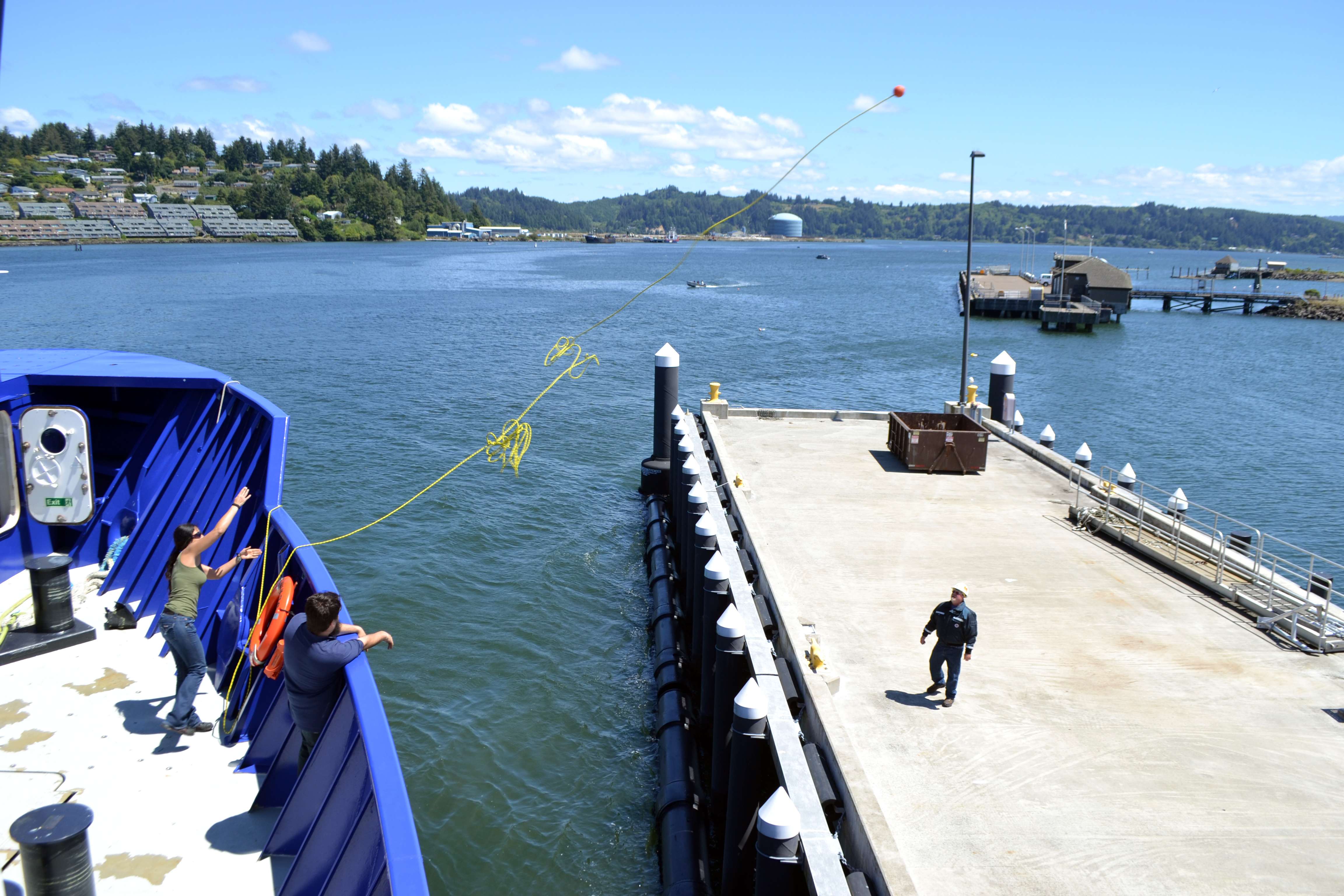
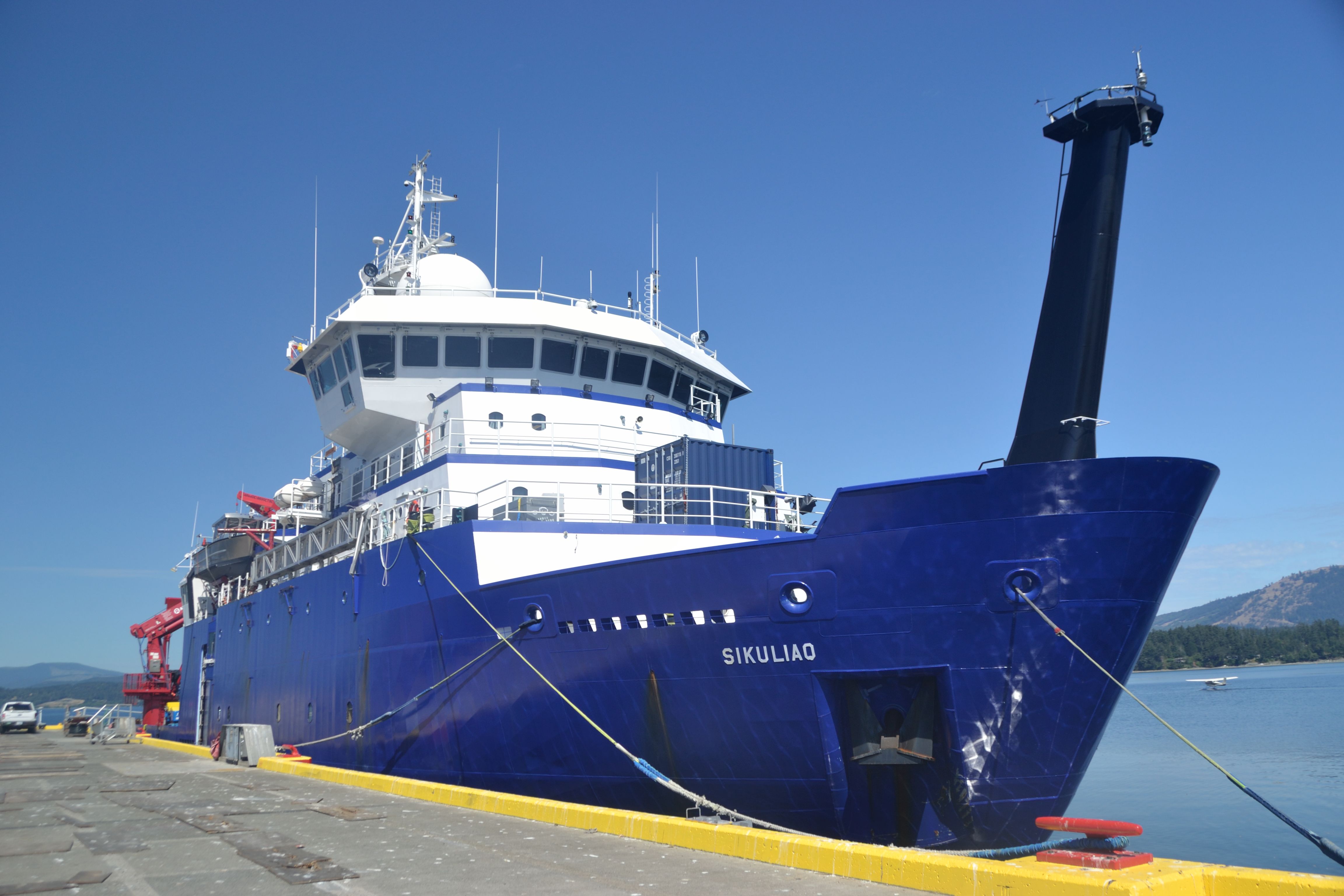
The R/V Sikuliaq leaves the University of Washington School of Oceanography fully loaded with Cabled Array infrastructure. Credit. M.Elend, University of Washington.
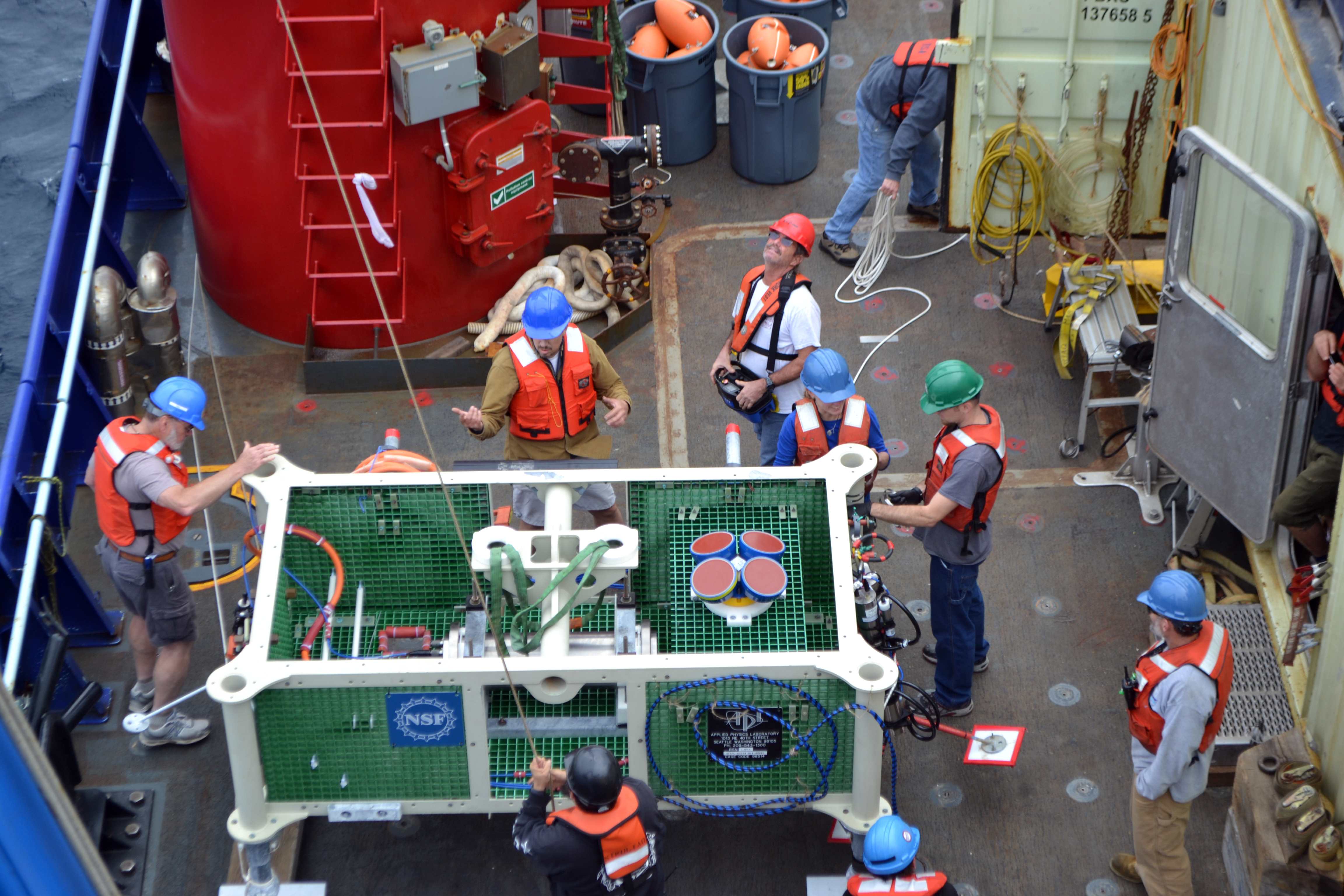
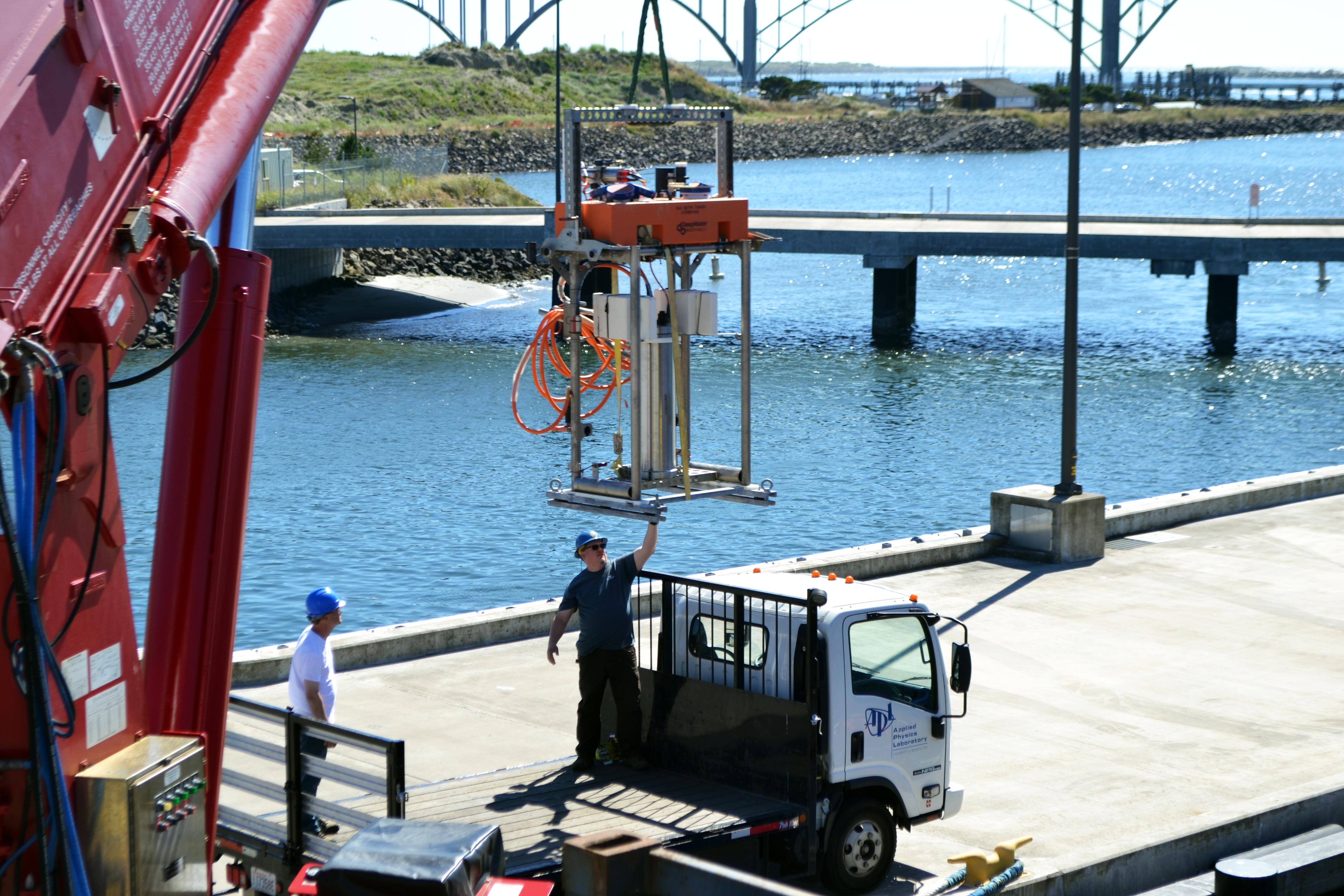
Junction box LJ03A rests on the deck of the R/V Sikuliaq, fully tested and ready for installation at the base of Axial Seamount. Credit: M. Elend, University of Washington. V16.
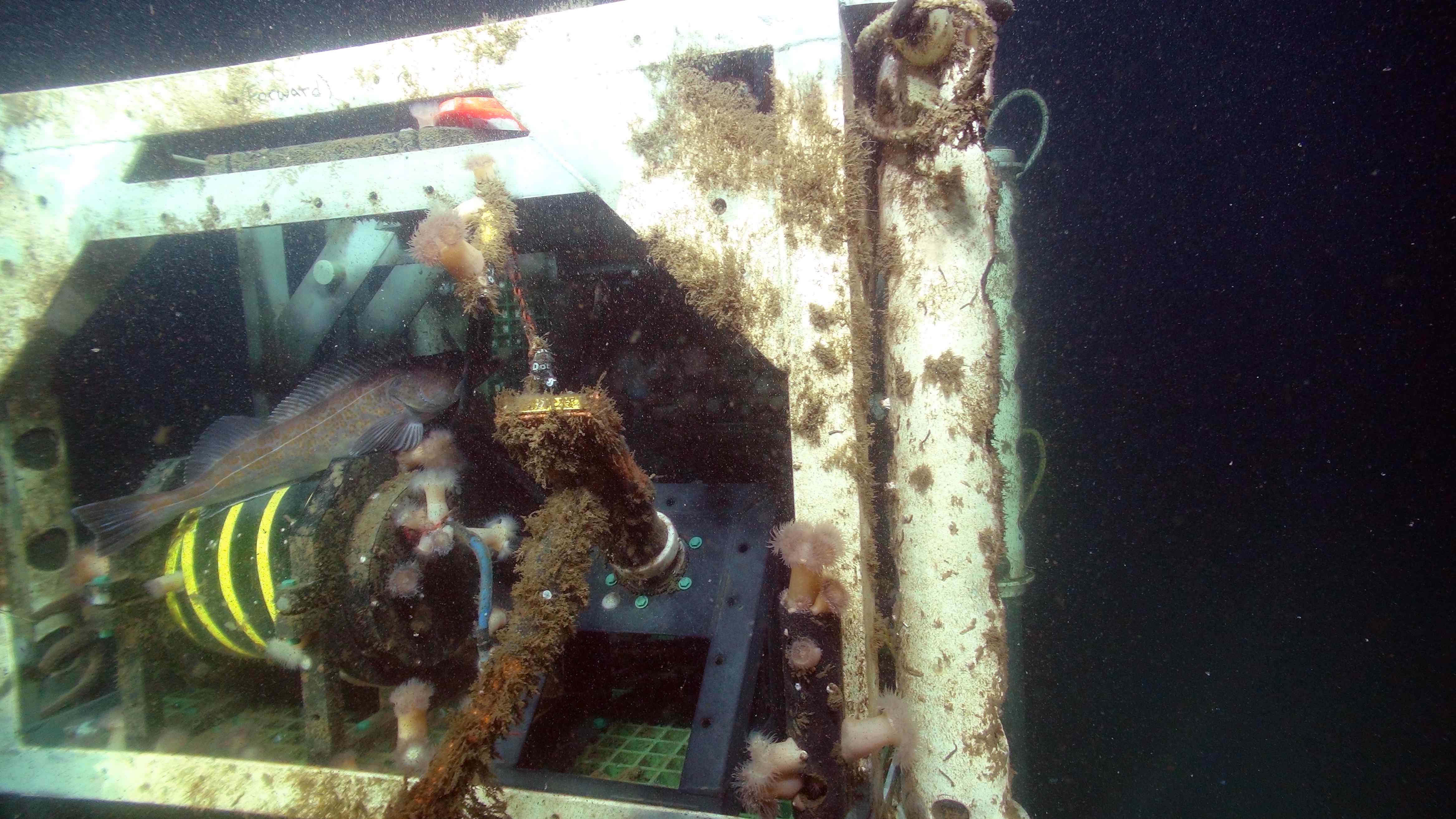
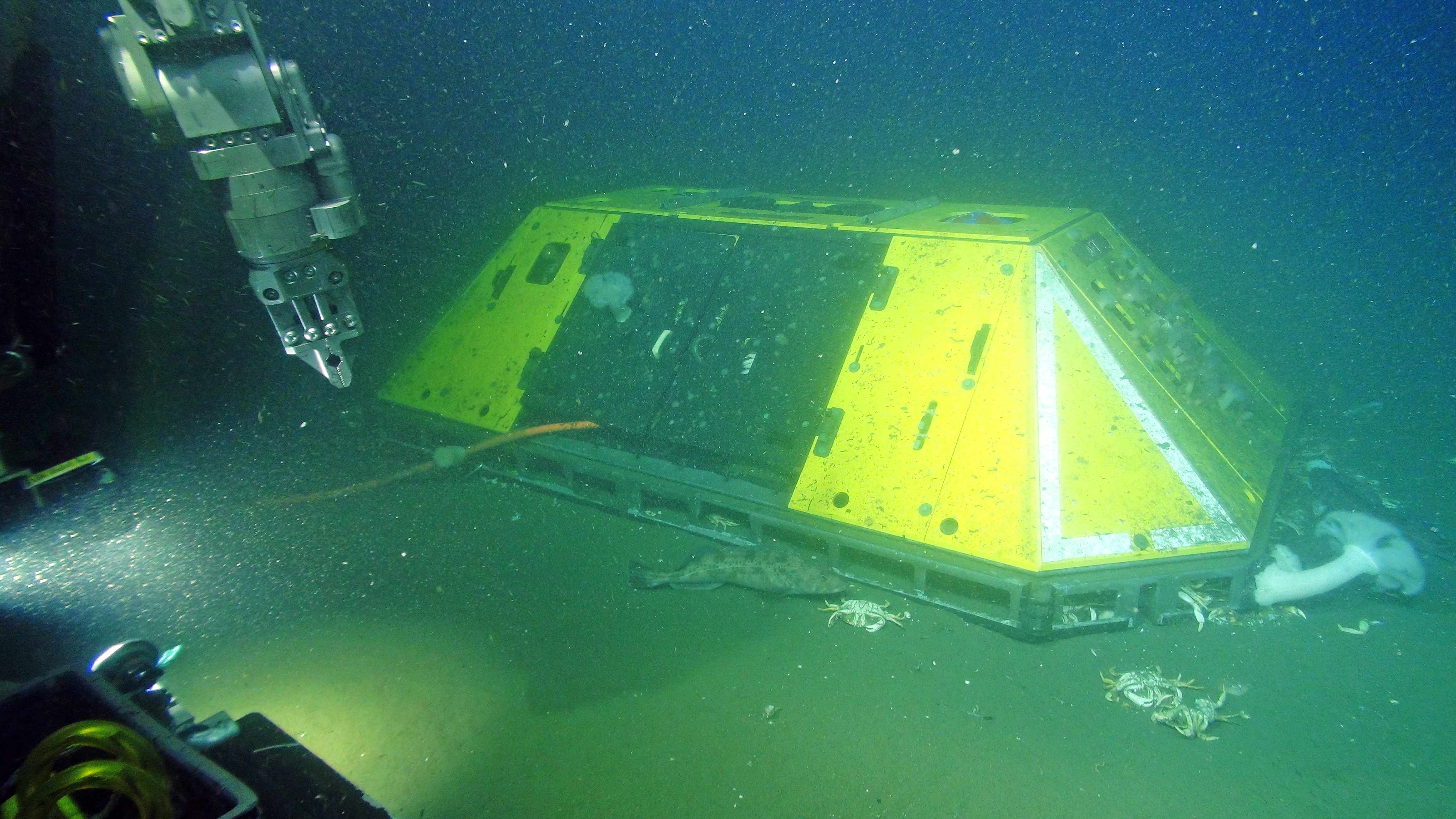
The LJ03A-2016 junction box hosting a variety of instruments to investigate water-column properties was successfully installed at the base of Axial Seamount. An instrument package hosting a CTD, dissolved oxygen, and absorption spectrophotometer is held in the manipulator of the ROV Jason. Credit. UW/OOI-NSF/Jason.
The ROV Jason breaches the oceans surface latched into an instrumented Platform Interface Assembly that has been installed for a year on a Shallow Profiler Mooring at the base of Axial Seamount. Connected to the submarine cable, the instruments have been sending sending data live back to shore since summer 2015 from 600 ft beneath the oceans' surface. Credit: M. Elend, University of Washington, V16.
The ROV Jason is latched into a recovered, instrumented Science Pod on a Shallow Profiler Mooring at the base of Axial Seamount. The winched profiler has made >2000 trips up and down through the water column. Connected to the submarine cable, the instruments have been sending sending data live back to shore since summer 2015 from 600 ft beneath the oceans' surface. Credit: M. Elend, University of Washington, V16.
A digital still camera (left), mass spectrometer (middle) and hydrothermal fluid and microbial DNA sampler (right) document changes in animal life, gas and fluid chemistry, temperature, and chimney growth at the El Gordo vent site in the International District Hydrothermal Field at the summit of Axial Seamount - water depth is ~ 5000 ft (1500 m). Data are streaming live to shore 24/7. Credit: UW/OOI-NSF/WHOI, V16.
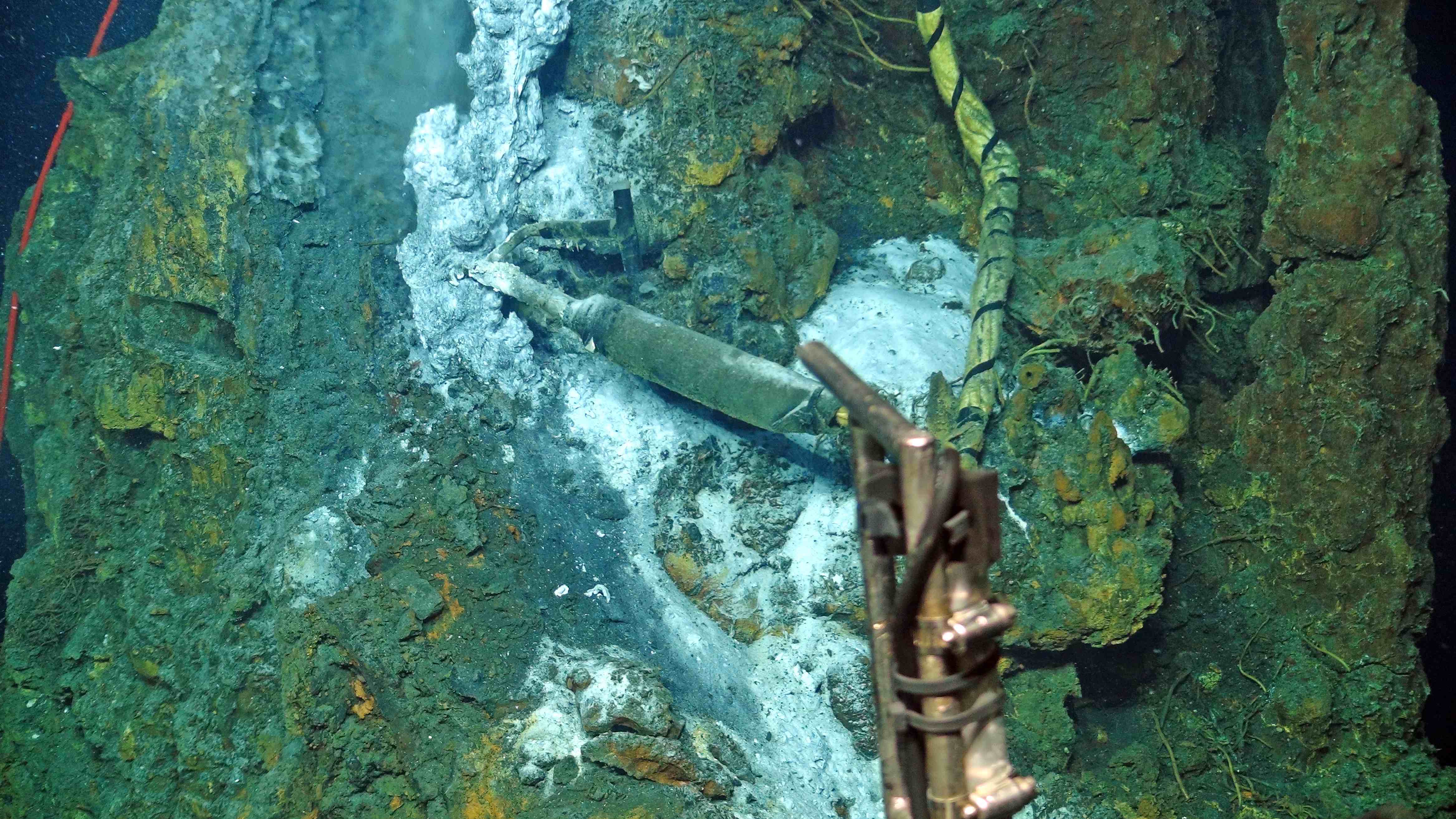
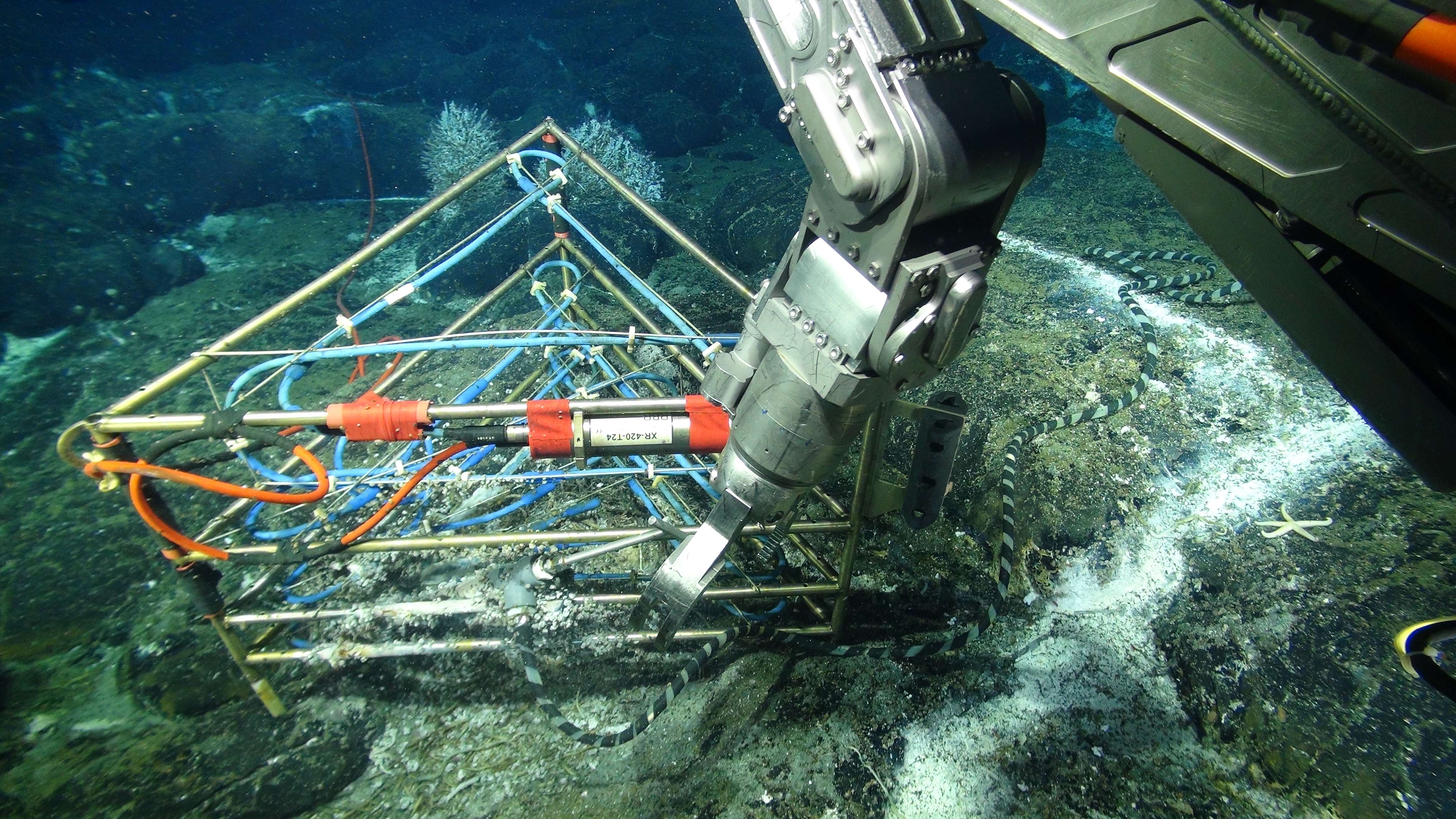
The wand of the temperature and resistivity sensor is embedded in 1-year old metal sulfide and sulfate minerals precipitated from hot hydrothermal fluid. This novel instrument, built by M. Lilley at the University of Washington, measures real-time changes in fluid temperature and resistivity as an analogue for chlorinity. Boiling vents often emit low-salinity, low pH fluids. Credit: UW/NSF-OOI/WHOI; Dive J2-912, V16.
The aft deck of the R/V Sikuliaq is loaded with Cabled Array equipment to be installed during Leg 2 of the OOI Cabled Array VISIONS'16 cruise. Credit: M. Elend, University of Washington, V16.
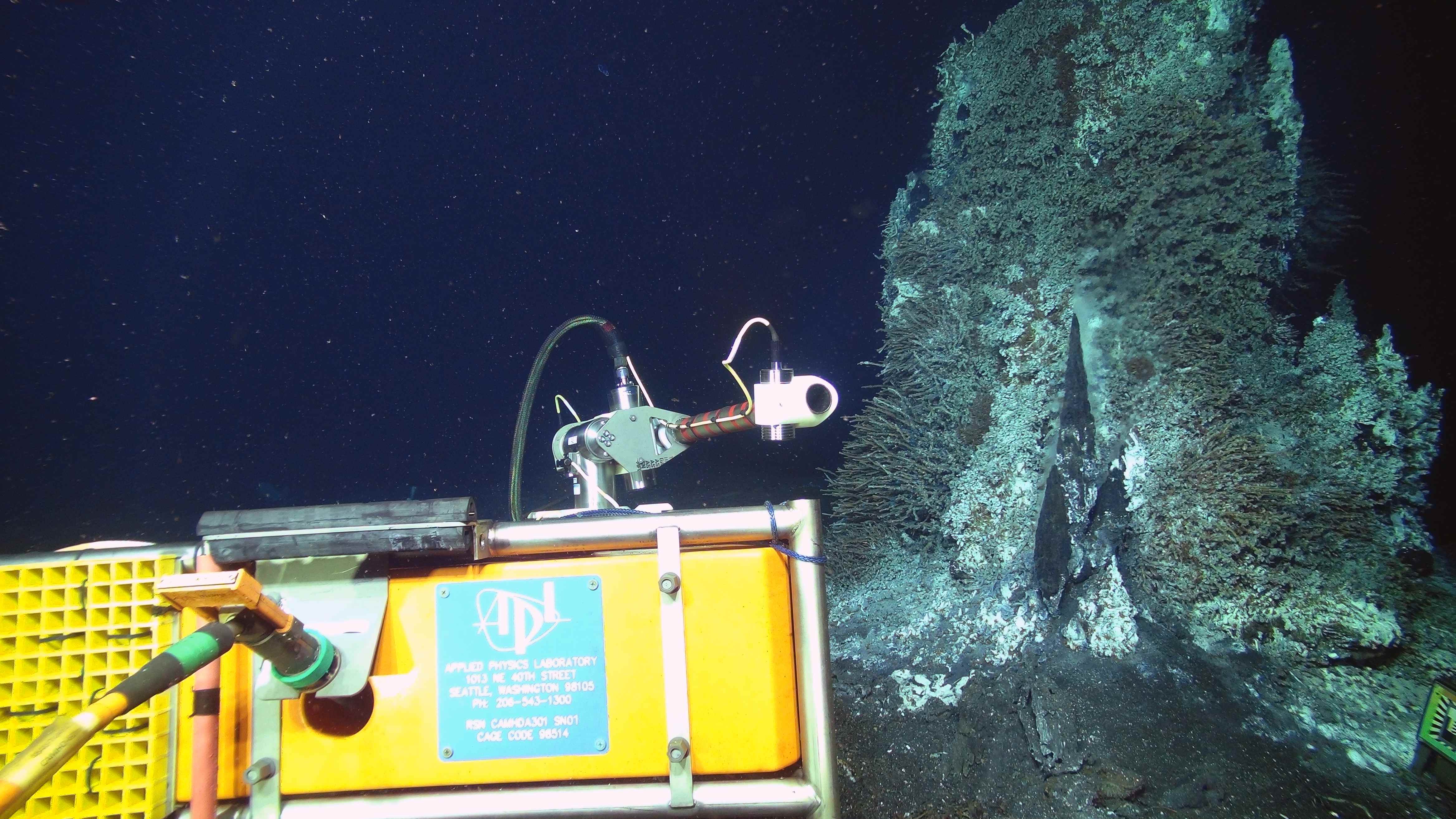
The high definition camera, built by the UW Applied Physics Lab, was reinstalled in 2016 during the VISIONS'16 cruise. The prior camera had been streaming video live to shore for two years. The camera was recovered to clear the outer window of biofouling. The camera is located at the hydrothermal chimney called Mushroom in the ASHES hydrothermal field on Axial Seamount. Video are streamed live from ~5000 ft down and >300 miles offshore onto the Internet 8 times a day. Credit: UW/NSF-OOI/WHOI; V16.