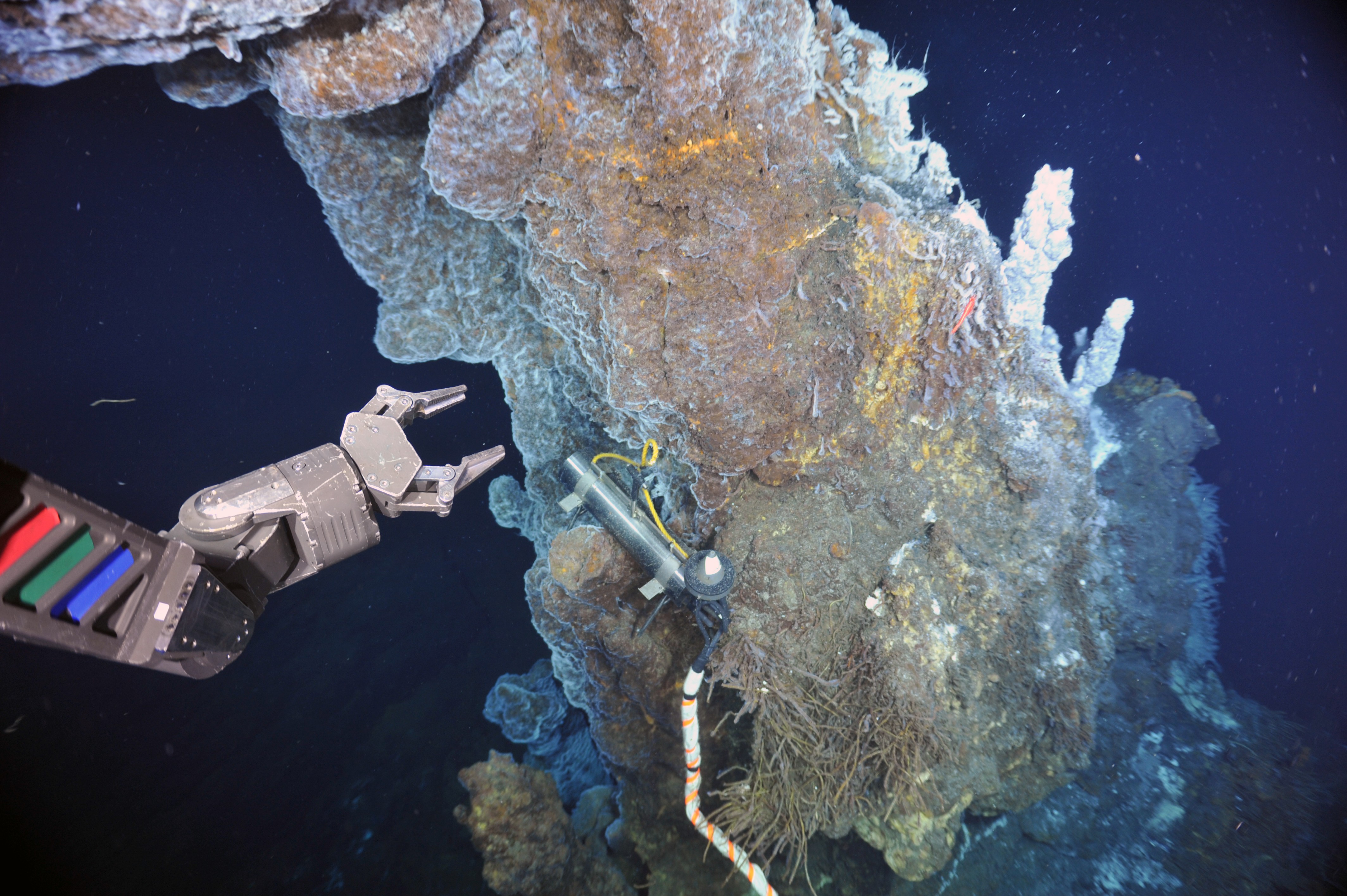
The temperature-resistivity instrument measures, in real-time, the temperature of black smoker fluids (>400°C) and the resistivity of the fluids as a proxy for chlorinity. Vents at Axial Seamount are boiling, producing fluids that are very low in chloride content (salts). Boiling is an important processes because it enhances precipitation of precious metals in seafloor black smokers.
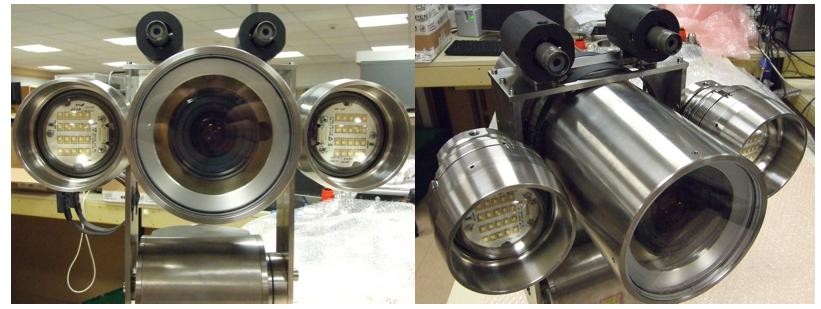
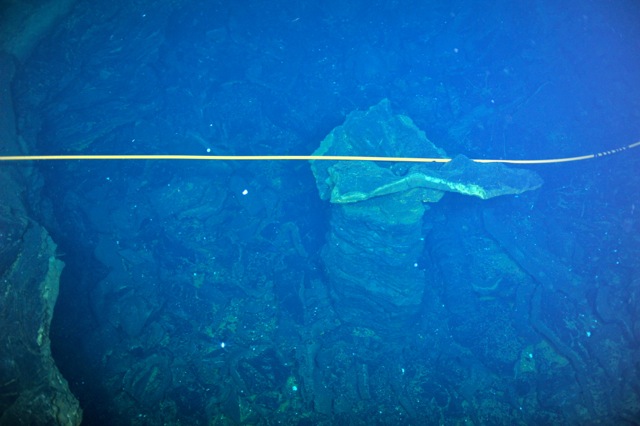
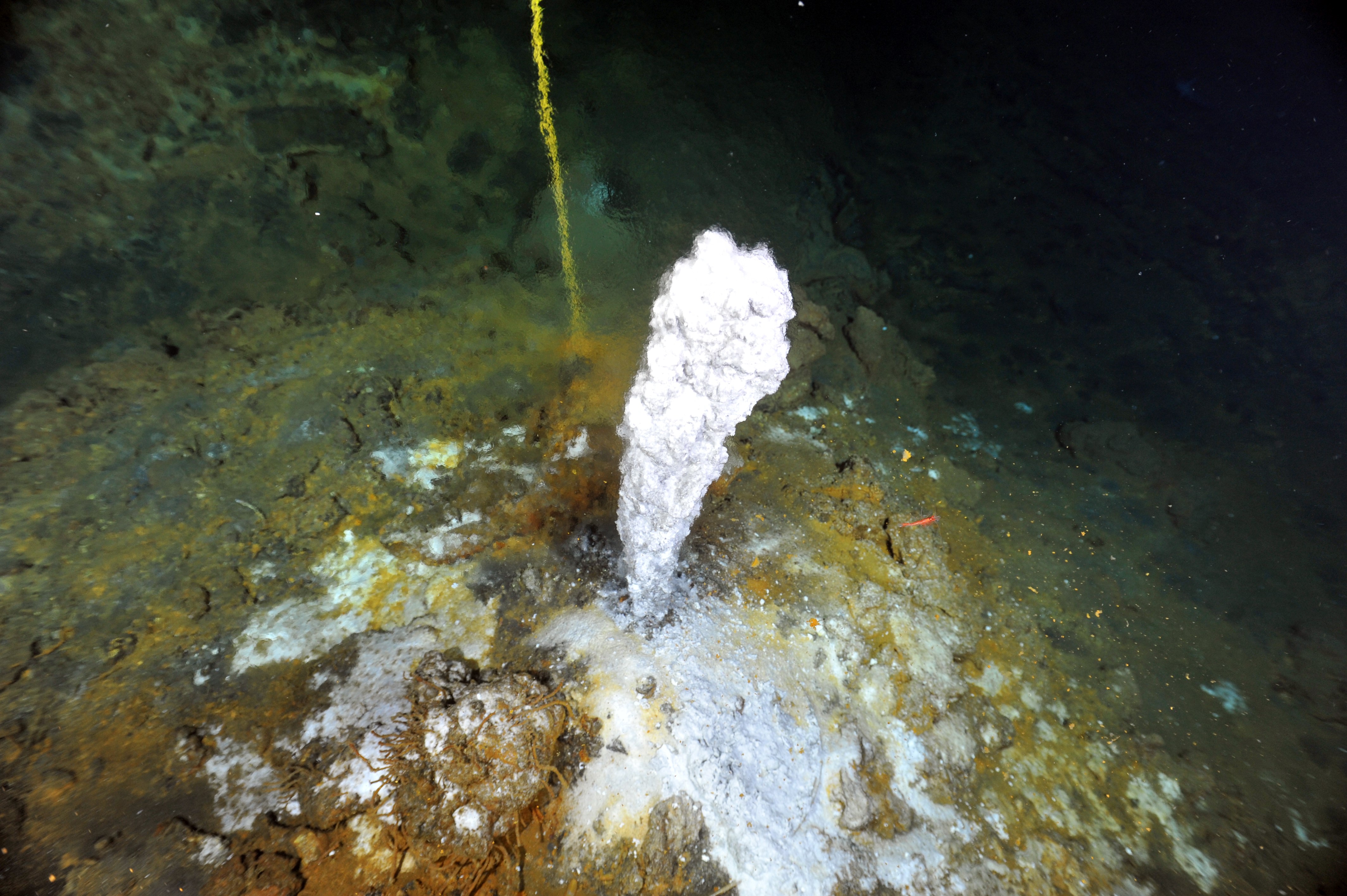
The HD video camera (with pan/tilt and LED lights) will be positioned near the Mushroom Vent at the Ashes Vent site in Axial volcano. The goal is to image the physical and biological activity on this vent.
Short-period seismometers provide real-time information on earthquakes at mid-ocean ridges. In 2003, an array of seismometers was deployed on the Endeavour Segment of the Juan de Fuca Ridge, north of Axial Seamount. The one shown here, was deployed inside a borehole in a pillow basalt in the Mothra Hydrothermal Field, providing better coupling to the seafloor. This project was funded by the W.M. Keck Foundation.
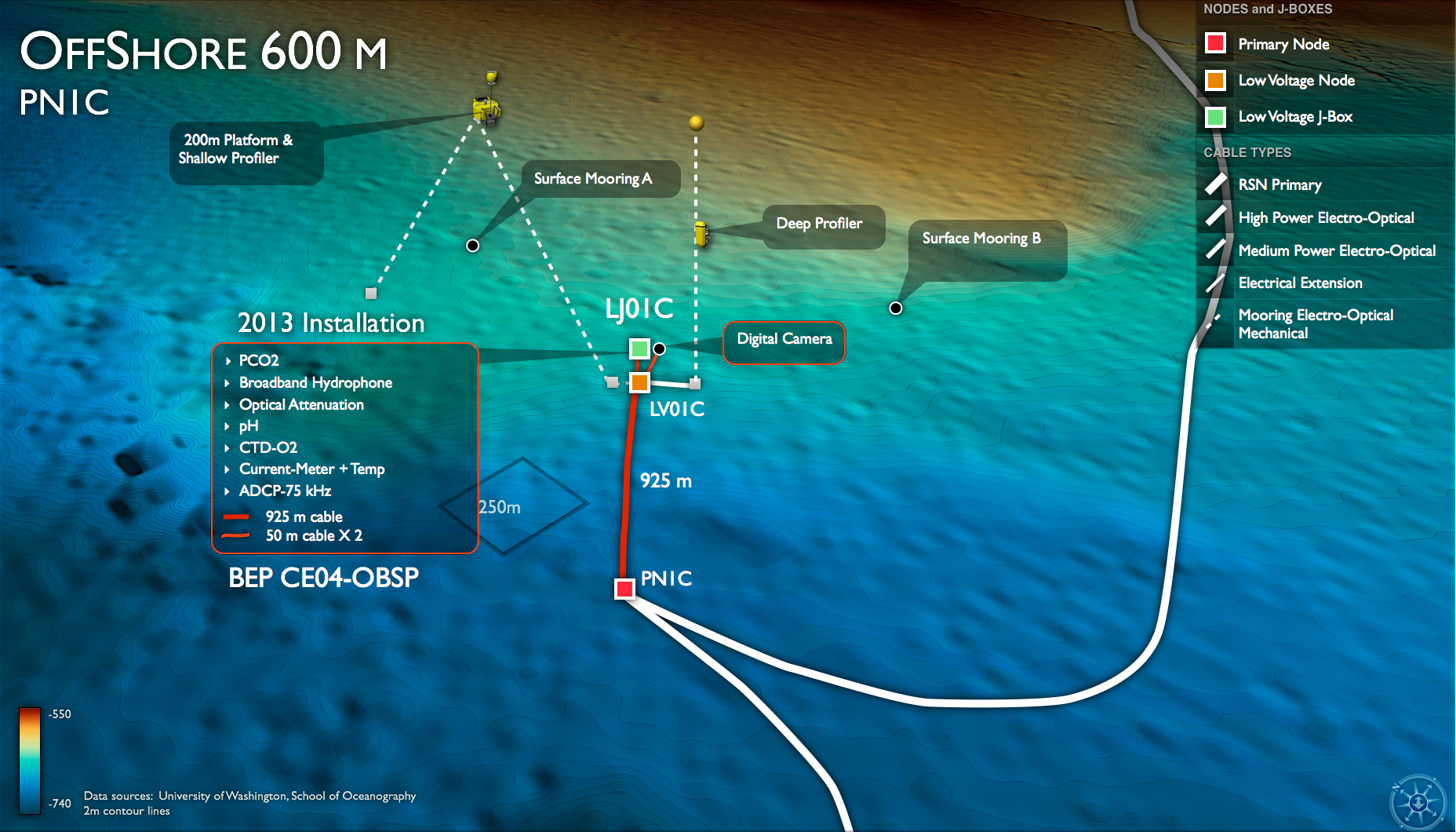
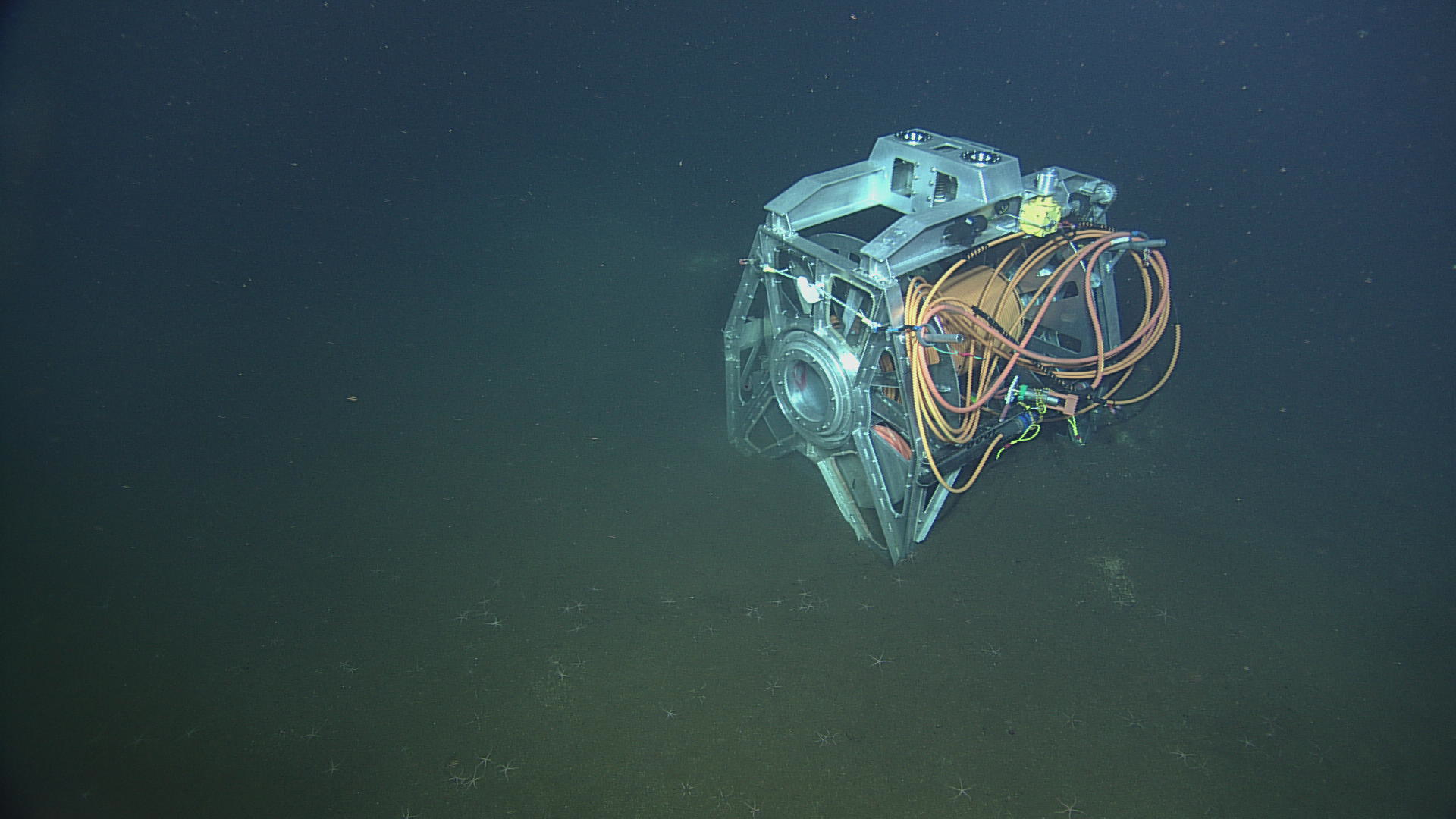
The Offshore Endurance site at 600 m water depth will host two cabled moorings and a Benthic Experiment Platform with numerous physical, chemical and biological sensors, as well as a digital still camera.
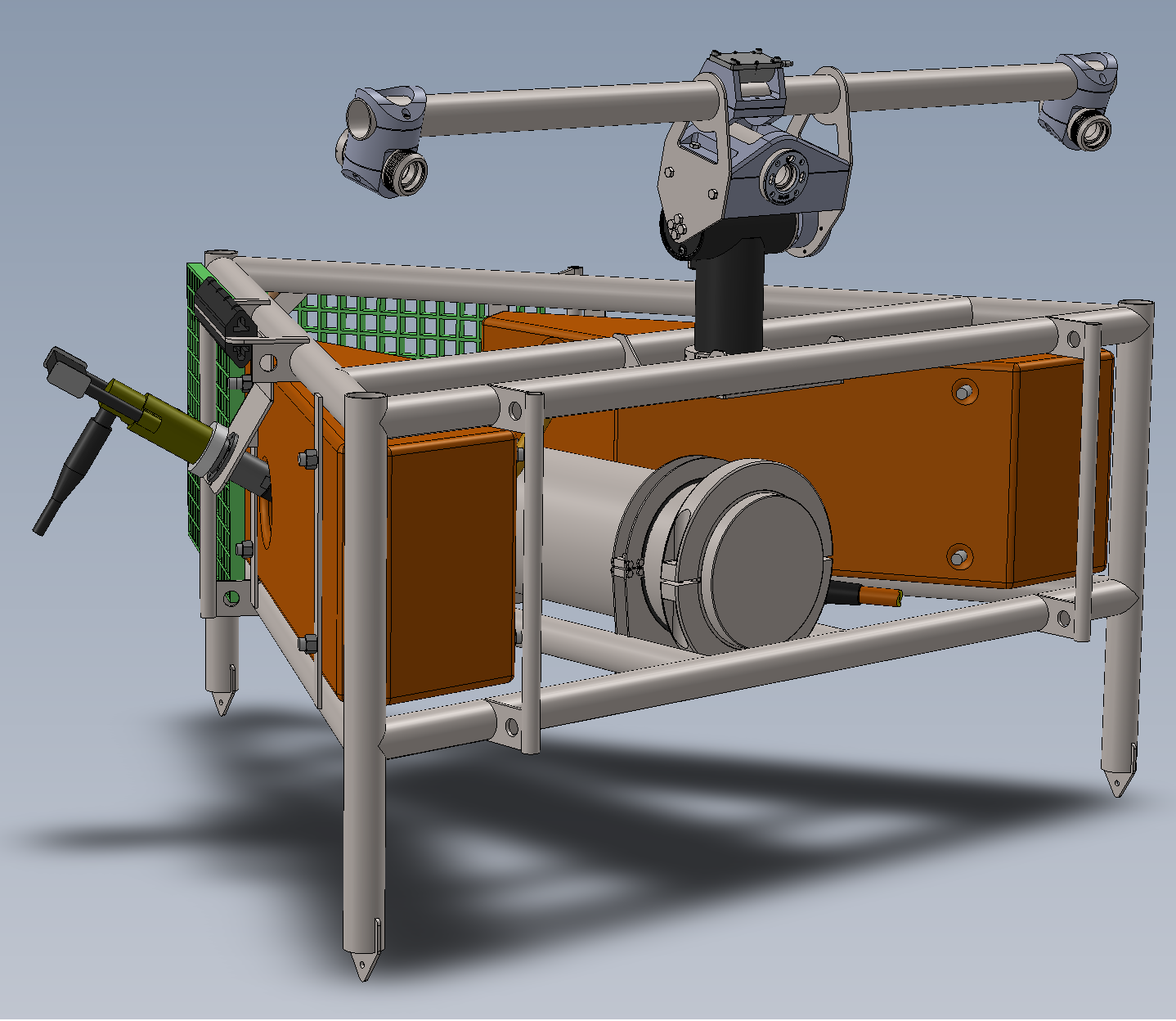
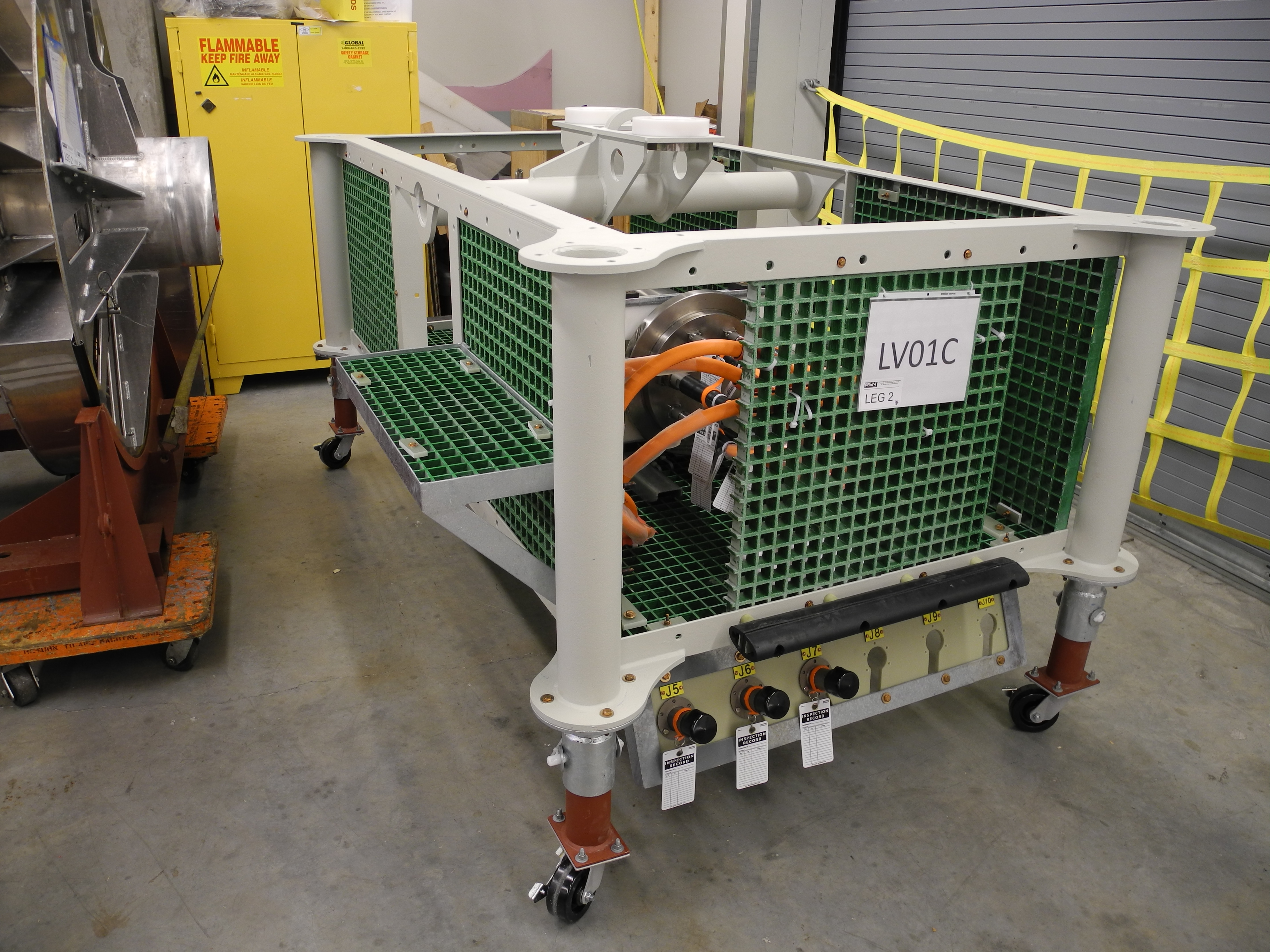
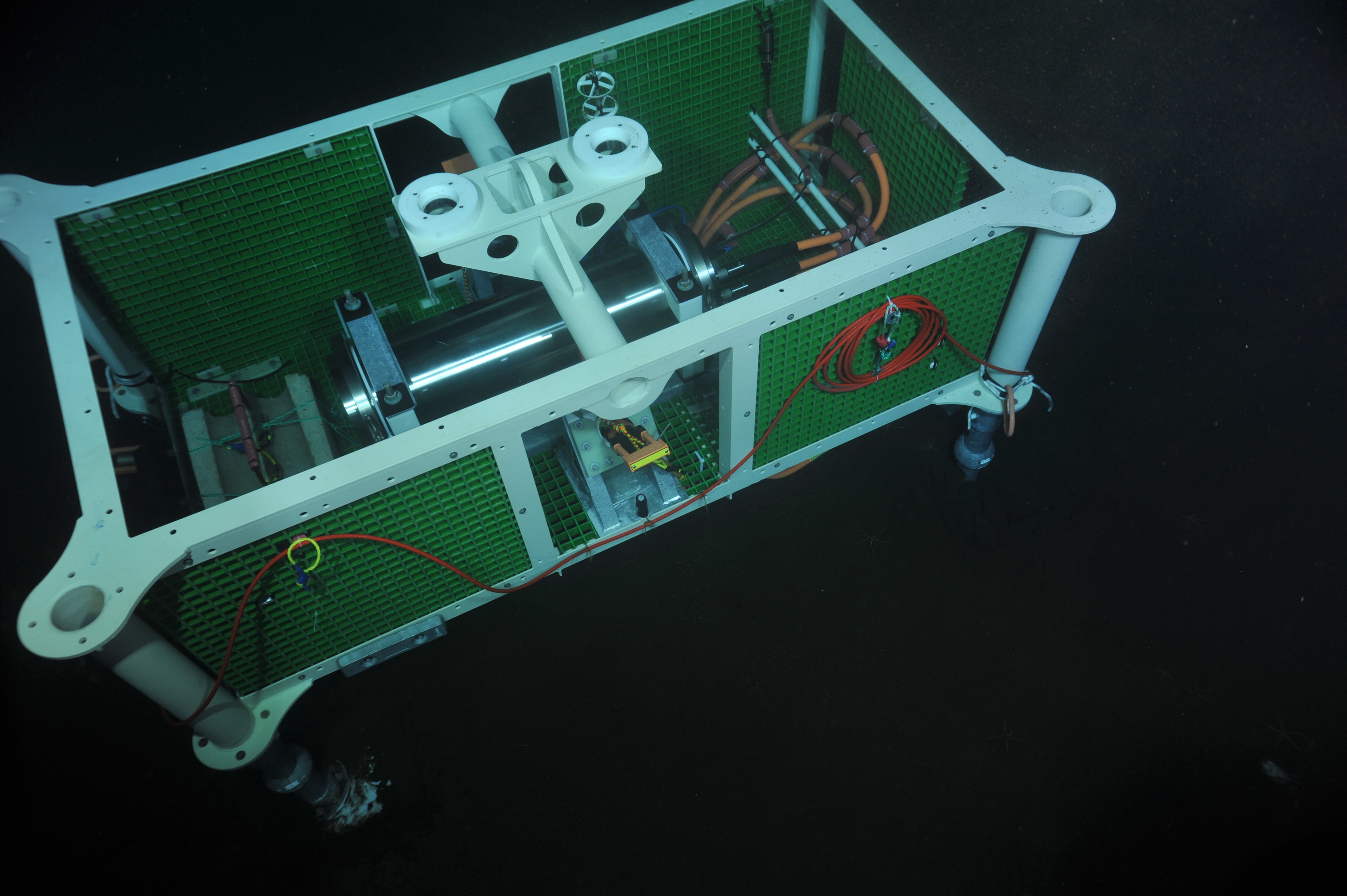
The Benthic Experiment Package (BEP) is composed of a hazard-resistant frame (shown here), the inside of which hosts an UW-APL-designed Low Power communications housing, and a variety of sensors to measure oceanographic properties that include acidity (pH), carbon dioxide, salinity and oxygen concentrations, and currents. A hydrophone that will be mounted outside of the frame will be used to detect sounds in the ocean.
The BEP is scheduled for installation in 2014 at the Endurance Offshore site that is part of the Endurance Array's Newport Line. This site is also the location of one of the RSN Primary Nodes, which is the power and data hub for the BEP Low-Power Junction Box, which is in turn the power and data hub for a variety of instrument platforms.
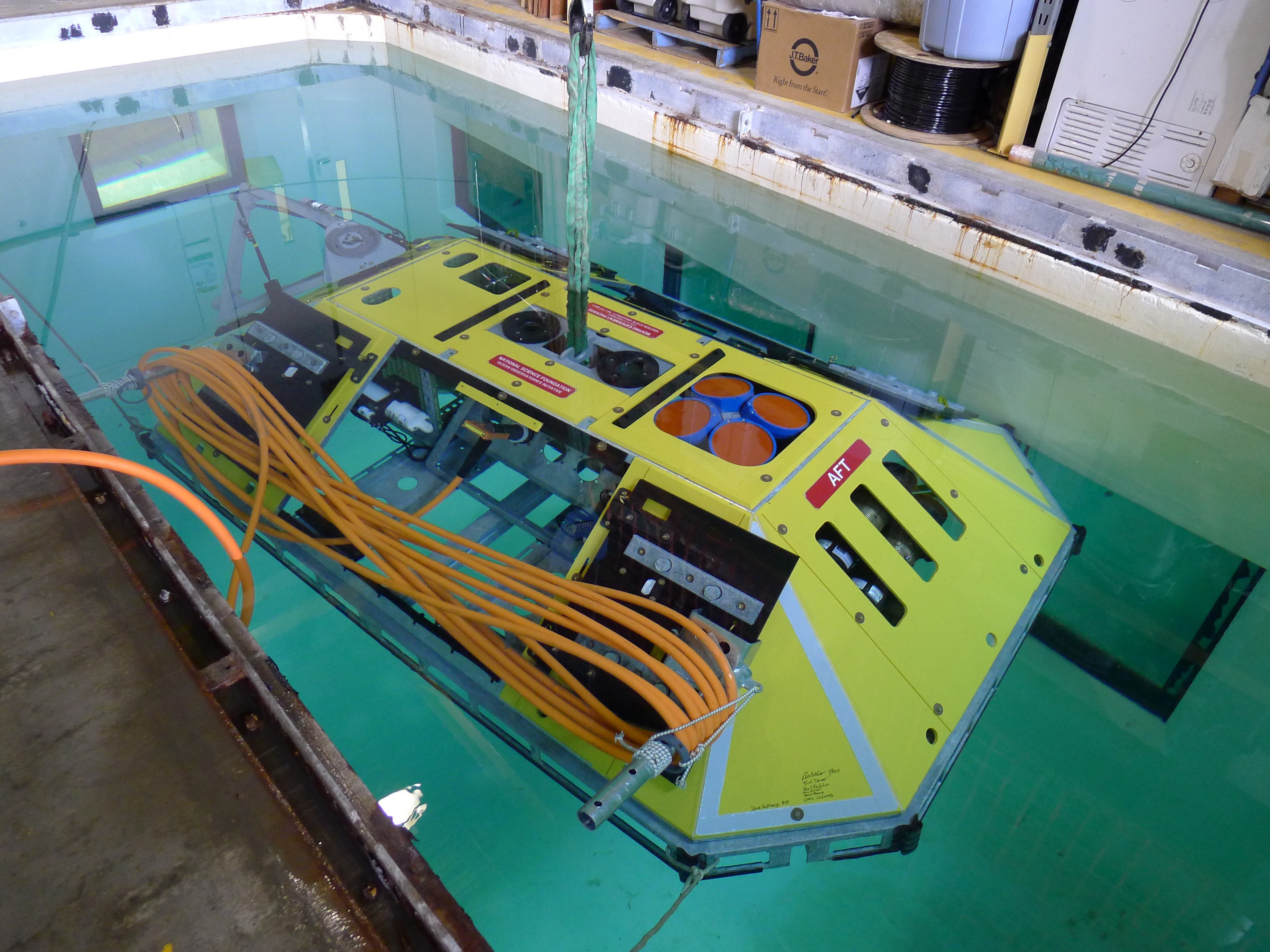
This low voltage node will be deployed during Leg 2 of the VISIONS'13 expedition at the Offshore site west of Newport Oregon at a water depth of ~600 m. It will provide a connection for the Endurance array Benthic Experiment Platform (BEP).
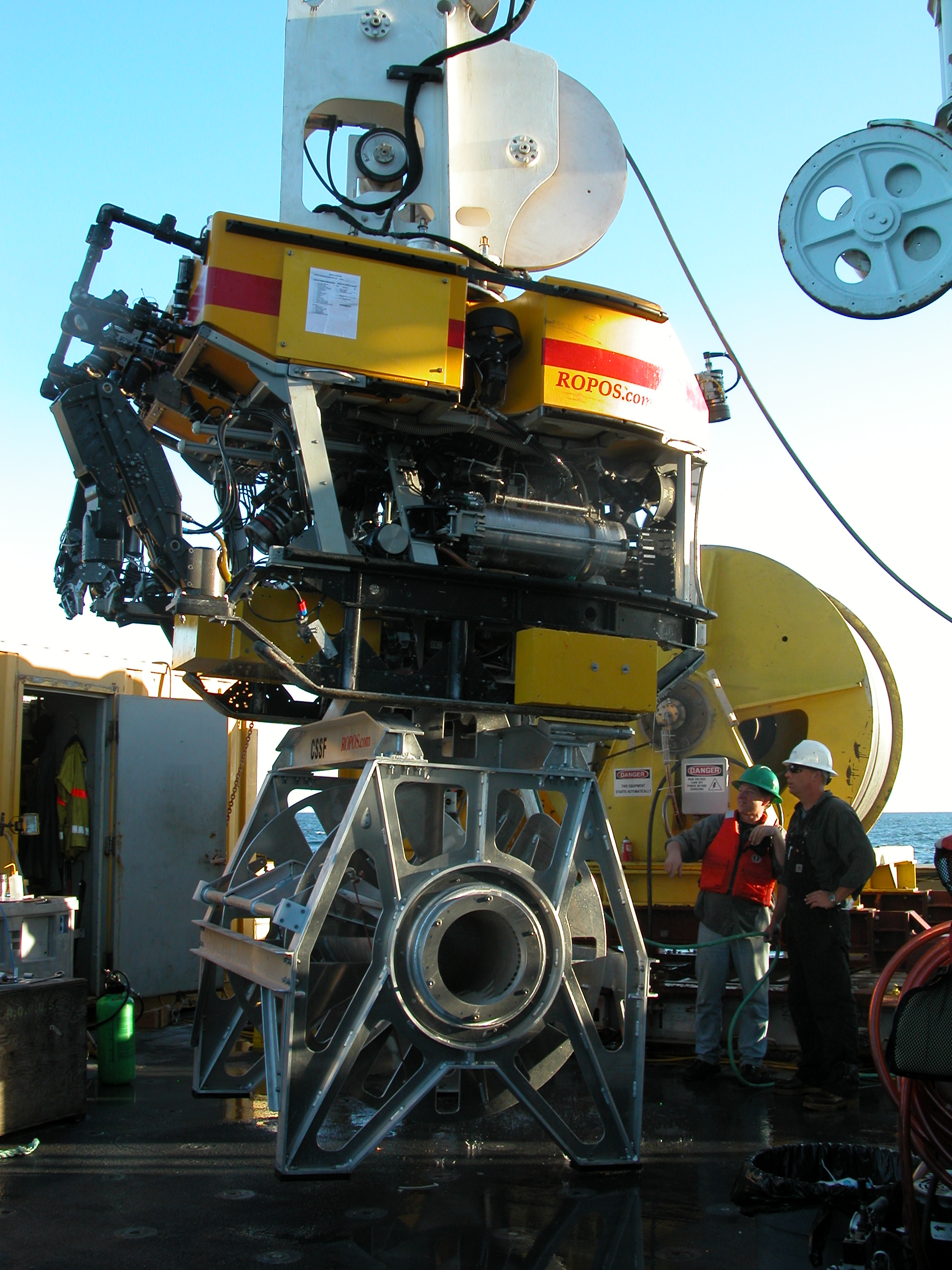
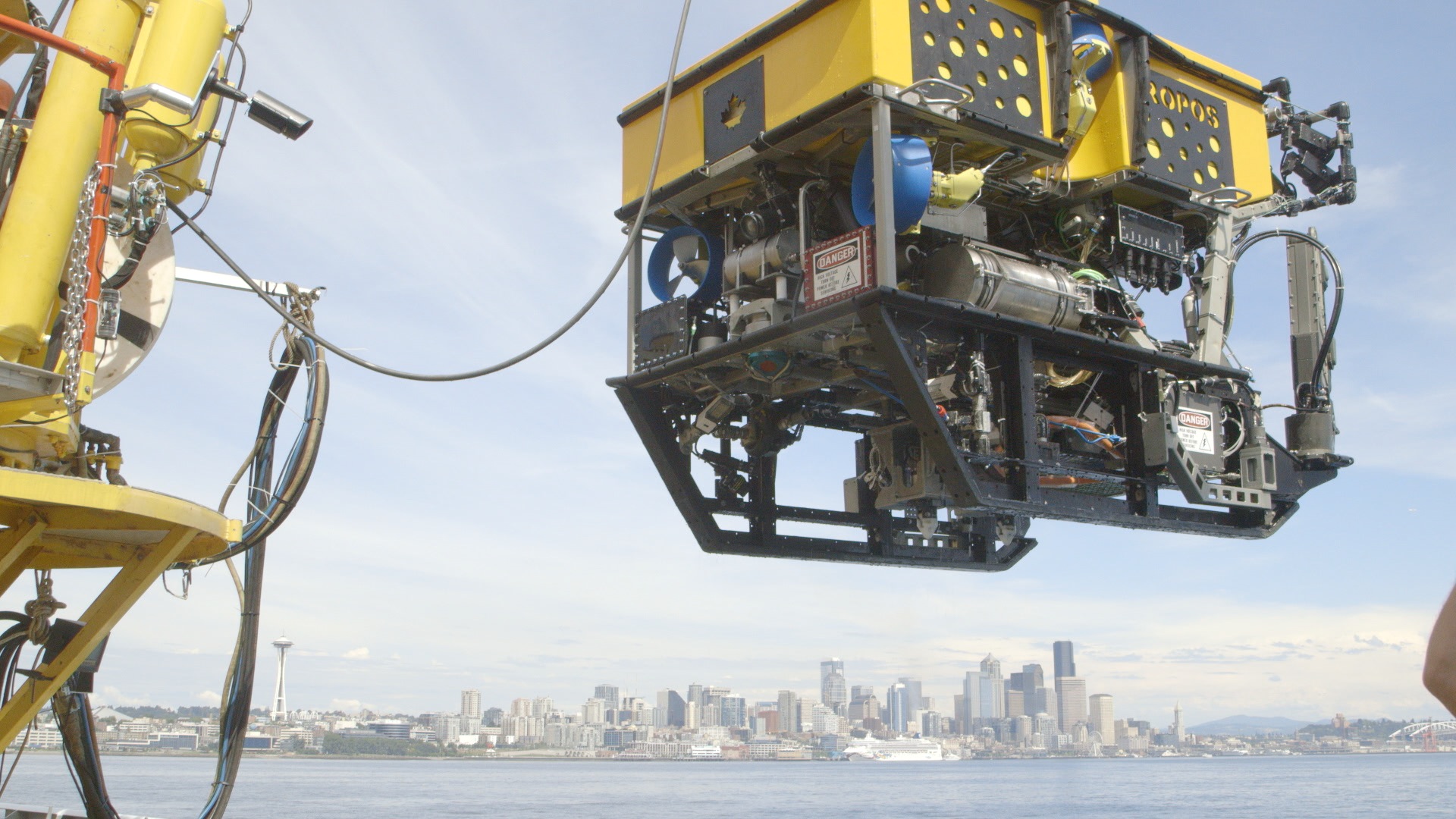
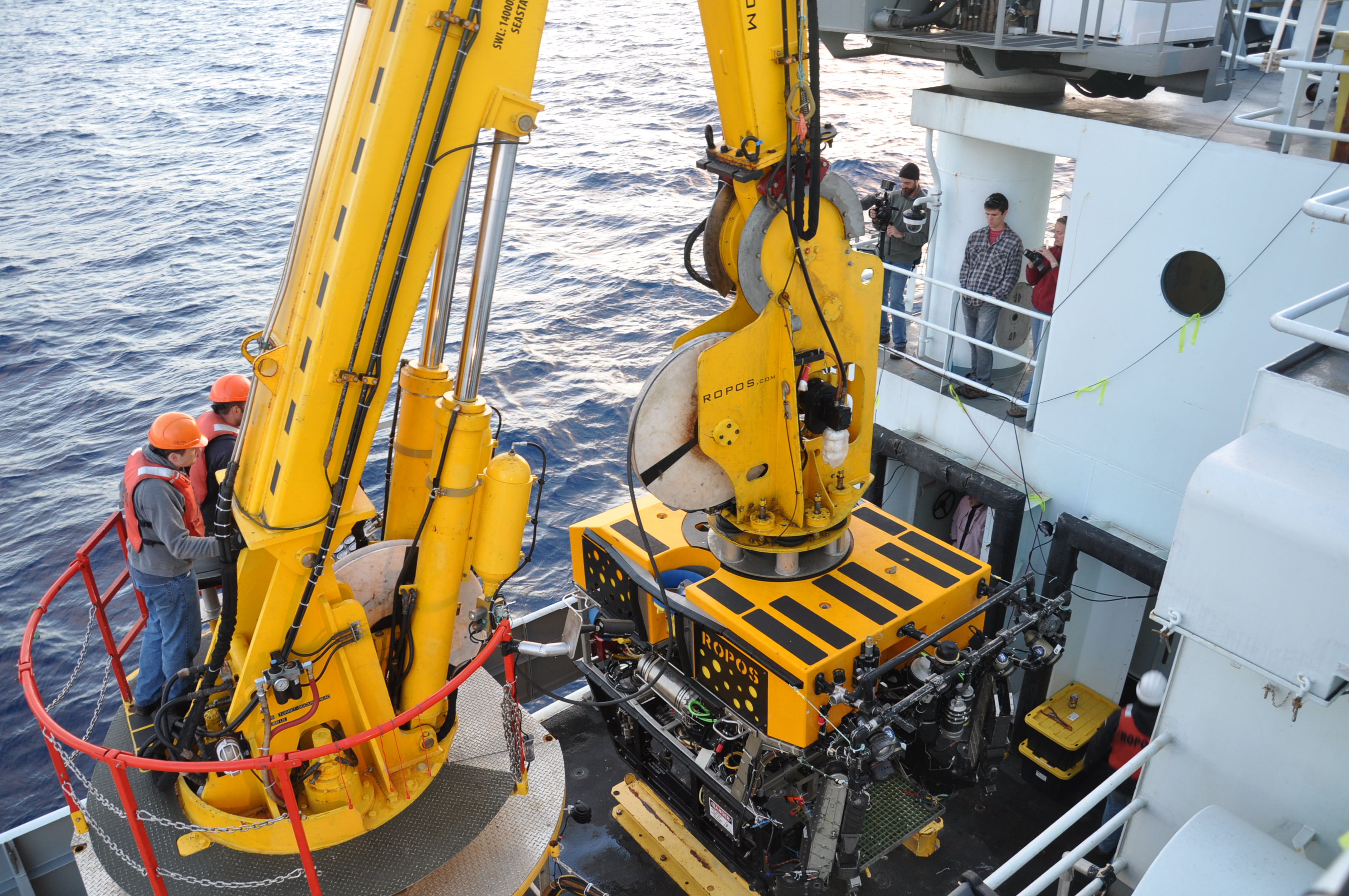
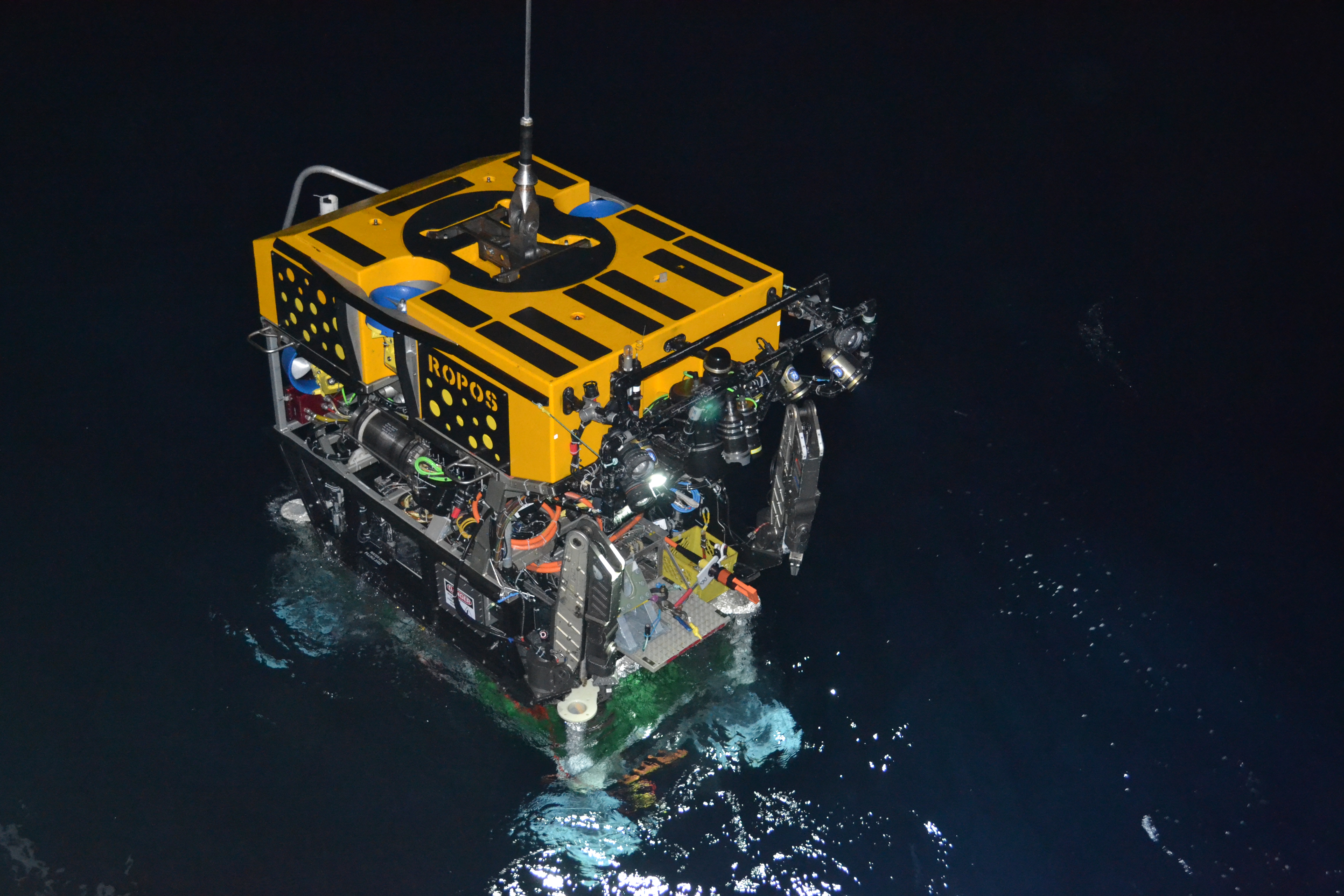
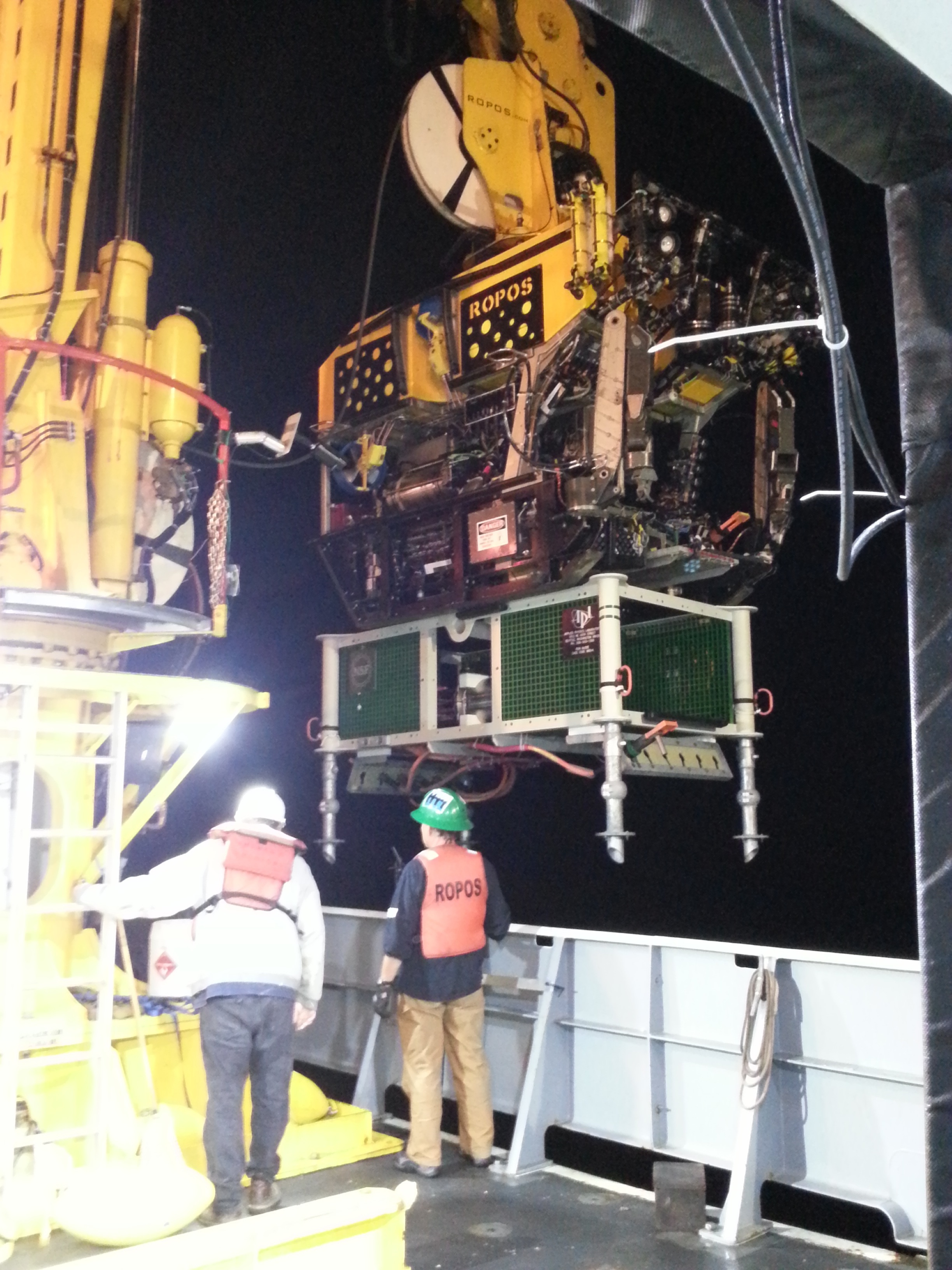
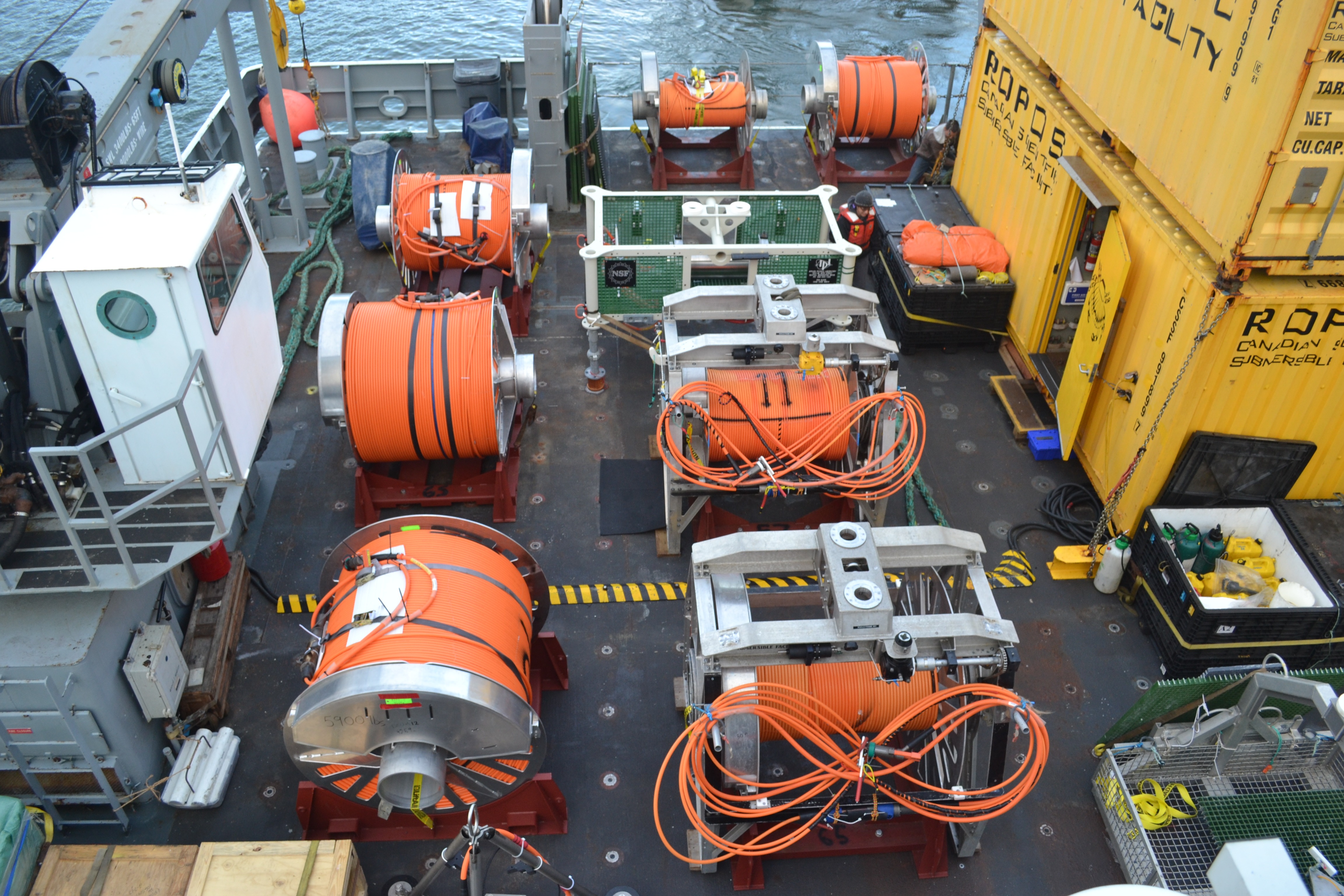
Some of the special capabilities of ROPOS are that it can lift up to 4,000 lbs and directly couple to Junction Boxes for deployment to the seafloor, such as the one shown here. This was a test deployment of a Junction Box "shell", not yet fully outfitted with electronics, cables and sensors conducted in 2011.
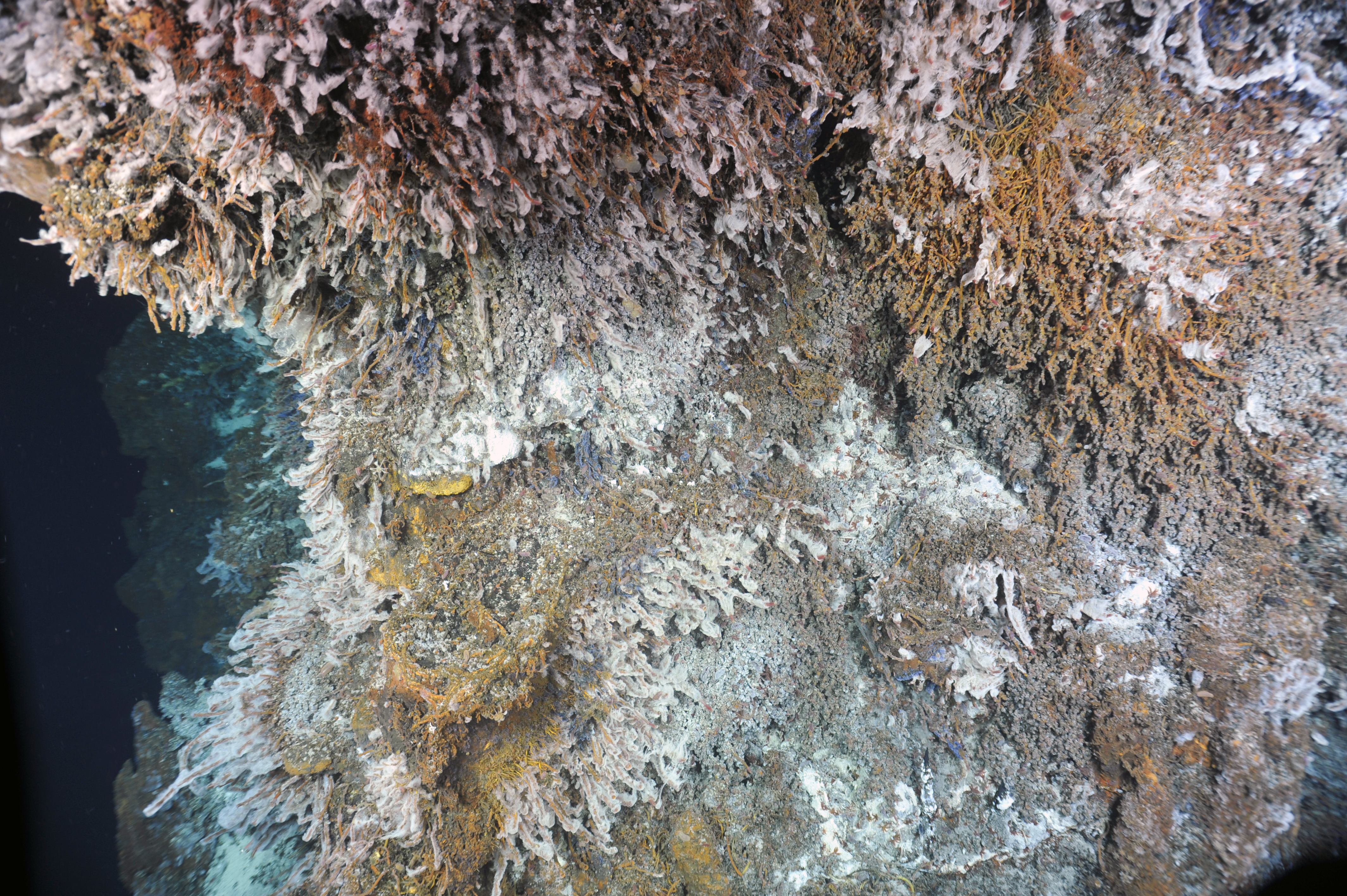
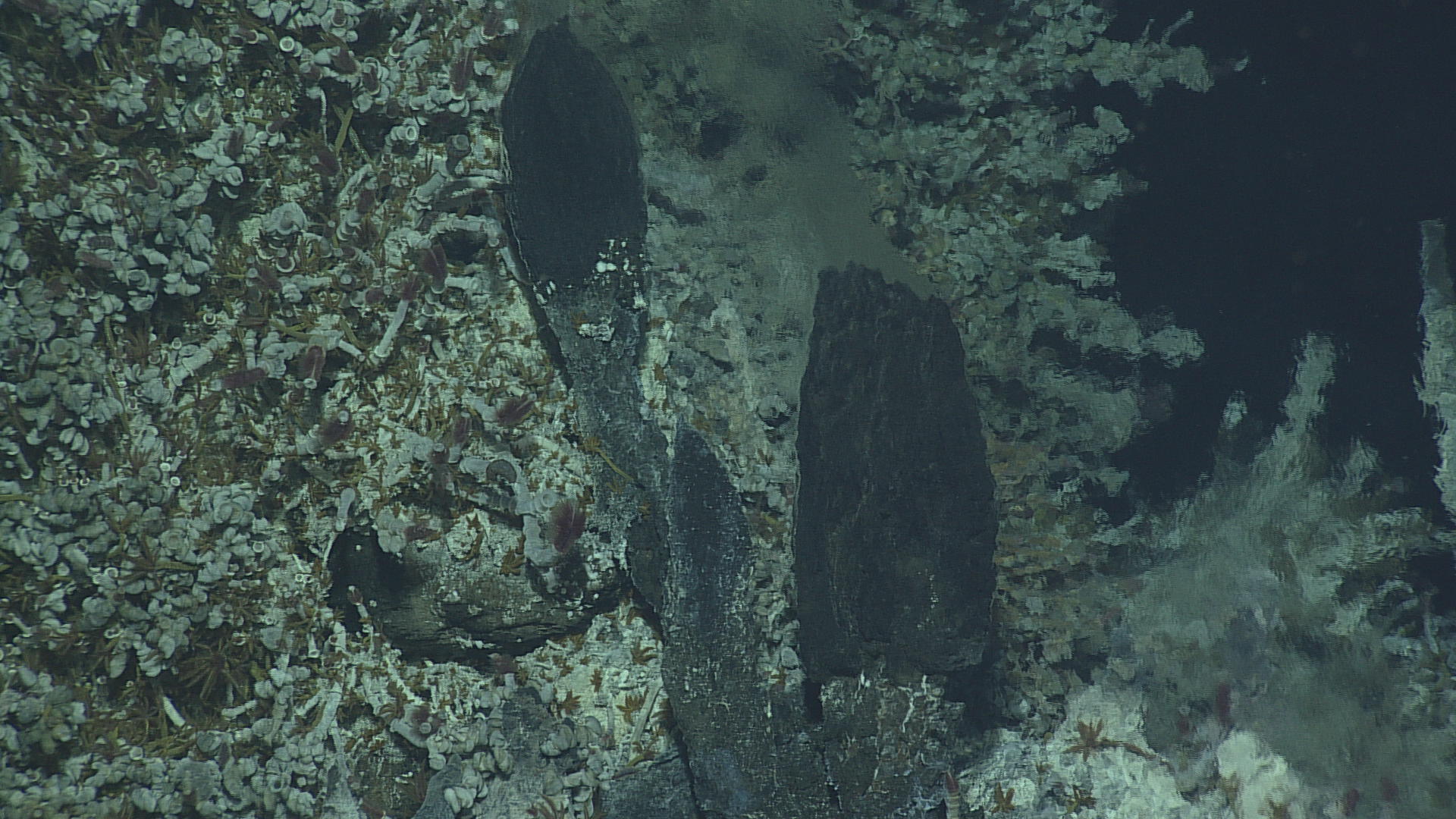
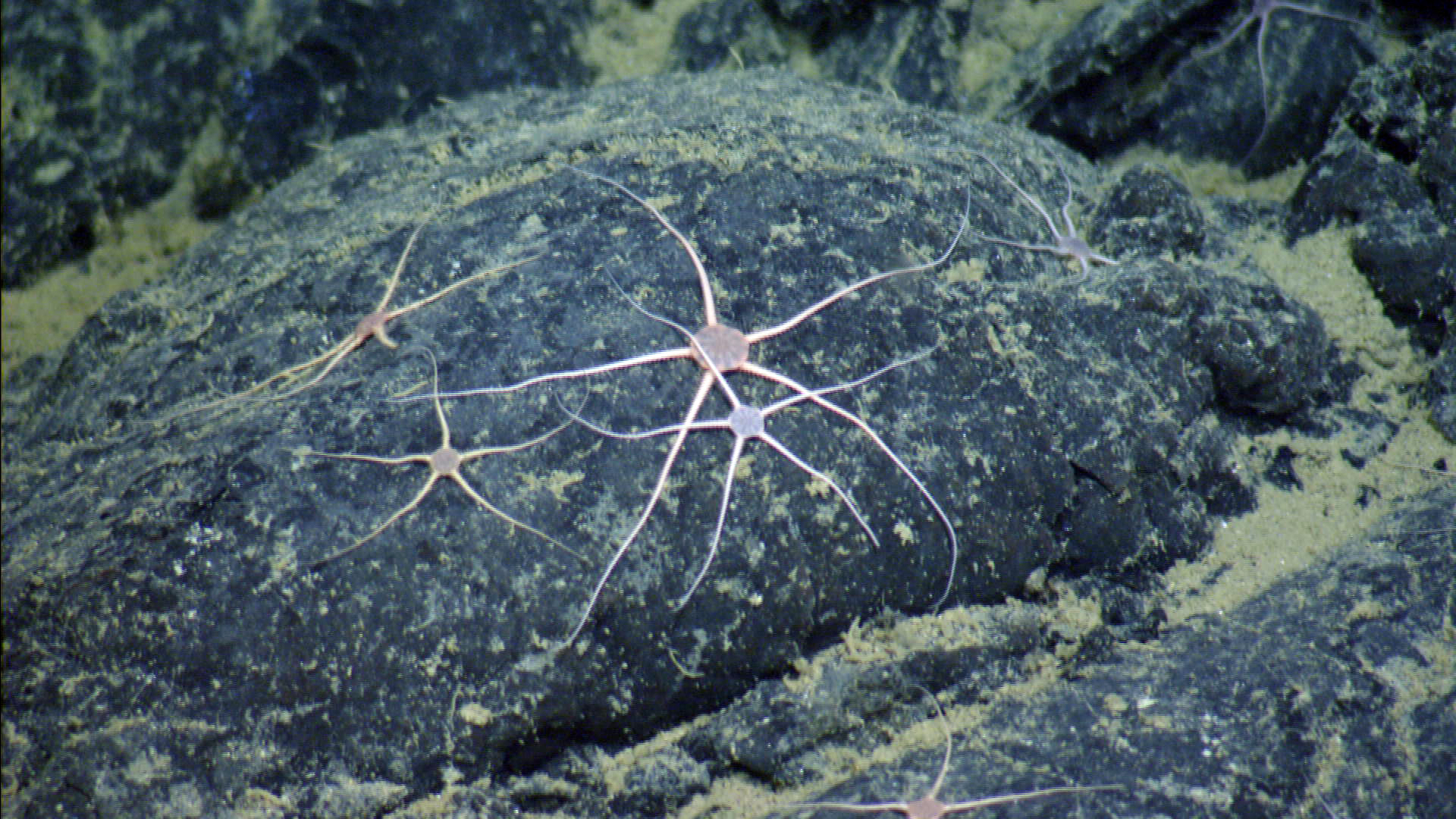
Dense macrofaunal communities cover the actively venting black smoker edifice called El Guapo. Here, tube worms are covered with filamentous bacteria. Also in this area are blue ciliates, palm worms, and thick colonies of limpets.
Photo credit: OOI/UW/CSSF
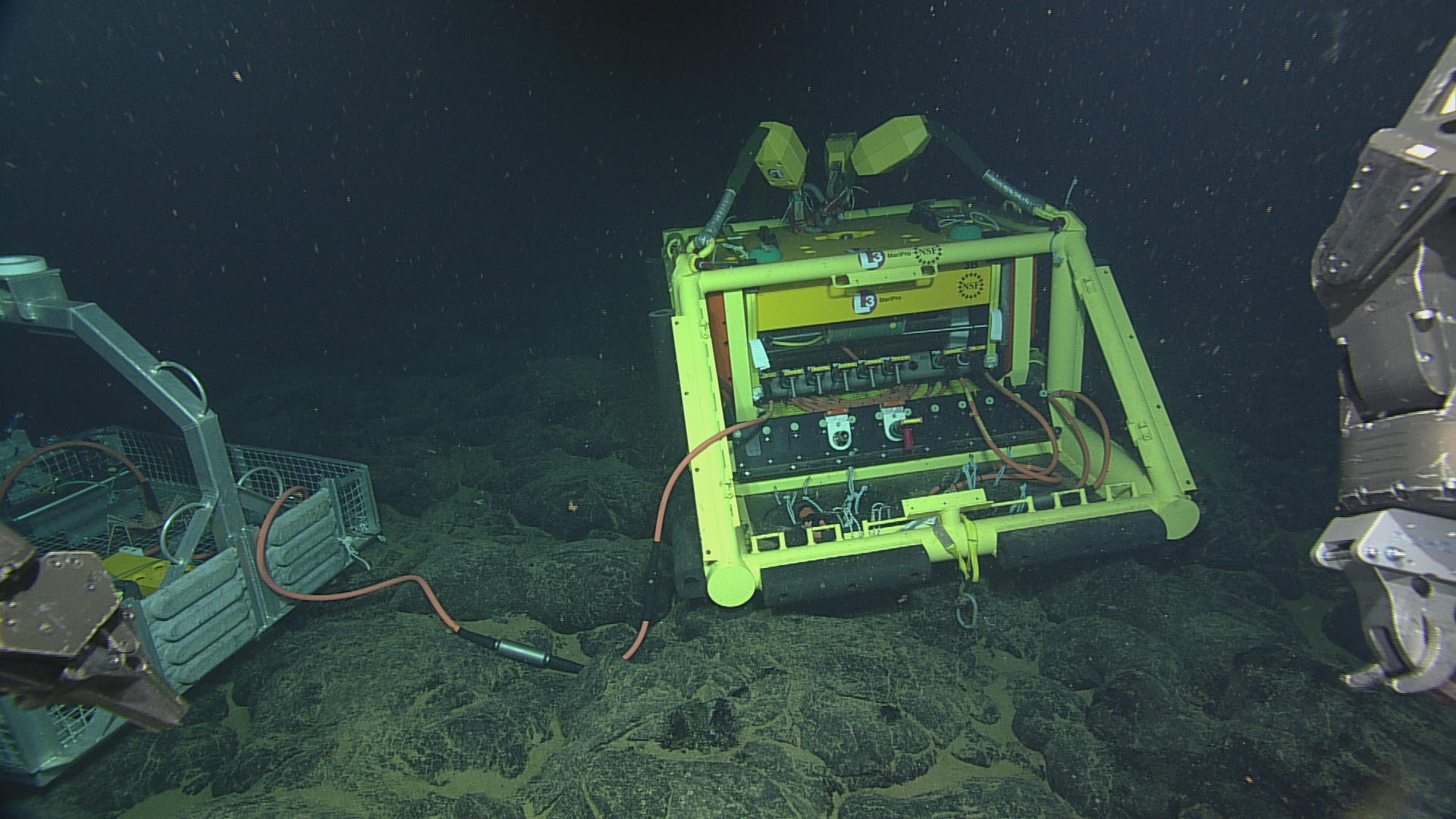
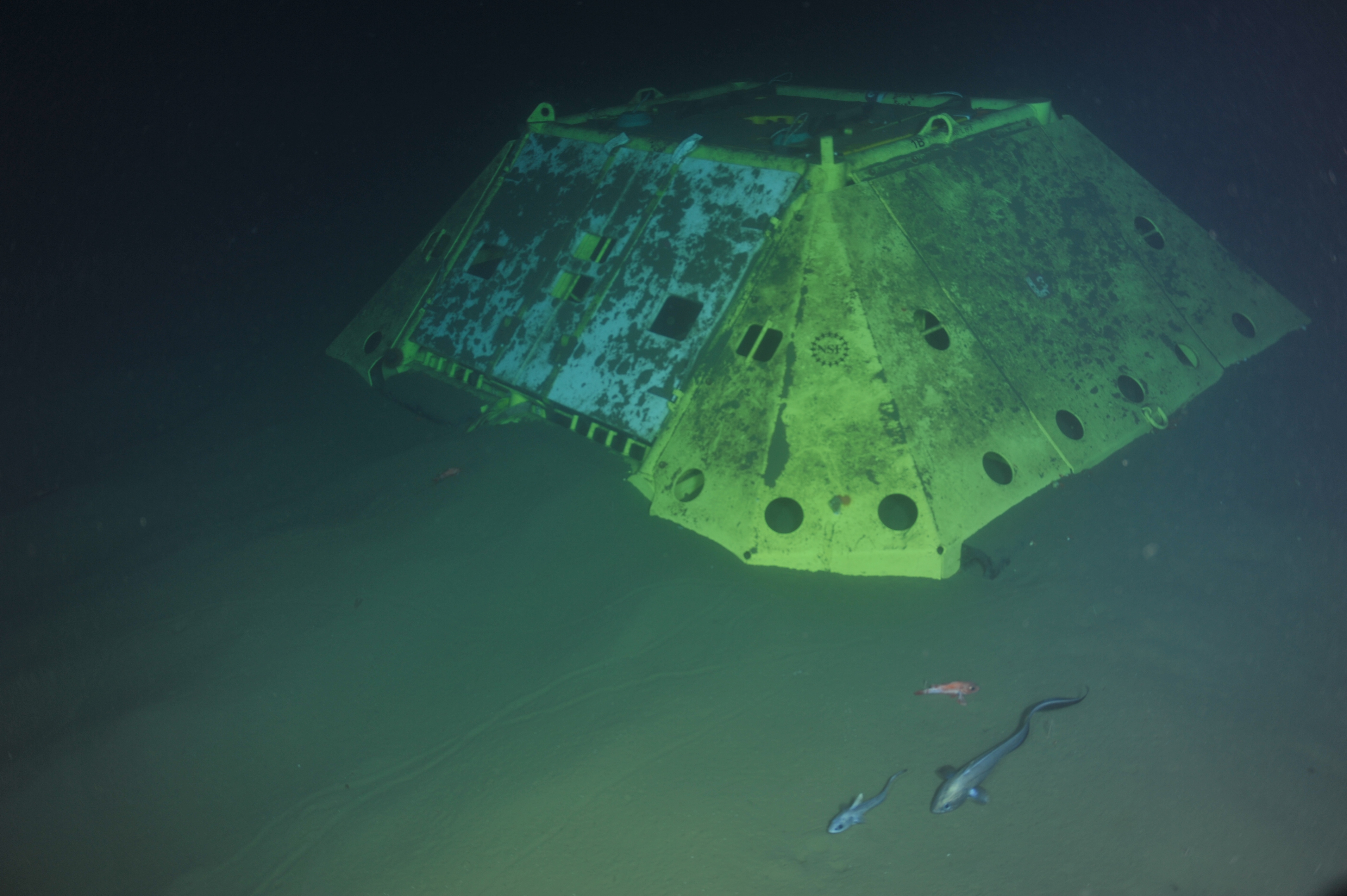
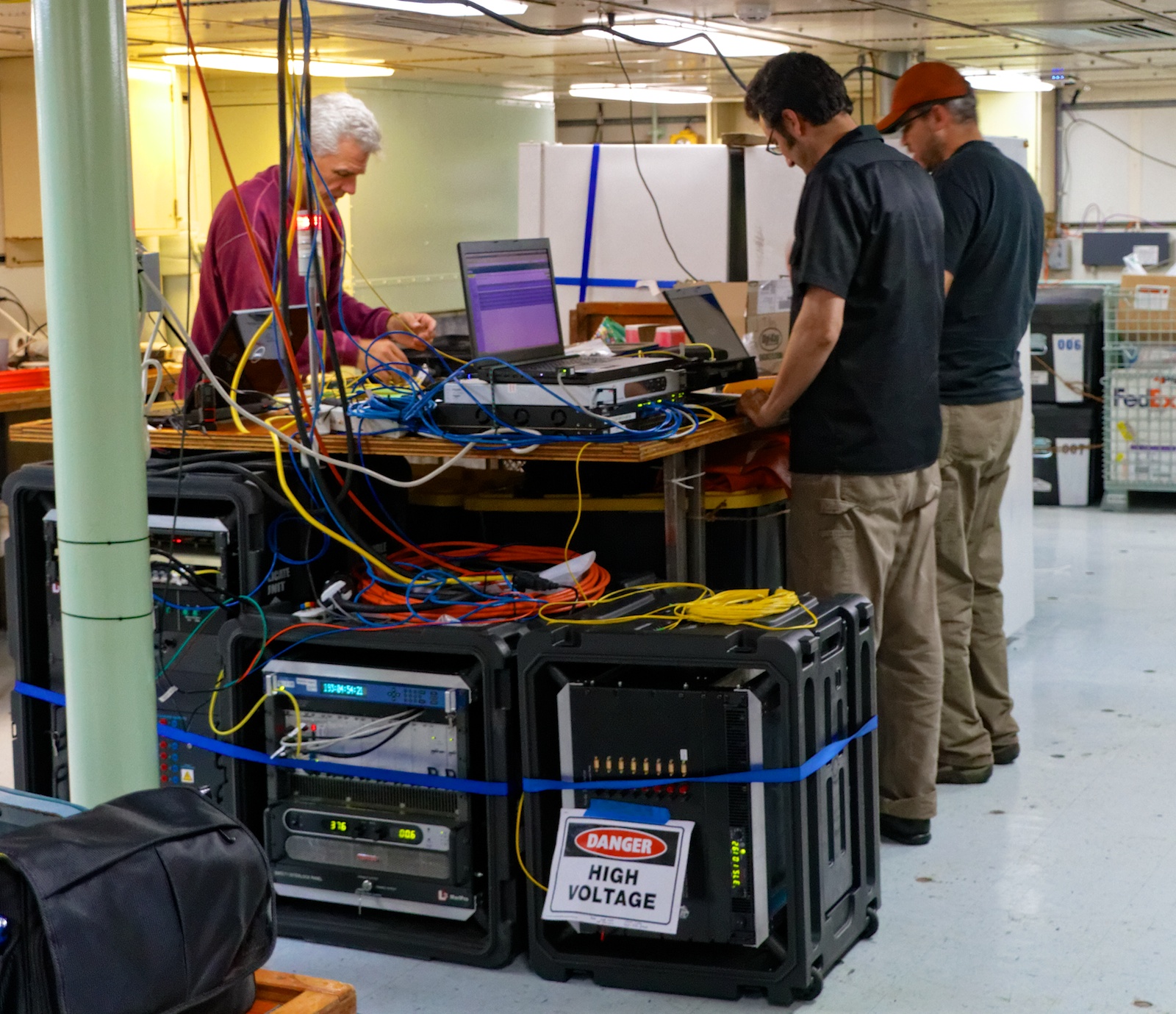
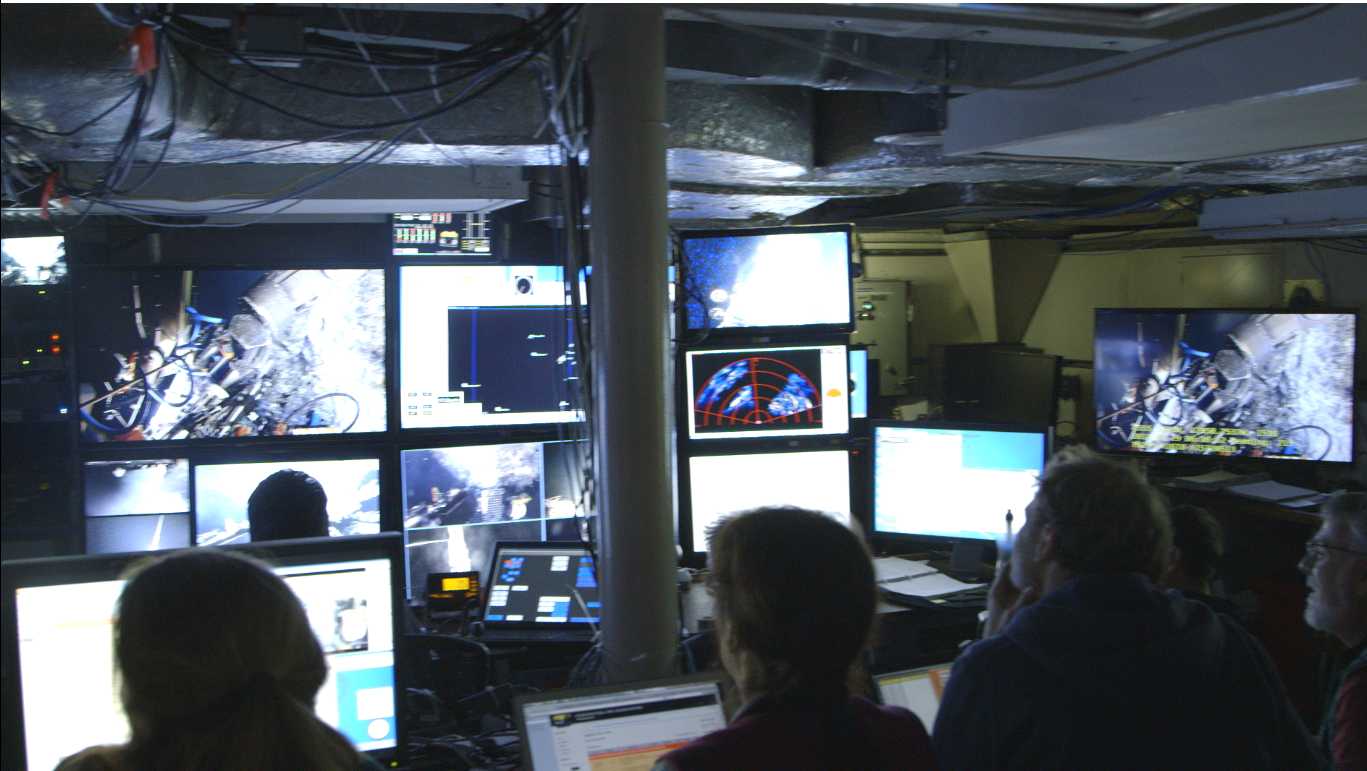
Spare commissioning support hardware is plugged into Primary Node 3B while it is fully powered up from >350 miles away at Pacific City, Oregon. A tool basket on the left holds the hardware, as well as other equipment that may have been needed for testing. The manipulator arms of ROPOS are in the foreground, waiting for the test to be completed.
Photo: OOI/UW/CSSF
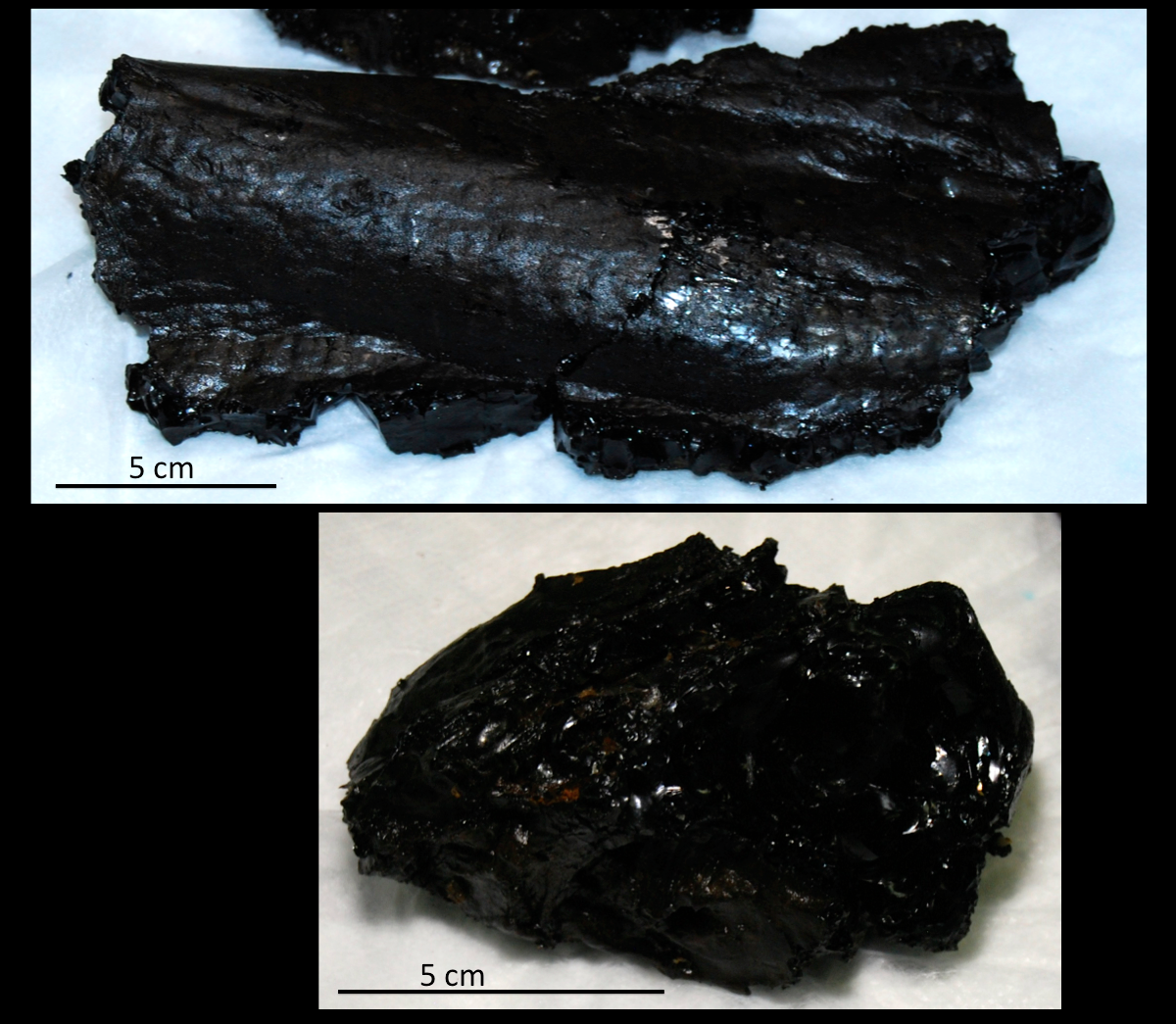
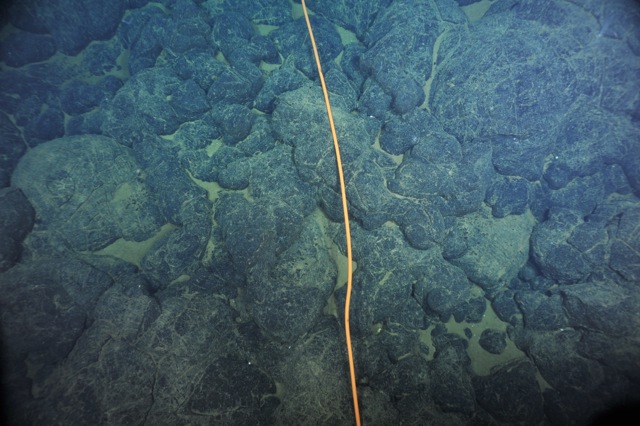
Iron-rich basalts quickly oxidize in the O2-rich atmosphere once on deck. (Photos by Leslie Sautter)
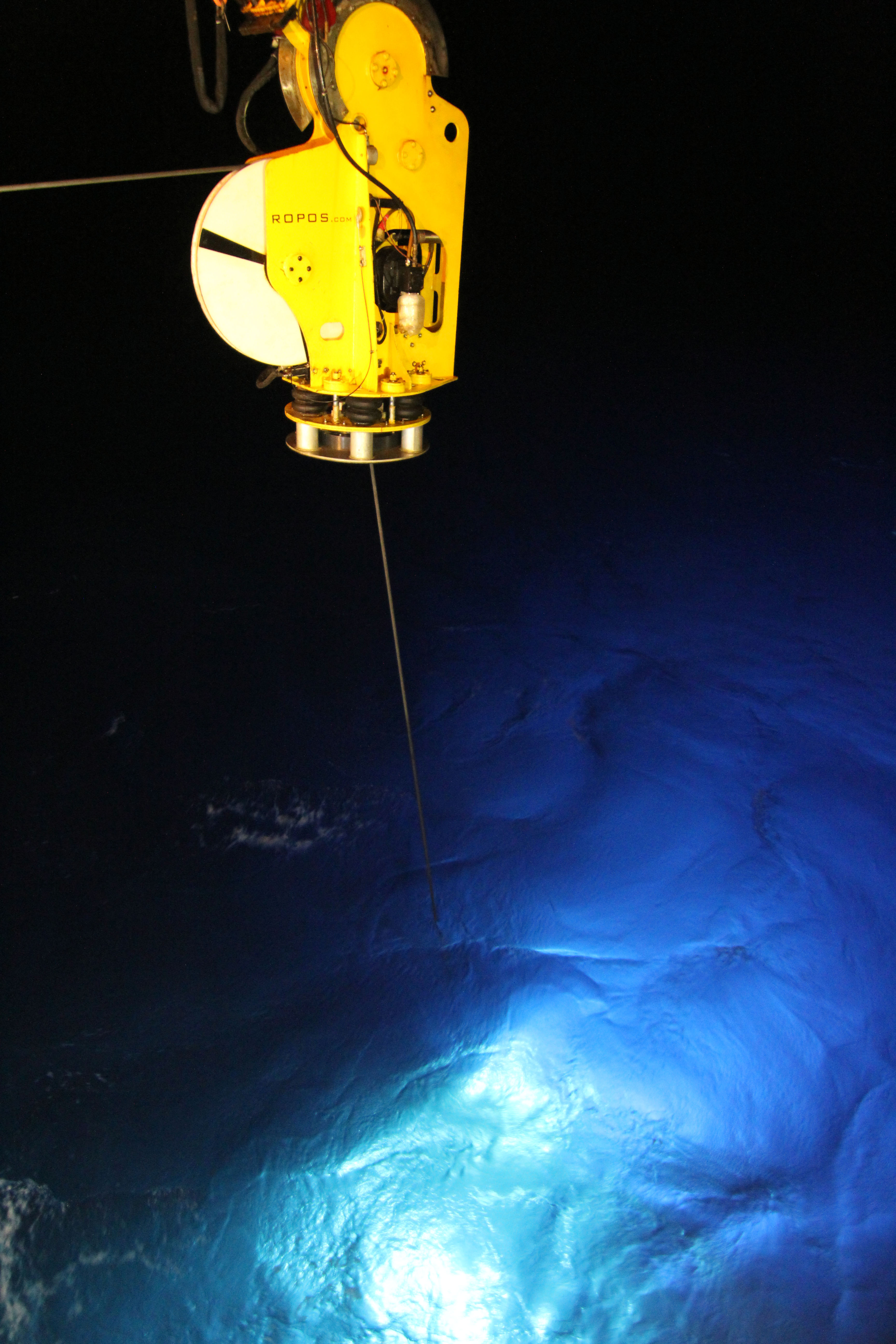
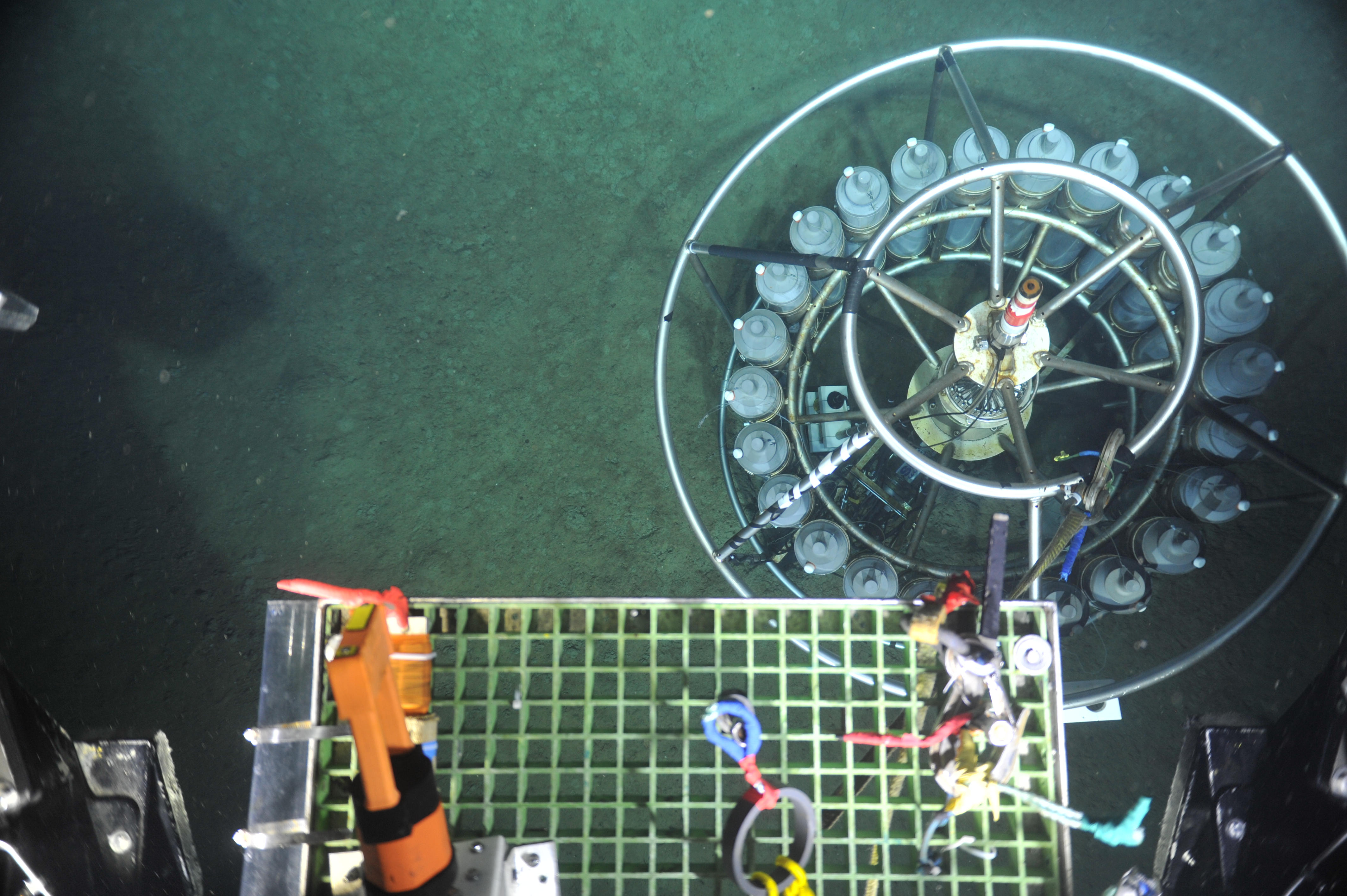
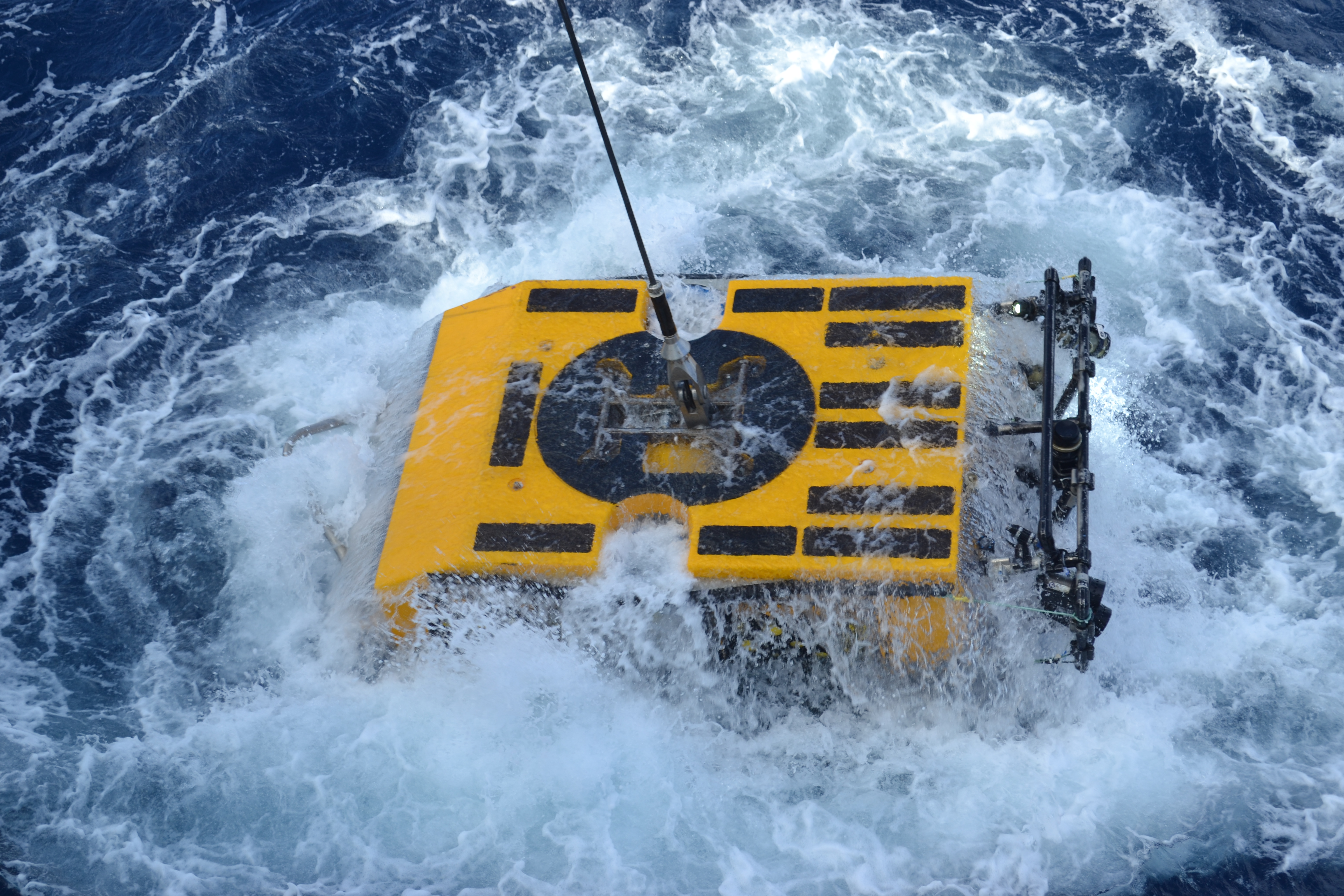
The remotely operated vehicle ROPOS used a snap hook connected to a line on its underbelly, hooked into the frame of the CTD for recovery to the surface. The CTD wire failed as the sensor-sampling package was being recovered onto the deck of the Thompon. Luckily, after its >9000 free descent to the seafloor, it landed upright in the soft sediment. Photo credit: NSF-OOI/UW/CSSF.
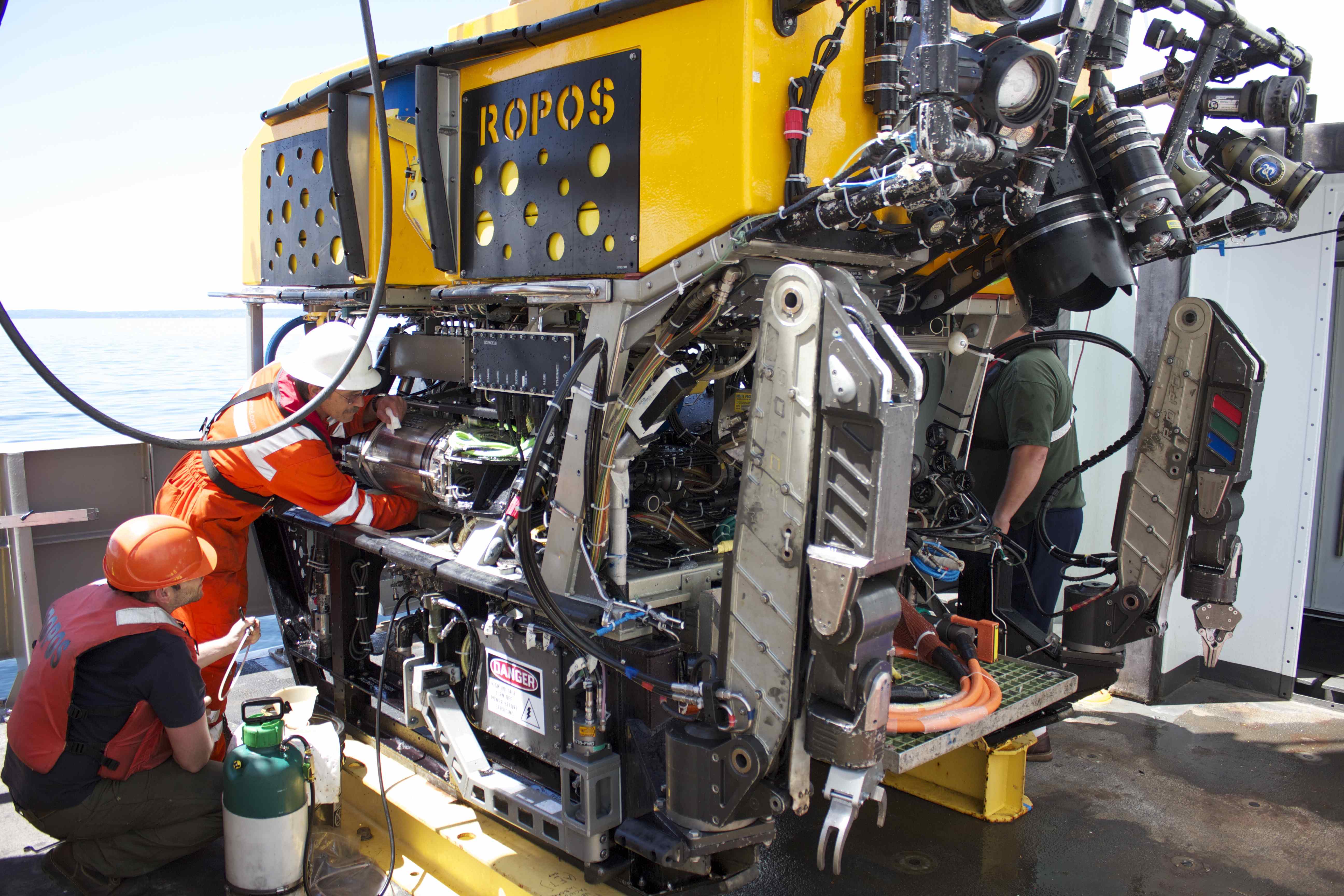
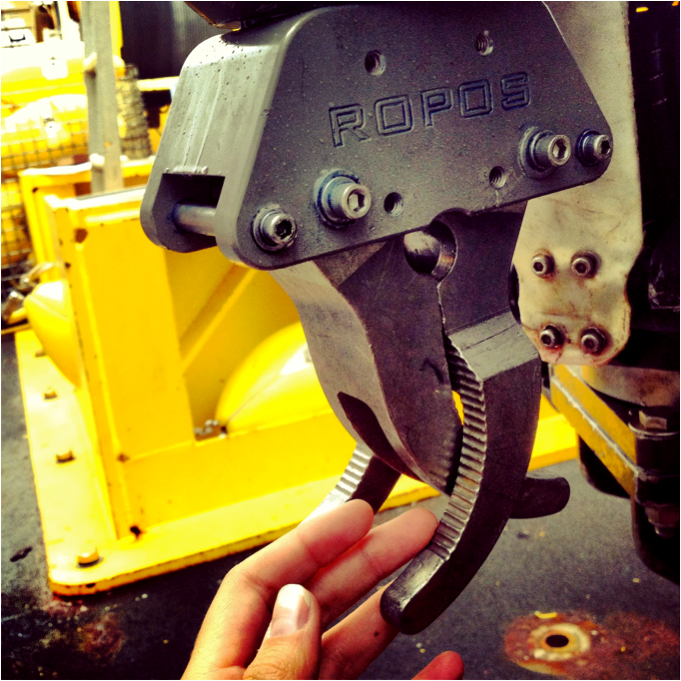
One of ROPOS’ “claws” that can be manipulated from the ship to do many tasks on the infrastructure deployed to the seafloor.
Photo by Montgomery Taylor
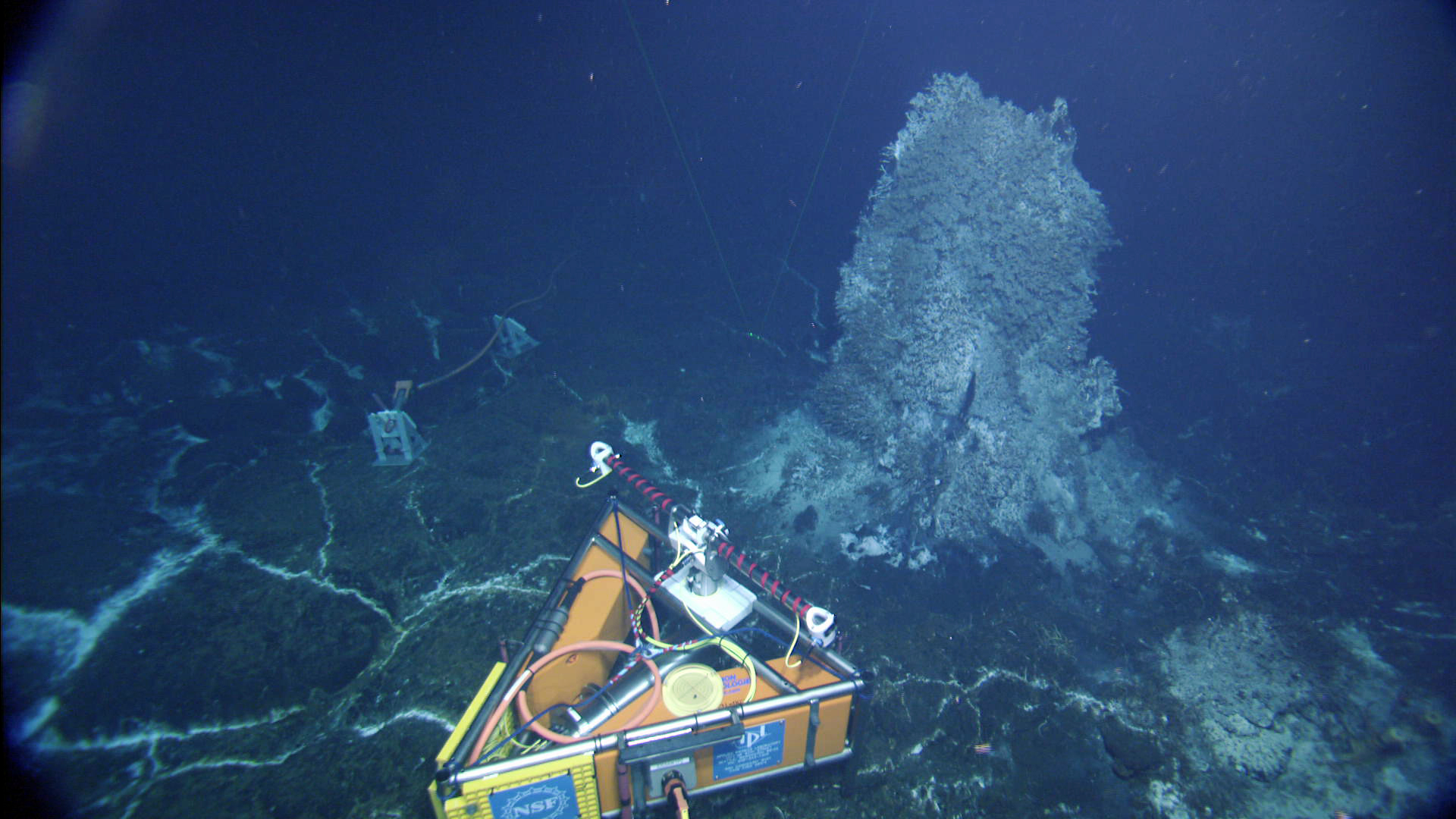
The ROV ROPOS powers up the RSN-OOI camera for the first time at the hydrothermal chimney called Mushroom. This image is from ROPOS with the vehicle lights off, and only the RSN-OOI HD camera providing illumination of the chimney while collecting the first video imagery from the seafloor, which was then streamed live over the Internet. Photo credit: NSF-OOI/UW/CSSF.
The summit of this hydrothermal chimney, called 'Eascargot', has a striking resemblance to a snail. A 270°C actively venting site (two small white chimneys mid structure) will host a cabled temperature-resistivity sensor there in 2014. This sensor will provide real-time data on the fluid chemistry (chlorinity) -temperature relationships inside the vent. The instrument was designed by Marv Lilley, University of Washington.
VISIONS '13, Leg 4.
Photo credit: NSF-OOI/UW/CSSF