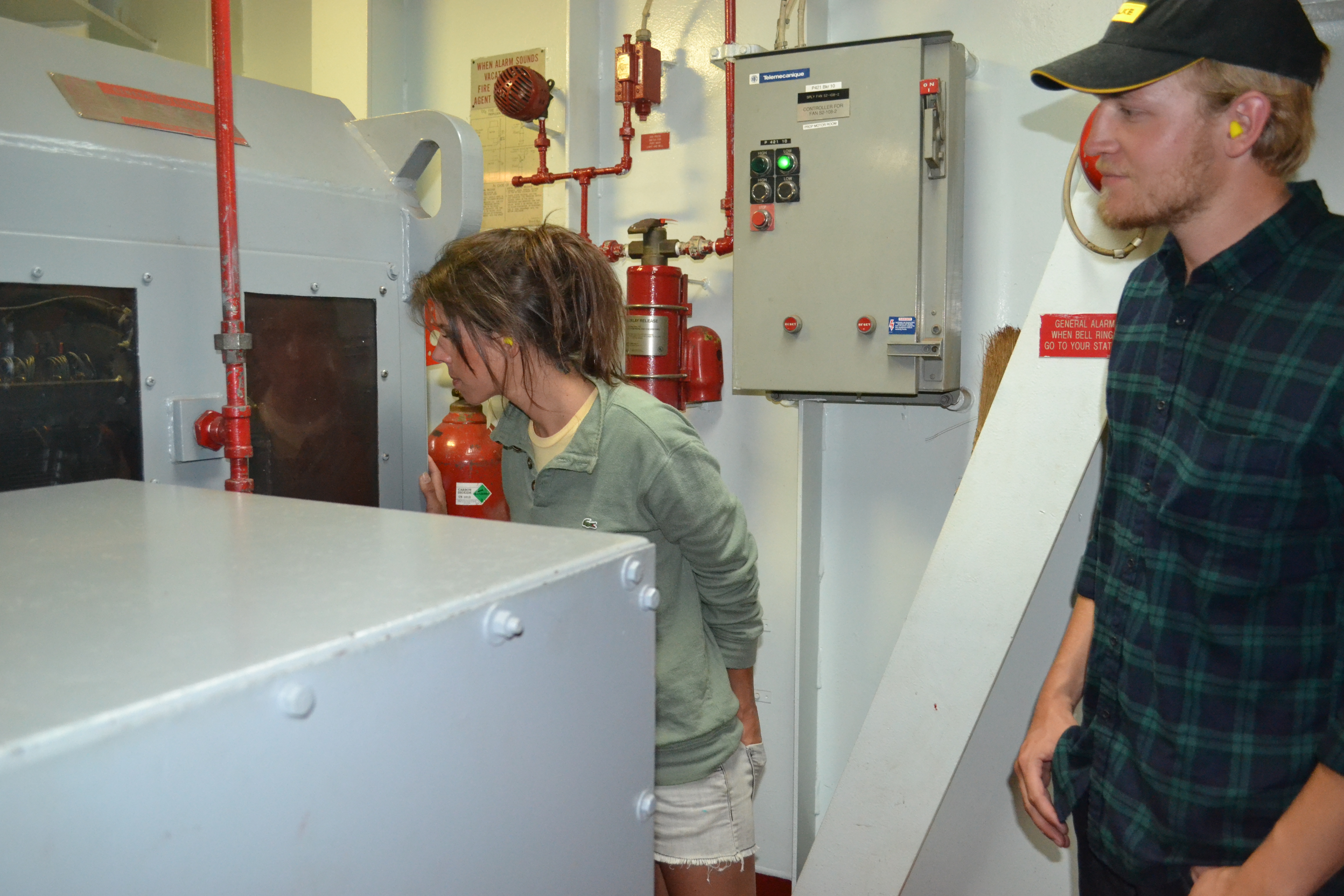
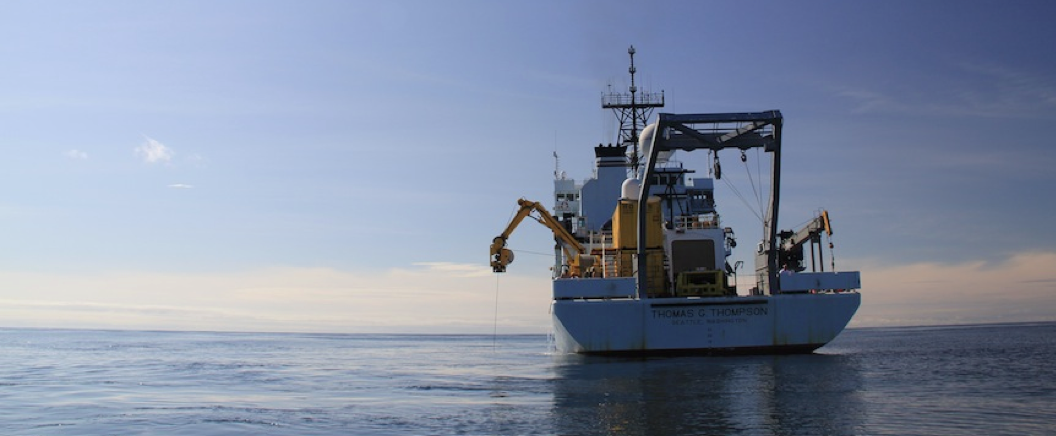
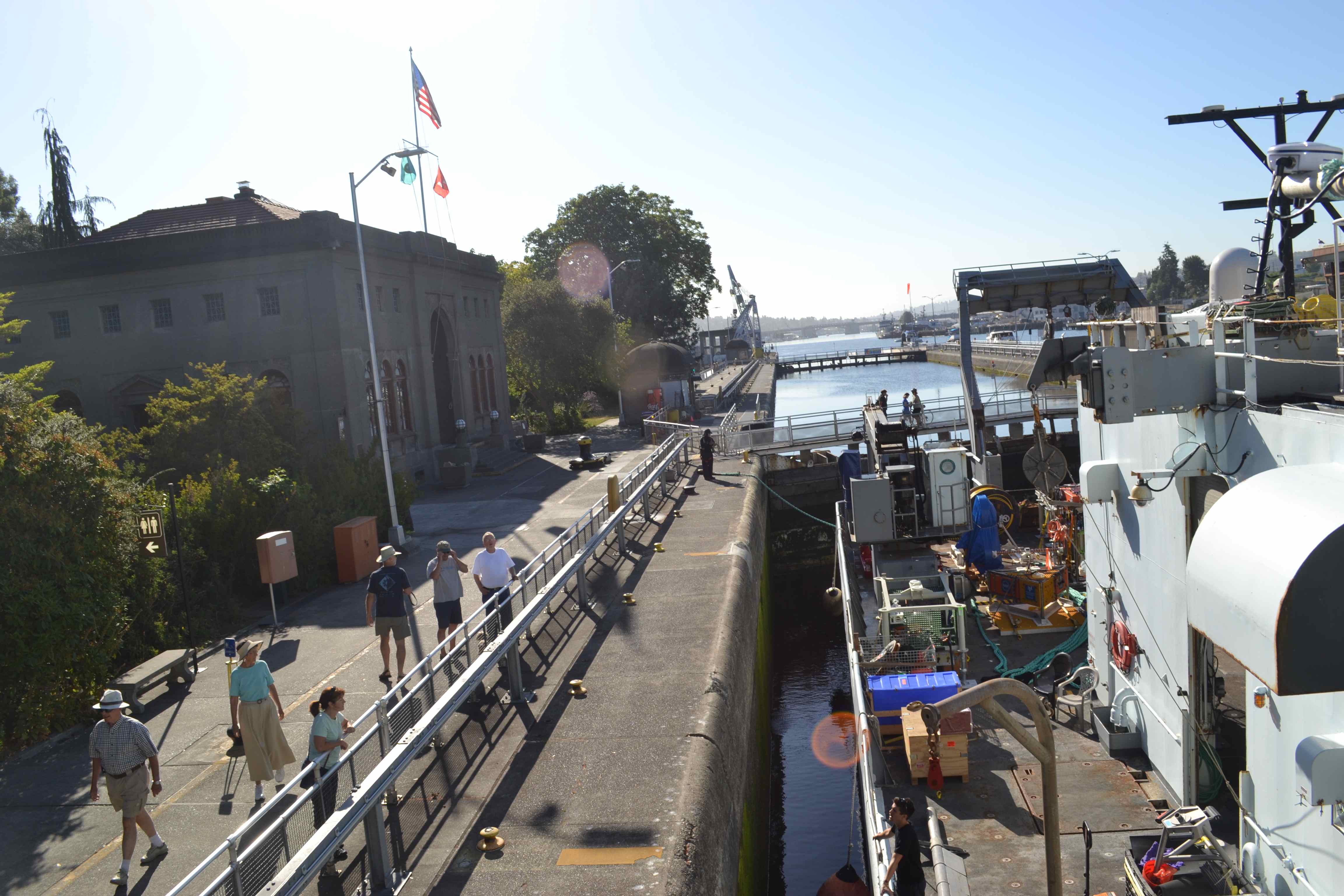
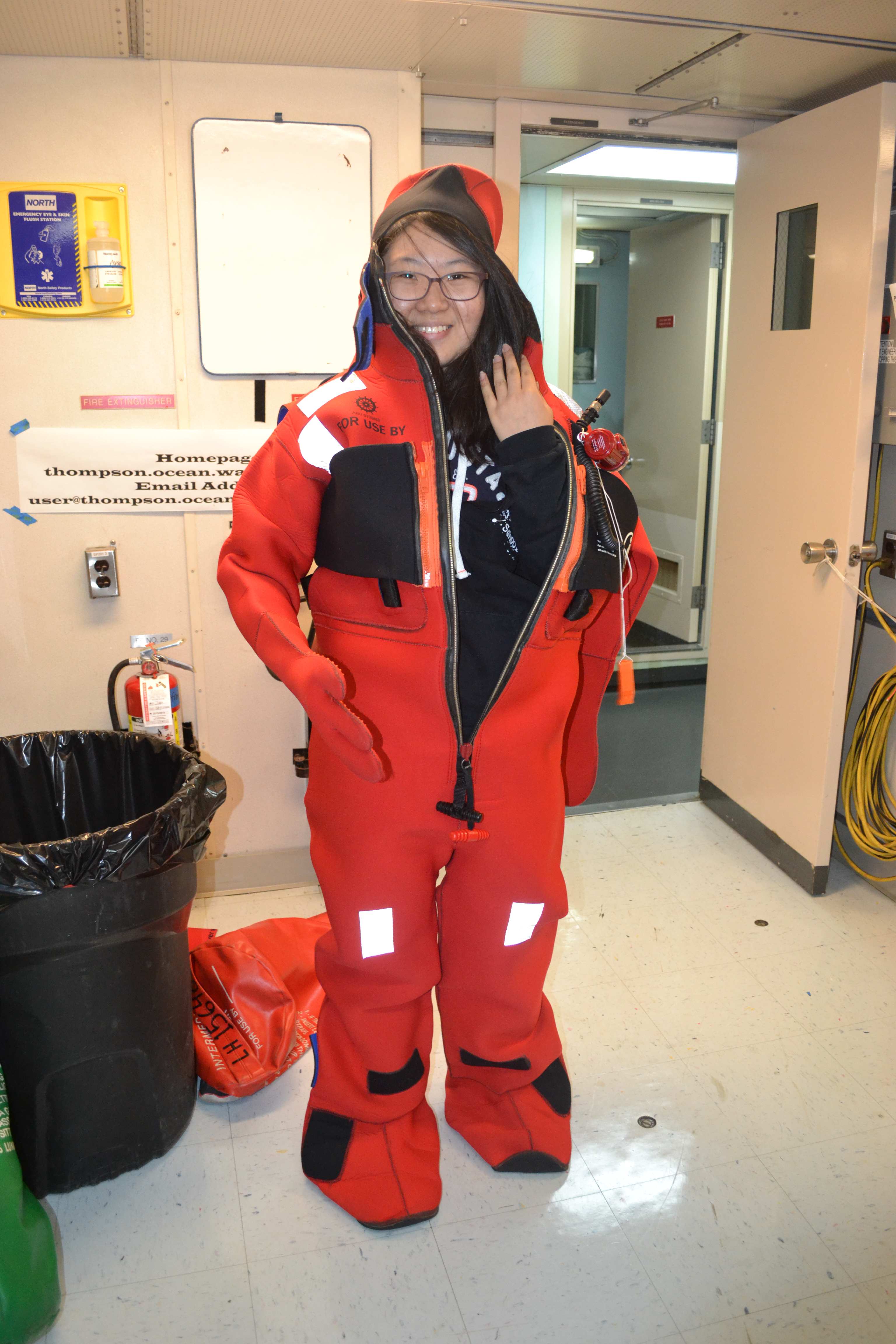
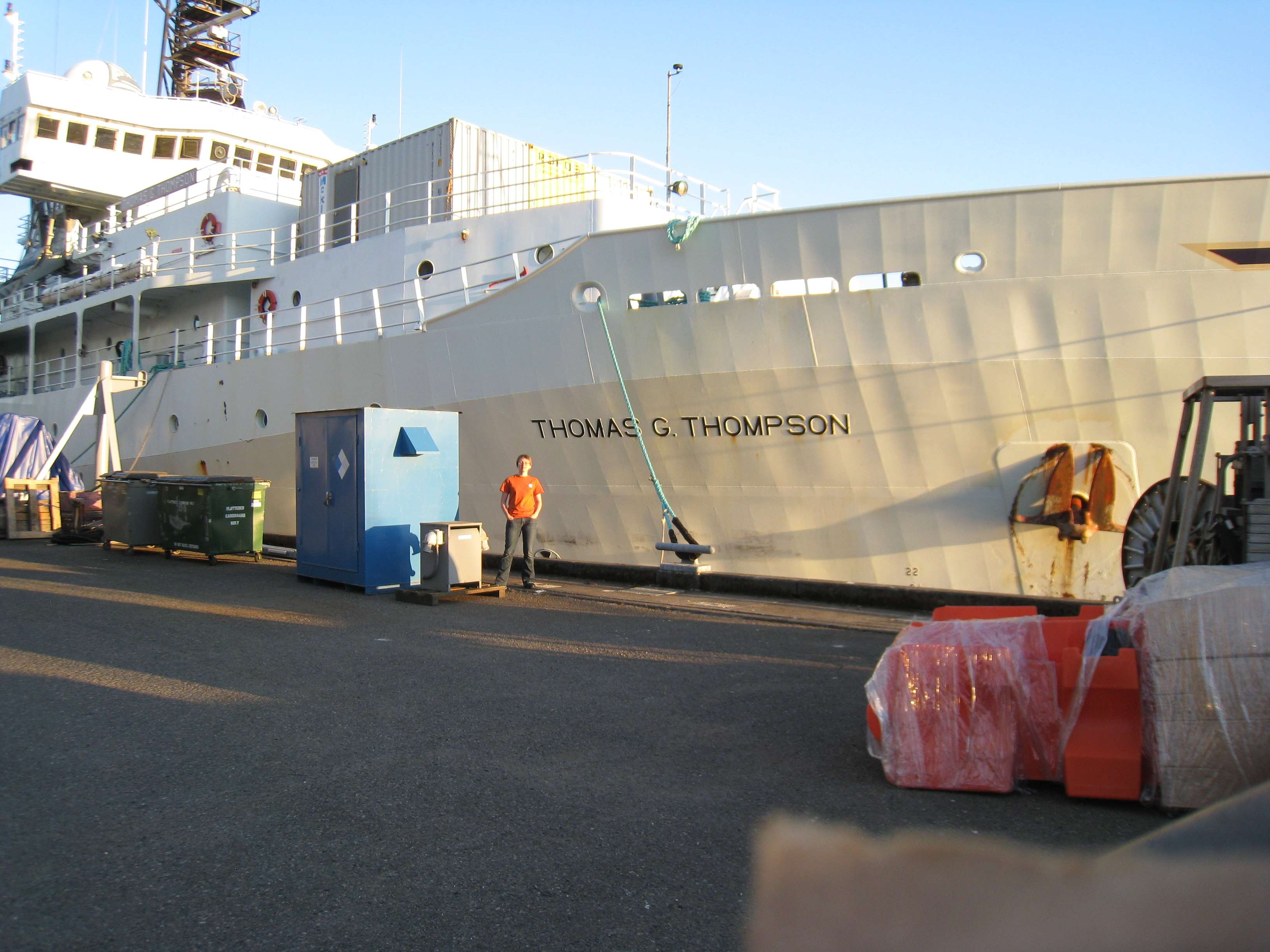
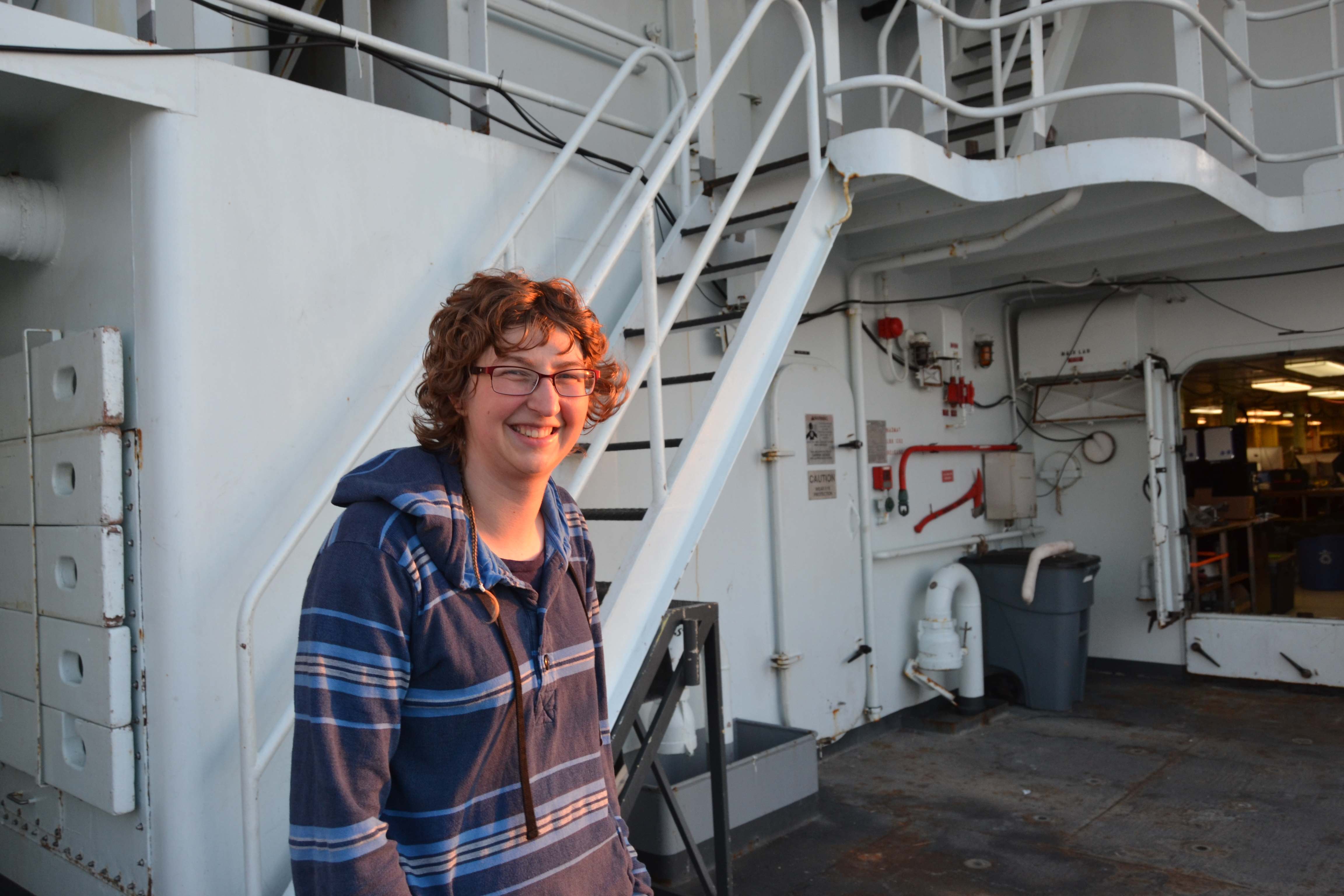
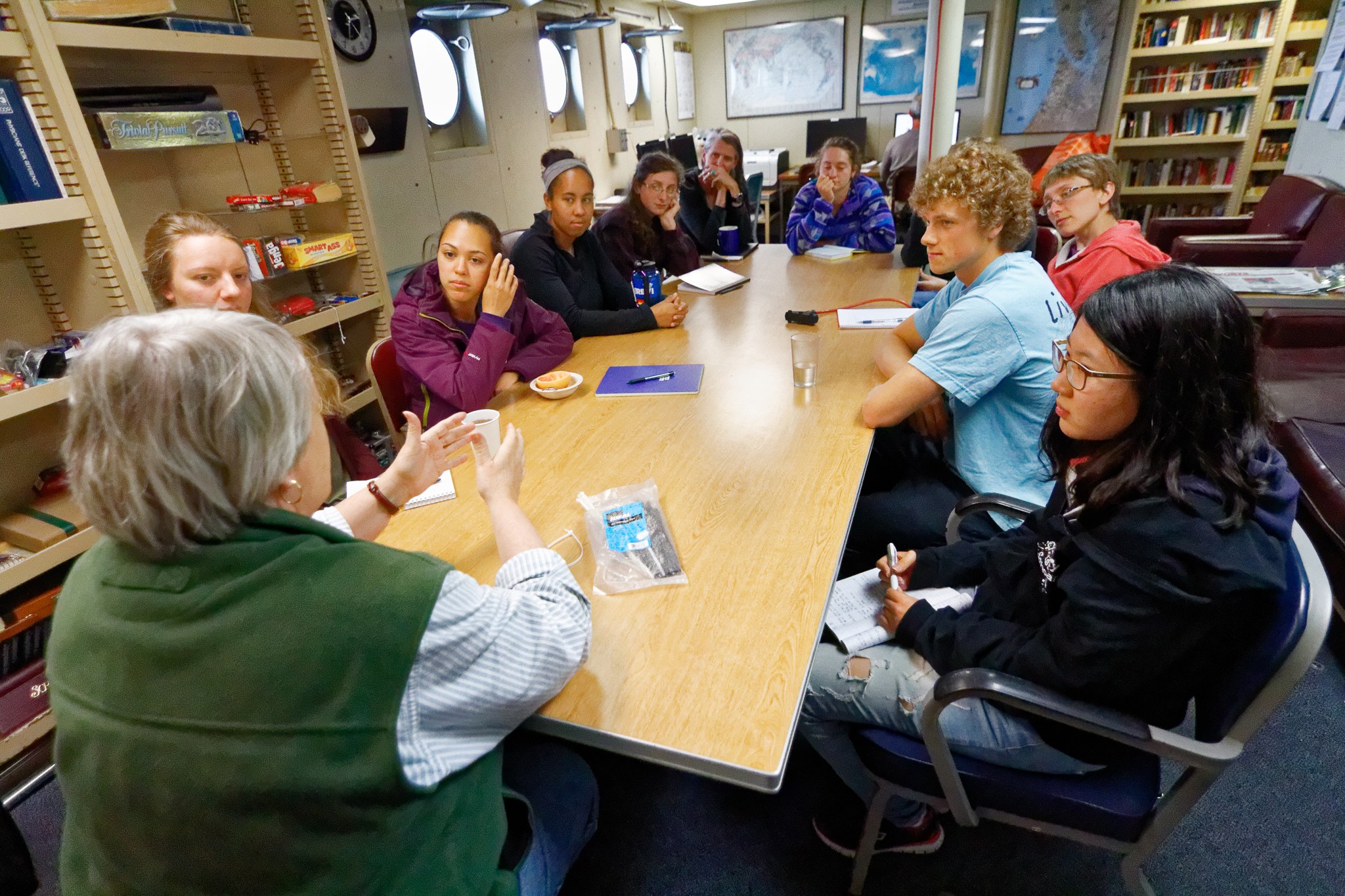
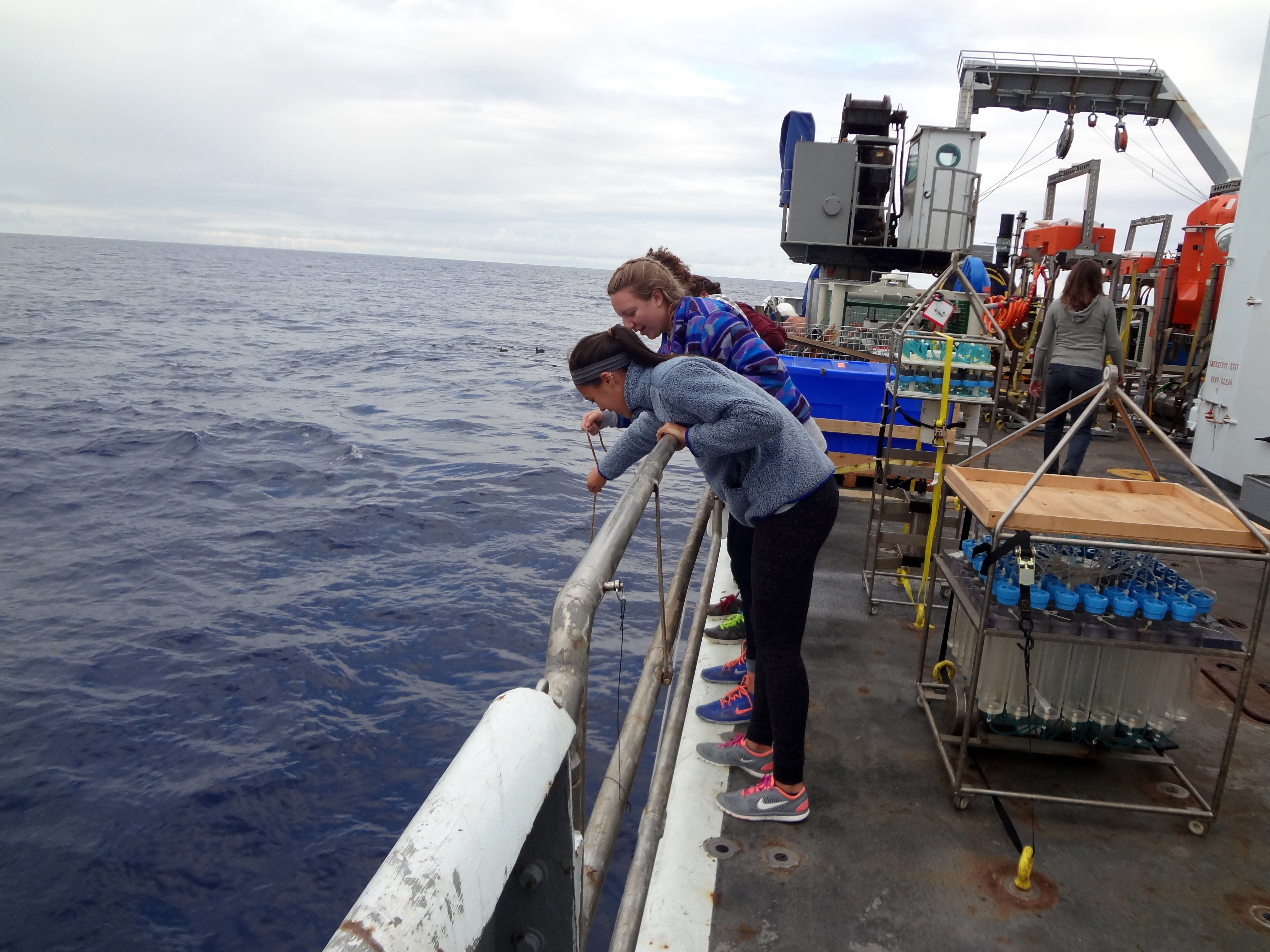
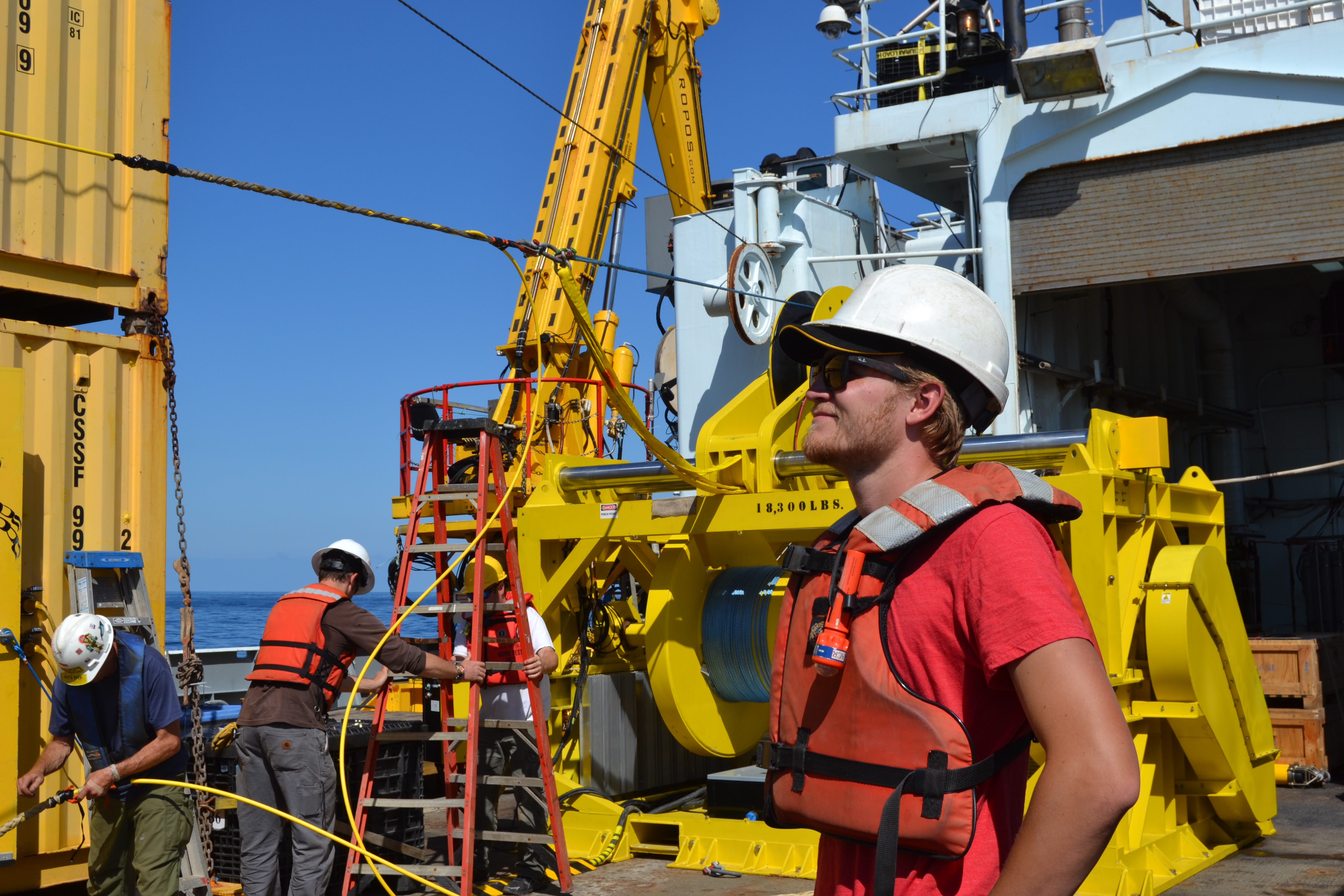
UW undergraduate students Jessie and Diana happy to be onboard the R/V Thompson as we depart Seattle for the Ocean Observatories Initiative Cabled Array cruise 2015. Credit: Mitch Elend, University of Washington.
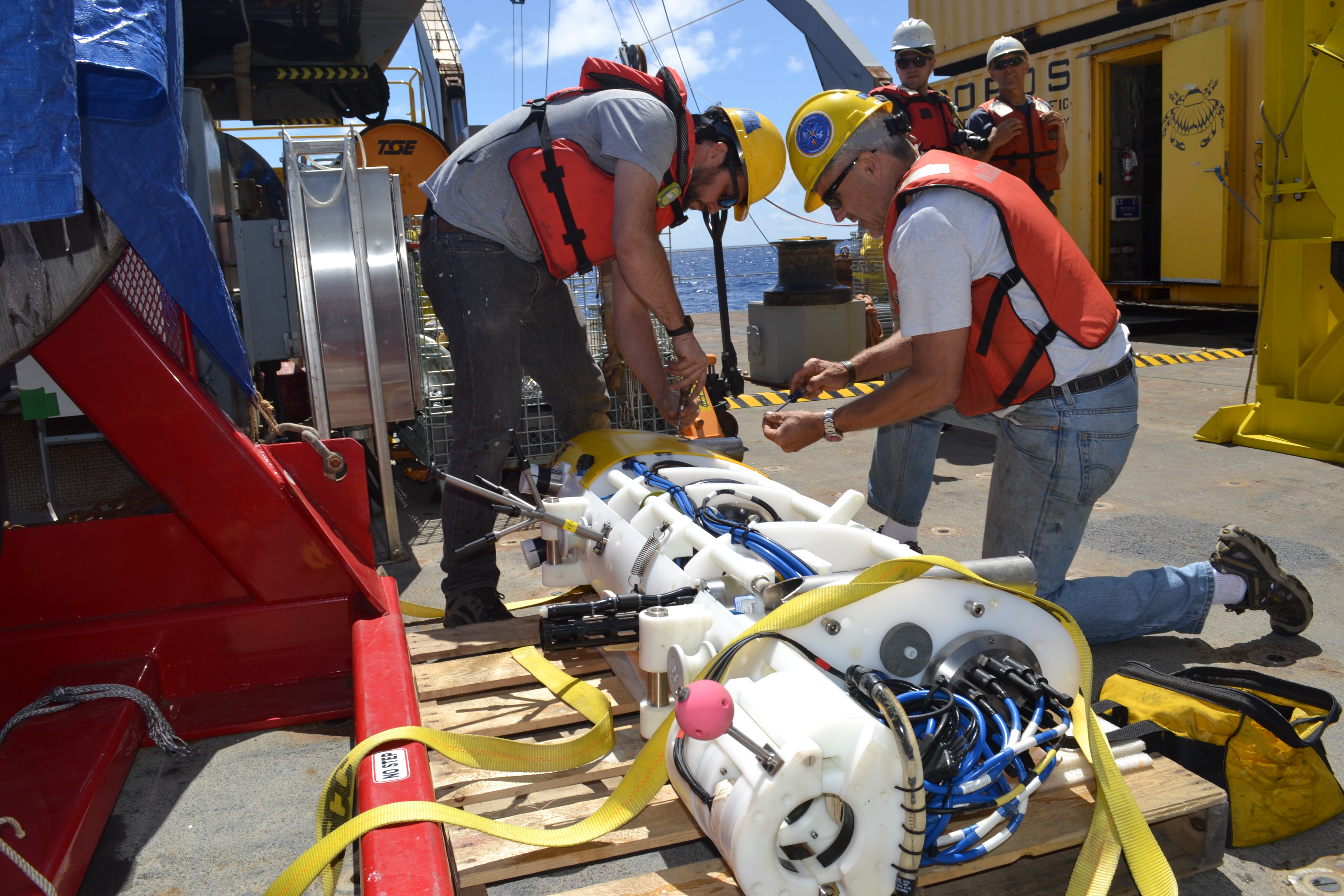
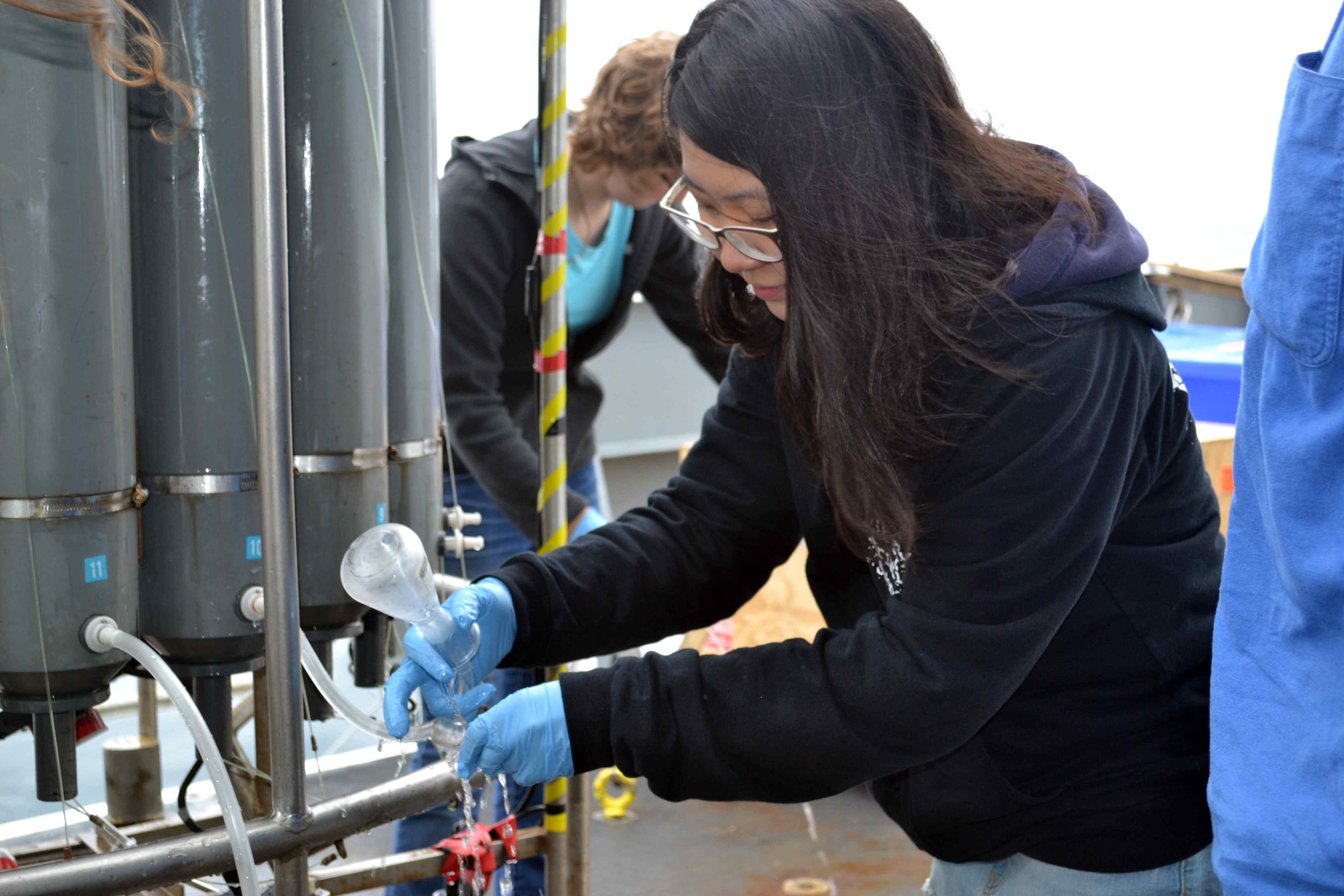
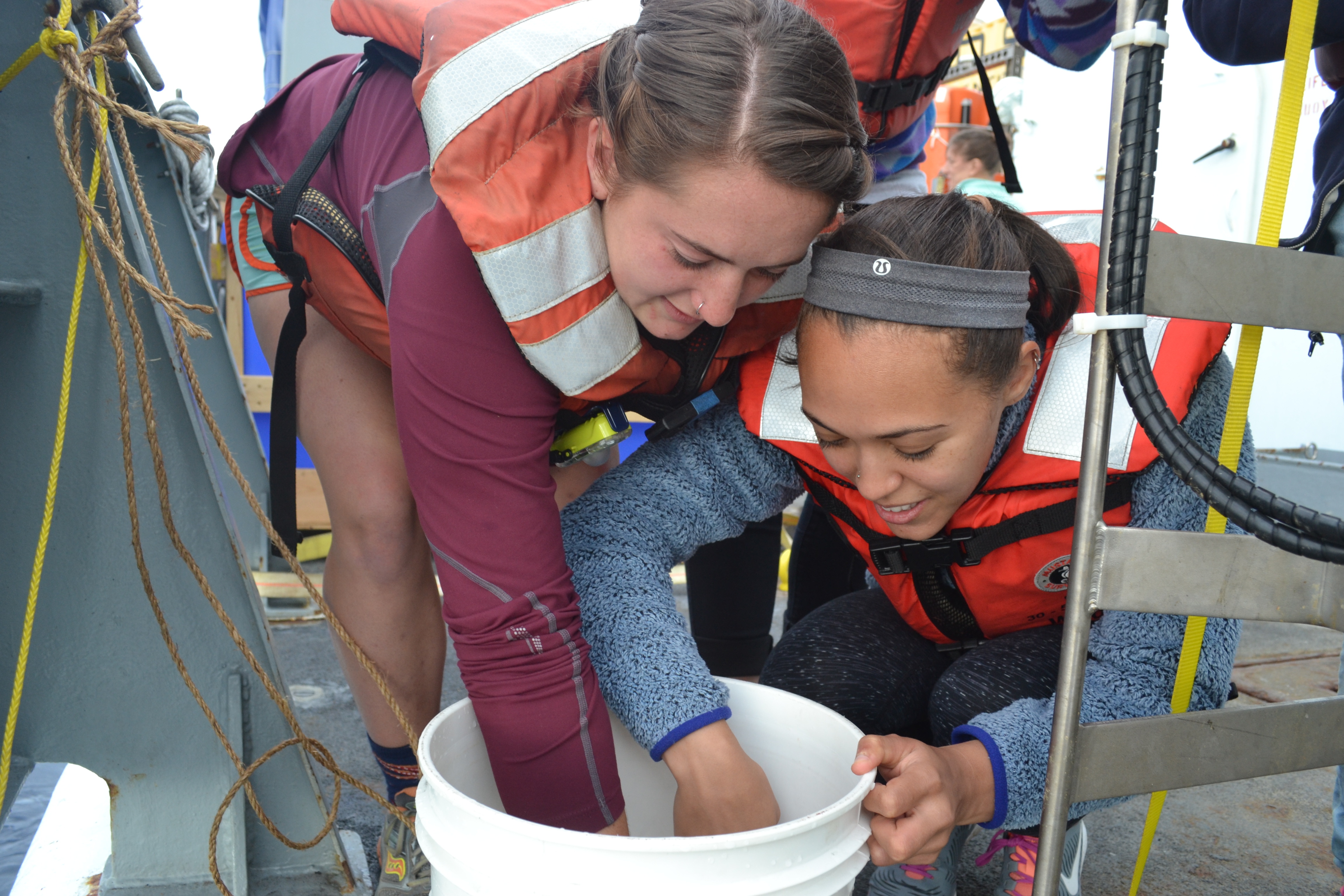
Jessie and Kadijah help prepare an instrument cable on a junction box, which provides power and communication to a variety of chemical and biological sensors that will provide live streaming data to shore from 2900 m water depth (over 10,000 ft beneath the ocean's waves). Credit: Lauren Kowalski, University of Washington.
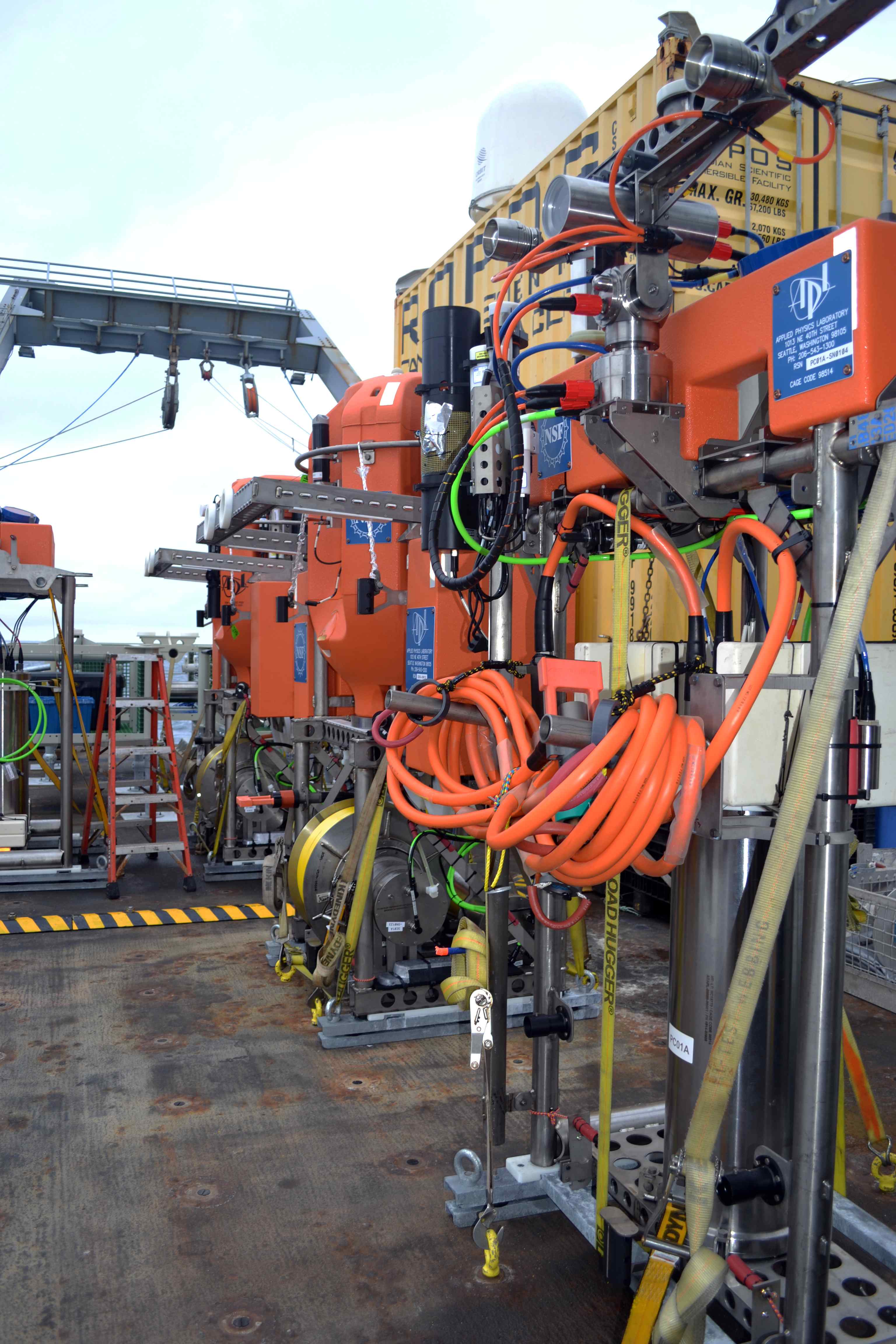
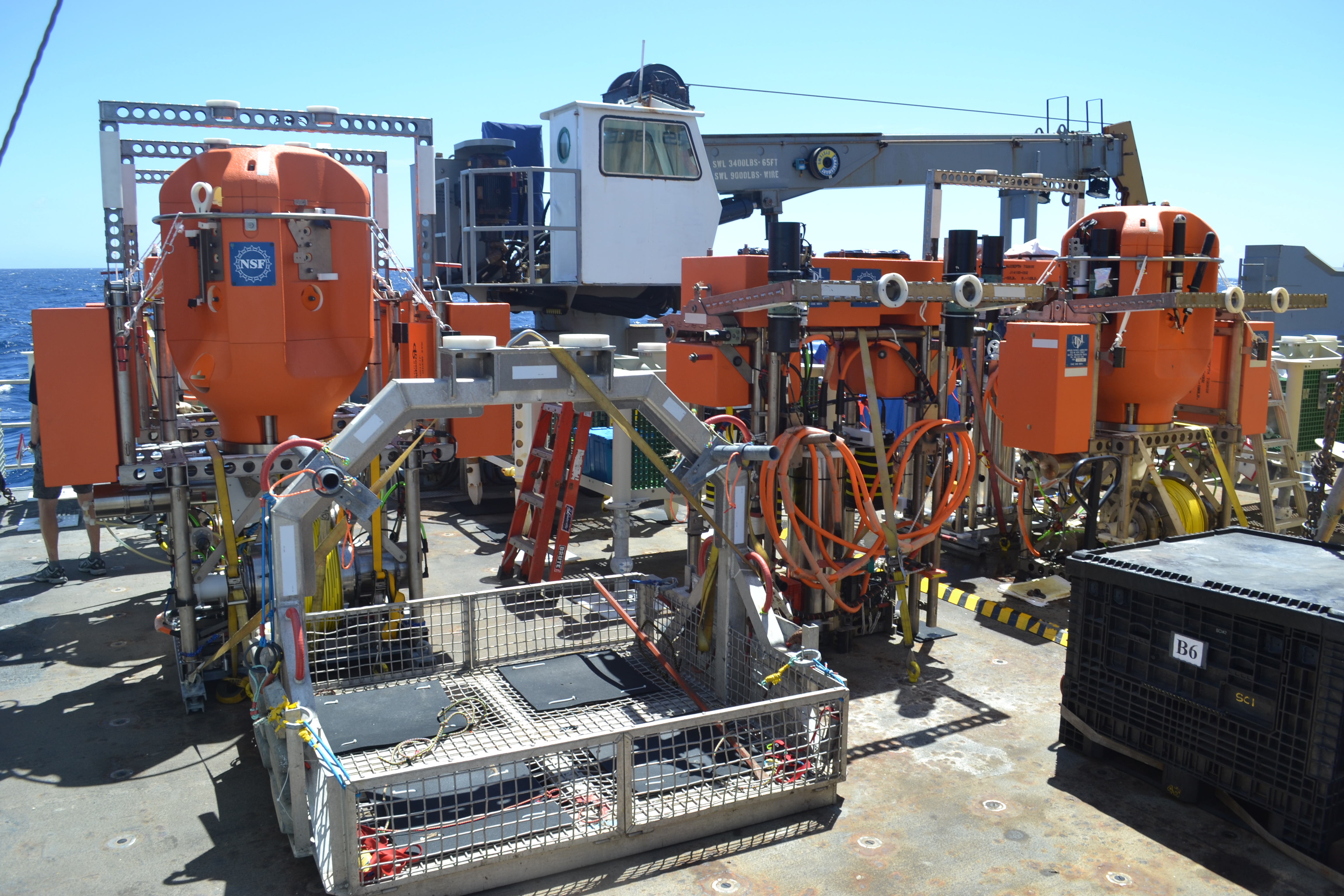
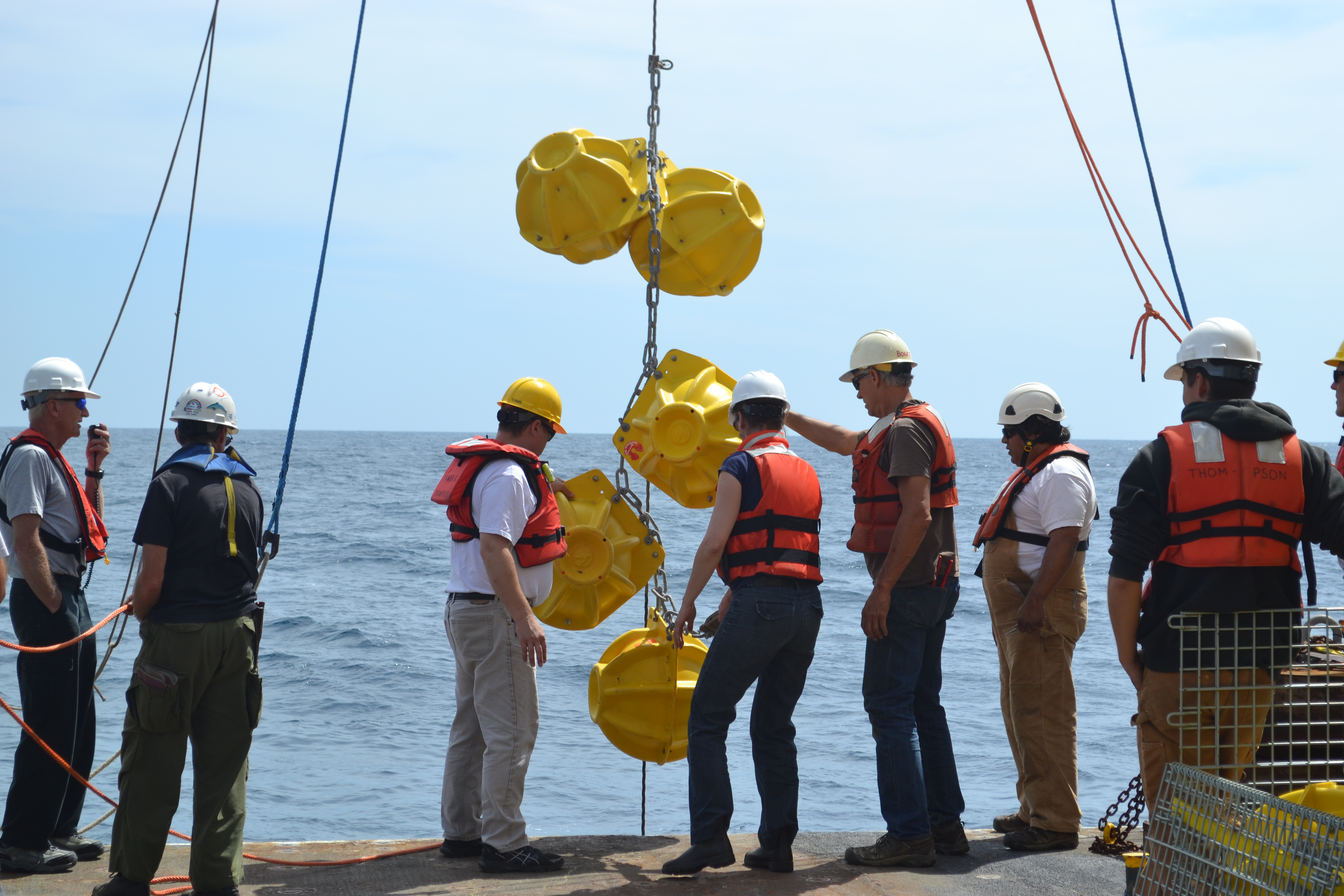
A line of shallow winched profilers and instrumented platform interface assemblies await installation on 2-legged Shallow Profiler Moorings that provide real-time data on chemical, biological, and physical properties of ocean waters off the coast of Oregon. Credit. Deb Kelley, University of Washington, V15.
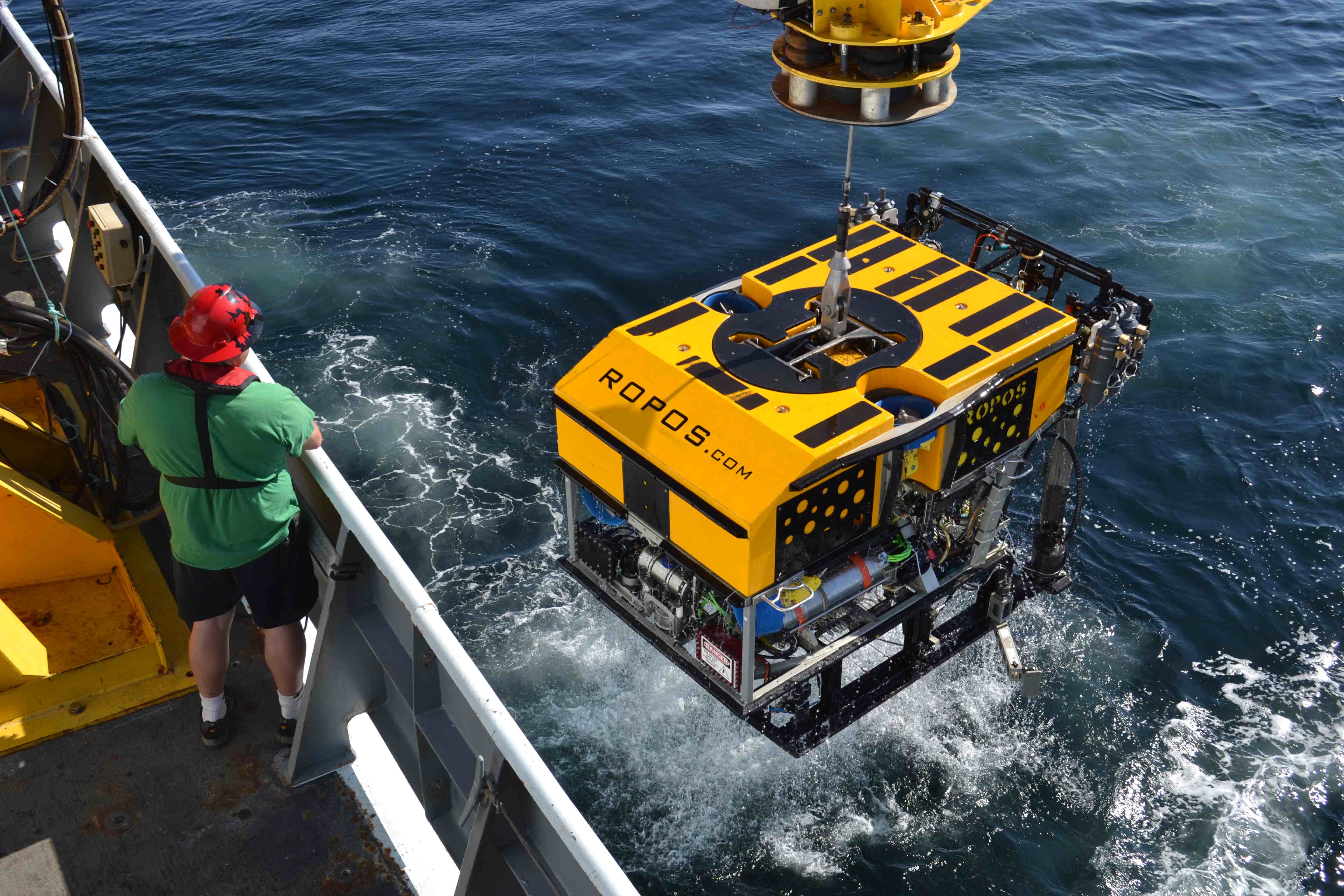
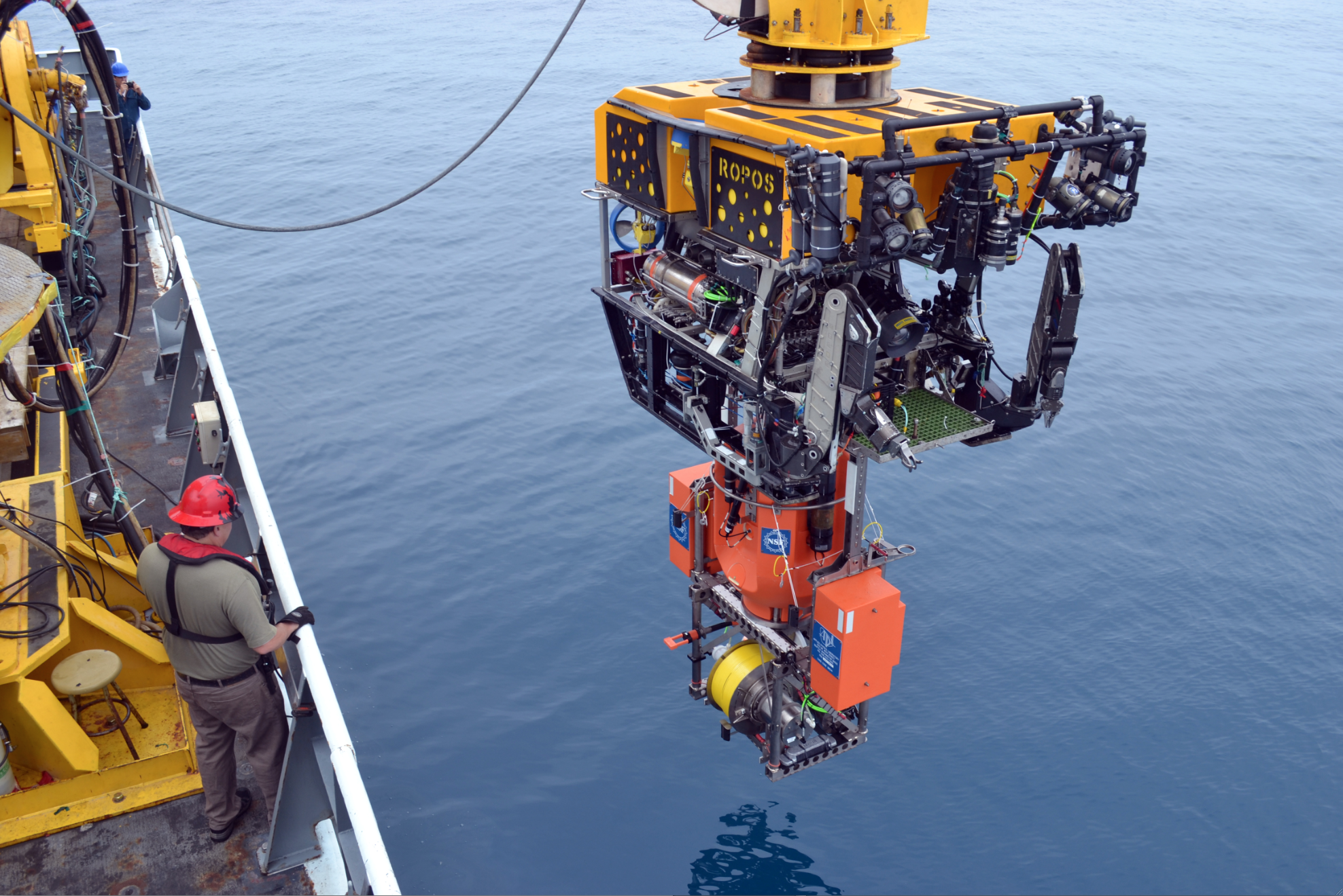
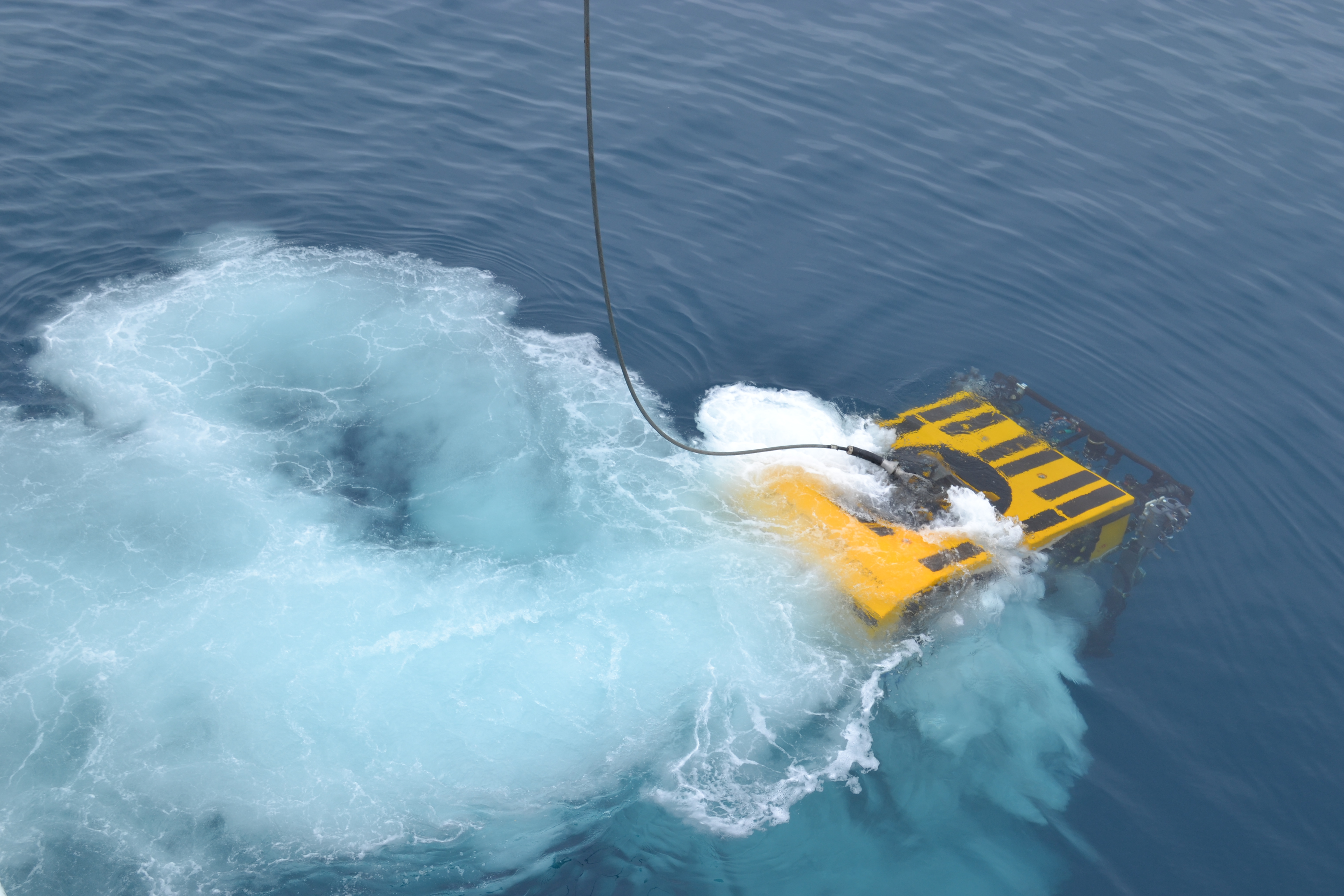
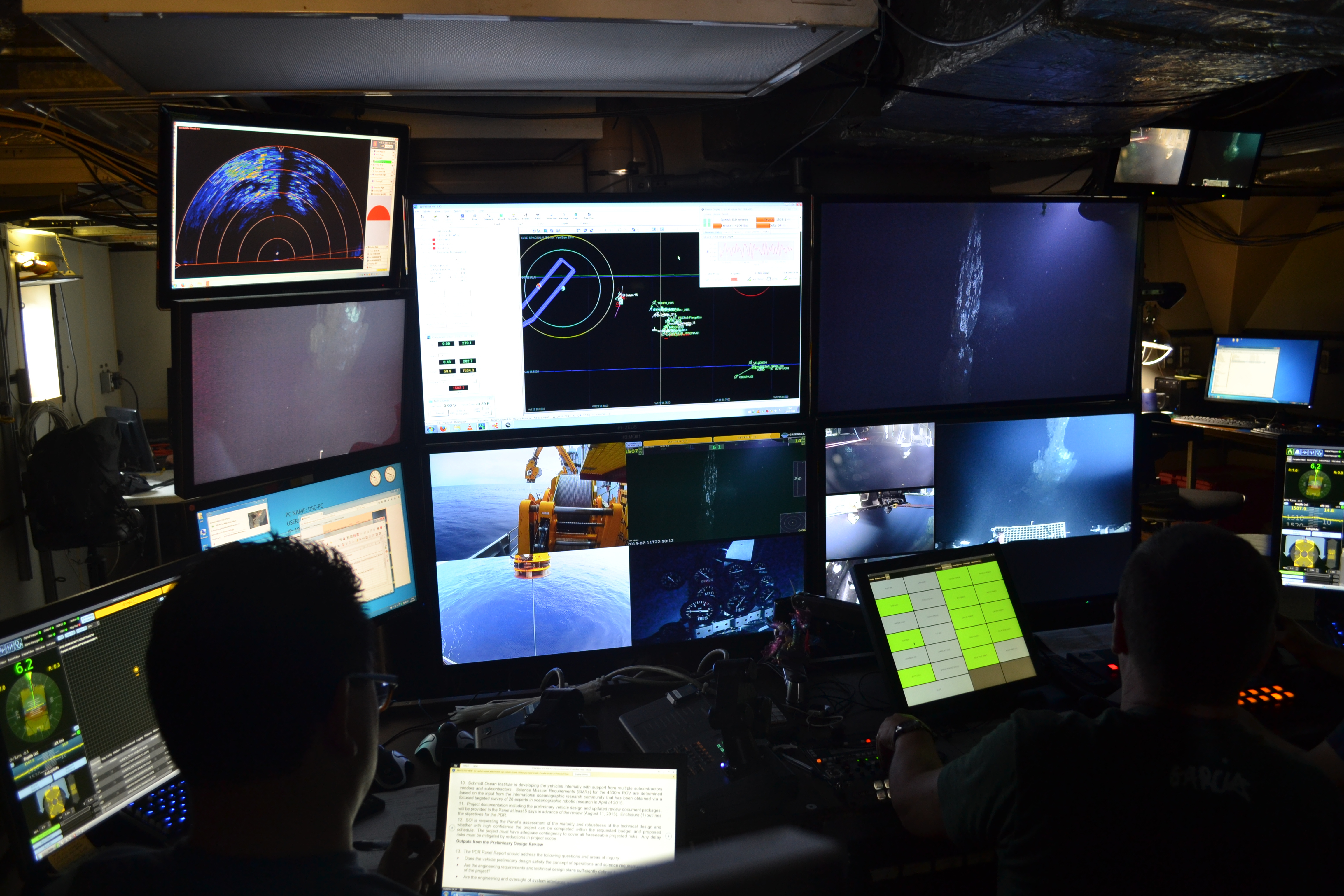
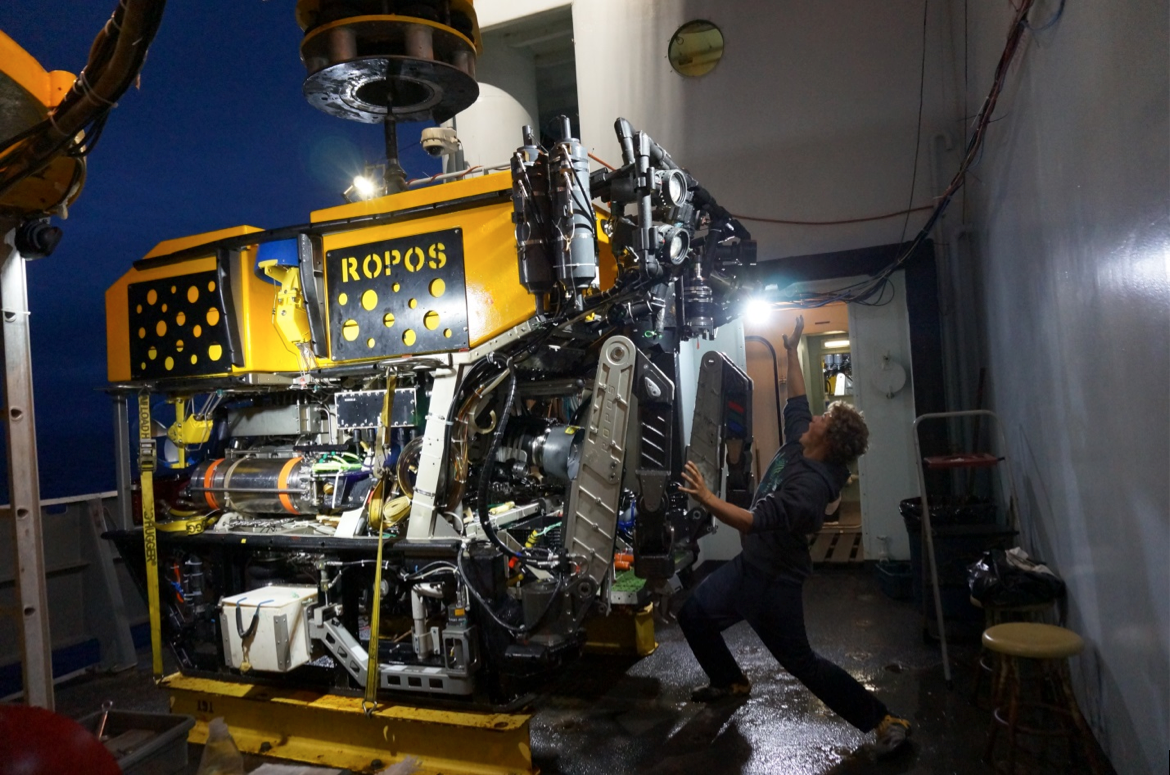
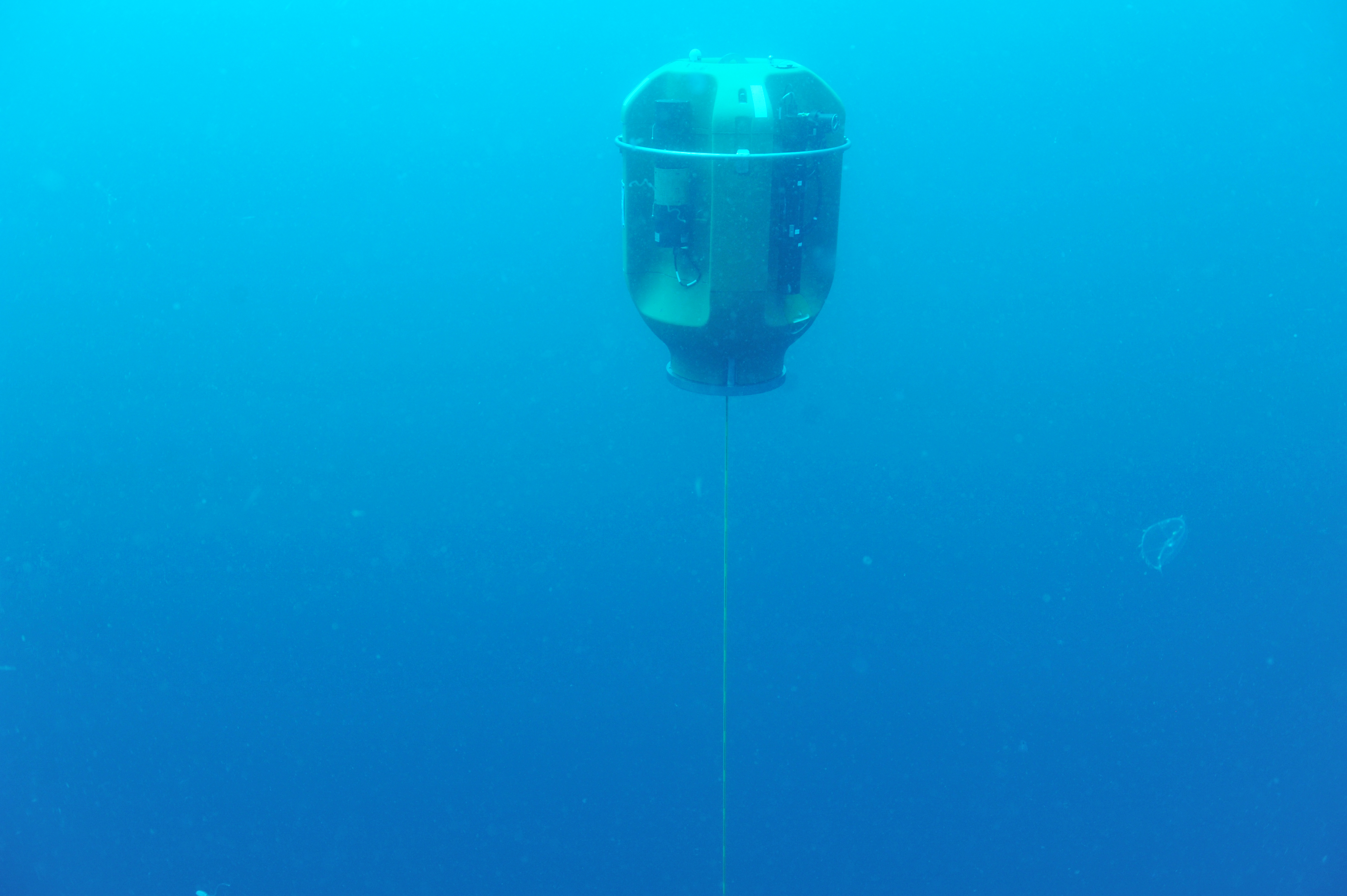
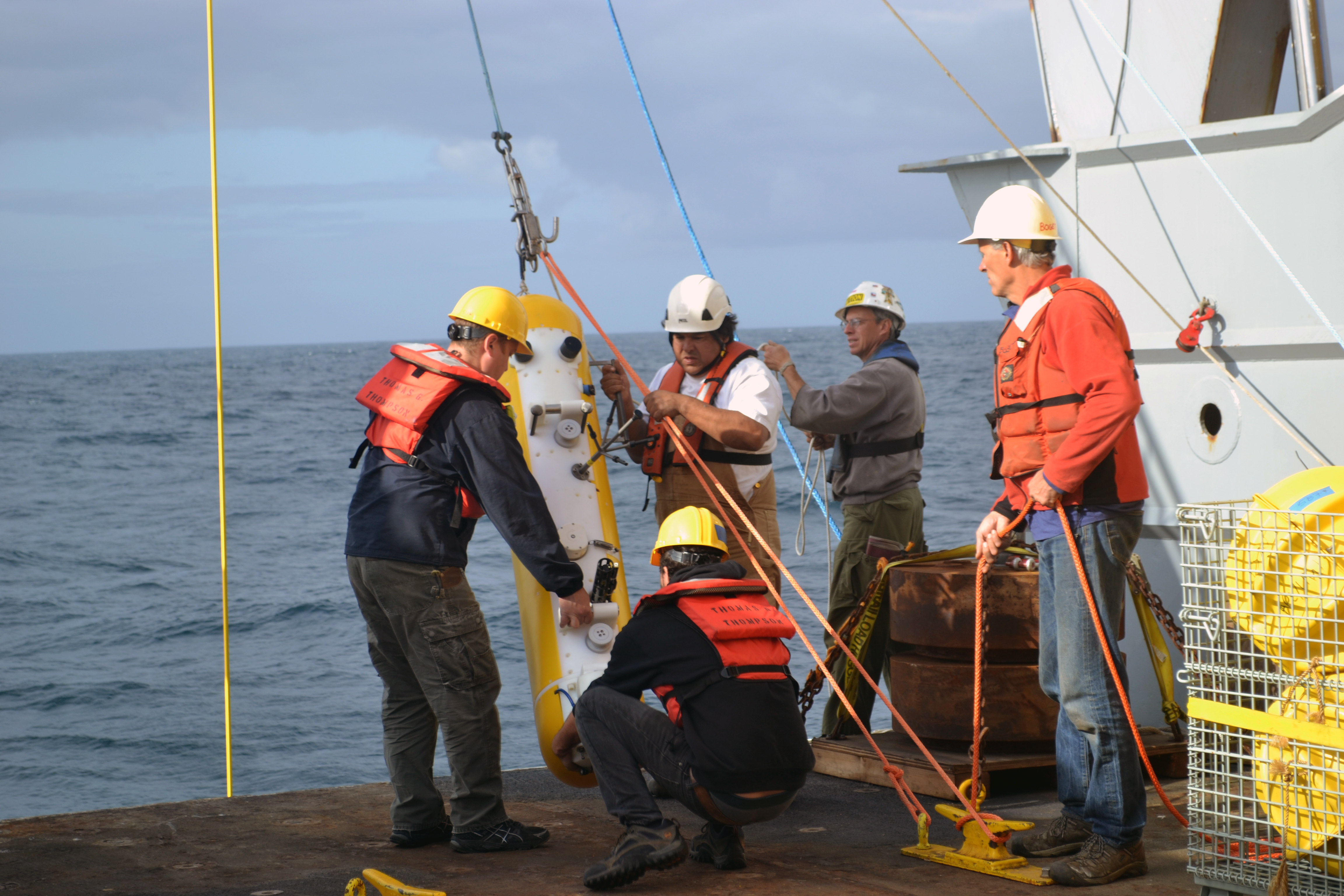
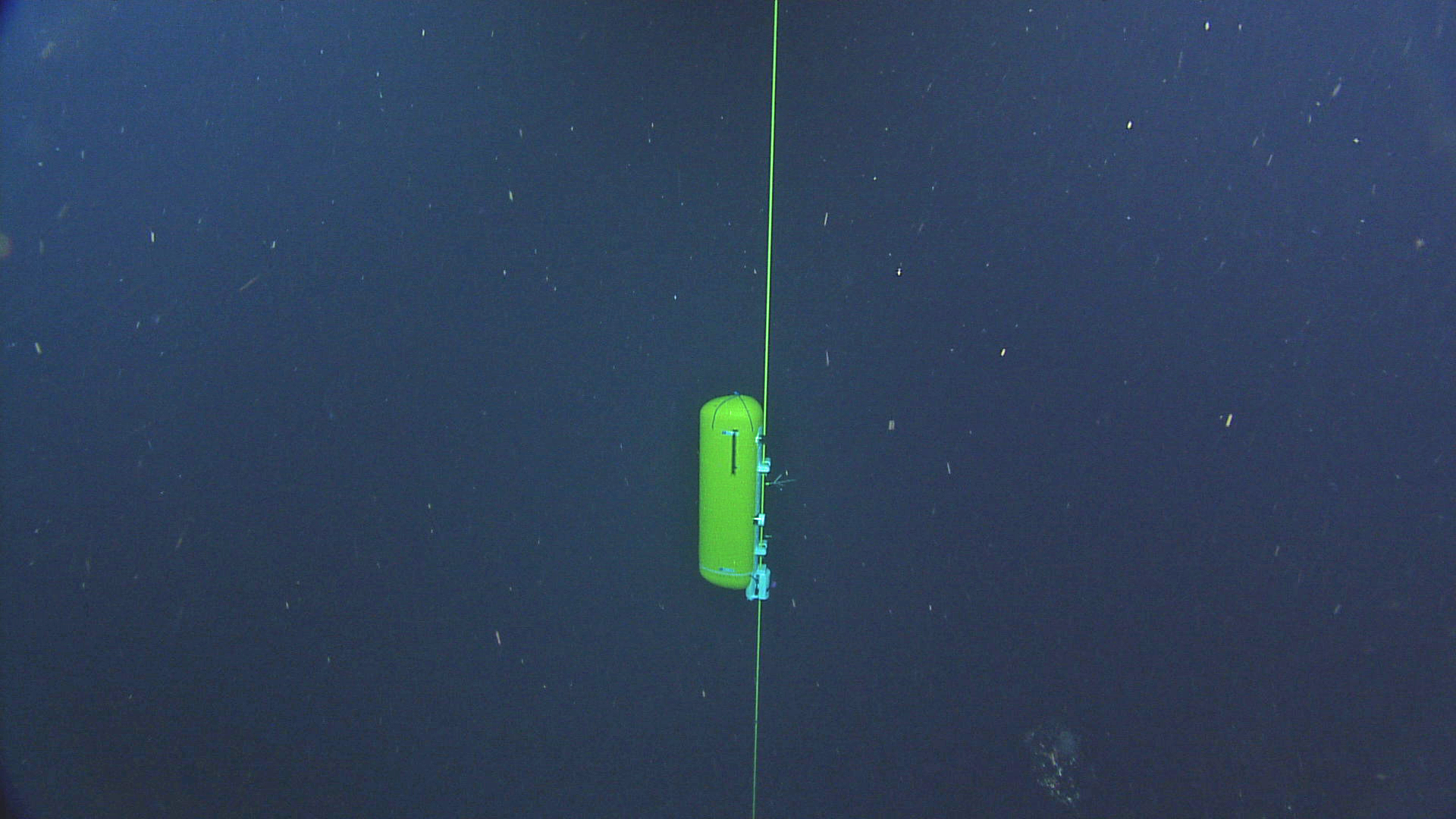
The ROV ROPOS begins its ~600 ft descent to the Shallow Profiler Mooring at the Slope Base site with an instrumented Winched Shallow Profiler 'pod' latched to its underbelly. Credit: Mitch Elend, University of Washington, V15.
A new high definition camera was installed at the hydrothermal vent called 'Mushroom' in the ASHES hydrothermal field atop Axial Volcano. The camera, built by the UW Applied Physics Lab, was tested today and streamed live HD imagery >300 miles back to shore from a water depth of >5000 m. Credit: Credit: NSF-OOI/UW/ISS; Dive R1835; V15.
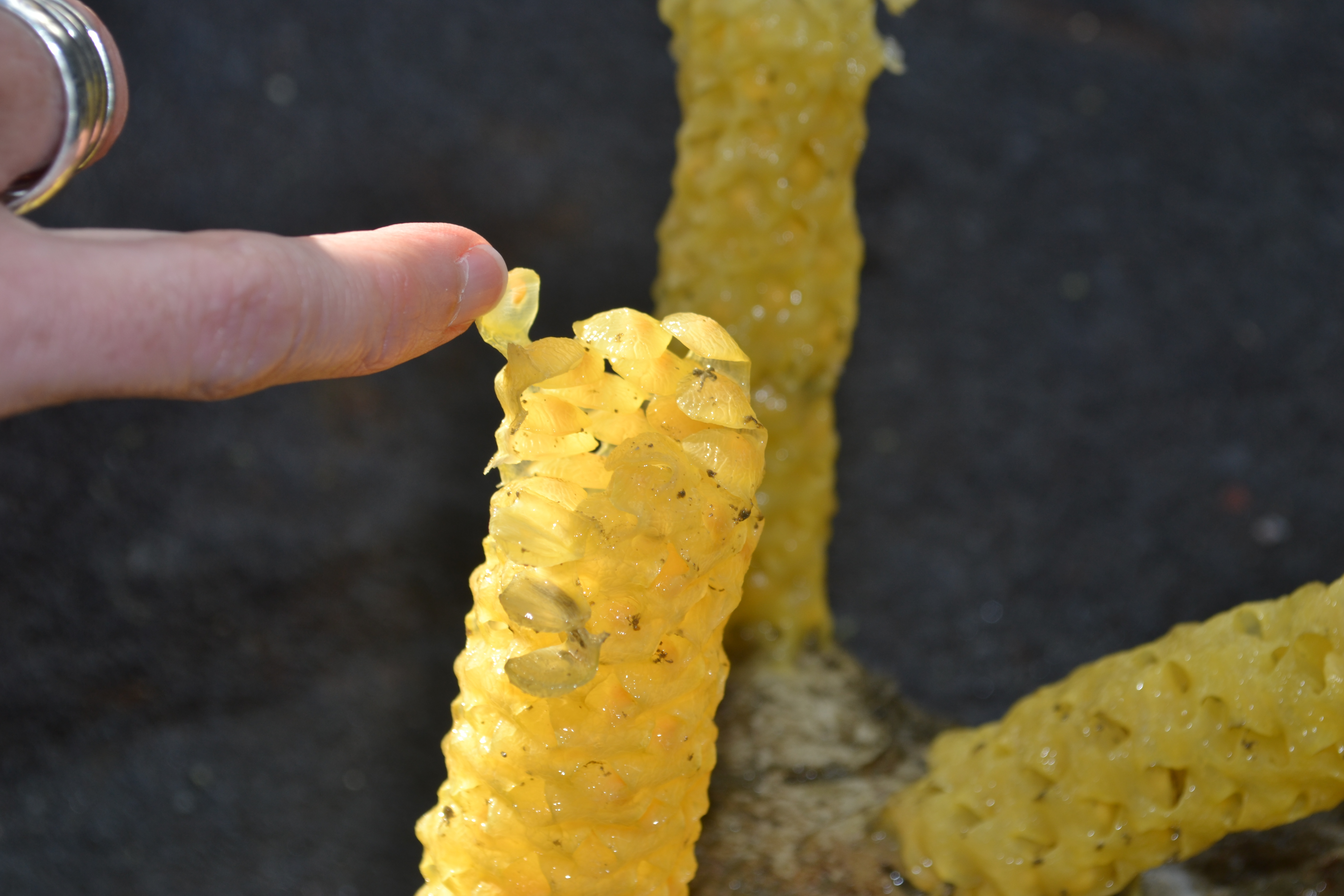
An Osmotic fluid sampler is installed in a small diffuse flow site hosting abundant tubeworms, limpets, and palm worms in the ASHES hydrothermal fluid. When recovered next year, the fluids this sampler host will provide information on how vent fluid chemistry changes over time. The nozzle iis installed inside a triangular 3D thermistor array is Credit: UW/NSF-OOI/CSSF; ROPOS Dive R1835; V15.
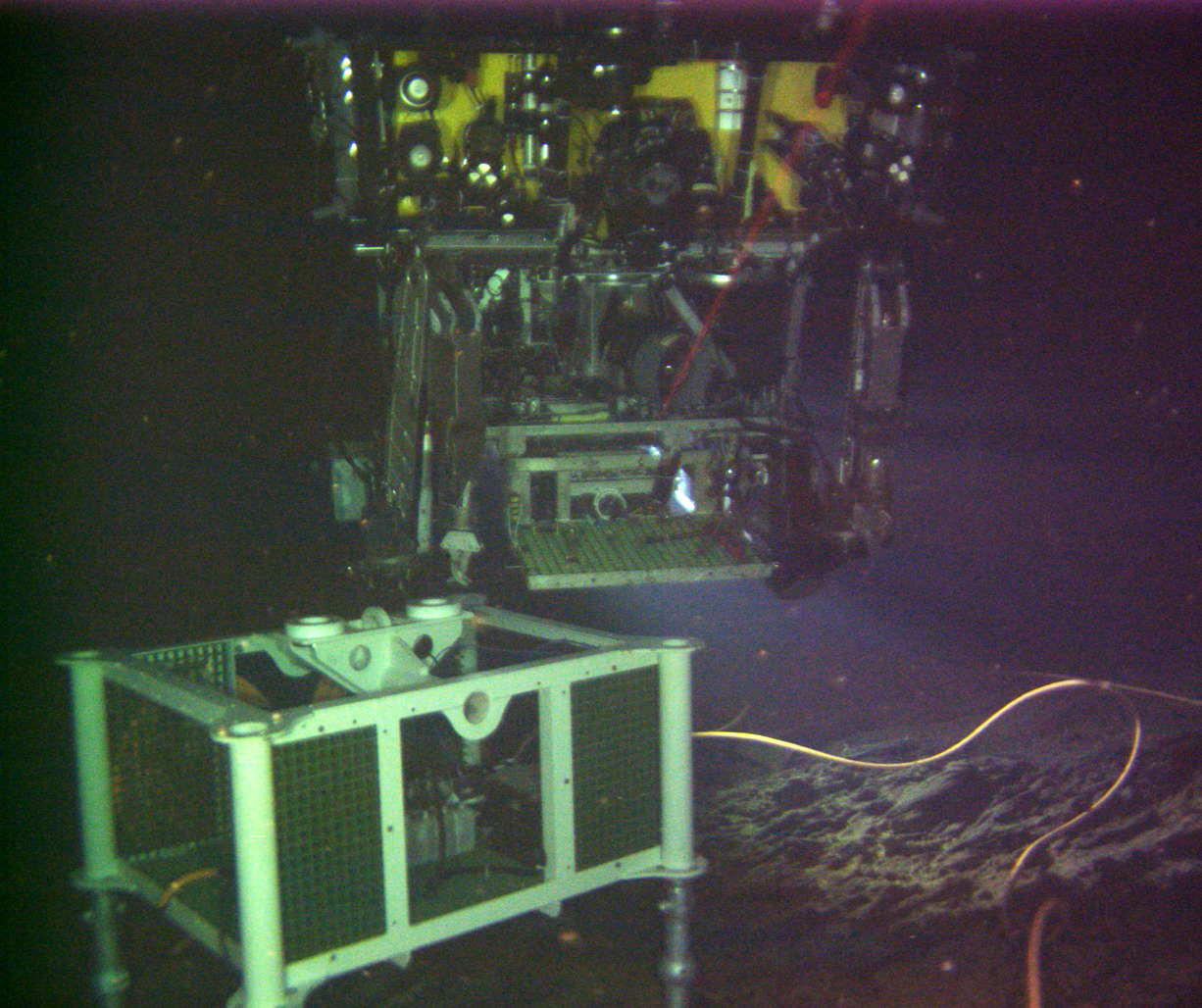
The newly installed digital still camera at the El Gordo vent within the International District hydrothermal field catches ROPOS above the mass spectrometer. Credit: NSF/OOI/UW, V15.
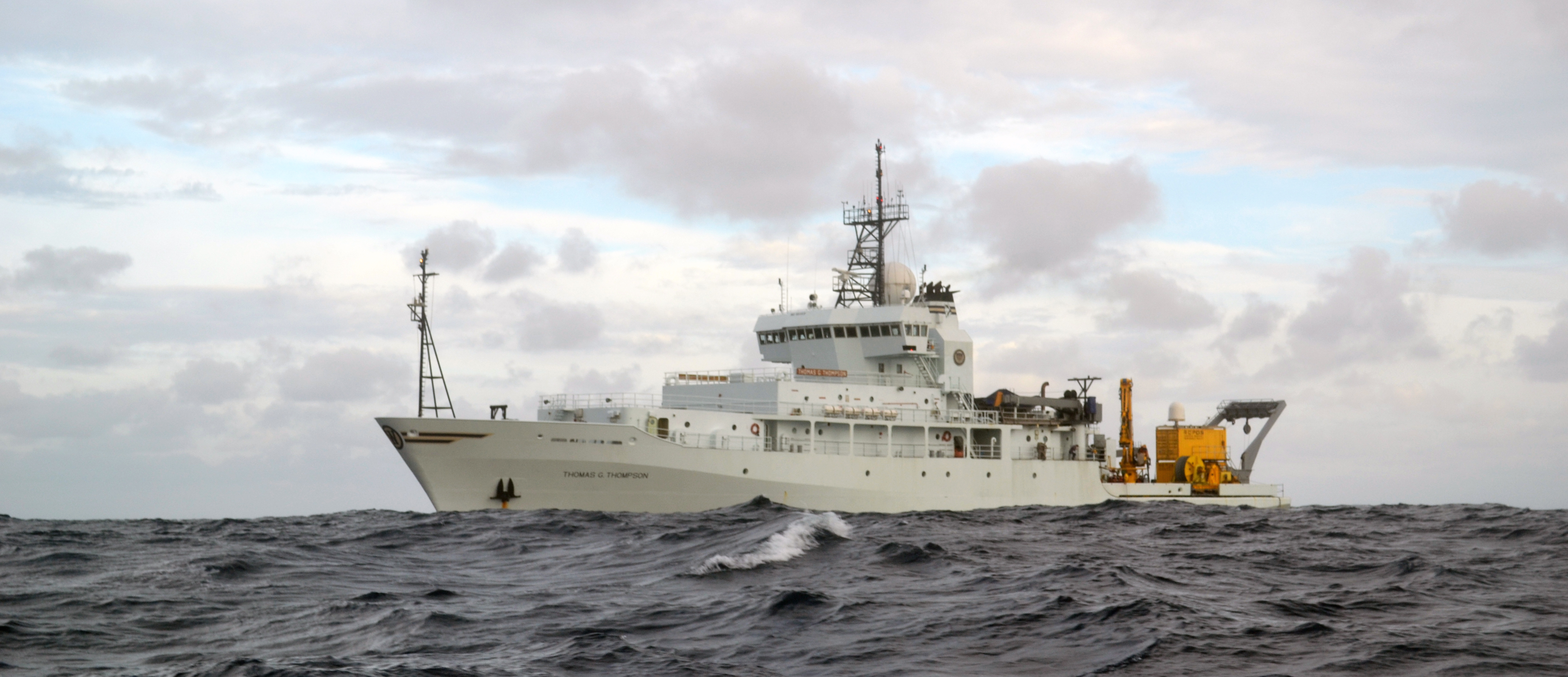
Leg 1 of the Cabled Array VISIONS"15 expedition has been extremelly successful with the back deck of the R/V Thompson bulging at the seams with recovered infrastructure and instruments. ROPOS has had rapid turn arounds, pounding out dives. The science crew is tired, but happy. Credit: Mitch Elend, University of Washington, V15.
Trina (APL-UW) does final preparation and checkout of a SAMI-pH sensor before the Platform Interface Controller is deployed. Credit: Mitch Elend (UW);V15.