
August 18, 2026
Reflections:
The 2026 VISIONS cruise has been an incredibly intellectually stimulating and fun endeavor. I joined because I thought I would enjoy being on a ship, but wanted to confirm and because I was interested in the ocean and ocean sensing. Through the journey, I definitely confirmed that I enjoy research cruises. Being surrounded by the sea was as beautiful as I expected, and I also unexpectedly really enjoyed the shift schedule and constant sampling/logging/other activity. Meeting the crew and Jason team was also one of my favorite parts, learning about ocean engineering from the Jason team and all their experience and getting excited with the crew as they got to participate in the RCA science through the live feed and had really wonderful curiosity and astute questions. In terms of the instrumentation, it was super awesome to learn about and see all of the different instruments that are used in the RCA, especially the IGT and RAS. I’m also now very curious about the HPIES, and plan on trying to parse through some of the data they collected.
Beyond the parts of VISIONS that I expected to be riveting, I have also come away with a new interest in both biology and geology of the deep! Before VISIONS, I would have been able to name octopus broadly, identify a few bottom fish, and that’s mostly it, but I’ve come away knowing the names of probably 15 new species, more I would recognize, a true love of rattail fish, and desire to keep learning. In an even larger turn, my interest and knowledge of the geology has expanded from knowing underwater volcanos and that fault lines exist to being interested in questions about the minerals, flow rates, and effects of the subduction at plate lines. Overall, I started VISIONS with a hunch I’d like being on the water and an interest in the ocean that was very much through the lens of mechanical engineering but have come out with a holistic curiosity and hope to keep involved in oceanography with my future work.
August 17th 2026
Location: Primarily Oregon Offshore
Depth: Varied
Seasickness: 0/10
Excited: Barely, it will be sad for it to come to an end!
Times “lost” in the hallways: 4.5
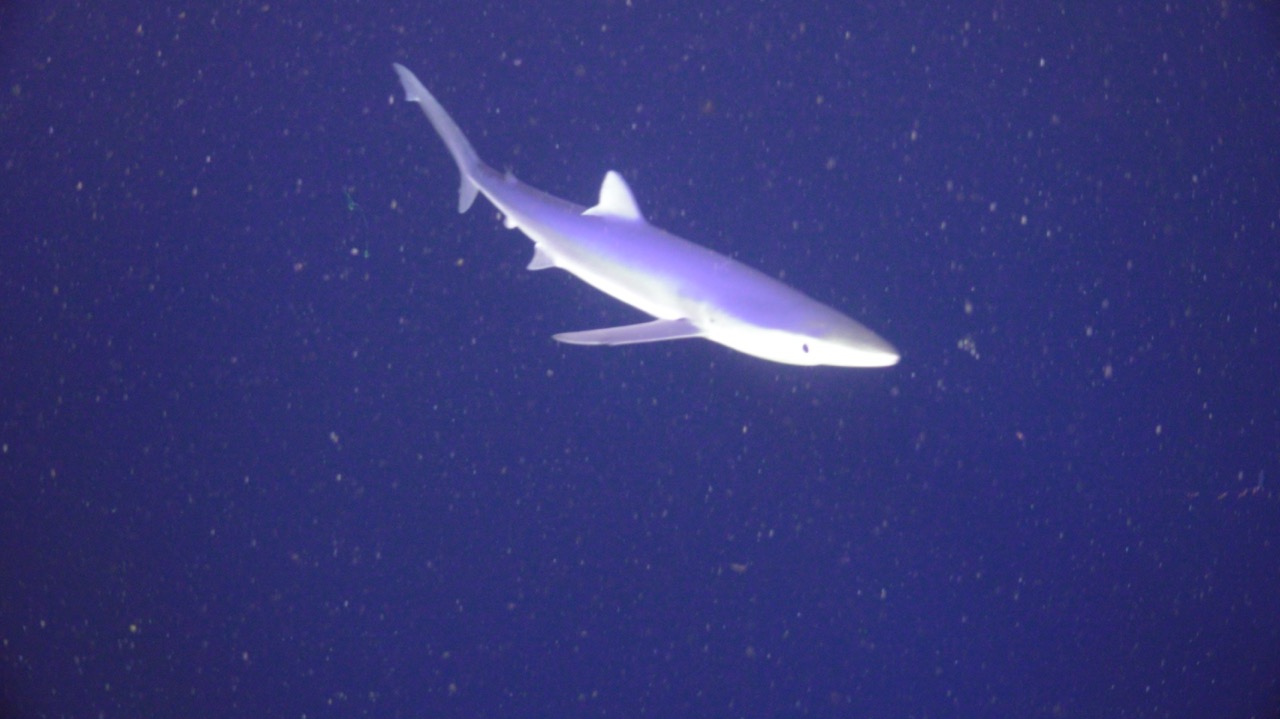
Favorite sighting: Blue Sharks
Shift this early morning started with a classic end of a dive, which was then followed by a transit – or in other words – it was shift snack time. There was representation of the classic leftovers and cup noodles, but the highlights were banana flavored corn puffs (think cheeto puffs but banana) and frozen Reeses, with a not terribly welcome guest appearance by wafers in coffee creamer constructed by Adrian. Following this we decided that it was the perfect time to play some ping pong while the transit continued.
This was expected to be a quick game or two, but time marched along and along, we became more and more convinced that the next dive was going to start after our shift. But at 03:50 we were back in the van, starting up the next dive. This turned into quite the blessing though, as immediately upon entering the water, the Jason cameras caught sight of blue sharks n the water. As the next shift appeared at roughly the same time we all got to swap out to be on deck watching them from the surface chase a school of fish around, a fun sight before bed.
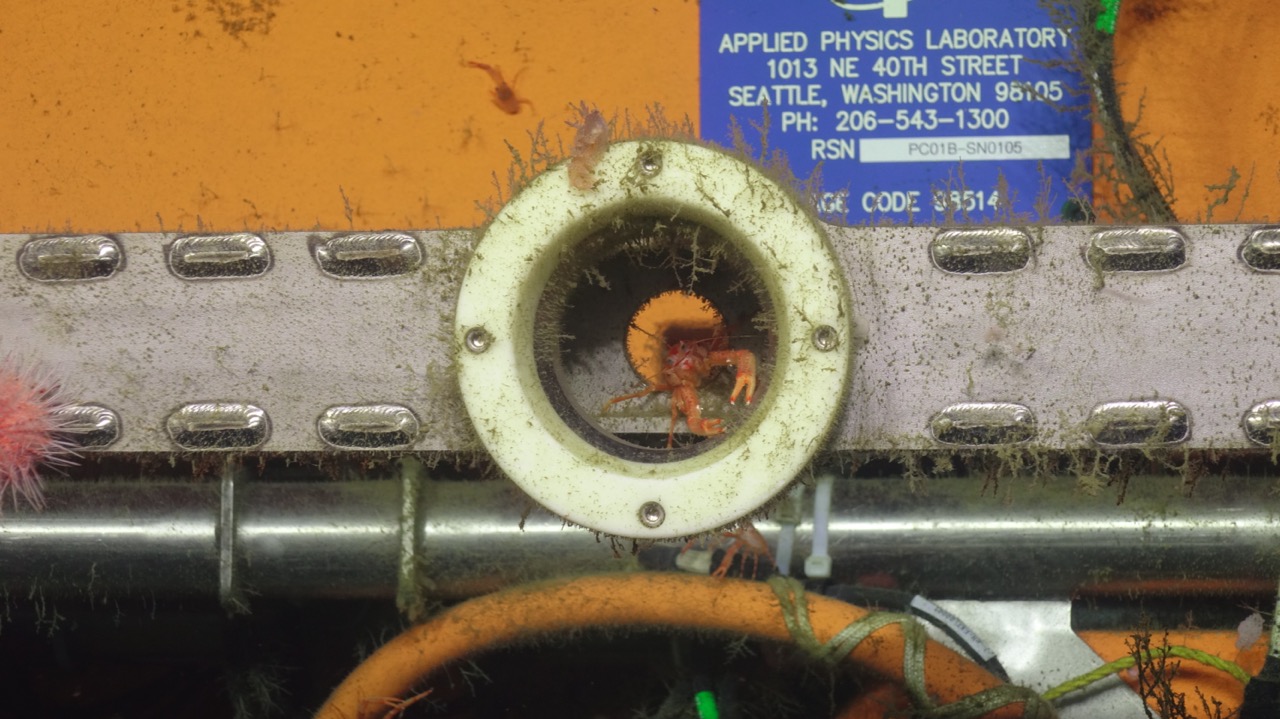
By 12:30 I was back in the van, getting ready for the start of the next dive. This dive was generally a survey of the moorings of one of the platforms that had been in the water for years. However, it also saved a dual purpose, allowing the Jason team to do a test run of multiple sonar systems they had onboard, as their current one keeps breaking and is quite expensive so they wanted to investigate other options. We dove to the bottom, and they started this testing. They found their current sonar seems the best, but will review the footage later stop confirm. Then we went for a survey upward along one of the mooring lines. It was entirely covered in life, which was awesome to see, but the platform at the top was even more spectacular. On the platform we saw dozens of squat lobsters, nudibranchs, sponges, anemones, and lots more.
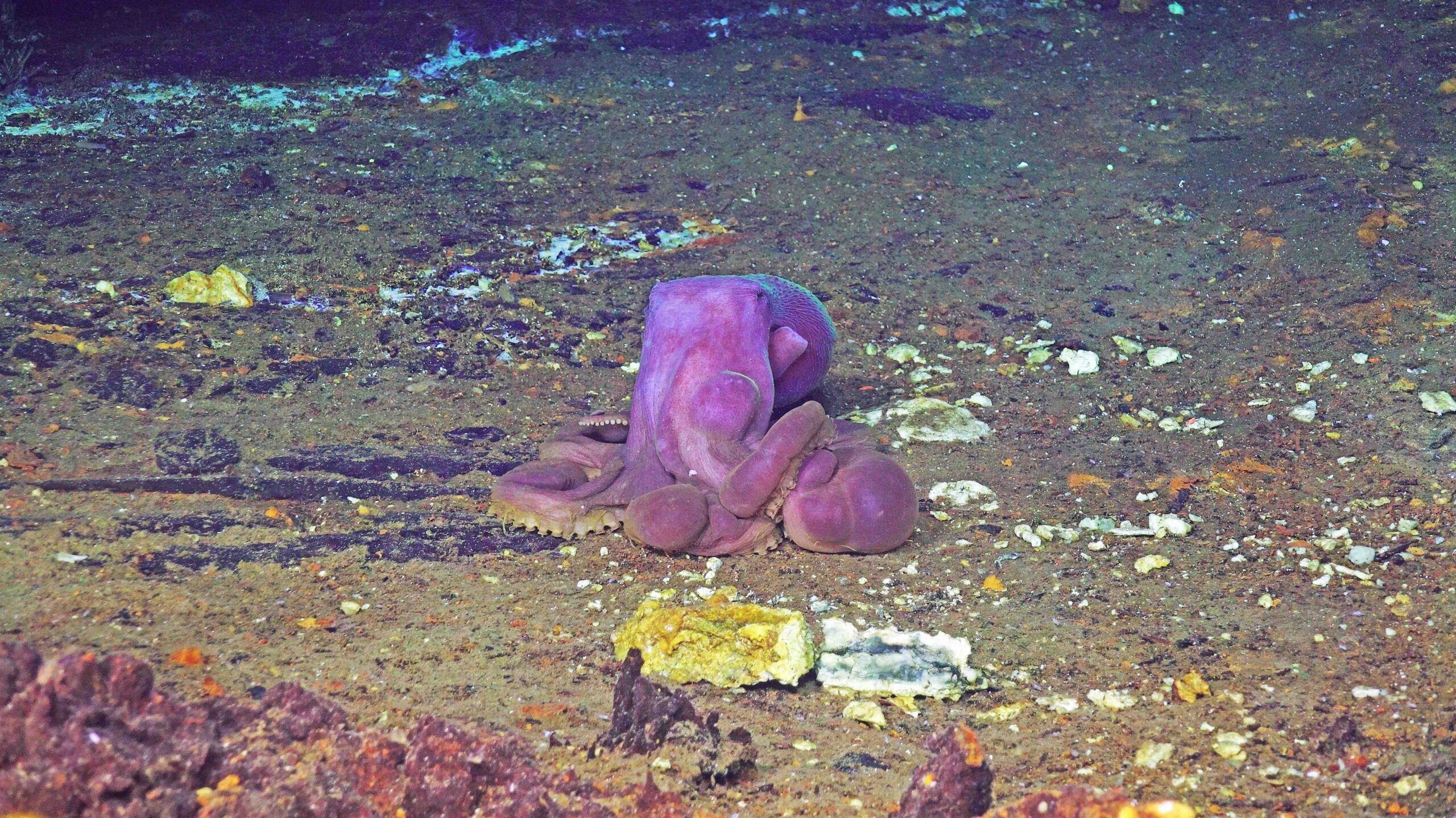
This was at the end of my shift, and normally after shift I am feeling like I need a break from the van – as cool as it is it gets dark. However because of the variety of life we had been seeing on this dive, combined with my curiosity at the second type of mooring/anchor for the site, I decided to grab my computer and blog in the van instead. And what a great plan that was! Firstly, right outside, the waves had picked up somewhat which is beautiful, but there also was a large flock of what I am pretty sure are black footed albatross. Then, immediately after getting back, I got to see some subsea excitement. There was a lot of sable fish, an octopus, and a brown cat shark, all fun on their own, but the sable fish went to chase a bit of food, and got the octopus all riled up in a bout of excitement.
Next up was another transit, during which I had a great discussion with Katie about lots of things researcher, OOI, and oceanography. We also got to see a whale spout, and hung out on the deck for a while. This was supposed to be the last excitement of the day, but shortly after Jason started the next and final dive – there was an unexpected issue that made us abort the dive. The Jason team responded quickly, and Jason is now back on board and the issue has been identified, which is good news! However, because the next cruise Jason is booked in only a few days, and we had already moved onto bonus dives, it was decided this was the sign to call it for the cruise.It certainly is partly due to the much too soon end of the cruise, but it seems as if each day of the cruise is attempting to one up the last, and they are doing a darn good job of it.
August 16th 2026
Location: Axial Base and transit
Depth: ~2600 m
Seasickness: 0/10
Excited: Superbly!
Times “lost” in the hallways: still only 4!
Favorite sighting: Rattail Fish
Today’s shift started slowly, with a multi hour Jason descent to the bottom of Axial Base with the goal of collecting an HPIES – a multi instrumented piece of equipment. On the way down multiple of the crew popped by and got to test drive the manipulators, and their excitement was contagious. Once we were at the bottom and attempting to collect, we ran into an issue. The handle with which we were supposed to pull on to disconnect the cable from the main array broke off. This definitely caused some worry, but in the end gripping the HPIES cable directly allowed us to disconnect. That was most of the shift so I then hit the hay.
Upon waking, we had already begun on of our final transits – from Axial Base back to Slope Base – an 18 hour transit. That meant that after my quick breakfast/lunch, we were all available for the fire drill. This one was much less chaos, it involved grabbing evacuation gear then just meeting in the main lab – no immersion suit testing today – and end of cruise announcements. Following this, a couple of us went out onto the bow again to admire the view,.
After this happened, I helped to process some of vent fluid samples that had been brought up by the RAS/PPS instrument. It was enjoyable, with a slow start as we learned what needed to be done and figured out the timing of each step, but towards the end we became a perfectly co-ordinated machine which feels awesome to fall into. During this, we also started smelling some smoke, which at first was a bit worrying, but when we poked our head outside to check it out, learned it was in fact a grill running – teeing us up for another delicious dinner by the galley crew and grill master. Every stellar dinner so far has left me a little indecisive with what to do next, but this time we had an engine room tour.
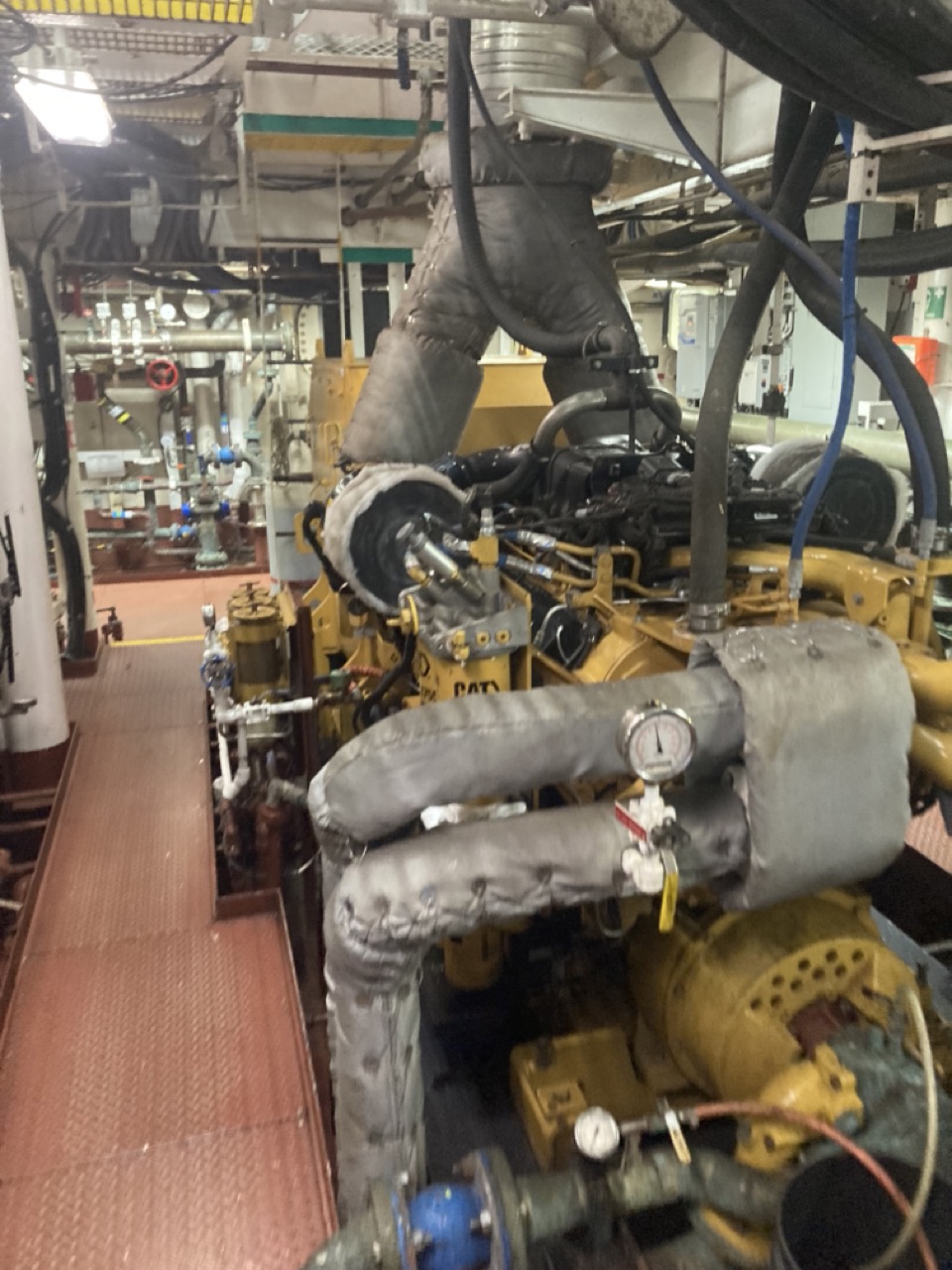
The engine room was an incredible spot, with tons of machinery all woven together working to make the ship livable and with redundancies everywhere. As you might have guessed, my favorite part of the ship for the day was down there – all of the different pipe making equipment they had so that no matter which pipe corroded or busted they would be able to repair it without shore. Following this engine room tour we also got to go to the bridge, which had some great views and some entertaining items due to the R/V Revelle being owned by the navy, such as a set of “big eyes” basically mounted binoculars and ice clearing circular motors in the window. This made for a very full day, so after the bridge I went for a quick nap before the next day.
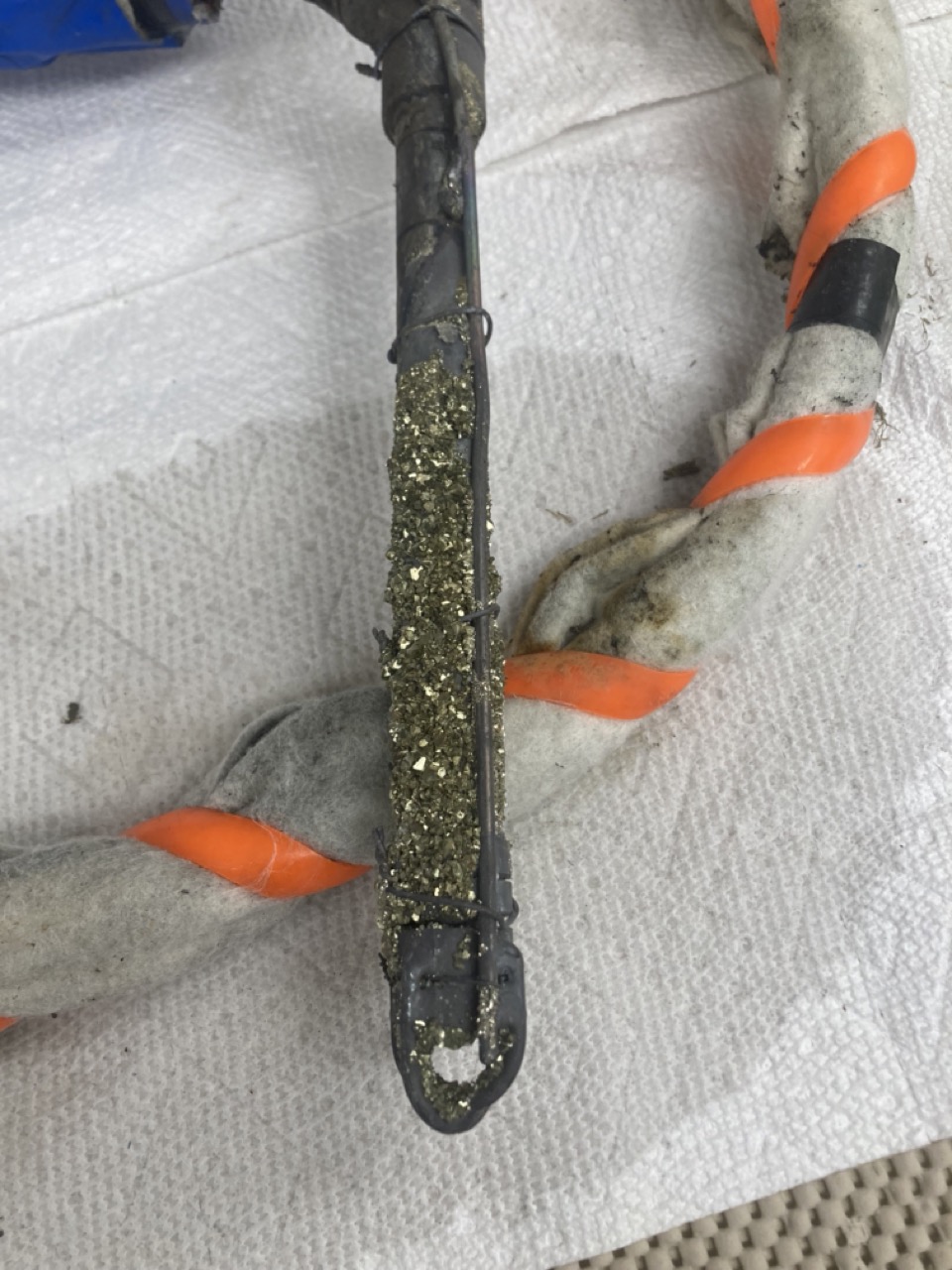
One miscellaneous item from the day, was the pyrite that had formed on a probe brought up the previous day. It was one of the prettier things I have seen, so wanted to share the photo in
August 15th 2026
Location: Primarily International District
Depth: ~1500m
Seasickness: 0/10
Excited: Superbly!
Times “lost” in the hallways: still only 4!
Favorite sighting: Octopus (Yes again), though spider crabs were also awesome.
Today was one of the most exciting days by far! It started with a bang – as right at the beginning of my first shift we were sampling with IGTs (Isobaric Gas Tights – see my old blog for more info). This was fun as we went around with temperature probes trying to find super-hot (>300°C) areas of the vents. Once we did so, we opened the IGT and had a sample flow in, which we later brought up to the surface. Additionally, we placed another cool sensor – the TRHPH (temperature-resistivity probe – see general website for explanation of this one) – and saw another octopus. This one seemed to care more about us, and ballooned out it’s tentacles in a fashion I had never seen before!
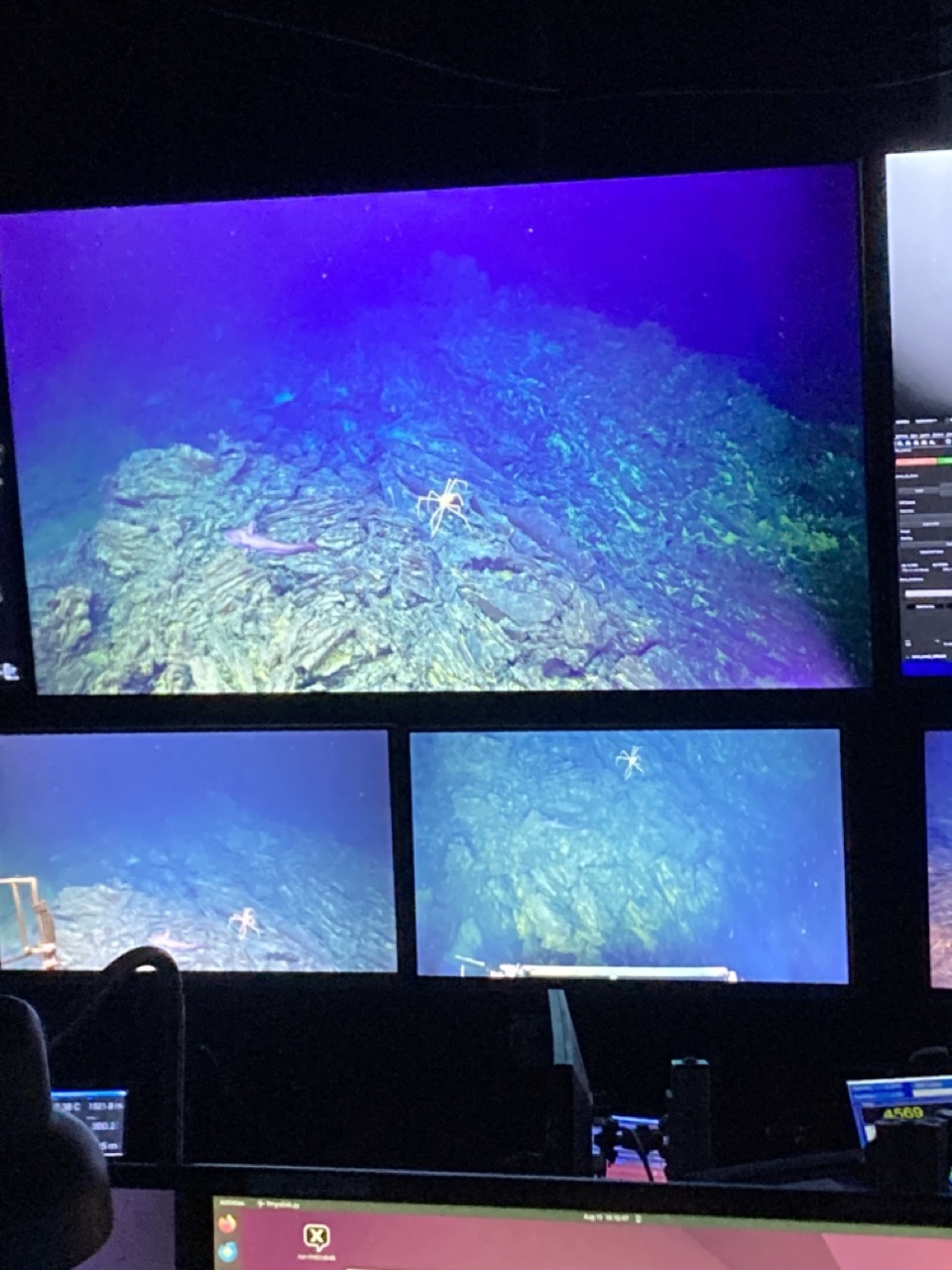
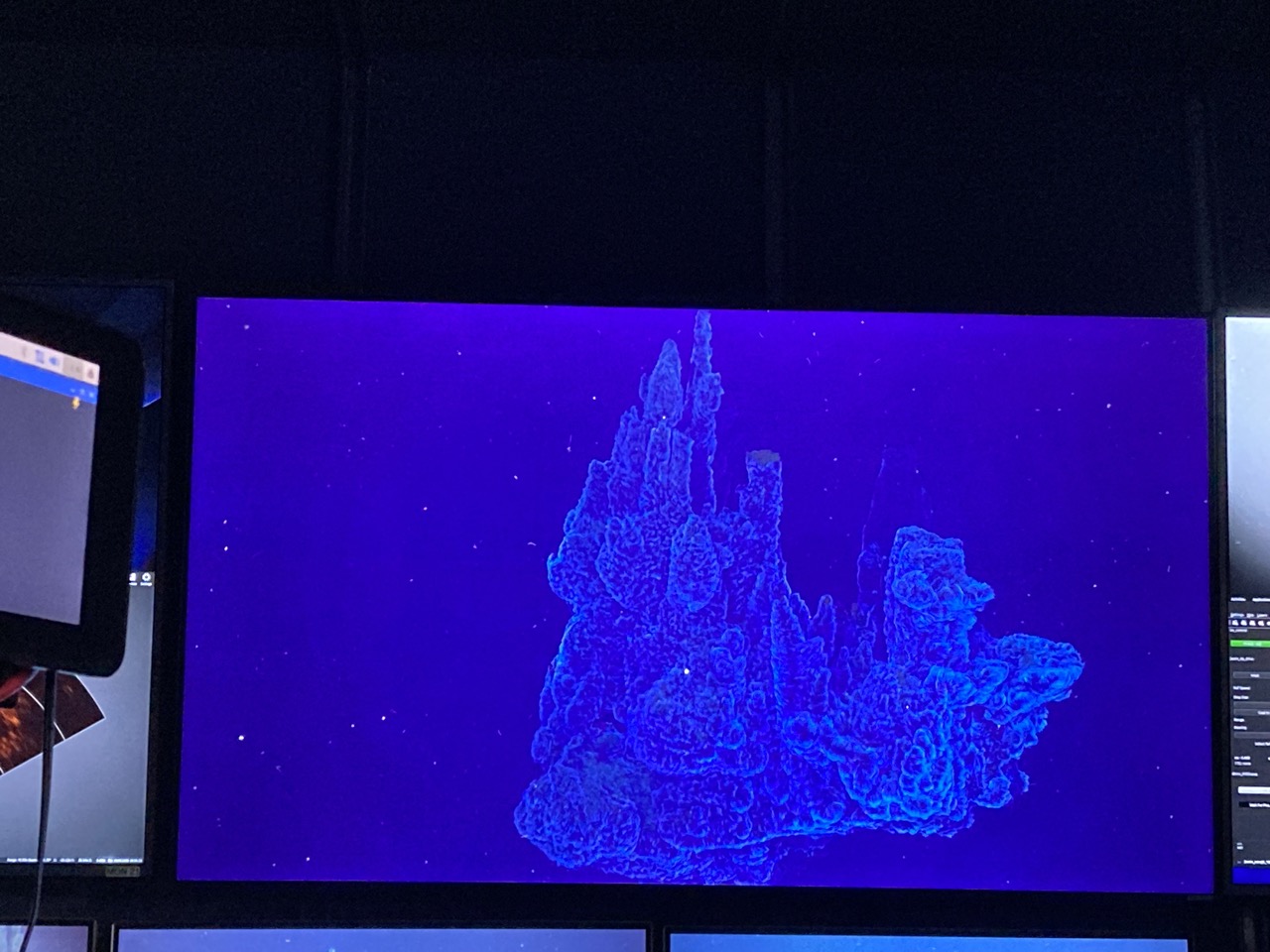
Around 11:00 – so even before my next shift – I was back up in the control vas because we were doing a survey of a section of the International District and long lava glow channel to the southwest with some incredible geology and biology. At the start this included a spider crab, with very spindly legs who was perched on cool old lava flow formations. Shortly thereafter we surveyed some more vents, including El Guapo – which was an 18 meter tall spindly tower with black smokers spewing out of the top – which I thought was my favorite vent! Though as cool as El Guapo was, it was quickly surmounted by Castle. Castle was another very tall vent, however it was less spindly and instead had large overhands of multiple spires and cones (castle-esque of course). It was also covered in white bacterial mats and purple blue ciliates! This led it to appear like a floating ghost as we backed a bit away, potentially the most spectacular site I have seen.
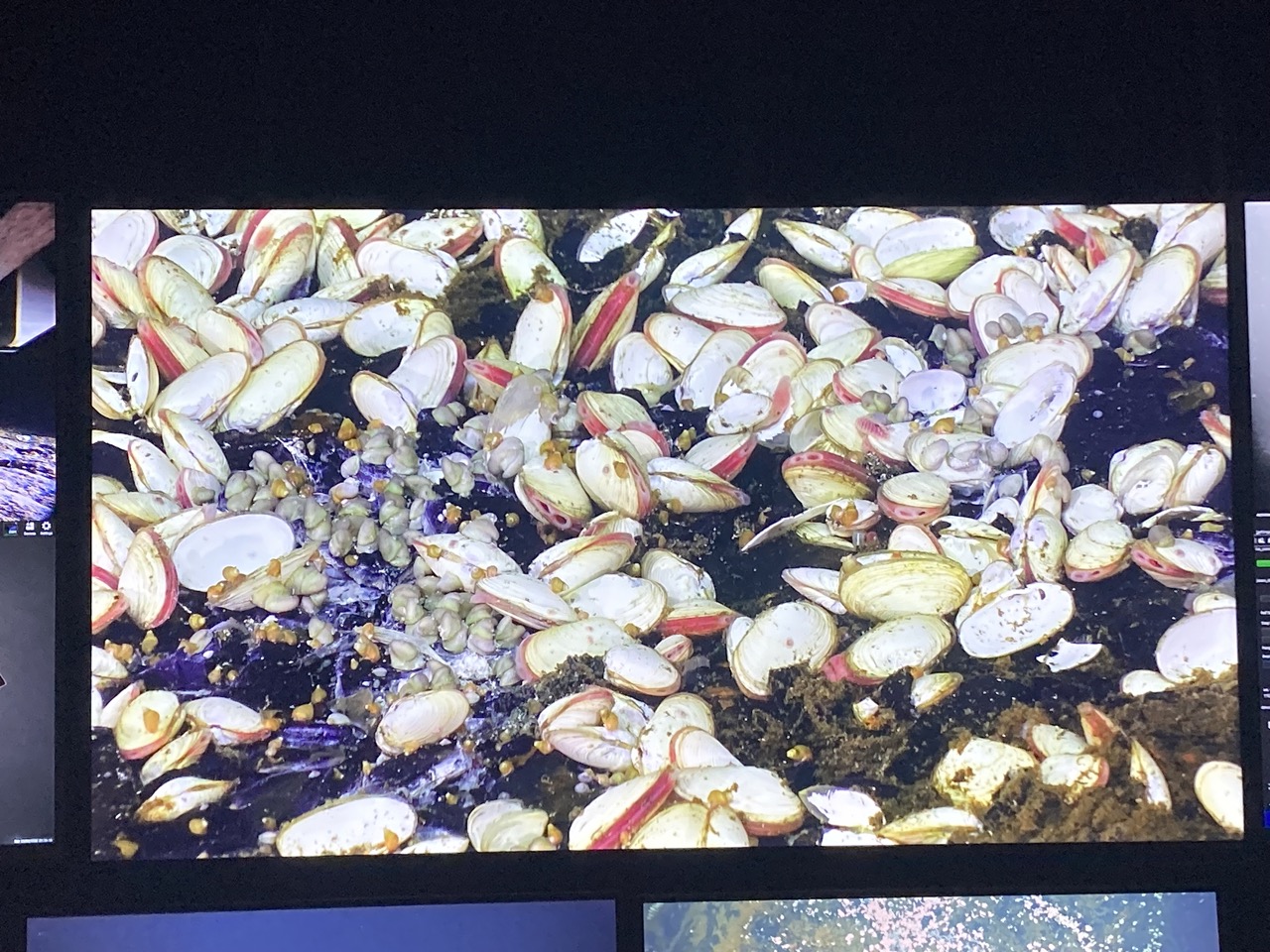
After visiting these incredible vents, we continued on our survey journey. There was an incredible frozen lava river we followed, which was bordered by spectacular caverns that had formed with the first lava lakes hardening while lower lava stayed liquid and drained from beneath the ceiling. There was also spectacular pillars of lava that formed around steam escaping from the seabed during recent volcanic eruptions. This type of eruption is pretty common, but is nothing to worry about from the surface! Further down the ‘river’, we ran across fields and fields of clams and tubeworms that were being enjoyed by a large number of spider crabs, a peek into the cycle of the ecosystem that was a joy to see. Overall, this was the most spectacular dive of all of them in my opinion, outclassing the geology, biology, and just plain cool factor of the rest!
One instrument I have not yet talked about much is the RAS (remote access fluid sampler). Essentially this takes and holds multiple samples of hydrothermal vent fluid to be brought up to the surface and analyzed each year. After my second shift, I took part in the preparation of samples to by analyzed onshore. This was quite a fun time as I was responsible for pipetting in chemicals and subsampling the larger collected samples to measure the hydrogen sulfide concentration and pH, which made me feel like a chemist or biologist in a way I haven’t for years.
In addition, as I commented on in yesterday’s blog, I made a concerted effort to go out to the deck more, which involved me eating dinner outside today. This was very nice and chill, and halfway through one of the ships chefs came out and we had a nice little discussion, which was great to get some time interacting with the crew as generally we are pretty separated. One aspect that is only just starting to hit me is how quickly the whole trip is passing by – it certainly feels like we should have more than two days of diving before the transit back to Newport OR and the end of it all.
August 14th 2026
Location: Primarily International District
Depth: ~1500 m
Seasickness: 0/10
Excited: Superbly!
Times “lost” in the hallways: still only 4!
Favorite sighting: Octopus
The first shift of the day was another cool dive in that we continued to see some great features and organisms – the rattail fish is becoming my favorite for sure. They are a cool silvery color, you can see their leg lines, they have big eyes that always look a bit surprised to me, and overall their anatomy is cool sharp yet flowy. However, first shift was pretty similar to the other Jason dives I have described, so I’ll skip most of the details.
Shift two of the day was during J2-1786, and the time that I was on watch the main focus was placing of a vent cap. This is pretty much what it sounds like – a cap that is placed over an active vent to prevent significant entrapment of seawater during sampling of hydrothermal fluids. This effort is being conducted in the International District Hydrothermal Field, with many diffuse flow sites that we were choosing from. However, the vent cap itself led to quite a bit of complexity in choosing the site. The largest constraint was the temperature – the goal was to find a site between 20°C and 50°C, as lower would not reflect hydrothermal fluids versus colder seawater, and higher ran the risk of damaging the equipment and not sampling fluids where microbial life can thrive. Another constraint was that there needed to be relatively level seafloor, as on a slope that was too steep, the vent cap would topple over. One more constraint was that the cable to the vent cap was not very long, meaning that there was a maximum distance from the junction box that the vent cap plugged into that it could be placed.
The first step of the process was testing the temperature of diffuse flow (which can be seen as shimmer in the water) with a temperature probe held by Jason. During my shift alone this was probably tested on 10 plus sites. Following the testing of the site, especially promising ones we placed the vent cap over. Even with pre-testing, however, many of these sites did not work, so it took a while to finally find a suitable site of diffuse flow. Once we did find an area though, it was a very cool sight watching the shimmering flow travel up through the opening at the top of the vent cap.
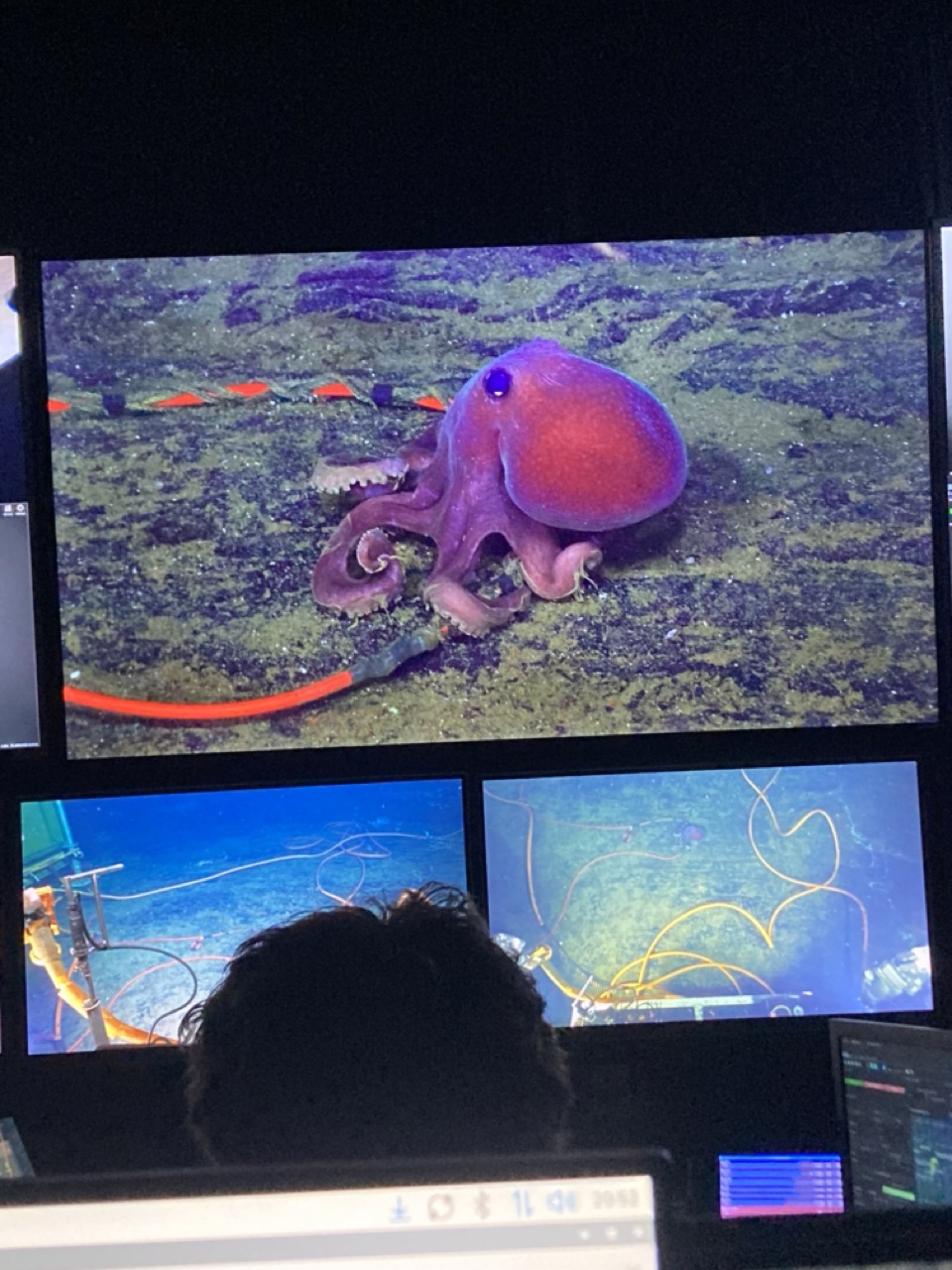
Another highlight of this second dive is that we also saw an octopus! It was chilling out on one of the cables and was quite cute! Luckily we did not need to adjust the cable it was sitting on, so we admired it and moved along. It is somewhat surprising how chill the creatures are with Jason, generally ignoring us, sometimes investigating, and every once in a while even bumping into us (especially the black cod towards the start of the voyage). That being said, I suppose there is not exactly a precedent for very large “creature” that is outputting the visible light spectrum, so it does make some sense that they generally ignore us.
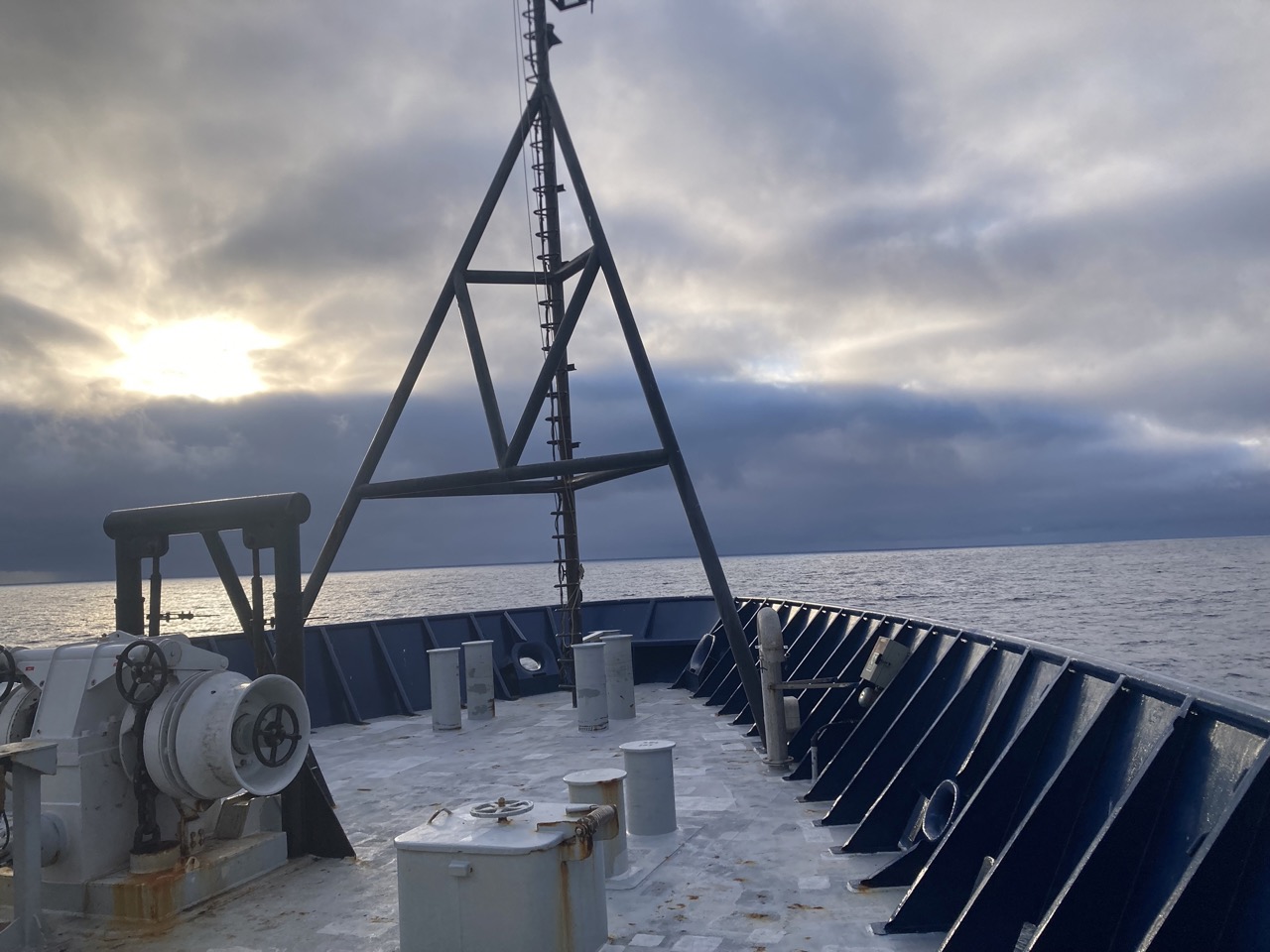
One of the cool items I noticed today was a fire hose path through the main hallway doors. It is akin to a cat or doggy door – but made of solid metal and right at the opening side bottom corner of the doors.
The final highlight of the day was realizing that I had not actually gotten out to look at the water much (in large part due to the shift schedule I am on puts a lot of the daylight hours during prime sleep hours or inside the control van), so after dinner I went onto the main deck a read/sea watched for a while. This was very calming and certainly something I’ll be doing again.
August 13th 2026
Location: Primarily Axial Caldera
Depth: ~1500 m
Seasickness: 0/10
Excited: Stupendously!
Times “lost” in the hallways: 4 (none today, I’m turning into a pro!)
Favorite sighting: Scale worms
The start of the shift today was right at the start of a dive where the goal was to go down and replace a high definition camera that is focused at a particular site. The site is the Mushroom vent site in the caldera of Axial Seamount, which is one of many vent sites where fluids seep up from the beneath the seafloor through cracks. The general principle is that seawater seeps through cracks in the seafloor to depth and is heated by hot rock/magma below. As the seawater reached depth it heats up, becomes acidic and leeches metals and other elements that are then dissolved in the fluids. At depth the fluids become extremely hot (commonly greater than 350°C or more), entrain gases such as CO2 coming off the magma chamber, and they become exceedingly buoyant. As they exit the seafloor and mix with cold seawater, sulfide minerals precipitate – the gases and minerals support an entire ecosystem that relies on chemical energy instead of solar energy like plants do.
The camera we were attempting to deploy, live streams the whole year back to shore, and is crucial to studying the dynamics of the vents and surrounding organisms. However, in attempting to lower Jason into the water with the camera below it in the undervator, the slightly more rough seas struck hard, blasting through the dozens of zipties and attachments holding the camera in place. This was quite worrying as the camera looked like it might have major damage, so the dive was aborted. While the Applied Physics Lab folks assessed the camera, the dive team pivoted to what was supposed to be the second dive in ASHES, and took a CTD down. This instrument collects the same conductivity, temperature, and pressure data (which tells us salinity, temperature, and depth data) as the overboard CTD I have discussed in previous blogs, but this one is placed on the seafloor for monitoring fluid properties near the seafloor rather than across the water column. This dive went off without issue.
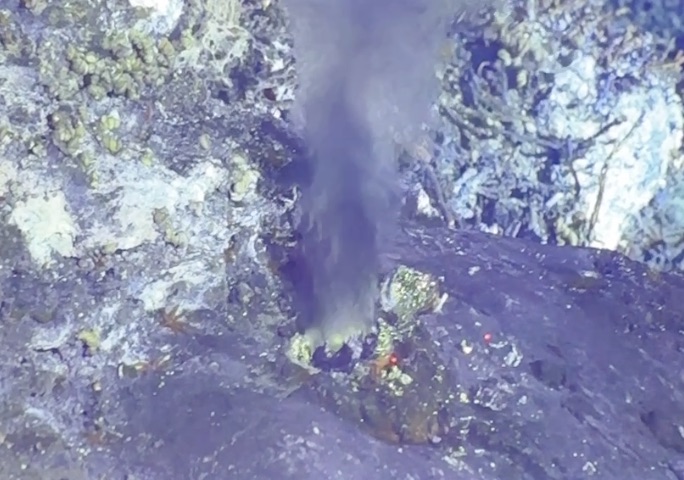
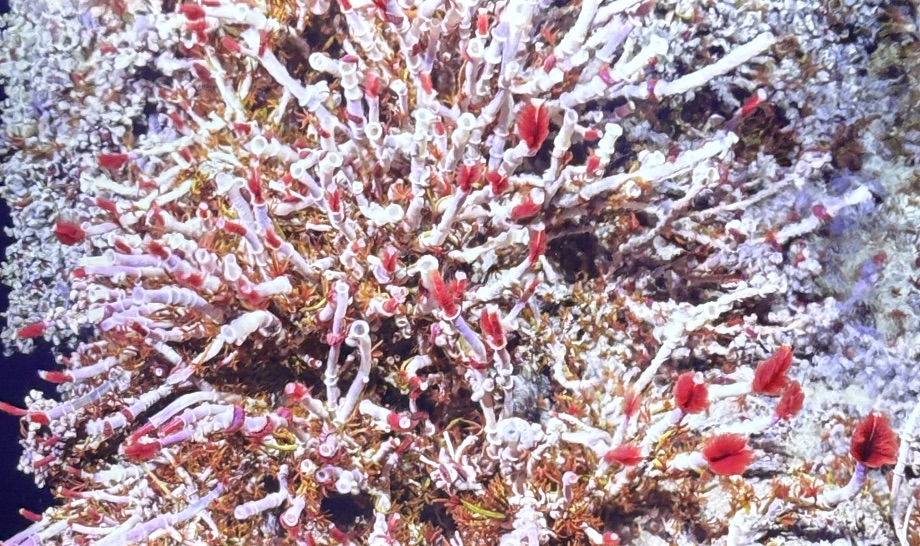
Following this, we went to a new location about 30 minutes transit away (Central Caldera), and did another dive turning some equipment – though I was soundly asleep through this one so don’t have any juicy details, just rumors of some wonderful shark sightings I missed. By the end though, there was some great news: the HD camera that we suspected had broken was in fact still in working order! This meant that it was re-attached to the sled underneath Jason and we came back to the site by Mushroom vent to deploy it. This turned out to be a spectacular dive! First order of business was placing the camera we carried down. To do so we had to navigate the literal (cooled) lava field to find a suitably flat location. Once this was done, Jason unplugged the 2025 camera, moved it out of the way, placed the new camera (in the exact same spot to ensure consistency for studies of the site), and toured the Mushroom vent. This was incredible, as we got to see tubeworms, palm worms and the black smoke exiting the vent, and many other awesome features. The camera then needed testing through the fiber optic cable to shore. Jason turned off all the lights while testing- which led to incredible backlighting of the vent. Unfortunately we were still on a limited time crunch, so couldn’t admire for too long, but right next door to Mushroom there is a vent dubbed Inferno, which was also incredible. It had even more black smoke pluming out of it (black smoke is the mineral laden fluid – it is not actually smoke just strongly resembles it), as well as some more creatures, including one very exciting one that looked like a centipede, is quite rare to see, and we are at the moment not certain what it is called!
Today I also learned about how an IGT or isobaric (unchanging pressure) gas-tight sampler works. It is essentially a heavy duty titanium tube built to withstand even the largest pressures, and is sent down to depth full of some air and seawater in the top part of a piston. Then when commanded to sample at depth, a valve is open and the high pressure hydrothermal fluid moves into the main compartment, pushing the piston up compressing the preloaded water and air. Then the valve is closed, successfully bringing sample back to the surface at the pressure of the deep sea. This is important because tit allows scientists to study the gases in solution, which are not stable at surface pressures, so an IGT is the only way to investigate what is down there!
August 12th 2026
Location: Primarily Slope Base
Depth: ~2900 m
Seasickness: 2/10
Excited: Definitely!
Times “lost” in the hallways: 4
Favorite sighting: Rattail fish
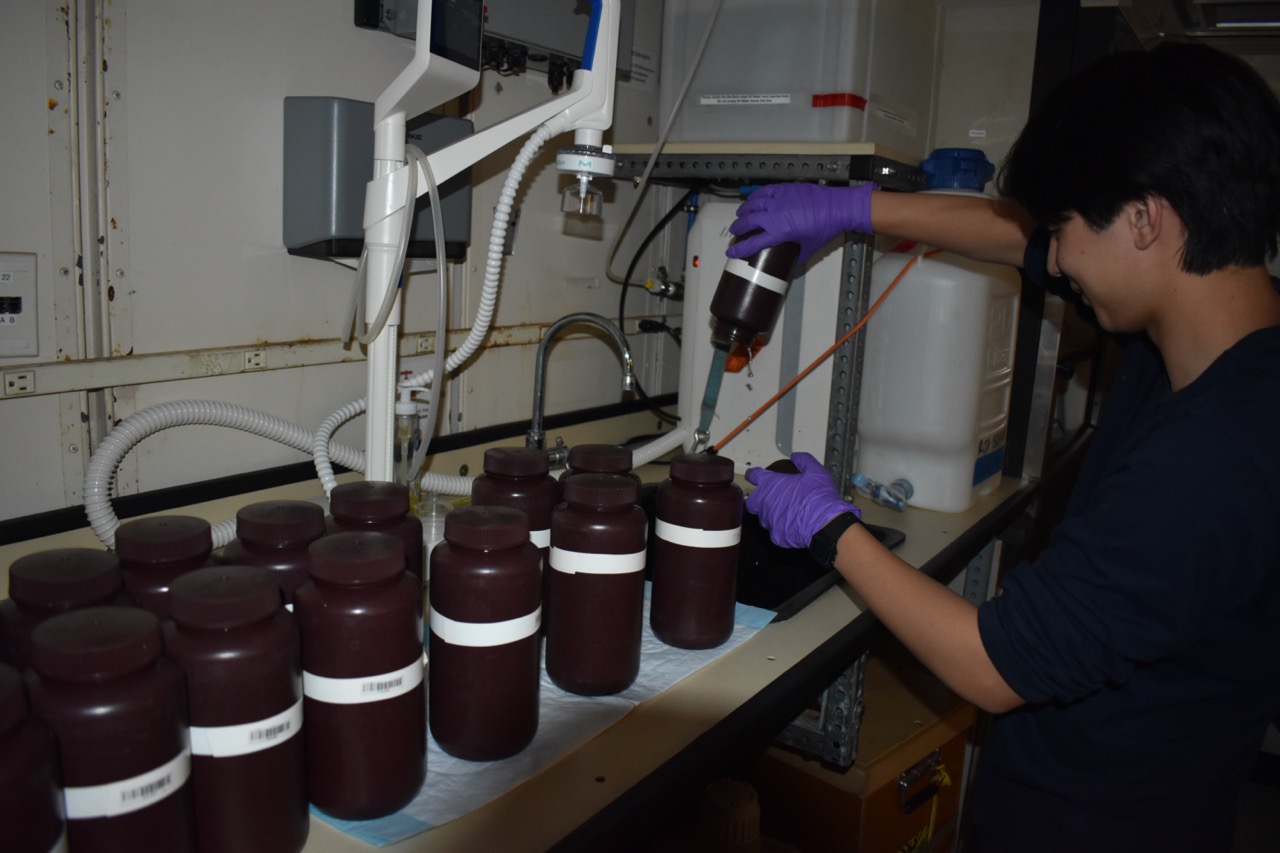
The first order of business upon waking was to finish helping collect samples from a CTD cast that happened at the end of yesterday. There had been two casts, the first which was down to full ocean depth, and a second which had gone shallower. The reason for this was that a few sensors such as the pH sensor cannot tolerate the full depth.
As Adrian and I started our shift collecting these samples, and the ship started transit to Axial Base, an 18 hour endeavor at 12 knts. During the ship transit, we collected samples from both CTD casts, and started to process them – specifically processing for chlorophyll. The way that this is done ship side is that each seawater sample is placed in a funnel that is then run through a glass filter to get rid of the water, but filter the chlorophyll. The filter paper is then removed and placed into acetone, frozen, and kept from the light. This process ensures the samples will stay accurate to the site and depth until they can be processed back in lab at the University of Washington.
Overall this first shift of the day was quite enjoyable because the seas had been quite calm and I had not felt even a bit seasick – I had not replaced my seasickness patch after it ran out yesterday. This turned out to be a classic plunder of forgetting that my current normal state was in fact due to the meds – and hence pulling an Icarus. As a result, by the end of the chlorophyll processing I was feeling slightly queasy. This was certainly not helped by the fact that as we transited the motion of the ship increased compared to stationary for a dive or CTD cast. Luckily though, I was still able to fall asleep and by morning the new patch had kicked in and all was good.
Since much of these blogs have been about the science and shift activities, I think now is a good time to give a shoutout to the galley crew. They have made us delicious meals every day, and there is always lots of snacks and leftovers for when shifts happen at crazy times so you aren’t there for mealtimes or just get peckish. Another part of being on ship that I’ve loved is going out and just watching the water.
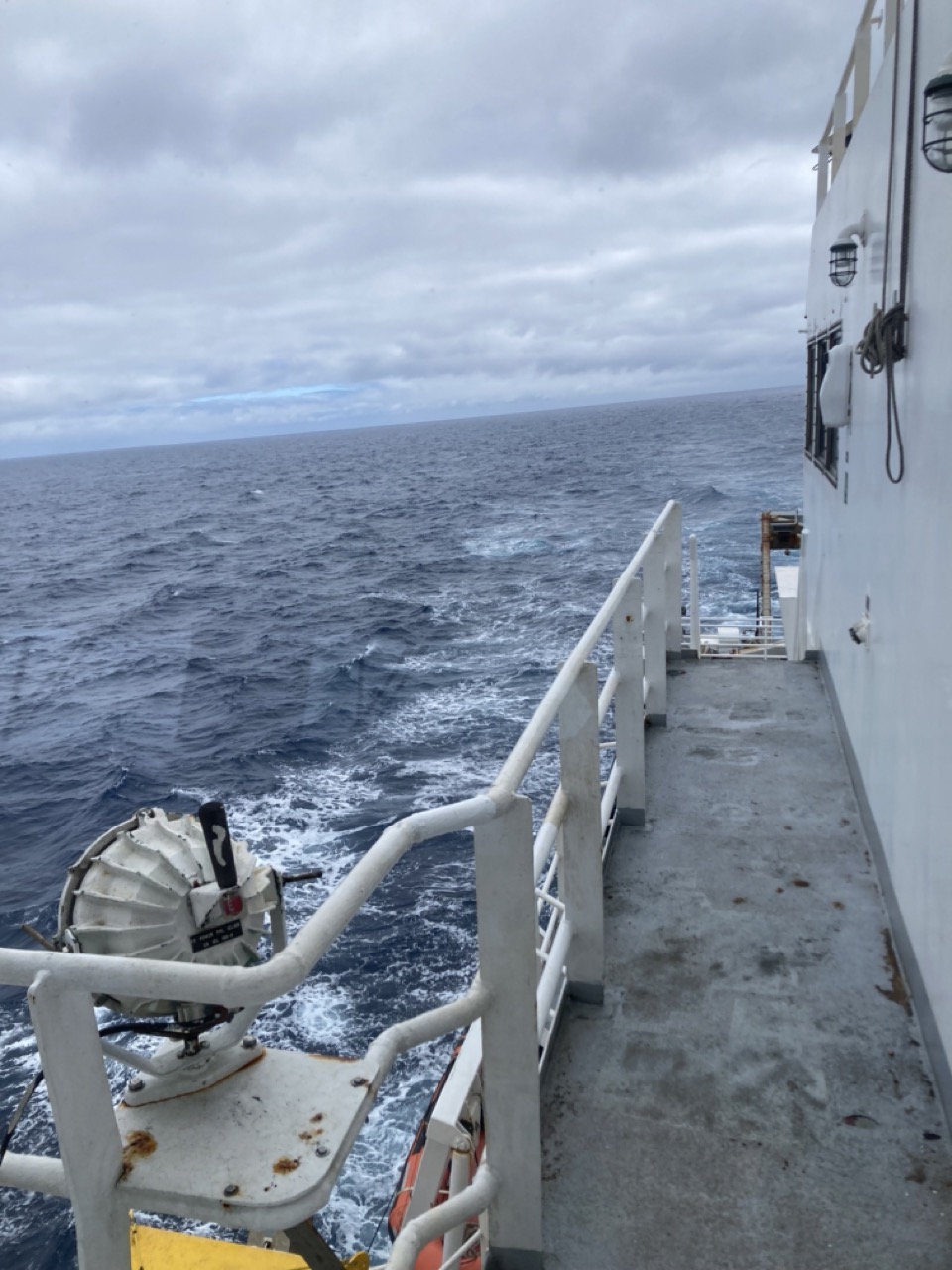
The waves are mesmerizing and especially during transit it is great to watch the spray and wake created by the ship. I was also hoping to do some meteor watching, but unfortunately it has been cloudy every night, so I’ll have to keep an eye out these next few days. One cool engineering aspect that I learned about is the connector cables for all of the instruments at the seafloor. They can carry power and data back and forth even at depths, and the connectors are oil filled. This helps with connecting and disconnecting them as when we swap instruments a small burst of oil clears seawater out of the connection.
August 11th 2026
Location: Primarily Southern Hydrate Ridge
Depth: ~770 m
Seasickness: 0/10
Excited: Definitely!
Times “lost” in the hallways: 3.5
Favorite sighting: Sole fish
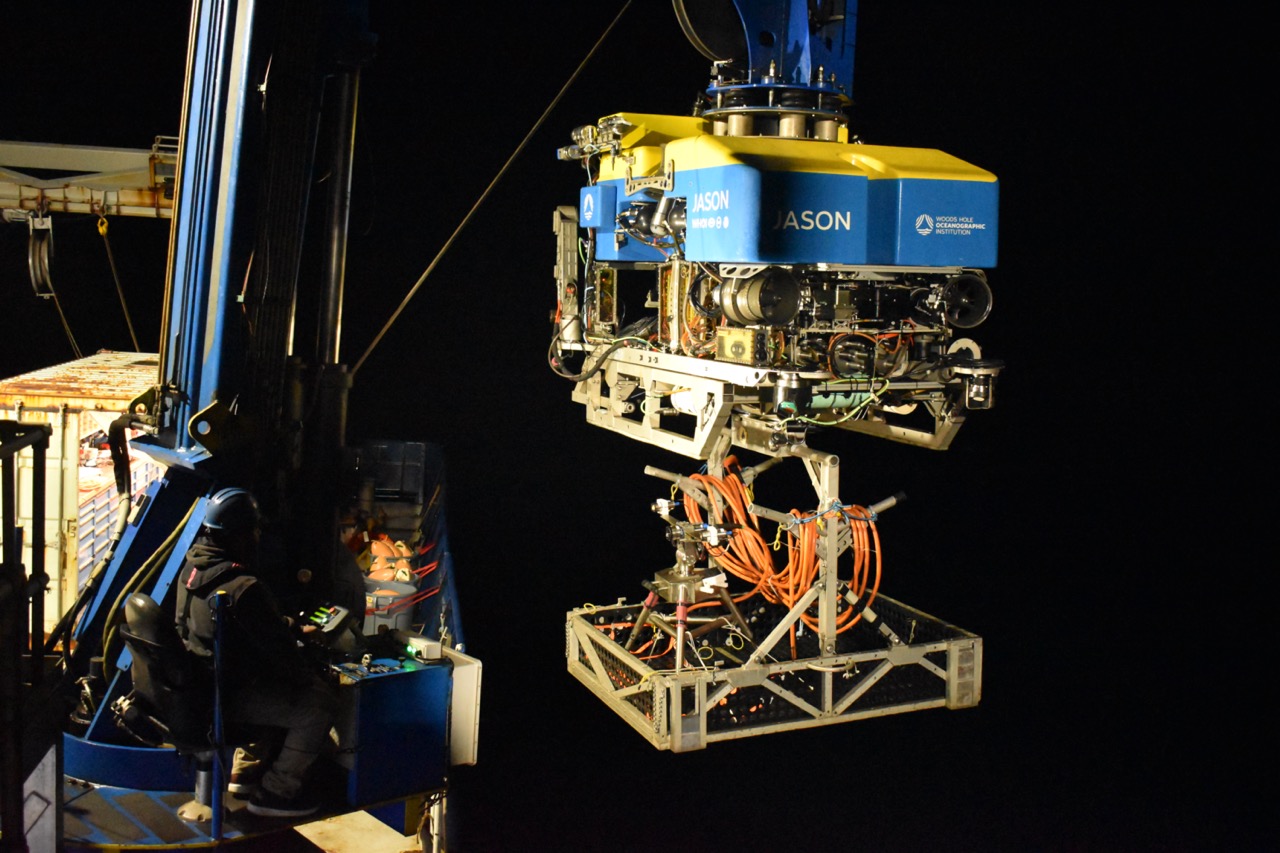
As normal, first order of business today was a shift in the Jason van. For some context in case you haven’t perused too much of the website yet, To the left is an image of Jason being deployed into the water with a payload below. Adrian – my shift partner – and I joined during Dive J2-1780 (labels on the current dive code can be seen on the livestream, so if you haven’t checked that out you should!) while the team was swapping out one camera system for another. This overall dive went pretty well, however it had one snafu. This was because the geology in the area is changing so rapidly (quite the opposite of the timeline I generally envision for the sea floor!), a camera setup placed last year had one of it’s legs sunken into a soft depression. This meant that extra care had to be put into placement of the camera to match the old view as closely as possible without being sunken in the depression, which the team handled without issue!
This camera swap portion of the dive ended right about 4 am (my shift end), but since the next endeavor was the methane seep survey I was quite excited about, I decided to stay up and watch. This was in fact the right decision, as we saw loads of really awesome sights. The first of these that was notable – a methane bubble plume coming from the ground (seeping). It was fun to watch the hydrate-encased bubbles rise what seemed like forever into the distance. The bubbles that rise from the site are methane bubbles, which is released in the area due to the subduction of the Juan de Fuca tectonic plate under the North American plate and associated geological processes which, like a snow plow pushes ocean sediments onto of the North American Plate. There were fuzzy white bacterial mats that consume the methane seeping up out of the sediment, as well as an orange mat of what seemed to be similar bacteria. We also saw many crab, rockfish, rattail fish, hagfish, brittle stars, and a flamingo left on site by the Monterey Bay Aquarium Research Institute several years ago, and lots more!
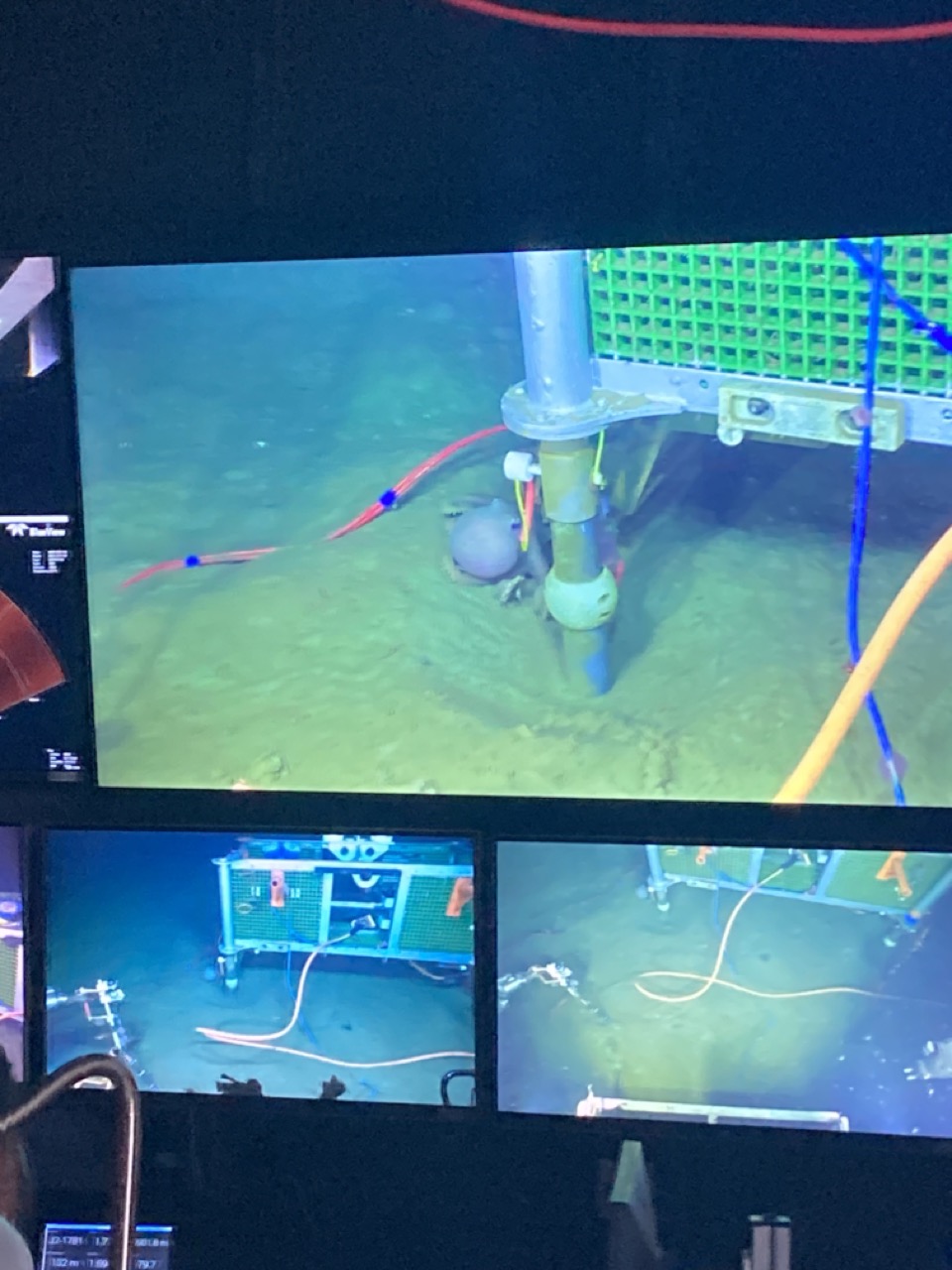
By the time I had slept some (and very soundly with the gentle rocking of the ship), and come back up to the control van for my noon – 4 pm shift, we were in the middle of Dive J2-1781 – a dive focused on swapping a junction box and some accompanying sensors. This is when I saw my first octopus on the cruise, which was awesome and I hope to see more. Although I did see the octopus, biology wise the best part of this dive was learning about how to identify many of the creatures we see down there – especially learning from Jolee and Adrian how to tell rattail fish and snail fish apart. At the end of the dive, we started the long ascent with Jason back to the surface, which because we started at 2900 meters, took around 2 hours. However, this ended up being great as the Jason crew gave us a chance to learn how to direct the manipulator arms! It was relatively intuitive, however it was still quite difficult – especially to tell where the “hand” was, which gave me an even greater appreciation for the skill that all of the Jason pilots have.
In terms of my favorite equipment of the journey today – (with full admission of bias because I got to use it), was the Jason manipulator mini arm! It was a small scale model of the full size manipulator, and you could freeze and unfreeze it with a button at the end which allowed you to reposition your hold to get a better angle for the complex twists the operators need to make.
August 10th 2026
Location: Oregon Offshore
Depth: ~600 m
Seasickness: 0/10
Excited: Absolutely!
Times “lost” in the hallways: 3
Favorite sighting: The little red shrimp who float by Jason scrambling their legs as if they were not meant to be in water.
Today started off strong, with a very exciting first shift at midnight. I woke up from a nap and went to the Jason control van, where although there was not a dive, I had a very good conversation with Adam, one of the Jason team members. He shared about how through an internship he eventually joined the team, and was also very excited to share an email list where many opportunities are posted for the academic research fleet.
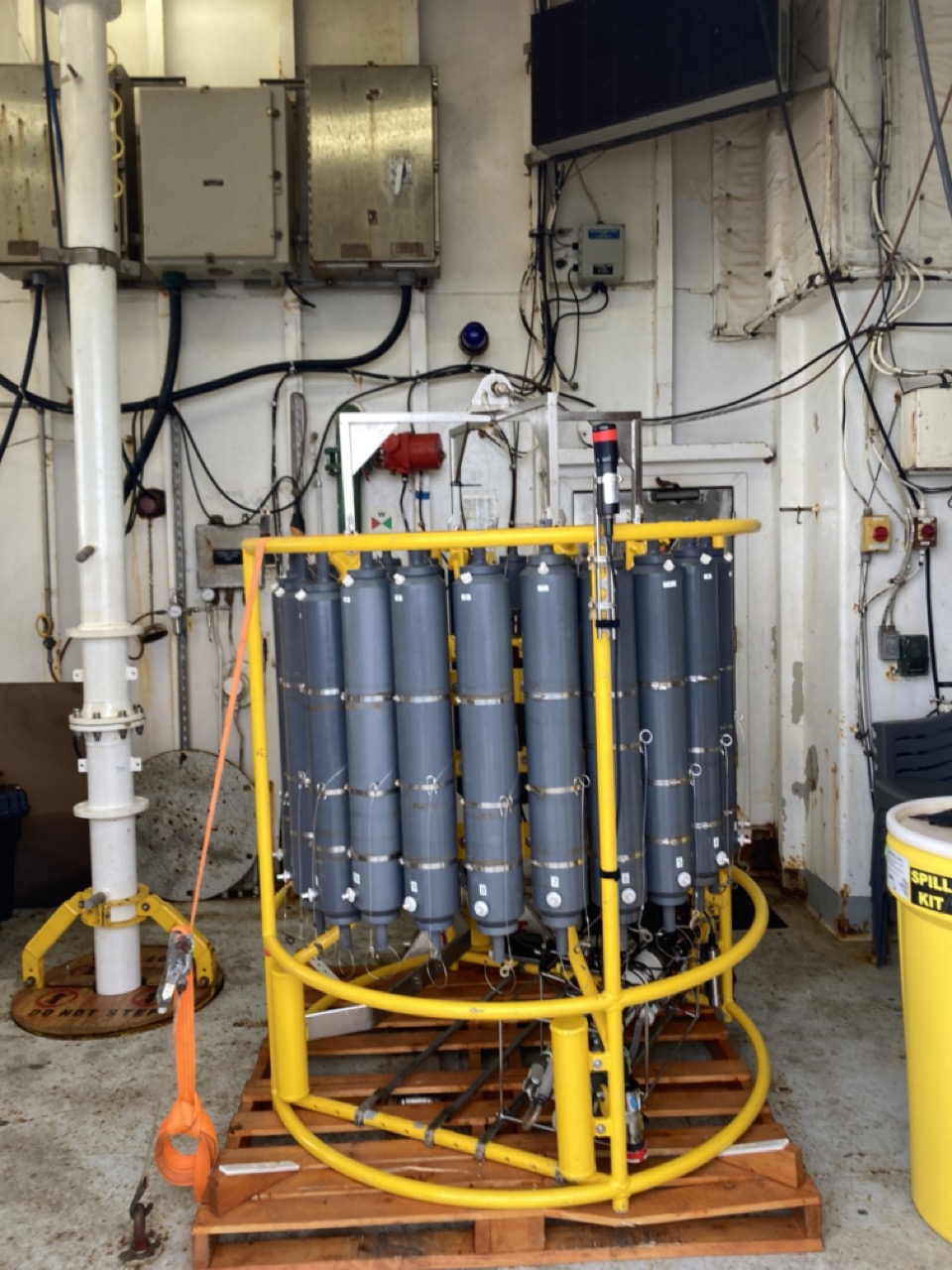
I then went to find the rest of the watch, and learned that we would be shortly doing an ~220 meter CTD cast. This was a great way to spend the nighttime shift, as it kept us busy! Shortly into the shift, we were notified that we would be arriving to the Oregon Offshore site in about half an hour, so it was time to go out and prep the CTD and Niskin rosette. This primarily consisted of priming (securing open) the Niskin bottles, as well as uncapping some of the sensors. Upon arrival, Noah and the winch operator took charge and we watched as the CTD started the shallow dive at the site (220 m). Following lowering the rosette package down to depth and bringing it back up (collecting water samples along the way), we collected and tested the samples. Our watch was involved in bottling and testing for oxygen concentrations, dissolved inorganic carbon, temperature, and nutrients – with the next shift picking up for a few more analytical types.
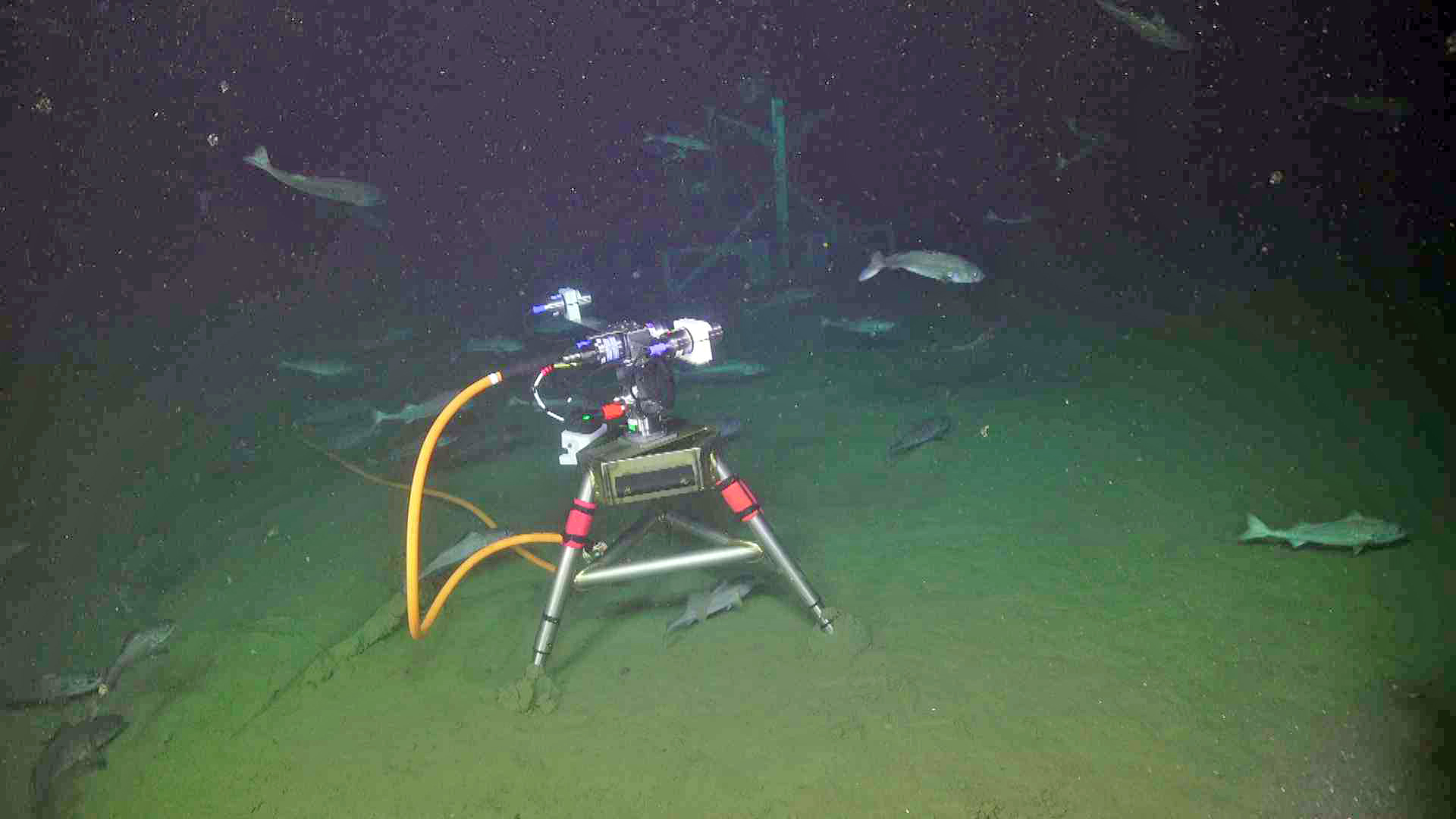
Upon waking, it was time for the second shift of the day – this one back in the Jason control van for some more equipment turning – where I was mostly involved in video logging for replacing a Digital Still Camera installed in 2025 . We also had a student meeting where one of the crew graciously showed us the basics of using a sextant – which we’ll get to do more of tomorrow which is quite exciting!
After my shift, the day held an random-ish assortment of other endeavors including – decorating cups to be shrunk by the pressure on our next CTD cast, helping collect chlorophyll from the CTD water samples, and learning how to calibrate/check calibration on an ac-s Optical Sensor, which measures the attenuation and absorption of the water – which can be used for a wide variety of things! The next few days are going to be particularly exciting, as there will be a multi hour seep survey including images of an essential fish habitat zone – which multiple people who have been on VISIONS claim is their favorite!
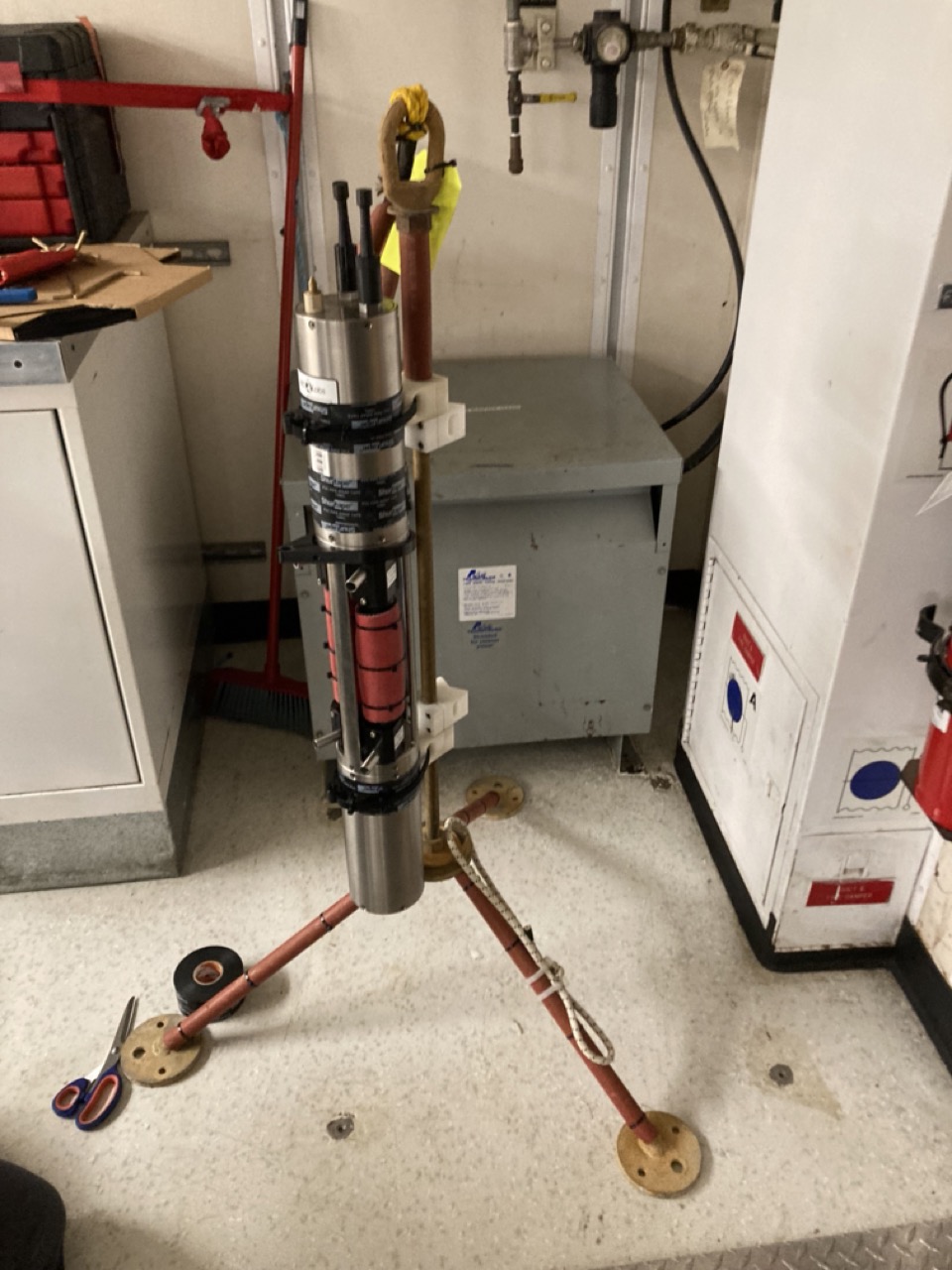
Today the piece of sea equipment I found the most joy in learning about were hydrostatic release units. We saw them yesterday during the safety meeting where we went over the lifeboats where they serve as a backup for if manual release of the lifeboats fails, they activate. This happens when the life boat capsule reaches a certain depth (pressure), which then lift the device that has a pin holding an internal knife edge in place. Once this pin is gone, the knife snaps forward, severing the rope it is positioned with, and releasing the lifeboat or other secured item. I particularly like these because of the simplicity of the mechanical system
August 9th 2026
Location: Oregon Shelf
Depth: 80m
Seasickness: 0/10
Excited: Yes!
Times “lost” in the hallways: 2
The grand VISIONS adventure started yesterday with a splendid van ride down from Seattle to Newport. Arriving in Newport, we hopped aboard the R/V Revelle – the research vessel that will be home for the next week or so! We got a tour around, seeing all of the different labs, the berths (beds), galley (dining), and more. We also got a safety briefing, which was quite fun to see pretty much everyone aboard all together. To cap the night off, we had dinner, played a round or two of Uno, and eventually went out to watch the sunset – with a bonus appearance of the largest flock of seagulls I have ever witnessed.
Bright and early this morning I woke up and went to a fast breakfast. Next up was a tour of the Jason control van, where we learned the basics of how to log different actions such as manipulation, dive start/end, and biology observed – as well how to correctly swap between camera feeds and capturing photos of interesting events. Following this we got an introduction on how to prime the Niskin (water sampling) bottles on the Conductivity, Depth, Temperature (CTD) sensor suite.
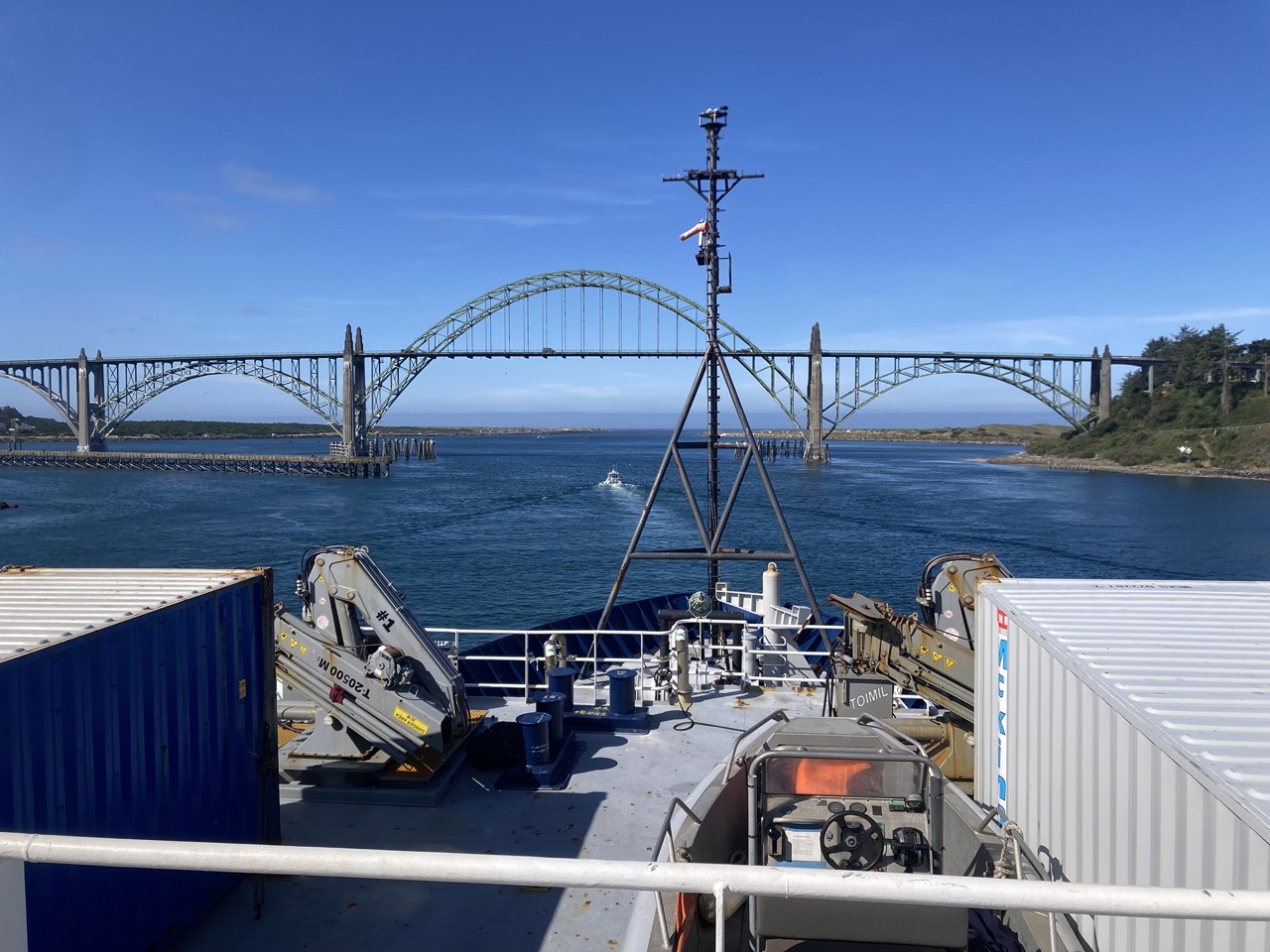
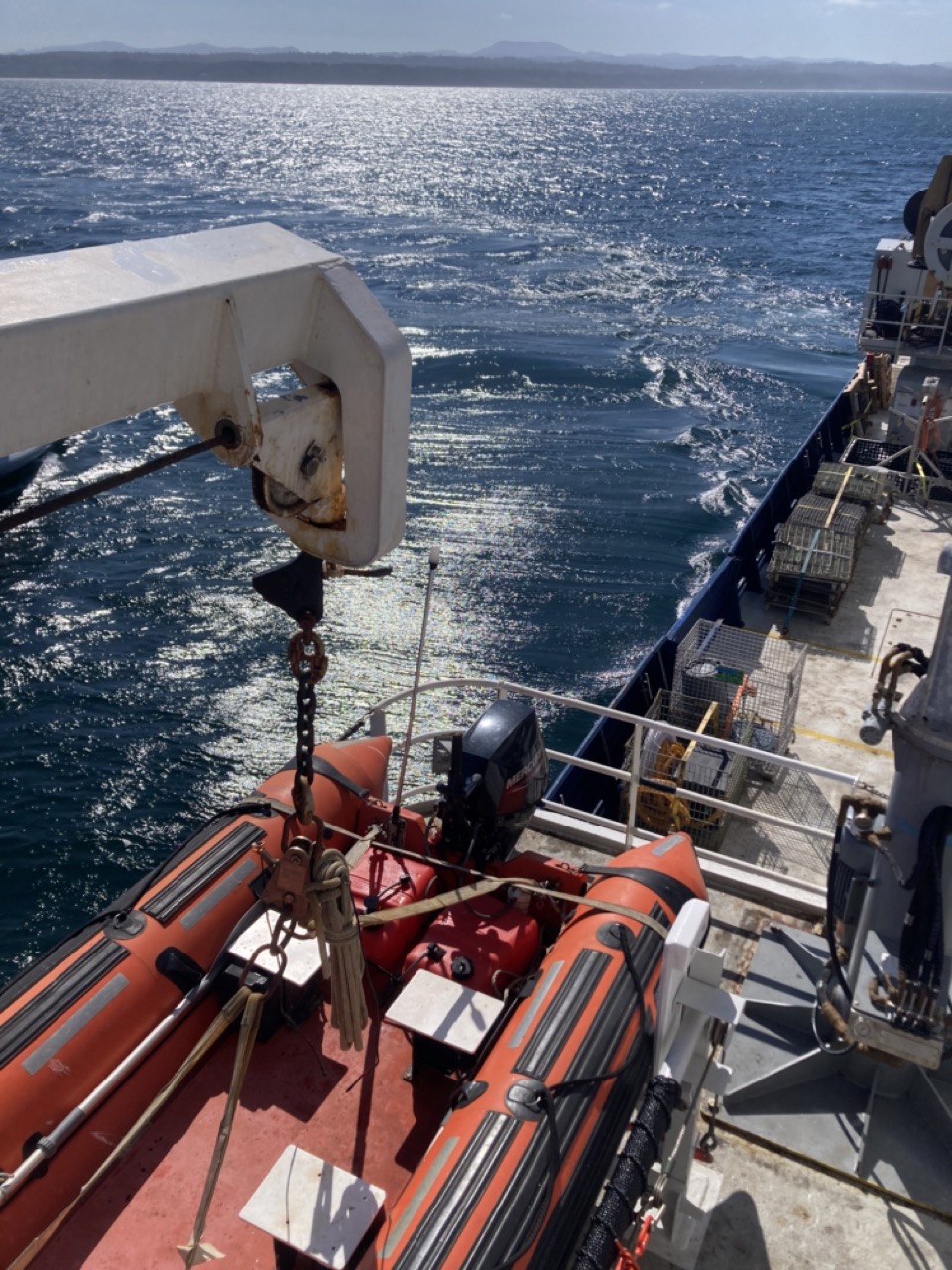
During the orientation, we took off from port, guided past danger by the harbor pilot of Newport. Out there, watching him hop back onto a small boat via ladder, I also caught some of the coolest wave formations I’ve seen – long crested wavelets along the side of the ship as we were turning. As we left the safety of the harbor, passing under the beautiful bridge, the boat started to roll, but it was not too rough so nobody got seasick – a great way to start the venture! Later on during the day, we did an abandon ship drill, which included getting into immersion suits – a bright orange waterproof onesie.
Immediately following our foray into fashion, Vector from despicable me would be jealous of, Adrian and I headed to the Jason control van for the first dive. Jason was headed down to replace (turn) a Benthic Experiment Package (BEP), and immediately started to discover a grand amount of life – that is to say the entire package was covered in barnacles, starfish, and anemones. This quickly led to a small issue in that when opening the doors of the BEP to access internals, they could not open all of the way due to all of the animals. Luckily though this just made it impossible to latch it open, so we continued on with the rest of the dive agenda, which went on without issue.
One of the best parts of the cruise so far has been discovering and learning about the level beyond land equipment that is needed for at sea operations. My current plan is to share one of these each day, and because it’s the second day aboard, I have two favorites to share with you. The first is that a large section of the Jason electronics are exposed to the outside. I expected them to all be entirely contained and difficult to access – but instead they are in pressure boxes filled with mineral oil right at the edge of Jason. This helps them withstand the pressure and leads to a visual effect that is reminiscent of steampunk machines – sepia colored and all exposed. In addition to the mineral oil bath, the way that we secure our computers has tickled my fancy. First a non-slip mat goes down, then your computer does – standard stuff. Then the fun really begins and you pull out a drill, and drill right into the table next to you. This is followed up by a set of eyebolts and tying your computer in with string around the keyboard and display.
That is all for the day – I will be back tomorrow with updates from the midnight – 4 am shift, as well as some more sweet ocean mechanisms!