
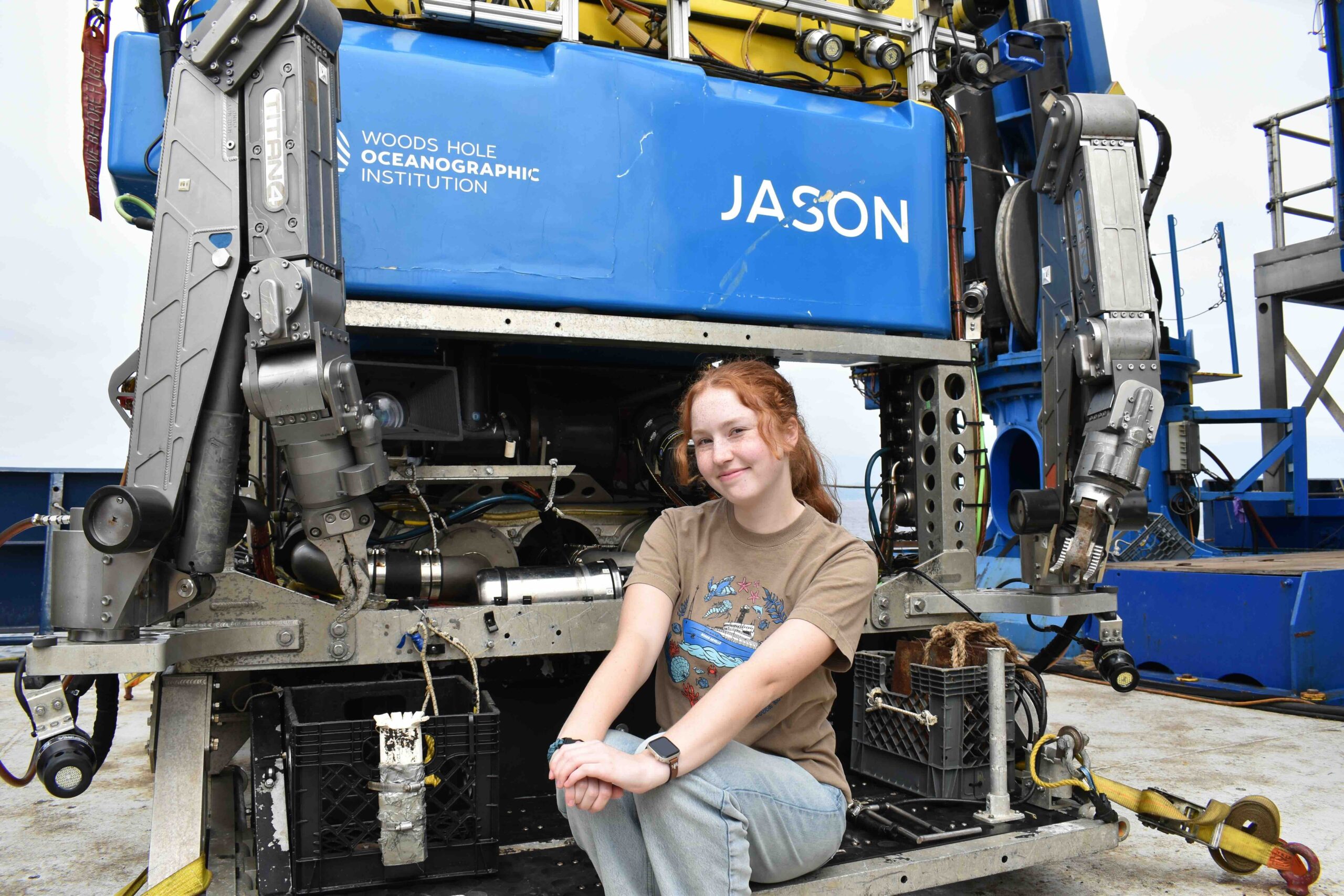
August 18th, 2026
Reflections
Today was our last day on the ship, and I feel nothing but immense gratitude for the entire OOI RCA team. If you asked me a few months ago if I could see myself living on a boat for multiple days on end, with nobody that I knew, and to a desolate place in the Pacific Ocean, I would’ve told you no. But if I knew how amazing my experience these last 10 days on the R/V Roger Revelle was going to be, I would’ve nodded excitedly and told you an enthusiastic YES in a heartbeat.
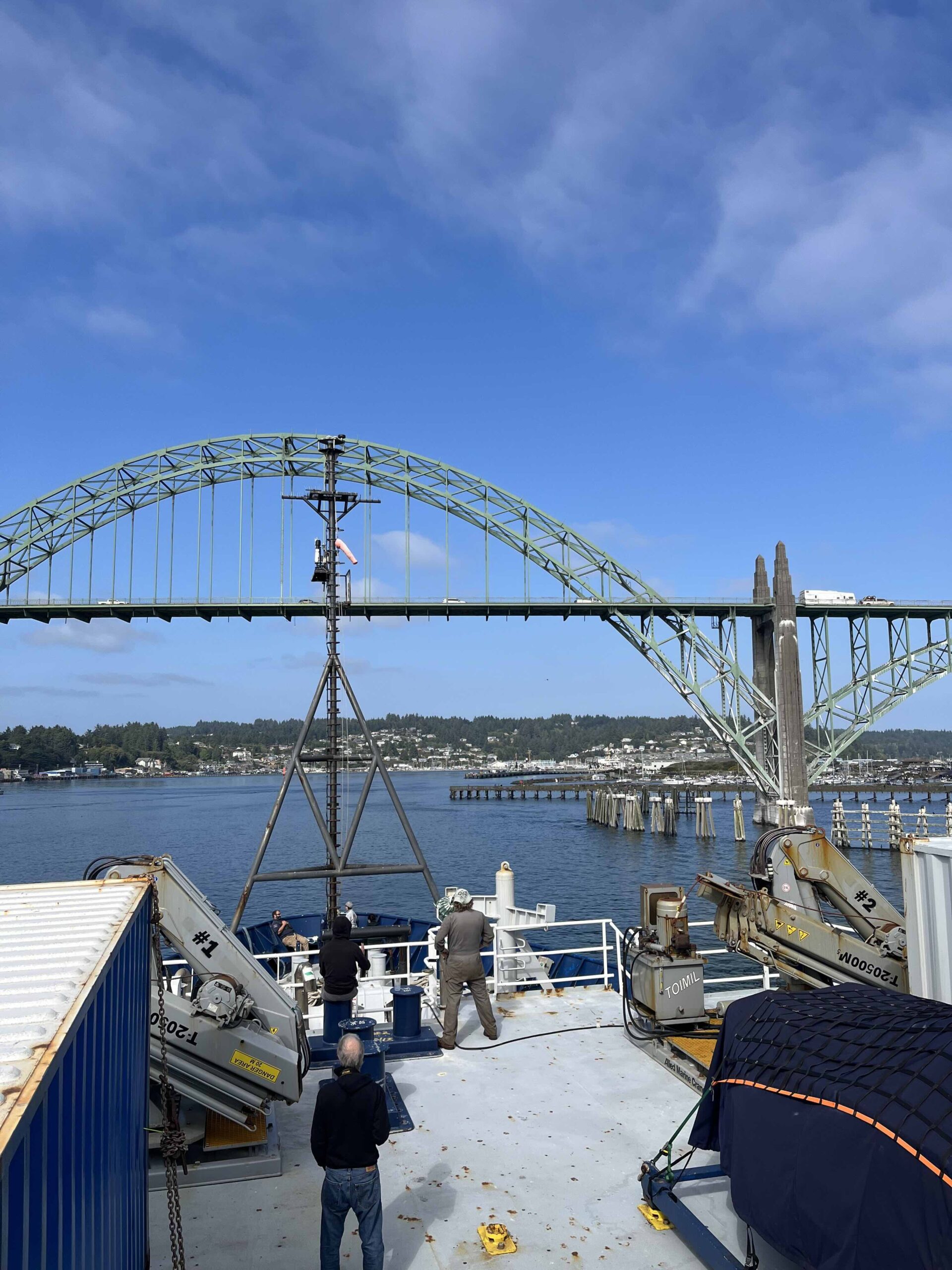
During our transit back to Newport, we helped in the lab spaces by hauling all of the equipment out to the back deck, where we gathered them into crates to make unloading them from the ship easier tomorrow. We also got some knot tying lessons from Matt to teach us how to tie down all of the crates we filled.
Once we arrived back at the port, we got to go out and explore the town. Izzie and I split off from the group and walked around town for a bit, before heading out to the beach where we met up with some other students. We all ran around the sand dunes for a bit and ran into the ocean (which felt so weird after being on a boat for so long.) We then traversed back to the boat, over the Newport bridge, and through the marina until we reached the ship for our final night.
I will be forever grateful for the opportunity to come out to sea and help with the Regional Cabled Array, I’m in awe of how many dedicated people we have working toward the Ocean Observatories Initiative and think it’s beautiful how we are all working towards a common goal of trying to share knowledge with the world. As scientists, we never know what opportunities we will be granted, but I know I will be forever grateful for everything I’ve experienced on the VISIONS 2026 cruise. From sitting in the control van logging for ROV Jason, scraping barnacles off of instruments collected from the bottom of the seafloor, or getting myself soaking wet taking samples from the CTD Rosette, I wouldn’t have traded it for the world.
This trip taught me so much about oceanographic field work, allowed me to learn things hands on through my own trial and error, and helped me make some amazing lifelong connections. It also really surprised me with how many kinds of people I got to interact with, everyone was in different stages of life and careers, and I got to understand a lot more about the types of opportunities in oceanography, and maritime in general.
August 17th, 2026
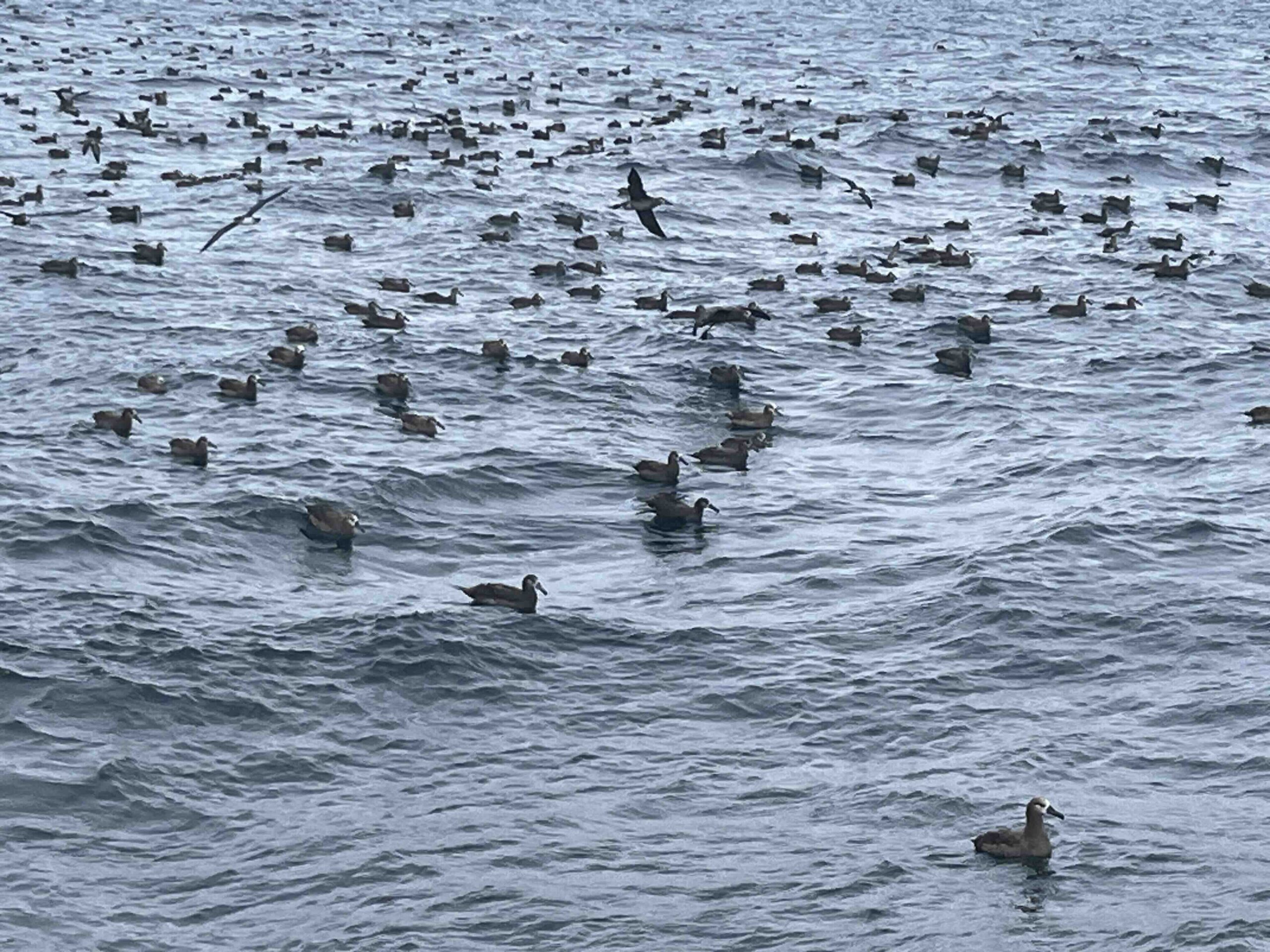
As I am writing this, I’m currently inside of one of the undervators Jason uses to carry instrumentation down to the seafloor. We are transiting right now to Slope Base, which will be our final site of the cruise. It’s a very bittersweet feeling knowing how close we are to the end of the cruise, so I’m just trying to soak up all of the time I’m getting on board.
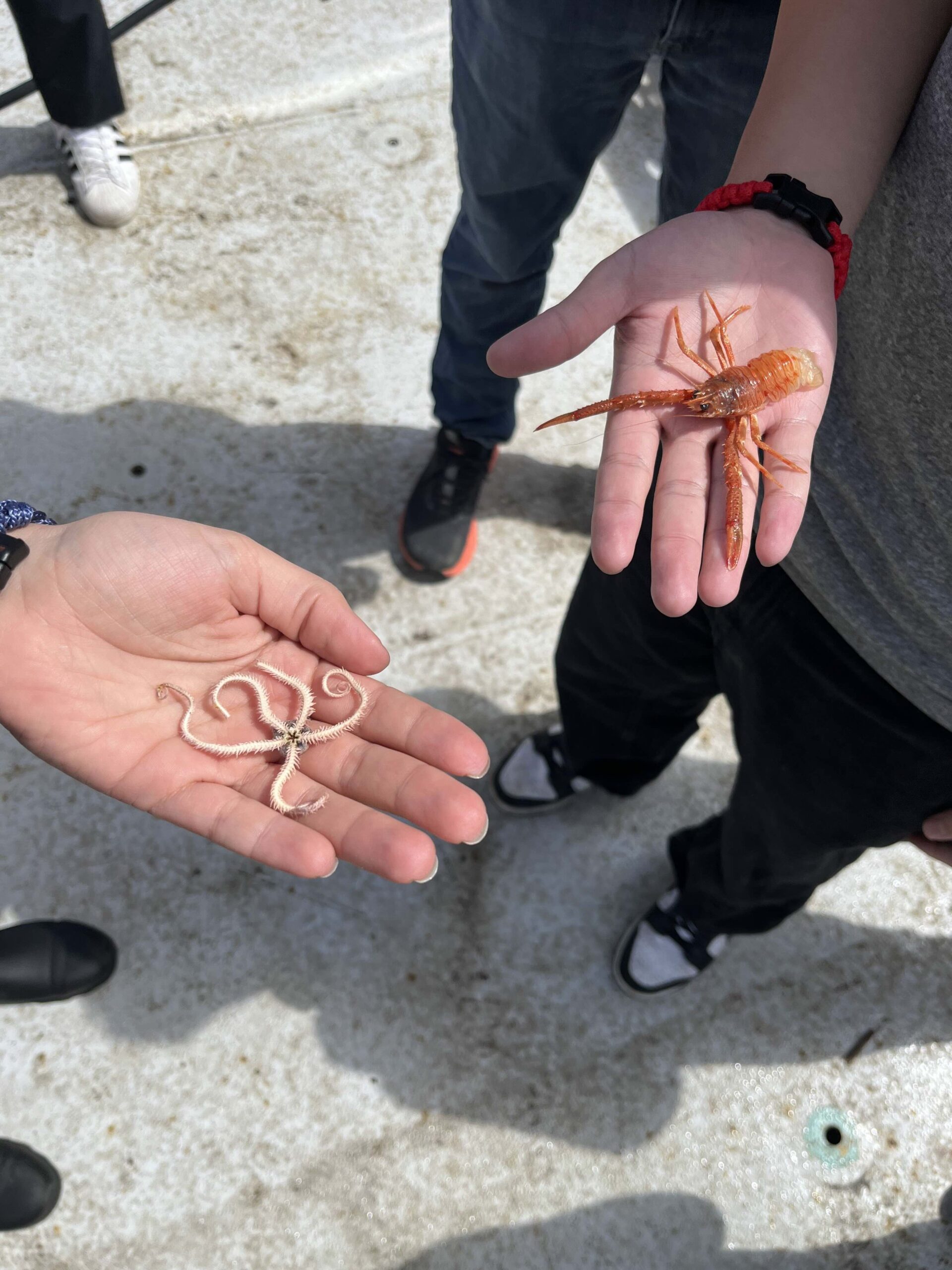
Today was another mostly transiting day, and our dives were very spread apart so there was lots of downtime. I don’t have too much to note of the day, but my dessert request got granted (tiramisu, yumm!) There also were a couple of whale sightings today, and I was able to catch a glimpse of the whales’ breath off in the distance. All of us students also got the chance to clean off the shallow profilers Jason had retrieved the night before and got some hands-on handling with some sea creatures which was fun.
Our final dive was planned for tonight, and I got into the control van ready to begin logging for the dive. We began as usual, lowering Jason into the water and beginning our descent. Unfortunately, at around 200 meters, Jason lost power. Luckily, it was at such a shallow depth, so recovery was easier than it would’ve been if it was at 2900 meters. The Jason and science teams were able to work very quickly and efficiently to recover the ROV, and we ended our night with all of the equipment safe and sound.
August 16th, 2026
Slowly but surely everyone on the ship is beginning to feel that we are nearing the end of the cruise. Most things tend to fly by very quickly, and the cruise feels the exact way. Before I got on the ship, I thought to myself that this was a really long time to be at sea, and that the trip would feel very long, but alas, I feel the exact opposite.
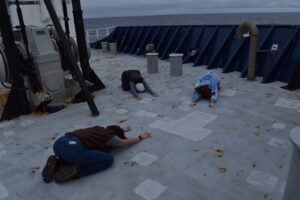
Today we began our 18 hour long transit back towards land, where we will be stopping at Slope Base early tomorrow morning (0200.) With a lack of tasks to do, many of the VISIONS students and I headed out to the bow to soak up some of the salt air while we were still out here. Maddie, Izzie, and I decided to partake in some light yoga and stretching while out on the deck.
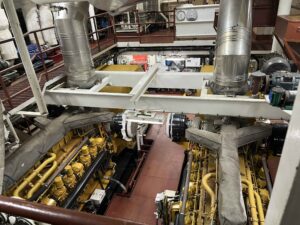
We also were given the chance to tour the engine room and the bridge today. All of the crew that showed us around were so kind, and it was insanely cool to see the parts of the ship that most people can’t. The engine room was super loud, and used both earplugs and earmuffs, and I could still hear the roar of the 4 engines.
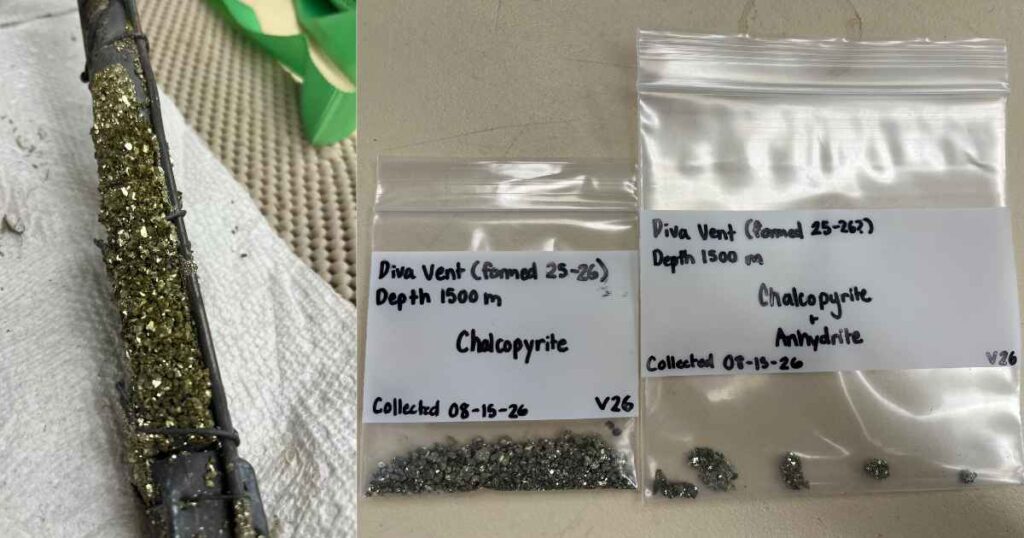
Although the transit days are the most chill, we still had a great time and made the most of it! I got to work scraping a bunch of Chalocopyrite off of one of the sensors that had been placed at the vent named Diva. I got super “in the zone” and spent around an hour picking off the minerals. I got a pretty good haul of them to add to my rock collection! Afterwards, Izzie got me my dry cereal, which we have been having each night for four days in a row now! What a great day.
August 15th, 2026
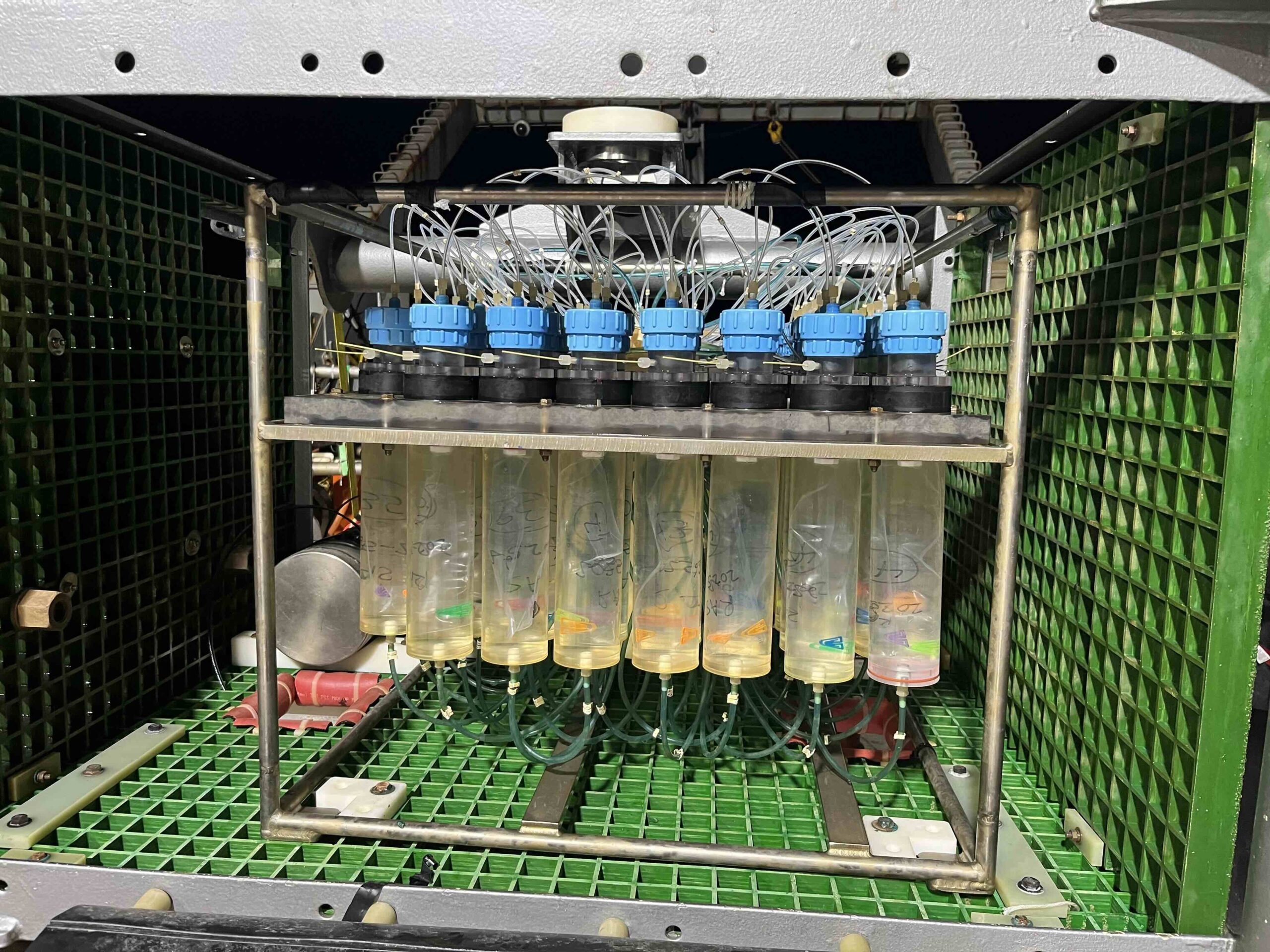
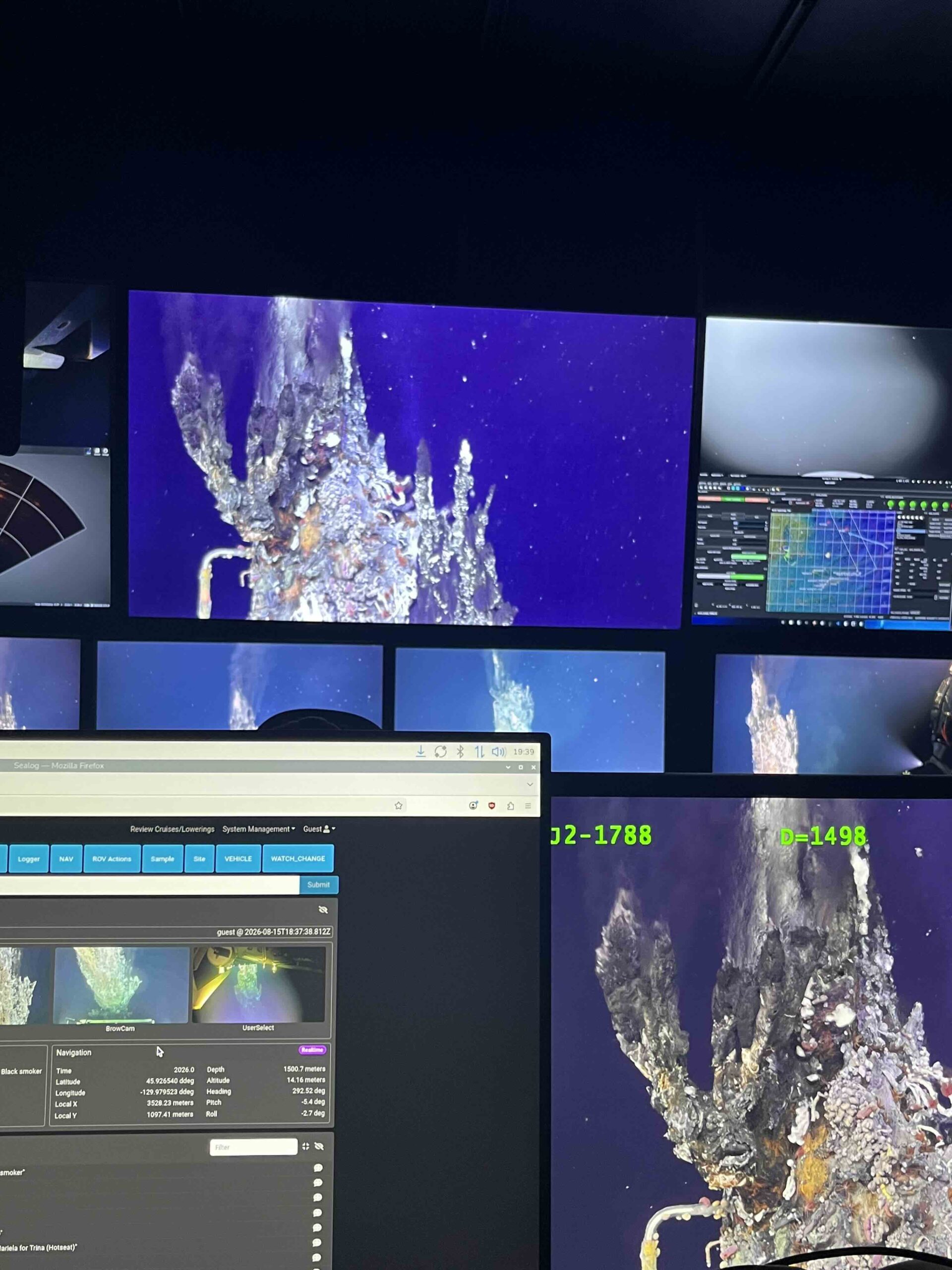
Late last night, during my shift, I got the awesome opportunity to help Mitch onboard take his Remote Access Sampler (RAS) samples. It’s this very unique mechanism of tubes filled with water and inside the tube is a plastic bag that will fill with hydrothermal fluid when one is queued by somebody on land. These samples were being taken from nearby one of the hydrothermal vents, so getting to handle some of the hydrothermal fluid was so cool!
That morning we began our dive where we surveyed a large portion of the International District site. We made our way to El Guapo, which is the tallest vent at the site, standing at around 18 meters tall. We slowly made our way up to the peak of the vent, with the sights getting more and more exciting as we ascended. Near the base we saw many inactive sulfide vents that were super spikey and interesting in shape, and the further we got up the more colorful the bacterial mats were, as well as the more abundance of vents that were billowing out hot fluids into the chilly seawater.
After the vent, we took an entire tour through a lava flow valley, which created what I imagine is the equivalent of a river bed. The lava (which is now basalt) cooled very rapidly, creating beautiful smooth and flat beds that stretch for miles along the site. Some of the basalts also end up crumpled, making a spikey looking border to the valley. The other favorite feature I saw was the basalt arches as well as the lava whirls, which are odes to the previous Axial eruptions, freezing its history for us to see until the next eruption.
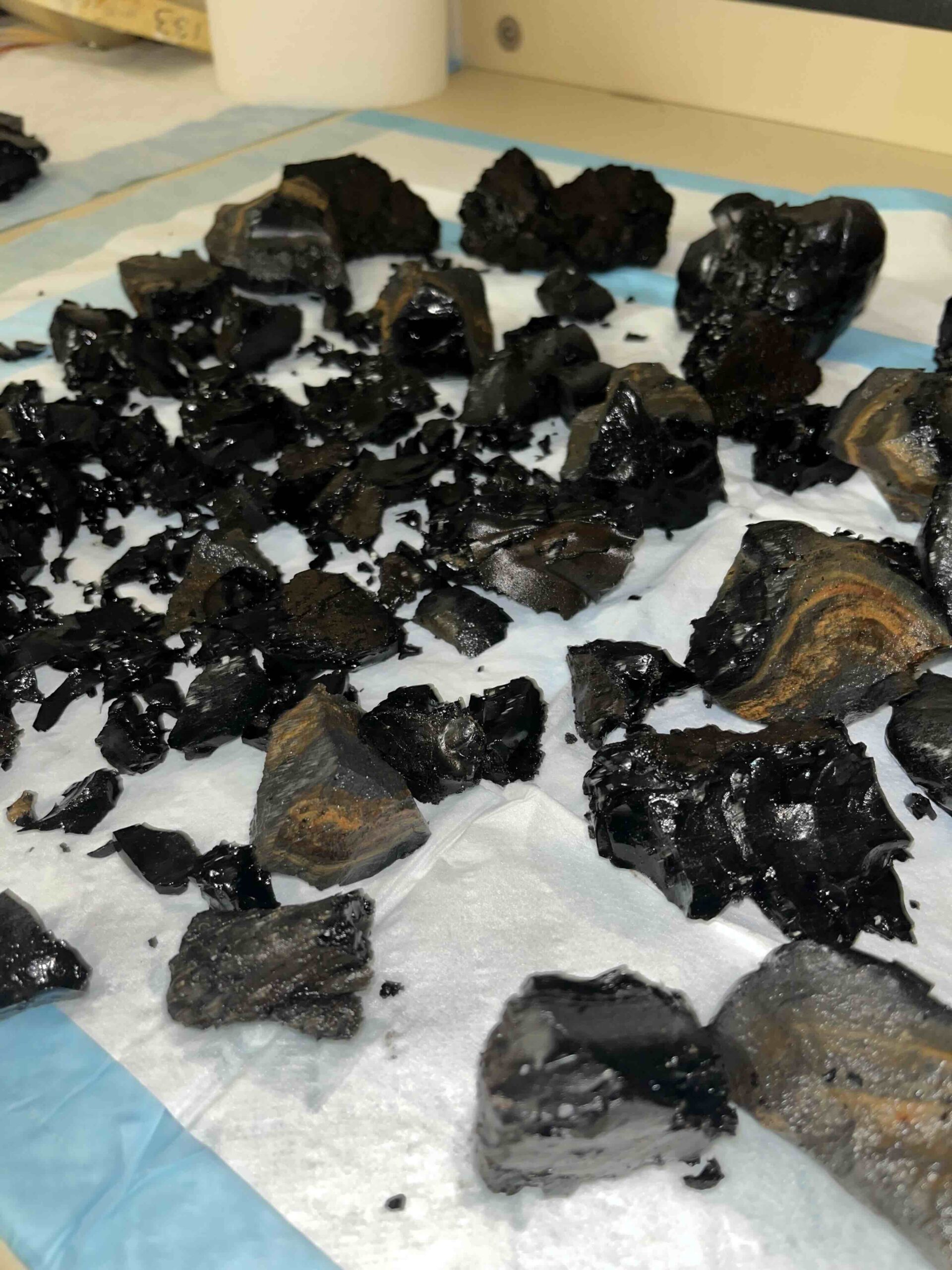
As a geology student, I may be biased to say this, but I think my favorite data we’ve collected so far has been the rock samples from the International District site. I got to stop by the wet lab today, and the rocks that were gathered from the seafloor were by far the prettiest and most interesting rocks I’ve seen from the field so far.
I spent the rest of the evening helping in the analytical lab, processing samples from the RAS that we collected last night. We put on some pop music, and myself and 5 other VISIONS students got to work processing through 49 samples, which we completed! Today was super productive, and I got to see some of the coolest things.
August 14th, 2026
I slept the duration of my off hours last night, and it was the first time I was able to do that for a while. I woke up feeling recharged, but definitely still sleepy (which may be because of the meclizine I’ve been downing.) Today we are heading to the International District site, which I think is the site I’m most excited for. We woke up to the ascension of the dive we started last night during our shift, so logging the rest of that dive was quite easy, and we had a bit of time to kill after the dive before the next one began.
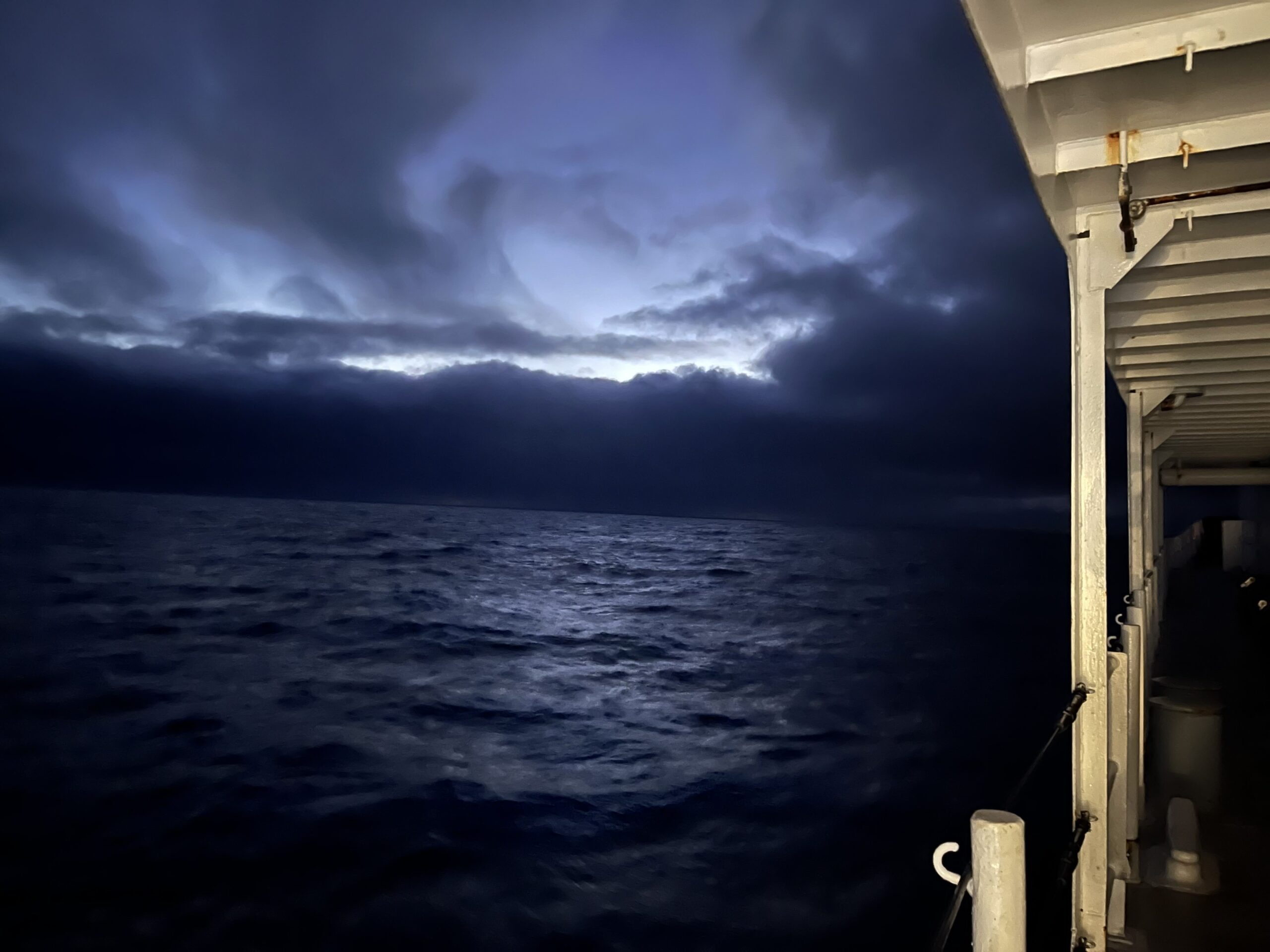
Luckily during our break on our shift, we saw dolphins! Seeing dolphins was a bucket list item for me on the cruise. They were so adorable swimming in synchronization with one another and jumping through the waves. They came out right at the same time the sun was coming out too. Izzie and I hypothesized that they might’ve been jumping to feel the warm sun, since that’s definitely what we wanted to do.
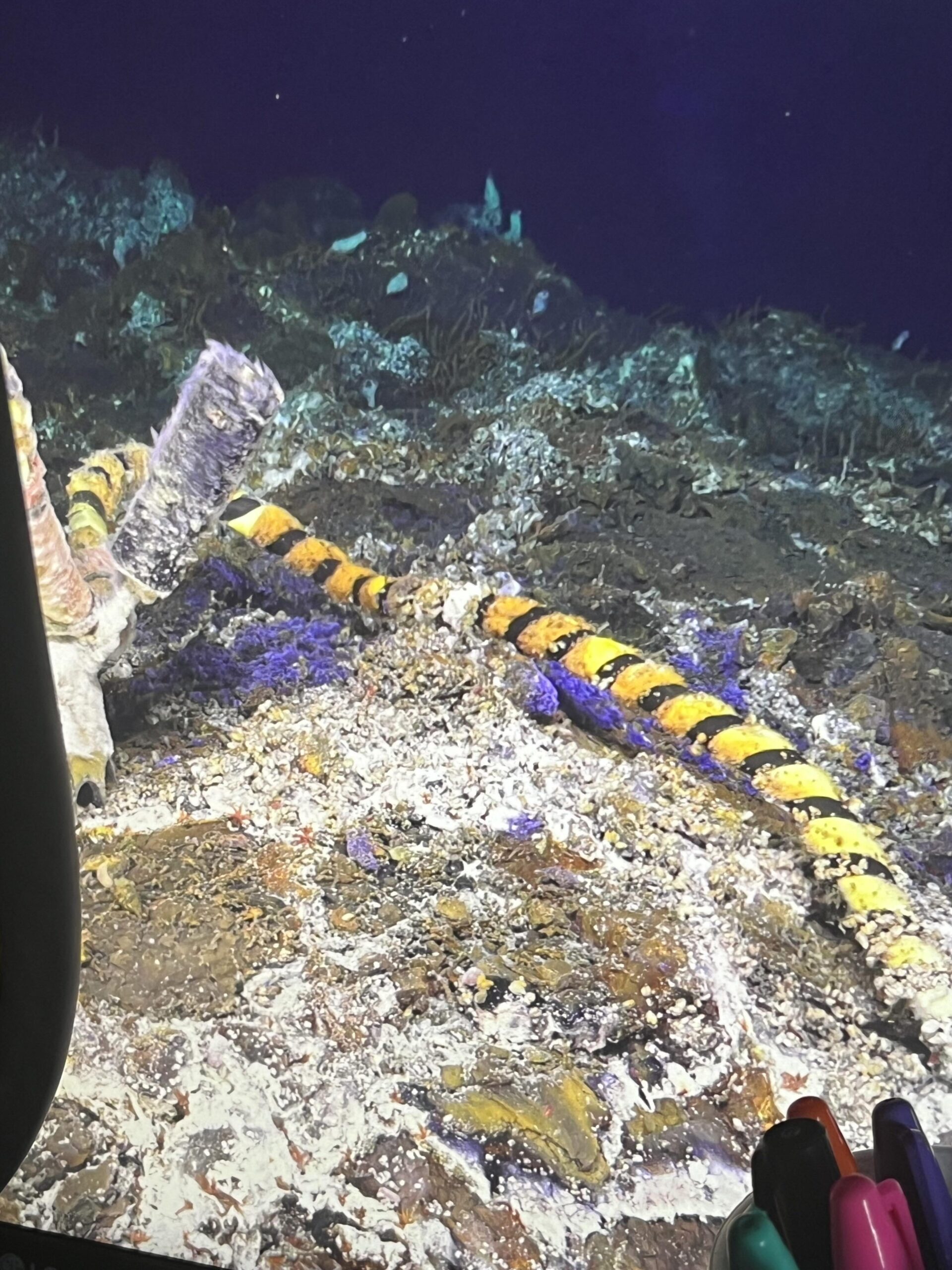
The next dive began shortly after our visit from the dolphins, and we went down to another vent system in the International District Hydrothermal Field. These vents were covered in beautiful blue ciliates, that are single celled protists that live in colonies with one another, and they cover the basalts in diffuse vent sites. They were this beautiful deep purple color, and I was shocked to see my favorite color down at the bottom of the ocean. This raises a question that has puzzled many scientists aboard: Why do so many organisms display bright colors in environments so dark that those colors cannot be seen?
After eating one of the best meals I’ve had onboard (chicken potstickers, pork drunken noodles, and tom kha soup. YUM!), we had our daily student meeting where we were told there was a bin full of paracord and knot tying books right before our eyes, and that we were encouraged to practice tying knots and make bracelets/keychains as much as we wanted to! I got to work very quickly and made myself two paracord bracelets that I will proudly wear for the rest of the cruise.
Early tomorrow morning, we will be diving through the International District vents once again, and approach a 16 meter tall hydrothermal vent called El Guapo, as well as visit some recent lava flows. I can’t wait!
August 13th, 2026
My shift last night began with everyone feeling optimistic, we finally had reached Axial Caldera at the summit of the seamount, and were ahead of our schedule, beginning our dive around 2200 instead of the projected 0100 the next day. Jason and the new HD Camera went into the water in the undervator, and were ready to replace the camera at the ASHES vent site. However, a swell caught the undervator and high definition camera and the dive was aborted to test the camera and ensure that it was still ok. To keep operations going while the camera was checked out, a few hours later a dive was conducted at Central Caldera to switch out one of the CTDs on the seafloor. This new dive time gave me the chance to get a few hours of sleep.
I was awoken around 0240 by Ada, one of our lab technicians and oceanographers on board, to the news that we were doing a small survey of one of the vents. In my half asleep haze, I quickly got out of bed and made my way to the control van where I was greeted by one of the coolest sights ever.
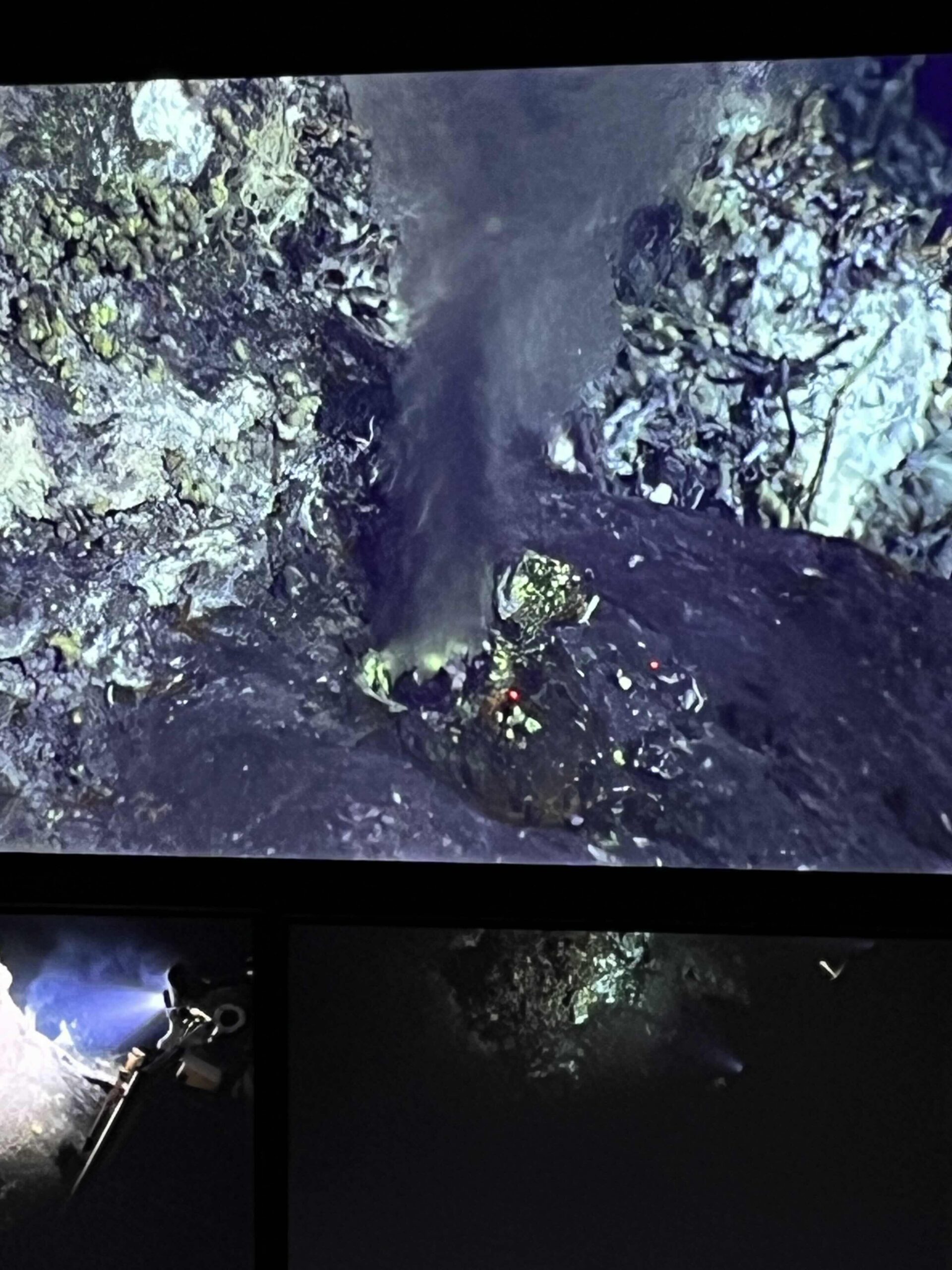
I’ve been so excited to see the hydrothermal vents for so long that I was completely awestruck by seeing one with my own two eyes. Despite my sleepiness, my eyes were glued to the screens in the control van for around 45 minutes, until I headed back to my berthing for a couple more hours of shut eye.
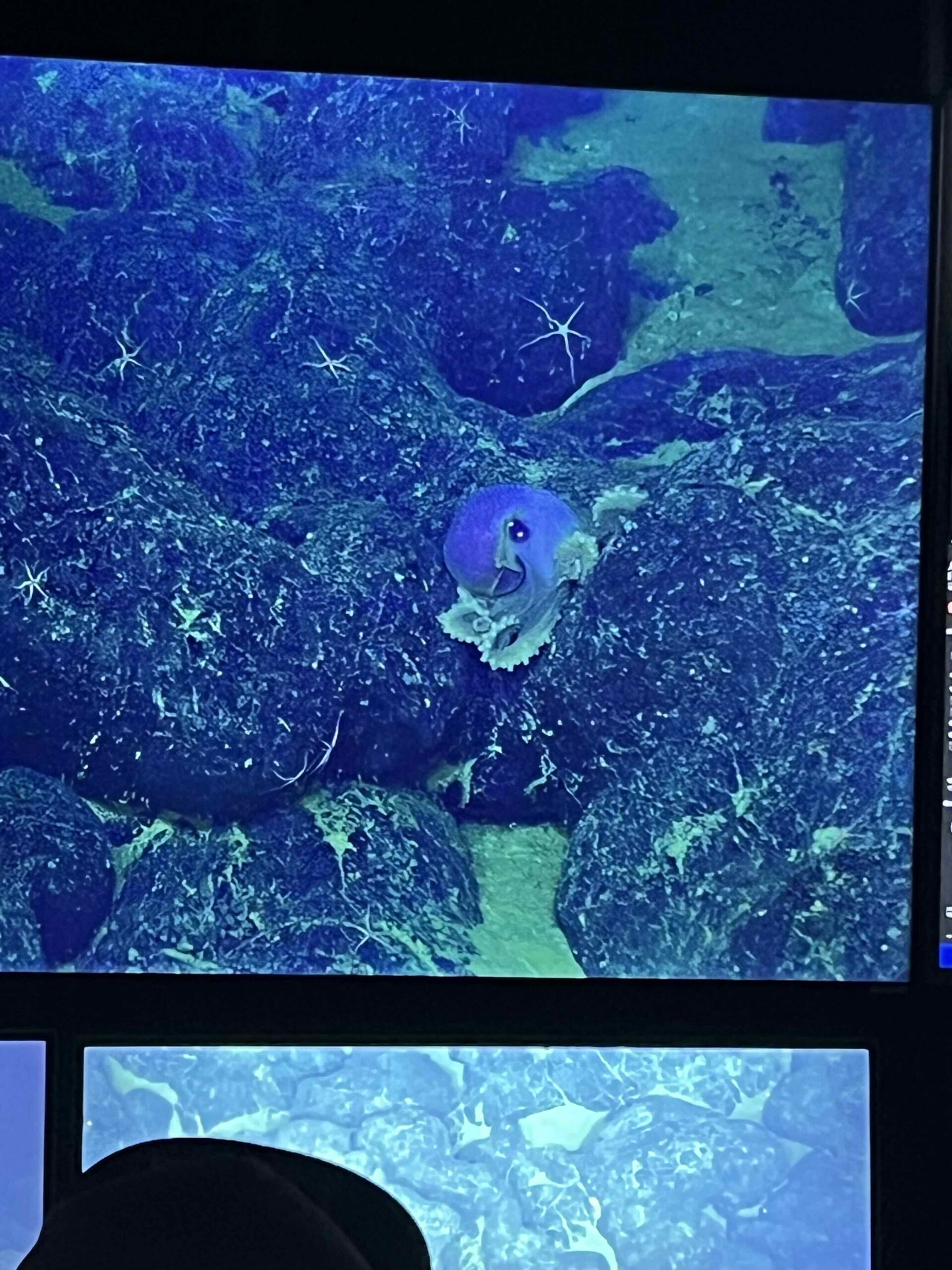
Breakfast came and went, and it wasn’t long before I was in the control van logging for our dive at the Eastern Caldera site. There weren’t any vents seen at this site, but we were able to get down to the seafloor and switch out the CTD, and see an adorable octopus on the way!
I spent the rest of the day anticipating our arrival back at the ASHES vent site to turn the HD Camera. Luckily this time, the dive went according to plan, and the exciting time came to gather in the van to watch the survey of the hydrothermal vent field. Seeing the hydrothermal vents again, fully awake, was even more breathtaking than before. I could feel my mood immediately improving, and the excitement within me was nearly bubbling out. It’s moments like this that remind me of why I love our planet and want to keep studying it.
August 12th, 2026
I woke up this morning feeling slightly salty from all of the water sampling we did the night before, but the boat rocking helped me sleep quite well throughout the night. I woke up to the ship still in transit, which was to be expected since it’s supposed to take around 18-20 hours until we make it out to Axial Base, 300 miles offshore.
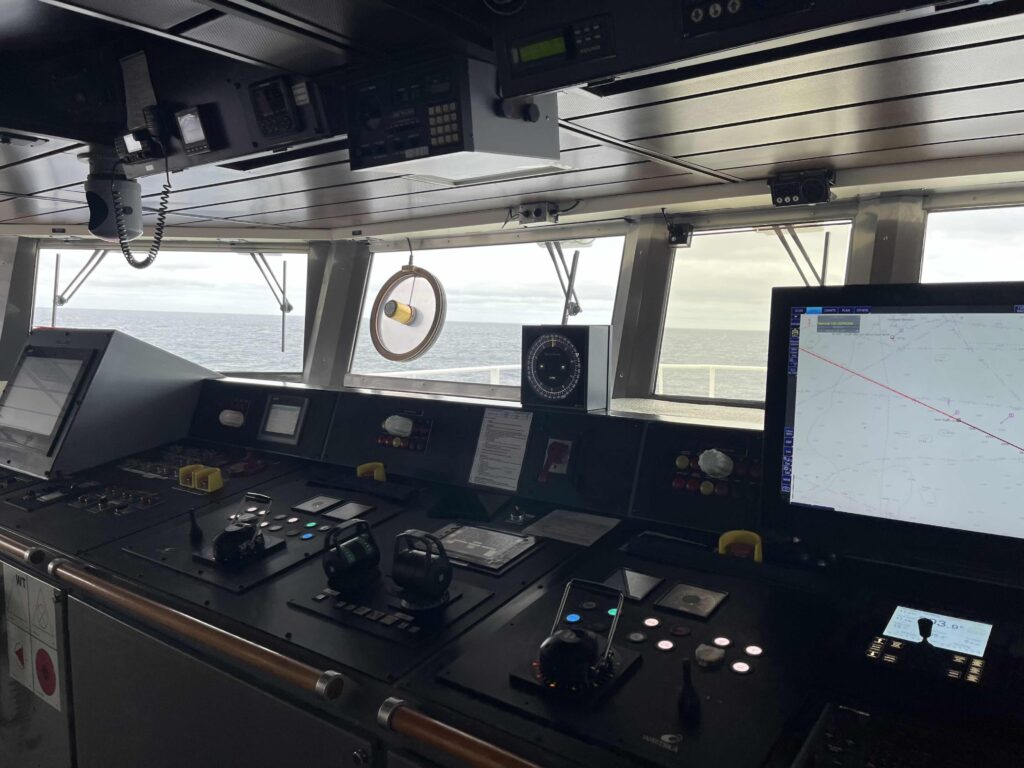
During our transit, Izzie and I decided to go up and visit the bridge to look at the sea around us and get familiar with the space as it was our first time ever being up there. Around 1645, we made it to our first Axial site, Axial Base (2600 m) and did two CTD casts. Today has been quite calm, and I spent a lot of the day brainstorming ideas for my project and catching up with sleep. Early tomorrow morning, we will be beginning our dives in the Axial Caldera, where we will see hydrothermal vents for the first time on this cruise. I literally cannot contain my excitement!
August 11th, 2026
Today is an exciting day, where we are encountering our deepest site along the Regional Cabled Array, Slope Base. It’s currently 0820 and we are actively transiting to the site. Last night we had our dive at the Southern Hydrate Ridge Site, where I was on duty for a majority of Jason’s descent. We saw a plethora of unique marine organisms such as a blue shark, rockfish, and a bunch of small fish. I always wonder what goes through the creature’s minds as a massive ROV approaches their home.
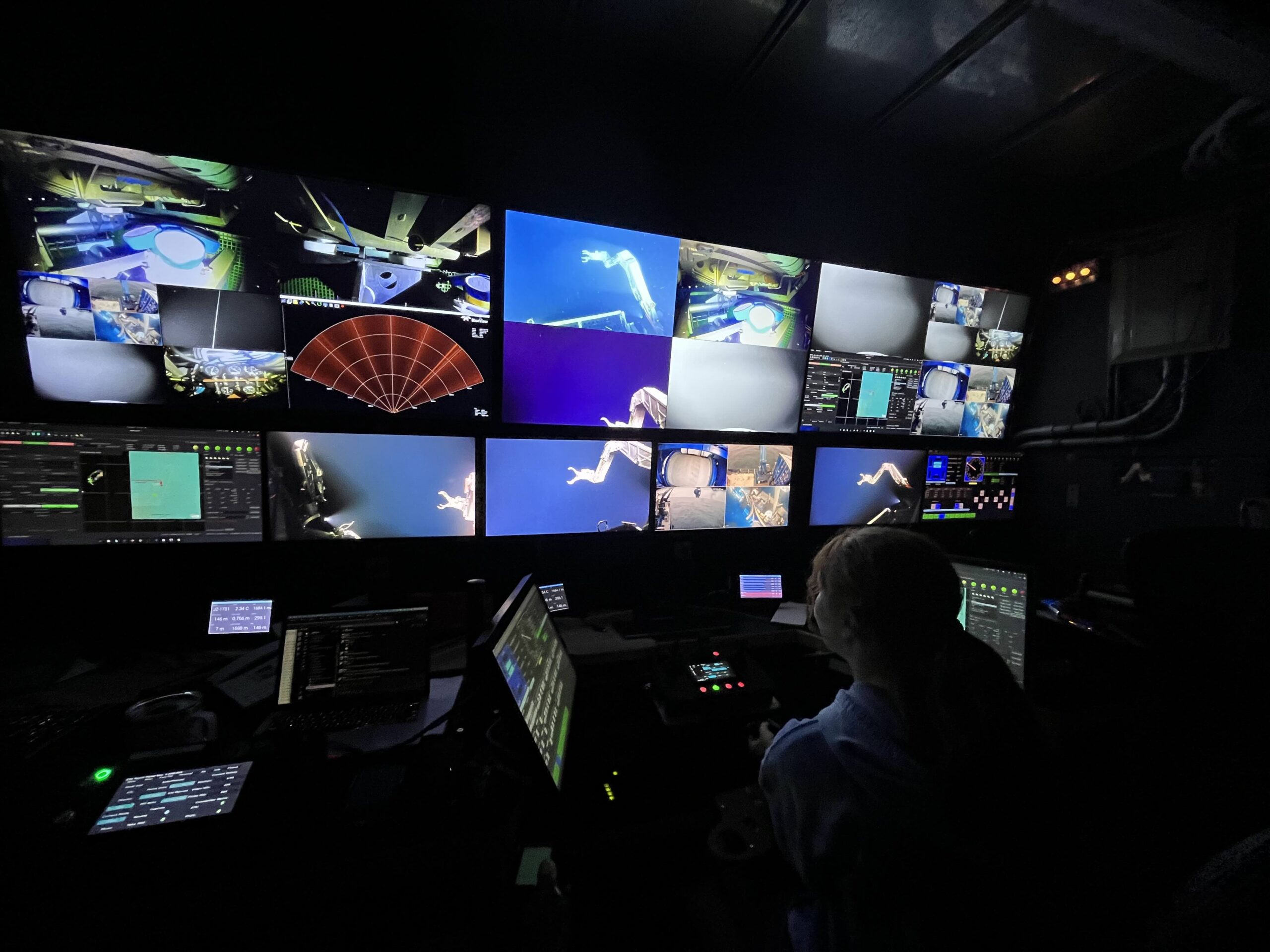
We began our deepest dive ~ 0900, where it took us about two hours to lauch Jason off of the deck, and down to the research site. During the very long descent, all students in the control van got the opportunity to operate the arms of Jason, and learn more about the roles of the pilot in the control van, which was so cool!
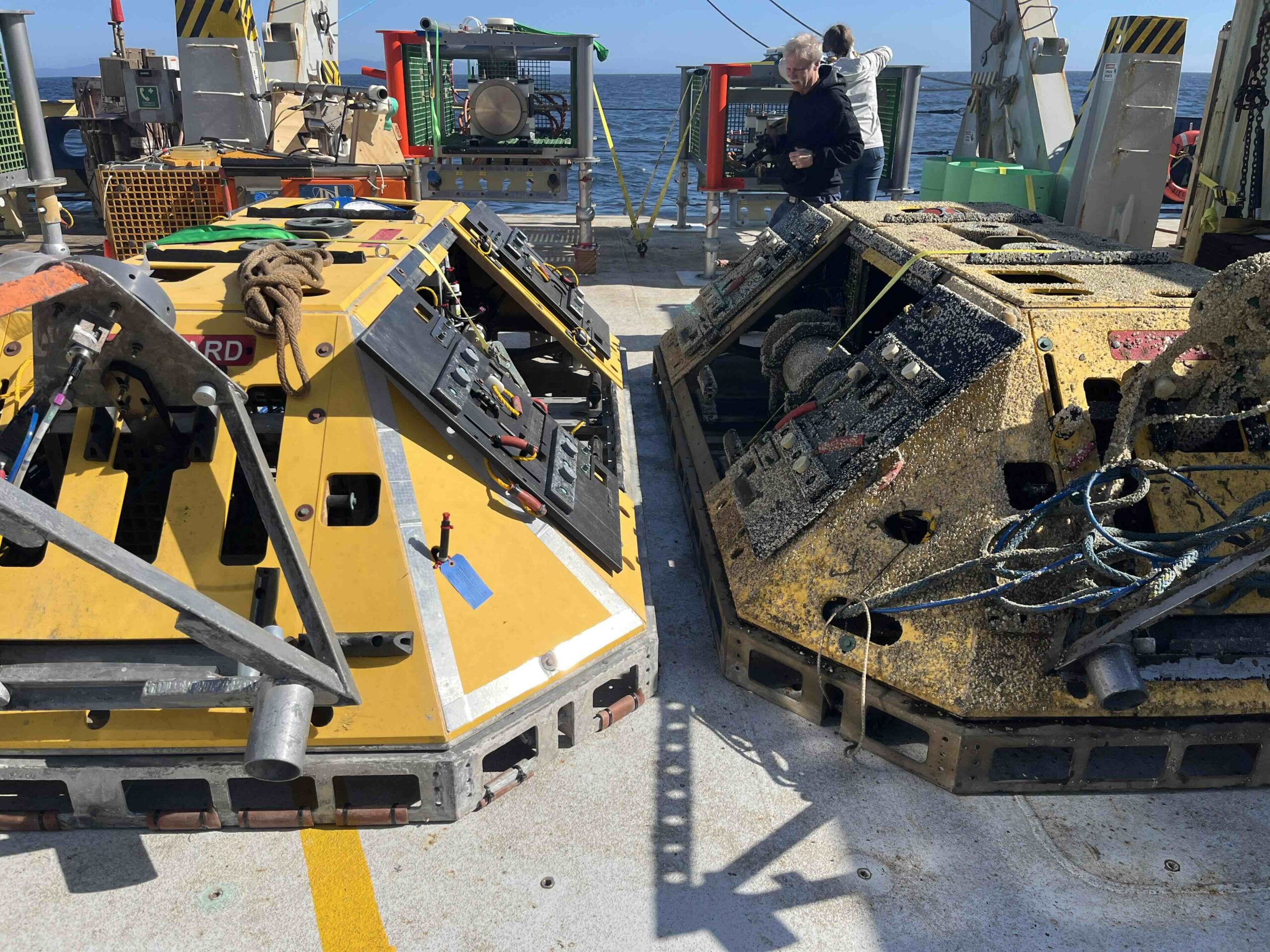
Around two, we had planned a lesson on how to use a sextant, which is a navigational device where when you record the angle between a celestial object and the horizon, you can calculate your exact position. Unfortunately it’s been cloudy most of the day, so our lesson had to be postponed. Luckily for us though, we got to start scraping off all the barnacles from the retrieved BEP and instruments! It was extremely satisfying for all involved.
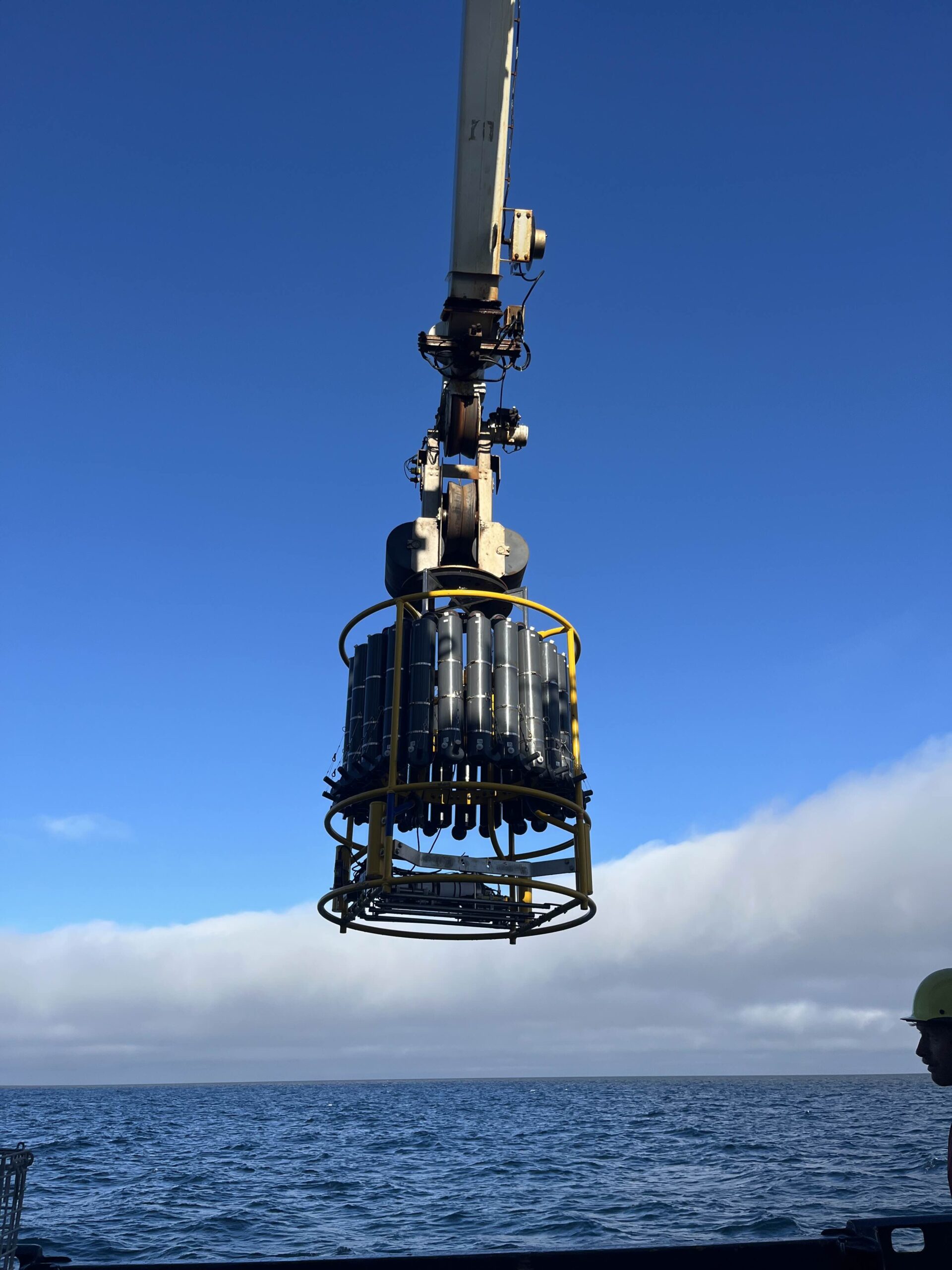
This evening, we conducted two CTD casts, one to a shallower depth (~280 meters) and the other to near the bottom of the water column (~2900 meters). After the CTD cast, I came into my shift early to help collect water samples, where we gathered salinity, chlorophyll, DIC, nutrients and DO samples from many of the Niskin bottles. It’s a very interesting and hands on process, involving rinsing out each of the bottles where we collect the water multiple times, then gathering up a specific amount of water that will be analyzed in the lab later.
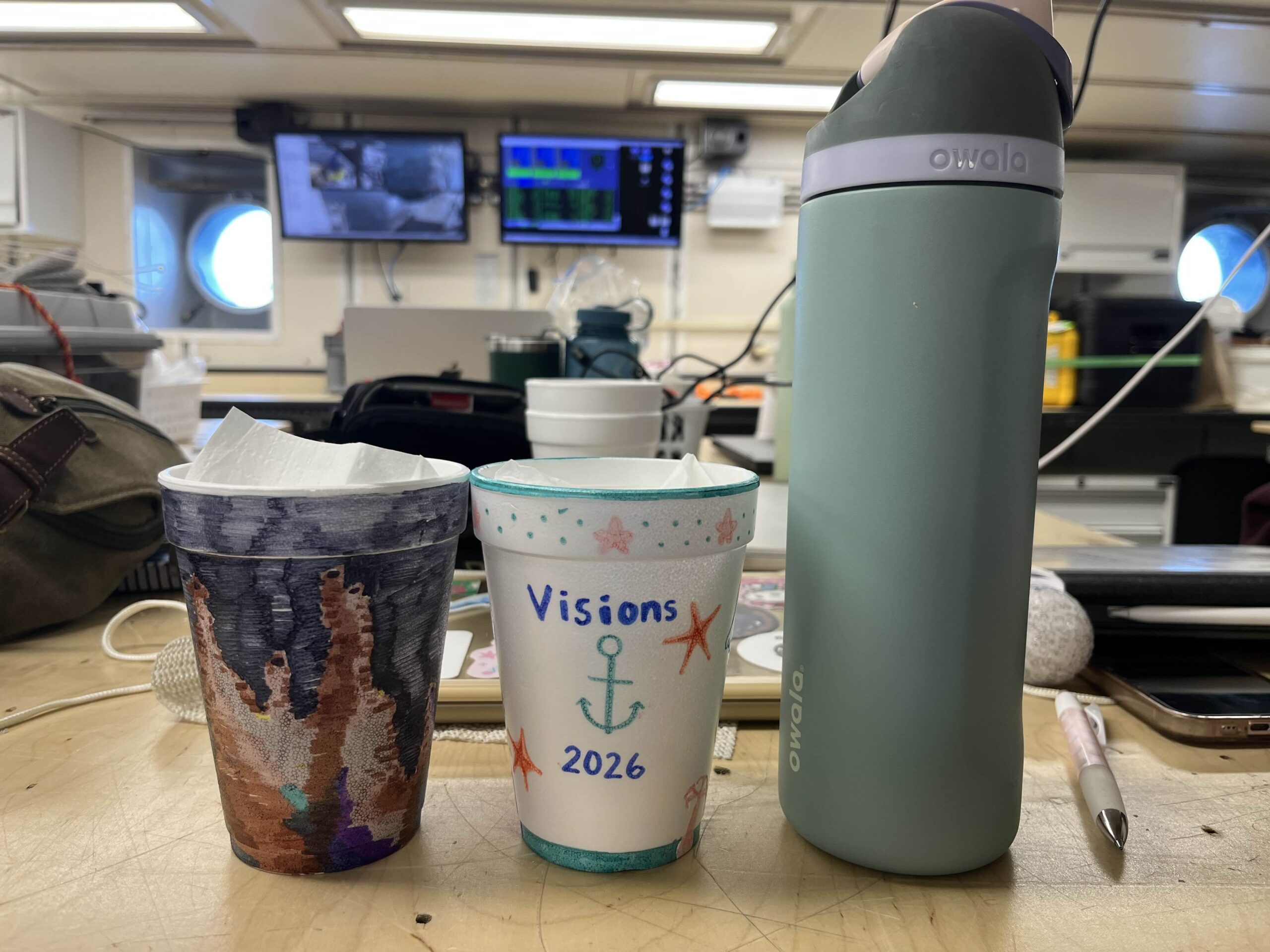
We sent down our styrofoam creations on the deep CTD to 2900 m, tonight we will get them back and be able to see them in their miniature form! Today was an interesting day, I love getting to work in the lab and experience everything out on deck!
August 10th, 2026
Last night, I had my first official watch of the cruise, where we had our third and final dive at the Oregon Shelf site. Unfortunately, we were battling some navigational issues for a portion of the mission, but that didn’t stop us from having a great dive. Our dive plan was to replace the Bio-Acoustic Sonar instrument platform installed in 2025 that allows for analysis of Zooplankton populations. Around 2230 the dive was completed. Promptly after, we began transiting to the Oregon Offshore site. During the transit, every wave crashing into the boat could be felt, and making large banging noises in the lab, creating a slightly eerie atmosphere.
This morning I got up and promptly got ready for my watch at 0800. Two CTD casts had already been completed at ~0300 and ~0600, and our first dive (J2-1778) began at ~0700, where me and my watch-mates took over for the current dive. This dive plan was to bring down a 2026 refurbished BEP and hydrophone to replace the one currently on the seafloor, as well as take a niskin sample where the new BEP was deployed at ~580 meters water depth.
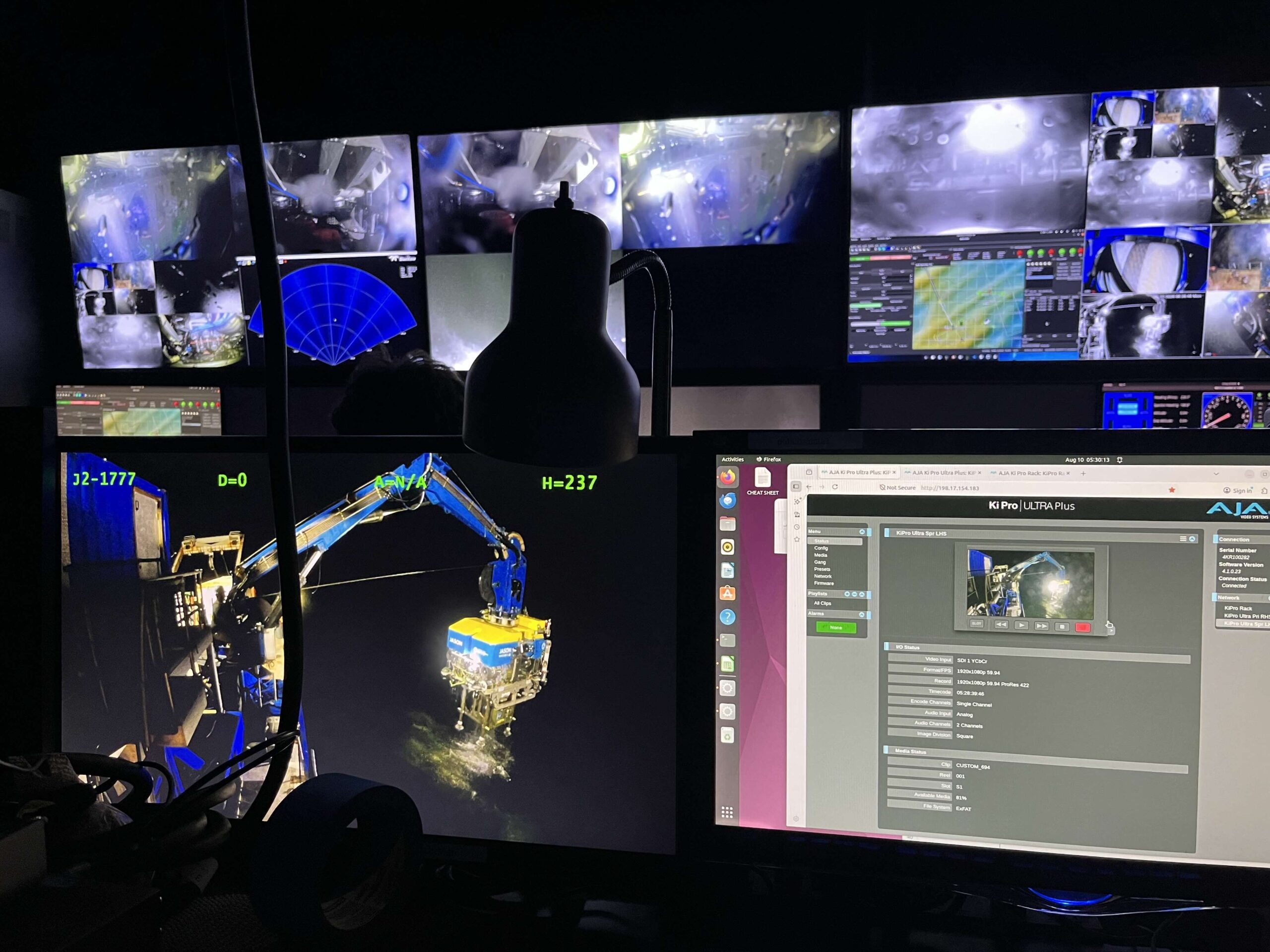
In the control room, we get to take on roles of being either the logger, and noting down everything that happens during the dive, or the camera controller, and take snapshots throughout the dive/control the broadcast. I think my favorite part so far is being able to log everything Jason does, but even just sitting in the control room is interesting in itself!
After the dive, I was able to help an oceanographer onboard, Mariela, with collecting some water samples. We used the water collected from the Niskin bottle during dive J2-1778, and gathered up water samples to check dissolved oxygen concentrations, salinity, and chlorophyll levels in ocean water at the new BEP site.
Another activity we were able to do was draw on styrofoam cups, which will be sent down in one of the CTD deployments tomorrow. Our next stop is the Slope Base, which has a depth of ~2900 meters. With great depth, comes great pressure, and our once regular sized styrofoam cups will compress and become miniature versions of themselves.
While waiting to start my evening shift, I got to help out Joe, another oceanographer onboard, collecting chlorophyll data from the Niskin samples. We ran the water samples through a large filtration system, and the filter would collect anything in the sample for them to analyze later. Today was very eventful, but I’m very excited for our future stops where we hopefully get to see methane seeps and exposed hydrate at the Southern Hydrate Ridge site this evening and tomorrow morning!
August 9, 2026
Yesterday we all gathered at the UW at 0700 to start making our way down to Newport, OR. Despite my immense sleepiness, the trip went surprisingly smooth, and we made it into port before 1300. Experiencing the ship was super exciting for the first time, but it seriously is a maze in here. Myself and some other students made our way around the ship to get more acquainted, and we found some of the cooler rooms all around the boat. Can you believe a ship has a miniature gym? I ended the night getting to hang out on the bow of the ship with some of my fellow VISIONS‘26 colleagues, before calling it an early night, and heading to sleep.
Today, I woke up around breakfast time, feeling recharged and ready for the day! The ship is still very confusing to navigate, and I nearly got lost on my way to the galley for breakfast, but I eventually made it and got to enjoy breakfast with some other students. This morning is our last few hours in the port before we head out to sea, so I’m soaking up seeing land as much as possible, but I’m excited to get out there and see nothing but the open ocean.
We got to first take a tour of the Jason control van, and it looks how I imagine a mission control center looks! Our first dive is set to begin at around 1100 at the Oregon Shelf site, where I will have my first shift of the cruise later in the evening.
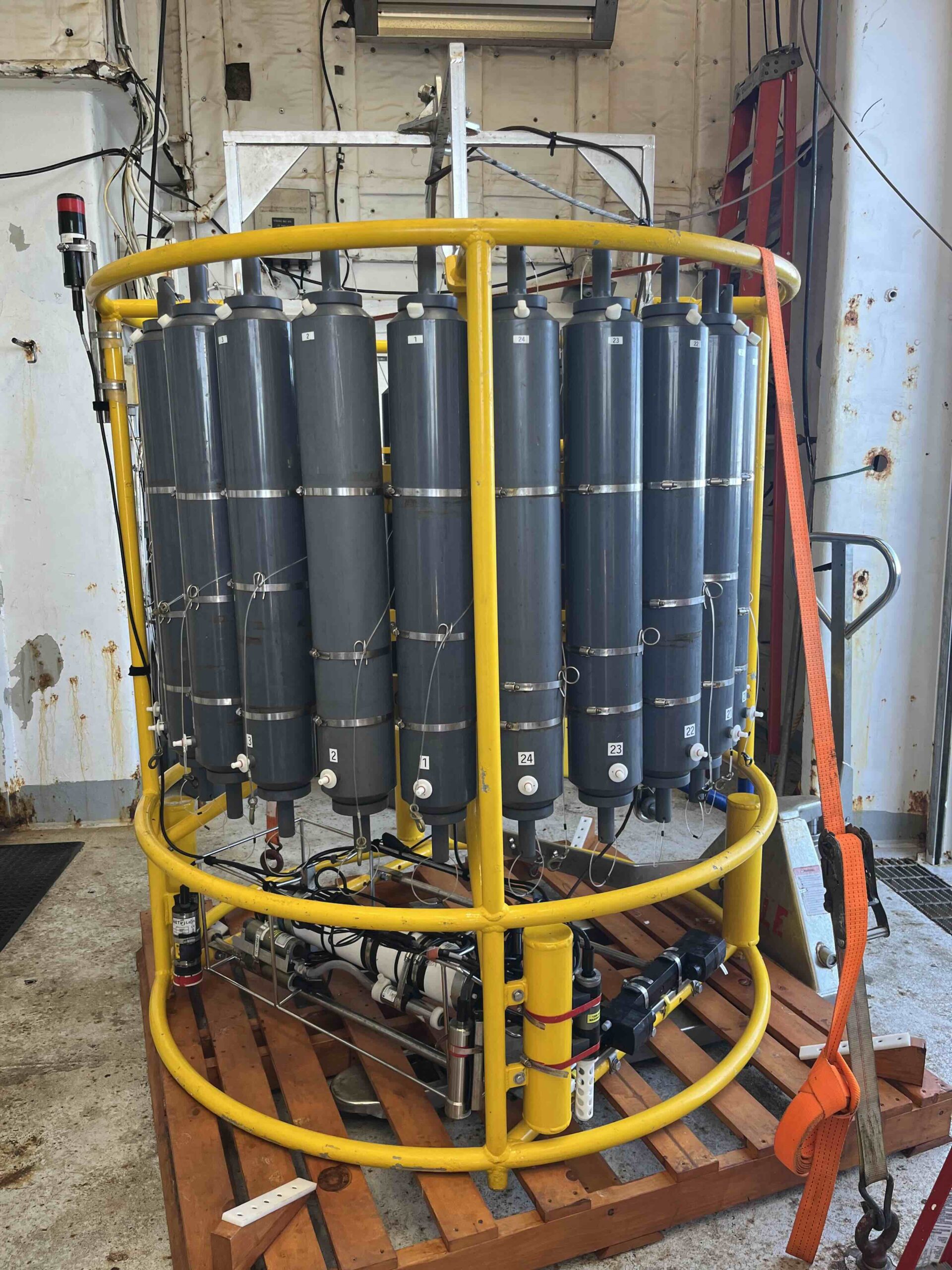
One of the things I was most excited to see was the CTD onboard. All of the scientists onboard are super kind, and willing to share a bunch of knowledge with you. This CTD was the largest I’ve encountered so far, and I was shocked at all of the technology it had loaded up on it. There were 24 different niskin bottles, which are trap water samples by snapping shut end caps on the bottles underwater, the unique thing about all of the bottles is that they are all programmed to shut independently of one another, and you can get up to 24 different samples throughout the entire water column.
Once we arrived at the Oregon Shelf, the sea was very much wavey, and me and my fellow students stumbled around the boat attempting to gain our sea legs, but seeing through the eyes of Jason for the first time made all of my worries go away. I’m excited for my shift that will happen during the night and will update about it tomorrow.
After our first dive, Jason brought back up a Benthic Experimental Package (BEP). The difference between the BEP that has been on the seafloor for a few years to now is very stark.
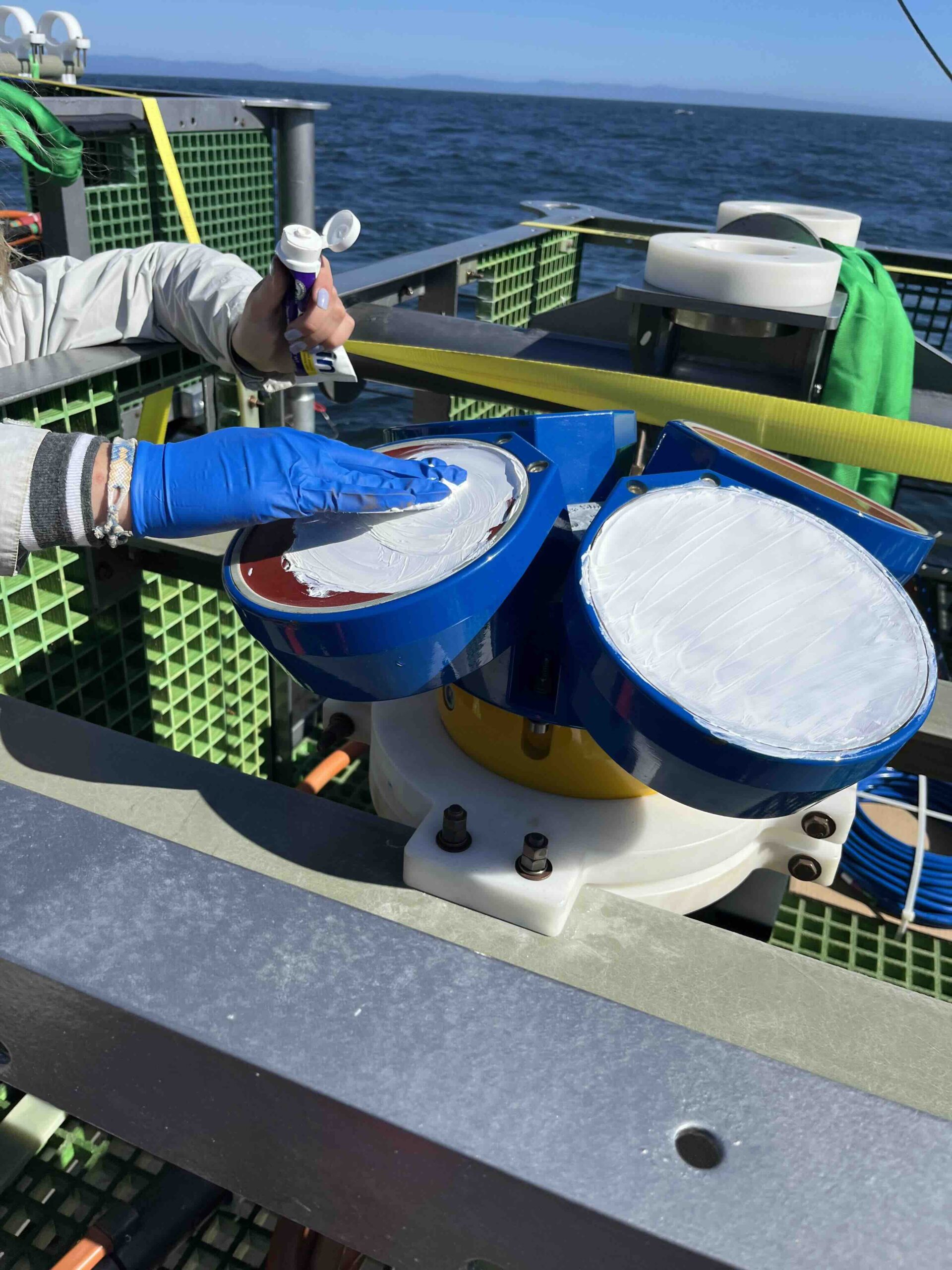
A unique tip I learned from one of the APL staff, Jenna, is that applying diaper cream (or any form of zinc oxide) prevents organisms from attempting to colonize a certain material. Jenna was applying the diaper cream to one of the ADCP (Acoustic Doppler Current Profiler) instruments that we will be deploying down to the seafloor in a few days.