
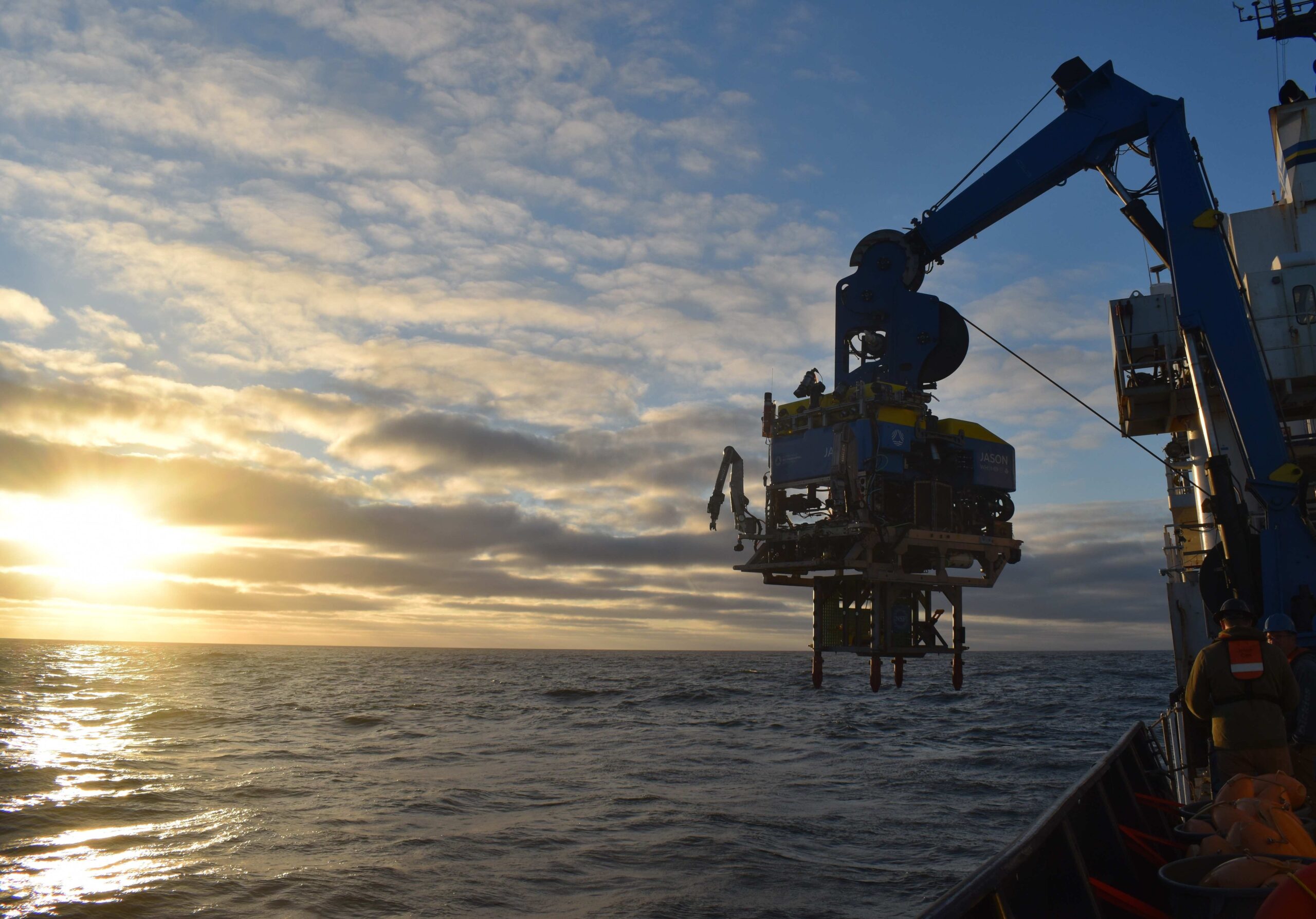
Our first stop was also our shallowest: the Oregon Shelf site, at just 80 m water depth and about an hour from Newport. But shallow means anything but simple. At this site, high currents and low visibility due to abundant biology and well stirred sediments can make it impossible to see even a foot in front of the ROV. For this reason, we like to start at this site early in the expedition rather than leave it until the end. The timing of the tides and weather can make a massive difference in success at this site, so having a couple of runs at the Oregon Shelf during the cruise and make all the difference in completing our work at this site. So, there was some anxiousness on what we would find as Jason descended.
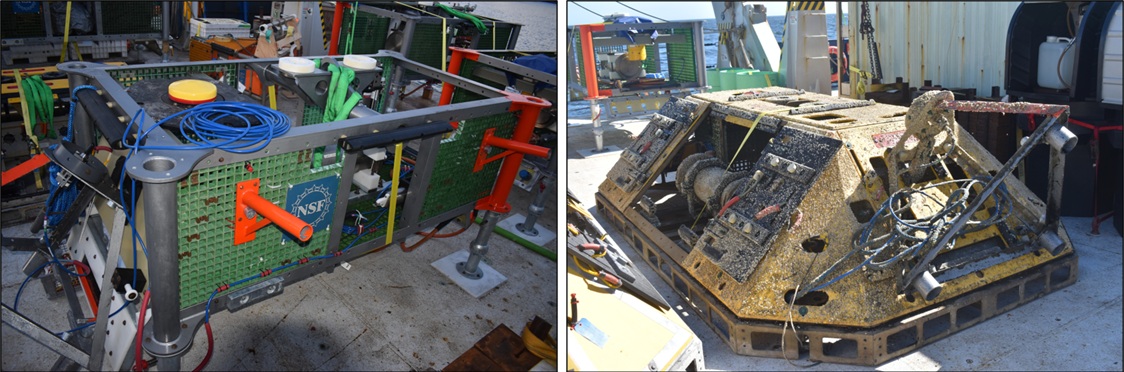
This year, however, we were very lucky. Over three efficient dives, Jason was able to swap all the equipment in about 12 hours. First, the Benthic Experiment Package (BEP) was turned. The BEP is a low powered junction box hosting a few instruments inside the platform, with several other instruments deployed at a distance with communication and power supplied by cables extending from the junction box.
This year marks a new design for the BEP at the Shelf site. The 2026 BEP looks like a standard green junction box rather than the low yellow, walled version that was originally designed for the site. This shift is because, while the low profile, and low walls were meant to make the BEP trawl resistant in case a fisherman accidently dragged a net over the equipment, the protective walls have instead become a trap for the abundant sediment at the site leading to instruments clogging. Over the next year our data team will monitor the instruments on this new BEP and assess how the design changes have improved data quality.
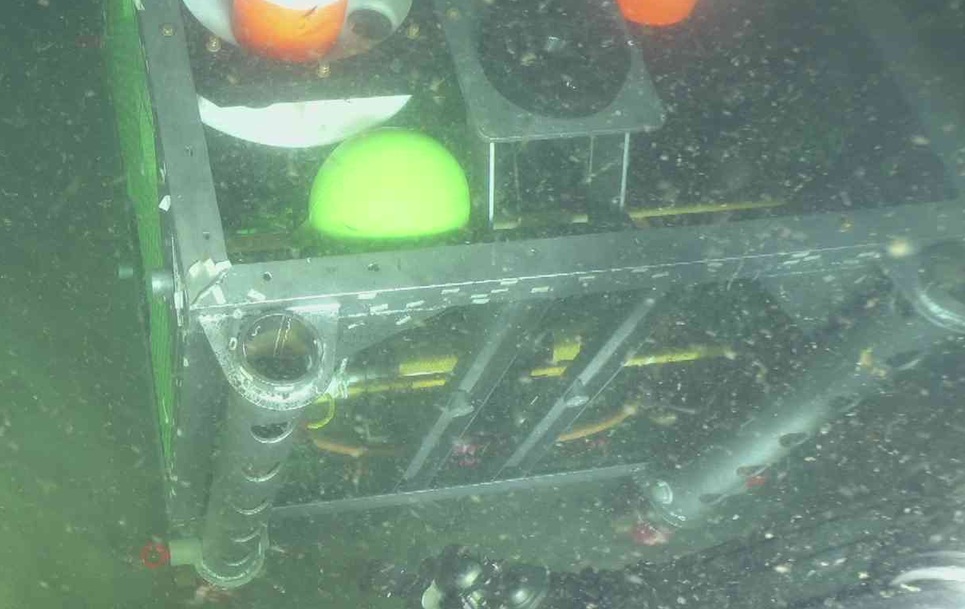
A second, dive turned the digital still camera that photographs the bottom and the critters that live there every thirty minutes throughout the year. This year, through the eyes of Jason we saw dungennes crabs, wood boring bivalves, dover sole, seastars, and even hagfish. The third and final dive replaced the zooplankton sonar, a bio-acoustic instrument that uses sound to count the tiny drifting animals — copepods, krill, and their kin — that form the base of the ocean food web. The very last thing we did at this site is release a calibration sphere that floats above the sonar on a very thin fiber – the acoustic “pings are reflected off the sphere. This helps confirm the sonar is "imaging" the water column/organisms correctly. This year the students affectionately logged it as a “ballon”.
The sonar isn’t the only instrument that we collect calibration data for. On the BEP dive the ROV Jason captured water samples from the seafloor with Niskins – gray bottles attached to the side of the vehicle, which can be triggered when needed. These water samples are processed by our team on the boat and analyzed either onboard or back onshore for environmental parameters that include dissolved oxygen, carbon dioxide, and nutrients concentrations, and chlorophyll (as a proxy for phytoplankton) to provide accurate values to compare data from therecently recovered and freshly installed sensors against.
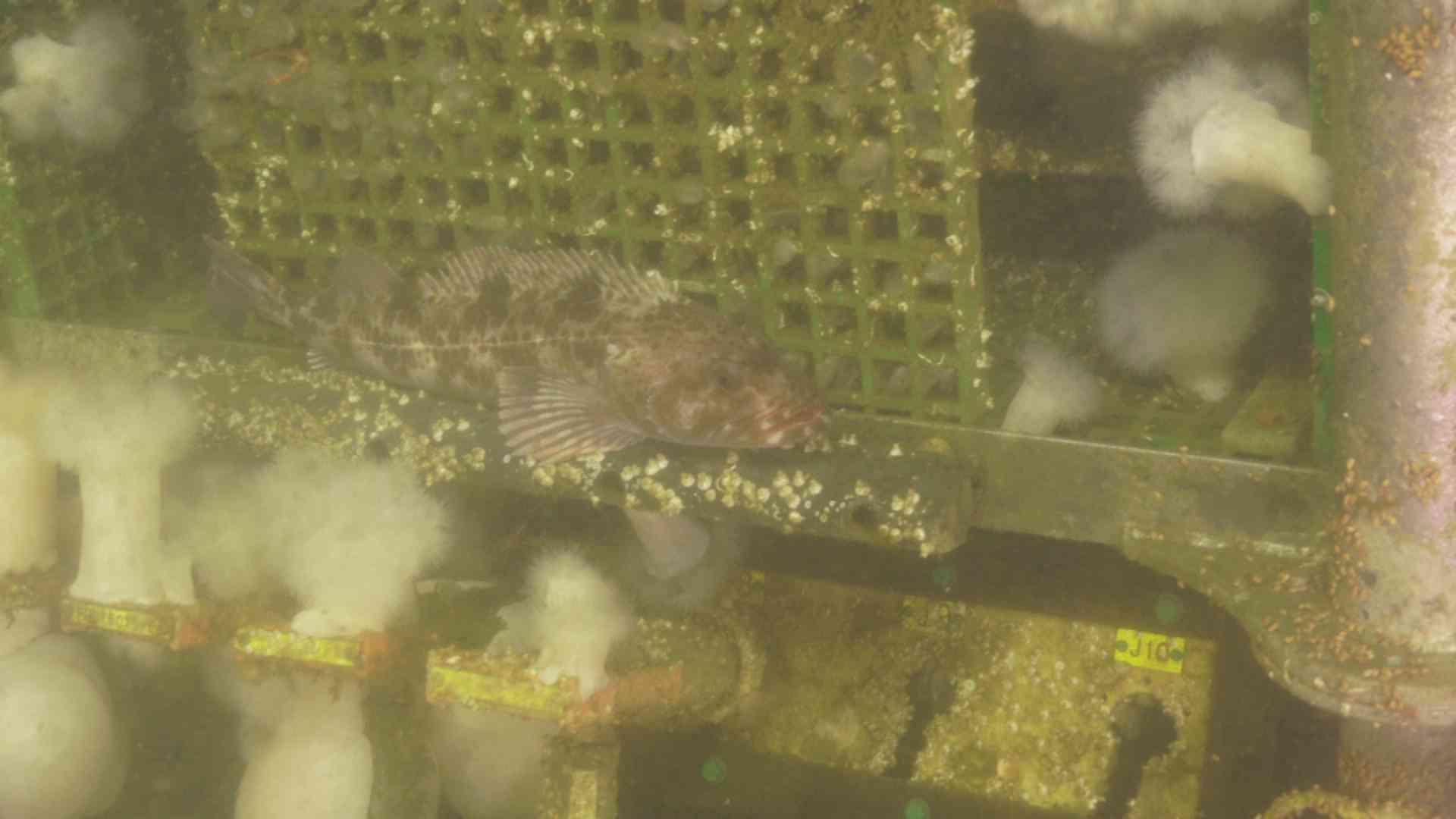
The shallow shelf may not look as dramatic as some of the sites we will visit, but scientifically it punches well above its weight. These are among the most productive waters on Earth, where summer winds drive upwelling that feed enormous blooms of life — and, in recent years, seasonal low-oxygen "dead zones" that can suffocate crabs and fish along the Oregon coast. The instruments we service here watch that story unfold in real time, season after season, giving scientists and fishermen alike a continuous “eye” into the changing coastal ocean.