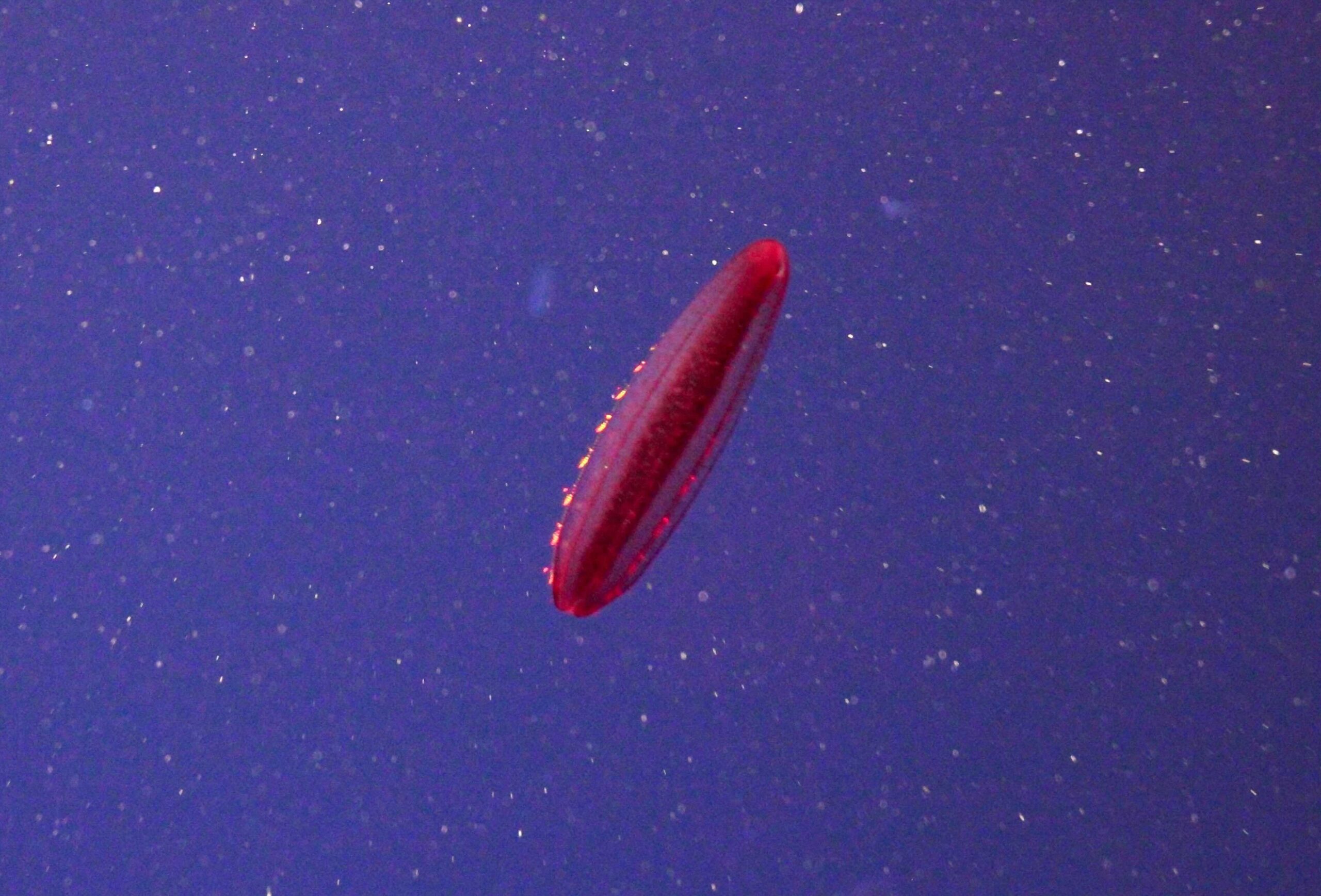
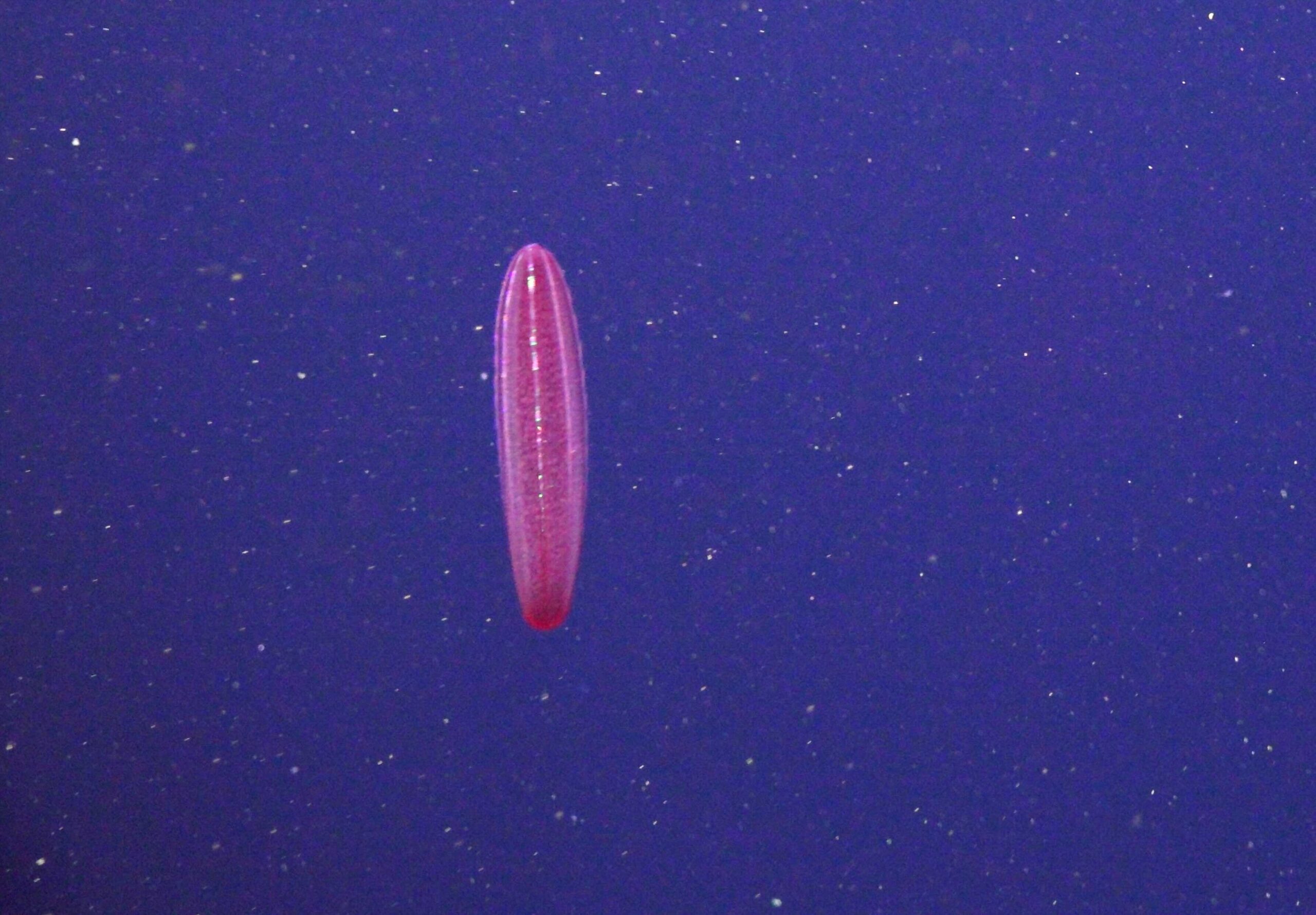
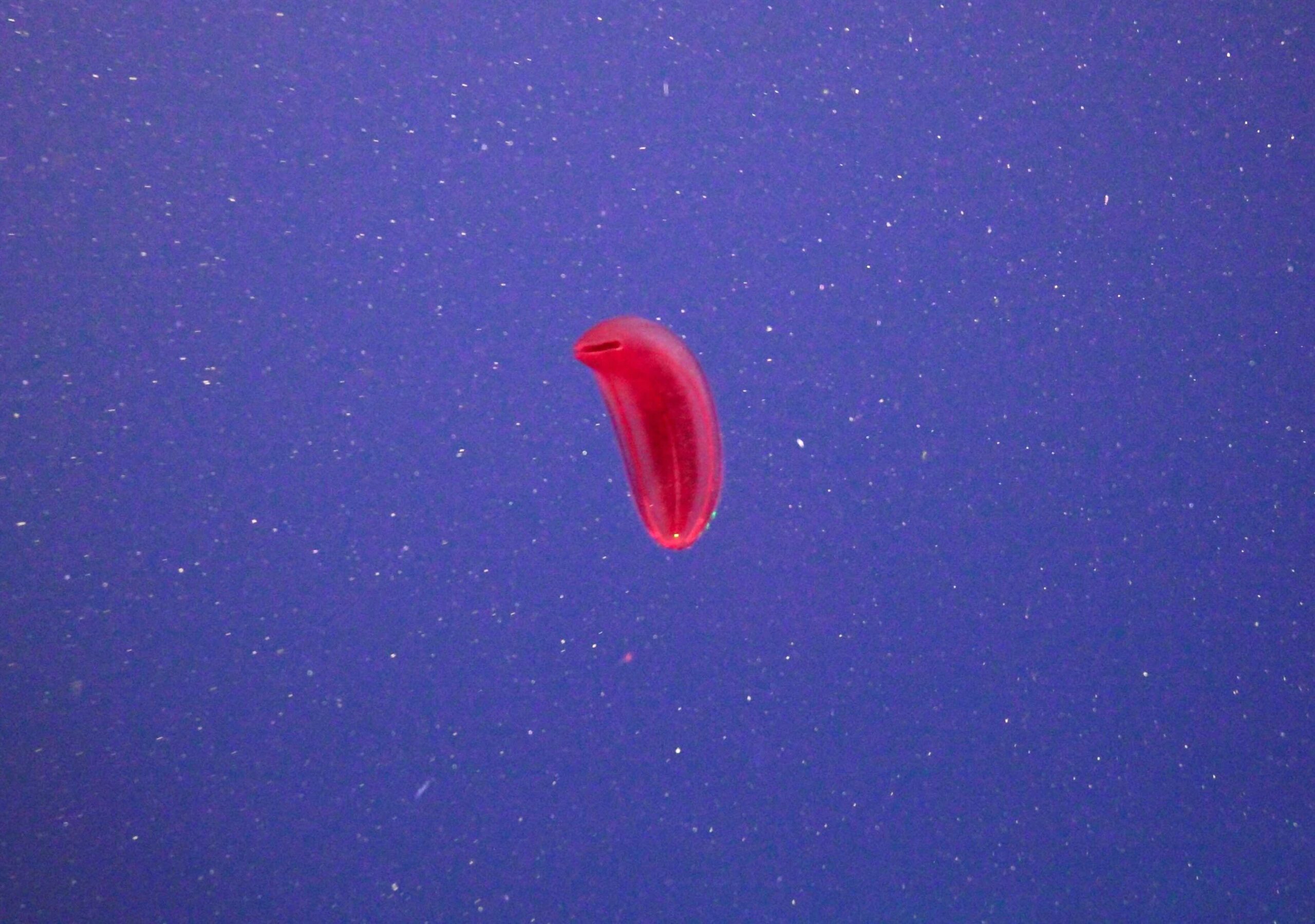
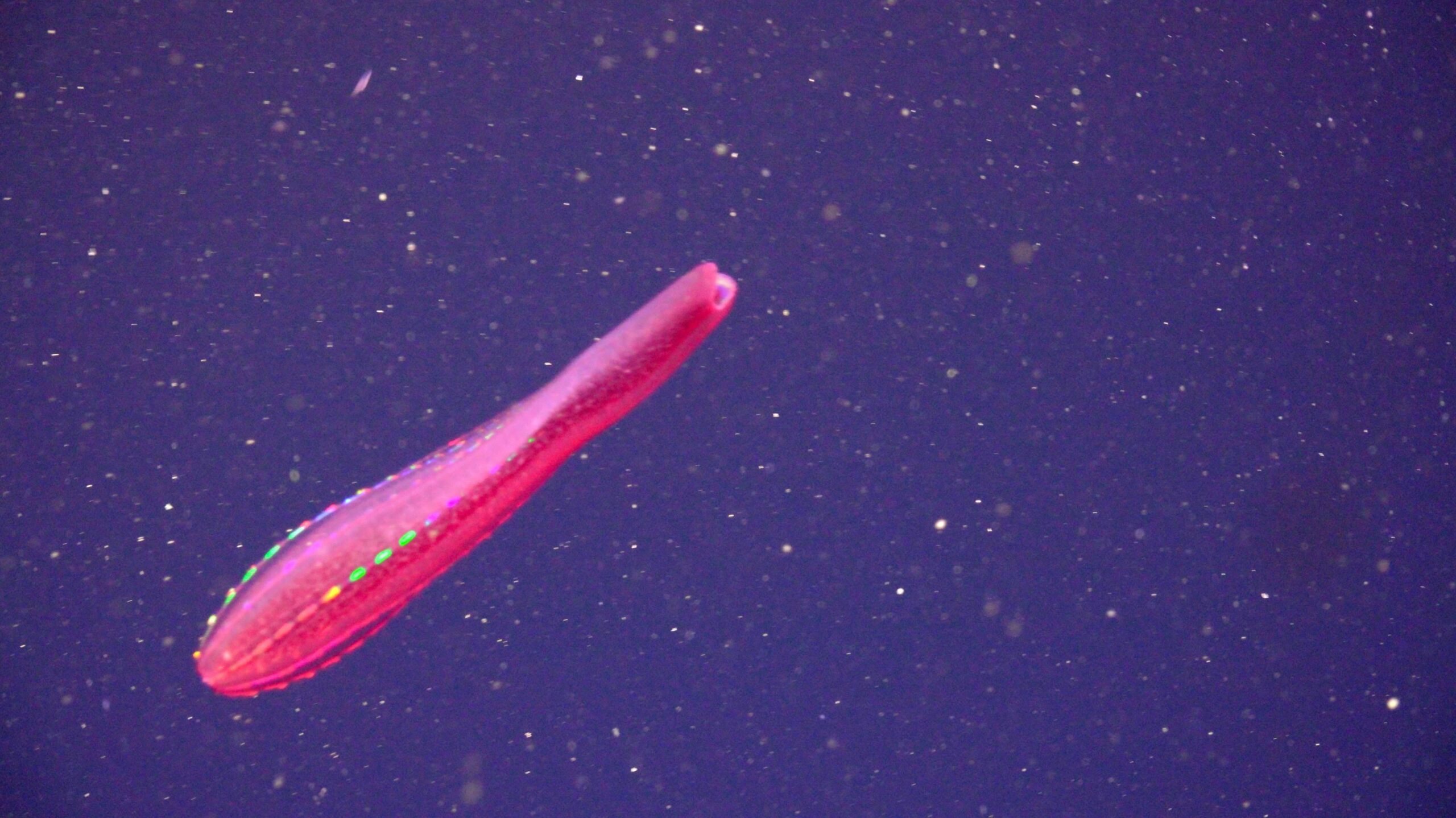
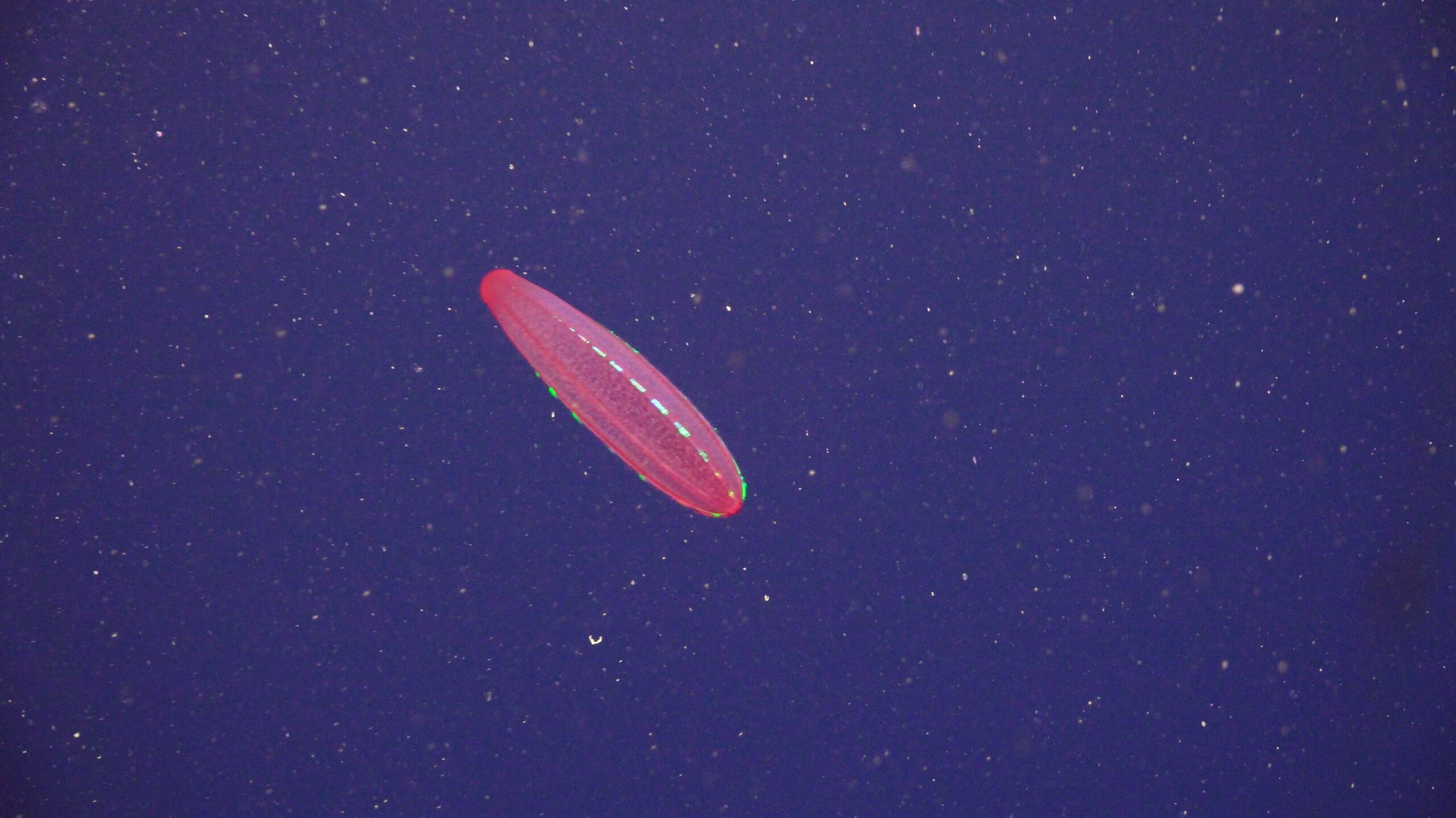
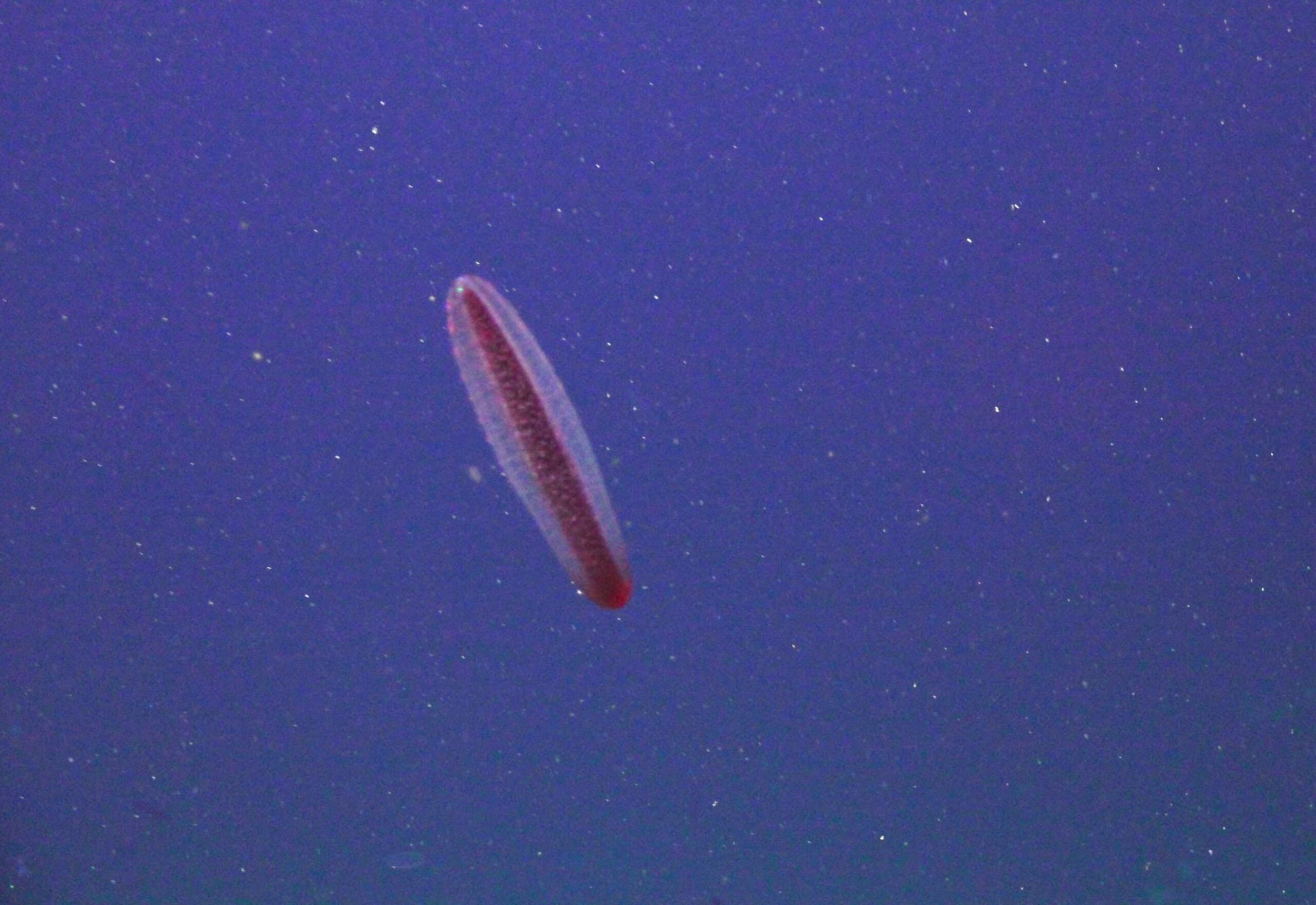
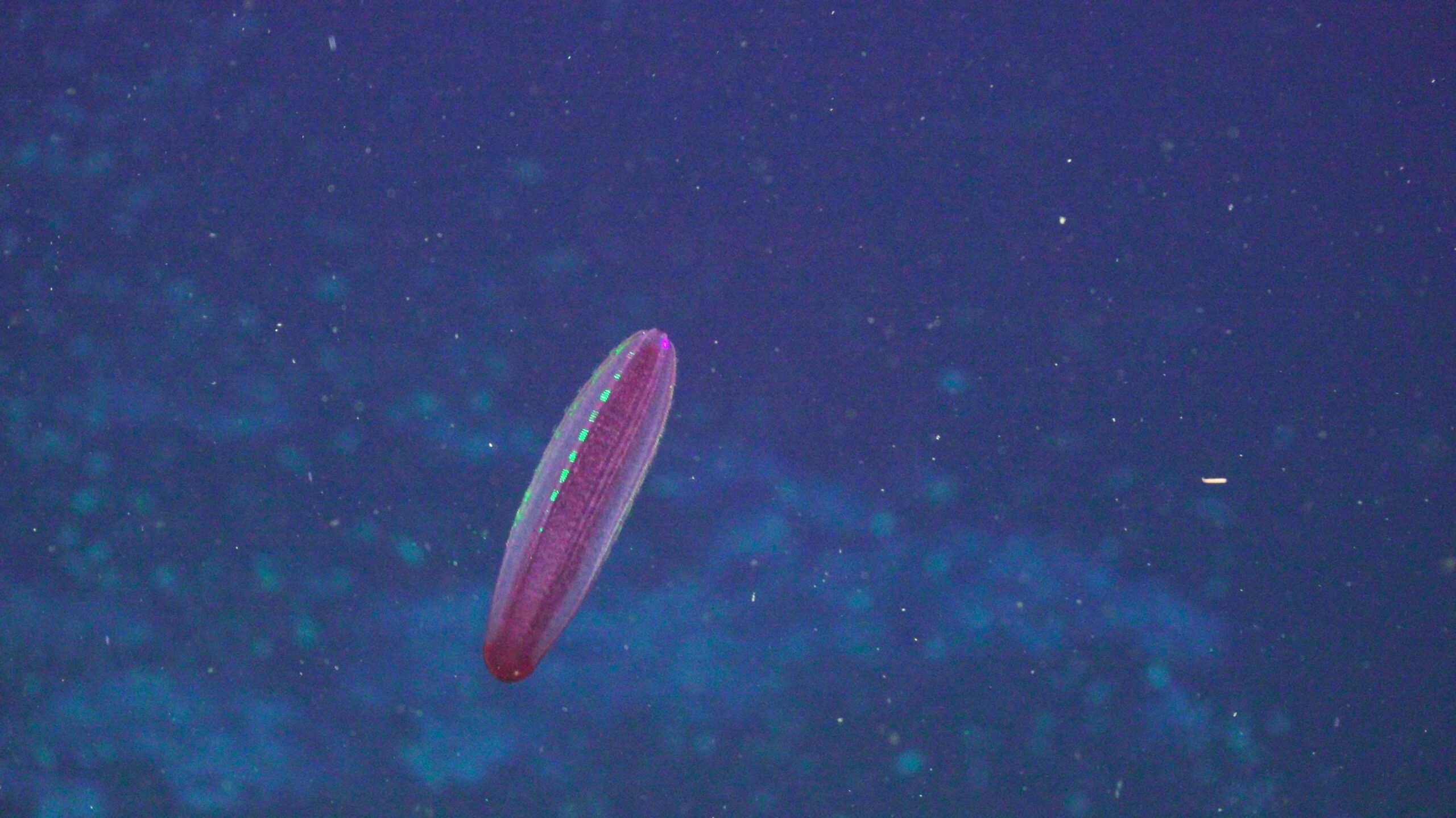
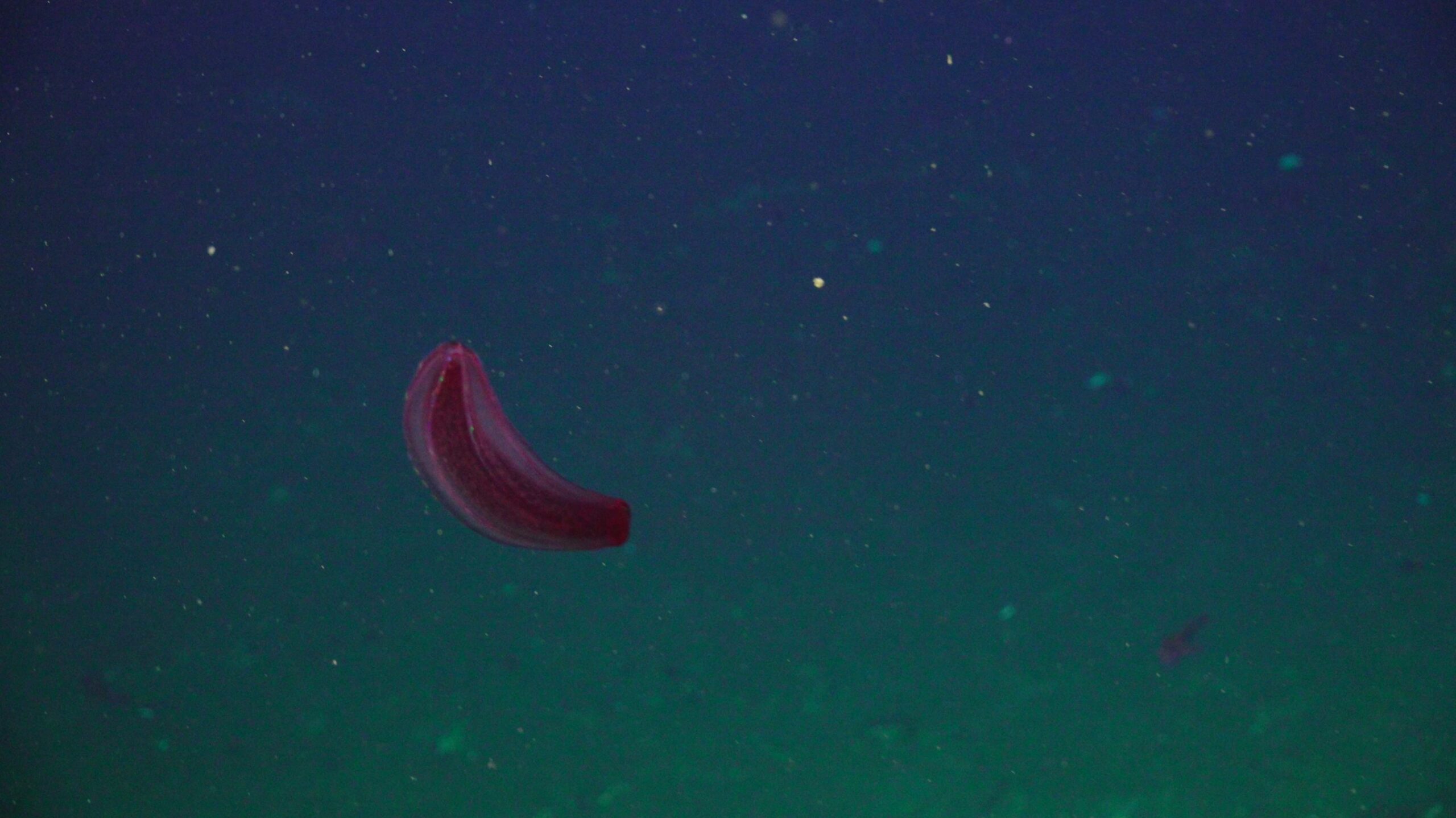
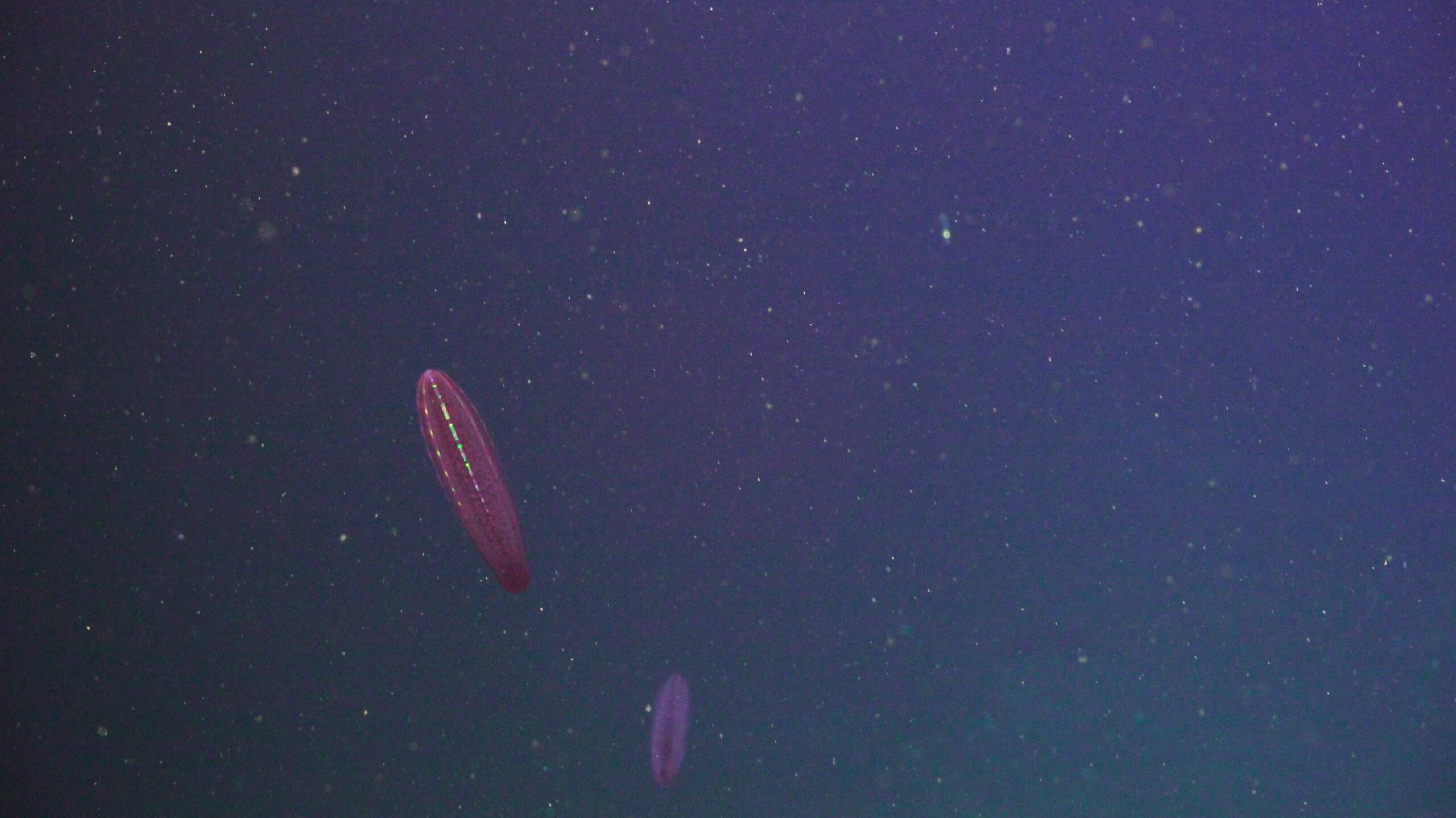
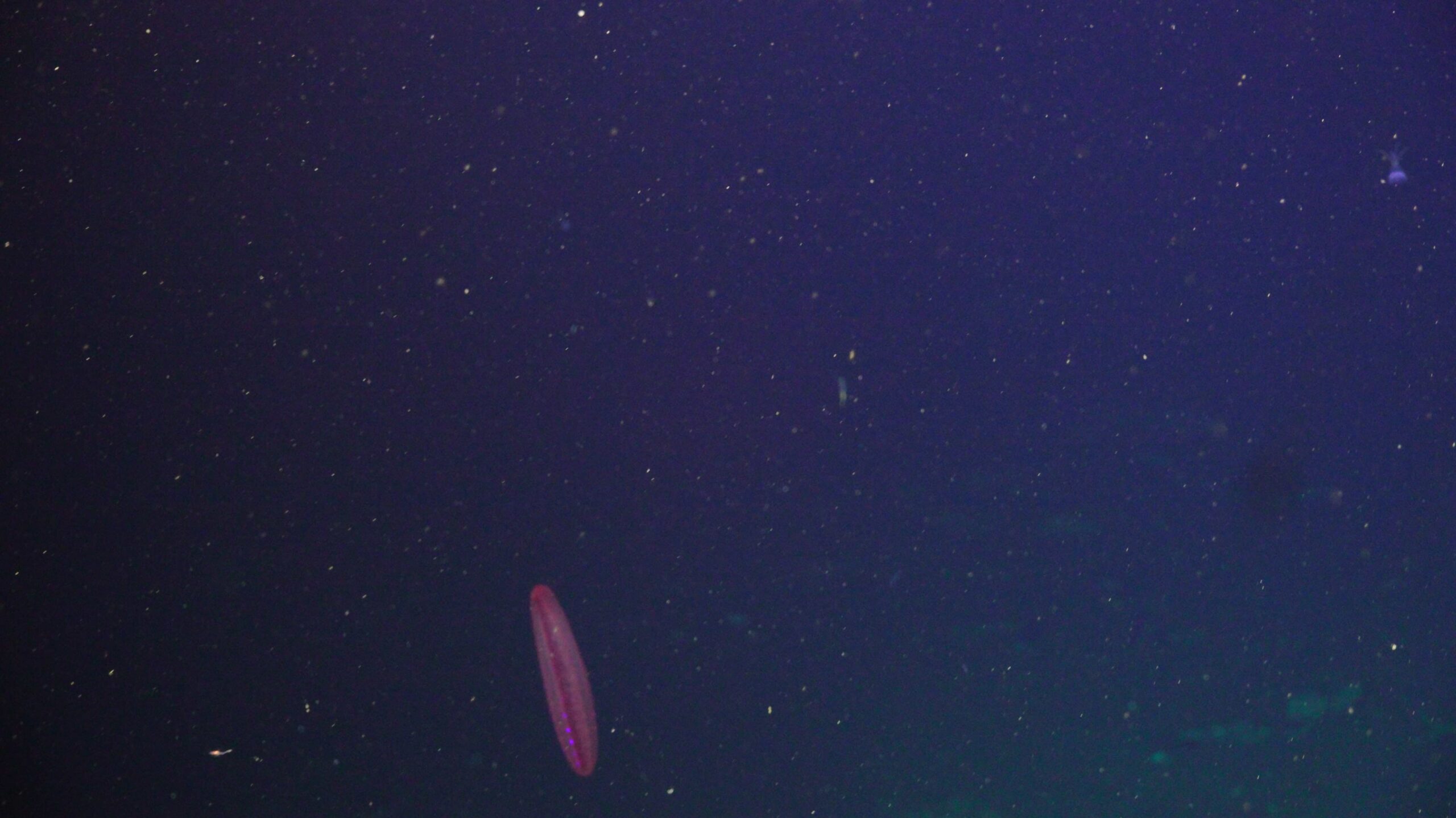
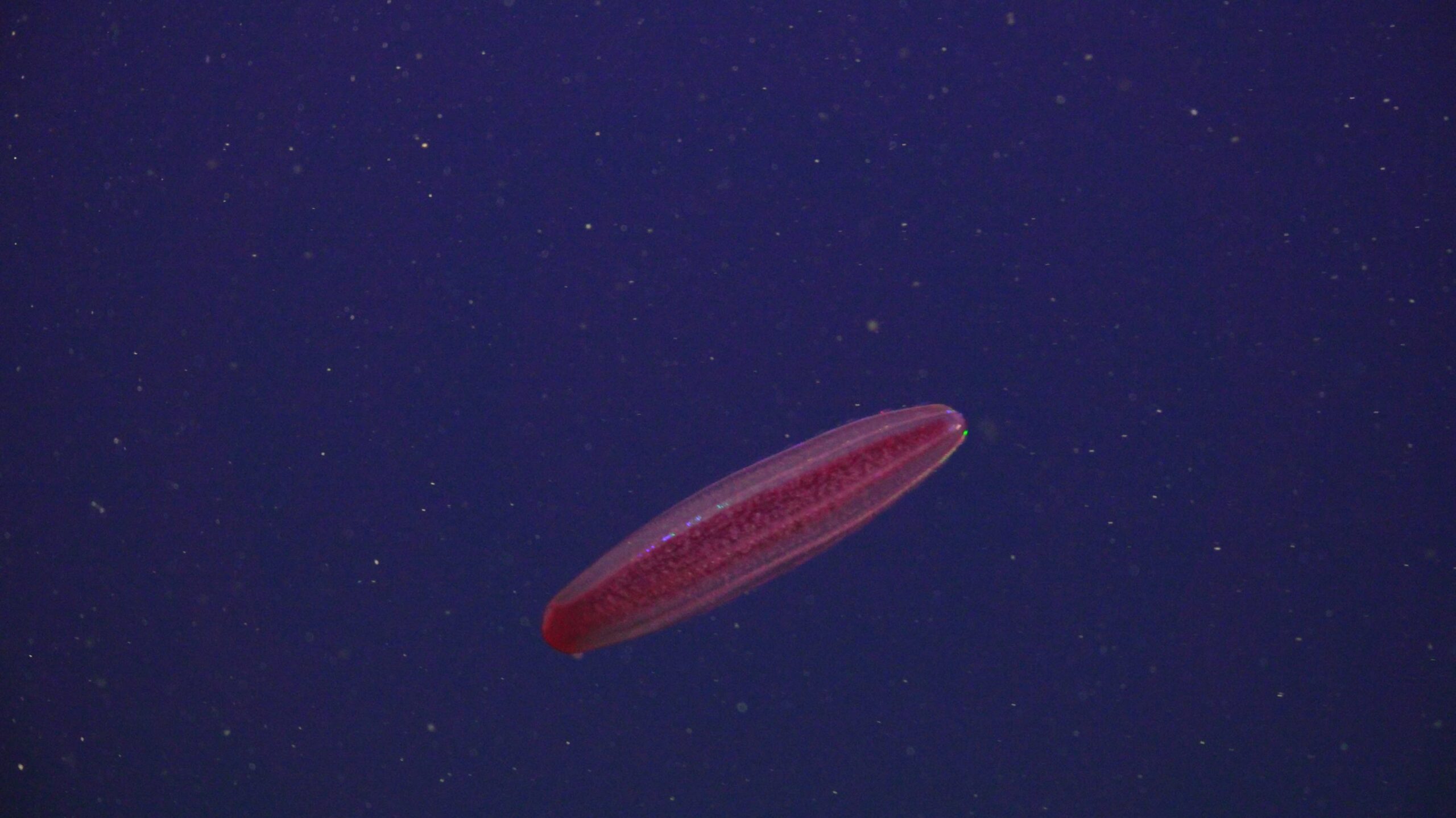
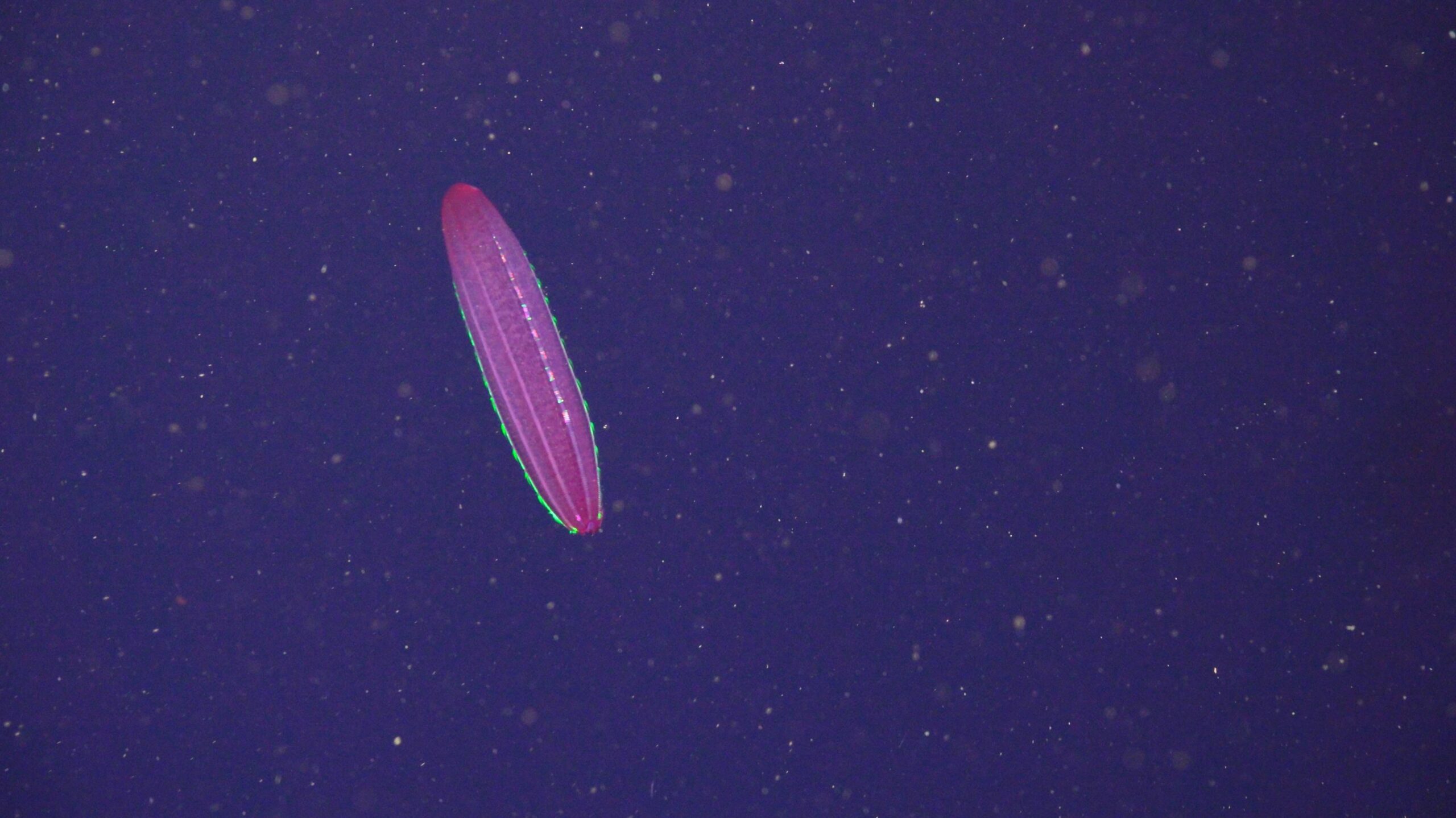
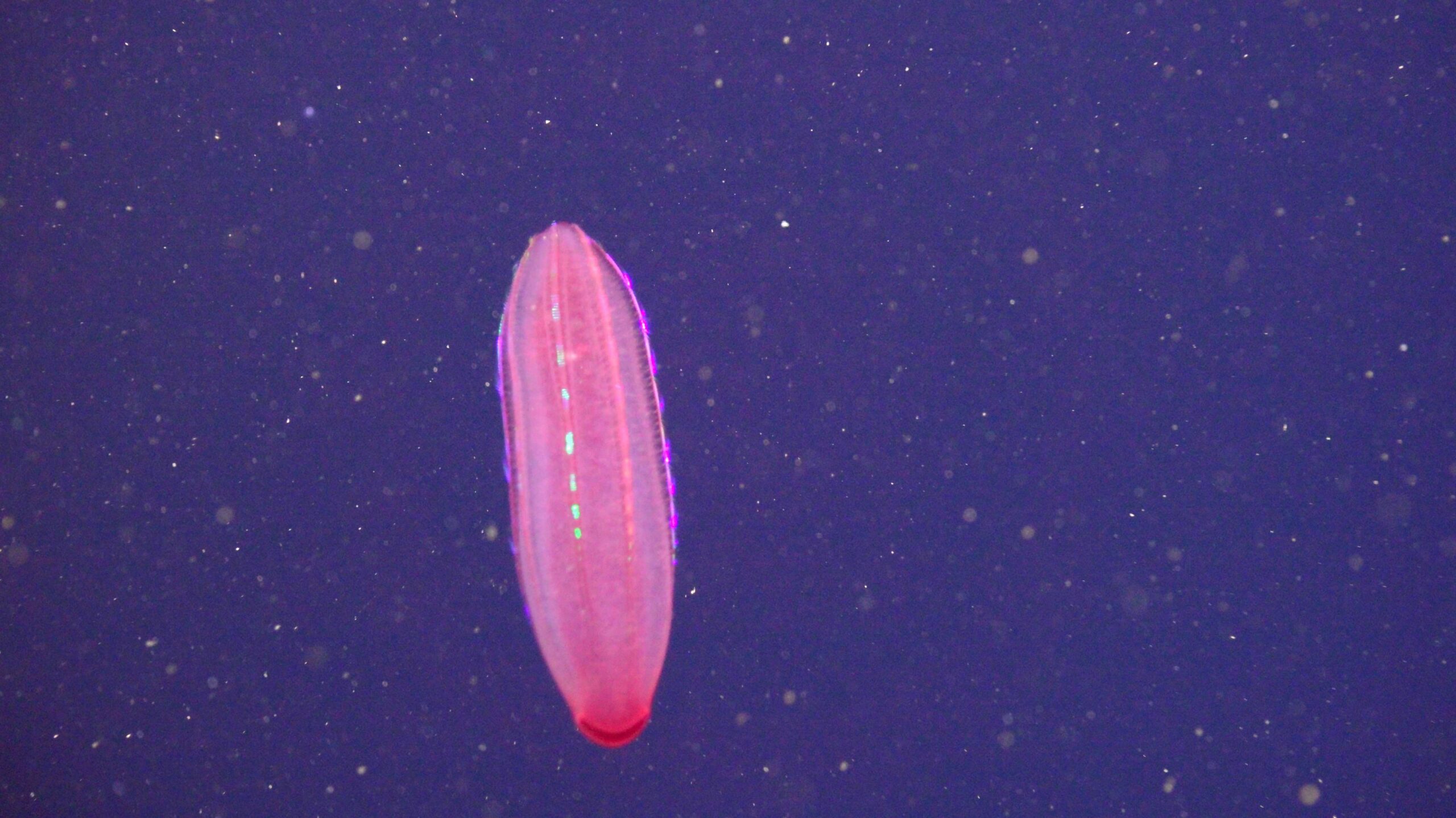
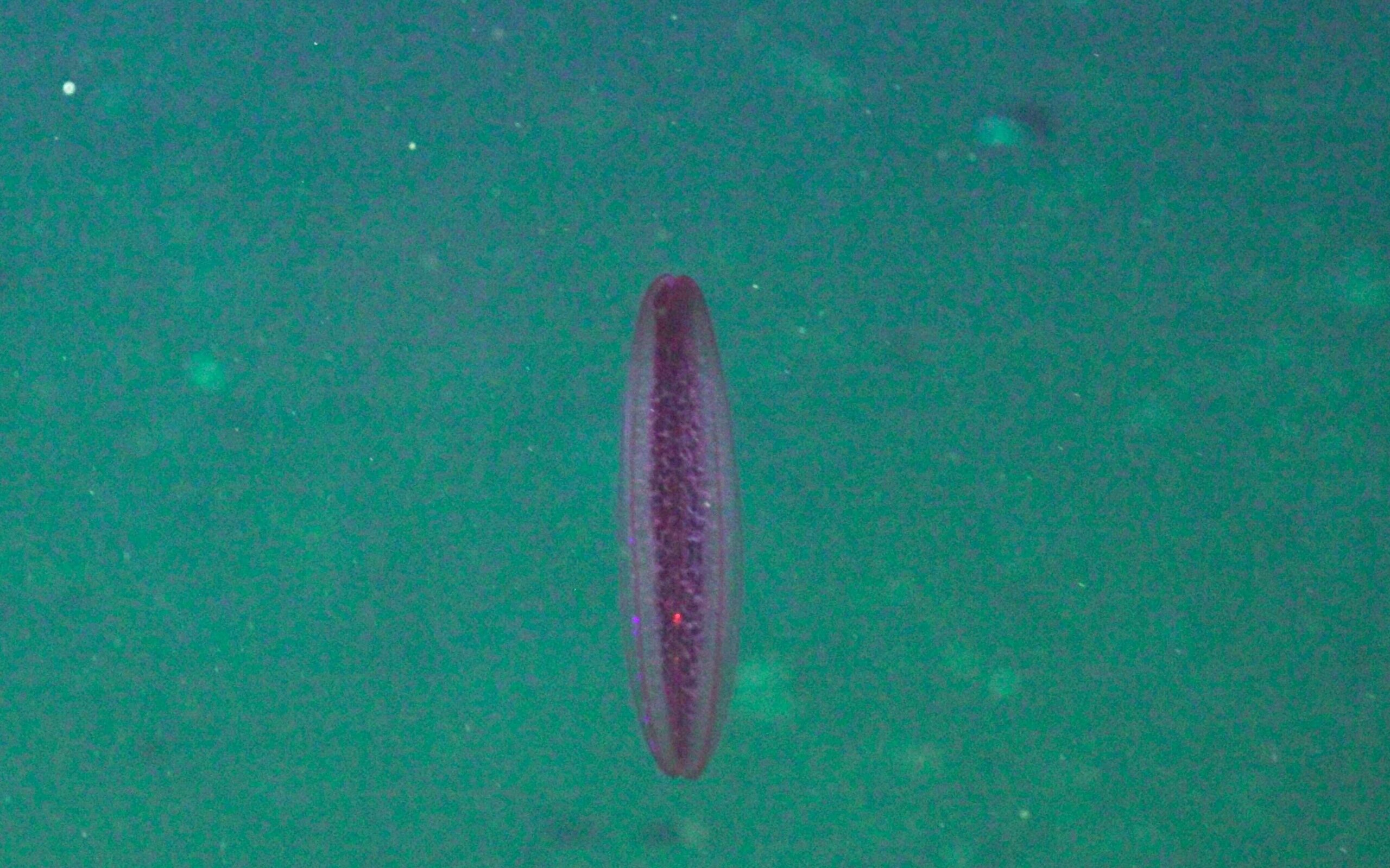
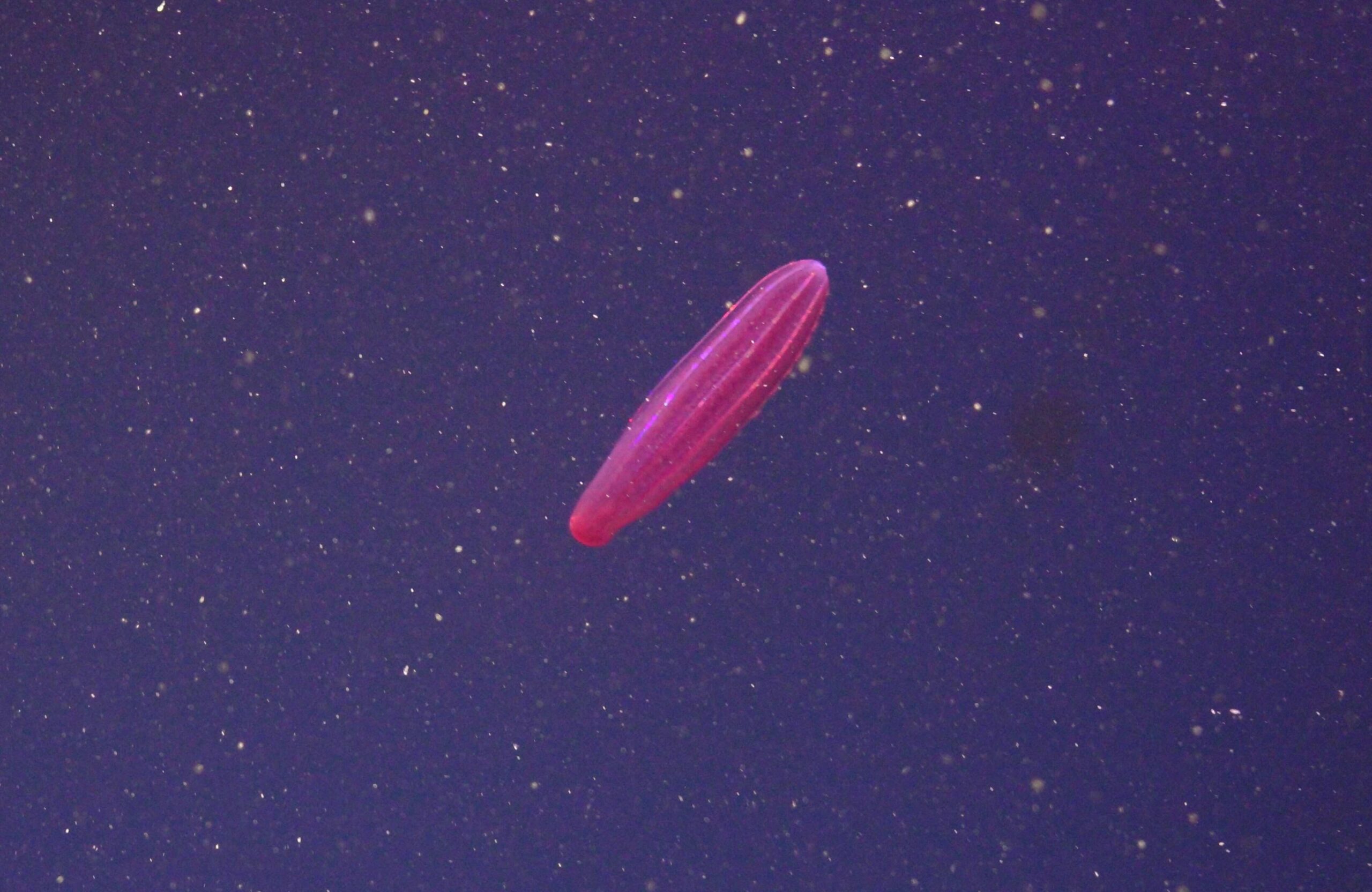
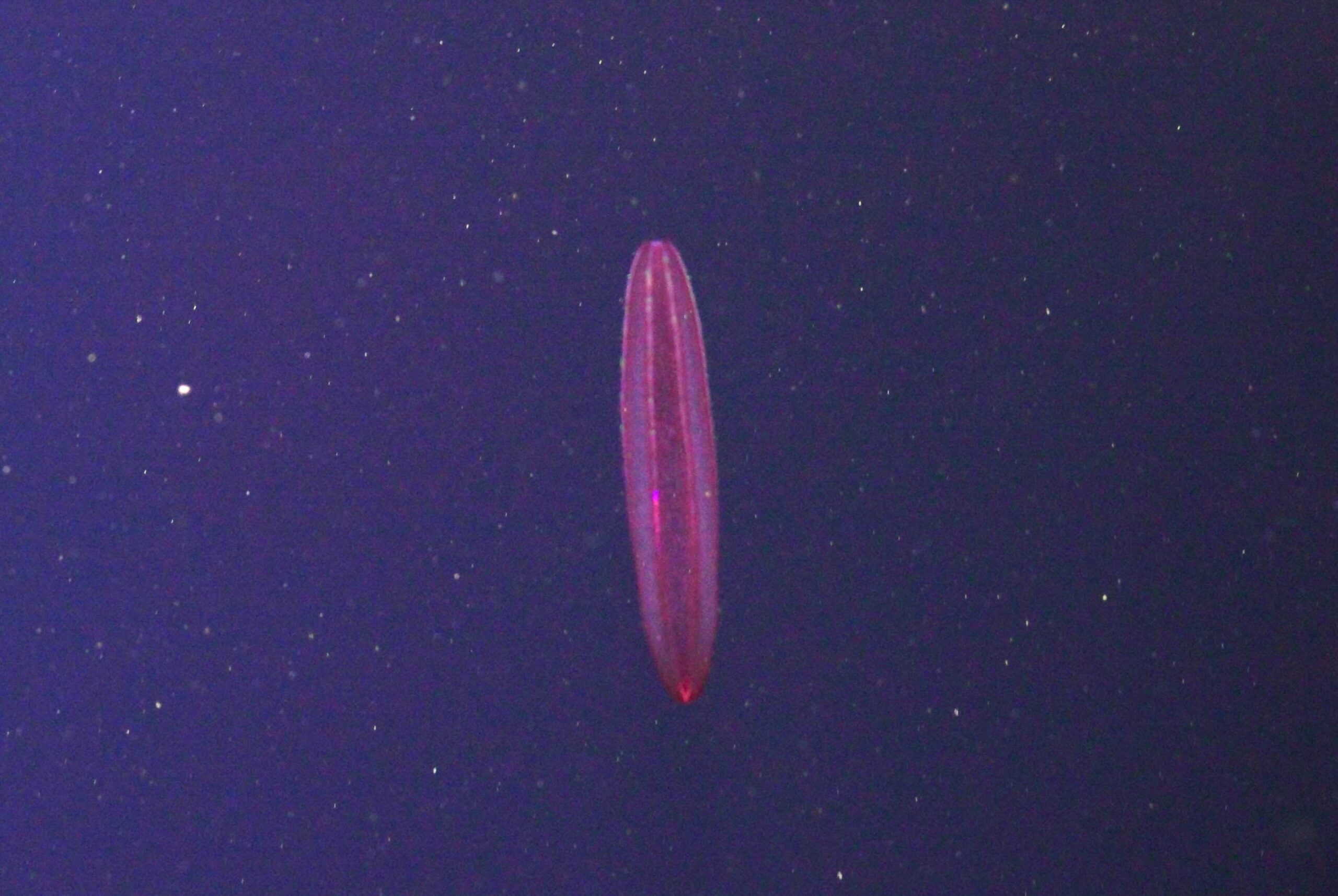
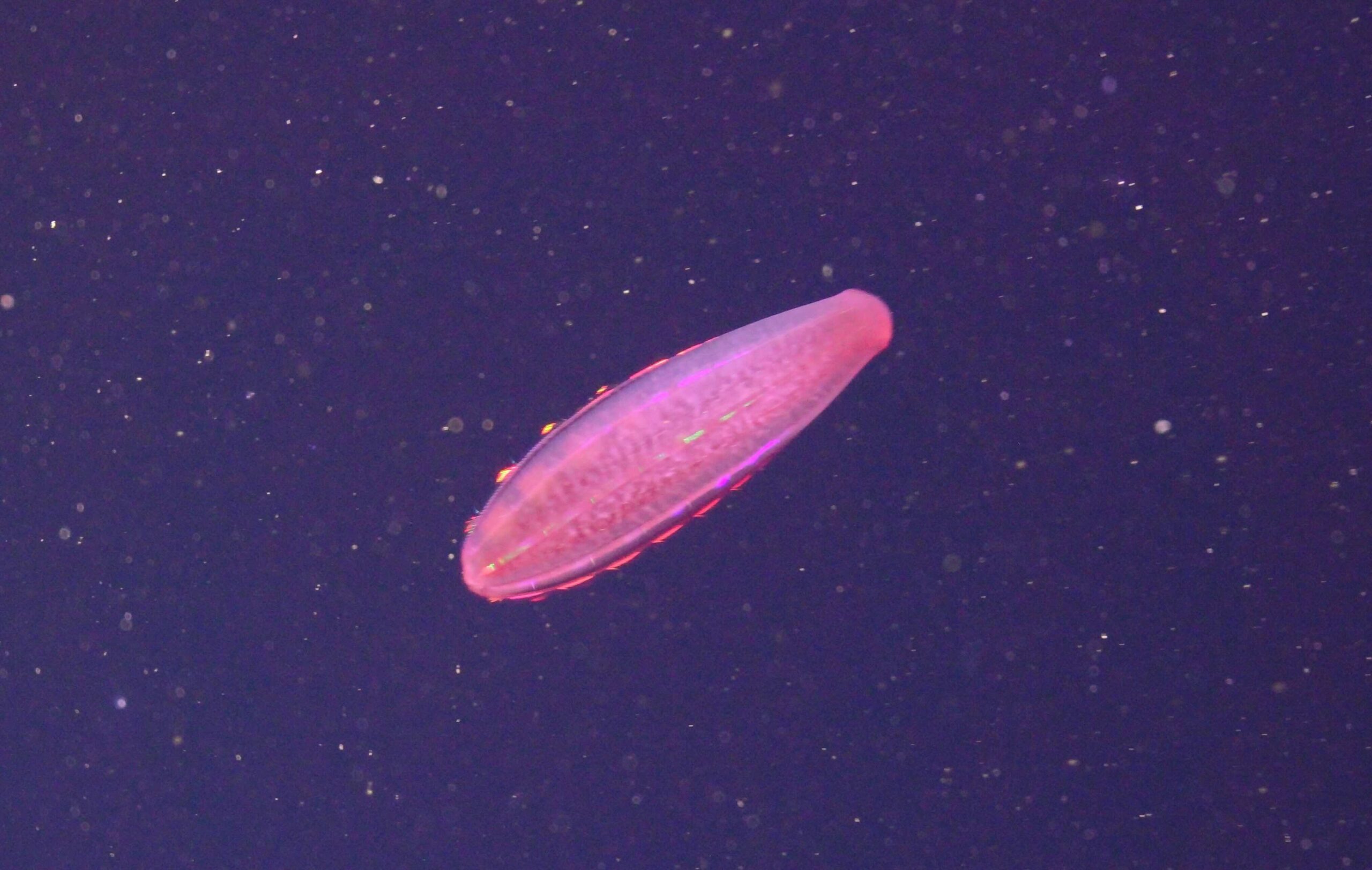
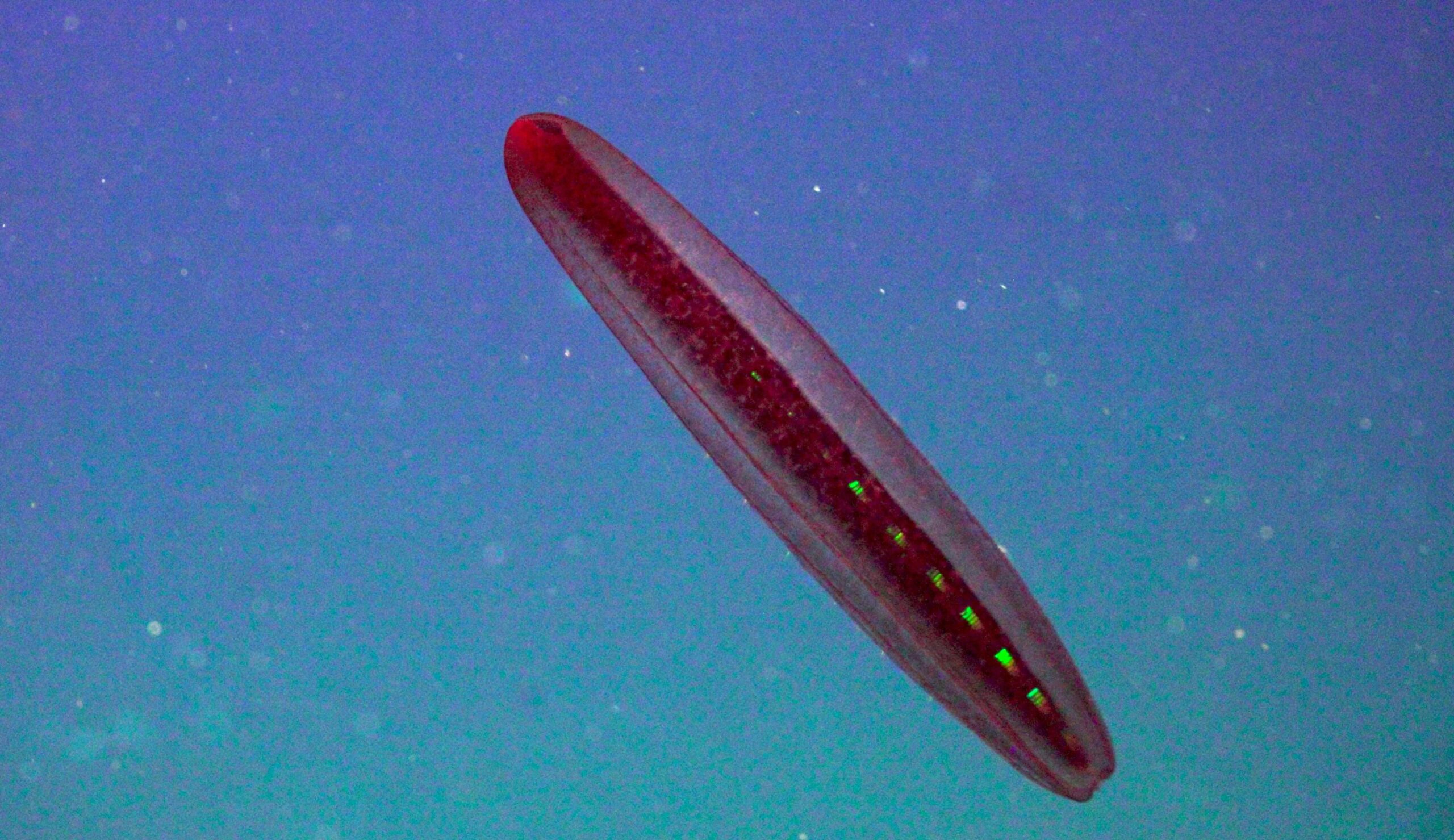
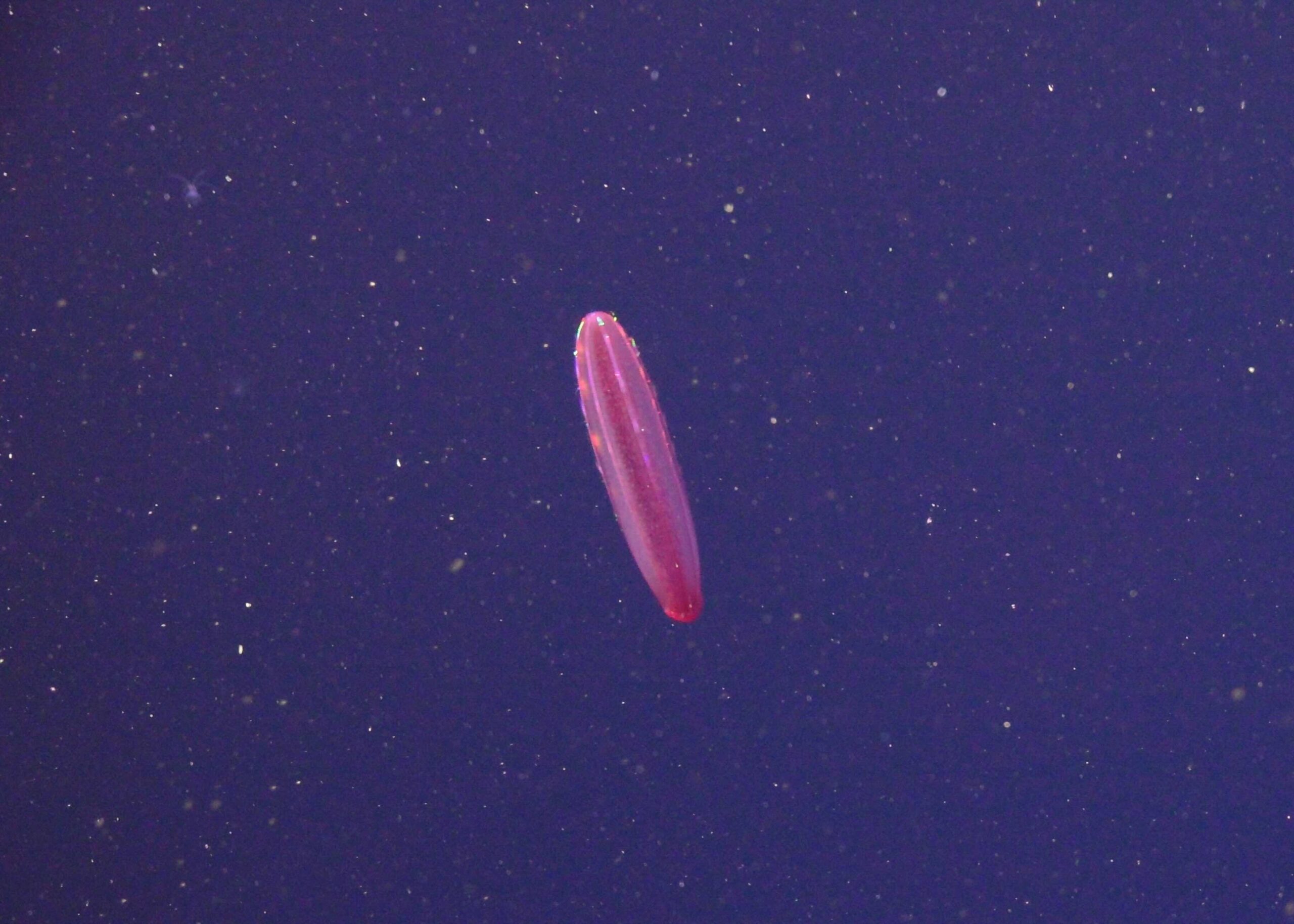
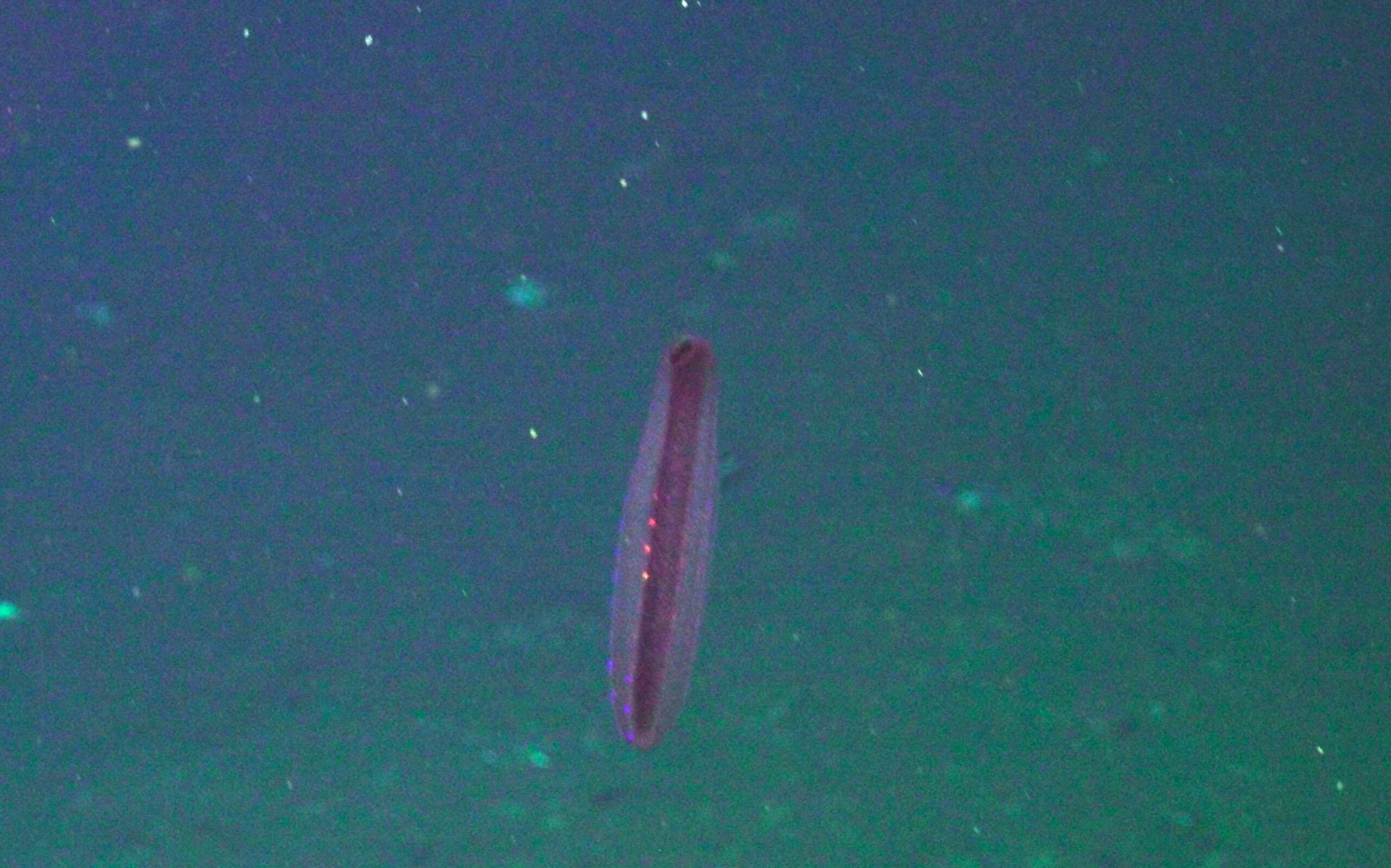
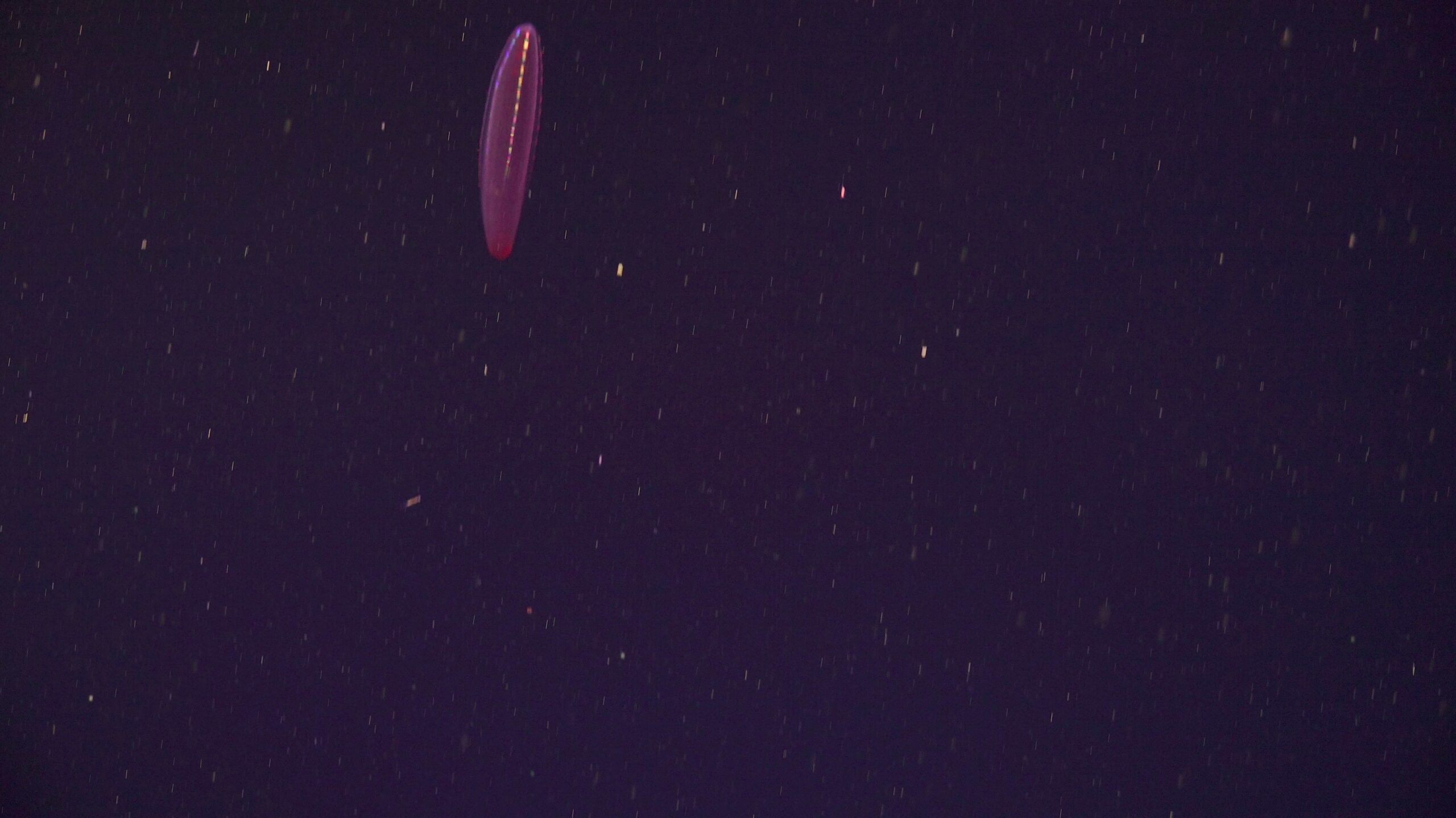
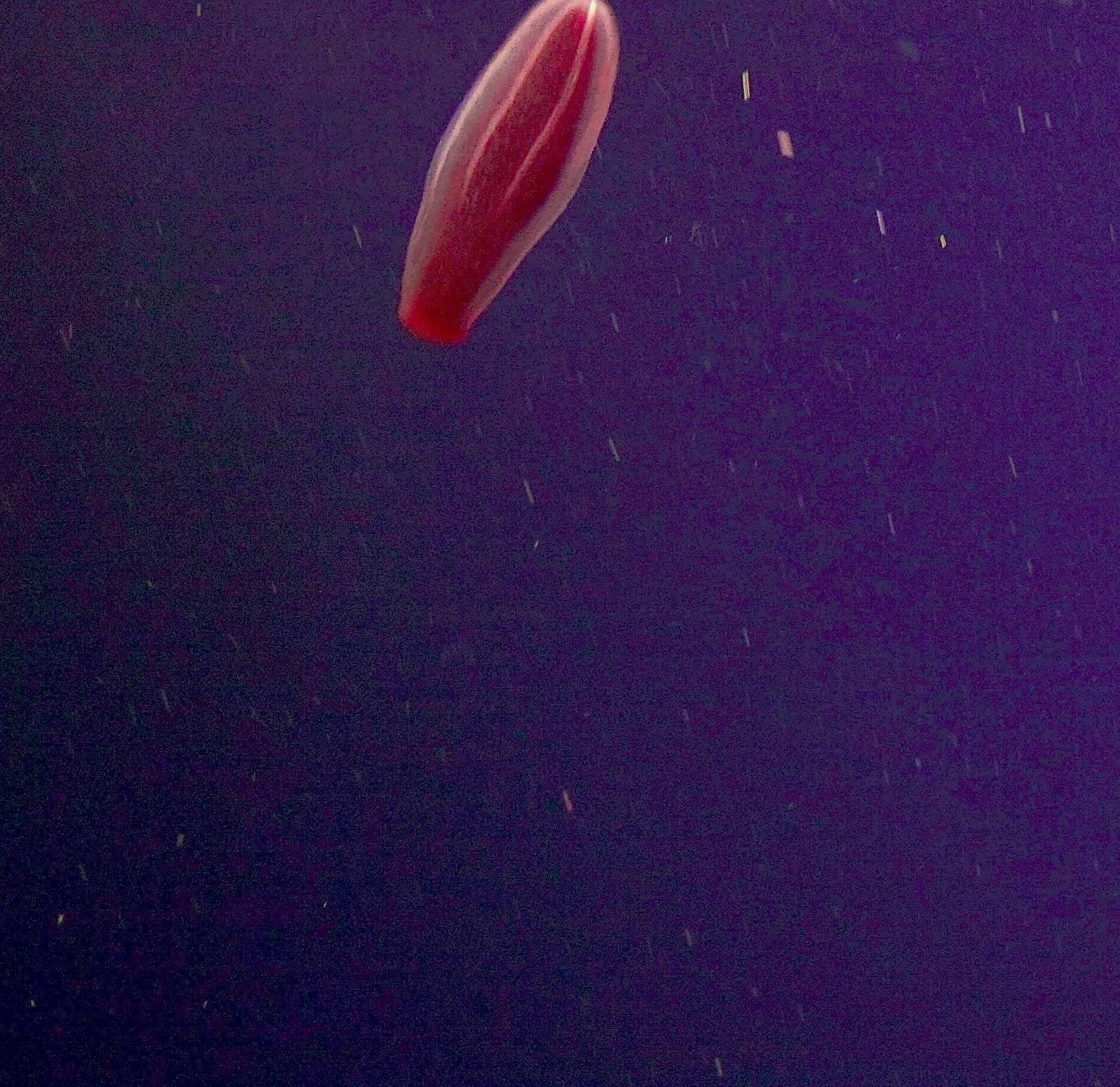
Beroe Ctenophores (Beroe abyssicola)
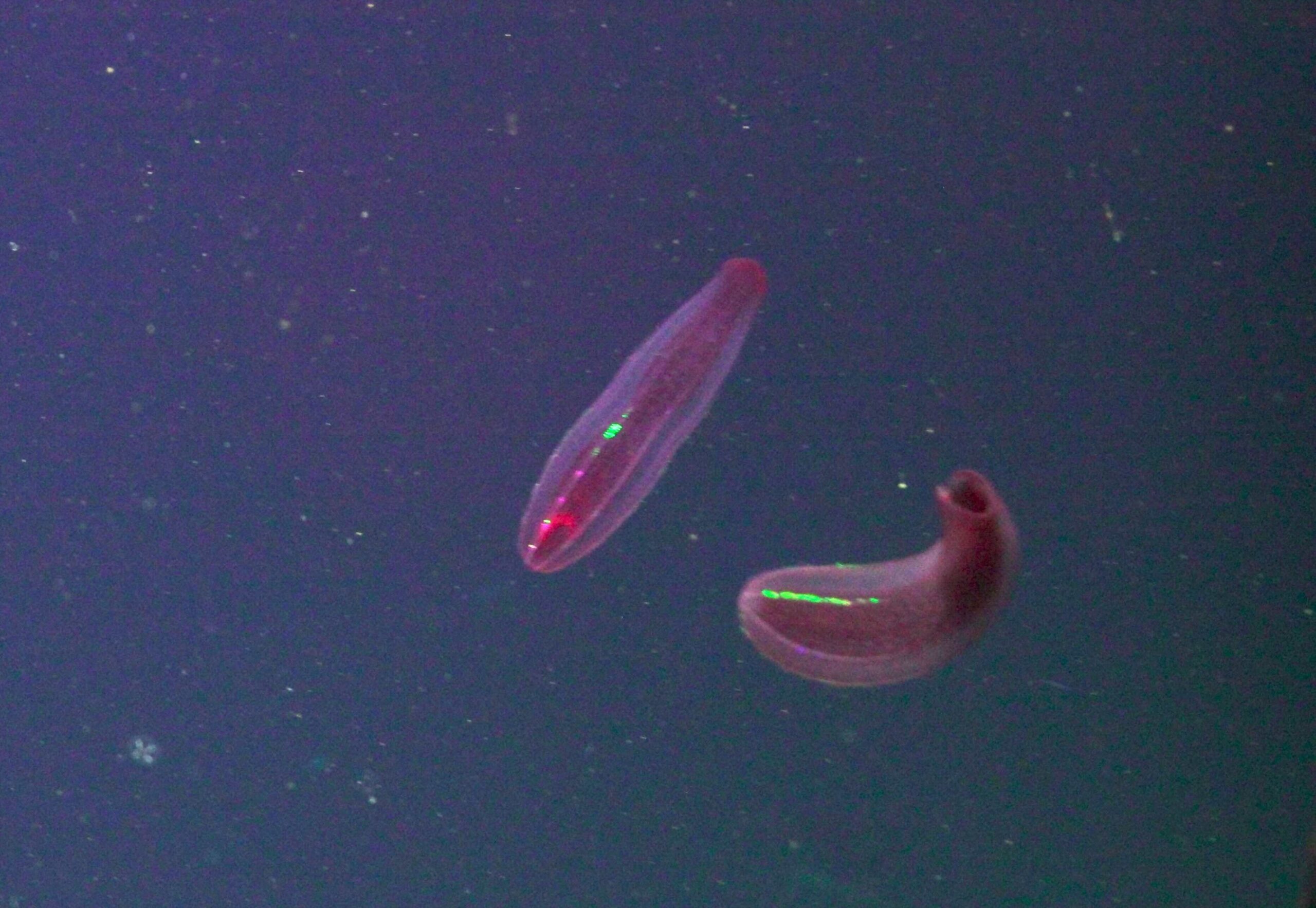
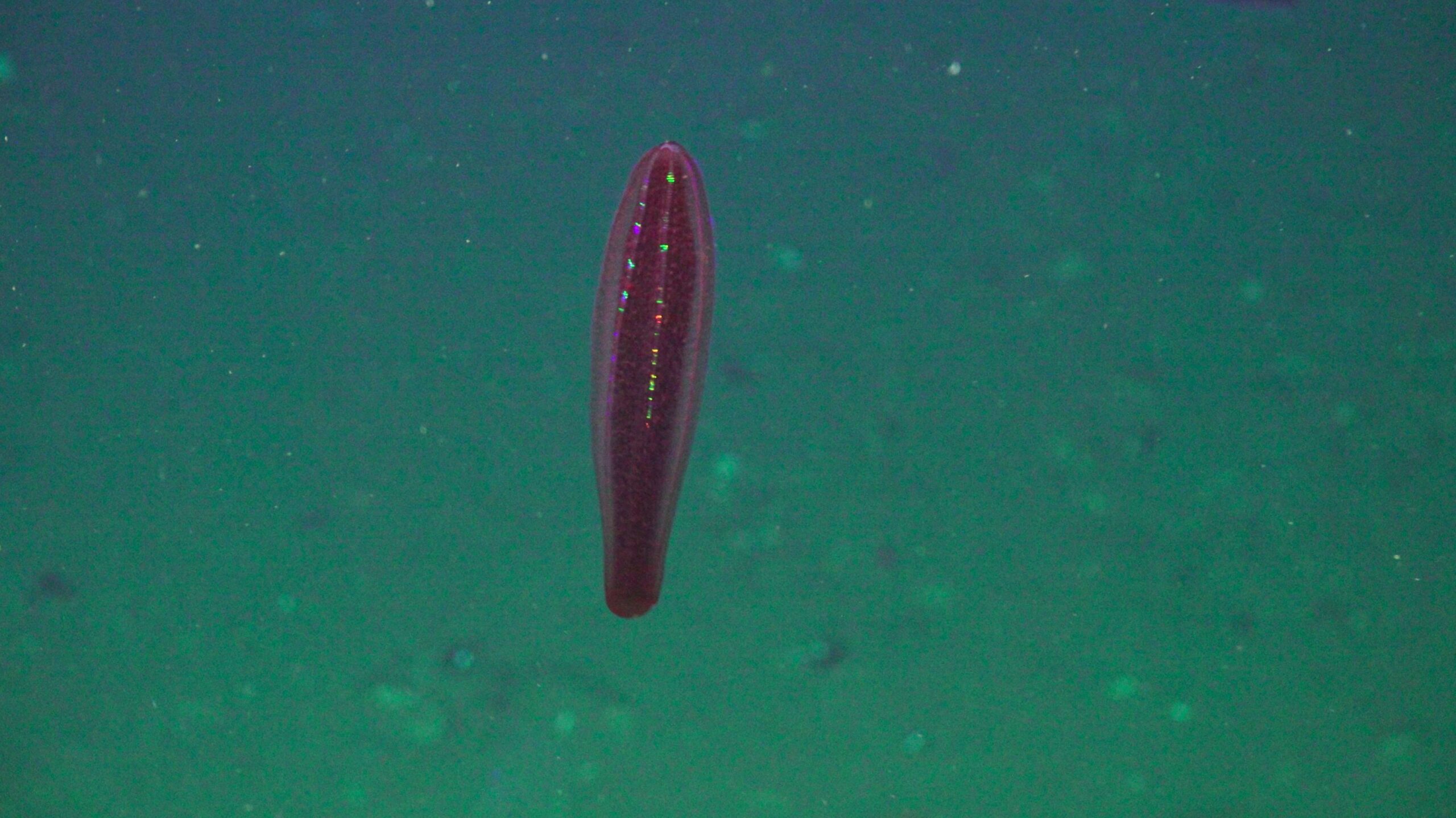
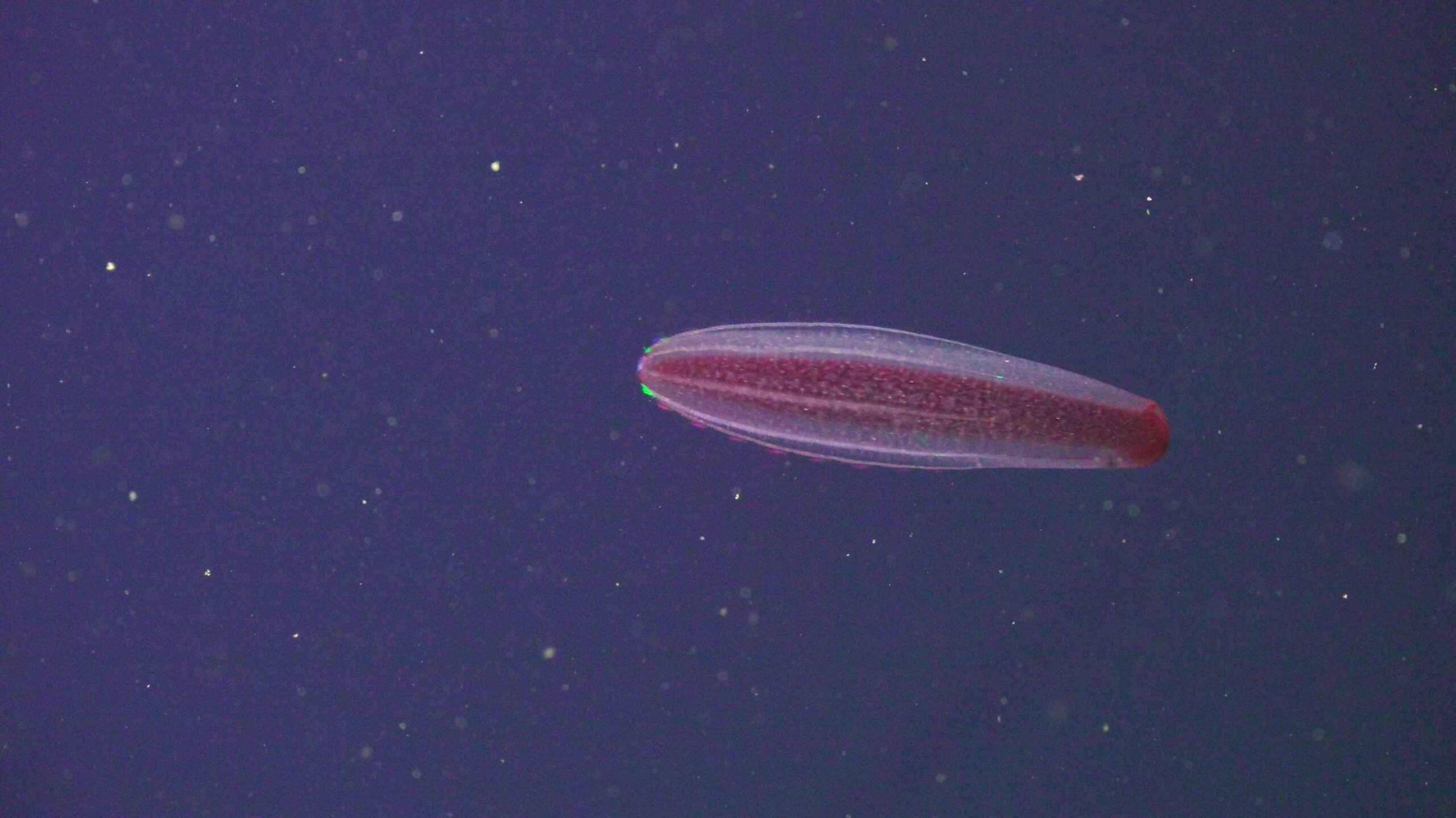
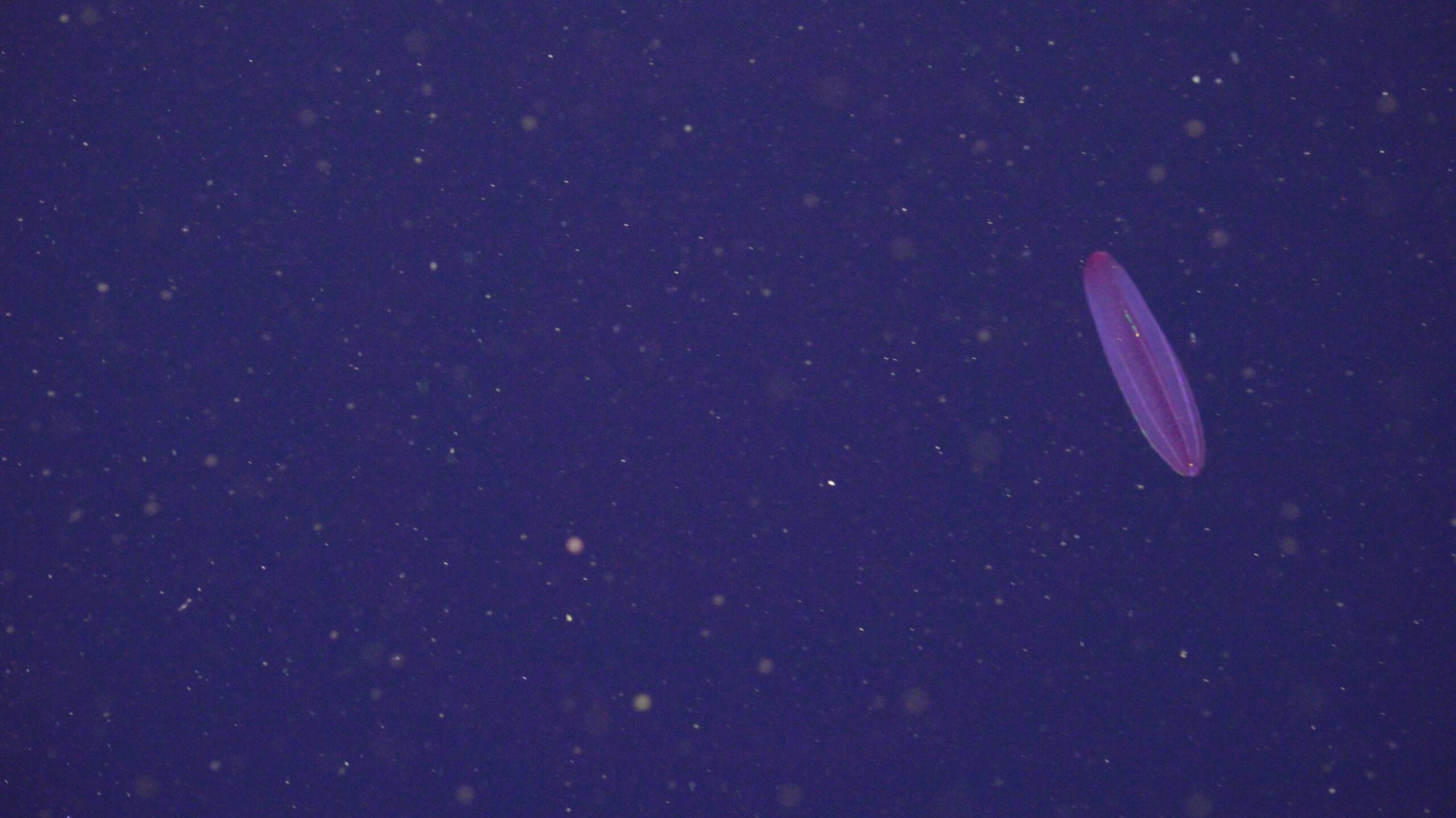
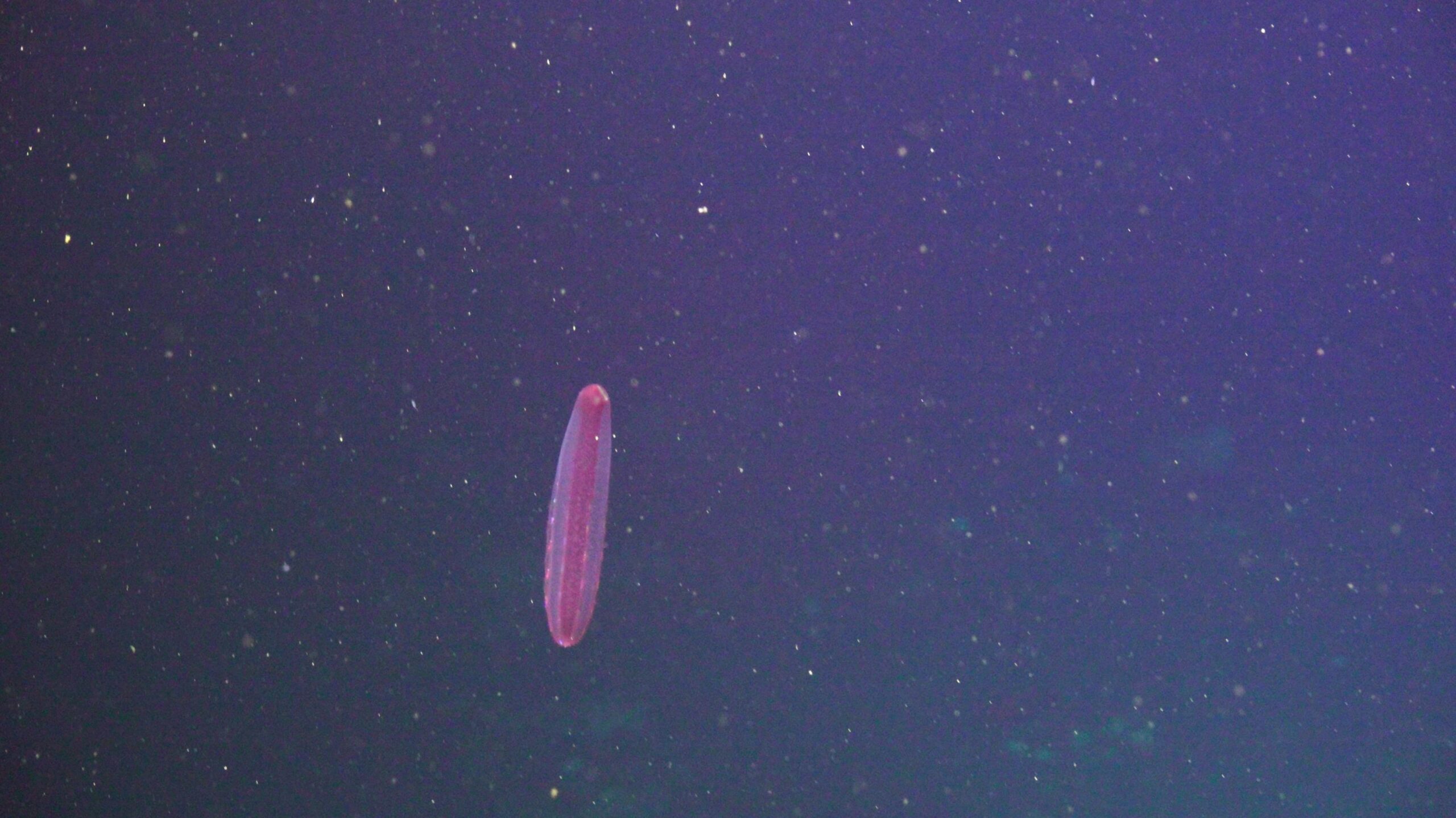
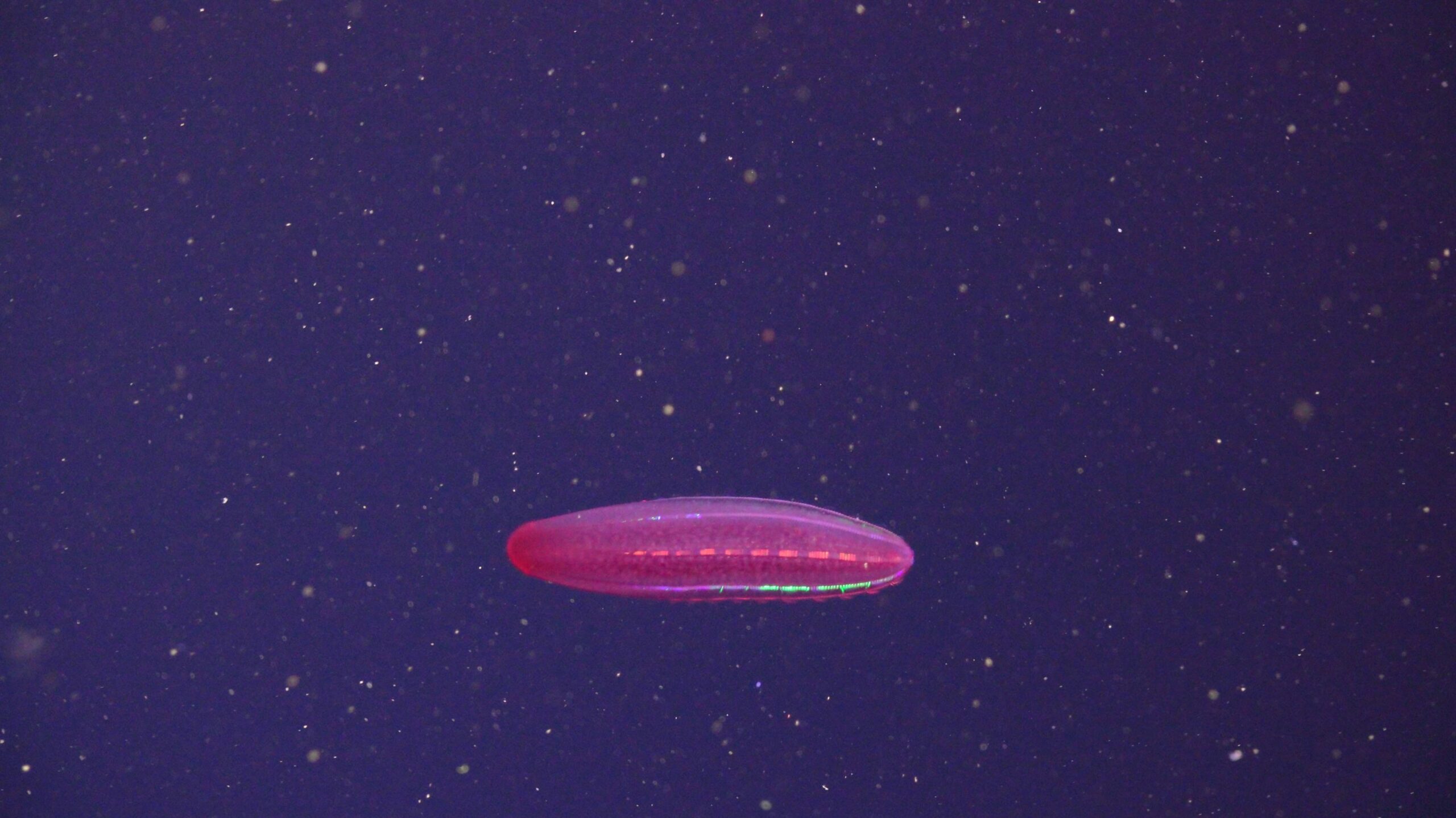
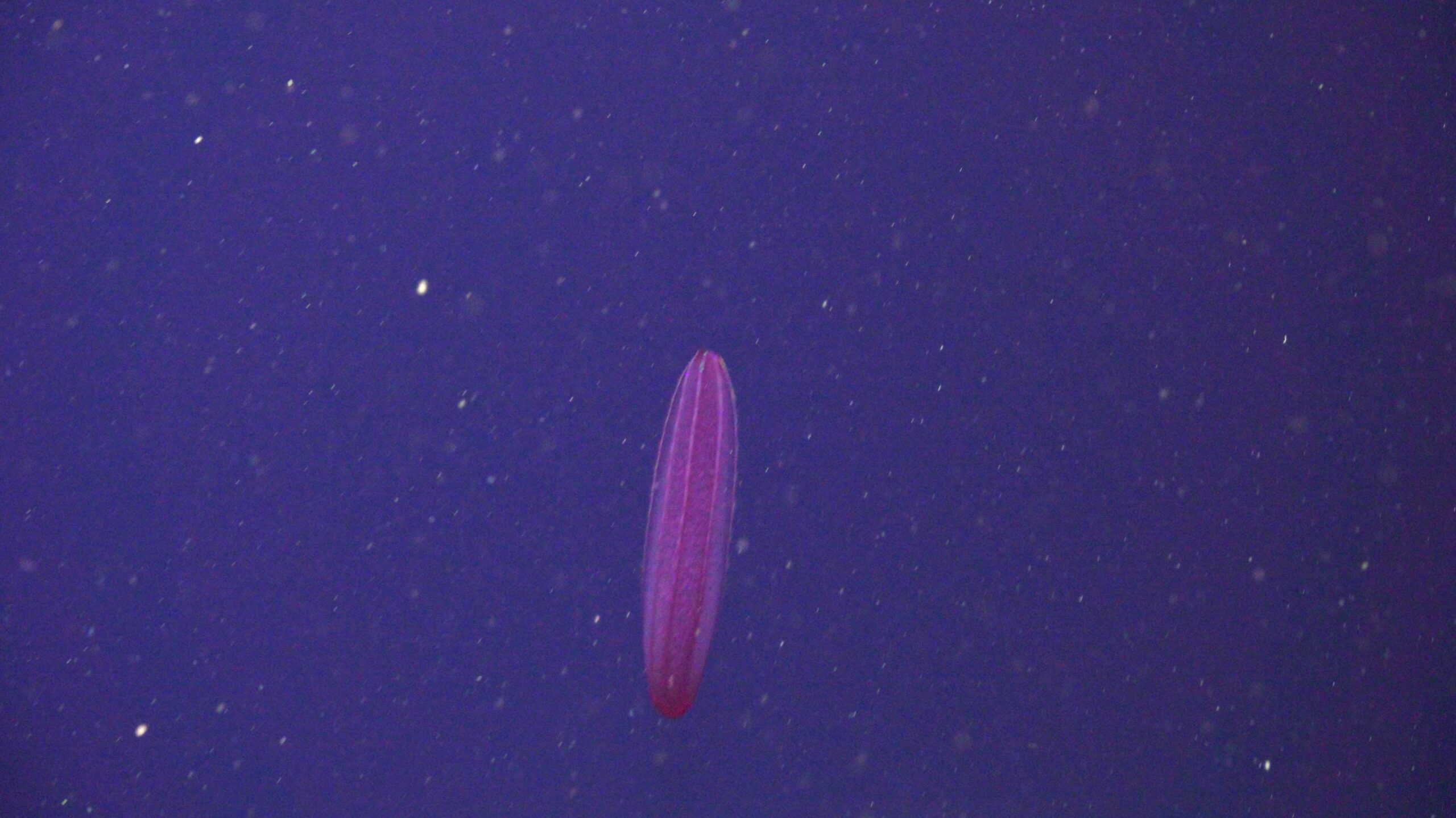
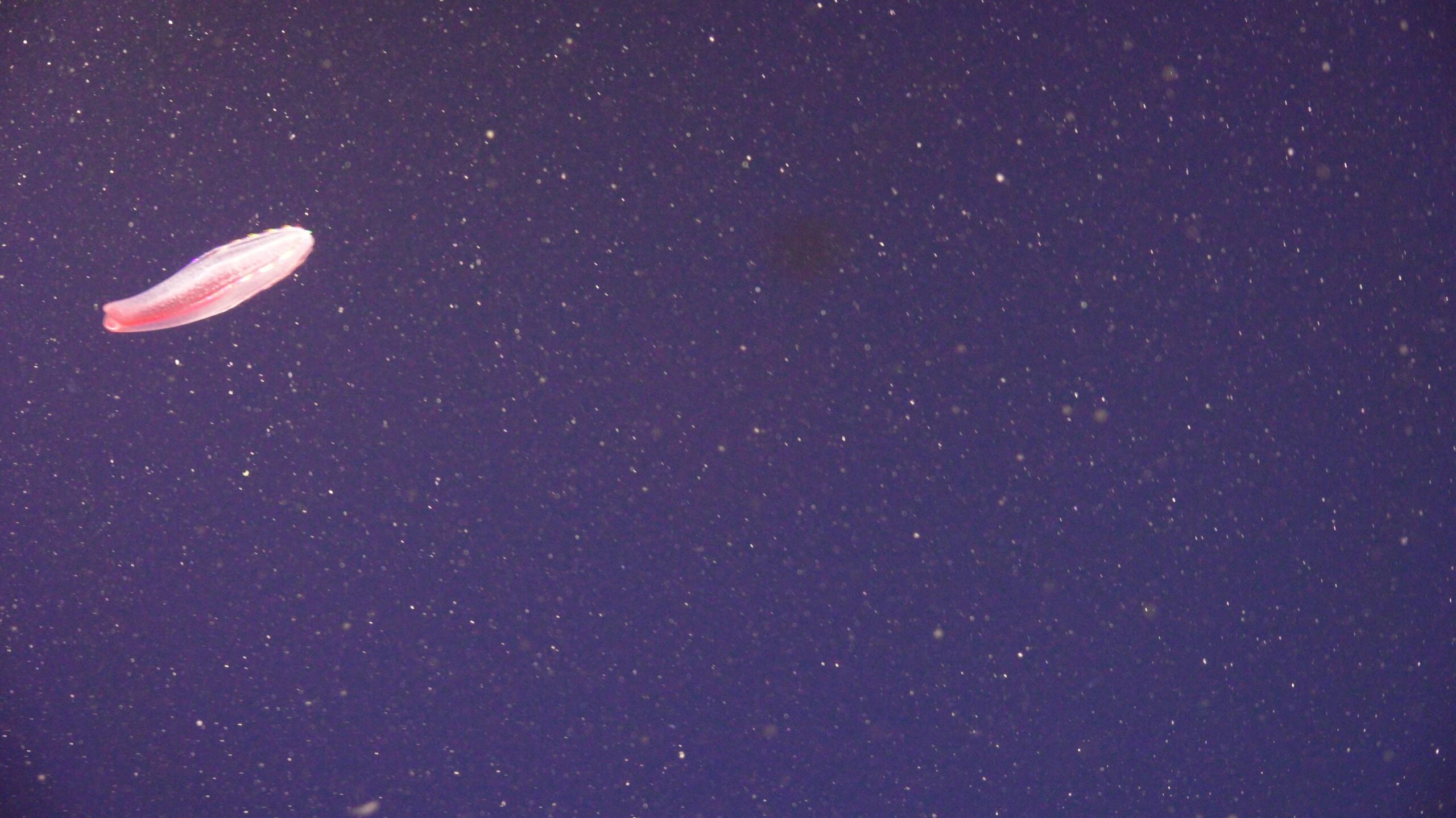
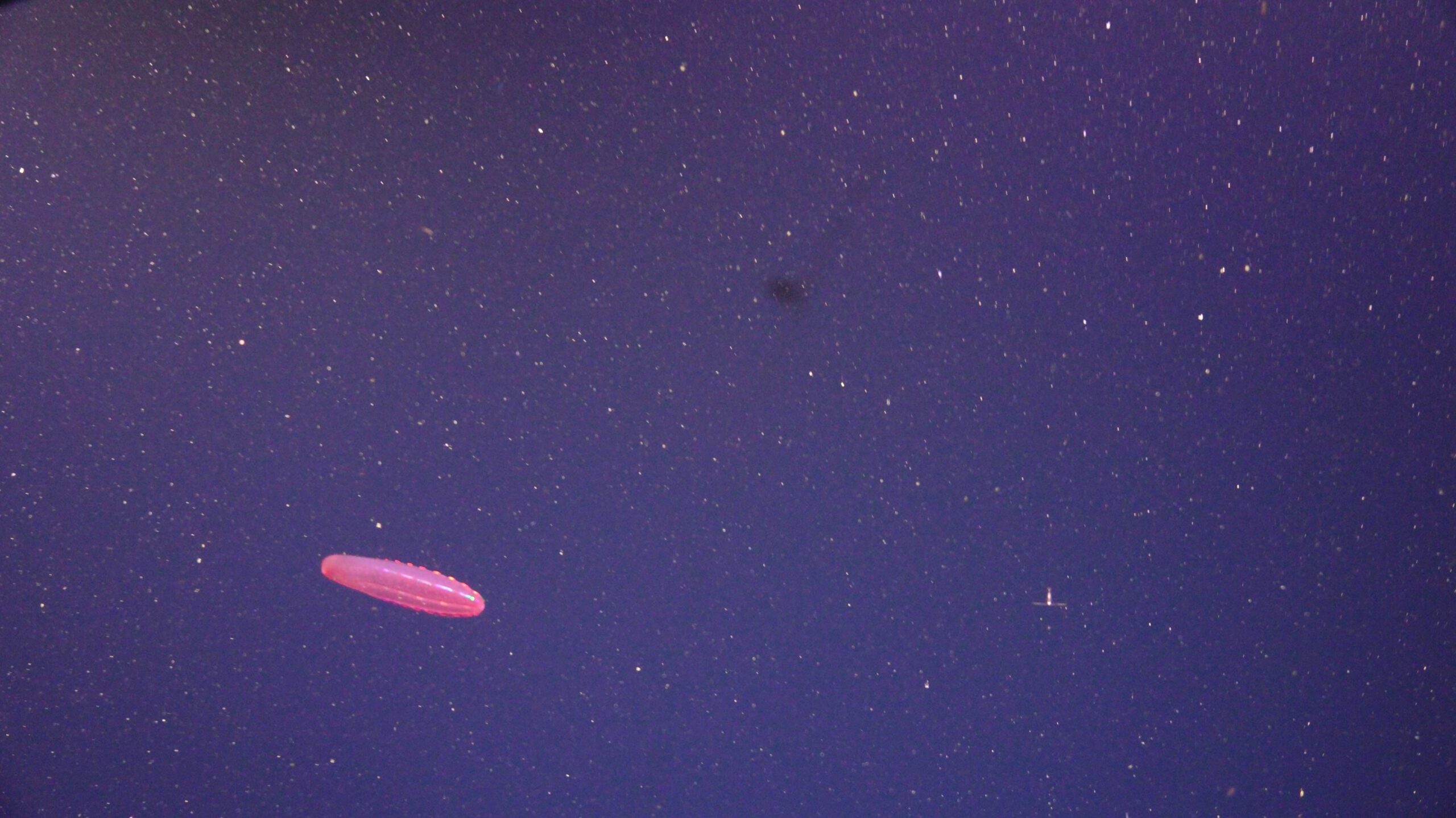
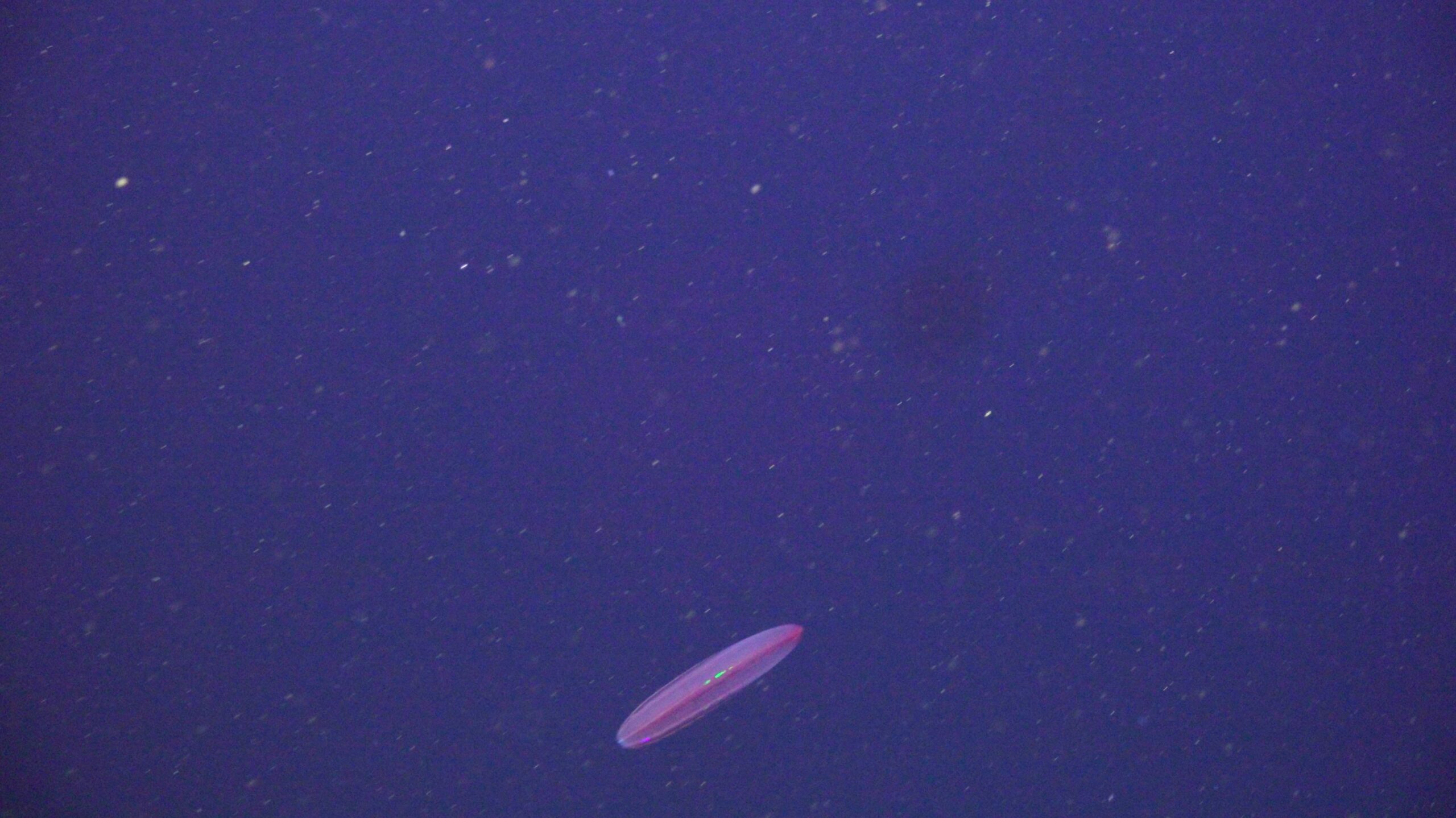
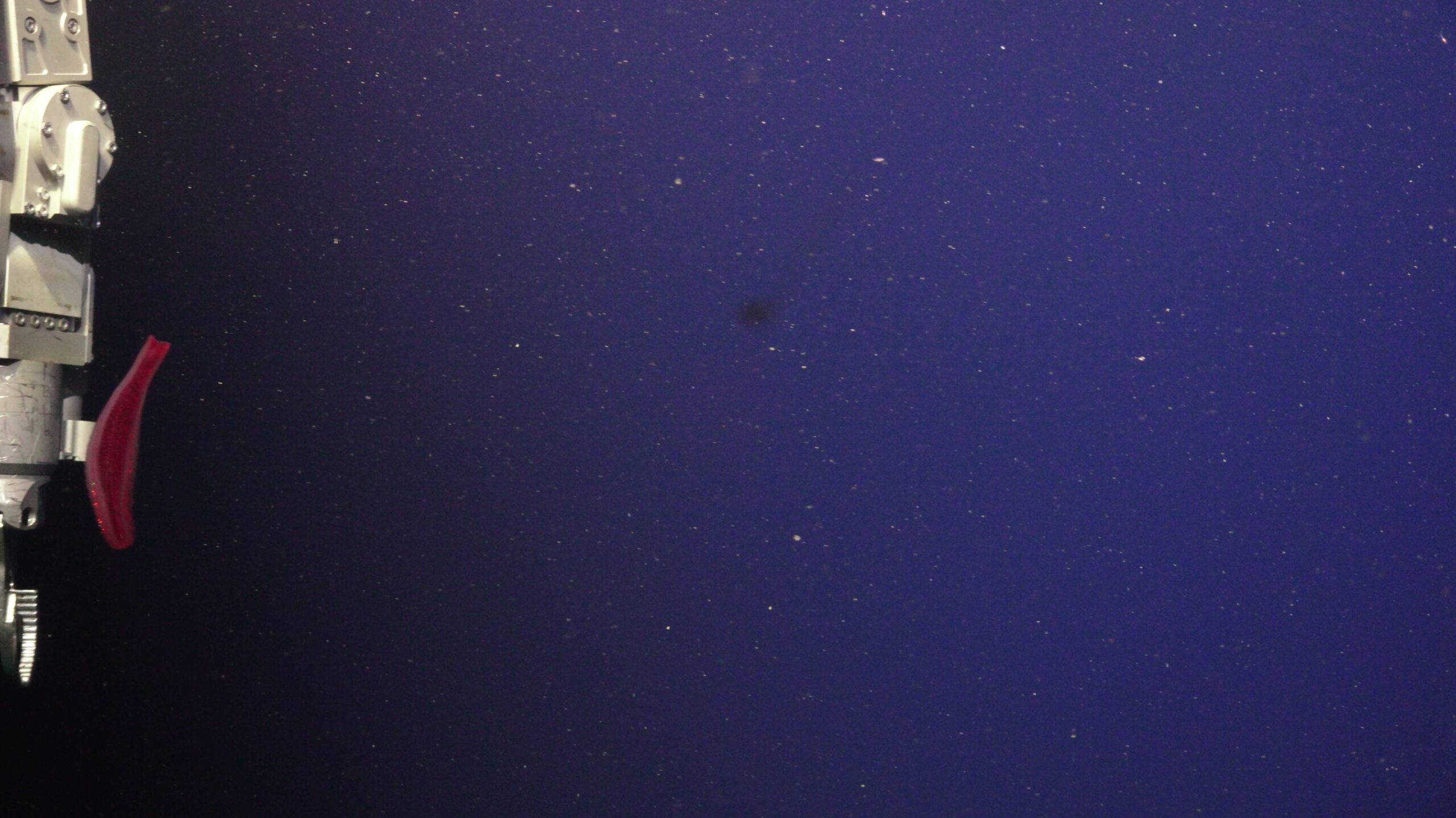
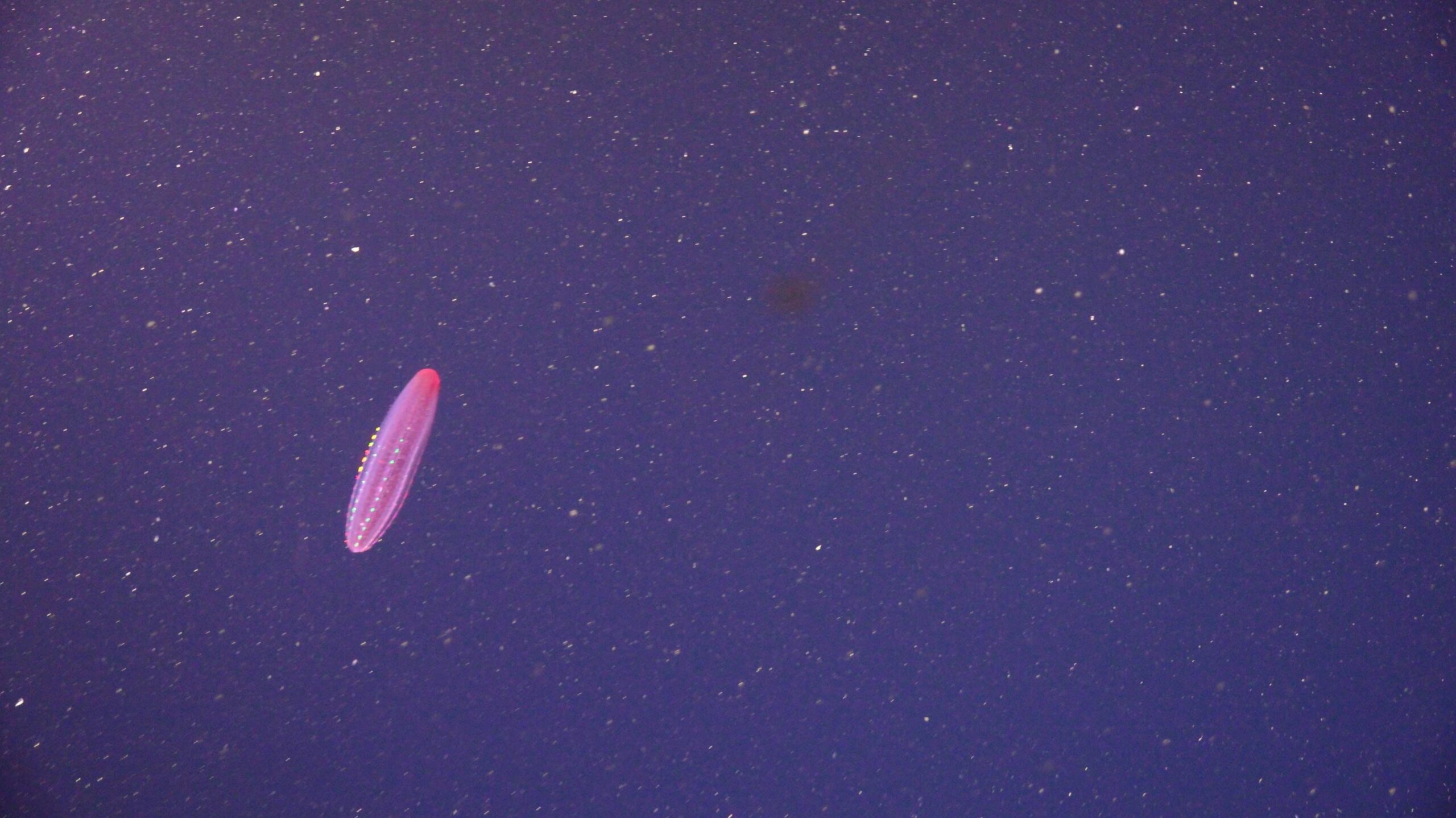
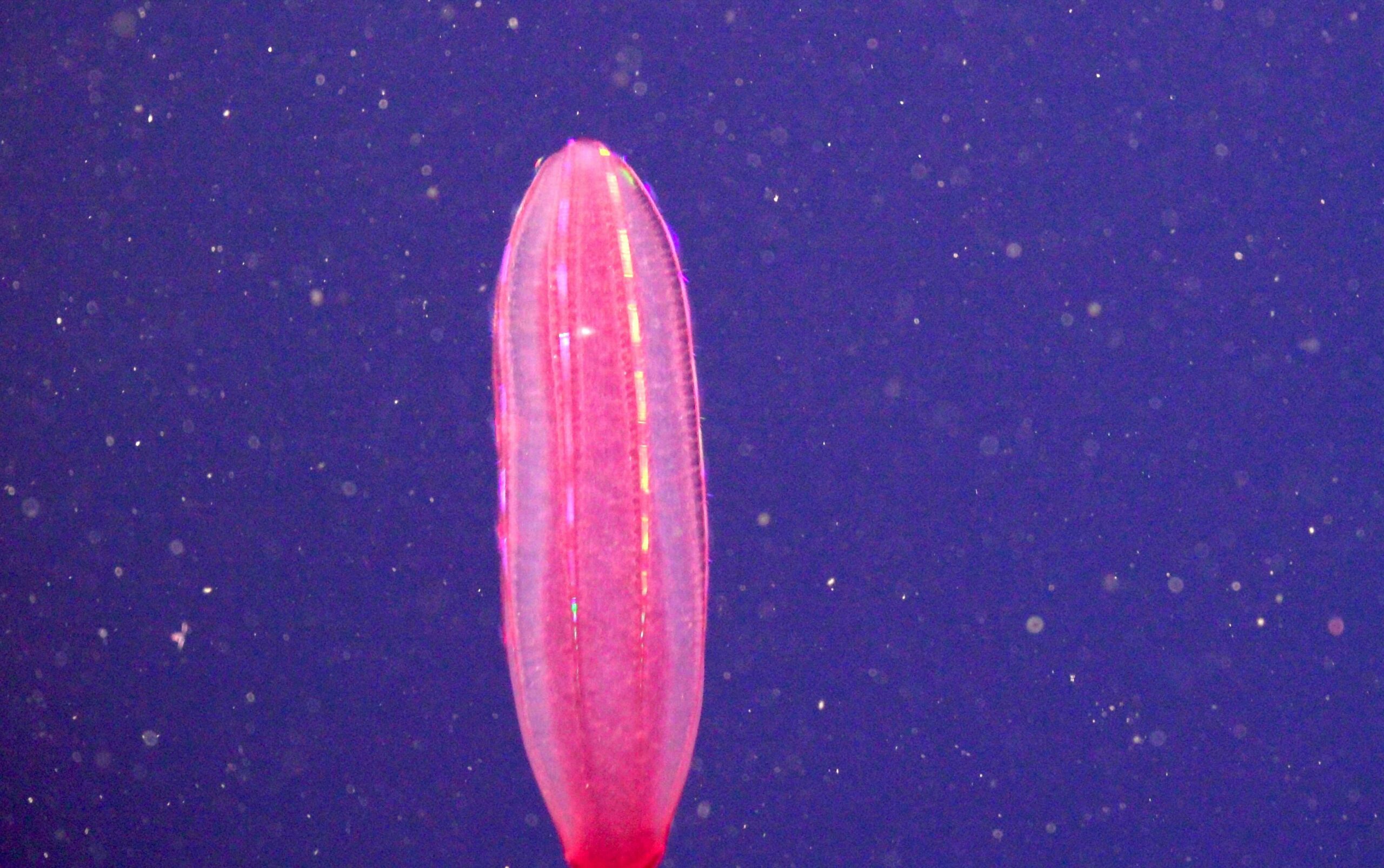
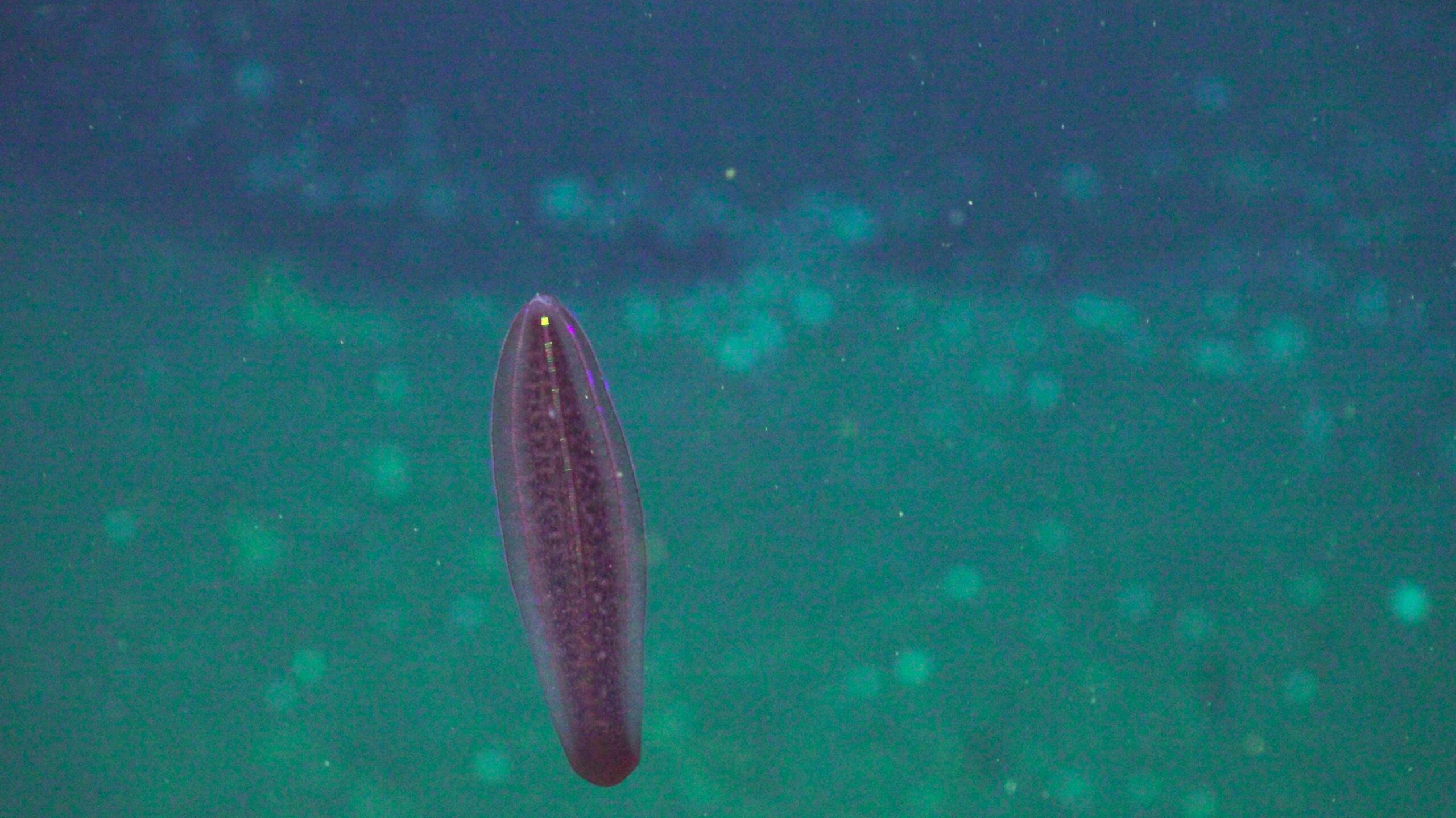
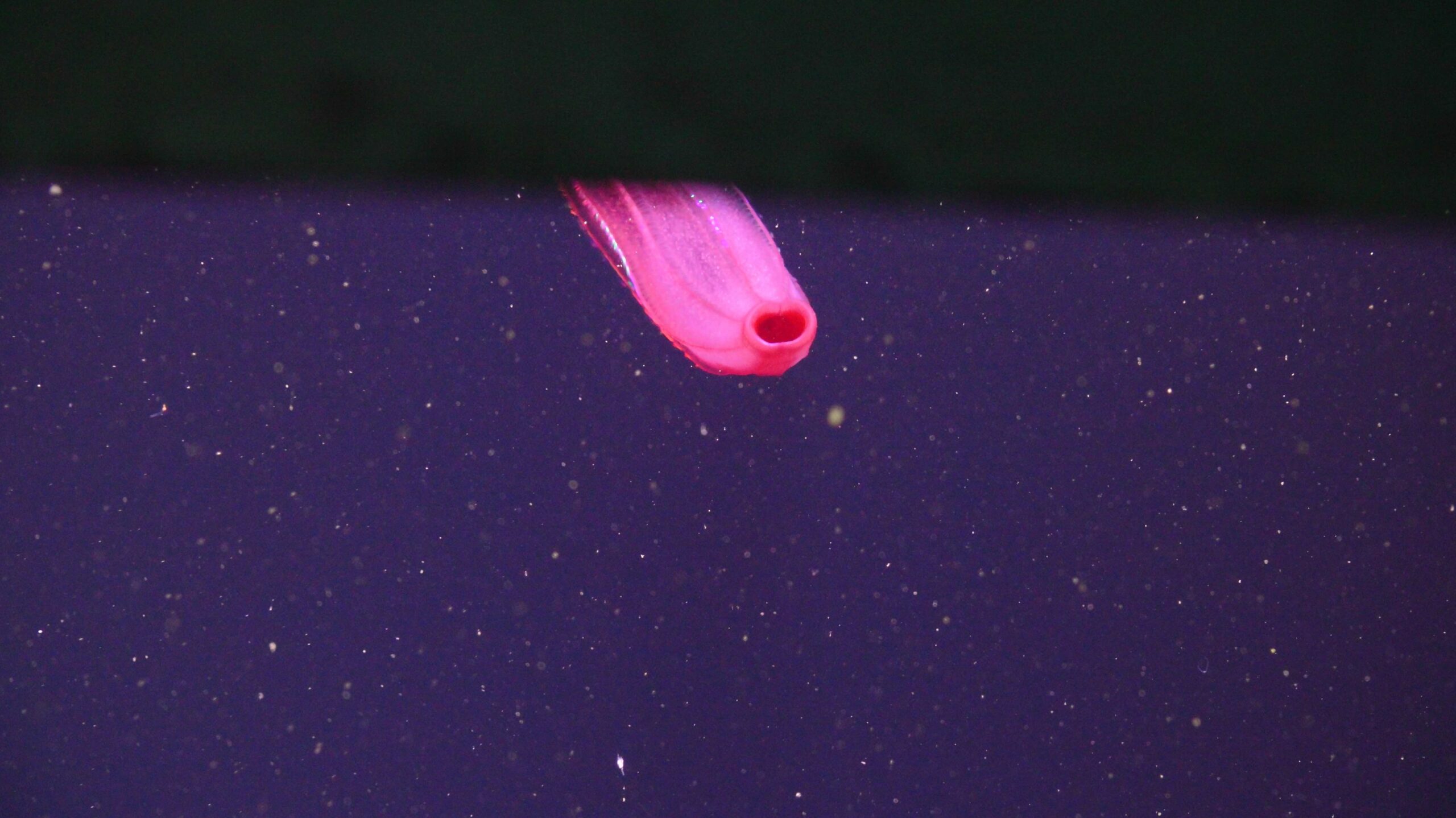
A species of predatory, pelagic ctenophore commonly found in the deep North Pacific Ocean (mostly between 400 and 2000 meters), Beroe feed primarily on other ctenophores. They have a simple nerve net, like other ctenophores, but have a very different body plan and feeding strategy. They have no tentacles during any stage of their lives, and have a flattened, cylindrical, semi-opaque red or purple body. Beroe abyssicola can grow up to 7 cm long, smaller than some other beroids, but larger than most ctenophores.
Beroe swim mouth-first via eight "comb" rows of joined cilia, constantly searching for prey. When they encounter a smaller Bolinopsis ctenophore or other prey, they engulf them whole. The "lips" of the mouth are surrounded by a band of sensory cells that can detect chemical and mechanical stimuli, and a set of large macrocilia on the inside of the mouth function as teeth, used to keep prey inside and strong enough to shred gelatinous tissue. Sticky adhesive bands of epithelial cells keep the mouth closed when not feeding. A large, muscular pharynx spans nearly the length of the body to digest the ingested material.
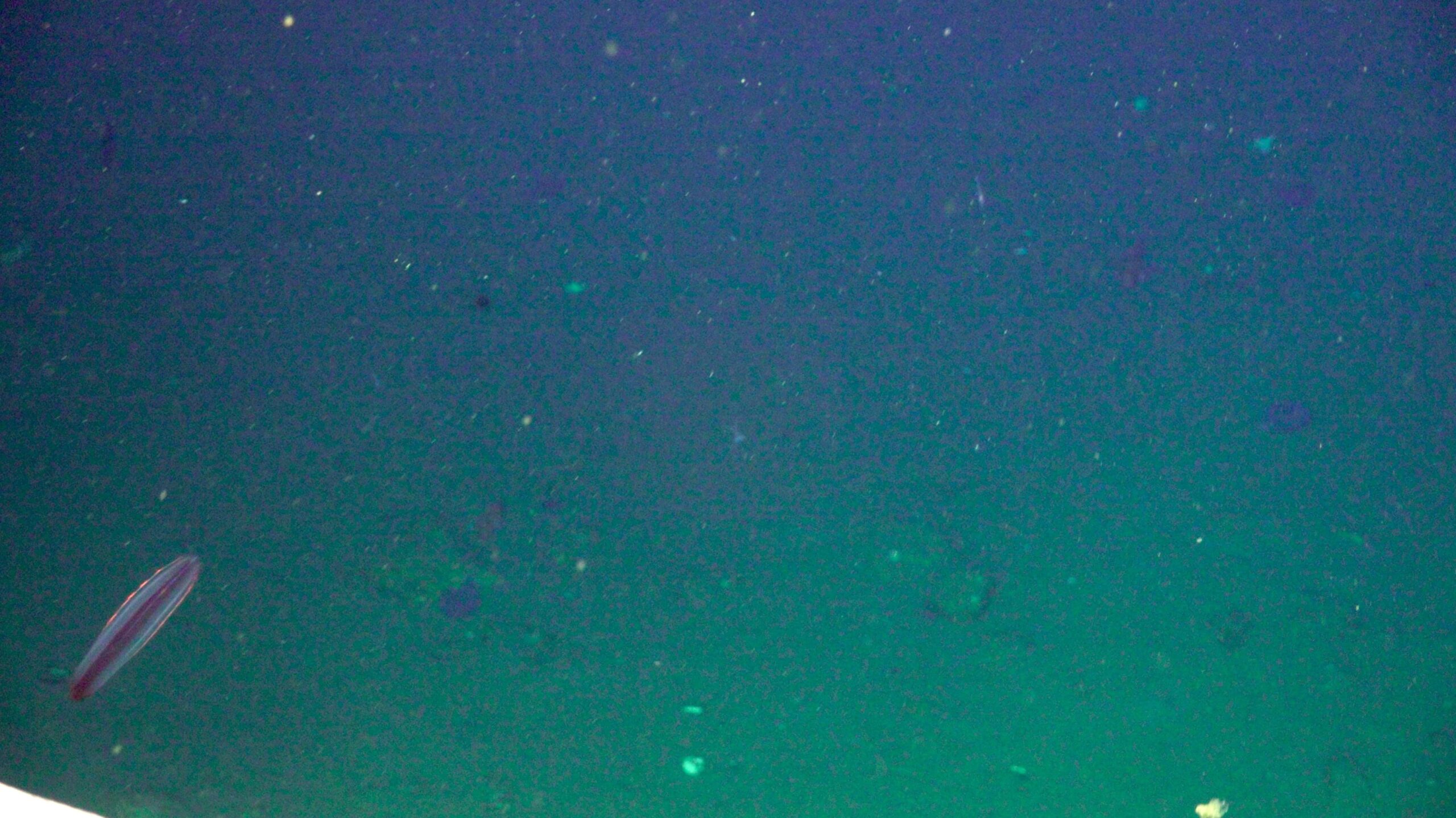
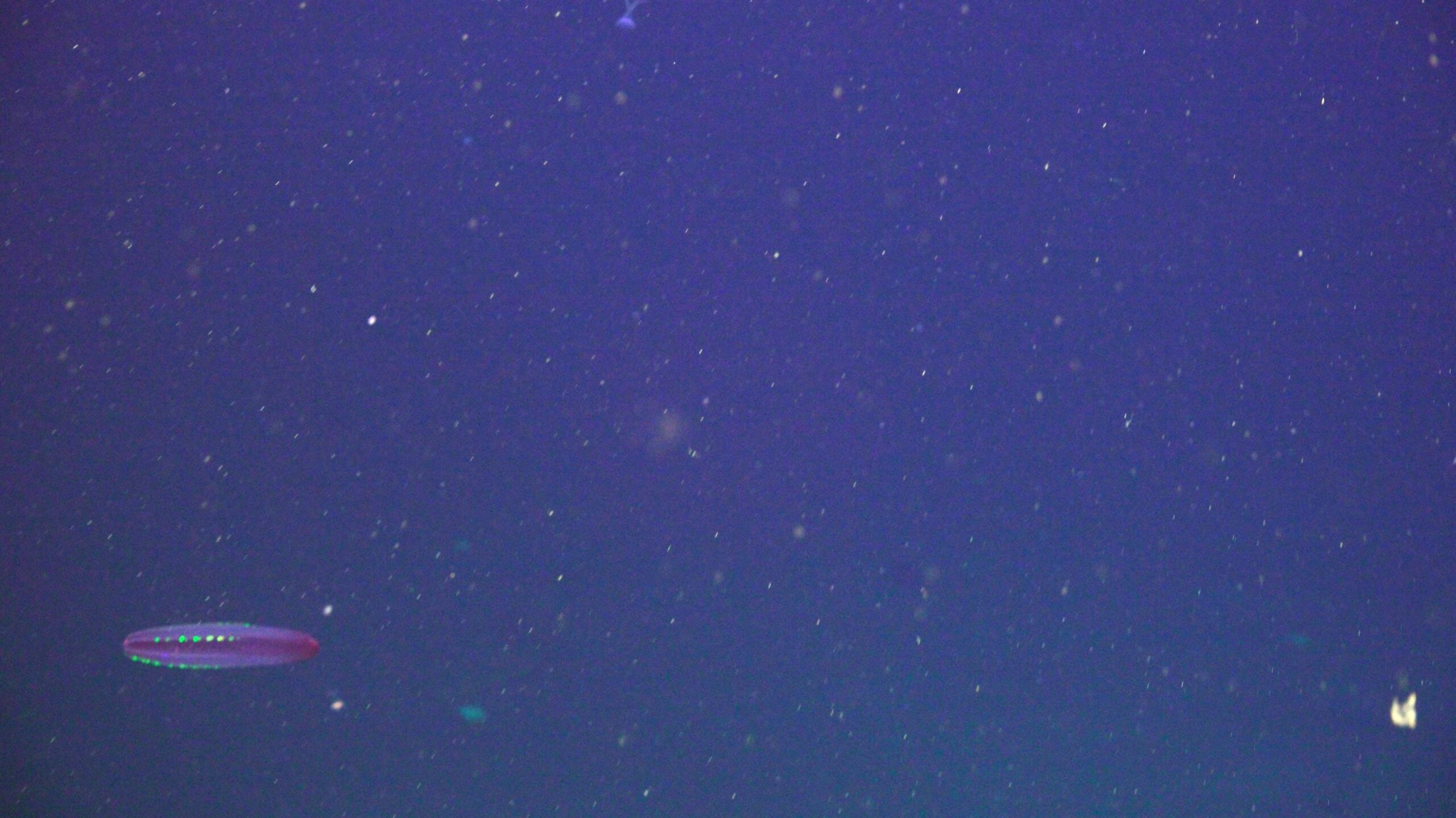
Large numbers of Beroe ctenophores have been encountered at Southern Hydrate Ridge during OOI cruises, and they are often associated with swarms of Bolinopsis and other ctenophore species.
References:
Wikipedia
WoRMS Taxonomic Database