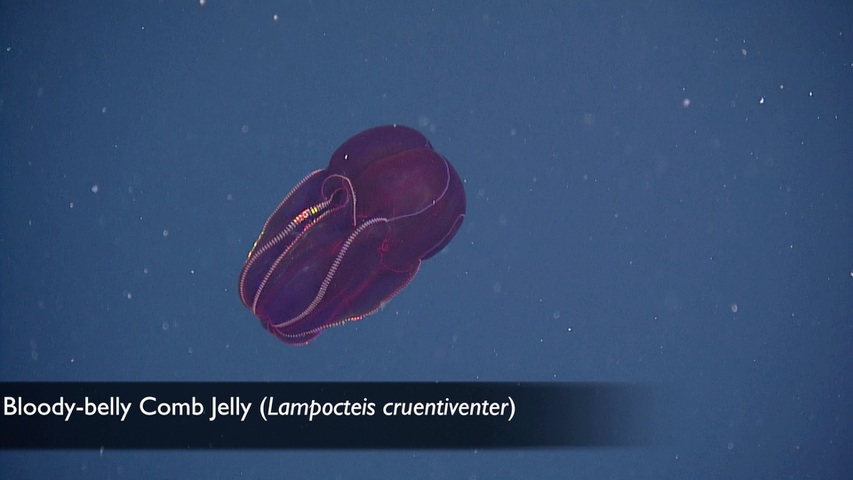
Bloodybelly Comb Jelly (Lampocteis cruentiventer)

Photo Credit: NSF-OOI/UW/CSSF, Dive 1739, V14
First collected off San Diego, CA in 1979 and first described in 2001, these ctenophores are typically found between 250-1,500 meters depth in the North Pacific Ocean. Lampocteis is the only genus in family Lampoctenidae, and it currently contains only one species: Lampocteis cruentiventer, the bloodybelly comb jelly. The species name combines Greek and Latin, and means "Bright comb with a blood-red belly."
There are two primary morphological differences between Lampocteis and other ctenophores: the meridional canals (branches of their digestive system) dead-end at the side opposite from their mouth, and there is a large notch in between their comb rows that reaches all the way to the funnel-shaped body cavity (infundibulum). Lampocteis can grow to 16 cm in length, and range in color from dark red or black to pale purple. The dark, opaque coloration may help them hide from predators in the deep sea and shield prey bioluminescence from becoming visible. Like other ctenophores, L. cruentiventer have rows of cilia arranged in "combs" that can create an iridescent effect when lit, but they can also produce bright blue flashes of bioluminescence when provoked.
References:
Wikipedia
MBARI Deep-Sea Animal Catalog