Bolinopsis Ctenophore (Bolinopsis sp.)
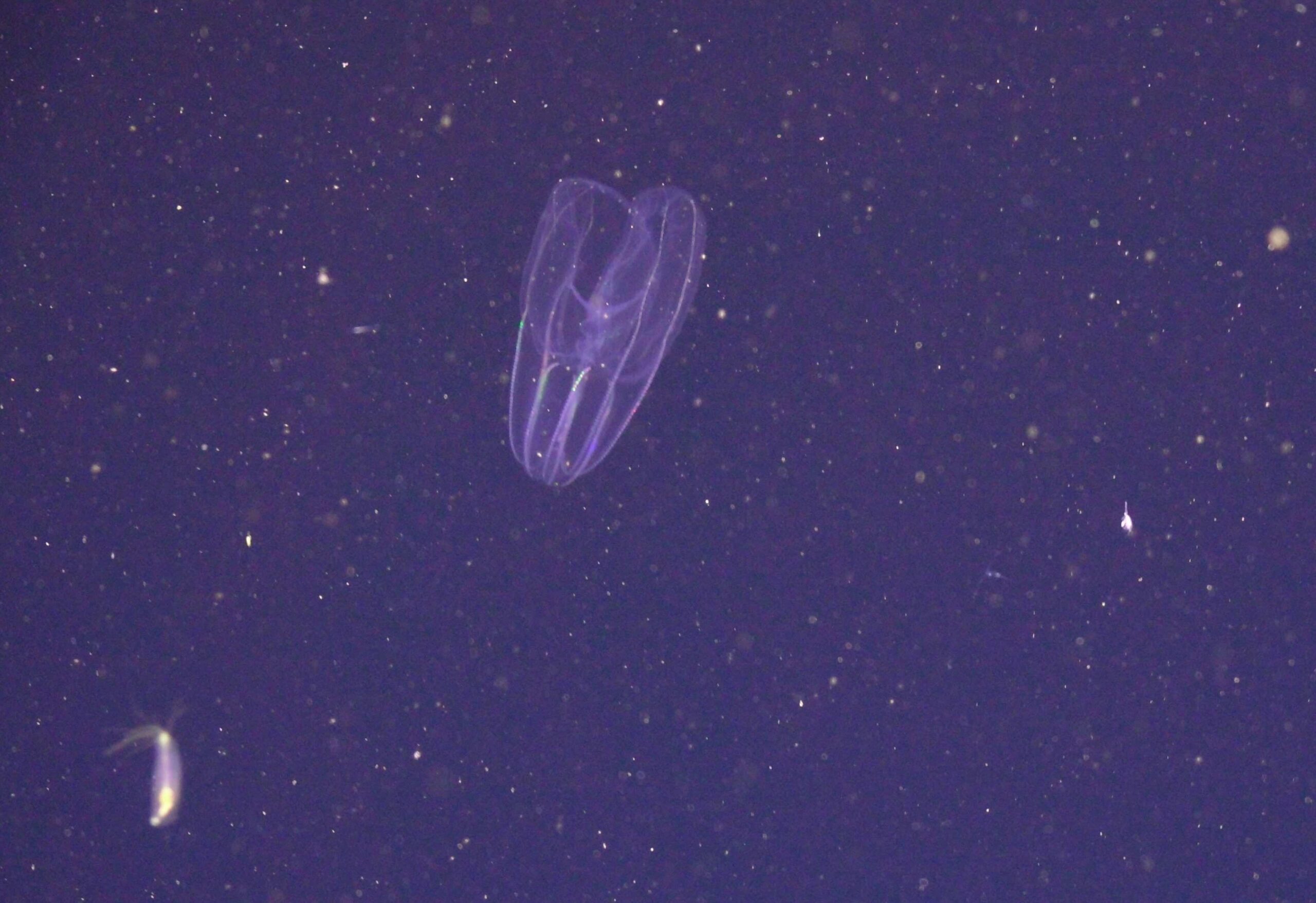
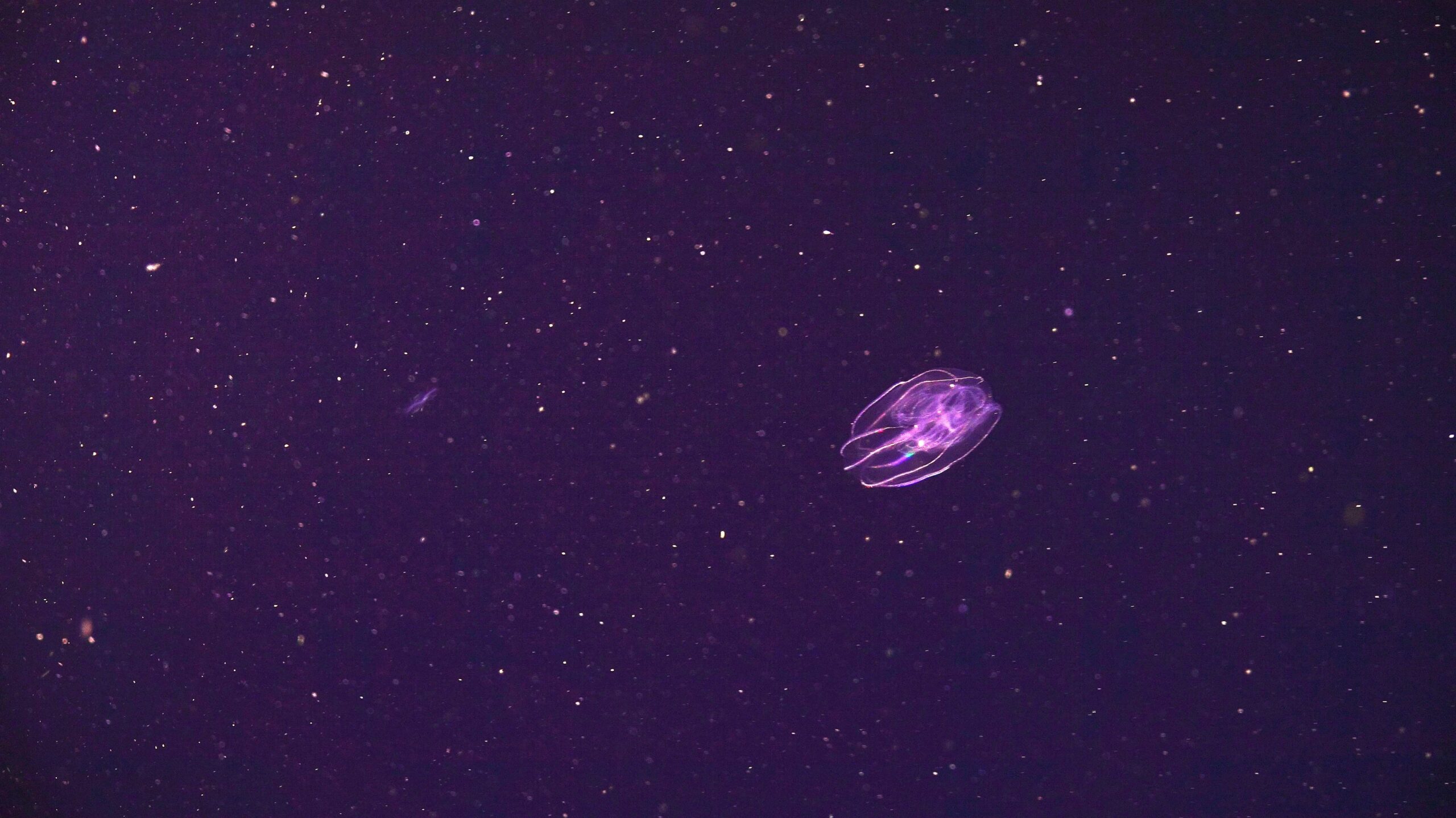
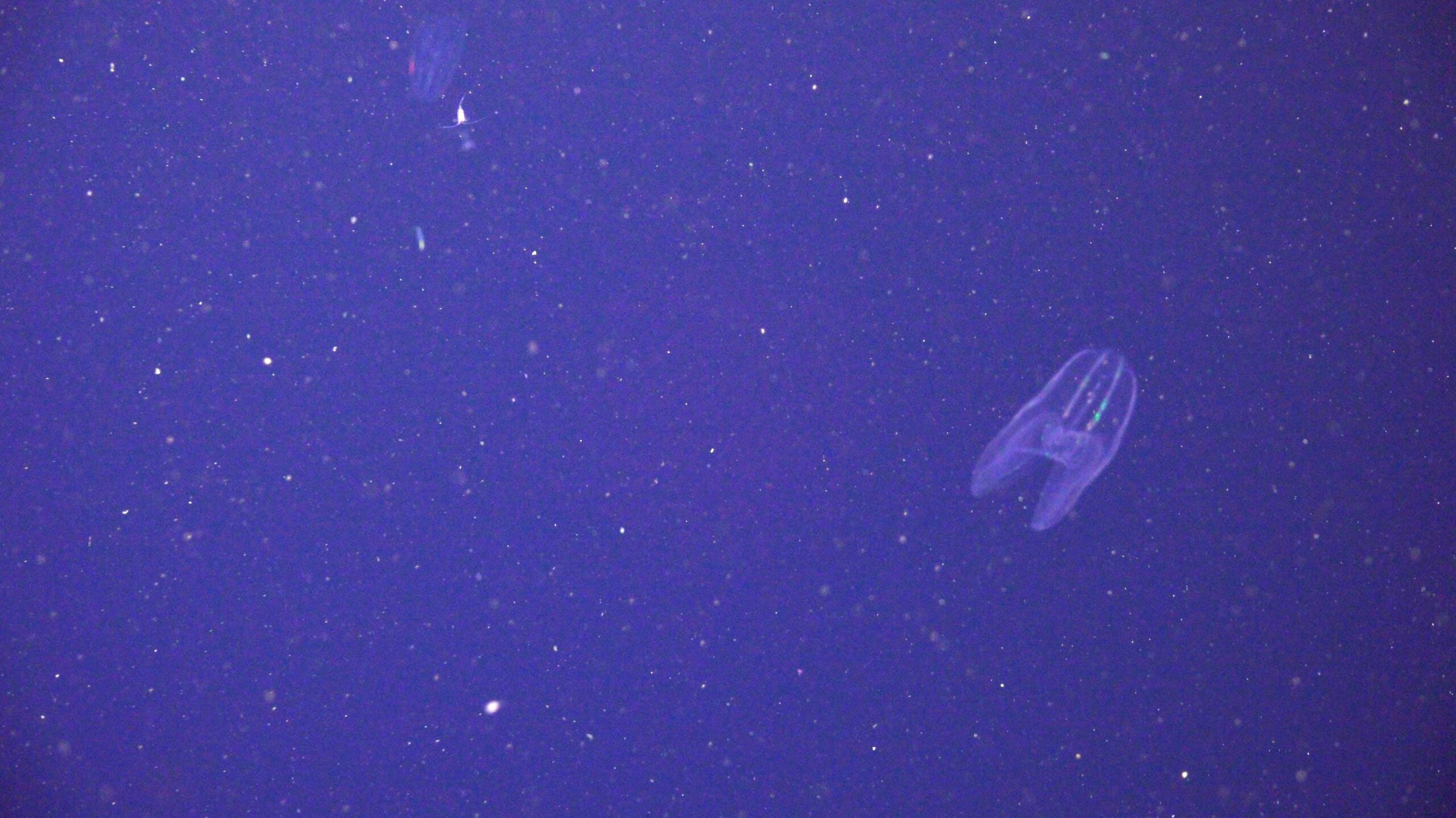
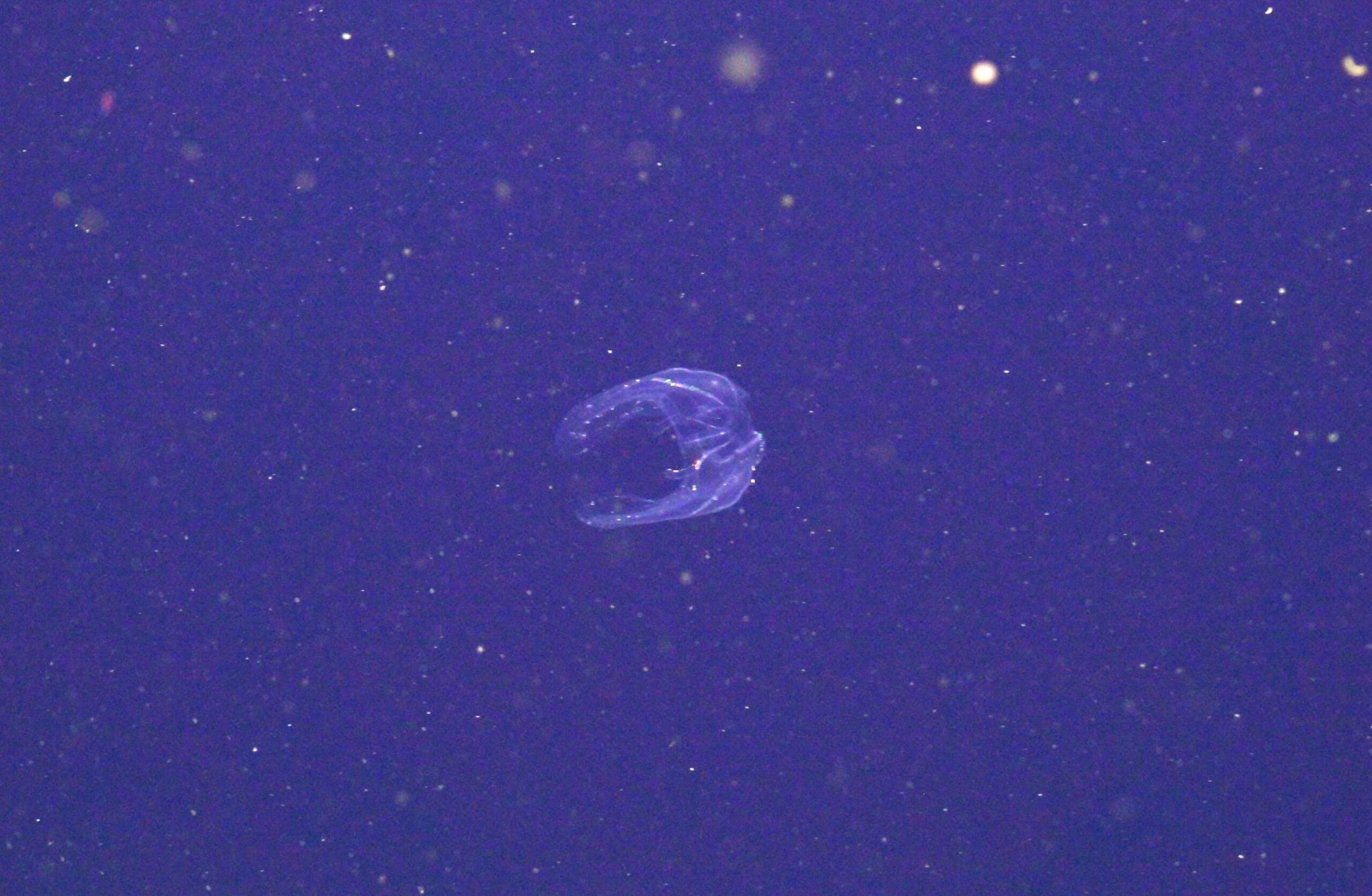
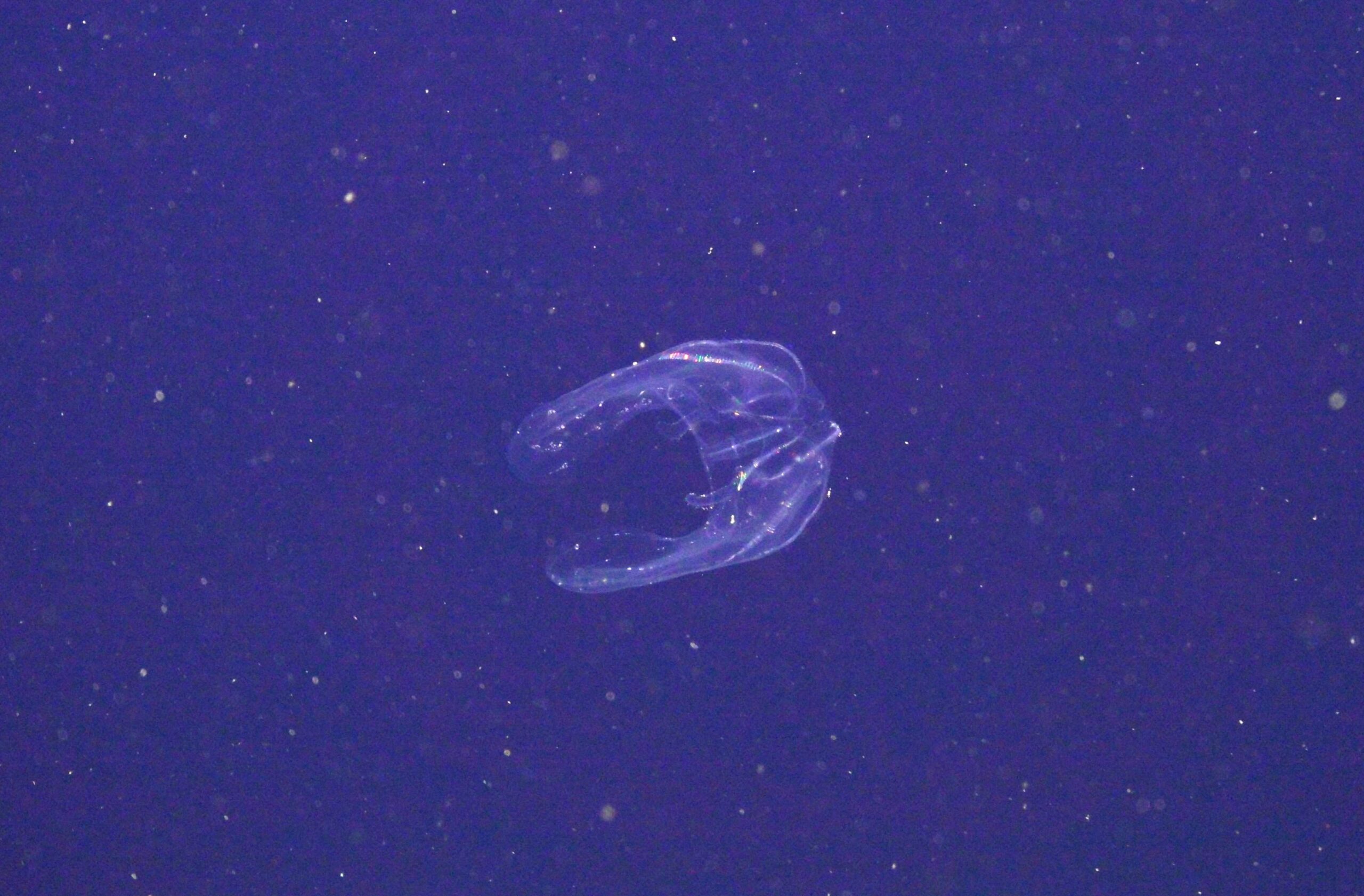
These lobate ctenophores (likely B. infundibulum) appear to be bioluminescent, but the effect is produced by the beating of their four longitudinal rows of cilia during locomotion and feeding. Light diffraction creates the rainbow effect along the sides of their bodies (although some can create a bioluminescent "startle" effect if touched).
Bolinopsis are oblong, ~15 cm comb jellies with a thin, transparent or translucent white body wall. They possess two short tentacles and use two large ciliated lobes to produce feeding currents that funnel food towards their mouth. Ctenophores (unlike cnidarians) lack stinging cells and use colloblasts (sticky adhesive cells) to capture their prey, such as fish and copepod eggs and larvae, gastropod veligers, rotifers, and other microscopic zooplankton.
Bolinopsis infundibulum occurs in the Pacific Northwest from the Bering Sea to California, and can generally be found between the surface and ~1000 meters. They can occur in large seasonal swarms, and serve as an important part of the pelagic food web. They are often preyed upon by other ctenophores, like Beroe species.
References:
Wikipedia
WoRMS Taxonomic Database