
August 18, 2026
Reflection
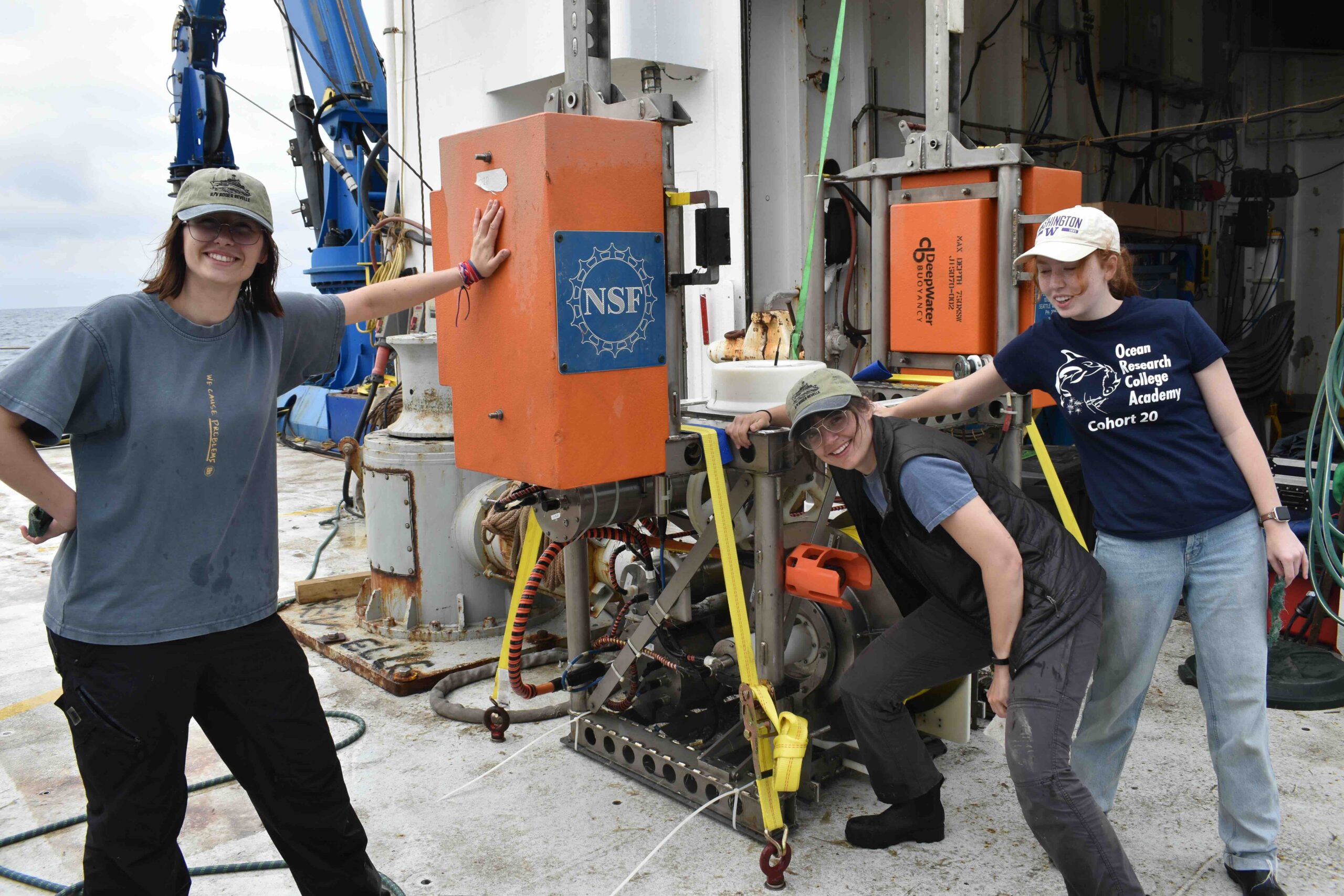
One aspect of the cruise that sticks out to me is how every moment on board is a learning experience of some kind. When we were sent out to scrape barnacles off the BEP, we got to ask the engineers questions about its structure and sensors, and also put our hands on it. We can learn about the instruments by reading about them and seeing them on the Jason cameras, but I think it was also very helpful to get hands-on with some of them. The same applies to the shallow profiler platforms; scrubbing at them for an hour, I noticed a lot about how they are structured from top to bottom. Mealtimes, emergency drills, and moving boxes around teach students about ship operations and expectations, as we get attuned to the oscillating pace of life at sea. Doing the lab work and sample collection was also very informative for how we go from collecting seawater to valuable scientific information.
There are many parts of the scientific process that I think people can overlook sometimes, and this experience made sure that we saw and interacted with a lot more of those steps.
I’ve now talked to a lot of people on board about how they got to where they are (engineers, Jason team, core RCA team, crew members) and each person had a very unique path. Everybody has been happy to share advice and resources and answer any questions I come to them with. In my experience, students can struggle with asking for help or asking questions when they don’t understand something. Being on the boat is a great chance to practice those skills. I think we were given enough information to understand what was going on and what is expected of us, but the amount that we take away is largely dependent on how outwardly curious we are. The VISIONS cruise provided a very supportive, enriching environment for young scientists.
August 16th, 2026
Today was spent transiting back to the Slope Base site, which of course means that we saw more dolphins! We ID’d them as short-beaked dolphins, with distinct grey and white coloring. They love swimming along in the wake that comes off the sides of the boat. I saw them twice today, once in the morning and then again in the evening when we went on a tour of the bridge.
In the morning, I helped Mitch gather RAS filters and then set them out to dry. Lunch was a barbeque burger with another amazing meat substitute. I made more paracord people and continued to struggle with a more complicated bracelet pattern.
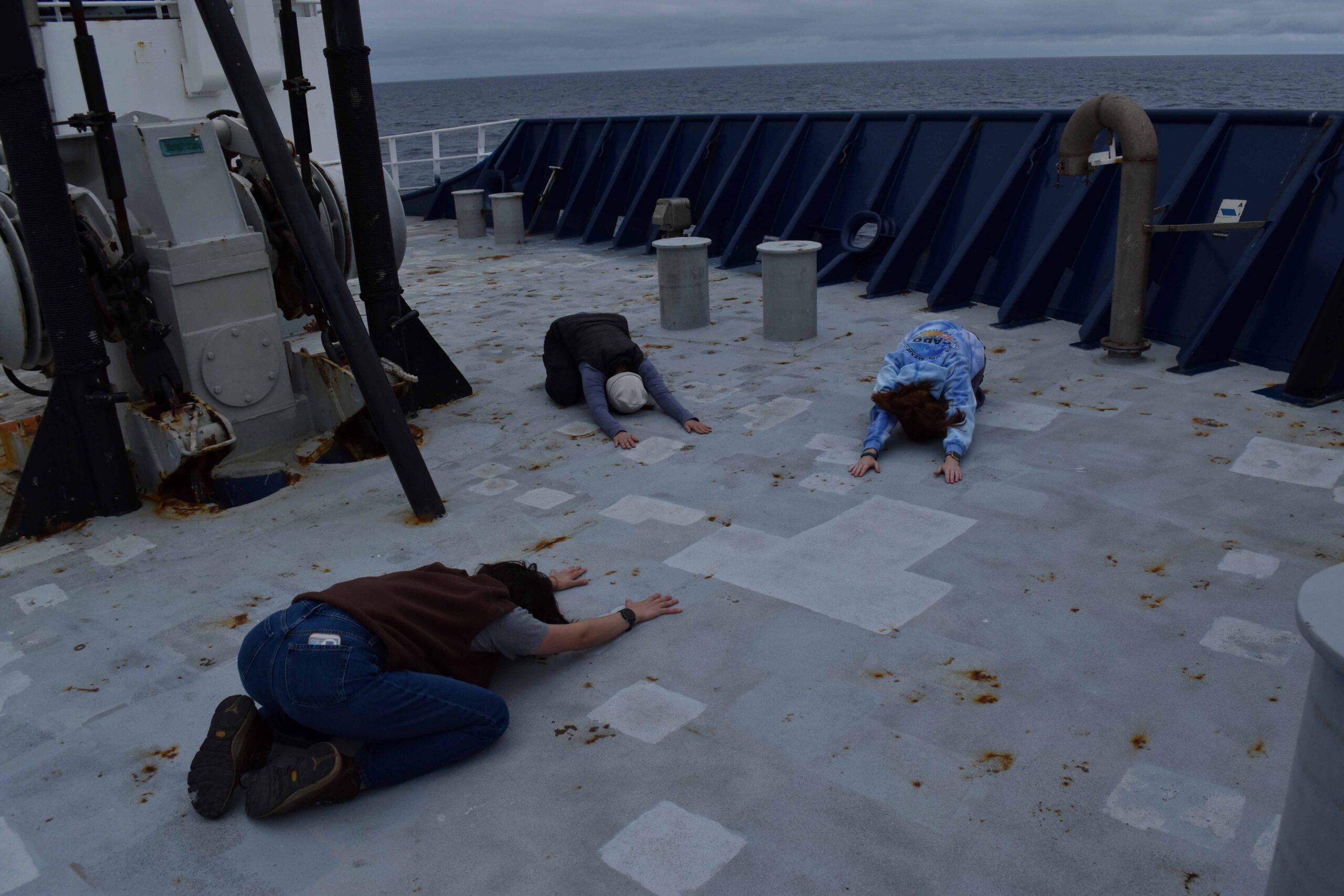
In the afternoon, some of the students stepped outside and went out to the bow to get some air, and we did yoga on the deck! My back and legs were very grateful by the end. I think we’re going to try to do more tomorrow, time permitting. We’re getting close to the end of the cruise already – I can’t believe it’s almost over.
In the evening, we went on tours of the bridge and of the engine room. The bridge was fun to explore and look out of across the ocean. The engine room was ear-deafening, so we wore headphones and earplugs. It also smelled like Easy Cheez, but I guess I’m the only one who thought so because everybody I asked looked at me weird. All the different machines and parts in the rooms were very impressive.
Avery and I continued our late-night ritual of eating a bowl full of assorted cereal from the galley, which has become a fun thing to look forward to mid-shift. A dive down to a shallow profiler platform (200m depth) started around 2330, so we watched the descent from the control van. It’s crazy how little 200 meters feel like now, after sitting through dives going down to 2900 meters. It went by in minutes.
Today felt pretty productive overall. I’ve been working on my project idea more and getting excited to go back to school!
August 15th, 2026
Today was a huge win for seeing cool underwater geology and biology! We did more dives at International District! In the morning and early afternoon, there was a 3-hour science survey of the geologic features and hydrothermal vents at the site. There were enormous beds of clams laid out across parts of the lava flows and some spindly spider crabs hanging around. We visited El Guapo, a 16-meter chimney covered with worms and other cool creatures. Jason started near the base of the chimney and slowly panned upwards for a few minutes, and I was shocked for long it kept going up and up with no end in sight. We also saw some crazy rock formations – ribbons, pillows, and whirlpools of solidified lava, as well as flat stretches along the seafloor with lines that ran along them like tire marks.
In the afternoon, some of the VISIONS students were recruited for a couple of hours to help with preparing samples of hydrothermal vent fluid that had been collected. It was fun to learn how to do the work; I really enjoy the repetitive process of lab tasks, especially when there’s good music going!
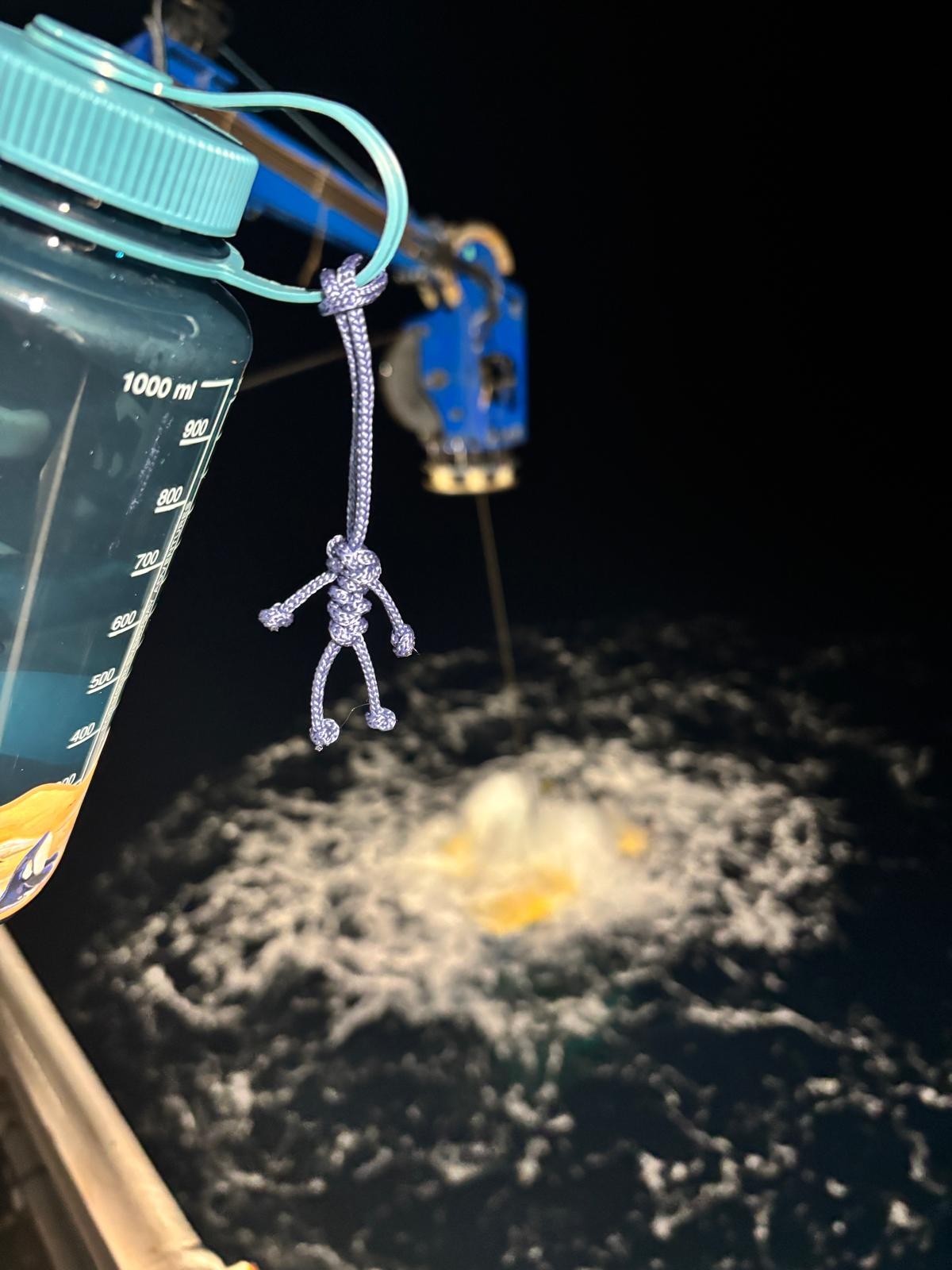
I continued with my paracord crafting and learned how to make a paracord person – great as a keychain or water bottle charm. I also started on my next bracelet! It’s nice to have something to work on and keep my hands busy.
We ended the evening with a light bit of ROV banditry. Jason pulled a knife out of a scabbard to accomplish a task on the dive plan, but I was more excited by the fact that it was impersonating an undersea pirate. Jason also collected some rock samples from the bottom, including large chunk of chalcopyrite. I guess its piracy skills still need some work.
August 14th, 2026
DOLPHINS!! We saw dolphins!!
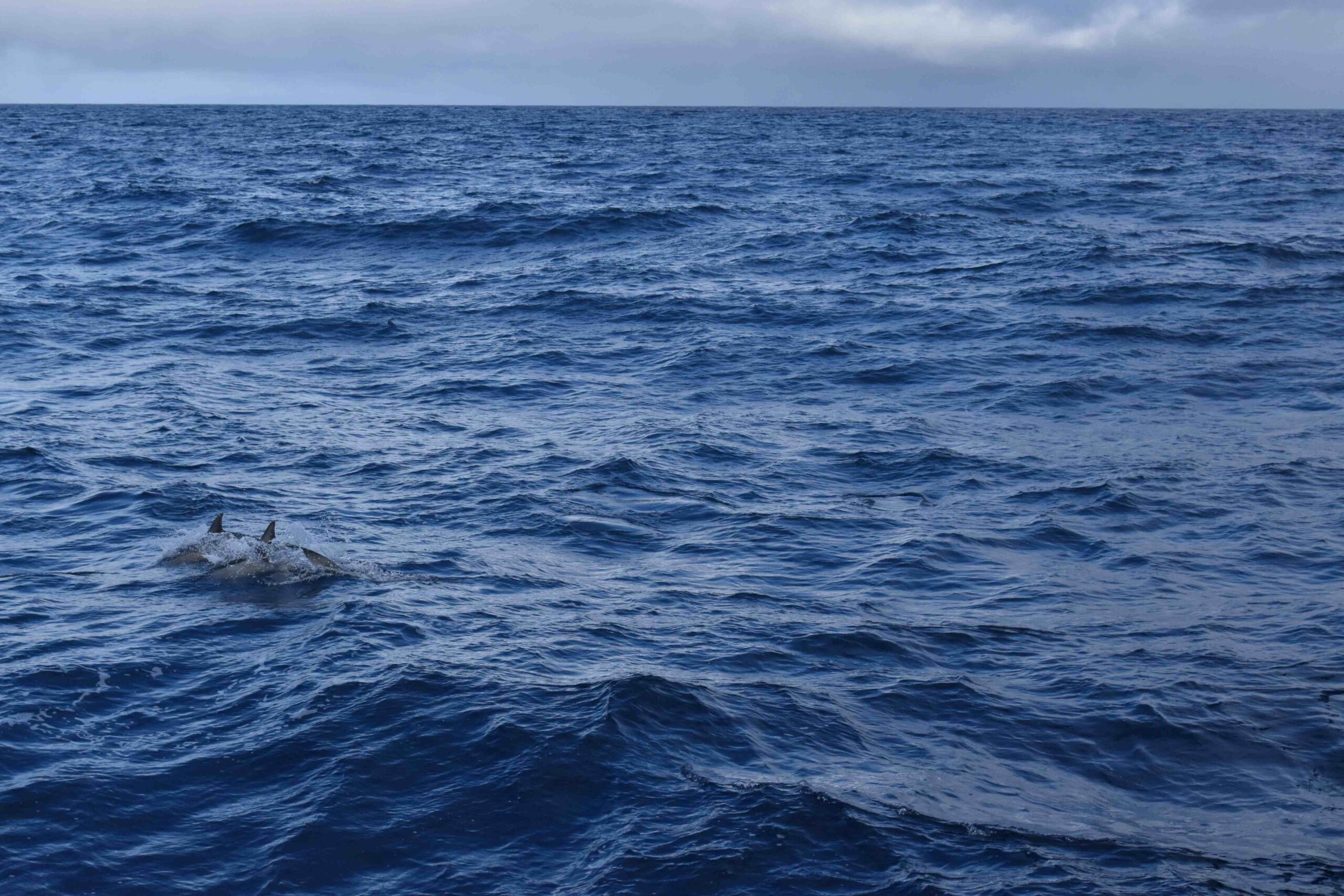
Today, we finished up at Central Caldera and moved on to the International District Hydrothermal Field site. My morning shift was spent logging the ascent of the morning dive and the descent of our first dive at this site. During transit between the two sites, we saw dolphins swimming around off the starboard side of the boat! It’s incredible how synchronized they were.
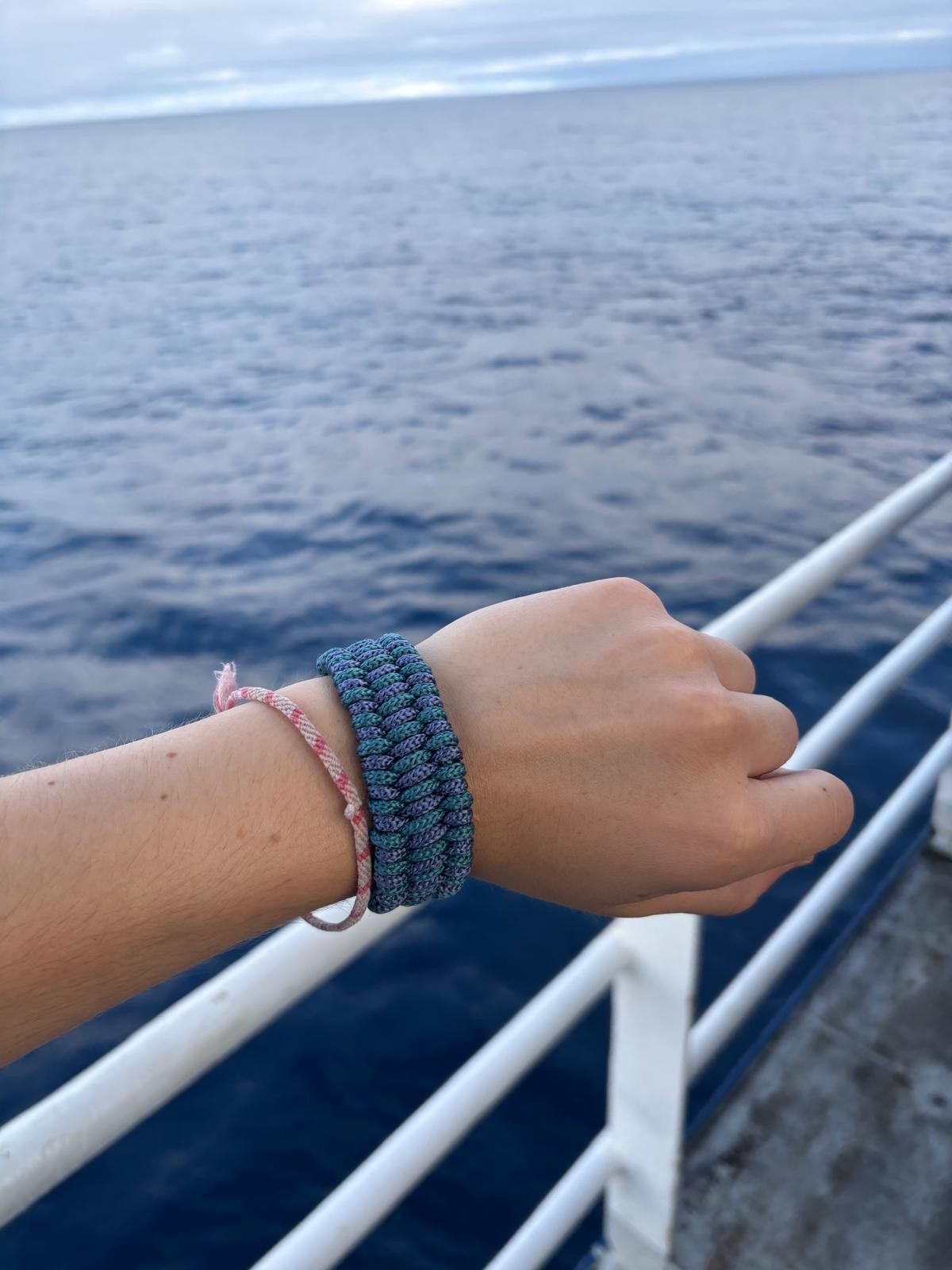
After my shift, I had some delicious lunch and then went downstairs to the Main Lab to work on a couple projects. We were encouraged to open the tub of bracelet-making/knot tying supplies sitting on the table, so Avery, Adrian, and I got really into making paracord bracelets while listening to ocean-inspired music for a couple hours. YouTube playlists are always a win.
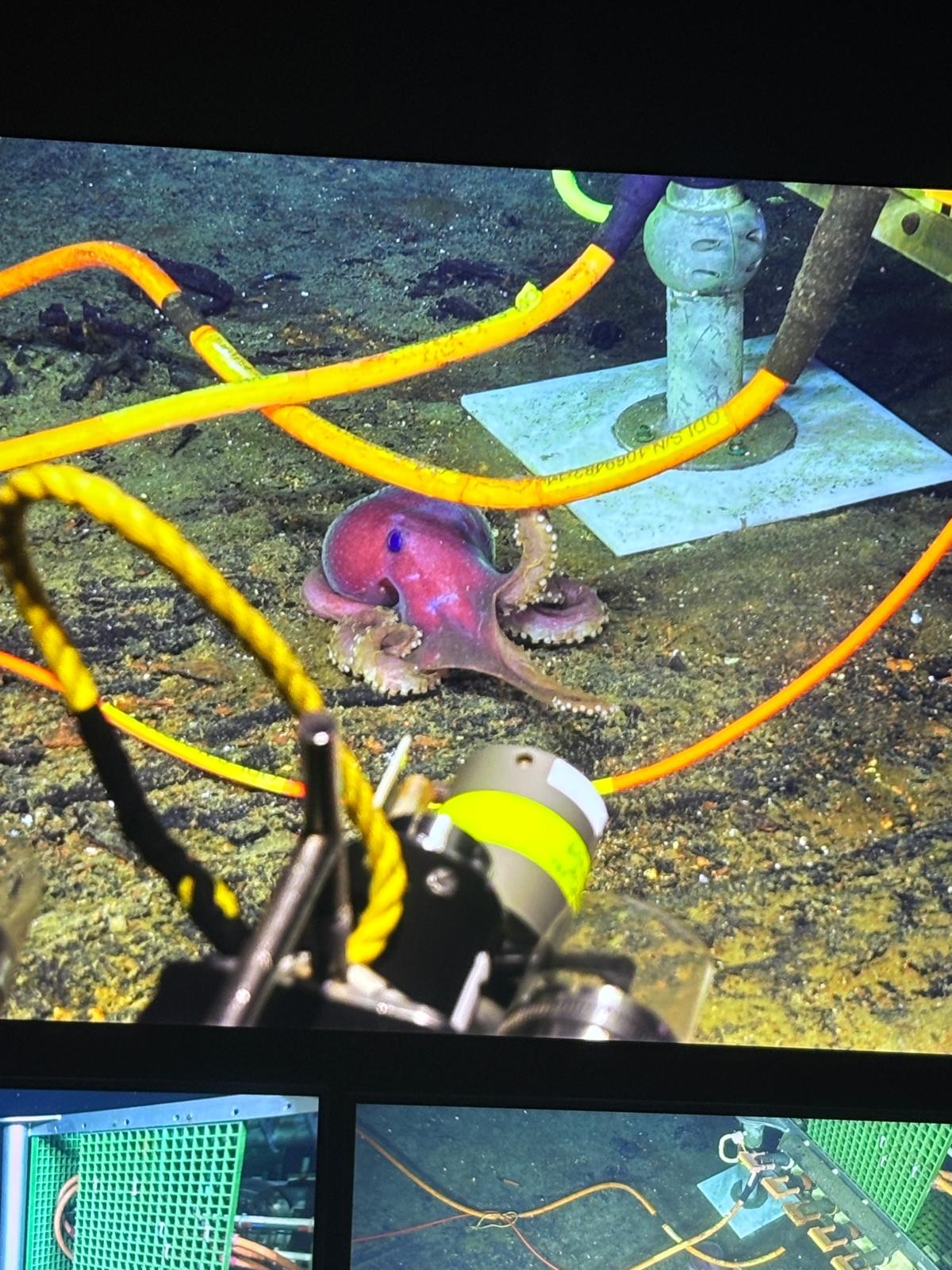
In the evening, we started our second dive at International District and saw a beautiful Graneledone octopus! It was a little more curious than the other ones we’ve seen so far and started creeping towards Jason like it wanted to grab onto us. The biology out here is insane – so far there’s been tons of cephalopods and huge jellyfish, as well as some cool fish species that I’ve never seen before. It’s so exciting when one pops up on the Jason camera feed.
After admiring the octopus for a few minutes, the Jason team started on the dive plan tasks. During the first part of the dive, we were turning a TRHPH, which measures hydrothermal vent fluid temperature and resistivity (as an analogue for chlorinity). At the vent Diva, Jason used a reamer to clear the vent opening and then stuck a temperature probe into the orifice to measure how hot the exiting fluid was (around 340° C!). Then, they used a couple of IGTs (Isobaric Gas-Tight samplers) to get fluid-gas samples from the vent.
At that point, I was tired, so I decided to call it a night. Tomorrow we’re going to be doing more observational work at the International District site, so we’ll see some even taller vents.
So far, we’ve been unlucky with cloudy nights, so we missed the peak of the Perseids a couple days ago. Hopefully we’ll get a clear night soon and get some good stargazing in before we go back to shore!
August 13th, 2026
Yesterday was mostly a transit day, so I caught up on sleep and spent more time wandering the ship. At one point, I went up to the bridge to look around and asked about their navigation systems. The view up there was beautiful! I also did some thinking about RCA project ideas and started preparing to go back to school.
Today, I woke up when we got to the Eastern Caldera site and started my shift doing chlorophyll filtering with some water samples collected during the CTD casts. I also learned a bit more about the QAQC that the data team is responsible for. After finishing the filtering, I went back to the van and watched the rest of the ongoing dive before grabbing some lunch and taking a fantastic nap. My dreams have been getting more vivid and memorable as the cruise goes on, but none of them have been ocean-related yet.
After my nap, we got back to the ASHES site to do the HD camera swap. The previous night, we had run into some issues, so we moved on to the Eastern Caldera and then doubled back. At ASHES, Jason dove again to replace a camera, and we saw our first hydrothermal vents of the trip!
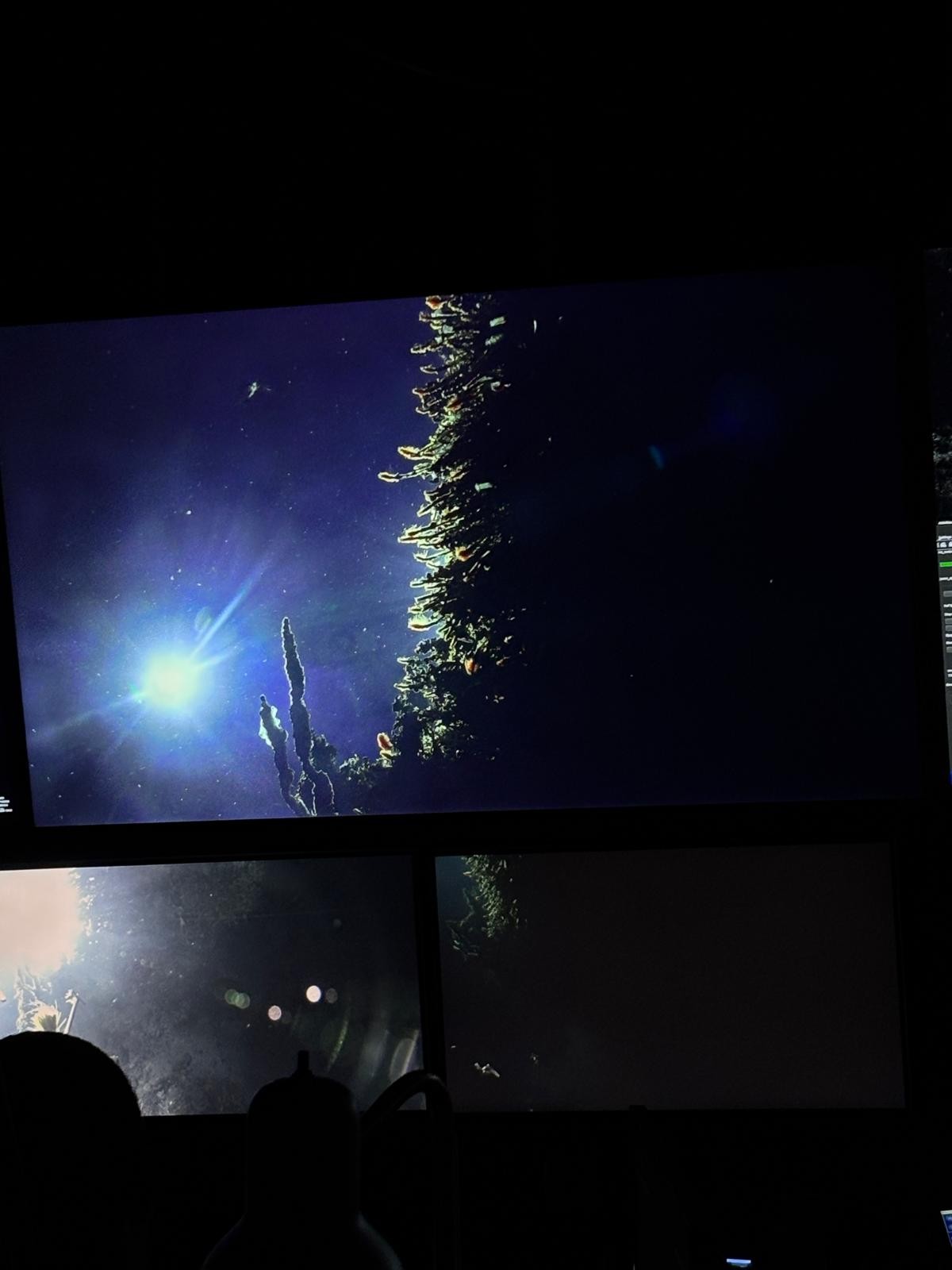
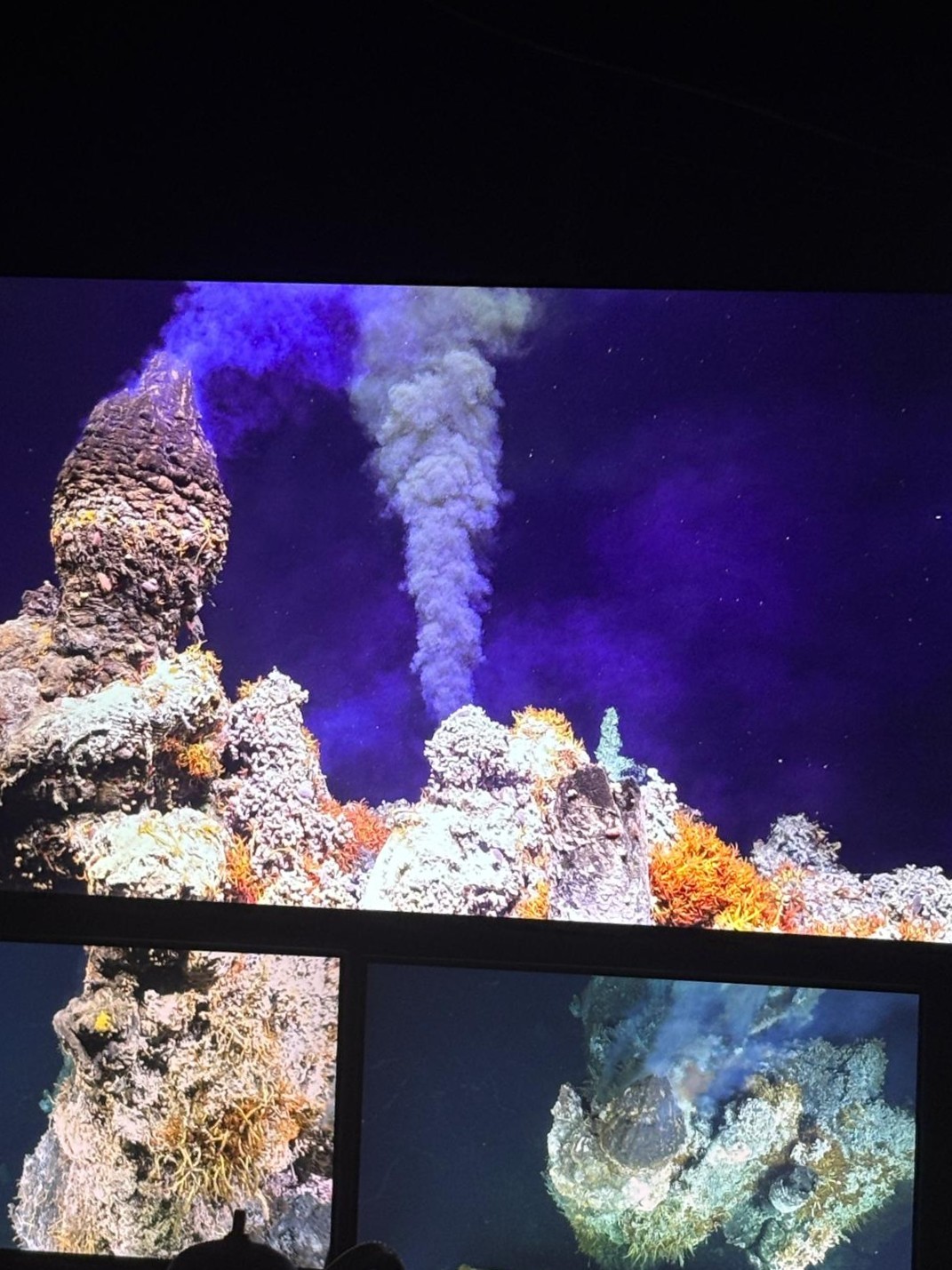
I’ve seen hydrothermal vents in videos and pictures before, but something about being out on the ocean, floating 1500 meters above the seafloor, and seeing them on the Jason livestream was just insane to me. They were so cool. I can’t believe we’re here seeing all of this. There were some crazy tubeworms, sulfide worms, and scale worms hanging out on the vents. The sulfide worms were bright orange-brown and looked like little flowers, and the tubeworms were growing in these huge clusters all over, some better-looking than others. One of the black smokers, the Inferno Vent, had a really cool beehive-like structure on the top. The fluid exiting the vents get up to 350°C, and we could see the water shimmering around where it was hottest. Near the end of the dive, we turned off Jason’s lights and looked at the Mushroom vent silhouetted by the other camera’s lights.
We’re going to the International District site soon, where we’ll see even larger vents. I can’t wait!
August 11, 2026
Today I woke up and just missed the end of the science survey for Southern Hydrate Ridge. I was a little sad about it, but I needed to get some sleep and there are plenty more things to look forward to! I ate a quick breakfast and went down to the Main Lab to catch up on blogging while we transited to Slope Base, our fourth site.
Once we arrived, I went up to the ROV control van and Jason was launched for our deepest dive of the trip, down to 2900 meters! Jason descends at ~30 meters / minute, so most of my shift was spent watching it descend through the water column. During that time, I got to try controlling Jason’s arm, which was awesome. The control is essentially a small model of the actual arm, with joints you can move around and buttons to open and close the jaws. Eventually Jason reached to the bottom, where we found the junction box to be turned and saw an adorable octopus, as well as a couple Venus fly trap anemones, a sea cucumber, and a crab.
My shift ended and I grabbed a yummy bean and rice burrito before heading back to lab to wash off some camera parts and scrape thousands of barnacles off one of the 2025 BEPs. I made some pretty good mileage with my tiny plastic scraper! After I had felt the sun a bit too long and started worrying about getting burnt, I went back inside to grab some more coffee and a snack. I think I’ve been averaging around 4 (tiny) cups of coffee per day, which isn’t too dreadful at all. The 24/7 accessibility is sweet.
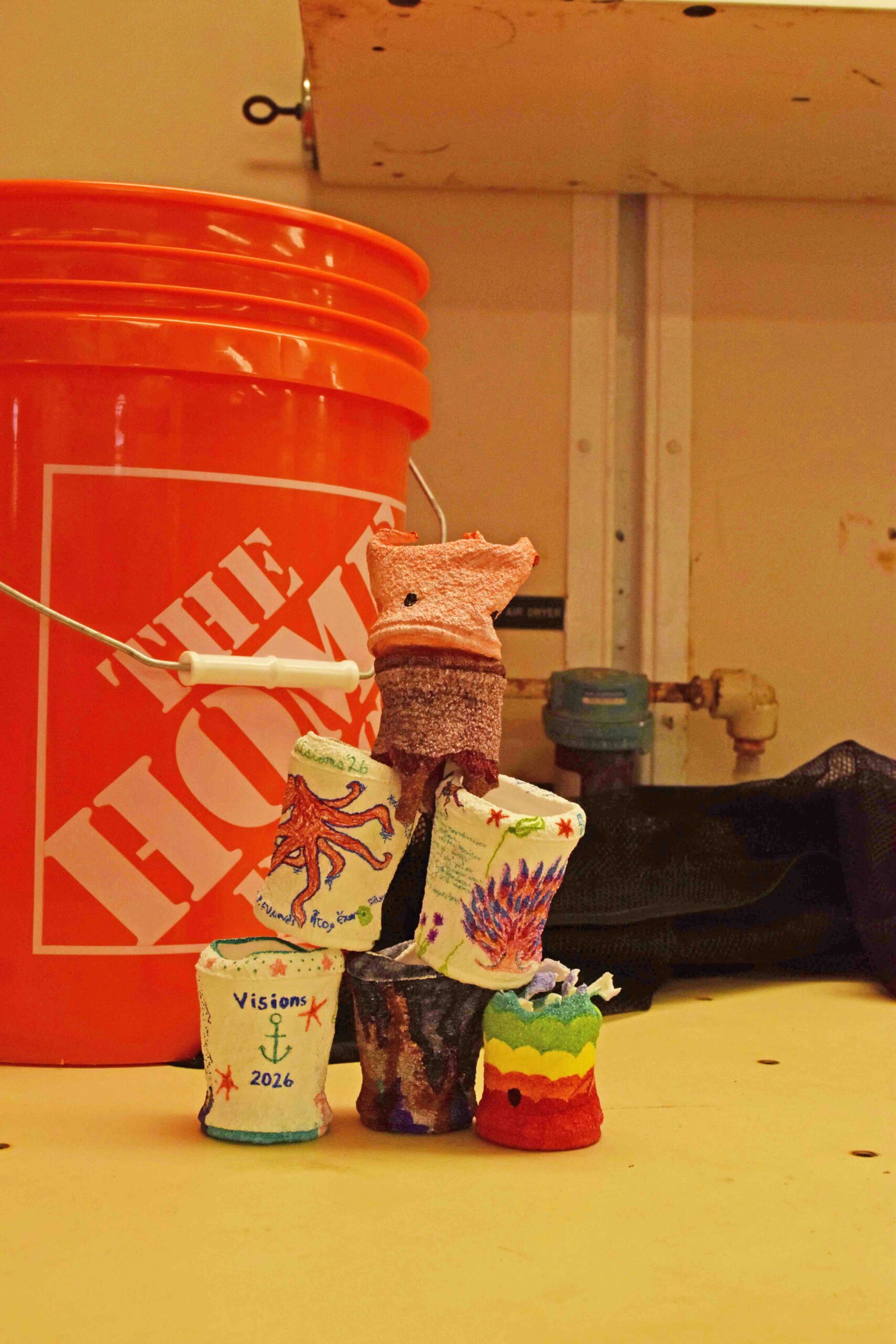
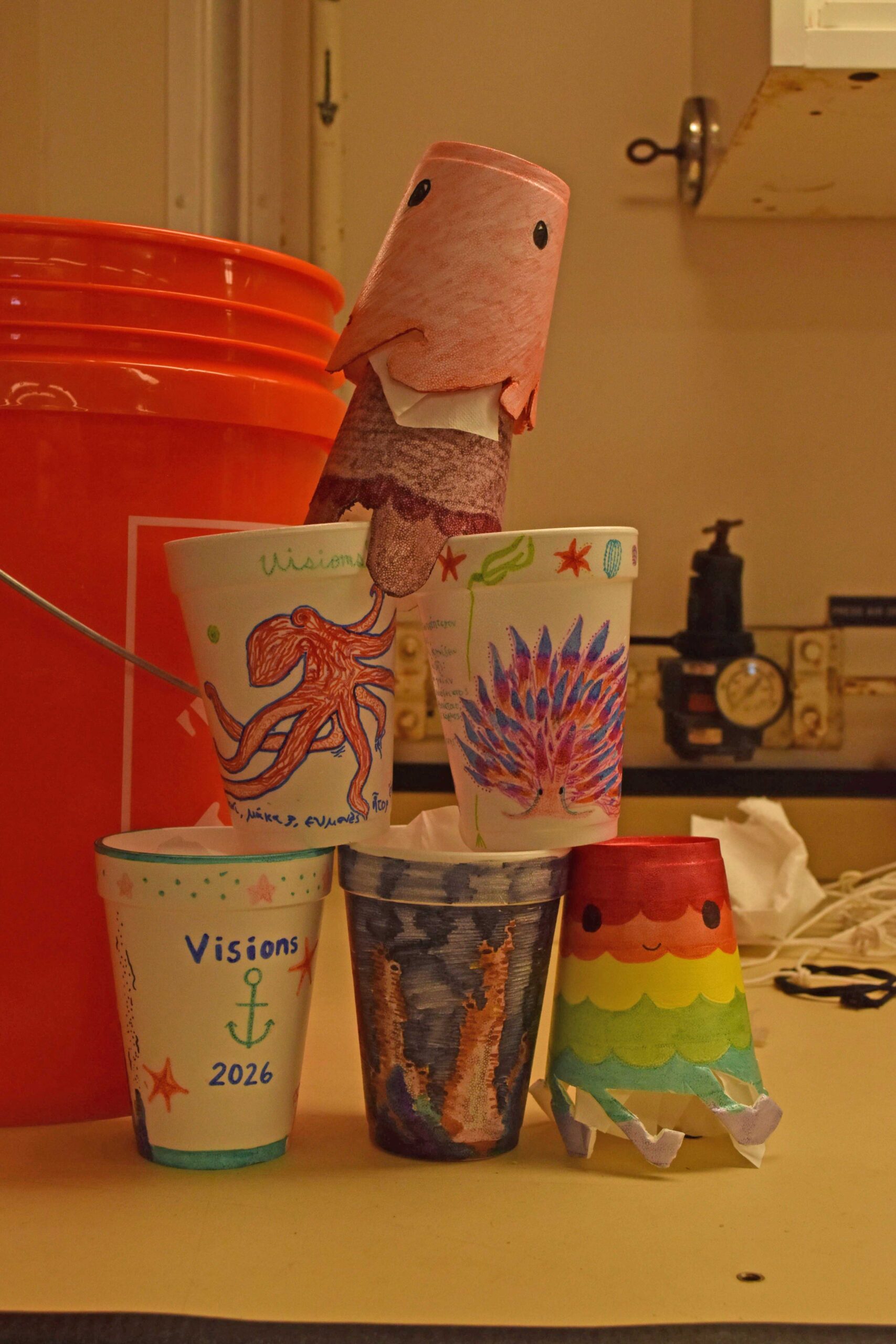
After watching Jason get reeled back up onto the ship, I learned about the CTD profile process and how to take water samples from the Niskin bottles. We did two casts, a shallow one down to 280 meters, followed by a deep one down to ~2900 meters. For the deep cast, we put all our Styrofoam cups in a bag and secured it to the frame so that they would shrink! I love how mine came out.
This cruise has been a great opportunity to learn about different pathways into marine science; I’ve been talking to a lot of the people on board about their careers and it seems like there’s a lot of variation in how one can get involved in these kinds of research cruises.
Some people were playing Mario Kart today. I need to get in on that.
August 10th, 2026
Last night we transited 4 hours to our second site, Oregon Offshore! The rocking of the waves against the boat was a lot more violent when we were transiting, so I had a hard time getting to sleep. My room is on the starboard side of the boat, so I hear the waves extra well at night.
This morning, I woke up and grabbed a quick breakfast before heading to the ROV van for my first shift of the day! There were a ton of albatross on the water, which I associate with “Albatross Soup,” so that puzzle became a topic of conversation between myself, Alex, and Maddy.
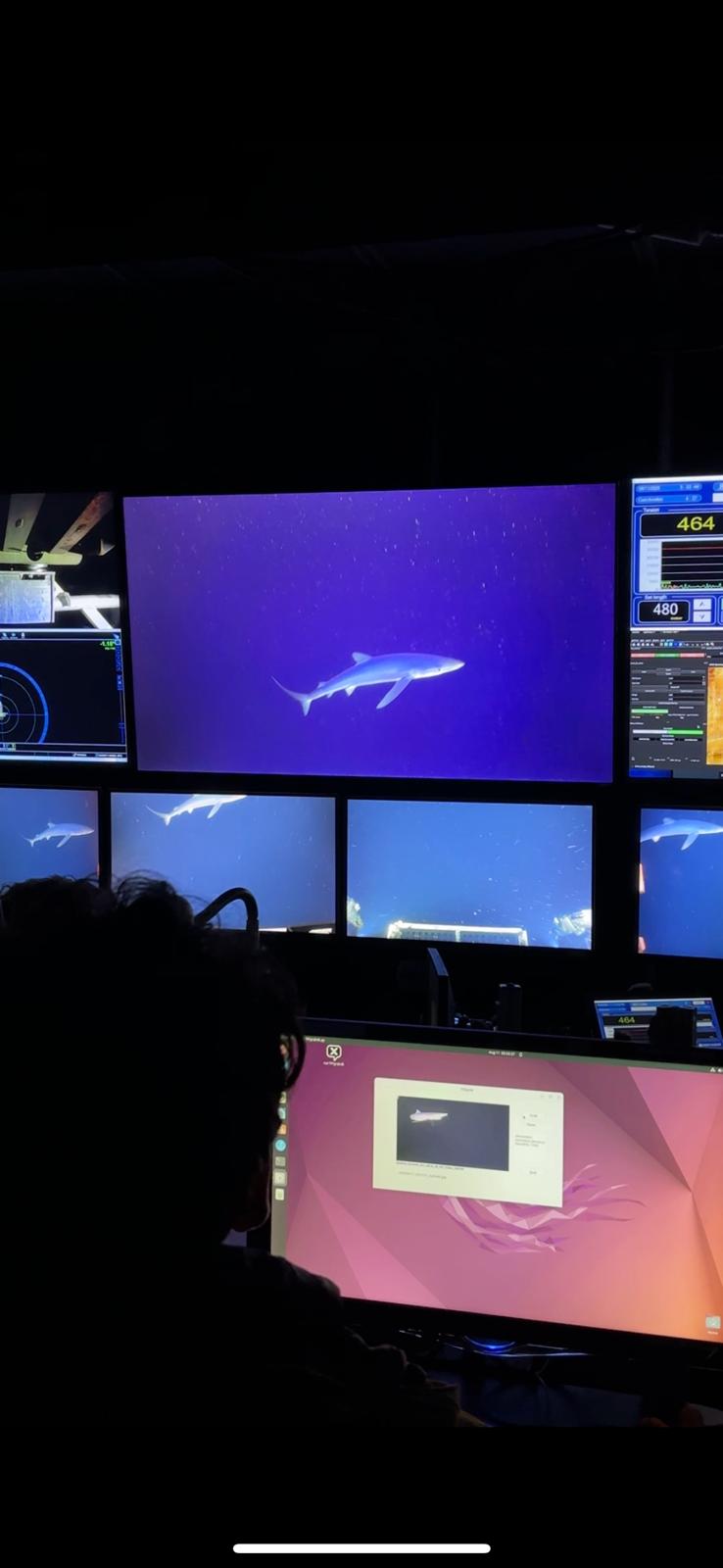
On my watch, Jason dove to a depth of ~573 meters to retrieve a BEP installed in 2025 and replace it with a 2026 BEP. There were tons of sable fish at the bottom, and still some particles in the water, but less ctenophores at that depth. Learning how to log events and take pictures of cool things has been really fun!
For lunch I had a lifechanging vegetarian patty melt sandwich (I don’t know what meat substitutes the galley uses yet, but it was incredible!!) and then I headed back to the Main Lab. At our next stop, Slope Base (2900 m water depth), we’re going to send down some Styrofoam cups on a deep CTD cast, and the pressure will crush all the air out of the cups and shrink them down. So, most of my afternoon was spent drawing various sea creatures on cups. We had our group meeting at 14:00 and learned a little about how sextants work.
I also watched some chlorophyll processing happen! We learned more about how Mariela and Joe collect the data they need from the water samples we’ve been gathering. I think watching them do things in the lab is healing the part of me that was disheartened by college chemistry lab classes.
After a couple hours of transit, we got to the Southern Hydrate Ridge and started a long dive to turn a digital still camera and survey the site. Most of my time in the ROV van was spent watching Jason descend ~700 meters to the bottom. On the way down, we saw some cool creatures, including sharks! They swam down with us to around ~140 meters depth before losing interest. Further down we saw tons of lantern fish swimming around. Once we made it to the sea floor, we saw bright red rockfish, a couple other weird looking fish, and a crab! I got pretty sleepy by the end of my shift at midnight, so I went back down to the lab, finished drawing on my second cup, and went to sleep. The curtains around my bed have been a gamechanger. I’m still finding my way around the ship, which is hard when all the doors look the same, but it’s getting easier.
August 9, 2026
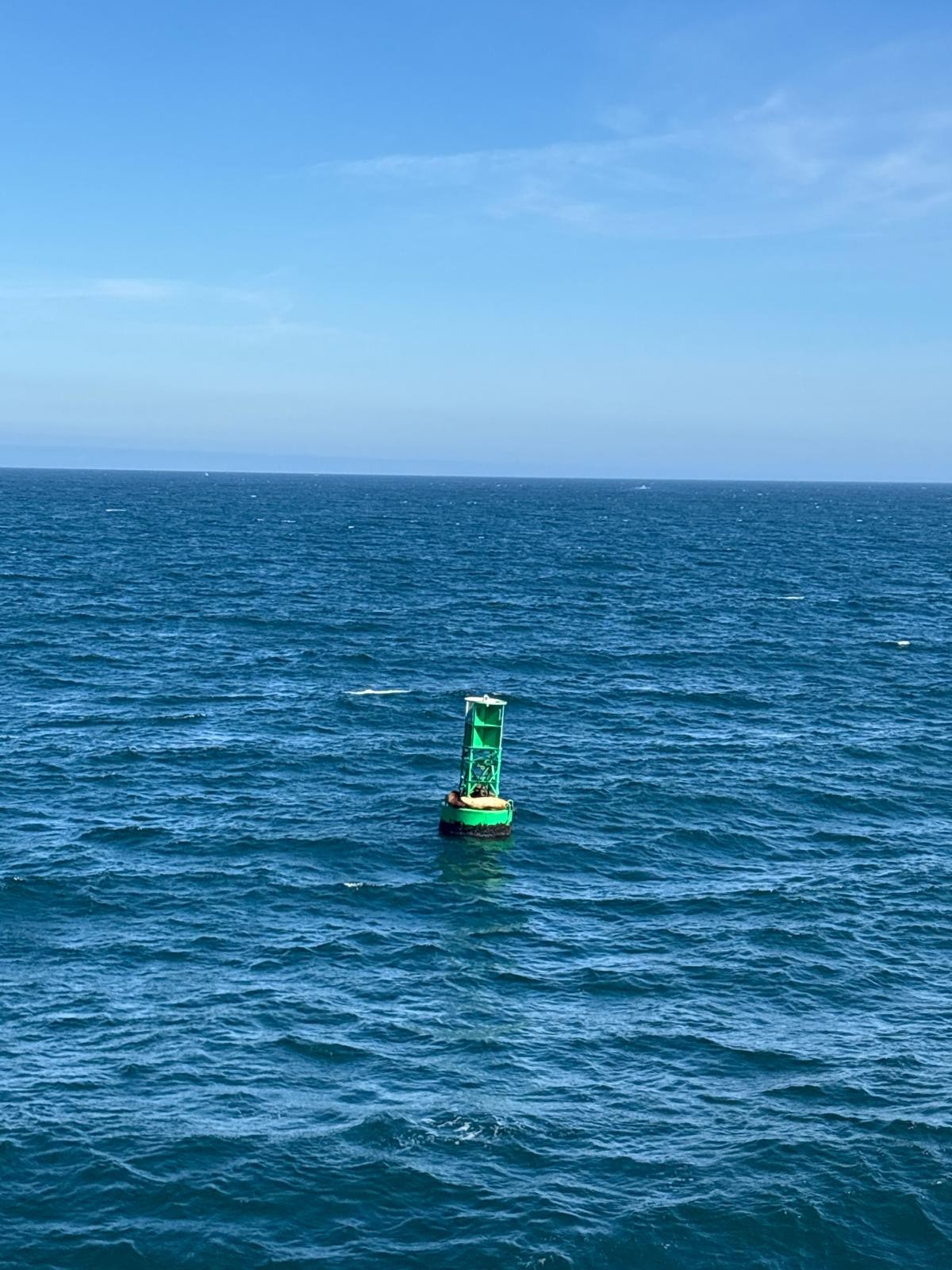
Today at 10:00, VISIONS ‘26 departed from Newport, Oregon on the Revelle. On our way out, we passed a few green channel markers, and the last one had a few sea lions sleeping on it! As soon as we got out onto the open ocean, the waves got pretty big and it took some time for me to adjust to the rocking. En route to our first site, the Oregon Shelf (depth of 80 meters), we learned more about the ROV Jason and our role in logging the dives. We also learned about how to set up the CTD for deployment. We took turns hopping up onto the yellow frame containing the CTD and other instruments. Once we got to the site, we had our abandon ship drill and tried on our beautiful orange emergency suits.
During the first dive, a barnacle-clad BEP (Benthic Experiment Platform) deployed in 2025 was replaced with a new BEP, and a few sea stars were displaced from their house in the process. I was surprised by the density of ctenophores/cnidarians/other invertebrates in the water; throughout the entire descent from the ocean surface to the bottom, small creatures were floating around everywhere. They varied in size a decent amount, although it’s hard for me to tell the exact scale of things so far. It’ll be interesting to see how this compares to the deeper sites we’re visiting later in the expedition.
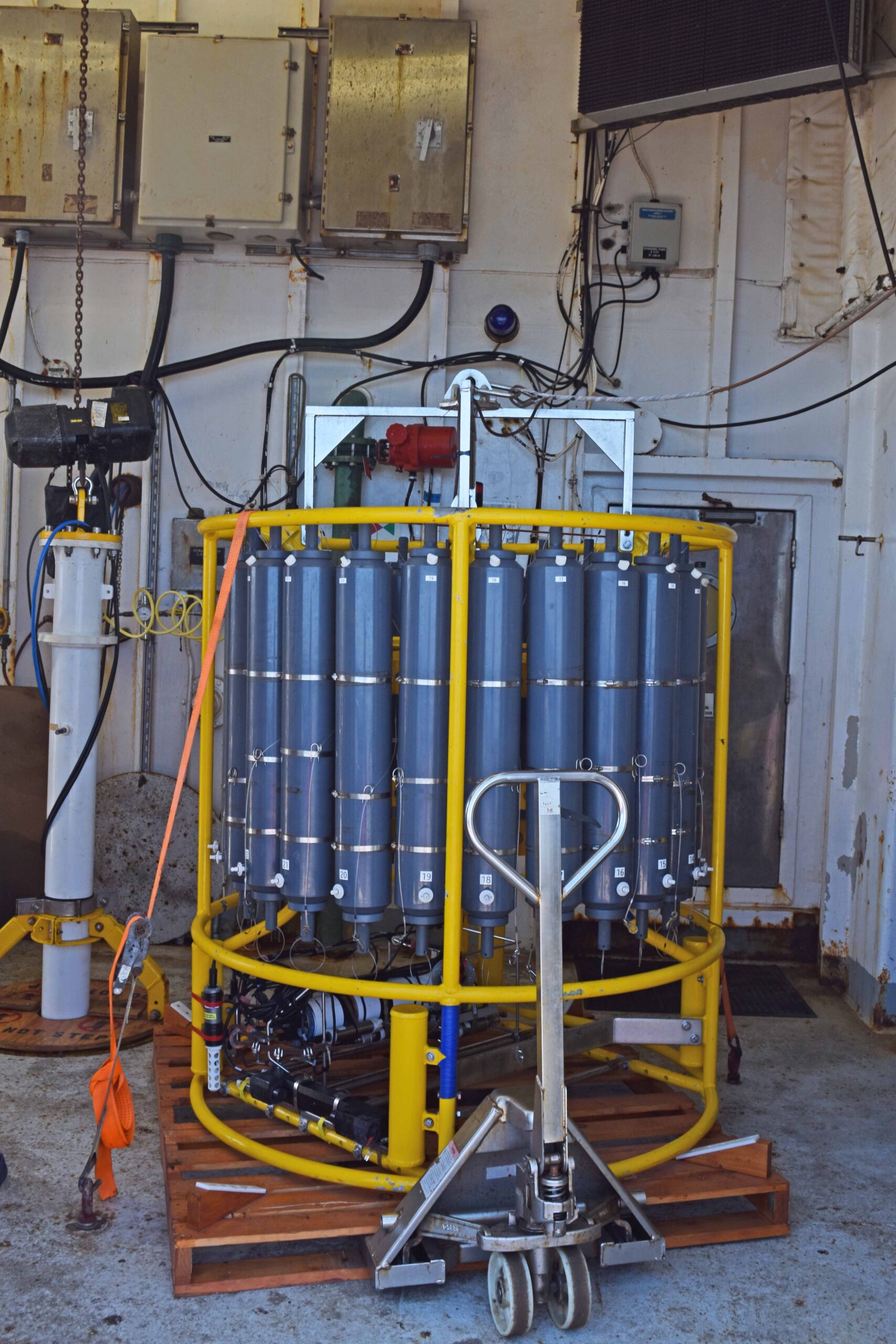
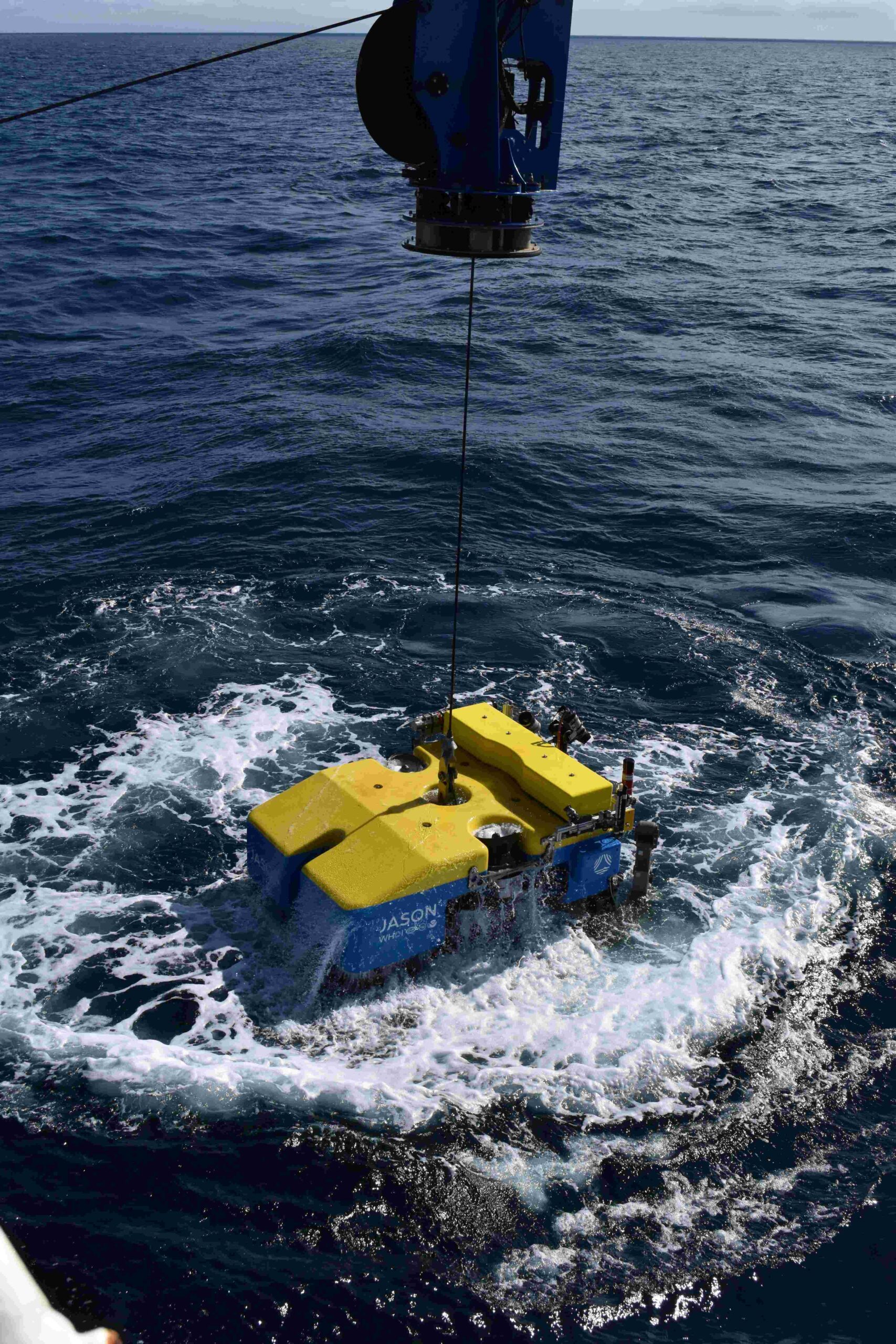
During the afternoon, I watched Jason get reeled up out of the water after its first dive with the 2025 BEP attached to it. Close to the ROV, there are a bunch of football-shaped objects that get clipped onto the cable when it descends and removed when it comes up. These footballs keep the cable suspended away from Jason when it’s the water, so that it doesn’t get wrapped up in the equipment. When Jason came up, the water became a lot more turbid at the surface even before the ROV became visible. A lot of mud made it up to the surface as well. Then, I walked around the boat for a while and practiced taking some photos, and did some computer work in the Main Lab.
My first shift in the ROV control van (which looks suspiciously like a shipping container from the outside) started at 20:00 and I learned how to do camera logging. There were some technical issues getting to the bioacoustic sonar, but we made it down eventually and now (22:00) we’re currently watching the Jason team working with the equipment.
I’m looking forward to taking more photos and documenting this trip. Today is (almost) gone, today was SO fun, tomorrow is another one! I love science.