
Saying Goodbye Once Again
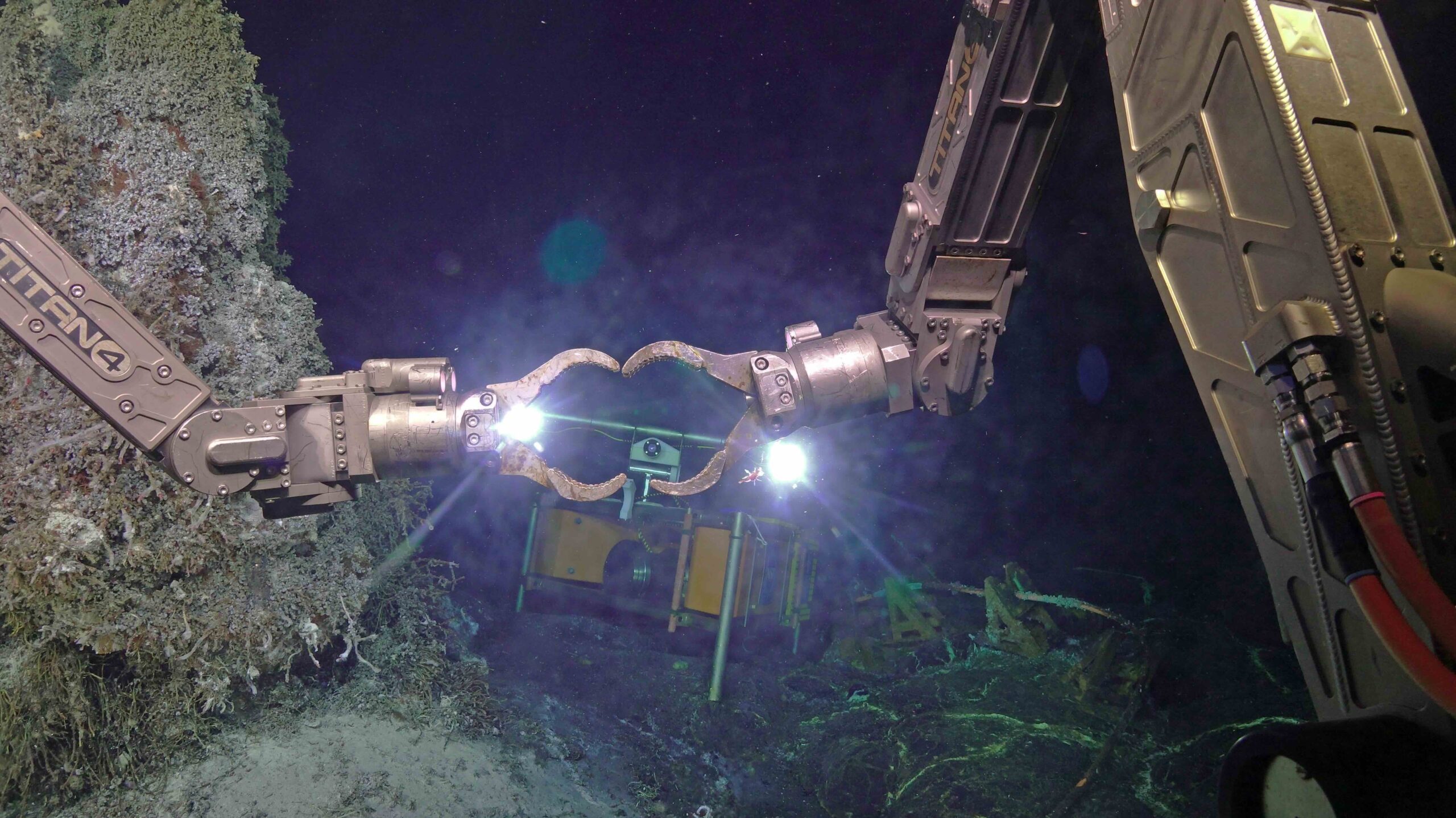
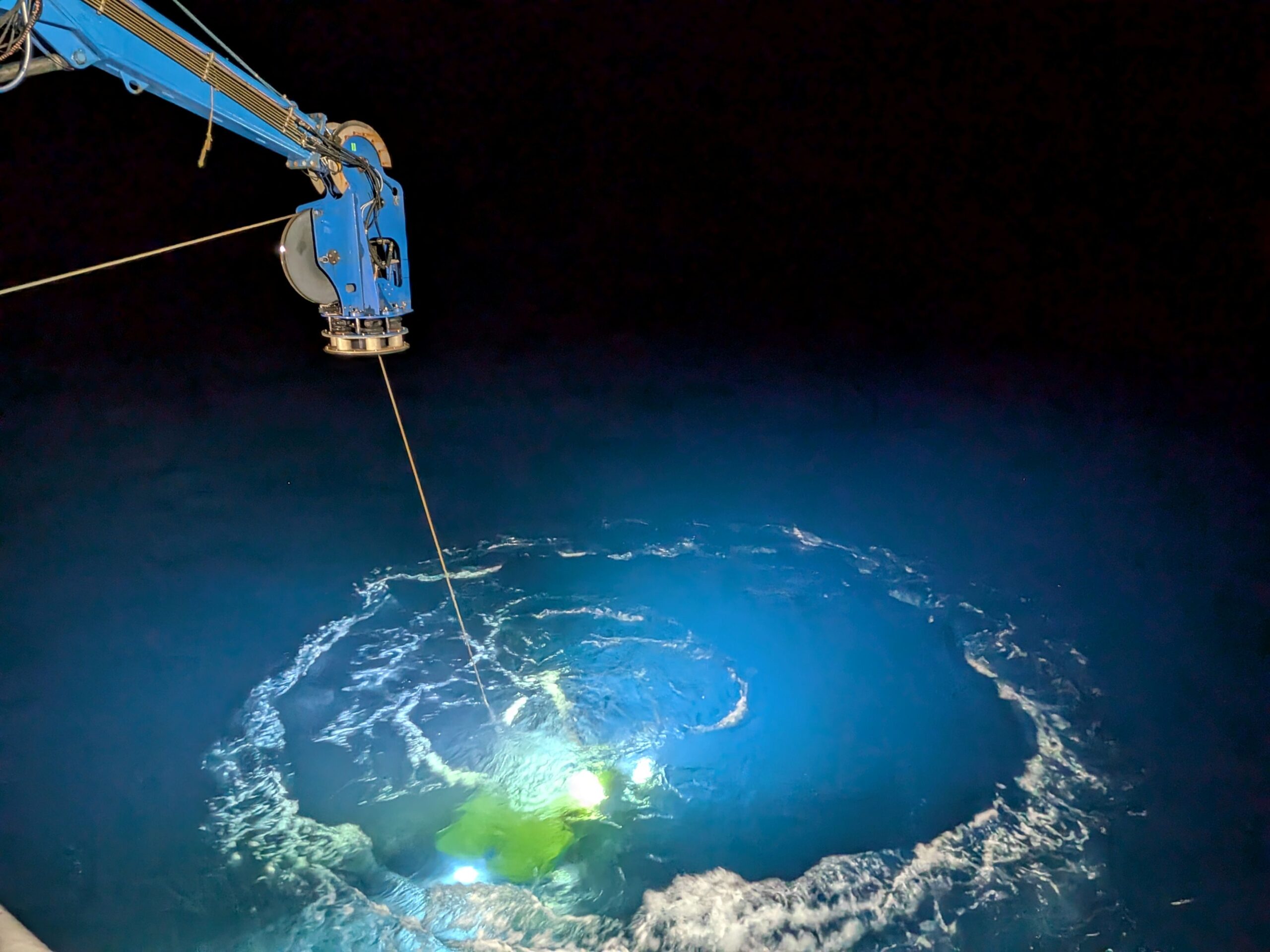
As we hold station in the fog off Newport, Oregon the RCA scientists, engineers and VISIONS’26 students are preparing to say goodbye to the R/V Roger Revelle, her crew, and the ROV Jason team. The Revelle crew took great care of us throughout the voyage, and the ROV team helped make the mission a success. The weather gods were kind to us, with only a bit of grumbling a couple days, which we are thankful for. We are equally thankful for the support of the National Science Foundation’s Ocean Observatories Initiative, whose funding makes this work possible and gives us the chance to maintain this exceptional underwater observatory, and explore the ocean’s wonders and the remarkable life it sustains.
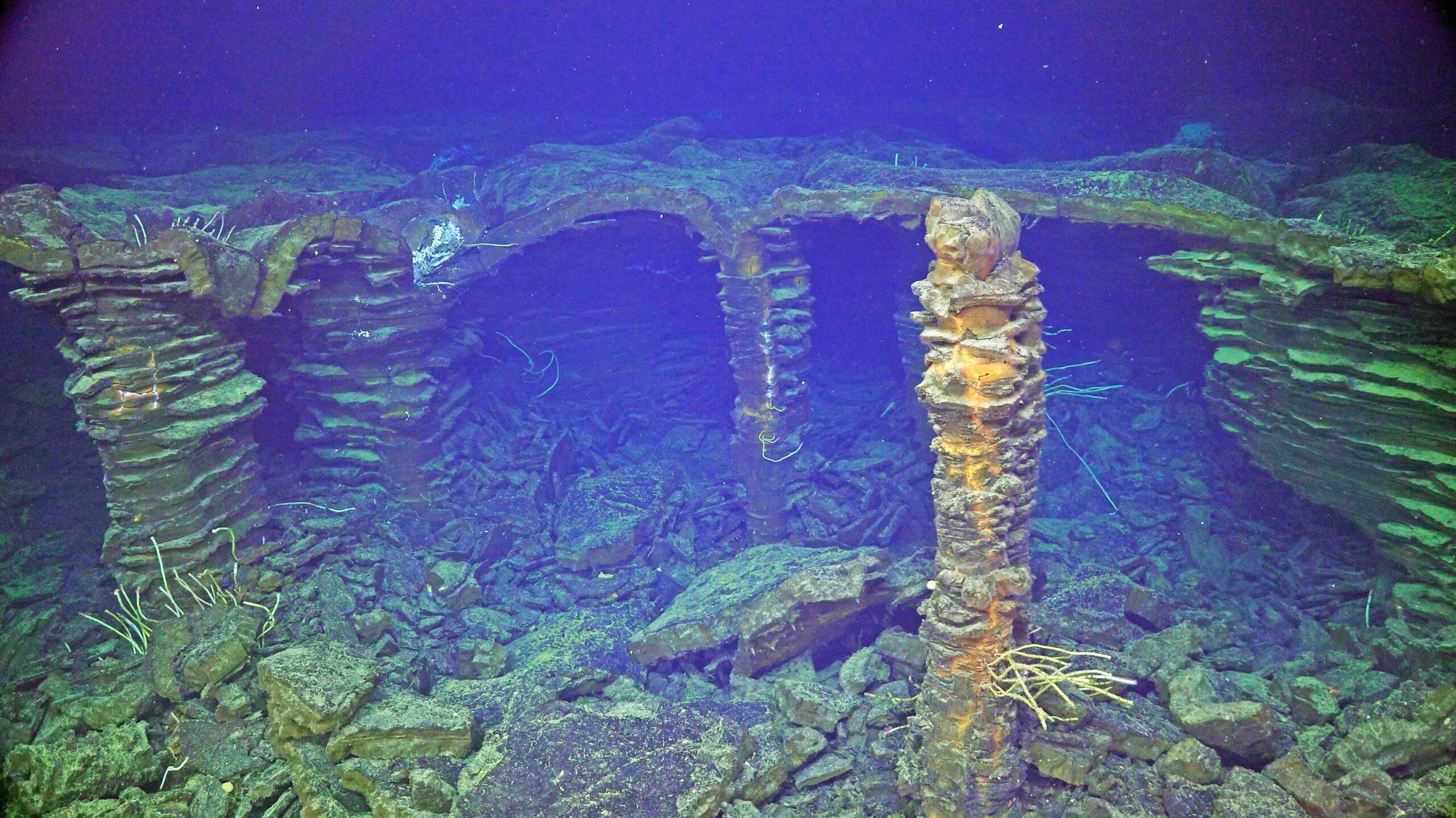
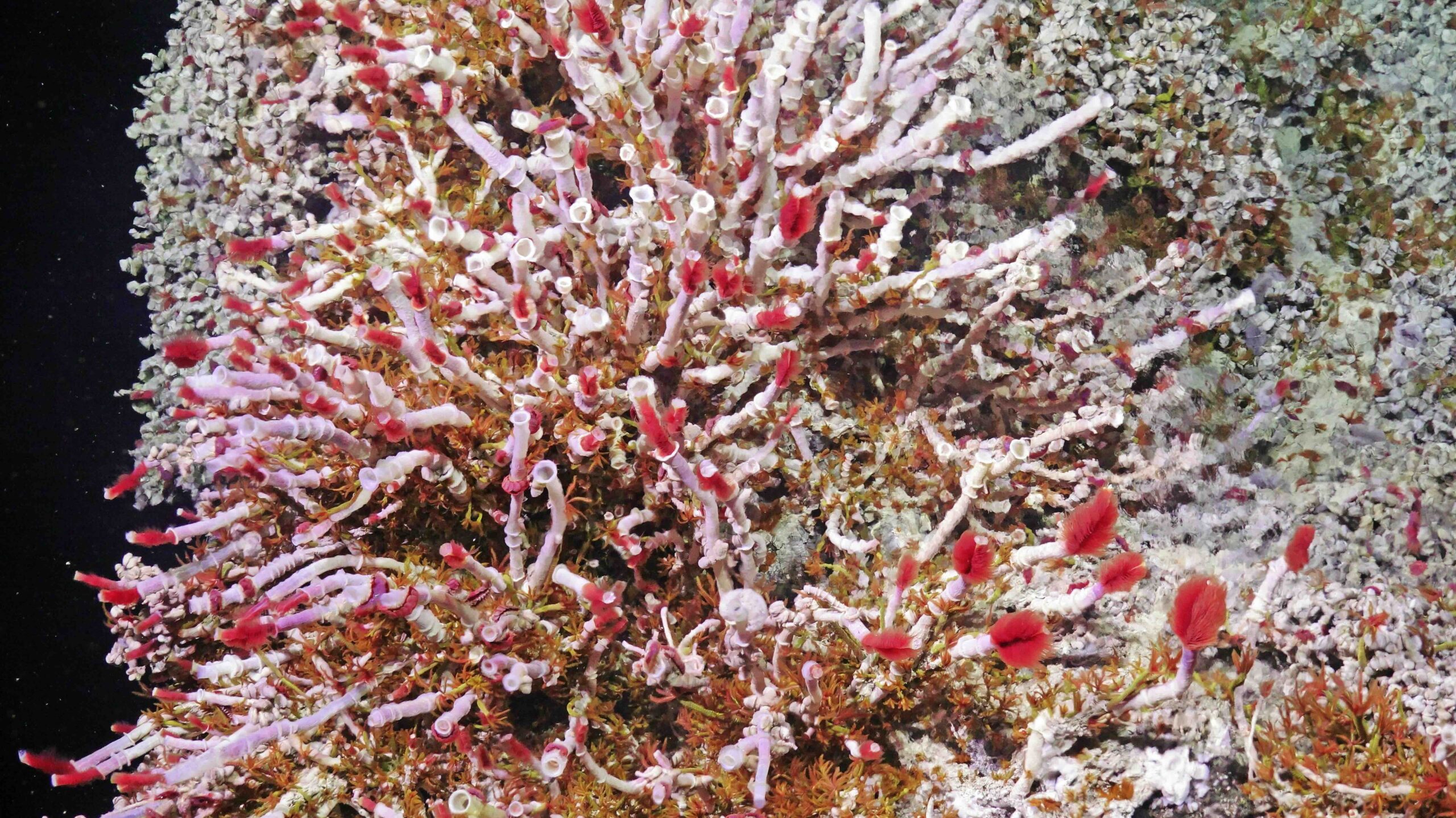
Through the eyes of Jason, the 8 VISIONS’26 students got to witness sights rarely seen by humans – rivers of lava frozen in time from the 2011 eruption of Axial Seamount hosting acres of clams, whelks, and gastropods and magical seascapes of arches, columns with “bathtub rings” and collapsed talus piles marking past lava lakes. They were in awe witnessing boiling hydrothermal vents covered in life that is hard to imagine even in dreams thriving in perpetual darkness supported by volcanic gasses issuing from below the seafloor. They also encountered octopus with enormous eyes made homes on our equipment and some puffed up like balloons letting Jason know they are not to be played with.
Closer to shore, the students watched explosions of methane bubbles issuing from sediment scraped off and compressed where the Juan de Fuca Plate dives beneath the North American plate. Here, along the Cascadia Margin, methane-rich fluids seep through soft sediment, supporting large clams hosting microbial symbionts, hummocky mounds draped in white and orange bacterial mats and beautiful, delicate pink soft corals. Above these habitats, the water column was equally alive — especially at the Oregon Offshore site, where huge numbers of sablefish gathered, joined this year by sharks, including one that appeared less than pleased after an encounter with Jason and one of its lights.
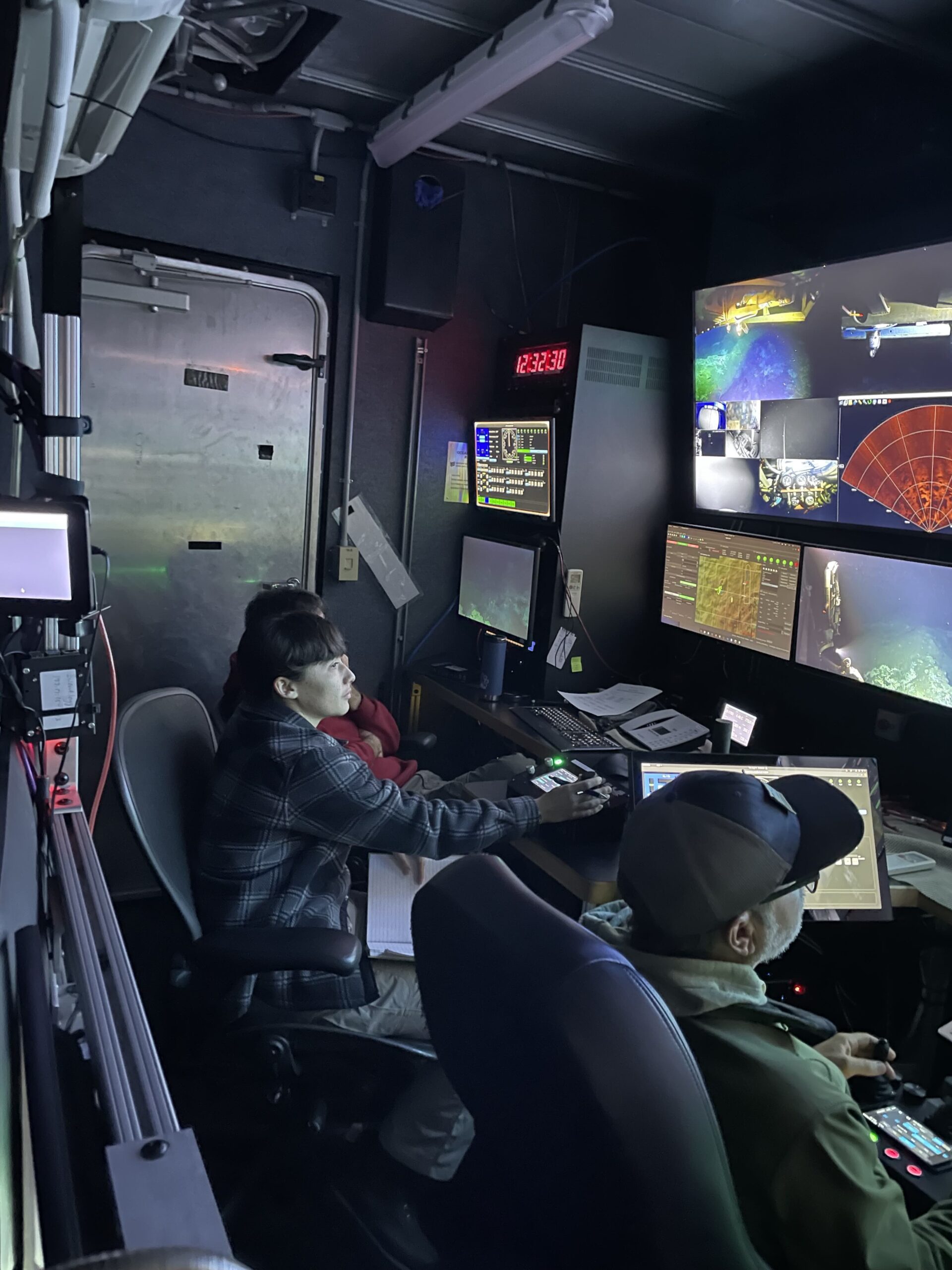
Beyond the science, this cruise was a powerful human experience. Many on the RCA team have sailed with members of the Jason team for years, and the time together brought not only hard work, but storytelling, laughter, and friendship. Inside the control van, conversations ranged from unforgettable moments at sea to the winding paths that led people into ocean science and engineering.
We thank the Revelle and Jason teams for their support and friendship and for their support of the VISIONS students, generously sharing their lives experiences and how they arrived in this life at sea – opening the eyes of students to new opportunities. The Jason pilots served as incredible mentors to the students, even allowing them to sit in the “hot seat” in the control van and use Jasons’ manipulators. It was truly a once-in-a-lifetime opportunity, and the students’ excitement was unmistakable, marked by ear-to-ear grins and reflected int their Daily Blogs which gave all of us a deeper appreciation of how they experienced the expedition.
What we Accomplished in 10 Days at Sea:
During our 10 days at sea, we visited all RCA sites spanning the Cascadia Margin to 300 miles offshore at Axial Seamount. The results were impressive:
- All scheduled RCA work was completed and more
- Jason completed 19 dives (J2-1775 – J2-1793) spanning 2900 m to 80 m water depth
- 6 CTD’s were conducted reaching depths of 2900 m
- 264 CTD verification samples were processed for the water column sensors
- 6 Instrumented Shallow Profiler Platforms
- 3 junction boxes and 2 Benthic Experiment Packages were turned
- 2 Shallow Profiler Mooring profiling platforms were recovered with10 instruments
- 20 Instruments were turned, 1 instrument recovered
- 4 PI instruments were turned and 2 deployed
- Multibeam imaging of bubble plumes issuing from Pythias Oasis and Southern Hydrate Ridge.
- Thousands of images and 10 terabytes of video were collected, documenting both operations and the extraordinary life that thrives in the deep
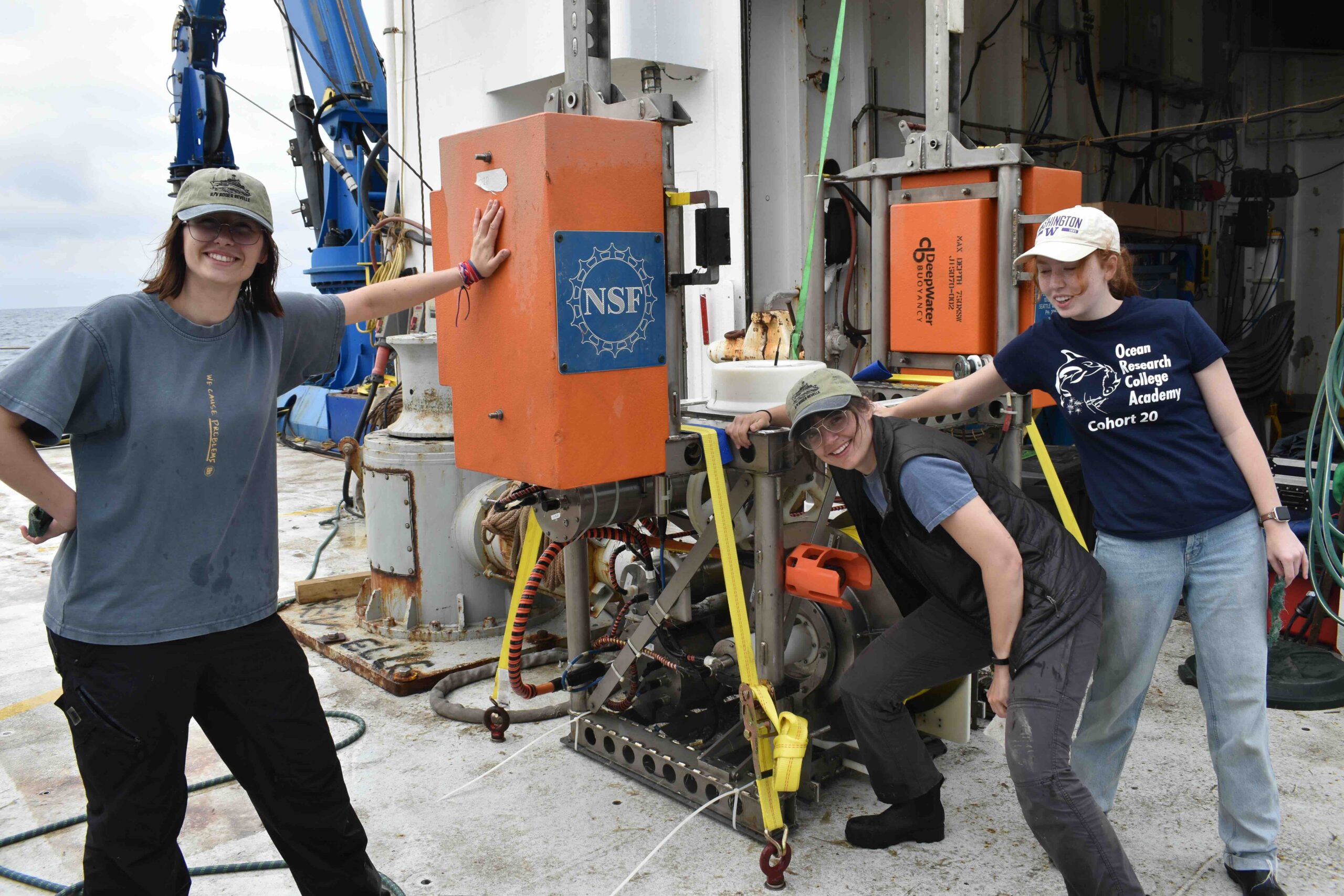
- Eight undergraduates from the University of Washington and Cornell University took part in the VISIONS at-sea experiential learning program. They were outstanding contributors throughout the cruise, standing 4-hour-on/8-hour-off watches in the ROV control van, assisting with CTD launches, and supporting fluid sampling efforts with enthusiasm and dedication throughout the cruise.
Looking Ahead:
For many of the RCA team members, the end of this cruise will mark the beginning of the next cruise. An NSF-funded effort to build the first subduction zone observatory off Washington and Oregon. Over the next two weeks, additional junction boxes and instruments will be deployed and attached to the RCA submarine cables, providing data in real-time on the deformation and seismic activity along the only portion of the Cascadia Subduction Zone with earthquake activity. This will allow the world to watch the Cascadia fault from the seafloor. We are wishing fair seas and following winds to PI William Wilcock and his team. For those of us getting off the boat we will join the audience back ashore following the COSZO (Cascadia Offshore Subduction Zone Observatory) livestream and cruise blogs.