


Please follow us on this expedition through the live video feeds from sea, daily updates, and stunning imagery. During the cruise, you will be able to directly observe parts of the seafloor rarely seen by humans, including Axial Seamount: the most active submarine volcano off our coast, located ~300 miles offshore and nearly a mile beneath the oceans’ surface. Here you can witness one of the most extreme environments on Earth, underwater 700°F hot springs teeming with life forms that thrive on volcanic gases and live in the complete darkness of the deep sea. We will also visit the Cascadia Margin, spending time at Southern Hydrate Ridge where methane ice deposits are commonly exposed on the seafloor covered in dense microbial mats fueled by methane-rich fluids issuing through the sediments. Here, and shallower sites that the Revelle will visit comprise some of the most biologically productive areas in the world’s ocean.

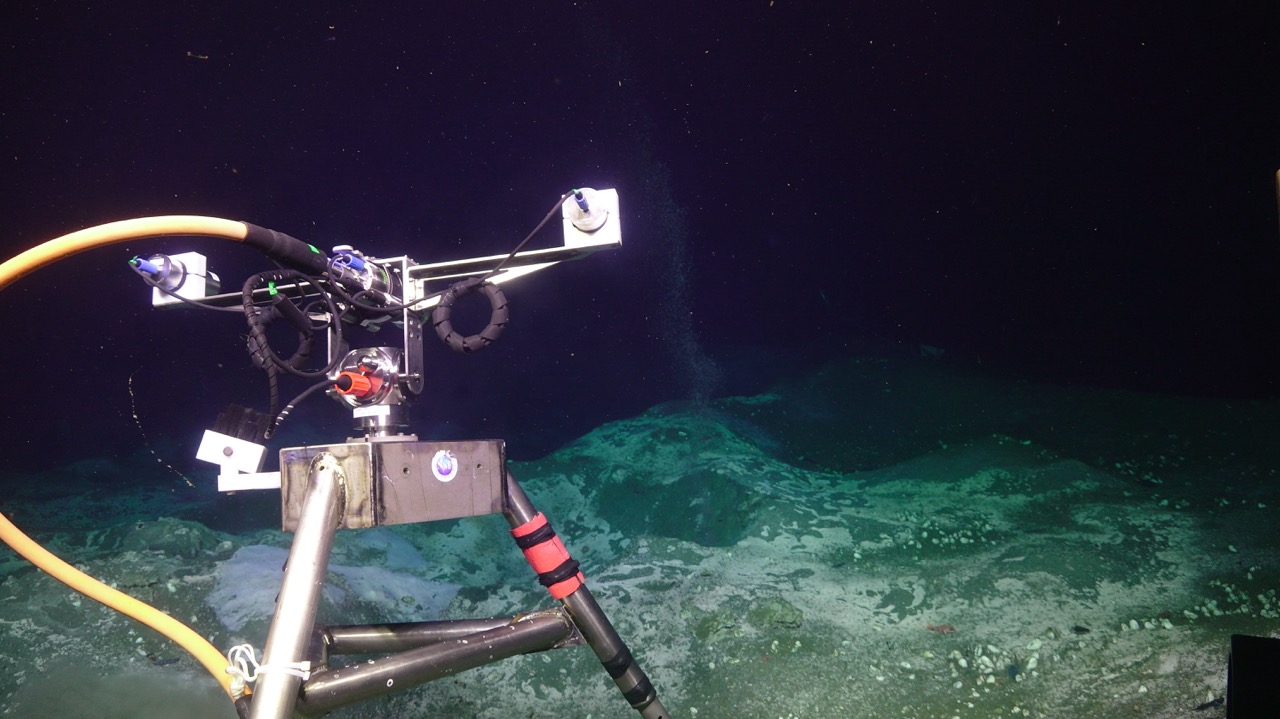
We are excited to get underway and very much look forward to being out in the Pacific Ocean again. This is an immense logistics operation with ~20 trucks transporting >130,000 lbs of gear to Newport, OR in support of highly complex at-sea operations that have required months of planning, and testing of gear to be installed. During the cruise, the ROV will deploy and recover a diverse array of >60 instruments, several small seafloor substations that provide power and communications to instruments.
This year we are very pleased to have 8 students sailing with us as part of the UW’s educational mission (VISIONS’26). Since 2013, the VISIONS program has allowed more than 270 students to participate in this at-sea experiential learning program. Please share in their wonder and excitement through their blogs: for many students this experience has changed their lives. We look forward to sharing this expedition with you as we continue to maintain this advanced underwater observatory that brings the internet into the ocean and the ocean to everyone!