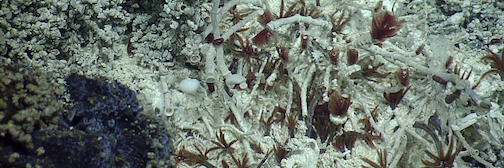
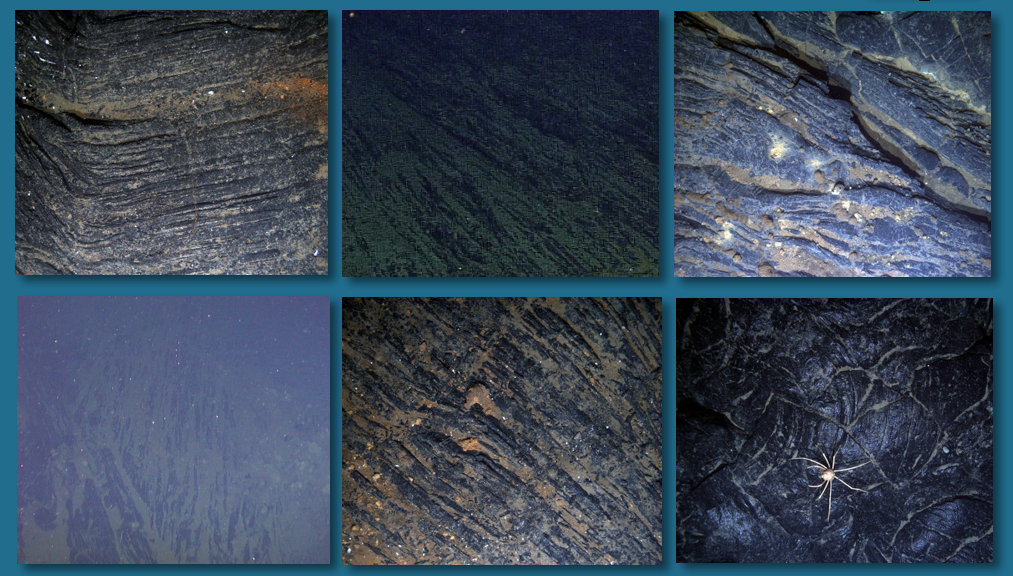
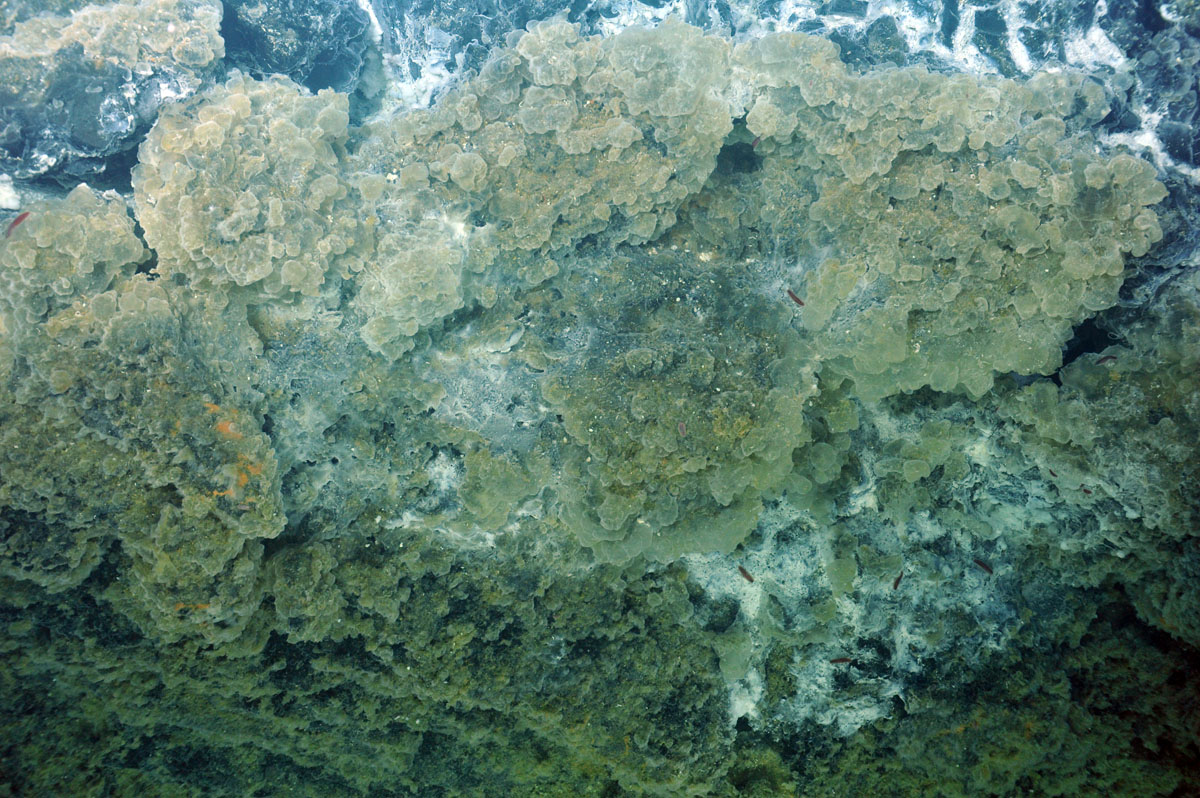
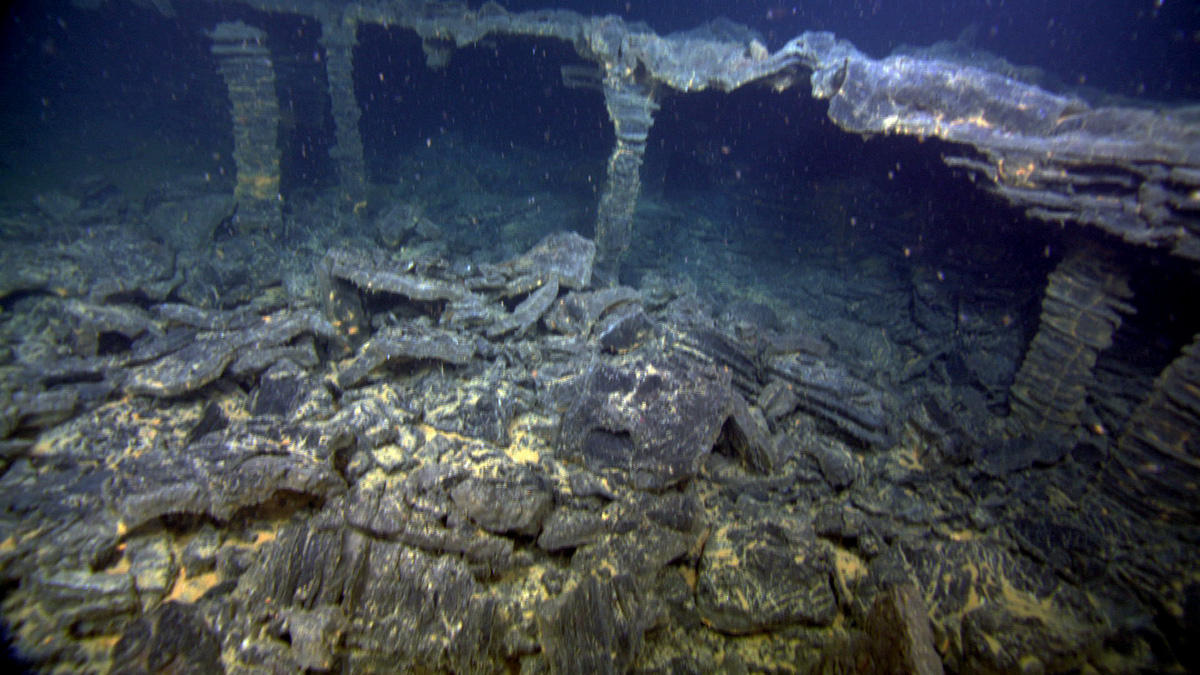
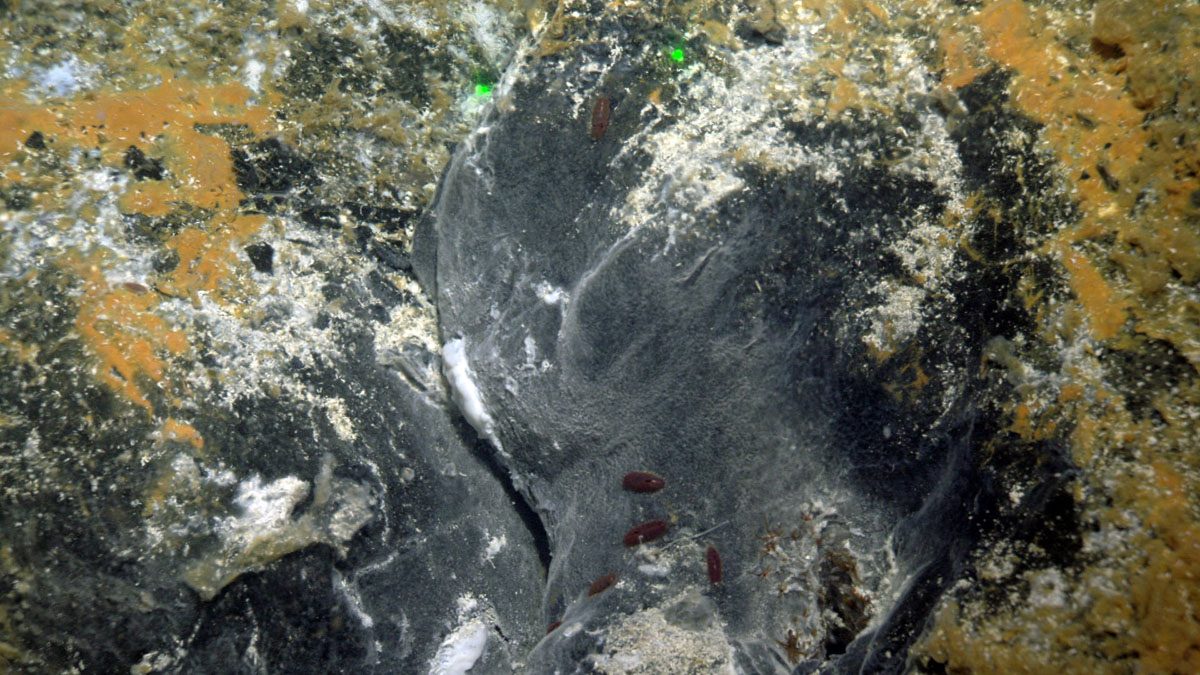
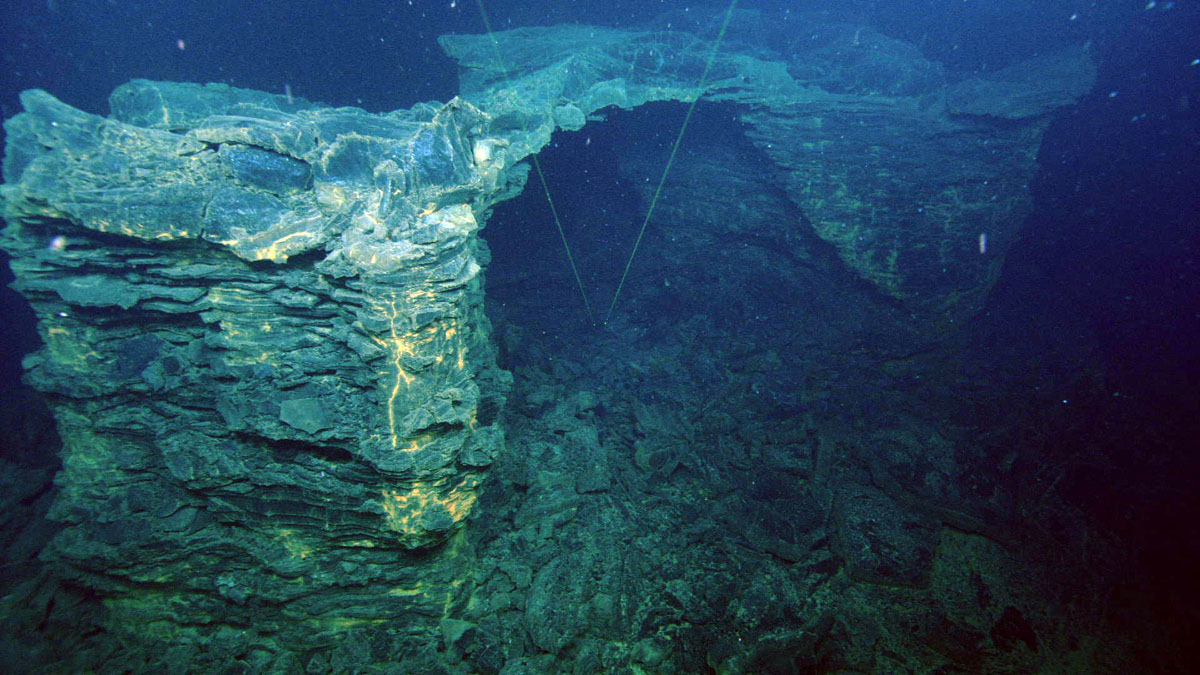
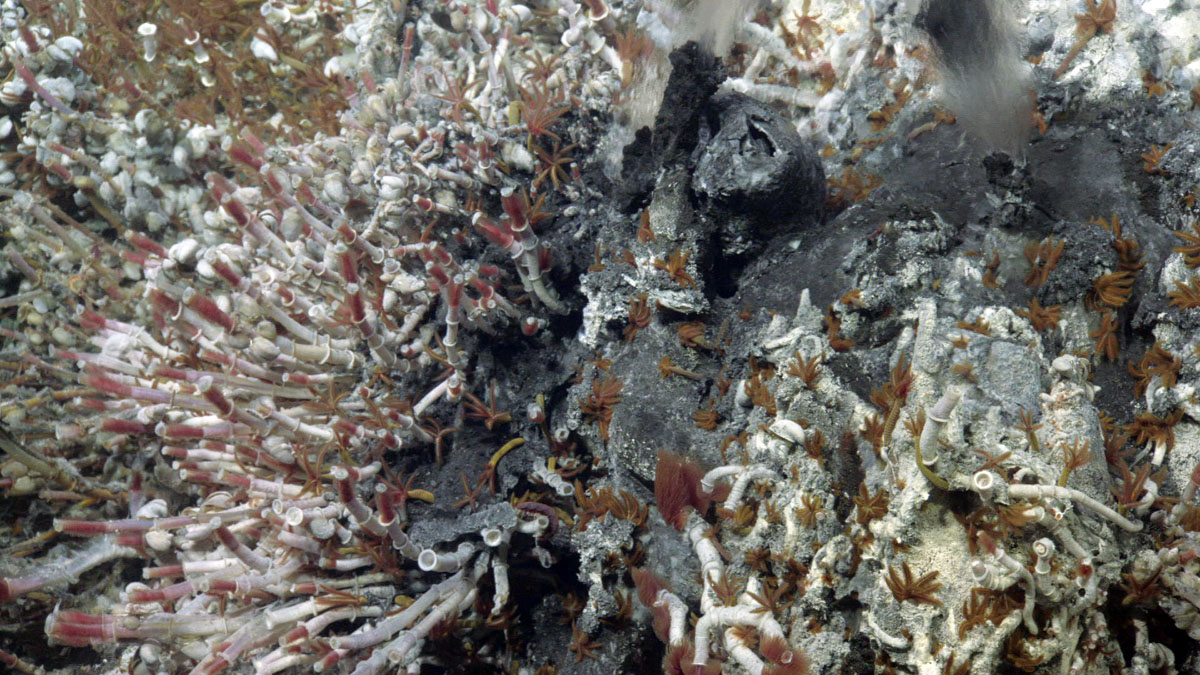
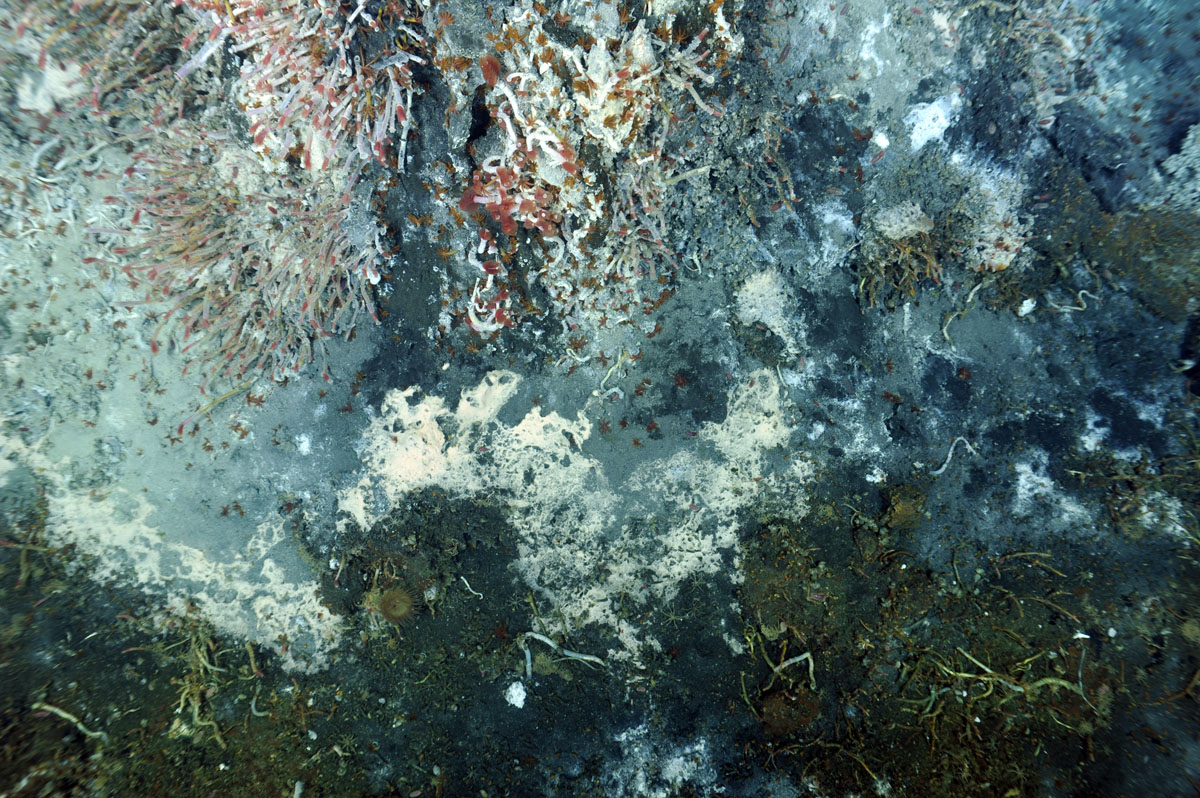
Small back smoker spigots on the summit of the black smoker structure called El Guapo in the International District hydrothermal field. which in 2011 was venting 350°C boiling fluids prior to the seafloor eruption in April 2011. Abundant sulfide worms colonize the young sulfide deposits. Credit: UW/NSF-OOI/CSSF; V11.
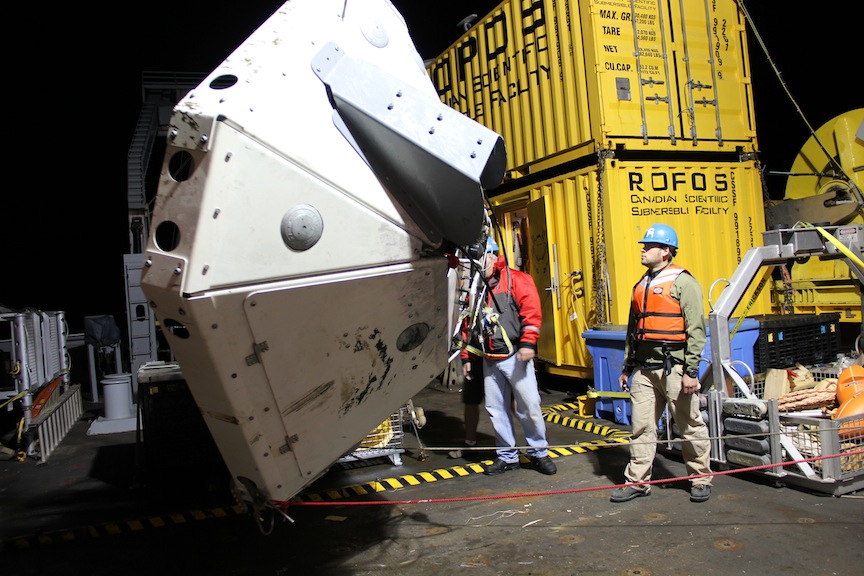
The bottom interface assembly as it is lowered off the Thompson's A-frame. (photo by Allison Fundis)
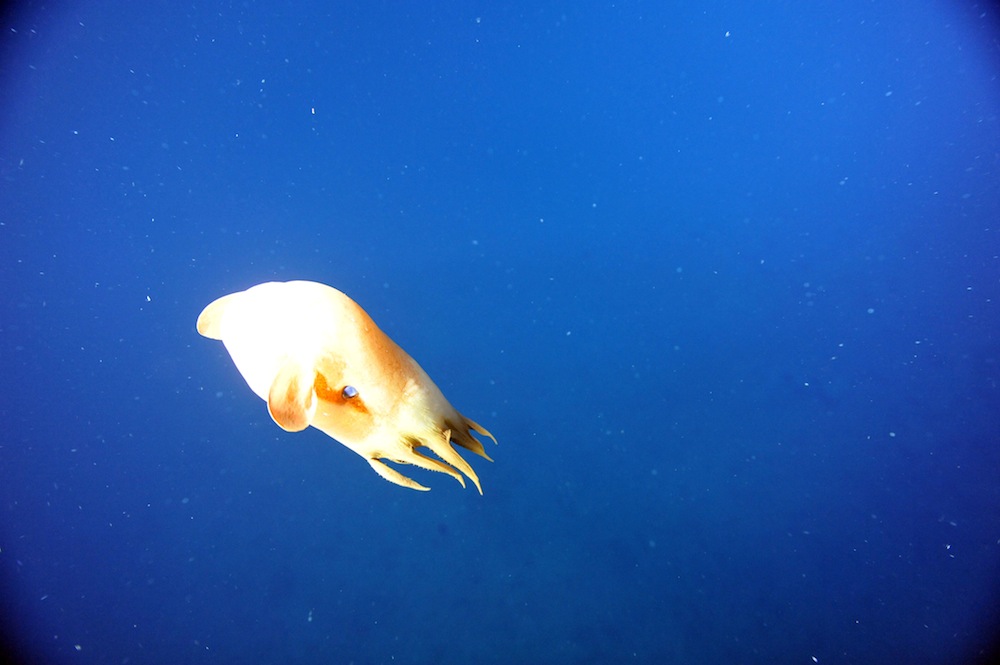
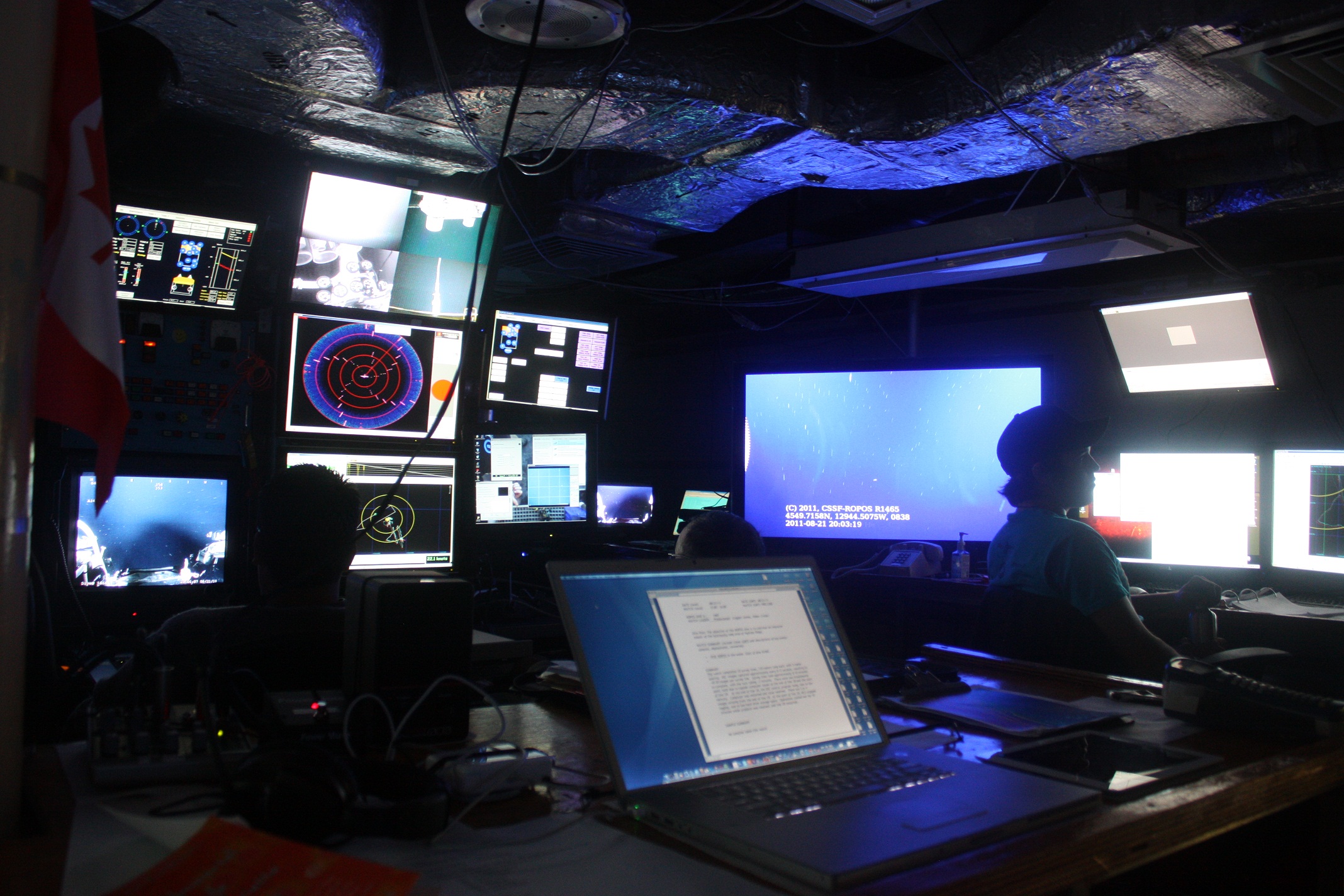
A Dumbo Octopus spotted during ROV ROPOS dive R1465. Credit: UW/OOI-NSF/CSSF, ROPOS Dive R1465, V13.
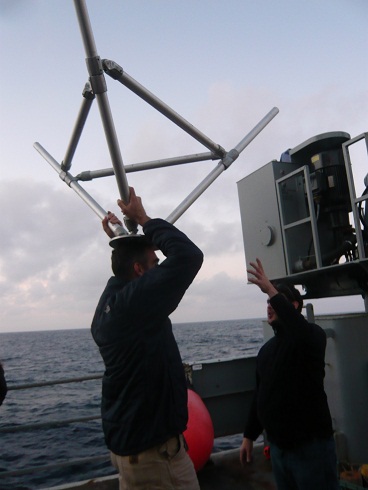
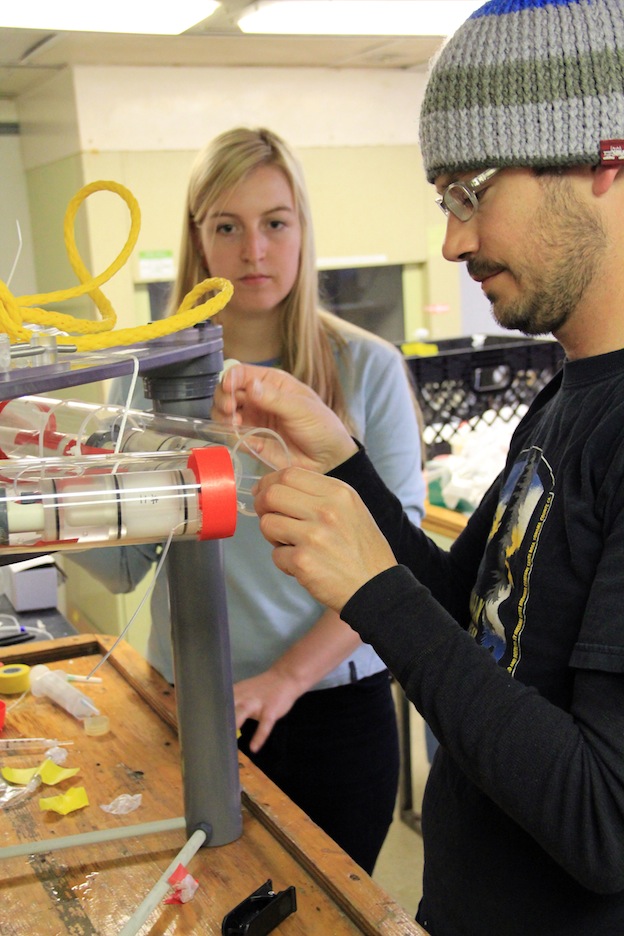
UW-APL engineer James Tilley and U of Western Ontario student Alexandra Powell help piece together Cody Youngbull's sensorbots for deployment. (photo by Allison Fundis)
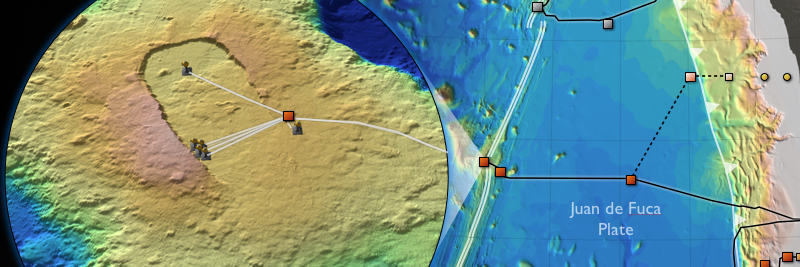
The OOI Regional Scale Nodes cabled observatory is currently under construction. Nodes with arrays of instruments will be placed at Axial Seamount and Hydrate Ridge. Future node sites are also indicated.
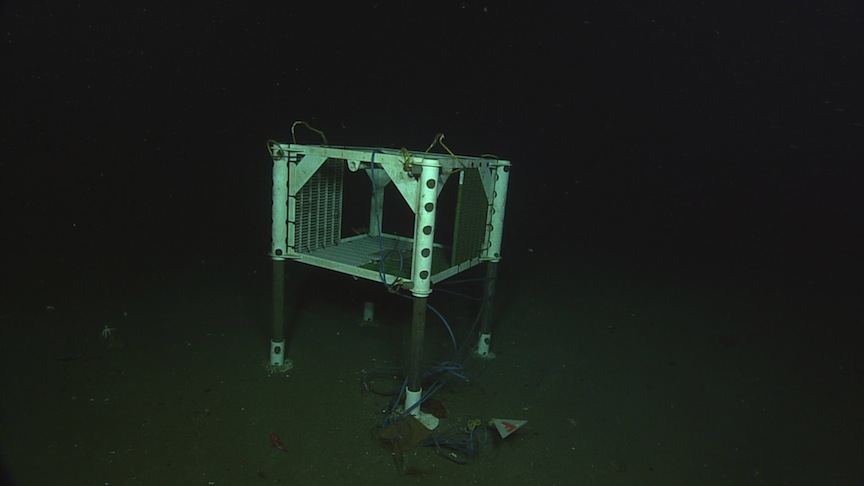
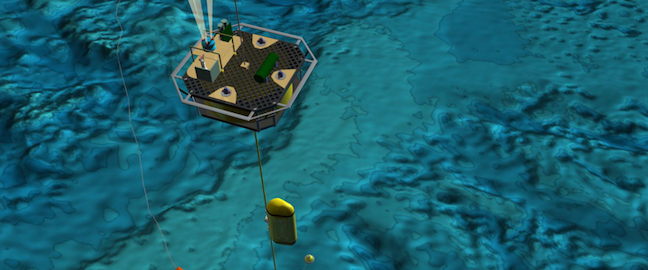
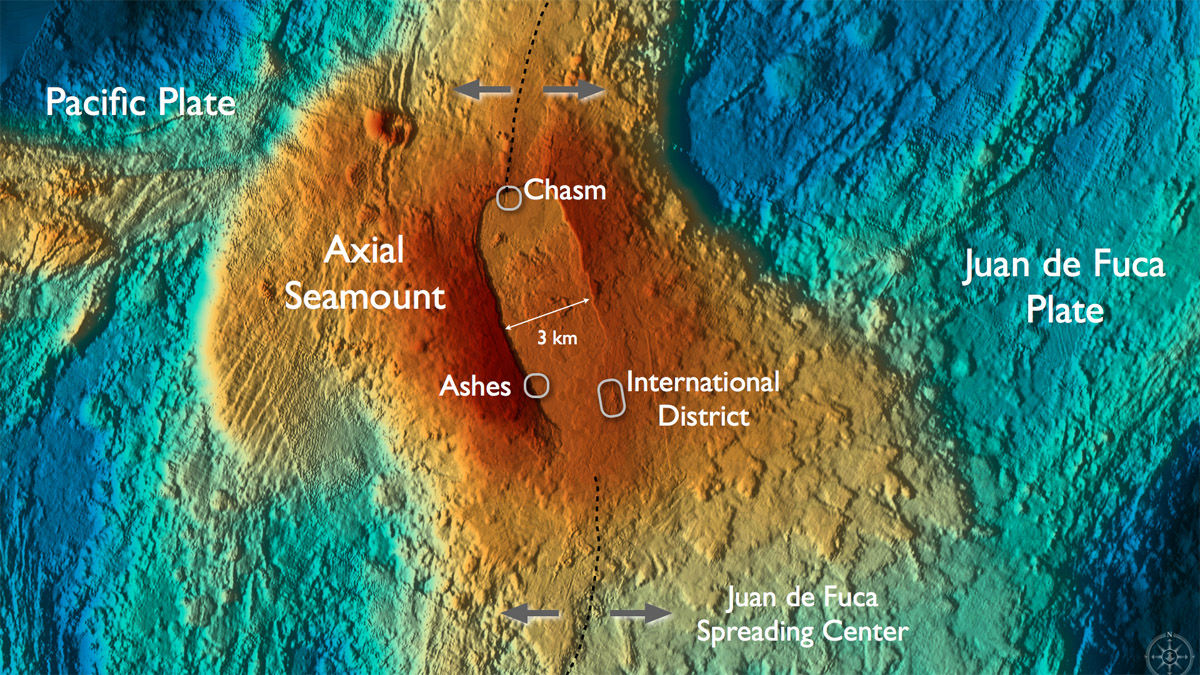
This full-sized Junction Box frame was successfully deployed and recovered in the International District Hydrothermal Field at Axial Seamount using the ROV ROPOS during the August 2011 VISIONS '11 expedition. During the VISIONS'13 cruise two fully built out medium-power J-Boxes will be deployed here that will provide power and communications to extension cables and sensors deployed at the vent sites. The sensors will include a digital still camera, mass spectrometer, fluid and DNA samplers, bottom pressure and tilt sensor, a temperature-chlorinity probe to measure boiling fluids exiting the vents, and a short-period seismometer.
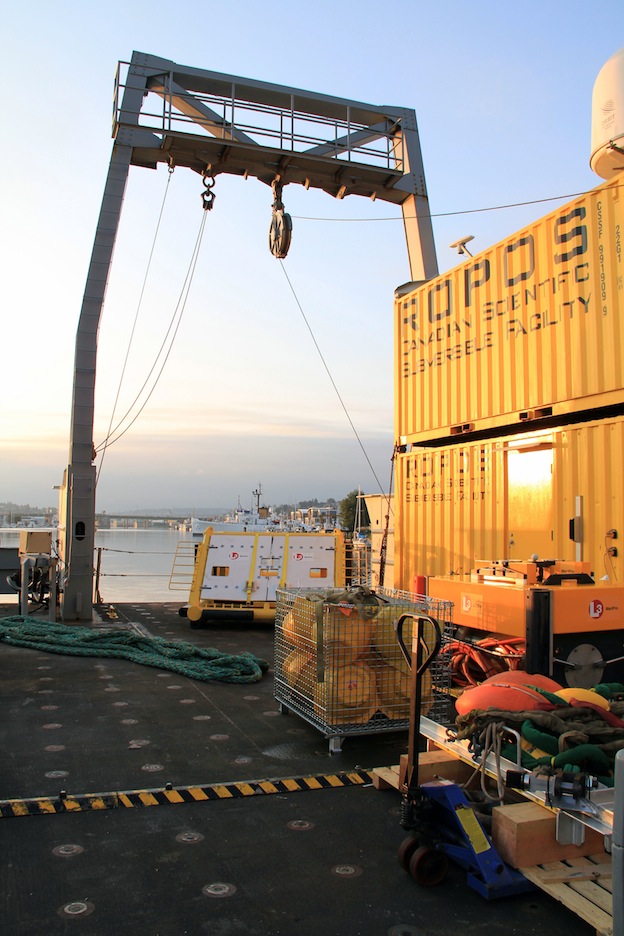
OOI Primary Node frame loaded on the fantail of the R/V Thompson at the UW dock in Seattle being readied for some initial deployment testing.
--Photo by Nancy Penrose, OOI Communications Coordinator at the University of Washington
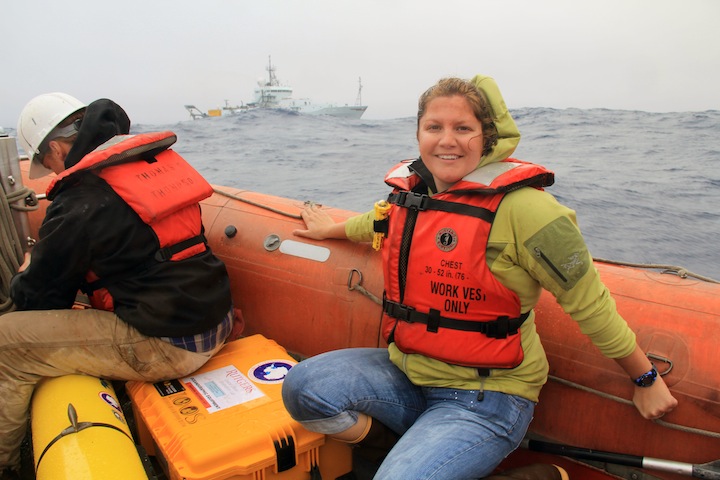
Chris Holm, OOI-CGSN Field Engineer, assists with the recovery of a NSF Cascadia Array Initiative seismometer. (photo by Allison Fundis)
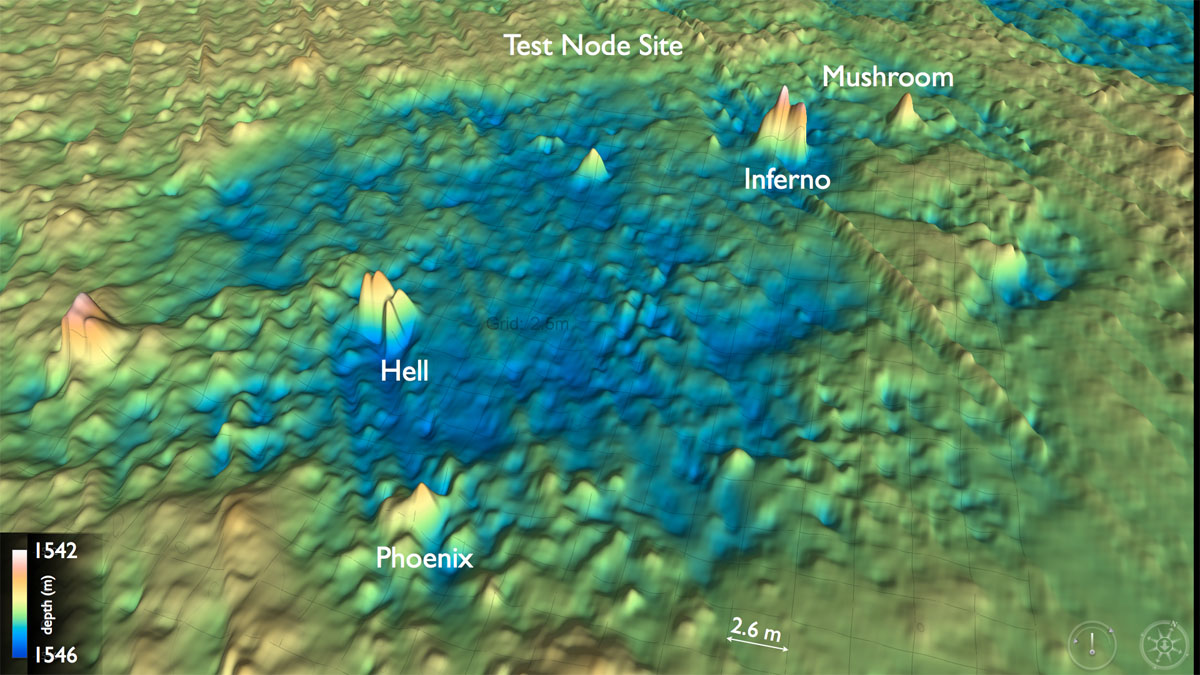
This bathymetric map of ASHES Hydrothermal Field shows the location of many of the black smoker chimneys that dot this site. The chimney Inferno rises 4 m (~ 12 feet) above the surrounding seafloor and is ~ 11 meters from its neighbor called Mushroom. Colleagues from NOAA-PMEL have worked at this site for two decades, monitoring changes in the chimneys and fluid chemistry.
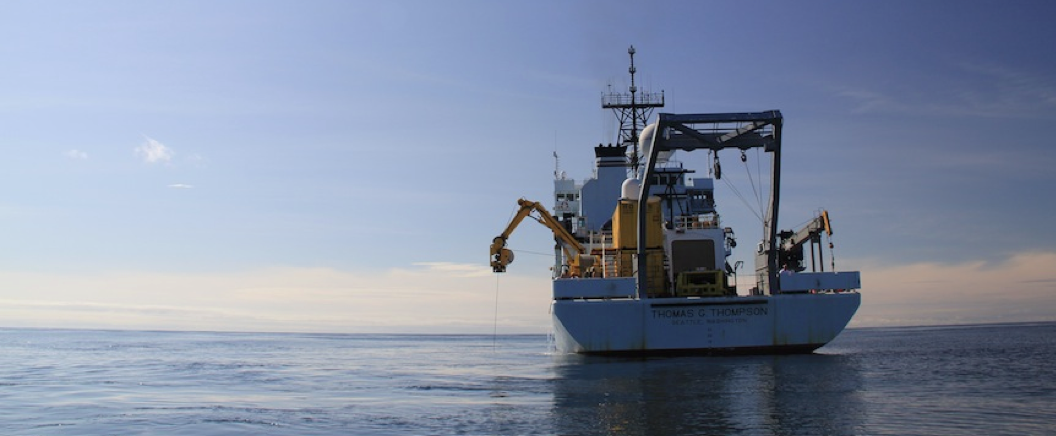
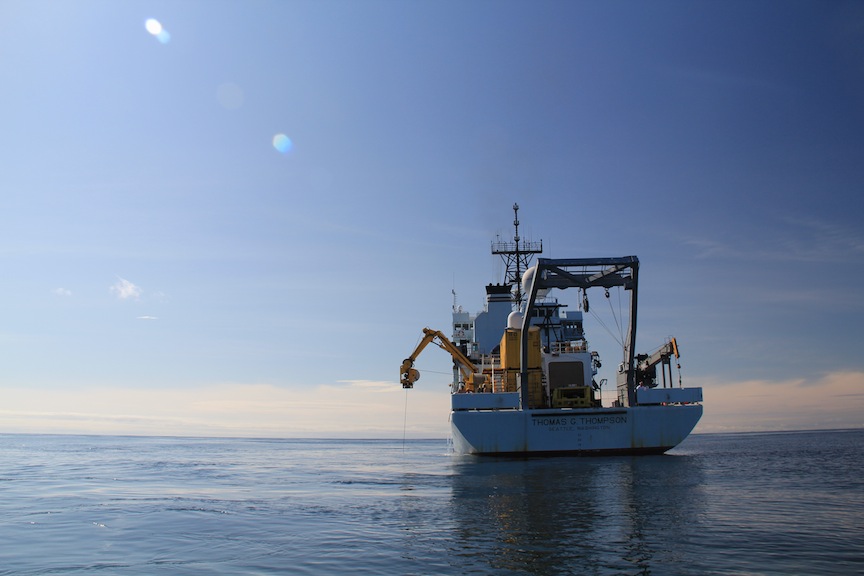
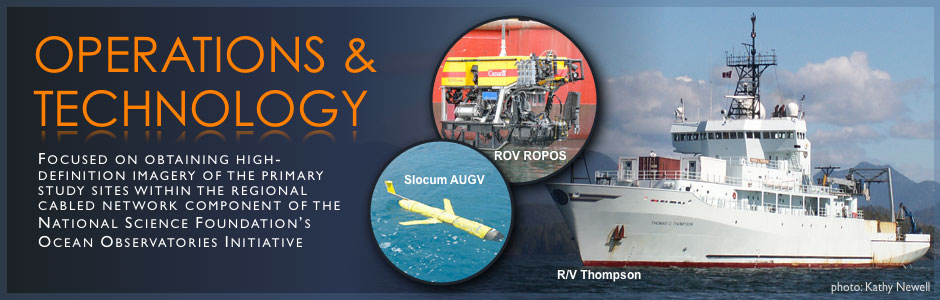
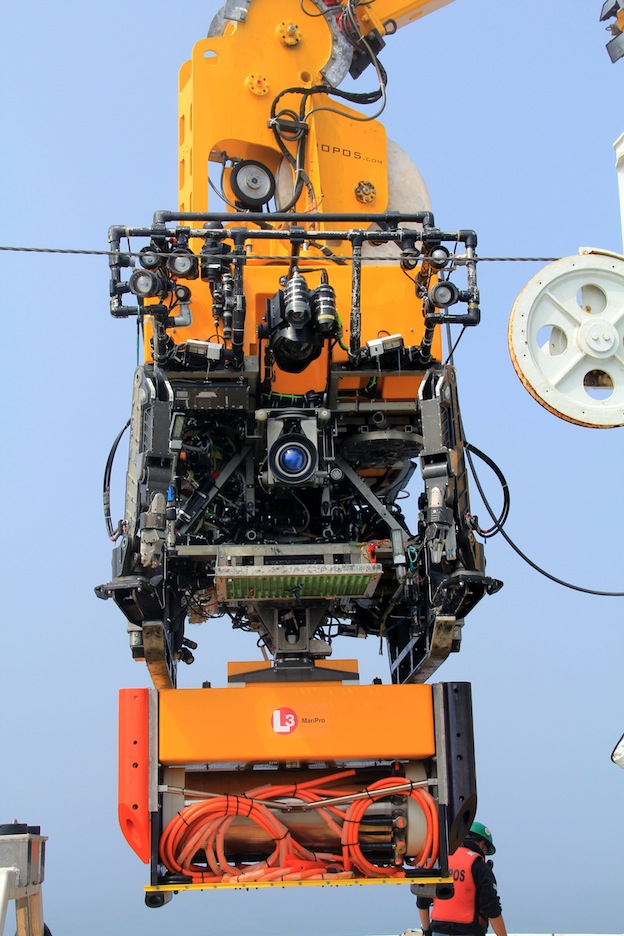
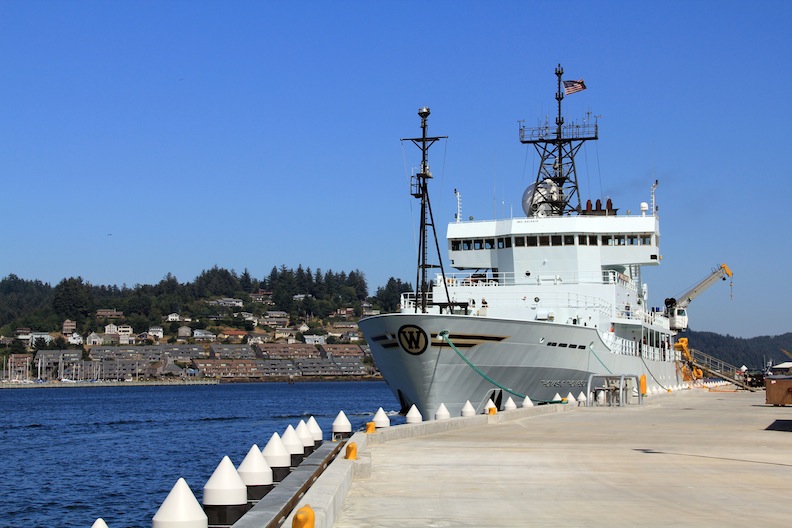
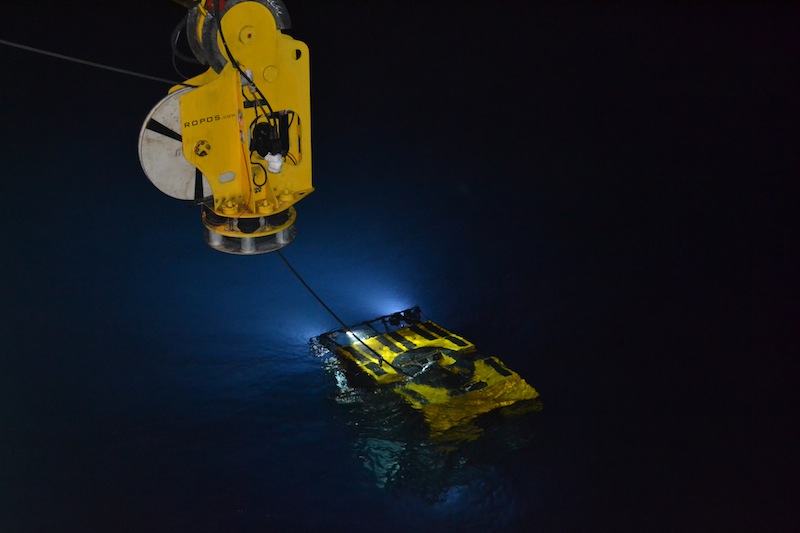
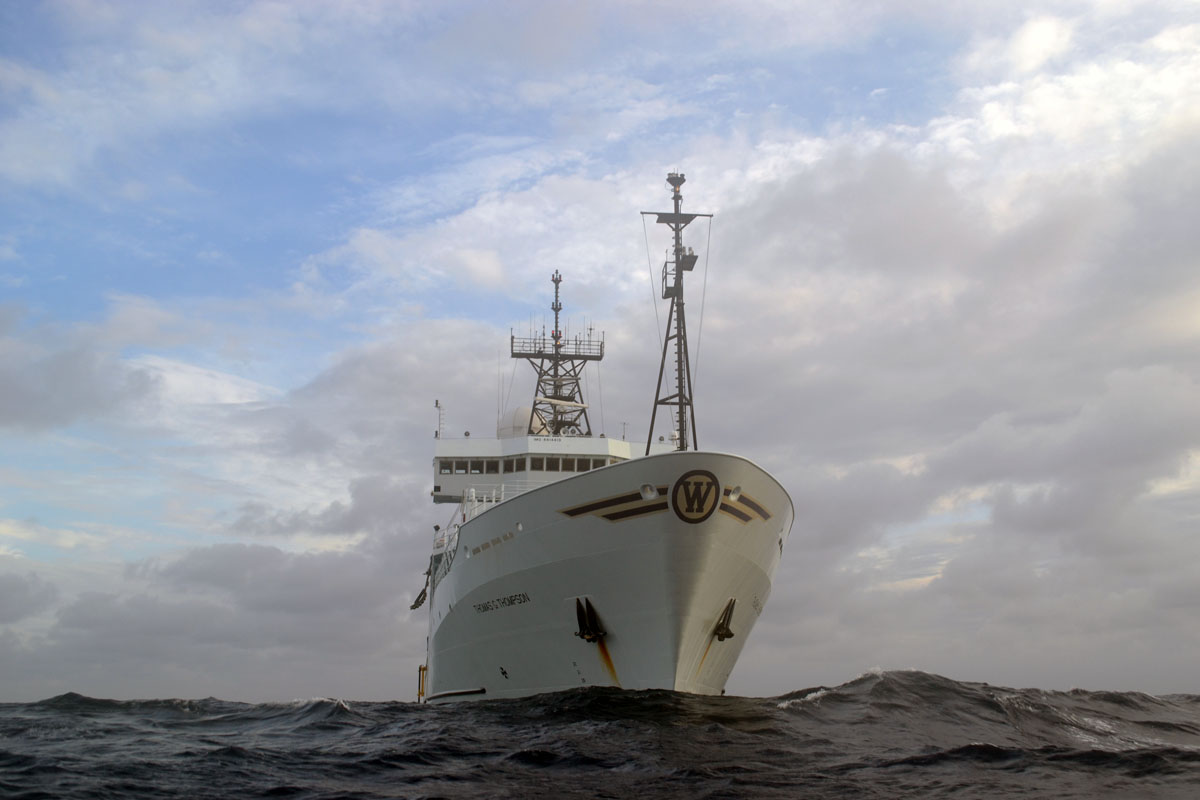
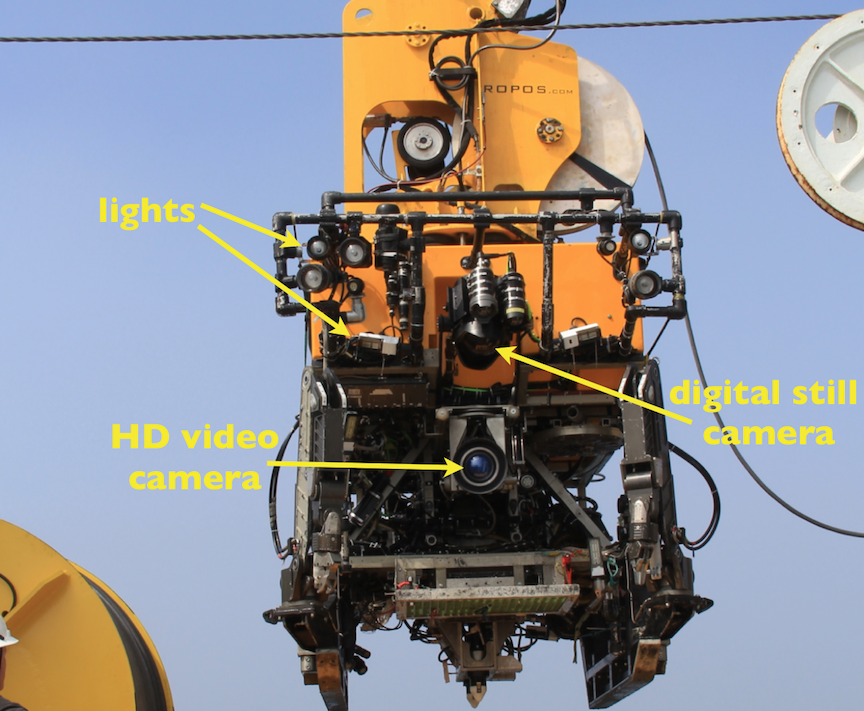
The R/V Thompson with the ROV ROPOS's crane and tether over the port side. (photo by Allison Fundis)