
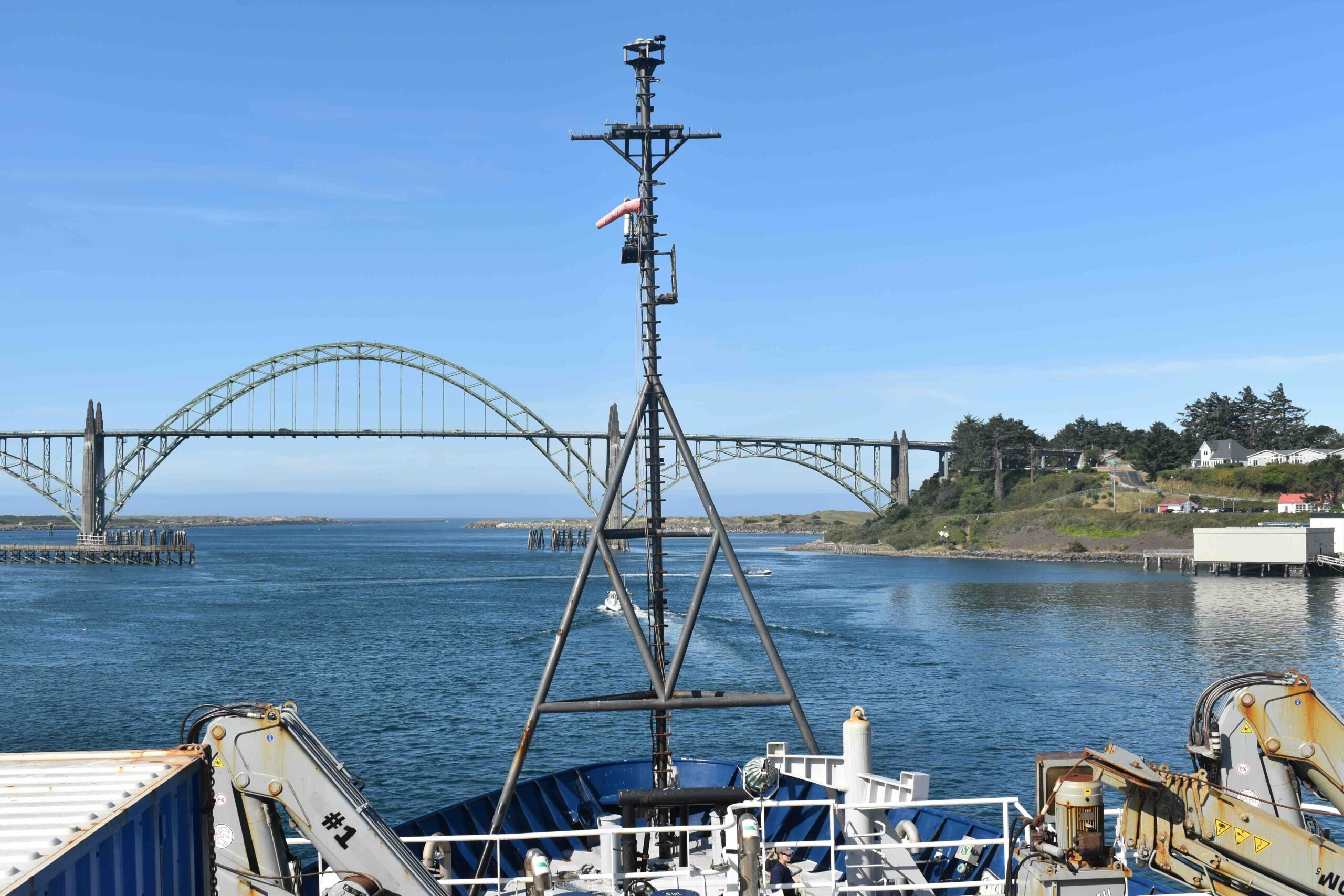
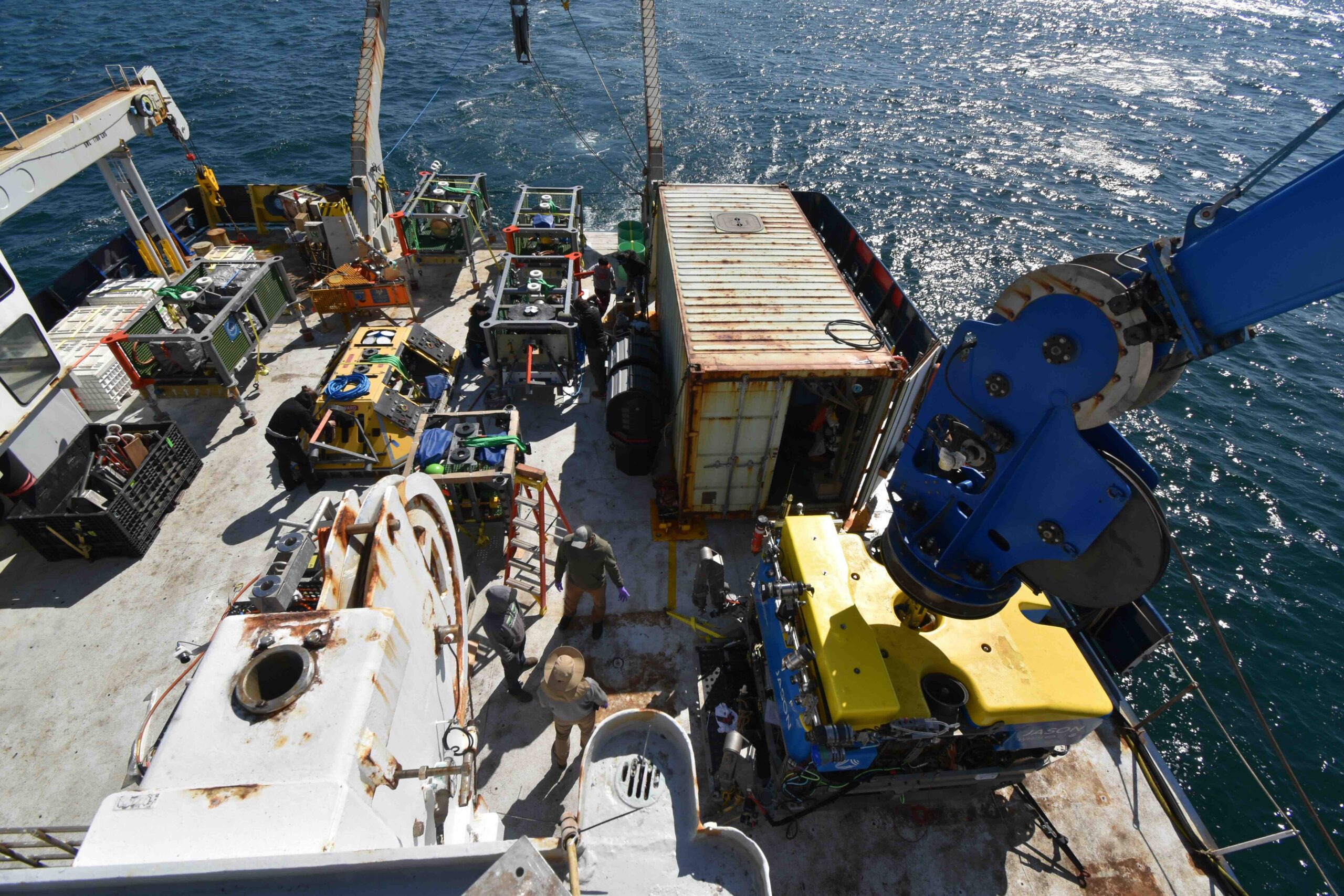
The past week has been a whirlwind of activity in preparation for departure. Once again, it has been almost exactly one year since our team was heading out to sea. Similar to last year, there has been a huge effort over the last few days by the RCA, Jason, and R/V Revelle teams, supported by a shore crane, to get 1000s of pounds of gear onboard, tied down, secured, tested, and prepared for deployments. The labs were also busy with folks setting up computers, workstations, and analytical instruments, testing communications and video equipment, storing a stash of tools, supplies, and sampling gear all squirreled safely away. Prior to departure, it is very important that everything is well secured so that nothing rolls around during the transit.
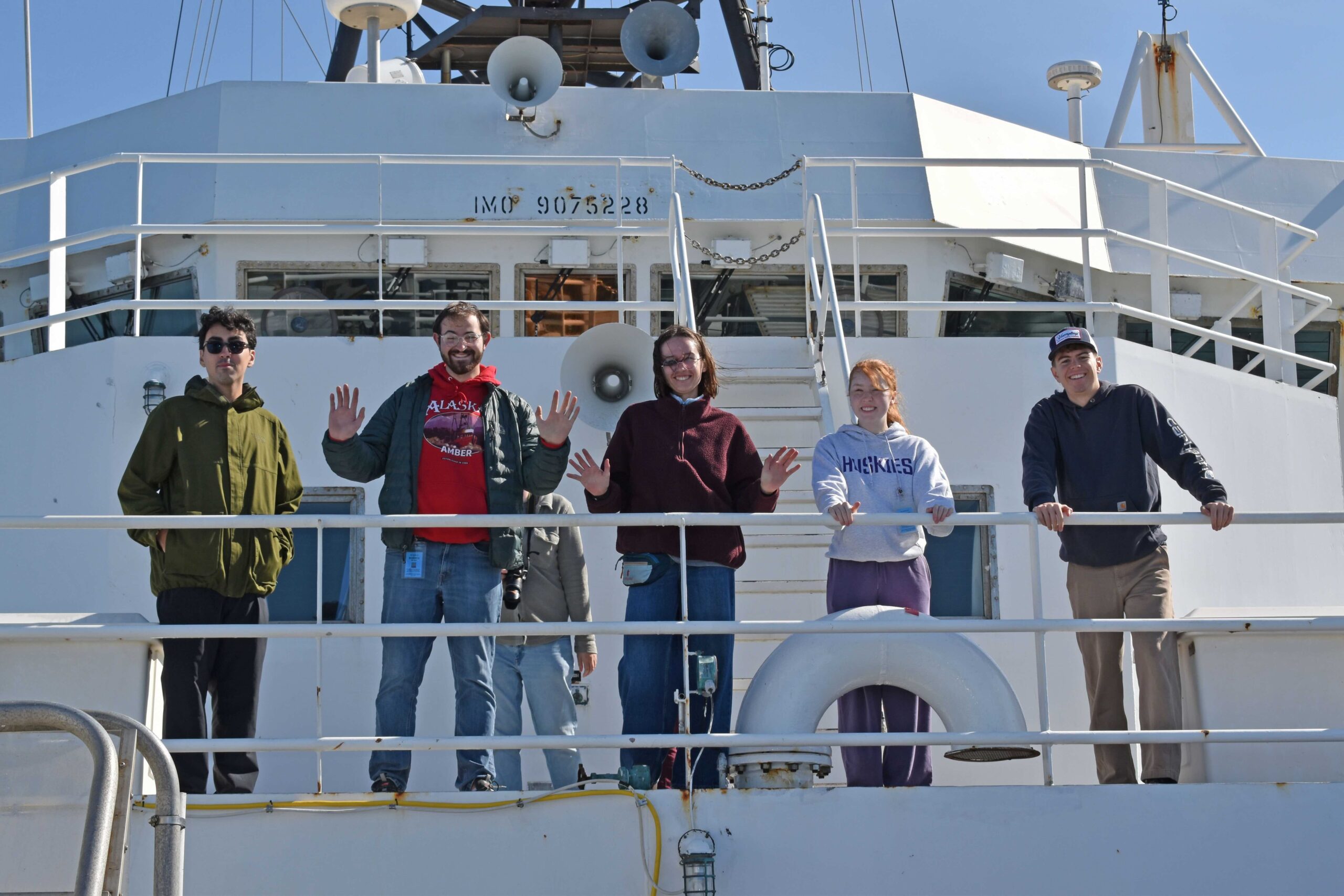
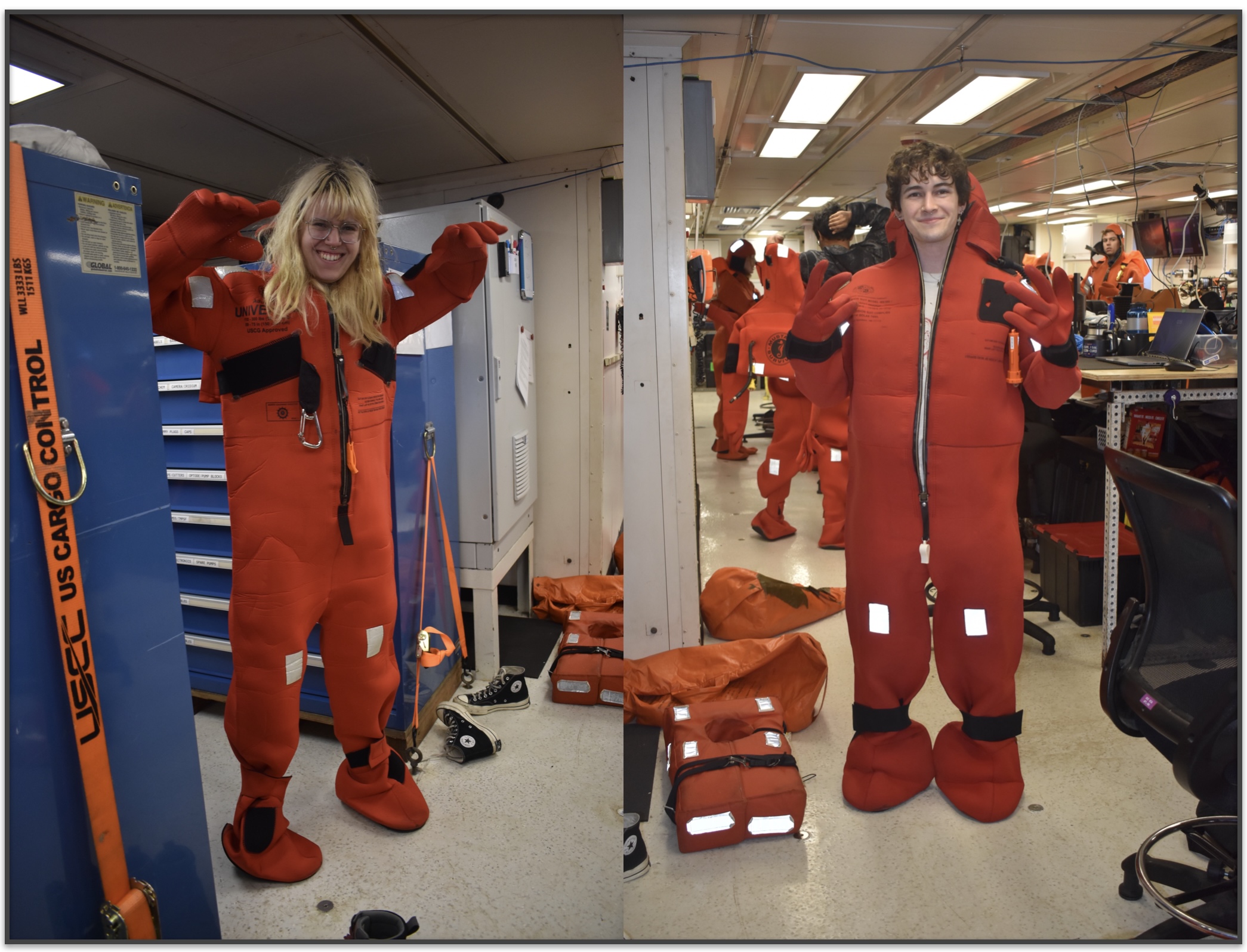
In addition to gear, an excited group of six undergraduates and two graduate students joined our team. Yesterday afternoon, the students arrived onboard having departed the UW at 0700 for the ~ 6 hr drive to Newport. The students are primarily from the UW and studying oceanography, marine biology, and geology but one student is from Cornell University. For all of them it is their first time on a research cruise. For many of the rest of the team we’re returning to a familiar place: we last sailed on the Revelle in 2017 and 2018, and in the intervening years we worked on her sister ships the R/V Thomas G. Thompson and R/V Atlantis. They were excited to be shipboard and spent the afternoon getting oriented to their rooms, the Main Lab, galley, getting computers set up and tied down, getting a safety briefing, and exploring the ship. All students took seasick medicine before bed.
At around 10:00 PDT this morning, the Revelle left the Newport NOAA dock under blue skies and calm seas and headed out under the Yaquina Bay bridge, past the jetties and out into the open ocean bound for the Oregon Shelf Site 19 miles west of Newport, OR. A flurry of activity accompanied the short trip to the Shelf Site with final touches being put on the platforms and Jason. During the transit, there was an important precruise dive meeting in the bridge with the Captain, Mates, science, engineering, and ROV team leads, and the research technicians to ensure all were familiar with the dive goals, myriad steps to put the equipment and Jason in the water, and exchange of information during that process – all wanted to be sure there was clarity in these complex operations with lots of “moving parts”. The wind was a little brisk, but the sea state was favorable for diving.
To the untrained eye, initial operations can seem a bit chaotic, but the team has been preparing for this for an entire year, and every member knows their tasks. A testament to this was our first successful Jason dive of this expedition – J2-1775, which went into the water a~12:30 PDT and is ongoing working on deploying a benthic experiment junction box (BEP) and recovering the BEP that was deployed last year.
We are excited for the many dives to come. Over the course of the next nine days at sea, we’ll visit every site on the Regional Cabled Array – from the Shelf site all the way out to Axial Seamount 300 miles offshore – recovering and replacing around 64 instruments and keeping the decade-long stream of ocean data flowing.