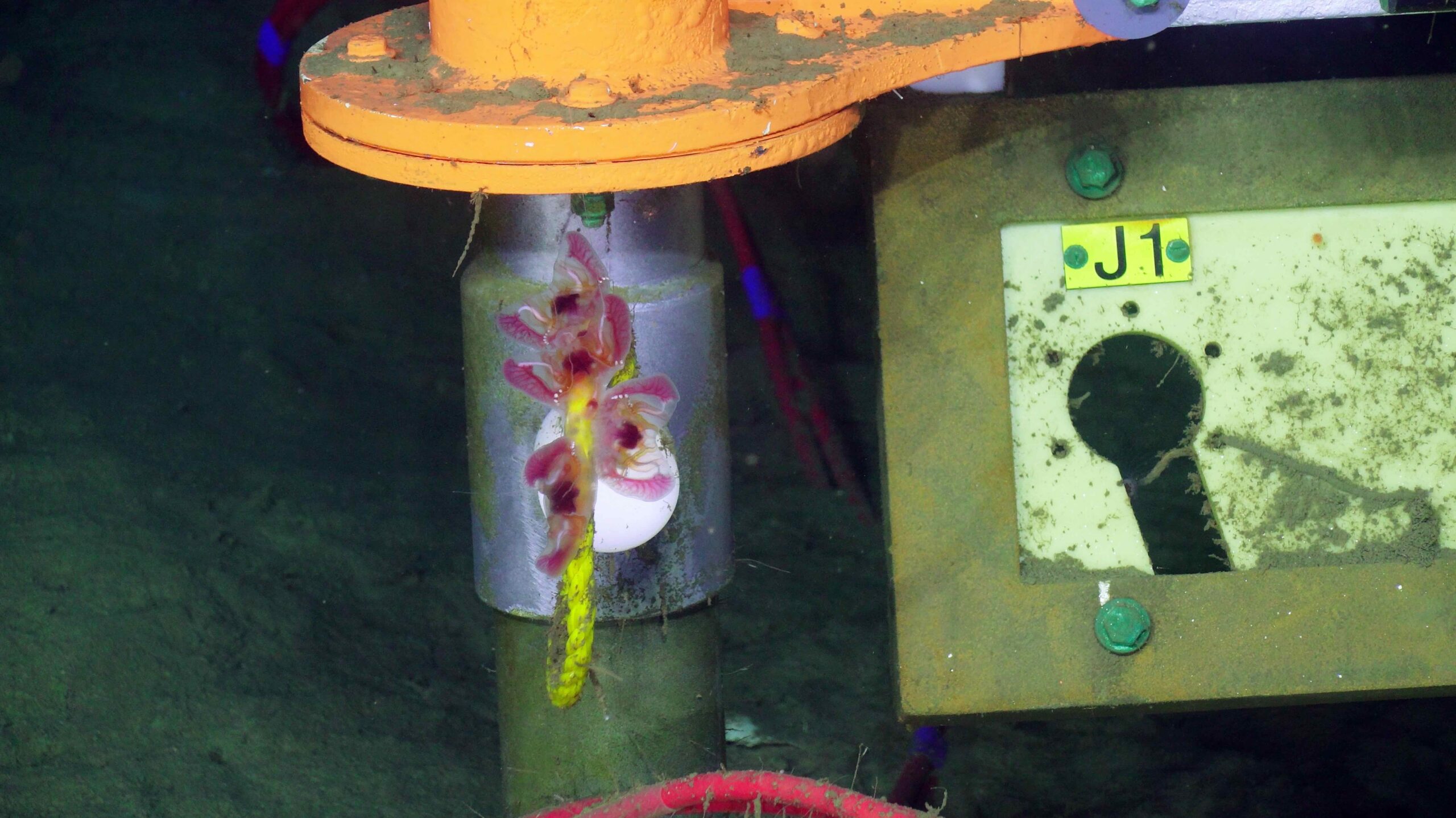
Benthic Ctenophores (likely Tjalfiella sp.)
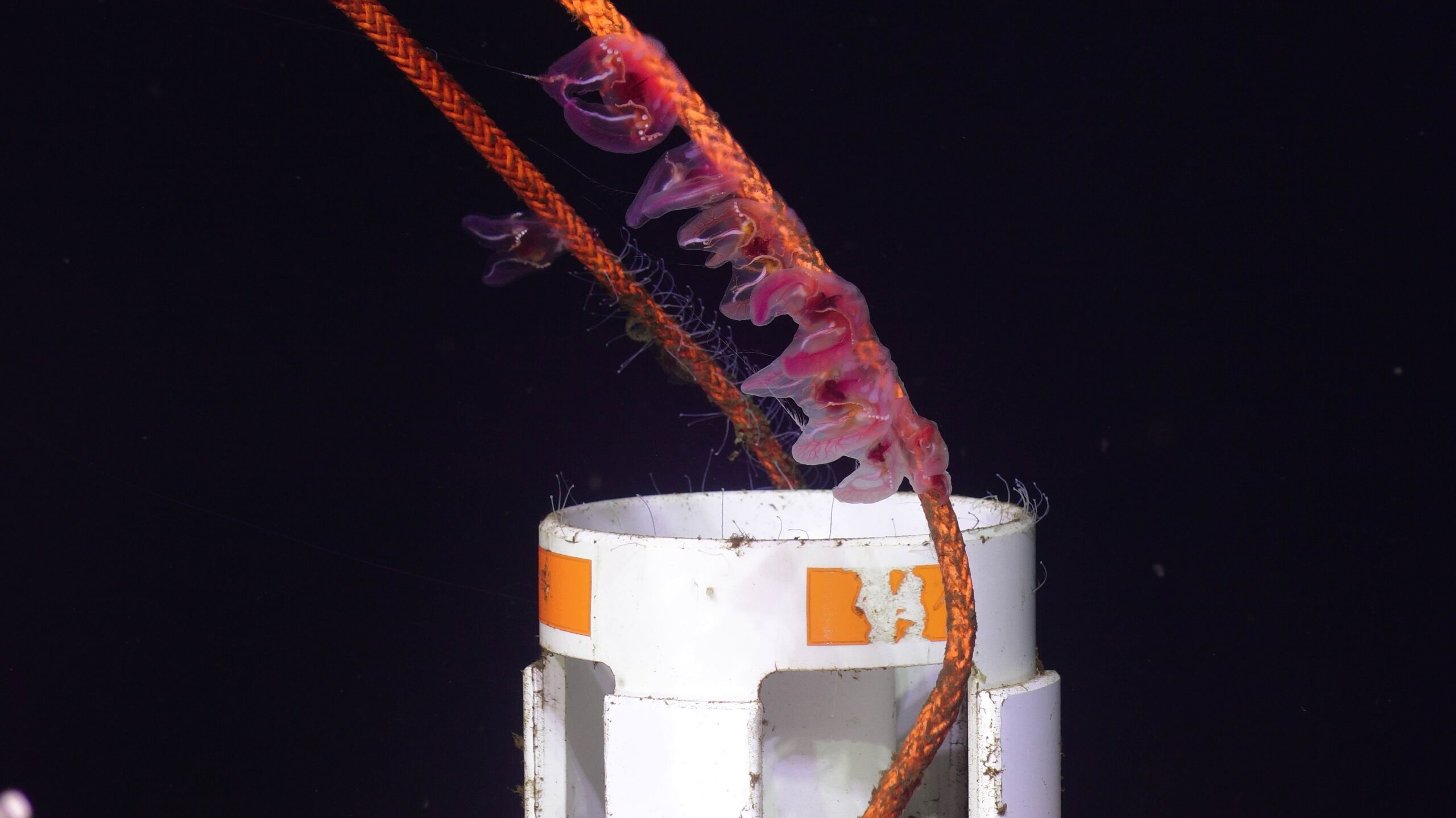
Tjalfiella is the only genus in the family Tjalfiellidae, in the order Platyctenida. Unlike most ctenophores, which are generally pelagic, platyctenids (also known as benthic comb jellies) live on or near the seafloor, often attached to hard surfaces. Platyctenids are very morphologically distinct from their pelagic counterparts; they have a flattened body shape and have lost many of the features normally associated with ctenophores.
Platyctenida are considered to be a young group in evolutionary terms, which is supported by strong morphological and developmental data, including a shared larval form with other groups believed to be derived from Cydippid comb jellies. However, the group may be polyphyletic.
Benthic ctenophores live on the seabed, rocks, and anthropogenic materials, or as epibionts attached to other benthic organisms. Tjalfiella range in size, and are often confused with nudibranchs or flatworms. They lack the ciliated comb-rows that distinguish most ctenophores but they still possess a pair of tentacles with stinging cells and adhesive collocytes in pores along the dorsal surface. They cling to and creep on surfaces by everting their pharynx and using it as a muscular "foot," similar to a mollusk. Although most ctenophores are hermaphroditic, certain platyctenids have been found to be asexual and reproduce using brood pouches.
This Tjalfiella species was first seen at OOI sites in 2026 during dives at Slope Base (2900 meters) and Axial Base (2600 meters), in small flower-like colonies attached to seafloor instruments and nodes.
References:
Wikipedia
The Encyclopedia of Life Sciences
NOAA Ocean Exploration Database