Image Archive


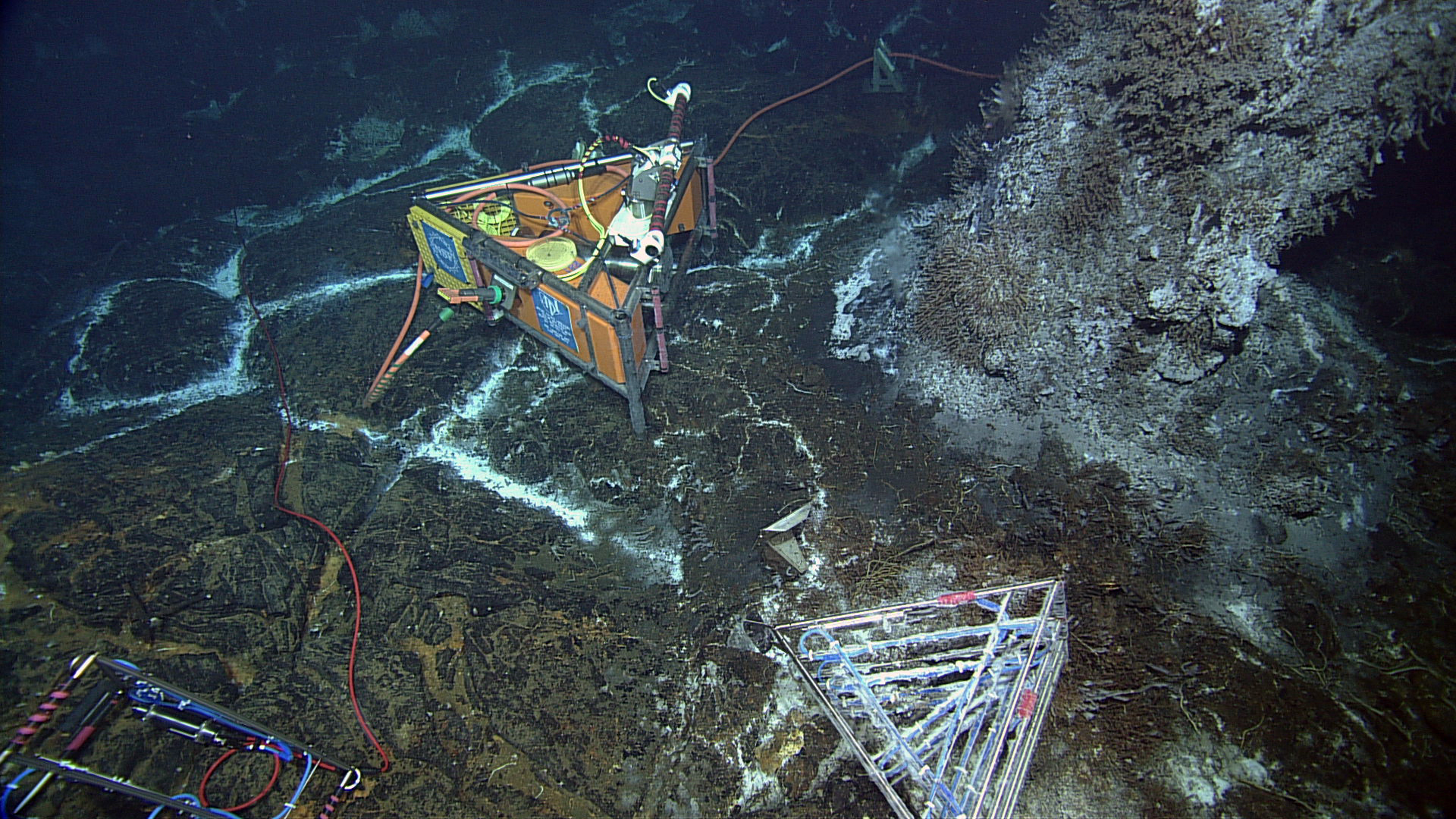
During ROPOS Dive R1730, the UW-RCA high-definition video camera was tested successfully. The camera was installed in 2013 and 1-year later it worked extremely well. A test 3-D thermistor array (bottom right) that was installed last year rests on a diffuse flow site, covered in microbial filaments. To the left, a cabled 3-D thermistor array will replace the uncabled system. Credit: UW/NSF-OOI/CSSF; Dive ROPOS R1730; V14.
r1732
r1731
A 3D thermistor array installed by the actively venting chimney called Mushroom. The array is in a diffuse flow site. Credit: UW/NSF_OOI/CSSF; ROPOS DIve R1730, V14.
r1729
r1728
r1727
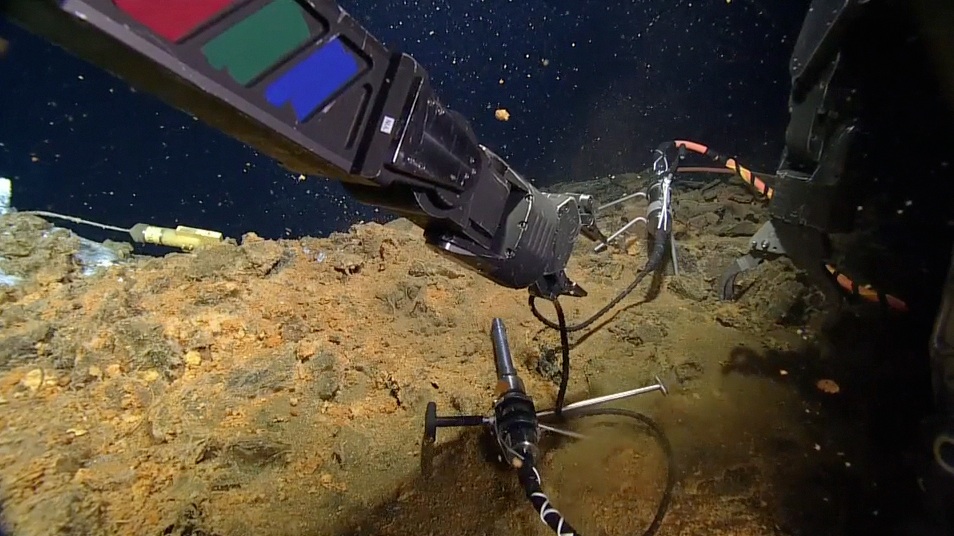
The ROV ROPOS installing a bottom-pressure tilt instrument at the summit of Axial Seamount to measure inflation and deflation of the volcano. Credit: UW/NSF-OOI/CSSF; ROPOS dive R1726.
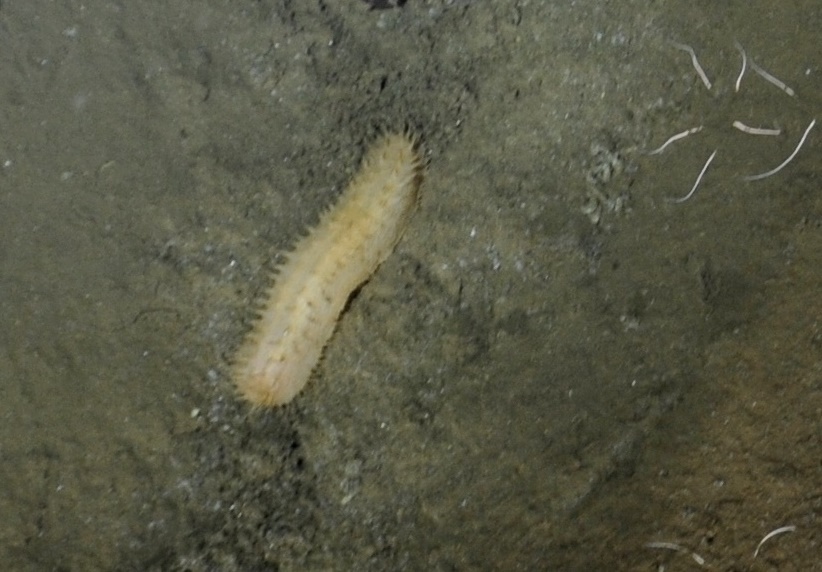
This unknown species is relatively common at Axial, living among the basalt lava rocks. Photo credit: NSF-OOI/UW/CSSF; Dive R1731; V14
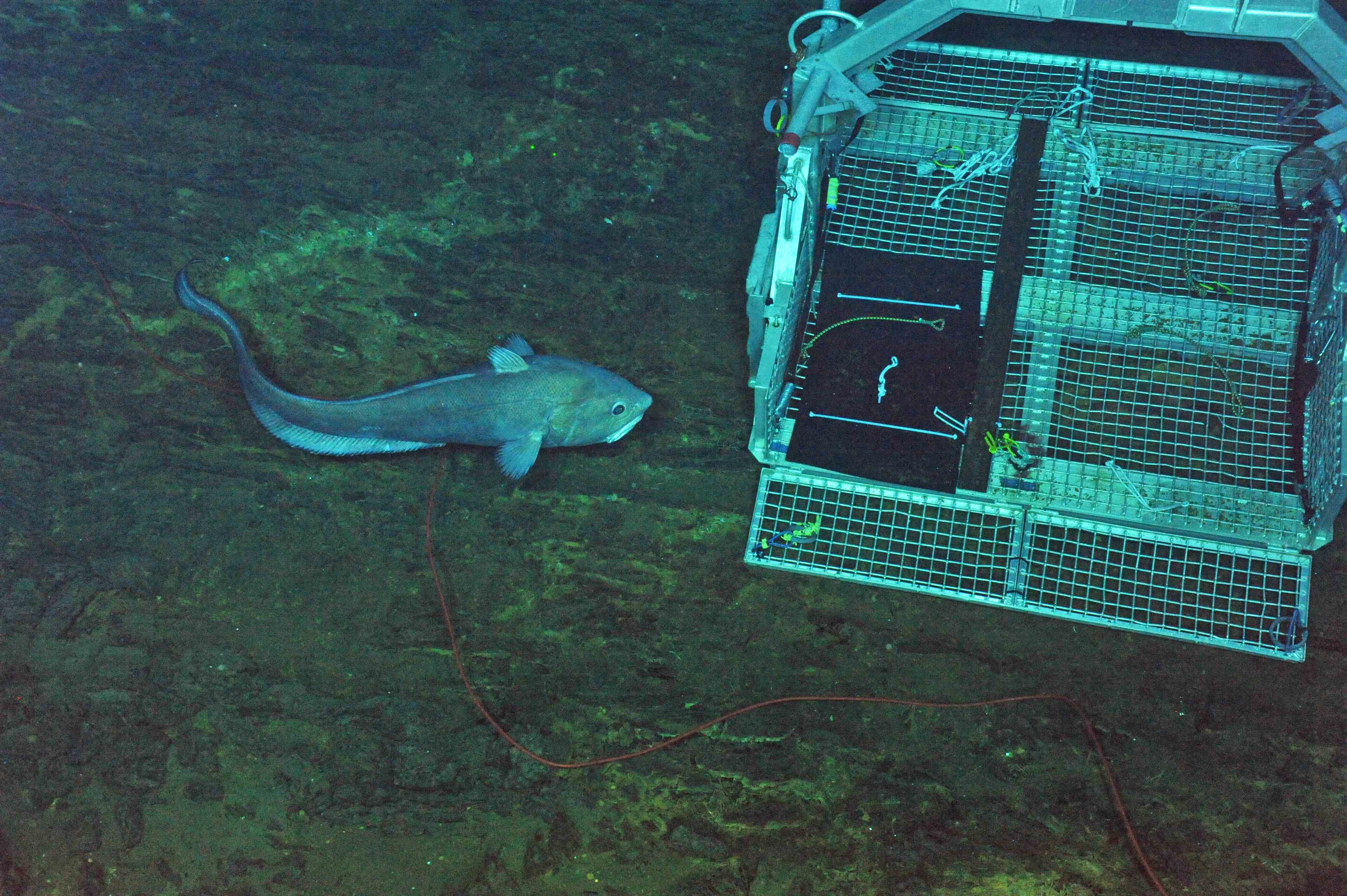
This giant rattail is more than 1 m in length explores the ROPOS tool basket in 2014. Credit: UW/NSF-OOI/CSSF; ROPOS Dive R1729; V14.
Ciliate colonies thrive near to the base of one of Axial's hydrothermal vents. Credit: UW/NSF-OOI/CSSF; V14.
Glob Snails (Depressigyra globulus)
Unknown Sea Cucumber 2. Photo credit: NSF-OOI/UW/CSSF; Dive R1716; V14
Specimen from Axial Base. Photo credit: NSF-OOI/UW/CSSF; V14
A Big Red Jelly floats by the ROPOS camera. Photo credit: NSF-OOI/UW/CSSF; V13
During ROPOS Dive R1729, a digital-still camera (left), a mass spectrometer (middle) and a fluid- and microbial-DNA sampler (right) were installed in the International District Hydrothermal Field at the vent called El Gordo. A titanium 'hat' rests on top of the structure in a tubeworm and limpet patch. Inside the hat are temperature probes and intake nozzles for the fluid and DNA sampler. Credit: UW/NSF-OOI/CSSF; ROPOS Dive R1729; V14.
A huge rattail fish followed the ROV ROPOS around the International District hydrothermal field for several hours. Near the end of the dive it investigated the tool basket, with thoughts that it might get in. Photo credit: UW/NSF-OOI/CSSF; ROPOS Dive 1729; V14.
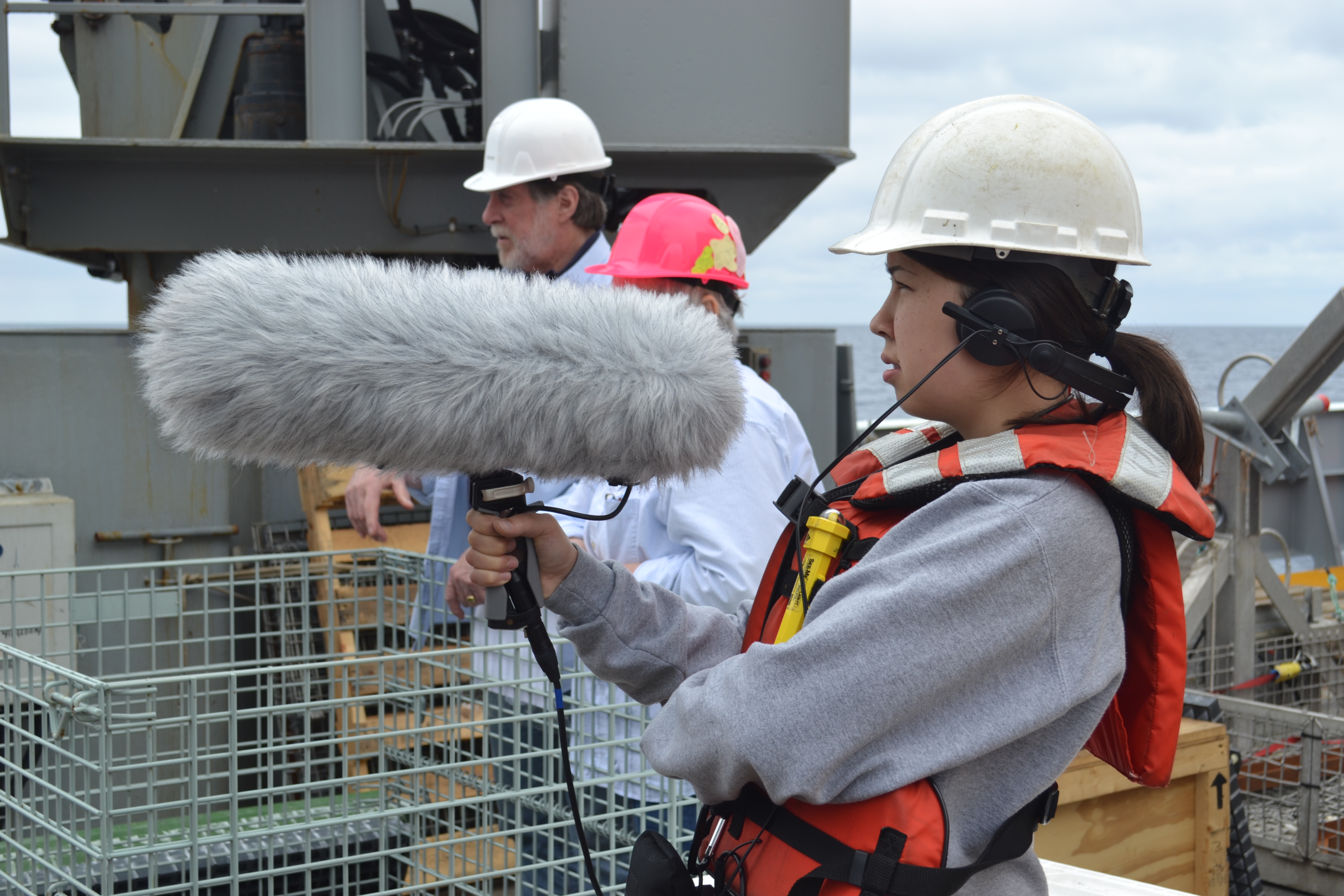
UW bioengineering student Gina Hansen records audio for one of her video projects. Photo Credit: Mitch Elend, University of Washington, V14
A fiber optic cable has been cut and splayed out so that all of its separate parts can be seen. The tiny little clear wire on the upper right is one of the actual optical fibers, of which there are six within the cable. Photo credit: Jesse Turner, University of Washington, V14.
Friedrich Knuth and Jet Leo take a selfy on the bow, where they conduct their evening workout. Photo credit: Friedrich Knuth, College of Charleston, V14.
ropos.movie_
Pacific Flatnose (Antimora microlepis) at Axial Seamount. Credit: UW/NSF-OOI/CSSF; ROPOS Dive R1720; V14.
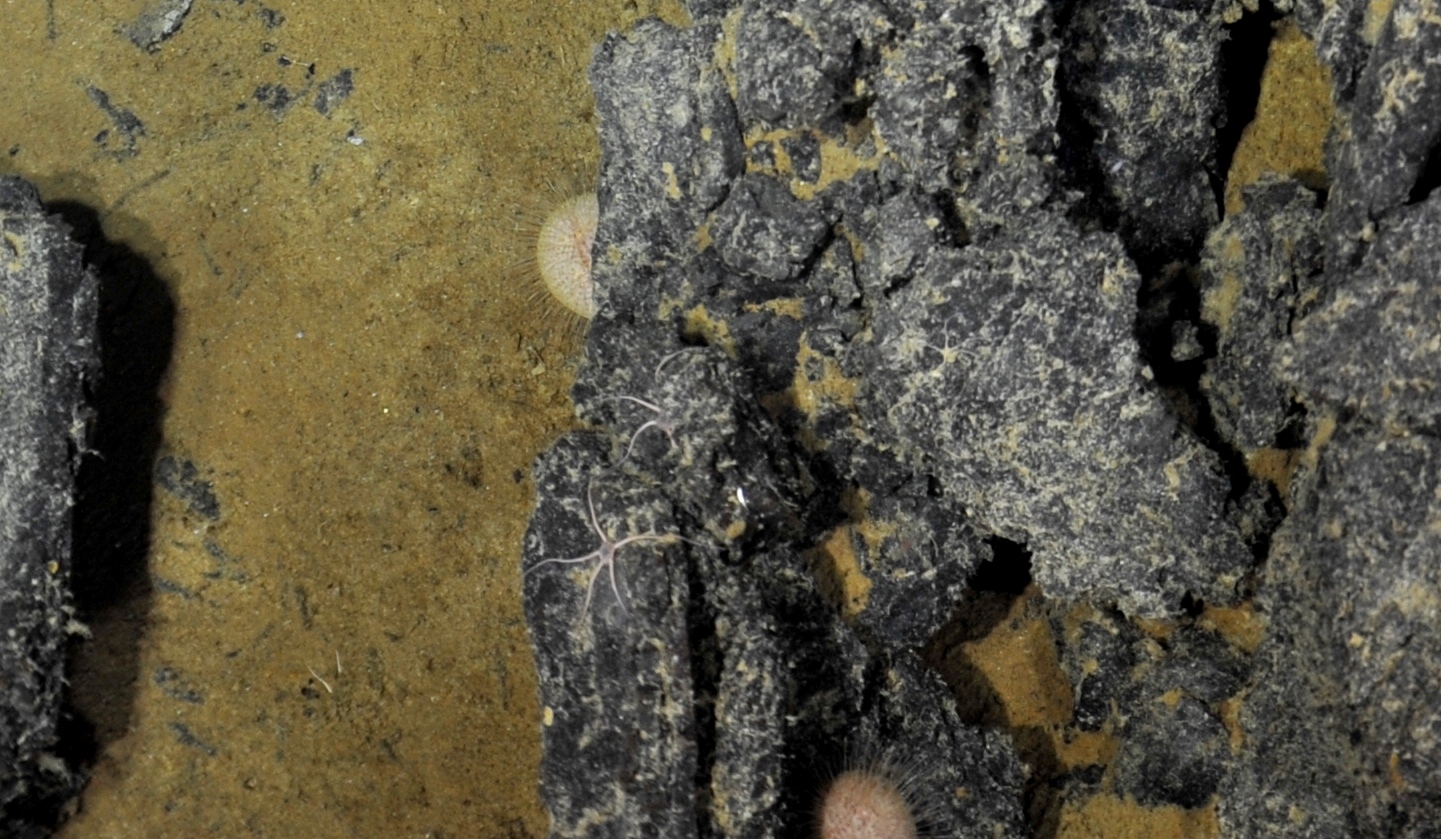
This species is not yet identified, although it may also be Spinophiura jolliveti. It is the dominant brittle star at the base of Axial. Photo credit: NSF-OOI/UW/CSSF; R600; V13
Hundreds of Spinophiura brittle stars can be found clinging to nearly all lava flows within Axial Seamount's caldera. Photo credit: NSF-OOI/UW/CSSF; Dive R1635; V13
A deep-sea octopus ignores ROPOS at the Escargot hydrothermal vent in the International District vent field at the summit of Axial Seamount. Credit: UW/NSF-OOI/CSSF; ROPOS Dive R1723; V14.
A rear view of the Spider Crab Macroregonic macrochira at Axial Seamount. Photo credit: NSF-OOI/UW/CSSF; Dive R1727; V14
The spider crab Macroregonic macrochira is very common at Axial Seamount. Credit:UW/NSF-OOI/CSSF; ROPOS Dive R1727; V14.
There are likely to be many sea urchins hiding beneath the vast lava rock fields at Axial.Here, several of the Unknown Sea Urchin 1 variety are shown. Photo credit: NSF-OOI/UW/CSSF; Dive R1724; V14
- Anemone
- Animal
- Arthropod
- ASHES
- Axial
- Axial Base
- Axial Biology
- Axial Caldera
- Bacteria
- Basalt Lava
- BEP
- Biofouling
- Biology
- Camds
- Camera
- Camhd
- Central Caldera
- Ciliates
- Cnidaria
- Coastal Biology
- Crab
- Deep Profiler Mooring
- Dive Highlights
- Eastern Caldera
- Echinoderms
- Endurance Array
- Engineering Team
- ENLIGHTEN 10
- Exploratorium
- Fish
- Geology
- HD Camera
- HPIES
- Hydrate Ridge
- Hydrates
- Hydrophone
- Hydrothermal Vents
- Illustration
- Inshore 80 Meters
- Instrument
- International District
- J-BOX
- Jason
- Jellyfish
- Junction Box
- K12
- Lava
- Mollusk
- Moorings
- Nodes
- Nudibranch
- Octopus
- OOI
- Oregon Offshore
- Oregon Offshore 600 m
- Oregon Shelf
- Oregon Slope Base
- People
- PN1B
- PN1D
- Polychaetes
- PPSDN
- Primary Node
- RASFL
- ROCLS
- ROPOS
- ROPOS Dives
- ROV Team
- RV Revelle
- RV Sikuliaq
- RV Thompson
- Salp
- Sample
- SC13
- Science Team
- Sea Cucumber
- Sea Star
- Sea Urchin
- Seafloor
- Seismometer
- Sensors
- Shallow Profiler Mooring
- Shark
- Shipboard
- Shore Station
- Slope Base
- Smoker
- Soft Coral
- Southern Hydrate Ridge
- Sponge
- Squid
- Students
- Students & Guest Participants
- Tmpsf
- Tubeworms
- VISIONS 11 Leg 1
- VISIONS 11 Leg 2
- VISIONS 11 Viewers
- VISIONS 13
- VISIONS 14
- VISIONS 15
- VISIONS 16
- VISIONS 17
- VISIONS 18
- VISIONS 20
- VISIONS 22
- VISIONS 23
- visions 26
- Visualization