Image Archive


This squished-looking Flapjack octopus (Opisthoteuthis sp.) was seen at Southern Hydrate Ridge during a site survey in 2022. Credit: UW/NSF-OOI/CSSF, ROPOS Dive R2228, V22.
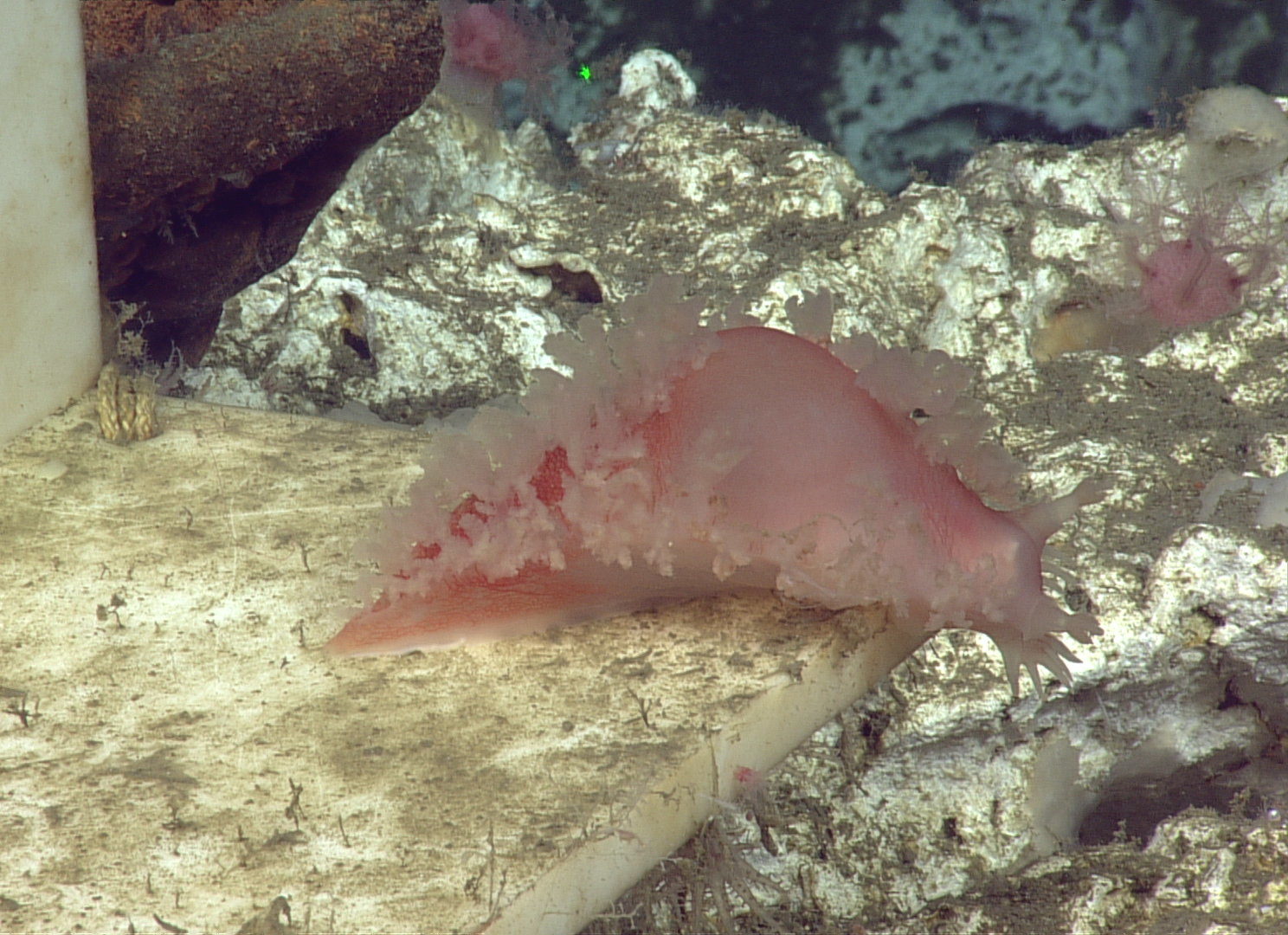
This rosy Tritonia tetraquetra nudibranch was seen sitting on a marker at the Pinnacle, west of Southern Hydrate Ridge. It was near some soft corals, some of which were missing polyps, and had clearly been grazed on by this sea pen and soft coral specialist predator! Photo credit: UW/NSF-OOI/CSSF, Dive R2228, V22.
Bathydoris aioca, an unusually large (~30 cm) deep-sea nudibranch, was part of a unique community of invertebrates gathered around the anchor of the Slope Base profiler mooring in 2900 meters (~9500 feet) of water, also including flytrap anemones, galatheid crabs, and sea cucumbers. Photo credit: NSF-OOI/UW/CSSF, Dive R2258, V22
Unidentified deep-sea nudibranchs found on equipment at approximately 1267 m during a dive at Central Axial Caldera. Photo credit: NSF-OOI/UW/CSSF; Dive J2-1375; V21.
A Fathead Sculpin (Psychrolutes phrictus), also known as a blob sculpin, resting on the seafloor during a dive to the International District. Credit: UW/NSF-OOI/UW/WHOI; Dive J2-1381; V21.
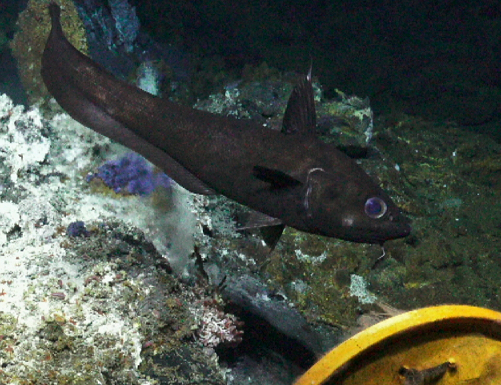
This rattail fish (Coryphaenoides acrolepis), seen amidst the vents in the International District at 1518 m, was incredibly curious about the equipment that Jason was working with. Credit: UW/NSF-OOI/WHOI; Dive J2-1380; V21.
An unidentified, swimming sea cucumber seen at approximately 1274 m on a ROPOS dive to the Central Axial Caldera. Photo credit: NSF-OOI/UW/CSSF; Dive J2-1376; V21.
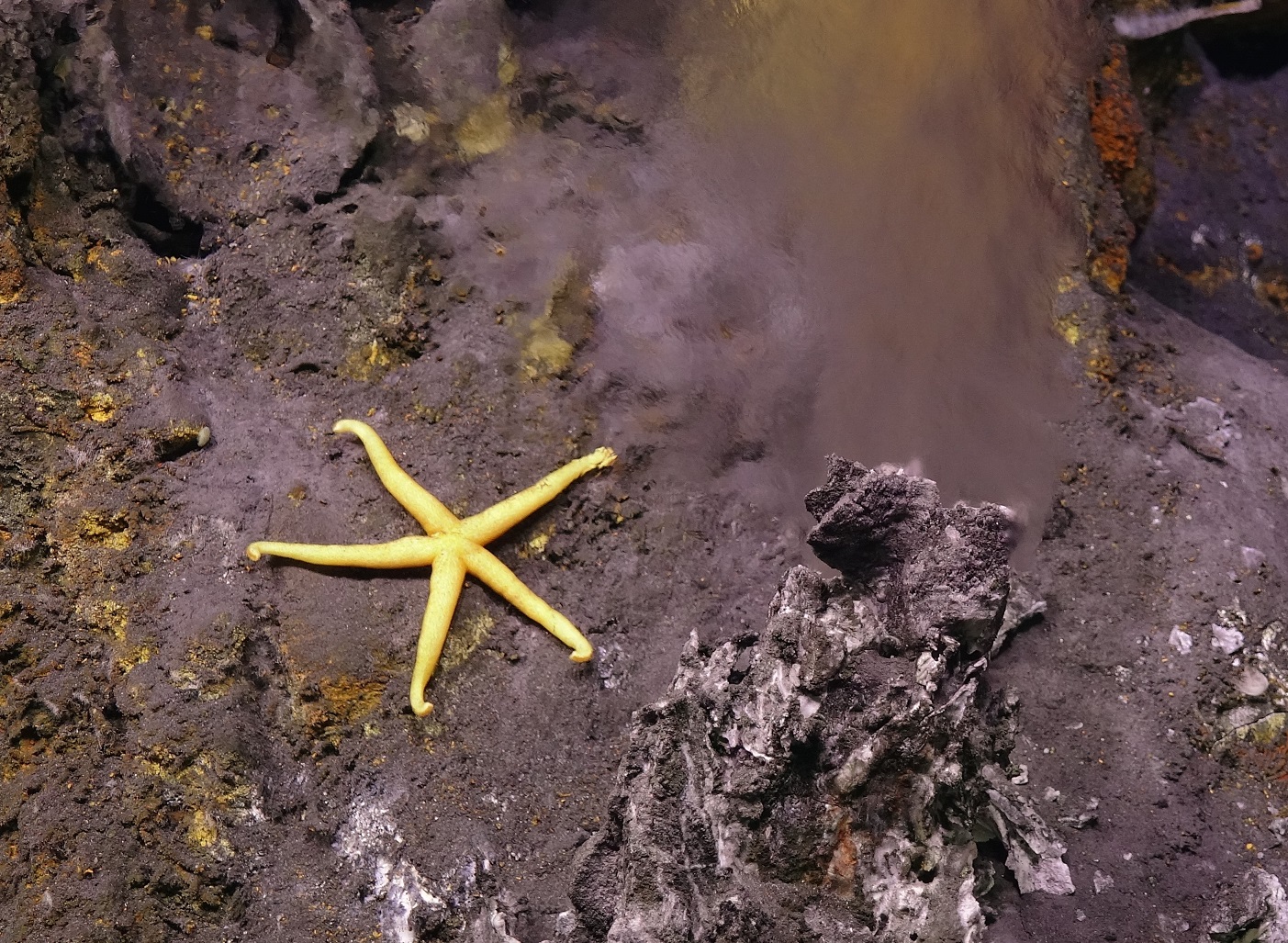
An unidentified sea star (possibly Henricia sp.) near one of the vents during a dive to the International District. It remained next to the chimney, despite the heat exuded by the vent plume. Photo credit: NSF-OOI/UW/CSSF; Dive J2-1381; V21.
A deep-sea crab from the family Lithodidae seen at International District. Photo credit: NSF-OOI/UW/CSSF; Dive J2-1378; V21.
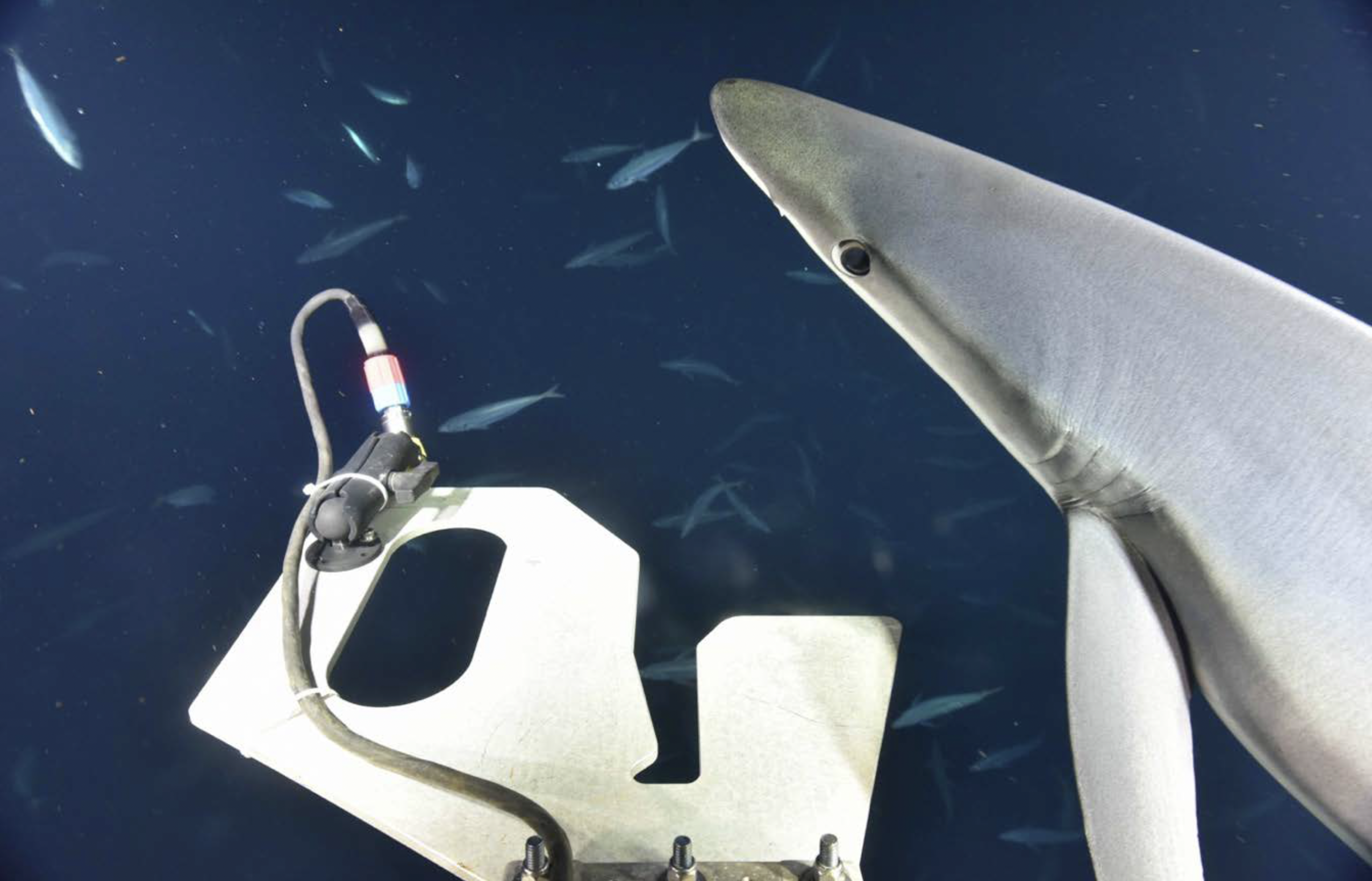
This blue shark was the highlight of the Slope Base Deep Profiler dive as he moved around the ROV Jason. Credit: UW/NSF-OOI/WHOI; Dive J2-1367; V21.
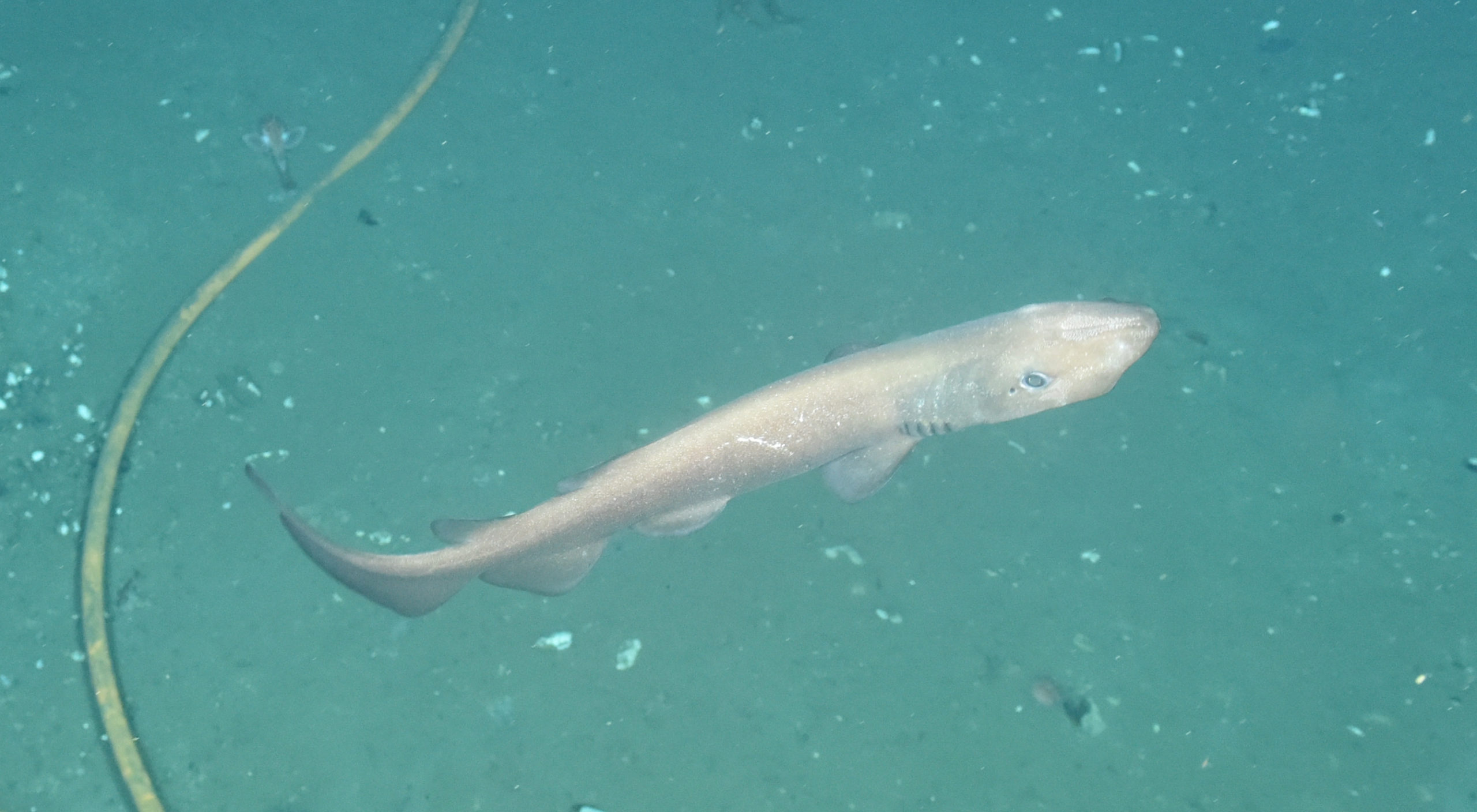
A brown catshark (Apristurus brunneus) at Southern Hydrate Ridge, seen during a site survey during VISIONS'22. Credit: UW/NSF-OOI/CSSF, ROPOS Dive R2224, V22.
An aggressive blue shark approaches the ROV ROPOS at the Oregon Offfshore Site. Credit: UW/NSF-OOI/CSSF; ROPOS Dive R2231, V22.
This blue shark was the highlight of the Deep Profiler Dive at Slope as it moved in an out from in front of the ROV’s camera.Credit: UW/NSF-OOI/WHOI; Dive J2-1367; V21.
Beautiful chains of salps swim around the top of the Shallow Profiler Mooring at Axial Base. Credit: UW/NSF-OOI/WHOI; V21.
A swarm of beautiful salp aggregates swim around the Shallow Profiler Mooring at Axial Base at a water depth of ~ 600 ft. Credit: UW/NSF-OOI/WHOI; V21.
Purple hagfish, speckled sole, red rockfish, starfish and crabs thrive at Southern Hydrate Ridge with diverse substrates to call home. Credit: UW/OOI-NSF/WHOI. V20.
The 12 ft across platform on the Slope Base Shallow Profiler mooring is home to a variety of fauna, thriving in the nutrient-rich currents. Credit: UW/NSF-OOI/WHOI; V20.
A rockfish hangs out with soft corals at the carbonate Pinnacle deposit at Southern Hydrate Ridge. Credit: UW/NSF-OOI/WHOI. V20.
Beautiful soft corals are ubiquitous on carbonate deposits that form the Pinnacle at Southern Hydrate Ridge. Credit: UW/NSF-OOI/WHOI. V20.
A sole lounges on the sedimented seafloor at Southern Hydrate Ridge. Credit: UW/NSF-OOI/WHOI. V20
A rockfish hangs out with soft corals at the carbonate Pinnacle deposit at Southern Hydrate Ridge. Credit: UW/NSF-OOI/WHOI. V20.
Beautiful soft corals are ubiquitous on carbonate deposits that form the Pinnacle at Southern Hydrate Ridge. Credit: UW/NSF-OOI/WHOI. V20.
A sole lounges on the sedimented seafloor at Southern Hydrate Ridge. Credit: UW/NSF-OOI/WHOI. V20
A 'Big Red' Jellyfish swims past Jason at the Slope Base site ~ 68 miles offshore. Credit: UW/NSF-OOI/WHOI. V20.
Crabs have taken "roost" in Primary Node PN1B. Credit: UW/NSF-OOI/WHOI. V20
Crabs swarm Primary Node PN1B. Credit: UW/NSF-OOI/WHOI. V20
The ROV Jason prepares to open the doors to Primary Node PN1B, which in addition to providing power and bandwidth to the RCA, serves apparently as a crab house. Credit: UW/NSF-OOI/WHOI. V20.
A Cedar Waxwing watches Jason onboard the R/V Thompson during VISIONS'20. Credit. I. Borchert, University of Washington. V20
- Anemone
- Animal
- Arthropod
- ASHES
- Axial
- Axial Base
- Axial Biology
- Axial Caldera
- Bacteria
- Basalt Lava
- BEP
- Biofouling
- Biology
- Camds
- Camera
- Camhd
- Central Caldera
- Ciliates
- Cnidaria
- Coastal Biology
- Crab
- Deep Profiler Mooring
- Dive Highlights
- Eastern Caldera
- Echinoderms
- Endurance Array
- Engineering Team
- ENLIGHTEN 10
- Exploratorium
- Fish
- Geology
- HD Camera
- HPIES
- Hydrate Ridge
- Hydrates
- Hydrophone
- Hydrothermal Vents
- Illustration
- Inshore 80 Meters
- Instrument
- International District
- J-BOX
- Jason
- Jellyfish
- Junction Box
- K12
- Lava
- Mollusk
- Moorings
- Nodes
- Nudibranch
- Octopus
- OOI
- Oregon Offshore
- Oregon Offshore 600 m
- Oregon Shelf
- Oregon Slope Base
- People
- PN1B
- PN1D
- Polychaetes
- PPSDN
- Primary Node
- RASFL
- ROCLS
- ROPOS
- ROPOS Dives
- ROV Team
- RV Revelle
- RV Sikuliaq
- RV Thompson
- Salp
- Sample
- SC13
- Science Team
- Sea Cucumber
- Sea Star
- Sea Urchin
- Seafloor
- Seismometer
- Sensors
- Shallow Profiler Mooring
- Shark
- Shipboard
- Shore Station
- Slope Base
- Smoker
- Soft Coral
- Southern Hydrate Ridge
- Sponge
- Squid
- Students
- Students & Guest Participants
- Tmpsf
- Tubeworms
- VISIONS 11 Leg 1
- VISIONS 11 Leg 2
- VISIONS 11 Viewers
- VISIONS 13
- VISIONS 14
- VISIONS 15
- VISIONS 16
- VISIONS 17
- VISIONS 18
- VISIONS 20
- VISIONS 22
- VISIONS 23
- Visualization